Why You Can't Feel the Earth Spinning at 1,600 km/h
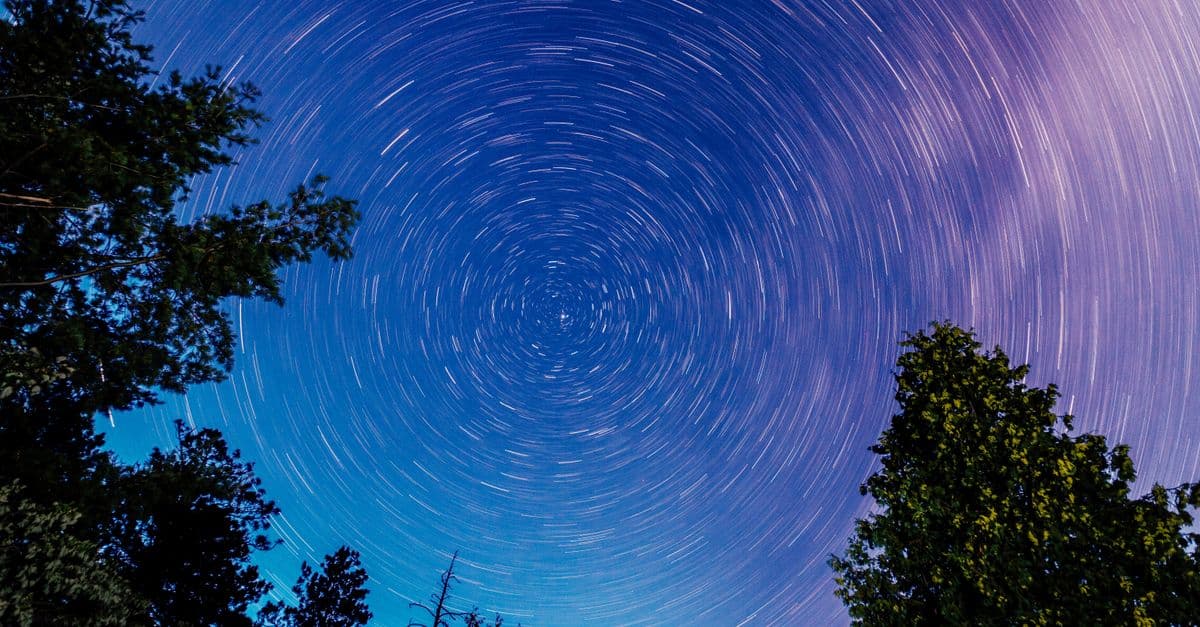
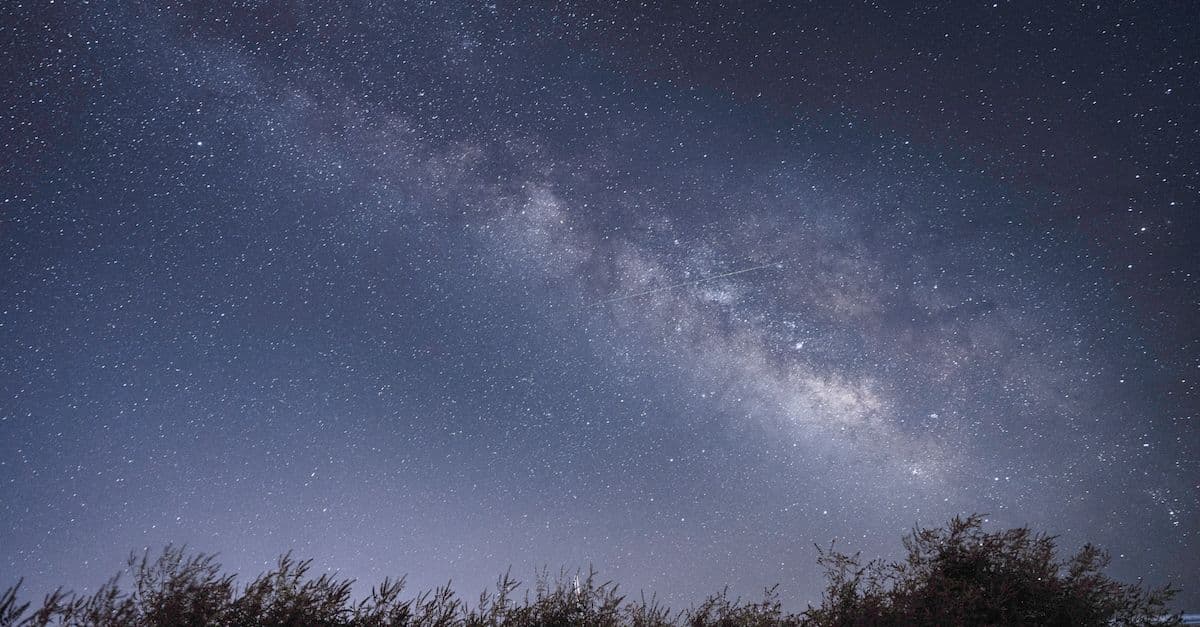
Photo: Harrison Haines / Pexels
Right now, if you're near the equator, you're moving at approximately 1,674 km/h — faster than a supersonic jet. Even at 45° latitude, you're moving at about 1,180 km/h. Earth completes one full rotation every 23 hours 56 minutes and 4 seconds (a sidereal day).
You can't feel any of this. You never have. Why not?
The answer is not a trivial one — it takes Newton, Galileo, and Einstein to fully explain it, and it connects to some of the deepest principles in physics.
Key takeaways
- Earth's surface rotates at 1,674 km/h at the equator.
- You don't feel uniform motion — only changes in motion (acceleration). Earth's rotation is slow enough that its centripetal acceleration is tiny compared to gravity.
- Galileo's principle of relativity: there is no physical experiment that can distinguish uniform motion from rest.
- The Coriolis effect, Foucault pendulums, and equatorial bulge are real physical consequences of Earth's rotation that we can measure.
- GPS satellites must correct for Earth's rotation and relativistic effects to maintain accuracy.
Why you can't feel constant motion
The key insight is that you don't feel velocity — you feel acceleration.
When you're in a car moving at 100 km/h on a smooth, straight highway, you feel nothing. You feel the jerk when you accelerate from 0 to 100, and you feel the braking when you slow down. But at constant velocity, there's no sensation.
This is Galileo's principle of relativity (1632): there is no mechanical experiment you can perform inside a uniformly moving reference frame that can tell you whether you're moving or at rest. A ball tossed straight up in a smoothly moving train falls back into your hand exactly as it would standing still.
Einstein later generalised this: not just mechanics but all of physics (including electromagnetism) is the same in any inertial (non-accelerating) reference frame. This is the foundation of special relativity.
So is Earth rotating in an inertial frame?
Not quite. A rotating frame is not an inertial frame — rotation is a form of acceleration (centripetal acceleration). But the rotation is very slow, and the resulting accelerations are tiny compared to gravitational acceleration.
At the equator, the centripetal acceleration due to Earth's rotation is:
a = ω²r = (2π / 86,400 s)² × (6,371,000 m) ≈ 0.034 m/s²
Earth's gravitational acceleration is 9.8 m/s².
The centripetal acceleration from rotation is only about 0.35% of gravity. You can't feel this tiny reduction in your weight. It's real — you'd weigh slightly less at the equator than at the poles for this reason (as well as because Earth is not a perfect sphere) — but far too small to perceive.
This is why Earth's rotation feels like nothing. The "push" you experience from the rotation is 0.35% of your weight — maybe 200–300 grams of apparent weight change for an average person. Completely imperceptible.
Galileo's ship thought experiment
Galileo's Dialogue Concerning the Two Chief World Systems (1632) contains a famous thought experiment about a ship. He asks: if you're below deck on a smoothly moving ship, with butterflies, fish, and dripping water, can you tell if the ship is moving?
No. Everything behaves exactly as it would on land. The butterflies fly normally, water drips straight down, fish swim with equal ease in all directions.
His conclusion: uniform motion is physically equivalent to rest. There is no absolute rest — only motion relative to something else.
This was revolutionary in 1632. It's why we can comfortably live on a spinning, orbiting planet without feeling any of it.
The Coriolis effect: evidence of rotation we can observe
The Coriolis effect is a deflection that occurs in rotating reference frames — a "fictional force" from the perspective of someone on the rotating Earth.
As Earth rotates, different latitudes move at different speeds. At the equator: 1,674 km/h. At 45° N: about 1,180 km/h. At the North Pole: 0 km/h.
When air or water moves from high latitudes toward low latitudes (or vice versa), it carries its original rotational velocity. This mismatch causes deflection:
- In the Northern Hemisphere: deflection to the right of motion.
- In the Southern Hemisphere: deflection to the left of motion.
The consequences:
- Weather systems rotate counterclockwise in the Northern Hemisphere (cyclones, low-pressure systems) and clockwise in the Southern Hemisphere.
- Trade winds deflect rather than blowing straight from high to low pressure.
- Long-range artillery shells in WWII had to be corrected for Coriolis deflection at intercontinental distances.
- Ocean currents form large circular gyres shaped by Coriolis.
The popular claim that the Coriolis effect determines which way water drains in a sink is mostly myth — sink drains are dominated by the geometry of the basin and the residual motion of the water, not Coriolis. The effect is too small at sink scale. But at the scale of storms and ocean gyres, it's dominant.
The Foucault pendulum: watching rotation in real time
In 1851, French physicist Léon Foucault installed a 67-metre pendulum in the Panthéon in Paris and invited the public to watch. The pendulum swung steadily — and its plane of oscillation slowly rotated, completing a full rotation in about 32 hours.
The pendulum was not changing direction. The Earth was rotating beneath it.
The Foucault pendulum is a direct physical demonstration of Earth's rotation in a stationary room. It works because the pendulum is swinging in an inertial frame (relative to the distant stars), while the floor rotates beneath it.
At the North Pole, a Foucault pendulum completes a full rotation in 24 hours (one sidereal day). At the equator, the pendulum shows no rotation. At intermediate latitudes, the period depends on latitude: rotation period = 24h / sin(latitude).
Foucault pendulums are installed in museums worldwide and remain among the most elegant demonstrations in all of physics.
Earth's equatorial bulge: the shape of rotation
If Earth weren't rotating, it would be a perfect sphere (or close to one). Rotation causes an equatorial bulge — the centrifugal effect pushes the equator outward.
Earth's equatorial radius: 6,378 km. Earth's polar radius: 6,357 km. Difference: 21 km bulge.
This is not tiny — it's measurable by satellite and has real consequences for orbital mechanics. Satellites passing over the equator experience slightly different gravitational pull than those in polar orbits.
The bulge also means that the summit of Mount Chimborazo in Ecuador (6,263 m elevation) is actually further from Earth's centre than Everest (8,849 m elevation) — because Chimborazo is closer to the equator where the bulge is largest.
Stellar aberration and annual parallax: Earth's orbit
Earth doesn't just rotate — it orbits the Sun at approximately 107,000 km/h. You don't feel this either, for the same reasons.
But there are observable consequences:
- Stellar aberration: stars appear to shift slightly in position over the course of a year, because Earth is moving in different directions. First measured by James Bradley in 1727.
- Annual parallax: nearby stars appear to shift against the background of distant stars as Earth moves to different points in its orbit. Used to measure stellar distances.
These effects are tiny and require telescopes to observe, but they're real and proved Earth's orbital motion definitively.
Frequently asked questions
If I jump, why do I land in the same spot?
Because you carry Earth's rotational velocity when you jump. You're moving at 1,674 km/h horizontally (at the equator) as you jump — and you continue moving at that speed while airborne. Earth's surface moves at exactly the same speed beneath you. You land in the same spot because everything is moving together.
Could you feel Earth's rotation if it sped up dramatically?
Yes. If Earth rotated fast enough — completing a rotation every 84 minutes or so — the centripetal acceleration at the equator would equal gravity and objects would fly off. Several rapidly rotating asteroids spin at near this limit.
Does the Sun also rotate?
Yes. The Sun rotates, but not rigidly — the equator rotates faster than the poles (differential rotation). At the equator: once every ~25 days. At the poles: once every ~35 days. This differential rotation is a driver of solar magnetic activity and sunspots.
Is Earth's rotation slowing down?
Yes, very slowly. Tidal friction from the Moon is gradually transferring angular momentum from Earth's rotation to the Moon's orbit. Earth's rotation slows by about 1.4 milliseconds per century. 600 million years ago, a day was about 21 hours. The Moon is slowly receding from Earth as a result — moving away at about 3.8 cm per year.
How do we know Earth's rotation so precisely?
Very Long Baseline Interferometry (VLBI) — using multiple radio telescopes pointed at quasars — can measure Earth's rotation to within microseconds. This precision is necessary for GPS satellite systems, which require extremely accurate time and position data.
The bottom line
You're hurtling through space right now at thousands of km/h — rotating with Earth, orbiting the Sun, orbiting the galaxy. You can't feel any of it because feeling requires acceleration, and these motions are either too steady or too slow (for rotation) to register. Galileo understood this in 1632; Einstein formalised it in 1905. But the rotation is real, and its fingerprints are everywhere: in the Coriolis effect that shapes every storm on Earth, in the Foucault pendulum rotating in Paris, in the equatorial bulge that makes Chimborazo further from Earth's centre than Everest.
Related Reading
Follow new articles
Add SciHub101 to your feed reader to see new science and technology stories.
About the Author
SciHub101 is an independent science and technology publication founded and edited by Buğra Sözeri, a software engineer and app developer based in Türkiye. AI tools assist with drafting and research. Source documentation in the existing archive is uneven, and articles are being reviewed and corrected. The Editorial Team byline identifies editorial responsibility; it does not certify specialist or independent human review. Where we compare products, anything built by our own team is labelled as such — see the editorial guidelines and About page for how corrections and disclosures work.
Related Articles
What Is the Speed of Dark — And Other Things That Move Faster Than Light
Nothing with mass can reach the speed of light. But shadows, spots of light, and the expansion of the universe can move faster than light without violating physics. Here's the strange truth about superluminal motion.

How Language Shapes the Way You Think
The language you speak does not lock your thoughts in place, but experiments suggest it nudges color perception, spatial memory, and decisions. Here is what the evidence supports and where it is shaky.

Isaac Newton: The Laws That Govern the Universe
Newton didn't just discover gravity — he invented calculus to describe it. His 18-month plague exile became the most productive retreat in science history.
What Is Spacetime? The Fabric of the Universe Explained
Space and time aren't separate things — they're a single four-dimensional fabric that can bend, stretch, and warp. Massive objects curve spacetime, and that curvature is what we experience as gravity. Here's what Einstein actually discovered.
The Four Fundamental Forces of Nature Explained
Every interaction in the universe — from holding atoms together to making stars shine — comes down to four forces. Here's what they are, how they work, and why physicists are still hunting for a theory that unifies them.
What If Gravity Was Twice as Strong? — Science Explained
What would actually happen if gravity suddenly doubled? Your skeleton would fracture under your own weight, the atmosphere would compress into a dense killing fog, and tall buildings would collapse. But life could still evolve — just very differently.