Why Is the Sky Blue? Scattering, Sunsets, and Perception
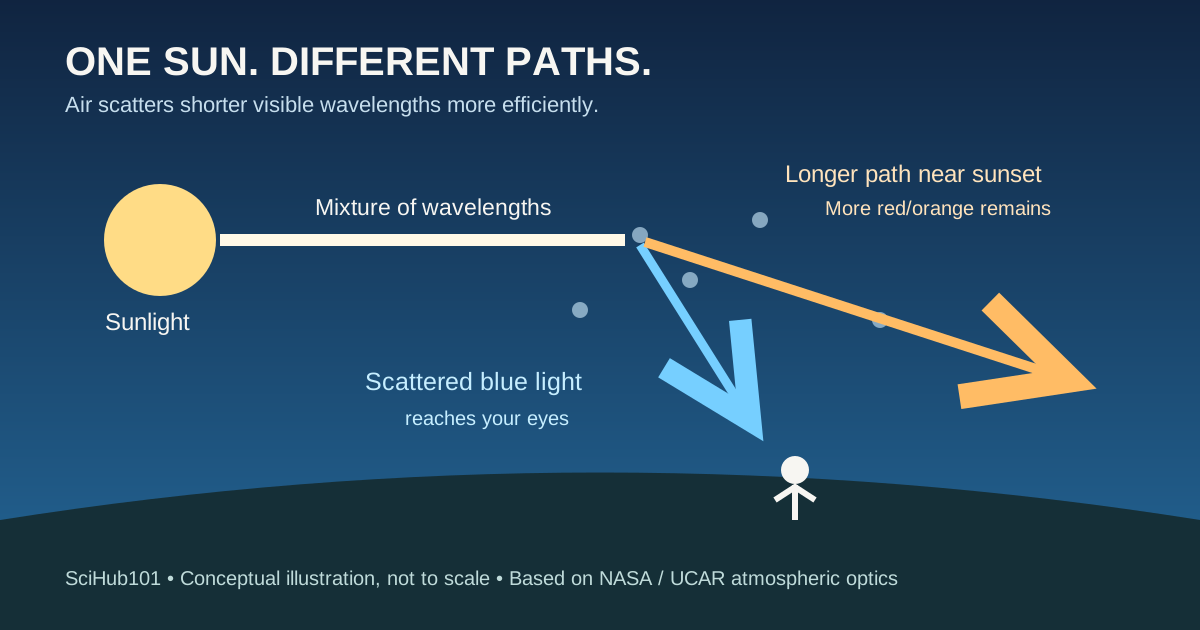
Illustration: SciHub101 / Original illustration
Why is the sky blue when sunlight looks white? Air redirects some sunlight toward your eyes, and it redirects shorter visible wavelengths more efficiently than longer ones. The answer explains why a clear afternoon and a red sunset can come from the same Sun. It also helps separate three things that often get blurred together: the light a source emits, what an atmosphere does to that light, and how our eyes interpret the result. NASA's sky explanation
Why air makes the sky blue
White sunlight contains a mixture of visible wavelengths, the distances between successive wave crests. Air molecules scatter light, meaning that they send part of an incoming beam in other directions. The blue sky is sunlight that reaches us by this indirect route. It is not a blue coating on the atmosphere. UCAR's atmospheric optics overview
Think of a beam as a stream passing a series of junctions. Some light continues along its original route; some takes a turn toward an observer elsewhere. The analogy describes the change in direction, not a physical road inside the air. A clear atmosphere supplies many opportunities for redirection without becoming an opaque wall.
For particles much smaller than the wavelength, the process is called Rayleigh scattering. Its approximate wavelength dependence is 1/λ⁴, where λ represents wavelength. This means that shortening the wavelength increases scattering sharply. It does not mean that all light is scattered, or that red light cannot scatter. Hong Kong Observatory's explanation of the wavelength law
As a worked comparison, use hypothetical wavelengths of 450 nanometers and 650 nanometers. Holding the other factors constant, the shorter wavelength scatters about (650/450)⁴, or 4.4 times, as efficiently. That number is a calculation from the approximation, not a measurement of the exact color of today's sky. Real observations also depend on the incoming spectrum and atmospheric conditions.
The sky and a sunset come from different routes through the same atmosphere: scattered sunlight versus light remaining in the direct beam.
Why the sky is not simply violet
Violet light has a shorter wavelength than blue light, so the scattering law alone cannot predict the color we perceive. The spectrum reaching us contains a mixture of wavelengths, and our visual system responds differently to different parts of that mixture. A scattering preference is one part of a color calculation, not the whole calculation. West Texas A&M University's explanation of sky color
Our eyes behave more like overlapping filters than a wavelength label printer. Several wavelength combinations can produce a similar perceived color. Saying that the sky is secretly violet oversimplifies a process that combines illumination, scattering, and human vision. Nor does violet need to disappear completely for a mixture to look blue.
A useful thought experiment is to compare a single violet lamp with a broad spectrum enriched in short wavelengths. Both can contain violet light, but their mixtures differ. The sky belongs to the second category. Its color should be explained as a spectrum interpreted by an observer, rather than one privileged wavelength winning a contest.
Why the Sun looks red near the horizon
When the Sun is low, its light travels through more atmosphere before reaching the observer. Scattering removes more short-wavelength light from the direct beam, leaving a mixture richer in red and orange. The light removed from that route is redirected elsewhere rather than universally destroyed. NASA's explanation of red sunsets
Imagine looking through progressively longer sections of the same filtering material. The material need not change for its effect to grow: the path through it has changed. This is why viewing geometry belongs in the explanation alongside wavelength. A sunset is not evidence that the Sun itself has suddenly cooled or changed its emitted spectrum.
The distinction also explains why the entire sky need not turn one uniform red. Looking toward the low Sun and looking high above it select different paths. Aerosols, clouds, and repeated scattering further affect the mixture. A simple diagram can explain the dominant mechanism without predicting every patch of a real sunset.
Why haze and clouds change the answer
Air molecules are not the only things that scatter sunlight. Larger particles and cloud droplets change how visible wavelengths are redistributed. Clouds often appear white because their droplets scatter a broad mixture of visible light; a thick cloud can appear gray when less light reaches its underside. NOAA's explanation of cloud colors
This is a useful limit on the everyday rule that shorter wavelengths scatter more. That rule describes the Rayleigh regime, not every particle in every atmosphere. Applying the same approximation to a large water droplet without checking its size would confuse two different physical situations.
Similarly, a washed-out sky does not by itself identify a particular pollutant or measure air quality. Atmospheric appearance combines particle properties, illumination, and viewing direction. Color can prompt a question about conditions, but it is not a substitute for measuring what is in the air.
Why Mars has blue sunset light
Mars can have an orange or reddish daytime sky and a blue-gray glow near the setting Sun. NASA explains that fine atmospheric dust scatters light differently from the molecules that dominate Earth's clear-sky explanation. The contrast cannot be explained just by naming carbon dioxide as Mars's main atmospheric gas. NASA's comparison with Mars
The comparison is valuable because it tests the explanation. If the rule were simply that every atmosphere makes a blue daytime sky, Mars would be a counterexample. Once particle size and viewing direction enter the account, different colors become compatible with the same underlying science of light interacting with matter.
The takeaway
A blue sky is a view of redirected sunlight. A red sunset is a view of sunlight filtered along a longer atmospheric path. Wavelength matters, but so do particle size, geometry, and perception. Keeping those parts separate lets one explanation account for several colors without pretending that every atmosphere or every observer must see the same thing.
Correction note, October 15, 2026: Corrected the wavelength law and removed unsupported animal-vision, seasonal, and mathematical claims. The comparison above is an illustrative calculation, not observational data.
Read next:
Follow new articles
Add SciHub101 to your feed reader to see new science and technology stories.
About the Author
SciHub101 is an independent science and technology publication founded and edited by Buğra Sözeri, a software engineer and app developer based in Türkiye. AI tools assist with drafting and research. Source documentation in the existing archive is uneven, and articles are being reviewed and corrected. The Editorial Team byline identifies editorial responsibility; it does not certify specialist or independent human review. Where we compare products, anything built by our own team is labelled as such — see the editorial guidelines and About page for how corrections and disclosures work.
Related Articles

Asch Conformity Experiment Explained
Solomon Asch's line-matching study showed 75% of people conform to wrong group answers. Here's why, when, and how to resist it.
What Causes Tides? Moon, Sun, and Earth
What causes ocean tides? The Moon's differential gravity, why there are two high tides daily, spring and neap tides, and tidal locking — explained.
Why Is Glass Transparent? The Physics of Light Passing Through
Glass transmits 90% of visible light—higher than any other common material—because its atomic structure lets photons pass through with minimal scattering or absorption.

How Mirrors Work — The Physics of Reflection
Mirrors don't actually flip left and right — they flip front to back. The physics of reflection, from bronze polish to the 39-meter ELT telescope.
How Rainbows Form — Light and Water Drops
Rainbows explained: refraction, dispersion, the 42° angle, secondary bows, Alexander's dark band, and supernumeraries. Discover how it works, why it...
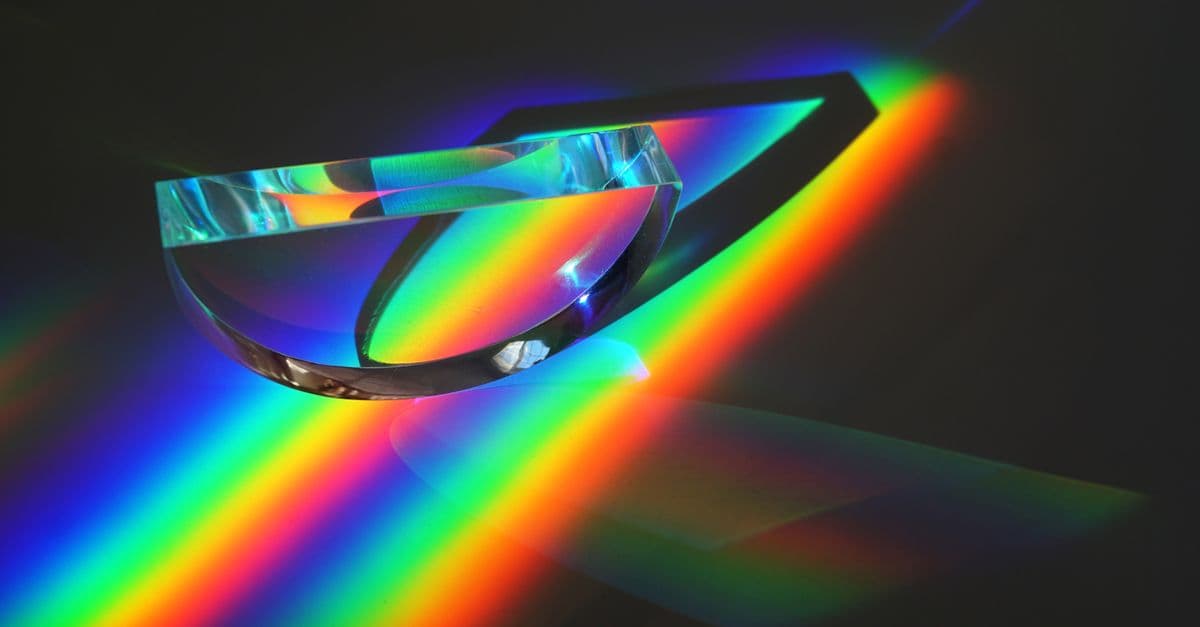
Newton's Prism: White Light is Many Colors Combined
In 1666, Isaac Newton used prisms to split white sunlight into its component colors and recombined them to create white light again. This proved light's nature and color's origins.