Asch Conformity Experiment Explained

Photo: Katerina Holmes / Pexels
In 1951, at Swarthmore College, psychologist Solomon Asch ran one of the most unsettling experiments in social science history. The task seemed trivial: look at a reference line, then pick which of three other lines matched its length. The correct answer was always obvious — a child could solve it with 99% accuracy. Yet roughly 75% of adult participants gave the wrong answer at least once. They did it not because they were confused, but because the people around them did.
The Asch conformity experiment cracked open a question that still echoes through every boardroom, jury, and group chat: how easily can we be talked out of what we can clearly see?
The Setup
A participant entered a room with seven to nine other "students." In reality, all of them except one were confederates — actors instructed to give specific answers. The real subject was always seated near the end of the line, so they would hear most of the group's answers before giving their own.
For the first few rounds, everyone answered correctly. Then, on cue, the confederates began giving the same wrong answer. The real participant now faced a stark choice: trust their own eyes, or trust the group.
The Results
Across the original trials, Asch found:
- About 37% of all responses conformed to the wrong group answer (averaged across trials).
- About 75% of participants conformed at least once.
- Only 25% held firm and never conformed.
- In control trials (no group pressure), error rates were under 1%.
The size of the effect shocked psychologists. People weren't agreeing under threat. They weren't being paid for the right answer. They were quietly contradicting their own perception in front of strangers they would never see again.
Why People Conform
Subsequent research identified two main mechanisms:
- Informational influence — "Maybe they know something I don't." When reality feels ambiguous, other people's behavior becomes a clue.
- Normative influence — "I don't want to look weird or be rejected." Even when the answer is obvious, the social cost of being the lone dissenter is real.
A 2005 fMRI study by Gregory Berns at Emory replicated a version of the Asch task and found that standing alone against a group activated the amygdala — the brain region tied to fear and threat. Conformity isn't just a habit. It's wired into our threat-response system.
What Changes the Conformity Rate
Asch and others varied the setup dozens of times. Some factors had massive effects:
| Factor | Effect on Conformity |
|---|---|
| Group size 1 confederate | Almost no conformity |
| Group size 2 confederates | Moderate increase |
| Group size 3+ confederates | Big jump — then plateaus |
| One ally giving correct answer | Cuts conformity ~80% |
| Anonymous / private answers | Drops sharply |
| High-prestige group | Increases conformity |
| Collectivist culture | Higher conformity (Bond & Smith 1996 meta-analysis) |
| Task ambiguity high | Sharp increase |
The single most powerful protector was one ally. Just one other person breaking ranks gave the real participant cover to do the same.
Has Conformity Declined Over Time?
A 1996 meta-analysis by Smith and Bond reviewing 133 studies across 17 countries found a small downward trend in conformity rates since the 1950s, especially in Western, individualist cultures. The effect is still robust, but modern participants — particularly online and in anonymous settings — push back more often than mid-century Americans did.
Online replications (text chat, video conferencing) consistently reproduce the basic effect, though weaker than face-to-face versions. Body language, eye contact, and physical co-presence still amplify the pressure to conform.
Conformity vs. Obedience vs. Role Conformity
Asch's experiment is often grouped with two other famous social psychology studies, but the mechanisms differ:
| Study | Mechanism | What's Pressured |
|---|---|---|
| Asch (1951) | Peer conformity | Public statement of belief |
| Milgram (1961) | Obedience to authority | Following harmful orders |
| Zimbardo (1971) | Role conformity | Adopting situational role |
The Zimbardo Stanford Prison Experiment (though since heavily criticized for methodological issues) showed that situational roles can override personal values — "guard" subjects abused "prisoner" subjects even though both were randomly assigned. All three mechanisms rely on different combinations of social influence, threat, and identity.
Frequently Asked Questions
Q: Did Asch's findings hold up in modern replications?
A: Yes, the basic effect replicates robustly across decades and countries. Conformity rates vary slightly (modern participants show slightly lower conformity in some online contexts), but 75% experiencing it at least once remains typical.
Q: Why don't people just give their own answer confidently?
A: Because public dissent triggers social threat response. The amygdala activates. The brain treats disagreement as error. Even when the task is trivial and the strangers anonymous, the pressure to align is neurologically real.
Q: Would experts conform less than naive subjects?
A: Domain experts shown peer disagreement on domain-relevant tasks show lower conformity than novices. But even experts conform on unfamiliar tasks. Domain expertise provides informational security that resists normative pressure.
Q: Can you train people to resist conformity?
A: Partially. Devil's advocate roles, group brainstorming norms that reward minority opinions, and anonymity all reduce conformity. But the effect never disappears — it just shrinks. The neural drive to align with groups is too fundamental.
Q: Is conformity ever adaptive?
A: Yes. In truly uncertain situations, using others as information sources is rational. The problem isn't conformity itself — it's applying it to contexts where your direct observation is reliable but you defer to the group anyway. Calibrating when to trust yourself vs. the group is a lifelong skill.
Read next:
- Social Psychology: Why We Conform to Groups
- Cognitive Biases: A List Explained
- How Language Shapes the Way You Think | Stanford Prison (1971) | Role internalization | Behavior matching assigned identity |
For more on the obedience side, see our article on Milgram's obedience experiments, and for role conformity see the Stanford Prison Experiment.
Real-World Echoes
The Asch effect shows up everywhere you can find a group with a stated answer:
- Jury deliberations — 12 Angry Men dramatizes how a single dissenter can flip a verdict. Real jury research backs this up: holdouts often capitulate within hours when isolated.
- Corporate yes-men cultures — executives who privately doubt a strategy but stay silent in the meeting.
- Fashion and consumer trends — what looks "obviously normal" this year looked ridiculous five years ago.
- Social media virality — visible like counts and trending labels function as a confederate chorus, nudging quiet observers toward the consensus opinion.
Related phenomena worth knowing:
- Groupthink (Janis 1972) — cohesive in-groups suppress dissent and converge on bad decisions. Janis's case study was the Bay of Pigs invasion.
- Abilene paradox — a whole group agrees to do something none of them actually wants, because each assumes the others want it.
- Spiral of silence (Noelle-Neumann) — people who think their view is in the minority go quiet, making the majority view appear even stronger than it is.
- Pluralistic ignorance — privately, most people disagree with a norm, but each believes they're alone.
The bystander effect is another close cousin — diffusion of responsibility plus social cue-reading.
What Reduces Conformity
If you want better group decisions, the research is clear:
- Use secret ballots for important votes. Anonymous answers wipe out most of the normative pressure.
- Actively invite dissent — leaders who reward "but what if we're wrong?" comments break the silence spiral.
- Smaller groups for deliberation. Once you pass 3–4 voices in agreement, dissenters fold.
- Ask for written commitments before discussion. Prior public commitment makes flipping harder.
- Bring in outsiders — even one person who isn't socially embedded gives others permission to disagree.
The single highest-leverage move, by far, is the ally effect: if you suspect groupthink, find one person willing to say "I'm not sure" out loud first.
The Neural Mechanisms: Brain Imaging and Conformity
Modern neuroscience has added a crucial dimension to Asch's findings: brain imaging during conformity shows that disagreeing with the group is scary.
In Berns et al.'s 2005 fMRI replication, participants made line judgments while their brains were being scanned. On trials where they disagreed with confederates, their amygdala and anterior insula (emotion and threat-perception regions) showed increased activation. Remarkably, participants who conformed didn't show this activation — their brains didn't perceive disagreement as threatening.
Two types of conformity confirmed at the neural level:
Informational Influence (Cognitive) — "Maybe I'm wrong." This activates dorsolateral prefrontal cortex (reasoning, decision-making).
Normative Influence (Emotional) — "I don't want to be rejected." This activates amygdala (fear) and anterior insula (self-awareness, social pain). The activation is automatic — you don't choose to fear social rejection, your brain does it for you.
This explains why telling people "conformity is irrational" doesn't work. The fear response is below conscious reasoning. Overriding it requires deliberate effort (prefrontal cortex), which is cognitively taxing.
Source: Berns, G. S., et al. (2005). "Neurobiological Correlates of Social Conformity and Independence During Mental Rotation." Biological Psychiatry 58(4), 245–253.
The Conformity Paradox: When Everyone Agrees, Disaster Follows
History is littered with examples of groups where conformity led to catastrophic decisions.
Bay of Pigs Invasion (1961). President Kennedy's advisors unanimously endorsed an invasion of Cuba. Internal doubts were suppressed. Kennedy later said: "If I had known how these things were being thought about, I would have had a substantial difference in my thinking." Irving Janis later analyzed this as groupthink — a pathological form of conformity where the group's cohesion and desire for harmony override realistic appraisal.
NASA Challenger Disaster (1986). Engineers had serious doubts about launching in cold weather, but dissenting voices were suppressed in meetings. The launch proceeded, the O-rings failed, and the shuttle exploded. Post-hoc analysis showed the conformity-silence cost 7 lives.
Financial Crises. Before 2008, almost everyone in finance assumed housing prices only go up. Dissenting economists were marginalized. Conformity in risk assessment led to systemic blindness.
Corporate Scandals. Enron, Theranos, FTX — in each case, dissenting voices within the organization were silenced. Whistleblowers were isolated or fired. The culture of conformity prevented early correction.
These examples show that conformity's adaptive value (group cohesion, shared norms) comes at a cost: groups can converge on catastrophically wrong decisions if dissent is suppressed.
Source: Janis, I. L. (1972). Victims of Groupthink: A Psychological Study of Foreign-Policy Decisions and Fiascos. Houghton Mifflin.
Resisting Conformity: Evidence-Based Strategies
If conformity's neural basis is automatic fear, how do you resist it? Research identifies practical strategies.
The Dietz Effect. One person breaking ranks reduces conformity dramatically. In Asch's original studies, adding just one confederate who gave the correct answer cut conformity in half. This person doesn't need to be an expert or a leader — just someone willing to disagree. Their presence signals "it's okay to dissent" and reduces the amygdala's threat response.
Pre-commitment. Writing down your opinion before group discussion makes reversing that position harder. Once you've publicly stated an answer (even to yourself, on paper), conformity pressure is weakened. This is why brainstorming (where ideas are listed without attribution) often generates more novel ideas than open discussion.
Anonymity. When answers are anonymous, conformity plummets. Voting booths work because you can't be identified. Online discussion with pseudonyms produces more dissent than identified discussion. The mechanism: removing social surveillance (being seen, being judged) removes the amygdala threat.
Psychological Distance. Discussing abstract principles ("What should a group prioritize?") vs concrete cases ("What should we do right now?") affects conformity. Abstraction engages deliberate reasoning (prefrontal cortex) and reduces conformity. Concrete, immediate decisions trigger emotional/social threat responses.
Expertise. On tasks where you're clearly expert, you conform less. A musician hearing music judged by peers will conform less about musical quality than a non-musician. Your brain suppresses the amygdala threat when it has confidence in its own judgment.
Cultural Context. Individualist cultures (Western) show less conformity than collectivist cultures (East Asia, Latin America). But even within cultures, explicit norms matter. A group that says "we value independent thinking" shows less conformity than a group with silent conformity norms.
Source: Deutsch, M., & Gerard, H. B. (1955). "A Study of Normative and Informational Influence upon Individual Judgment." Journal of Abnormal Psychology 51(3).
Beyond the Line: Modern Applications and Failure Cases
The Asch paradigm has been extended far beyond line-matching. In healthcare, military, and organizational contexts, conformity has real stakes.
Medical Conformity and Diagnosis
In hospital rounds, junior doctors observe senior doctors commit to a diagnosis. Even when junior doctors have contradictory findings (lab results, imaging), they often stay silent. Post-hoc analysis of misdiagnosis cases frequently finds that multiple staff members knew the diagnosis was likely wrong but didn't speak up. The "senior doctor said X" creates conformity pressure even with objective biomarkers.
The fix: Many hospitals now use "pre-briefing" — before the lead doctor announces their diagnosis, junior staff submit anonymous guesses. This commitment before group influence sharply reduces conformity.
Military Conformity and Combat Decisions
Soldiers often report that orders that seem tactically unsound proceed because dissent is suppressed in hierarchical settings (a stronger form of Asch's conformity, blended with authority/obedience). After-action reviews that explicitly ask "what would you do differently?" often surface critical information that was known but unspoken during the operation.
Jury Conformity
Juries are Asch experiments with consequences. A holdout juror who disagrees with the emerging consensus often faces intense social pressure. Empirical research on jury deliberations finds that:
- Jurors who speak first set an anchor that influences final verdicts
- Initial vote tallies heavily predict final verdicts (dissenters often cave)
- Jurors who vote guilty-first are more rigid than innocent-first (initial commitment matters)
- Anonymous vs identified voting would likely reduce conformity but is impractical in jury deliberations
The jury system partially accounts for this by requiring unanimity — the need for everyone to agree is a structural brake on conformity.
Individual Differences: Who Conforms Most and Least?
Not everyone conforms equally. Research has identified personality and background factors that predict conformity.
Predictors of HIGH conformity:
- Collectivist cultural background (but this varies enormously by individual)
- High need for social approval (measured on personality tests)
- Anxiety or social anxiety (increases threat response)
- Younger age (late teens and 20s show peak conformity)
- Lower perceived expertise in the task domain
- High conformity in childhood (somewhat stable trait)
Predictors of LOW conformity:
- Individualist cultural background
- High confidence in own judgment
- Autism spectrum traits (possibly due to differences in social threat processing)
- High IQ (though this is weak; being smart doesn't protect much against conformity)
- Experience as a dissenter or minority voice (prior low-conformity behavior predicts future low-conformity)
Important caveat: Individual differences matter, but the situation dominates. Even people who "never conform" will conform under the right circumstances (large enough group, high enough stakes). Conversely, highly conformist people sometimes hold firm when they have expertise.
Source: Mullen, B. (1983). "Operationalizing the Effect of Group on the Individual: A Self-Attention Perspective." Journal of Experimental Social Psychology, 19(4), 295–322.
The Asch Effect in the Digital Age: Social Media as Confederate Chorus
The Asch experiment assumed co-presence in a room. What happens online?
Like counts and engagement metrics function as visible group agreement. When you see a post has 100K likes, your amygdala registers "the group endorses this" — and your prefrontal cortex second-guesses your own opinion. Studies of social media conformity find:
- Users are less likely to engage with minority-opinion posts even when the posts are high-quality
- Visible engagement metrics (like counts) influence perception of content quality and trustworthiness
- Algorithm-driven feeds reinforce group consensus (you see what the group liked)
- Pseudonymous/anonymous comments show MORE diversity of opinion than identified comments
The internet paradox: Anonymous forums (4chan, Reddit's throwaway accounts) produce more genuine diversity. But they also enable trolling and extremism because there's no social cost to bad faith. The Asch mechanism — fear of social rejection — keeps us honest on identified platforms, at the expense of suppressing minority views.
Generational Differences: Do Young People Conform More or Less?
The conventional wisdom is that Gen Z, with internet exposure and "diversity of thought," conforms less. But data is mixed.
Evidence for less conformity:
- Gen Z scores lower on measures of "need for approval" than prior generations
- Online environments with pseudonymity do show more dissent
Evidence for more conformity:
- Social media amplifies conformity through engagement metrics and algorithm clustering
- Visible social judgment (quote-tweeting, dunking) may create stronger conformity pressure than Asch's quiet room
- Cancel culture or fear of viral backlash may suppress honest dissent more than 1950s conformity did
The honest answer: conformity mechanisms are the same, but the form of pressure has changed. Less face-to-face, more algorithmic. Less punitive authority, more distributed social judgment.
Applied: Designing Organizations That Resist Conformity
If you're trying to build a culture where good ideas get vetted regardless of hierarchy, the research gives clear guidance.
Structural changes:
- Devil's advocate roles. Assign someone to argue against the emerging consensus. Not just "we're open to criticism" — actively require it.
- Anonymous input. Pre-decision surveys, anonymous Q&A in meetings, written feedback before discussion. Remove the amygdala threat.
- Separate groups deliberating separately. Bring them together only after independent analysis. Reduces the group-consensus anchor.
- Minority report as default. In financial, medical, and military decisions, require a formal dissenting view be documented. Forces deliberation on the minority position.
- Rotate facilitators. Different people leading meetings prevents one person's consensus from dominating.
- Hire for disagreement. Explicitly seek people with demonstrated track records of dissent and whistleblowing, not just consensus-builders.
The single highest-leverage move is still simple: have one person willing to say "I'm not sure" before the group reaches consensus. That person doesn't need to be right — they just need to break the silence.
Frequently Asked Questions
Q: Did participants actually believe the wrong answer, or were they faking it?
A: Post-experiment interviews showed most knew the group was wrong but went along to avoid standing out. A minority genuinely doubted their own perception. Both are conformity — public compliance and private acceptance are separate dimensions.
Q: Was the Asch experiment ethical?
A: By modern standards it's borderline — participants were deceived and some reported real distress. But there was no lasting harm and full debriefing followed. IRBs today would likely approve a modified version.
Q: Has the Asch experiment been replicated?
A: Yes, dozens of times across cultures and decades. The basic effect holds robustly. Magnitude varies — collectivist cultures and high-status groups produce more conformity; anonymous and individualist settings produce less.
Q: How is conformity different from obedience?
A: Conformity is yielding to peer pressure from equals. Obedience is yielding to authority. Milgram's shock studies showed obedience is even more powerful than conformity — people will harm strangers when told to by a perceived expert.
Q: Can you train yourself to resist conformity?
A: Somewhat. Prior commitment, written-down opinions before discussion, and practicing low-stakes disagreement all help. But the amygdala response is involuntary — the goal is to act despite the fear, not to stop feeling it.
Q: Does the Asch effect work online?
A: Yes, but weaker than in person. Anonymous text-only environments produce the least conformity. Video calls with visible faces produce more. Social media's visible engagement metrics function as a running Asch confederate group.
Read next:
For another example of how popular accounts can reshape a psychology story, see the Genovese case and its evidence.
Follow new articles
Add SciHub101 to your feed reader to see new science and technology stories.
About the Author
SciHub101 is an independent science and technology publication founded and edited by Buğra Sözeri, a software engineer and app developer based in Türkiye. AI tools assist with drafting and research. Source documentation in the existing archive is uneven, and articles are being reviewed and corrected. The Editorial Team byline identifies editorial responsibility; it does not certify specialist or independent human review. Where we compare products, anything built by our own team is labelled as such — see the editorial guidelines and About page for how corrections and disclosures work.
Related Articles

The Butterfly Effect Explained — Small Causes
How Edward Lorenz discovered the butterfly effect by accident in 1961, what it really means, and where it does (and doesn't) apply.
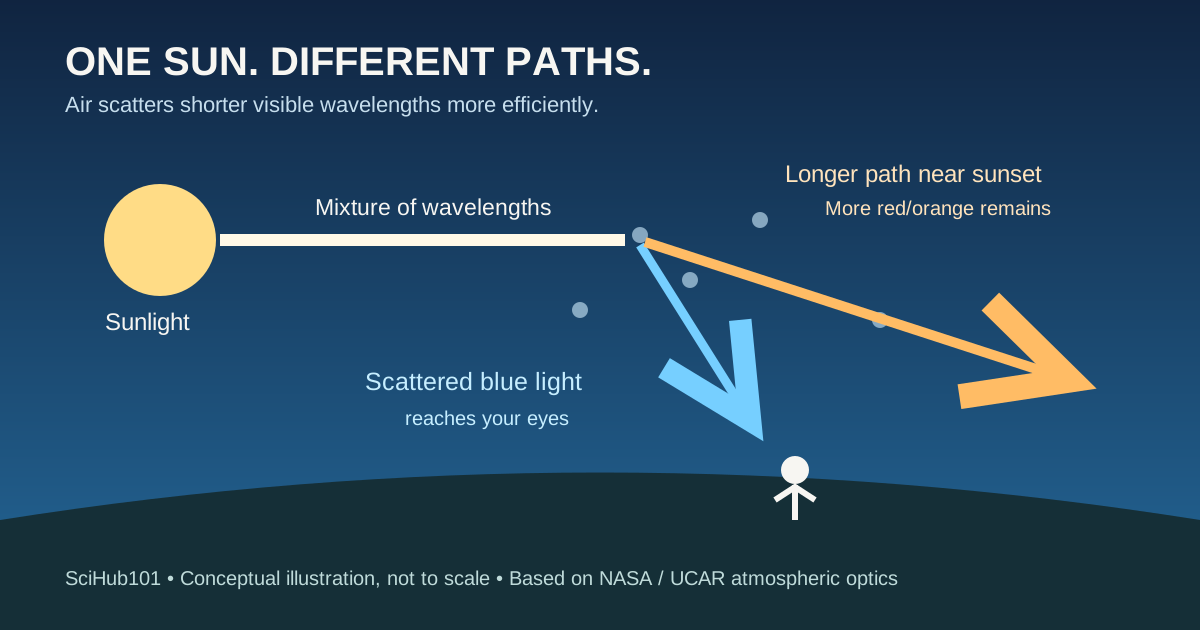
Why Is the Sky Blue? Scattering, Sunsets, and Perception
Why is the sky blue? Learn how air scatters sunlight, why sunsets turn red, and how dust and human color vision change the colors we see overhead.

Social Psychology: Why We Conform to Groups Even When We Know Better
People will deny the evidence of their own eyes to agree with a group. The psychology behind conformity is stranger — and more rational — than it appears.

The Psychology of Social Media: Why It's So Addictive
Social media platforms lean on variable rewards, cue-triggered dopamine wanting, and social comparison. Here is what the research shows, and where it falls short.
Complete Science Experiments Guide 2026 — Every Landmark Experiment by Field
Every landmark science experiment in one hub: Pasteur's swan-neck flask, Galvani's frog legs, Eratosthenes, Michelson–Morley, Hafele–Keating and more than 140 others, grouped by field and era.

Social Proof Psychology: Why Crowds Change Decisions
Social proof psychology explains why people copy crowds under uncertainty. Real experiments show how much, when, and why — plus how to resist it.