What Causes Tides? Moon, Sun, and Earth
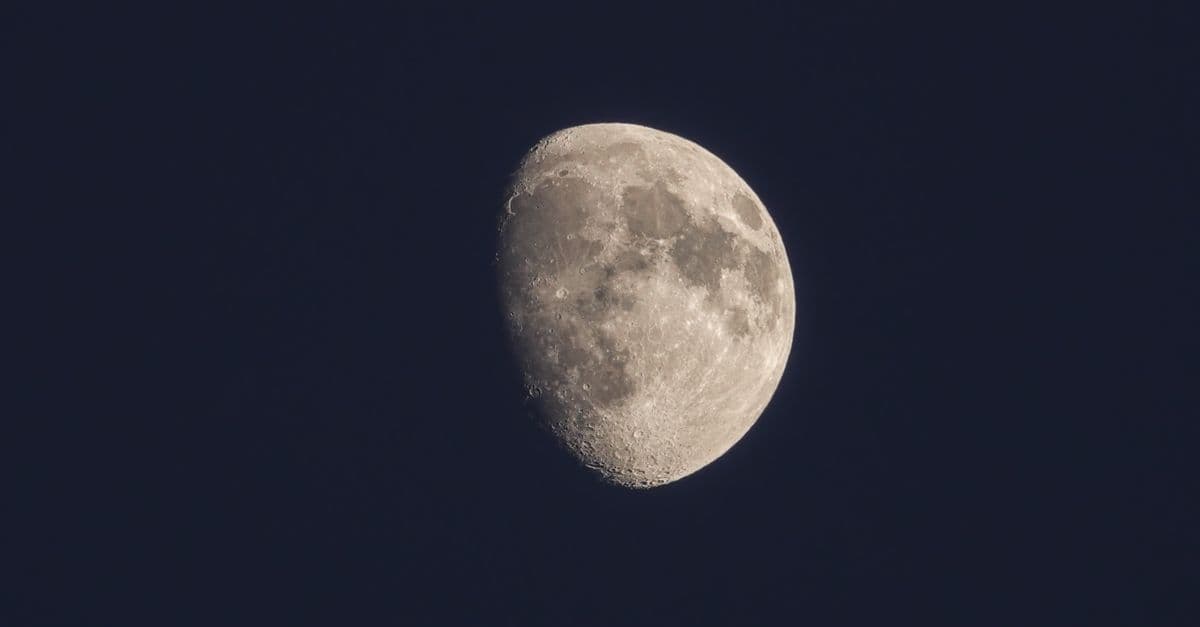
Photo: Bejan Adrian / Pexels
Twice a day, the ocean rises and falls. At Burntcoat Head in Nova Scotia's Bay of Fundy, the average tidal range is 16.3 meters (53 feet) — a documented Guinness World Record and roughly the height of a five-story building — while in parts of the Mediterranean the difference between high and low tide is barely 30 centimeters. The same force drives both extremes: the differential gravitational pull of the Moon, with the Sun adding a smaller secondary push. The full mechanism, though, has several parts most textbook summaries skip entirely.
Tides Are About Differences in Gravity, Not Just Gravity
The Moon pulls on every part of Earth, but not equally. The side of Earth facing the Moon is roughly 12,742 km (Earth's diameter) closer to the Moon than the far side — a small fraction of the average 384,400 km Earth-Moon distance, but enough to matter. Because gravitational pull weakens with the square of distance, the Moon pulls the near-side ocean strongest, Earth's solid center a bit less, and the far-side ocean least of all.
Subtract the average pull — the pull acting on Earth's center of mass, which is what actually determines Earth's orbital path — from each of those three pulls, and what's left is a stretching force. That stretching force creates a tidal bulge on both the near and far sides of the planet simultaneously. This is the detail most people get backward: the far-side bulge is not a shadow or an afterthought. It is just as real, geometrically, as the near-side bulge. The Moon isn't pulling water away from Earth on the far side; it's pulling Earth's solid body away from the water that lags behind.
Think of it like three cars in a line, all connected by weak springs, with the front car getting yanked forward hardest, the middle car a bit less, and the back car least. If you only look at the middle car's speed, the front spring stretches (front car pulls ahead) and the back spring stretches too (back car falls behind), even though the same force is doing both things. That's the tidal mechanism, translated from orbital mechanics to a highway metaphor.
Because Earth rotates roughly once every 24 hours through these two stationary-ish bulges, most coastlines experience two high tides and two low tides per day, spaced about 12 hours 25 minutes apart. The extra 25 minutes exists because the Moon itself moves roughly 13 degrees along its orbit during the time Earth completes one rotation, so Earth has to spin a little further to "catch up" to the bulge again. Over a full lunar month this creeps the tide schedule forward by about 50 minutes per day — anyone who has fished or surfed the same beach for a week has noticed the tide arriving later and later.
Why the Sun Matters Less Than the Moon
The Sun is about 27 million times more massive than the Moon, and yet its tidal effect on Earth is only around 46% of the Moon's, roughly half. The reason is that tidal force does not scale with mass and distance the way ordinary gravitational attraction does. Ordinary gravity falls off as 1 divided by distance squared. Tidal force — the differential between the near side, center, and far side — falls off as 1 divided by distance cubed, because it depends on how quickly gravity's strength changes across Earth's diameter, not just how strong gravity is at Earth's center.
That extra factor of distance in the denominator punishes the Sun disproportionately. The Sun is about 390 times farther from Earth than the Moon is. Cube that distance ratio and the Sun's advantage in mass gets overwhelmed. Run the actual numbers — solar mass versus lunar mass, solar distance cubed versus lunar distance cubed — and the Moon wins by a factor of roughly 2.2, matching the observed contribution of each body to the total tidal range.
Here's an analogy that makes the cube relationship concrete: imagine you're holding two magnets of different strength at different distances from a steel ball, and you care only about how differently the near and far edges of the ball are pulled, not the average pull. A weaker magnet held close will create a bigger difference across the ball than a much stronger magnet held far away, because "difference across a small object" shrinks fast with distance. The Sun is the strong magnet held far away; the Moon is the weaker magnet held close, and closeness wins.
The Sun still matters, though — its tidal pull adds to or partially cancels the Moon's pull depending on where the three bodies sit relative to each other, which is exactly what produces the two-week spring/neap cycle described below.
Why do tides lag behind the Moon's position overhead?
Real oceans are not simple equilibrium bulges chasing the Moon in real time. Friction with the seafloor, the shape of continents, and the inertia of moving water mean the tide at most coastlines lags the Moon's overhead position by several hours — a delay called the "establishment of the port," documented by coastal surveyors for centuries and now built into every NOAA tide-prediction station.
Spring Tides and Neap Tides
| Tide type | When it occurs | Sun-Moon geometry | Effect on range |
|---|---|---|---|
| Spring tide | New Moon and full Moon | Sun and Moon aligned (same or opposite side of Earth) | Highest highs, lowest lows — roughly 20% larger than average |
| Neap tide | First quarter and last quarter | Sun and Moon at roughly right angles from Earth | Smallest tidal range of the month |
| Mean tide | Other lunar phases | Partial alignment | Between spring and neap |
| Perigean spring tide ("king tide") | New/full Moon coinciding with lunar perigee (closest approach) | Closest Moon plus alignment | Largest tides of the year at a given coast |
Table: How the Sun-Moon-Earth geometry sets the two-week tidal amplitude cycle.
"Spring" here has nothing to do with the season. It comes from the older English sense of "to spring up" or "to leap," describing water that rises unusually high. These amplified tides recur roughly every 14.75 days, tracking the half-cycle of the Moon's phase. Coastal engineers, port authorities, and fishing communities plan around this cycle explicitly — a container ship with a deep draft may only be able to clear a shallow harbor entrance during spring tide, and low-lying flood defenses are stress-tested against the combination of spring tide and storm surge, the scenario that produces the most damaging coastal flooding events.
Perigean spring tides — sometimes called "king tides" in coastal media coverage — happen because the Moon's orbit is not a perfect circle. Its distance from Earth varies between about 356,500 km at perigee (closest) and 406,700 km at apogee (farthest). Because tidal force scales with the cube of distance, even this modest 12% variation in distance produces a noticeably larger tidal pull at perigee. When perigee lines up with a new or full Moon, the two effects stack.
Why Some Coasts Have Enormous Tides — and Others Have Almost None
Out in the open ocean, away from any coastline, the tidal range is typically only about half a meter to one meter. Nearly all of the dramatic tidal ranges reported around the world are a coastal amplification effect, not a difference in the Moon's underlying pull.
The mechanism is resonance, the same physics that makes a child's swing go higher if you push it at exactly the right rhythm. The Bay of Fundy's shape — long, narrowing, and of a specific depth — gives the entire bay a natural sloshing period of close to 12.5 hours, which happens to nearly match the roughly 12-hour-25-minute period of the semi-diurnal tide arriving from the open Atlantic. Each incoming tidal pulse arrives just as the previous pulse's energy is still sloshing back, reinforcing rather than canceling, and the range builds until friction losses balance the incoming energy. NOAA's own JetStream educational resource on the Bay of Fundy documents this as a textbook resonance case.
Other tidal hotspots share the same underlying geometry of a long, funnel-shaped inlet resonant with the tidal period: the Severn Estuary between England and Wales, Cook Inlet in Alaska, and Ungava Bay in northern Quebec all rank among the world's largest tidal ranges for essentially the same structural reason.
Enclosed or nearly enclosed seas show the opposite effect. The Mediterranean, the Baltic, and the Black Sea all have tiny tidal ranges — often under half a meter — because they connect to the open ocean only through narrow straits (Gibraltar, for the Mediterranean). Not enough water can flow in and out fast enough to build a full tidal bulge inside the basin before the tide reverses. The basin is effectively too small and too choked off to resonate with the roughly 12-hour tidal rhythm.
What are amphidromic points?
An amphidromic point is a spot in the open ocean where the tidal range is essentially zero — the tide doesn't rise or fall there at all, even though water all around it is rising and falling normally. Around 140 of these points exist worldwide. Instead of moving up and down, the tide rotates around each amphidromic point, counterclockwise in the Northern Hemisphere and clockwise in the Southern Hemisphere, a rotation driven by the Coriolis effect acting on the moving tidal wave. Lines connecting places that experience high tide at the same moment — called cotidal lines — radiate outward from each amphidromic point like spokes on a wheel.
Tidal Locking: Why We Only See One Side of the Moon
Tides are not something the Moon does to Earth alone — Earth does it right back, and far more forcefully. Because Earth is more massive and the Moon is smaller and rigid, Earth raises an enormous tidal bulge on the Moon's crust, one that was even more pronounced billions of years ago when the young Moon's interior was still partially molten. According to NASA's overview of tidal locking, friction from that repeatedly flexing bulge acted like a brake, gradually slowing the Moon's rotation over hundreds of millions of years until its rotation period matched its orbital period exactly: 27.3 days for both. Once rotation and orbit synced up, the bulge stopped moving relative to the Moon's surface, the friction (and the braking) stopped, and the lock became permanent. That's why Earth only ever sees one face of the Moon — commonly called the "near side" — and why the far side stayed unphotographed by humanity until the Soviet Luna 3 probe imaged it in 1959.
This isn't a special quirk of the Earth-Moon system. According to Wikipedia's tidal-locking summary corroborated by numerous planetary-science sources, essentially every large moon in the solar system, from Jupiter's Galilean moons to Saturn's Titan, is tidally locked to its parent planet for the identical reason.
The braking process runs both directions, just on wildly different timescales because Earth is so much more massive than the Moon. Earth is still being slowed by the Moon's tidal drag today. Ancient eclipse records preserved on Babylonian clay tablets, cross-checked against modern astronomical calculations by researchers such as F. R. Stephenson, confirm that Earth's rotation has been gradually lengthening for millennia — the classic historical benchmark cited for millisecond-scale day-length change over centuries. To conserve the total angular momentum of the Earth-Moon system as Earth's spin slows, the Moon is pushed into a slightly higher, slower orbit. NASA's Lunar Laser Ranging program — which bounces laser pulses off retroreflector panels left on the lunar surface by the Apollo 11, 14, and 15 missions and by Soviet Lunokhod rovers — has measured this recession with millimeter-level precision, and the widely cited figure from that decades-long dataset is that the Moon moves away from Earth by roughly 3.8 centimeters (about 1.5 inches) per year.
Run that recession forward and the consequences compound. In roughly 600 million years, researchers estimate the Moon will have receded far enough that its angular size as seen from Earth will shrink below the angular size of the Sun, meaning the Moon will no longer be able to fully cover the solar disk. Total solar eclipses — the kind where the Sun's corona becomes visible and daytime briefly turns to twilight — will stop happening anywhere on Earth, leaving only annular ("ring of fire") eclipses behind.
Tides Beyond the Ocean
Water is the most visible medium for tidal forces, but it's far from the only one.
Solid Earth tides. The rock beneath your feet isn't rigid the way it feels — Earth's crust itself flexes by roughly 30 centimeters (about a foot) twice a day under the same lunar and solar pull that moves the ocean. You never notice because the ground, buildings, and your own body all rise and fall together. Geophysicists have to account for solid Earth tides when calibrating extremely sensitive instruments, including gravitational-wave detectors and precision GPS ground stations.
Atmospheric tides. The atmosphere has tides too, but they're driven mostly by the Sun's daily heating cycle rather than by gravity directly — as sunlight warms the air, it expands and creates a pressure wave that circles the globe roughly once a day. This is a genuinely different mechanism from ocean tides, even though the word "tide" is shared.
Tidal bores. In certain narrow, shallow, funnel-shaped estuaries — the Amazon's Pororoca, England's River Severn, and China's Qiantang River are the three most famous examples — the incoming tide can't spread out fast enough and instead piles up into a single steep wave, sometimes several meters tall, that travels upriver against the current. Surfers ride the Severn bore; the Qiantang bore has been documented reaching heights over 9 meters during the largest autumn tides and draws large crowds specifically to watch it, though it has also caused fatalities among spectators who underestimate it.
Intertidal ecosystems. Barnacles, mussels, sea stars, anemones, and shore crabs have evolved physiological tricks — sealed shells, water retention, temperature tolerance — specifically to survive being fully submerged at high tide and then baked or frozen in open air at low tide, twice a day, every day. The intertidal zone is one of the most physiologically demanding habitats on Earth precisely because of this twice-daily environmental swing.
Tidal power. Tides are a genuinely predictable renewable-energy source, unlike wind or solar, because they follow a fixed astronomical schedule decades in advance. The Rance Tidal Power Station in Brittany, France, opened in 1966 as the world's first large tidal barrage; it has a peak generating capacity of 240 megawatts across 24 turbines and, according to power-industry sources like Power Technology and Tethys, produces an average of roughly 96 MW with an annual output around 600 gigawatt-hours. Scotland's MeyGen project takes a different approach — underwater turbines placed directly in a fast tidal current, rather than a dam-like barrage — and reported a nameplate capacity of 6 megawatts with 10.2 gigawatt-hours of net output in 2023, with plans to expand toward 86 megawatts.
Navigation. Tide tables have guided shipping for centuries because misjudging tide height can ground a vessel in a harbor channel or strand it on a sandbar. Modern tide predictions, maintained by agencies like NOAA's Center for Operational Oceanographic Products and Services, are built from harmonic analysis: at least 30 days, and ideally a full year, of measured water-level data at a given station gets decomposed into 37 separate sinusoidal "harmonic constituents," each corresponding to a specific astronomical cycle (the Moon's orbit, the Sun's apparent motion, the Moon's varying declination, and so on). Add those 37 curves back together for any future date and you get a tide prediction accurate enough that ports have relied on it since electronic tide-prediction machines replaced mechanical ones in the 1960s.
What Galileo Got Wrong
Galileo Galilei proposed one of history's most famous incorrect tide theories. He argued that tides were caused by the combined effect of Earth's rotation and its orbital motion around the Sun sloshing the oceans back and forth, like water sloshing in a moving cart. It was a genuinely clever mechanical idea for its time, and Galileo was proud enough of it to feature it as the capstone argument in his Dialogue Concerning the Two Chief World Systems (1632) — but it was wrong, and it couldn't even explain the basic observed fact of two tides per day rather than one.
Galileo specifically rejected Johannes Kepler's earlier suggestion that the Moon was somehow responsible for the tides, reportedly dismissing it as an occult, unscientific idea because Kepler hadn't offered a mechanical explanation for how a distant body could act on the ocean without touching it. It took Isaac Newton's Philosophiæ Naturalis Principia Mathematica, published in 1687, to finally supply that mechanism: universal gravitation, applied as a differential force across Earth's diameter. Newton's tidal theory explained the two-bulge structure, correctly predicted that the Sun would be a secondary contributor, and accounted for the spring/neap cycle — all from a single unified force law. Pierre-Simon Laplace later extended Newton's equilibrium theory into a full dynamic theory of tides in the late 18th century, incorporating fluid dynamics, ocean depth, and the Coriolis effect, because the real ocean — full of continents, varying depths, and resonant basins — behaves quite differently from Newton's idealized frictionless water-covered sphere.
Did ancient civilizations understand tides before Newton?
Yes, at a practical level. Coastal societies in places like the Bay of Bengal, the British Isles, and the Persian Gulf tracked tide timing against the Moon's phase for navigation and fishing centuries before Newton, without a gravitational explanation. The Greek explorer Pytheas of Massalia is often credited as one of the earliest writers, around 325 BCE, to explicitly link tides to the Moon's cycle, though the mechanism remained a mystery for another two millennia.
Why Lakes Don't Have Tides (Mostly)
Even the Great Lakes, despite their enormous surface area, experience only centimeter-scale lunar tides — far too small to notice against everyday wave and wind action, because the basin is simply too short and too shallow for the sloshing period to build up meaningful resonance with the roughly 12-hour tidal forcing, the same resonance mechanism that makes the Bay of Fundy's tides enormous rather than tiny. The Caspian Sea, technically the world's largest inland body of water, behaves similarly.
What lake-watchers typically mistake for tides are usually seiches — standing waves in an enclosed body of water triggered by sudden shifts in wind or atmospheric pressure, not by lunar or solar gravity at all. A strong storm front crossing Lake Erie, for instance, can push water several feet higher at one end of the lake within hours, a genuinely dramatic water-level change that has nothing to do with the Moon.
What This Means for Coastal Life and Engineering
The tidal mechanism described above is not just an astronomy curiosity. Coastal cities design seawalls, storm-surge barriers, and flood-warning thresholds around the predictable spring-tide/neap-tide cycle combined with weather, because the worst coastal flooding almost always happens when a storm surge arrives on top of an already-elevated spring tide rather than during a random storm on an ordinary day. Shipping schedules, dredging operations, and offshore construction windows are built directly from NOAA's and equivalent international agencies' harmonic tide predictions, decades in advance, because the underlying orbital mechanics are stable and computable. Marine biologists studying intertidal zones treat the twice-daily submersion cycle as one of the defining evolutionary pressures on those ecosystems, on par with temperature or salinity. None of this practical infrastructure would be possible if tides were random — their value to engineers and sailors alike comes directly from the fact that they are, at their core, precise clockwork.
Frequently Asked Questions
Q: Why are there two high tides per day, not one? A: Because the Moon's differential gravity creates bulges on both sides of Earth at once — the near side, pulled toward the Moon, and the far side, effectively left behind as the Moon pulls Earth's center of mass toward itself. As Earth rotates roughly once every 24 hours, a given coastline passes through both bulges, producing two highs and two lows roughly 12 hours 25 minutes apart.
Q: Does the Sun cause tides too? A: Yes — about half as strong as the Moon's, roughly 46% by the standard calculation. When the Sun and Moon align at new or full Moon, their tidal pulls reinforce each other and produce spring tides, the largest tides of the month. When they pull at roughly right angles, around the first and last quarter Moon, they partially cancel and produce neap tides, the smallest tides of the month.
Q: Why is the Bay of Fundy tide so huge? A: Resonance. The bay's length and depth give it a natural water-sloshing period close to 12.5 hours, which nearly matches the roughly 12-hour-25-minute period of the incoming semi-diurnal tide. Each pulse reinforces the leftover energy of the last one instead of canceling it, and the range builds to an average of 16.3 meters (53 feet) at Burntcoat Head, a documented world record.
Q: Is the Moon really moving away from Earth? A: Yes, by about 3.8 centimeters (1.5 inches) per year, a figure measured with millimeter precision using NASA's Lunar Laser Ranging program, which bounces laser pulses off retroreflector panels left on the Moon by the Apollo 11, 14, and 15 missions. Tidal friction is gradually transferring rotational energy from Earth's spin into the Moon's orbit, which is also why Earth's day is slowly lengthening.
Q: Do tides happen on other planets and moons? A: Yes, and in some cases far more violently than on Earth. Jupiter's moon Io is caught in an orbital resonance with Europa and Ganymede — the Laplace resonance — that keeps its orbit slightly elliptical, and the resulting tidal flexing generates enough internal heat to make Io the most volcanically active body in the solar system. The same kind of tidal heating is thought to keep a liquid ocean beneath Europa's icy crust and powers the geyser-like plumes erupting from Saturn's moon Enceladus.
Q: Will Earth one day be tidally locked to the Moon? A: In principle, yes, but not on any timescale that matters — the process would take vastly longer than the Sun has left in its current life stage. The Sun is expected to exhaust its core hydrogen and expand into a red giant, engulfing or scorching Earth's orbit, long before tidal locking could ever complete.
Q: What is a tidal bore? A: A tidal bore is a single, steep traveling wave that forms when an incoming tide is forced through a narrow, shallow, funnel-shaped river mouth and can't spread out fast enough, so it piles up into a wall of water that pushes upstream against the river's normal flow. China's Qiantang River bore is among the largest documented, reaching heights over 9 meters during peak autumn tides, and it draws large crowds of spectators every year.
Q: How do scientists predict tides so far in advance? A: Through harmonic analysis. Tide-monitoring stations record water level continuously for at least 30 days, and ideally a full year, then decompose that record into 37 separate sinusoidal wave patterns, each tied to a specific astronomical cycle like the Moon's orbit or the Sun's apparent yearly path. Adding those 37 waves back together for any future date, a method NOAA has used since electronic computers took over the calculation in 1966, produces tide predictions accurate enough for commercial shipping and coastal engineering years ahead of time.
Q: Can tides generate usable electricity? A: Yes. France's Rance Tidal Power Station has operated since 1966 with a 240-megawatt peak capacity and around 600 gigawatt-hours of annual output, making it one of the longest-running renewable-energy plants of any kind. Newer projects like Scotland's MeyGen use submerged turbines in fast tidal currents instead of a dam-like barrage, trading some output for lower environmental disruption to the estuary.
Q: Why don't lakes have visible tides? A: Even large lakes are too short and too shallow for meaningful tidal resonance to build up against the roughly 12-hour lunar forcing period, so the true lunar tide on a lake like Lake Superior amounts to only a few centimeters, lost in normal wave noise. What people usually notice as dramatic water-level swings on lakes are seiches, wind- and pressure-driven standing waves that have nothing to do with the Moon.
The takeaway
Tides look like a simple pull-and-release relationship between the Moon and the ocean, but the real mechanism is a difference in gravity across Earth's diameter, not gravity itself — which is exactly why the Sun, despite being vastly more massive, contributes only about half as much as the Moon. The same physics that raises two ocean bulges a day has also locked the Moon's rotation to its orbit, is slowly lengthening Earth's day, and is nudging the Moon a few centimeters farther away every year, a trajectory that will eventually end total solar eclipses altogether. What varies wildly from coast to coast isn't the Moon's pull, which is nearly uniform, but each coastline's geometry — a bay shaped like a resonant chamber turns an ordinary one-meter tide into 16 meters, while a nearly enclosed sea can flatten the same pull to almost nothing.
Read next:
- How the Moon Formed: The Giant Impact Hypothesis Explained
- What If Earth Had Two Moons? The Science of a Twin-Moon World
- Chaos Theory and the Butterfly Effect Explained
Sources
- Newton, I., Philosophiæ Naturalis Principia Mathematica (1687).
- Cartwright, D. E., Tides: A Scientific History (1999).
- Williams, J. G., et al., "Lunar laser ranging tests of relativity and the SEP," Classical and Quantum Gravity (2012).
- NASA Science — "Tidal Locking," science.nasa.gov/moon/tidal-locking/
- NASA Lunar Laser Ranging program overview.
- NOAA Tides & Currents — "About Harmonic Constituents," tidesandcurrents.noaa.gov/about_harmonic_constituents.html
- NOAA Tides & Currents — "History of Tidal Analysis and Prediction," tidesandcurrents.noaa.gov/predhist.html
- NOAA — "JetStream Max: Bay of Fundy, The Highest Tides in the World," noaa.gov/ocean/fundy-max
- Stephenson, F. R., Historical Eclipses and Earth's Rotation (1997).
- Wikipedia — "Tidal locking," "Amphidromic point," "Cotidal line," "Tidal heating of Io" (cross-referenced against primary planetary-science sources).
- Power Technology — "La Rance: learning from the world's oldest tidal project."
- Tethys (PNNL) — "La Rance Tidal Barrage" project profile.
- Wikipedia — "MeyGen" project capacity and output figures (2023).
Follow new articles
Add SciHub101 to your feed reader to see new science and technology stories.
About the Author
SciHub101 is an independent science and technology publication founded and edited by Buğra Sözeri, a software engineer and app developer based in Türkiye. AI tools assist with drafting and research. Source documentation in the existing archive is uneven, and articles are being reviewed and corrected. The Editorial Team byline identifies editorial responsibility; it does not certify specialist or independent human review. Where we compare products, anything built by our own team is labelled as such — see the editorial guidelines and About page for how corrections and disclosures work.
Related Articles
Why Is the Sky Blue? Scattering, Sunsets, and Perception
Why is the sky blue? Learn how air scatters sunlight, why sunsets turn red, and how dust and human color vision change the colors we see overhead.
What's Inside Earth? Layers Explained
What's inside Earth: crust, mantle, outer core, inner core. How we know via seismology, recent discoveries, magnetic field origin, and why it matters.
What If Earth Had No Moon?
The Moon is more than a nightlight. It holds Earth's tilt steady, drives our tides, and may have made complex life possible.
What If Earth Had Two Moons? The Science of a Twin-Moon World
A second moon would change tides, eclipses, calendars, and possibly life itself. Here's exactly what would happen — based on real orbital physics — if we suddenly had two moons.
Why Does the Moon Have Phases? The Science Explained
Half the Moon is always sunlit; phases are how much of that lit half we see as the Moon orbits Earth. The synodic month lasts 29.5 days, moving through new, crescent, quarter, gibbous, and full phases. Phases are NOT Earth's shadow—that's an eclipse. The Moon always shows us the same near side due to tidal locking, a gravitational dance between Earth and Moon.
What If the Moon Disappeared Tomorrow?
If the Moon vanished overnight, Earth's tides, axial tilt, and life itself would change forever. Here's the science of what happens next.