What's Inside Earth? Layers Explained
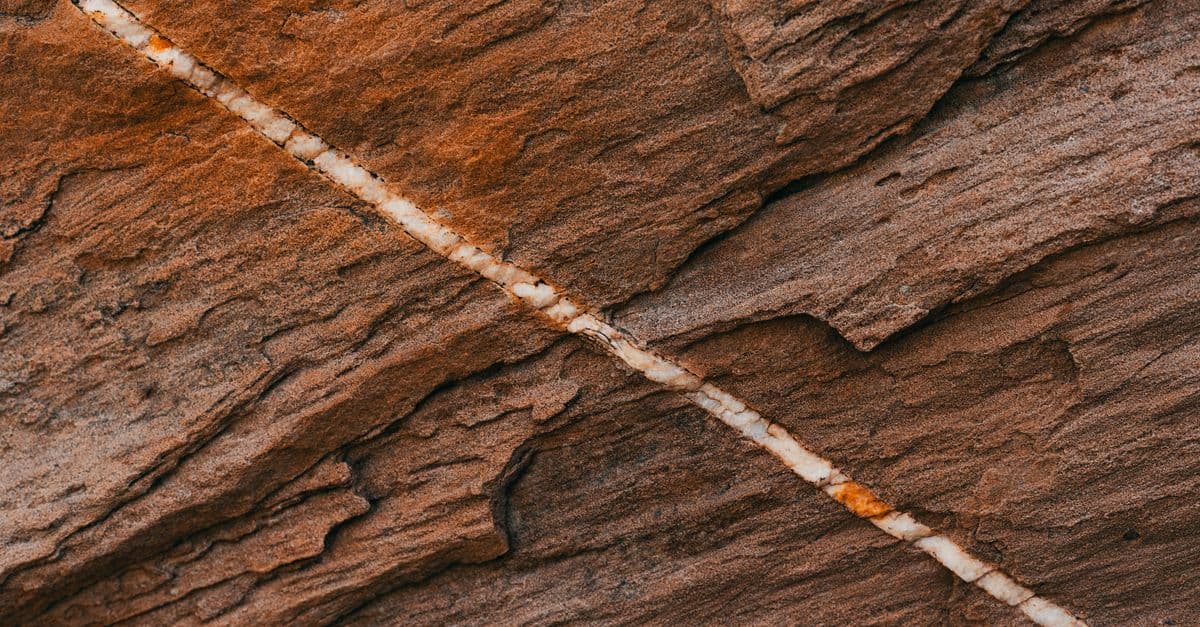
Photo: Santos Malekar / Pexels
We have walked on the Moon, sent probes to Pluto, and mapped galaxies billions of light years away — yet we have never drilled more than 12.3 kilometers into our own planet. Earth's radius is 6,371 km. We have scratched 0.2% of the way to the center.
Everything we know about Earth's interior comes from indirect measurements: earthquake waves, magnetism, gravity, meteorites, and tiny mineral crystals brought up from extreme depths. Despite the limits, the picture is detailed and increasingly surprising.
The Four Main Layers
1. Crust (0–70 km)
The thin, rocky outer shell.
- Oceanic crust — 5–10 km thick, basaltic, denser, younger (recycled at subduction zones; oldest is ~200 million years).
- Continental crust — 30–70 km thick under mountain ranges, granitic, less dense, much older (oldest rocks ~4.0 billion years).
The crust feels solid but it's a thin scum on what lies below.
2. Mantle (70 km – 2,890 km)
By far the largest layer — about 84% of Earth's volume. Silicate rock dominated by olivine, pyroxene, garnet, and at deeper depths, perovskite-structured silicates.
A common misconception: the mantle is not a sea of liquid magma. It is solid rock under immense pressure and temperature. But over millions of years, it flows like an extremely viscous fluid, dragging continents around in plate tectonics.
Subdivisions:
- Lithosphere — Crust + uppermost rigid mantle. Broken into tectonic plates.
- Asthenosphere — Slightly softer, partially molten in places, ~100–660 km.
- Lower mantle / Mesosphere — Solid and stronger, down to 2,890 km.
3. Outer Core (2,890 – 5,150 km)
Liquid iron and nickel with traces of lighter elements (sulfur, oxygen, silicon — composition still debated). Temperature: roughly 4,000 – 6,000 °C. Pressure: hundreds of gigapascals.
This is where Earth's magnetic field is born. Convection currents of liquid metal generate electric currents, which sustain the magnetic field through the geodynamo mechanism. Without this, solar wind would have stripped our atmosphere — as it likely did on Mars.
4. Inner Core (5,150 – 6,371 km)
Solid iron-nickel alloy. Yes, solid — even though it sits at about 5,400 °C, roughly the surface temperature of the Sun. The pressure (over 360 GPa) overcomes the heat and locks the iron into a crystalline solid.
Radius: ~1,220 km — about 70% the size of the Moon.
How We Know
We have never been close. The Kola Superdeep Borehole in Russia reached 12,262 m by 1989 before being abandoned because the rock at that depth had become plastic from heat. Every other claim about Earth's interior comes from indirect evidence.
Seismology — The Master Tool
Earthquakes send two main wave types through Earth:
- P-waves (Primary) — Compressional, travel through solids and liquids.
- S-waves (Secondary) — Shear, travel only through solids.
The fact that S-waves don't reach the opposite side of Earth from a quake (creating an S-wave "shadow zone") is direct evidence that the outer core is liquid. Later P-wave reflections off a deeper boundary revealed the solid inner core — discovered by Inge Lehmann in 1936.
Modern seismic tomography uses thousands of earthquakes to build 3D images of Earth's interior, revealing structures like rising mantle plumes and sinking slabs.
Other Lines of Evidence
- Earth's mass and moment of inertia constrain the average density profile.
- Magnetic field measurements demand a conducting, convecting liquid outer core.
- Meteorites (especially iron meteorites) are thought to resemble the core, since they came from the differentiated interiors of small early-solar-system bodies.
- Diamond inclusions — Tiny mineral inclusions inside diamonds brought up from 400+ km depth give us actual samples of the lower mantle (e.g. ringwoodite + water, hinting at mantle hydration).
Comparison Table: Earth's Layers
| Layer | Depth Range | State | Composition | Temperature |
|---|---|---|---|---|
| Crust | 0–70 km | Solid | Basalt / granite | ~0–500 °C |
| Mantle | 70–2,890 km | Solid (flows) | Silicates (olivine, perovskite) | 500–4,000 °C |
| Outer Core | 2,890–5,150 km | Liquid | Iron, nickel + light elements | 4,000–6,000 °C |
| Inner Core | 5,150–6,371 km | Solid | Iron, nickel | ~5,400 °C |
Recent Discoveries (2020s)
The inner core, long thought to be a simple solid ball, is turning out to be far more interesting:
- 2023 — Inner core rotation reversal. Yang and Song (Nature, 2023) analyzed decades of seismic data and concluded the inner core's super-rotation relative to the mantle slowed around 2009 and may now have reversed direction. The full cycle appears to be about 70 years.
- 2024 — Innermost inner core. Tkalčić and colleagues found seismic evidence for a distinct, ~650-km-radius innermost region with different anisotropy than the surrounding inner core — possibly a fossil of an earlier crystallization stage.
- Mantle hydration. Ringwoodite inclusions in diamonds show the transition zone (410–660 km) holds significant water — possibly a global ocean's worth locked into minerals.
Why Earth Has a Magnetic Field (and Mars Doesn't)
The geodynamo requires three things:
- An electrically conducting liquid — Earth's outer core.
- Convection — driven by heat escape and inner core growth.
- Rotation — providing Coriolis forces that organize the flow.
Mars had a magnetic field early on but its small core cooled and froze, killing convection ~4 billion years ago. Without a magnetic shield, solar wind stripped Mars's atmosphere. This is part of why Earth has thick air and liquid water and Mars does not.
Where Did Earth's Heavy Metals Go?
When early Earth was molten (after the giant impact that formed the Moon), iron and the siderophile ("iron-loving") elements — including gold, platinum, iridium — sank to the core during what geochemists call the iron catastrophe. The gold in your phone almost certainly arrived later, delivered by meteorite impacts during the "late veneer" billions of years ago.
Magnetic Pole Reversals
Earth's magnetic field reverses on average every 200,000 – 300,000 years, though intervals vary wildly. The last full reversal was 780,000 years ago (the Brunhes–Matuyama reversal). The field has been weakening ~5% per century, and a feature called the South Atlantic Anomaly is one place where the field is particularly weak — but a reversal is not imminent or catastrophic, contrary to internet hype.
Comparing Rocky Planet Interiors
| Planet | Core State | Magnetic Field | Plate Tectonics |
|---|---|---|---|
| Mercury | Partially liquid (large core for size) | Weak | No |
| Venus | Likely liquid, no convection | None today | No |
| Earth | Liquid outer + solid inner | Strong | Yes |
| Mars | Frozen / partially molten | None today | No |
Heat Loss and Internal Cooling: Why Earth Is Gradually Cooling Down
Earth is not in thermal equilibrium. It's cooling. The interior was born molten, and despite the massive latent heat from metallic differentiation and ongoing radioactive decay, the core loses energy continuously through conduction to the mantle, convection, and ultimately radiation to space. Over billions of years, this heat loss is profound.
The decay of long-lived radioactive isotopes — uranium-238 (half-life 4.5 billion years), thorium-232 (14 billion years), and potassium-40 (1.3 billion years) — still contributes about 50% of Earth's internal heat flow. The other 50% is primordial heat left over from Earth's formation and the late heavy bombardment. This balance is critical: if radioactive decay declined (which it will, as isotopes decay), Earth's mantle would cool, convection would slow, and eventually stop. A dead, cold mantle means no plate tectonics, no magnetic field, and ultimately a geologically inert planet like Mars.
This is why understanding Earth's cooling trajectory matters for long-term habitability. In roughly 1-2 billion years (not an imminent threat), Earth's core may cool enough that the geodynamo shuts down. We won't see it happen, but our descendants might live under a weakening magnetic field and increasing solar wind penetration — similar to Mars's fate 4 billion years ago.
Source: Turcotte & Schubert, "Geodynamics" (3rd edition, 2014) — internal heat flow and radioactive contribution.
Seismic Anisotropy: Earth's Interior Has a Grain
Recent seismic tomography has revealed that Earth's interior isn't isotropic — it has directional properties. Seismic waves travel at different speeds in different directions through certain regions, much like wood has a grain. This anisotropy reveals stress patterns, flow directions in the mantle, and crystal alignment in the core.
The inner core, for example, shows strong anisotropy in the east-west direction — seismic waves propagate ~3% faster along Earth's spin axis than perpendicular to it. This indicates that iron crystals in the inner core are preferentially aligned, probably due to differential stress or flow during solidification. This alignment tells us about the history of inner-core growth and the forces at play in our planet's deepest region.
Similarly, anisotropy in the mantle reveals where hot, rising plumes meet cold, sinking slabs. The relative motion aligns mantle minerals, creating a fingerprint of deep convection. Modern seismic networks with thousands of stations can detect these subtle velocity variations, giving us a 3D map of Earth's internal machinery.
The Lithosphere-Asthenosphere Boundary: Where Plates Decouple
A seemingly simple concept — where the rigid lithosphere ends and the softer asthenosphere begins — turned out to be more complex than geologists first thought. It's not a sharp boundary but a gradient. The lithosphere is cold, strong, and rigid down to roughly 70–100 km depth (on average; ranges 50–200 km). Below that, temperatures rise and material becomes ductile enough to flow slowly over geological time.
But the boundary itself is interesting. In some models, partial melting (just a few percent) in the asthenosphere reduces viscosity dramatically, allowing the lithosphere to slide freely above. In others, the change is primarily a transition from brittle fracture (lithosphere) to ductile flow (asthenosphere) driven by temperature and pressure. Seismic waves show a velocity drop right at this boundary — consistent with a small amount of melting or a compositional change.
This boundary motion matters for plate tectonics, earthquake zones, and volcanic activity. At mid-ocean ridges, the boundary is shallow and hot — decompression melting occurs, producing new oceanic crust. At subduction zones, it's deeper and colder — adding complexity to how slabs interact with the surrounding mantle.
Compositional Stratification and Chemical Reservoirs
Beyond the mechanical layers (crust, mantle, core), Earth is also chemically layered. The crust is enriched in incompatible elements (those that partition into silicate melts rather than staying in the solid) — thorium, uranium, potassium, rare earths. The mantle is depleted in these elements because they were extracted during the mantle melting that produced the crust. The core is almost pure iron and nickel with trace light elements.
But even within these layers, there's chemistry. The upper mantle (peridotite) is different from the lower mantle (which may contain perovskite and post-perovskite — denser crystal structures that form only under extreme pressure). The boundary between these compositional regimes (~660 km depth, the 660-km discontinuity) is where mantle convection patterns change. Cold, subducting slabs may pile up here before sinking deeper; hot plumes rise on the other side.
Understanding this chemical structure is essential for modeling mantle convection, predicting where magma forms, and tracking how material cycles through Earth's interior over geological time.
Source: Garnero, E. J., et al., "Structure and dynamics of Earth's lower mantle" (Science, 2016).
What Lies at the Core-Mantle Boundary? The Forgotten Frontier
Where the solid lower mantle meets the liquid outer core, at 2,890 km depth, lies one of Earth's most extreme and least understood regions: the core-mantle boundary (CMB). Temperatures jump from ~3,800 °C to ~4,000 °C over a very short distance. Pressure is immense. The viscosity contrast is enormous — liquid metal meets nearly solid rock.
Recent seismic imaging has revealed that this boundary is not smooth. There are topographic features — hills and valleys — reminiscent of a mountain range. Some of these features are thought to reflect compositional variations (iron-rich material sinking from the mantle into the core, or silicon-rich material from the core being incorporated into the mantle). Others may be dynamic — changing on human timescales as convection patterns shift.
Plumes appear to originate near the CMB, rising from particularly hot regions. The largest plumes (possibly anchored at the boundary) feed hotspot volcanism (Hawaii, Yellowstone, the Afar region). Understanding the CMB may unlock why these deep plumes exist and how they transport heat from the core to the surface.
Source: Garnero, E. J. & McNamara, A. K., "Structure and properties of Earth's lower mantle" (Annual Review of Earth and Planetary Sciences, 2018).
Frequently Asked Questions
Q: How deep have humans actually drilled?
A: The Kola Superdeep Borehole reached 12.3 km in 1989. The Z-44 Chayvo well in Russia is longer (12.4 km) but mostly horizontal. Neither approached the mantle — we've only scratched 0.2% of the way to Earth's center.
Q: Is Earth's core hotter than the Sun's surface?
A: Roughly the same temperature. The inner core is about 5,400 °C; the Sun's photosphere is about 5,500 °C. However, the pressures are vastly different, which is why one is solid and the other is plasma.
Q: Why is the inner core solid if it's so hot?
A: Pressure. At over 360 GPa, even iron at 5,400 °C cannot stay liquid — atoms are forced into a crystalline lattice. Pressure increases the melting point of iron dramatically; at Earth's center, the melting point reaches 5,500+ °C.
Q: Does the mantle move?
A: Yes, by mantle convection. Hot material rises (like Hawaii's plume), cold material sinks (subducting slabs). It moves only centimeters per year — but over millions of years, it drives continents and reshapes ocean basins.
Q: Could we drill to the mantle?
A: It's been proposed — the MoHole project in the 1960s tried and failed. JOIDES Resolution and now the Japanese drillship Chikyu have reached deep into oceanic crust, but never the mantle. The pressure, heat, and engineering challenges are immense, and heat flow from the hot rock into the drilling fluid makes it progressively harder the deeper you go.
Q: How does the magnetic field actually generate itself?
A: Convection of liquid iron in the outer core, combined with Earth's rotation, organizes electric currents that produce and sustain a magnetic field — the geodynamo. Modern supercomputer simulations reproduce the main features, including reversals, by solving the magnetohydrodynamic equations governing fluid motion and magnetic fields simultaneously.
Earth's Early History: The Formation of Layers Through Differentiation
Earth didn't form with its layers already arranged. At its origin 4.54 billion years ago, Earth was a homogeneous ball of rock and metal. The layered structure we see today resulted from differentiation — a process where denser material sank and lighter material rose.
The giant impact: Earth formed from collisions of planetesimals and planetary embryos. About 50 million years after solar system formation, a Mars-sized object (sometimes called Theia) collided with proto-Earth at an oblique angle. This impact was catastrophic — the collision energy vaporized rock and molten the entire planet. Angular momentum from this collision gave Earth its rotation and spun off the Moon (formed from impact ejecta).
Magma ocean era: For the first ~10 million years, Earth was a molten ocean of rock with a temperature of thousands of degrees Celsius. In this molten state, differentiation happened quickly. Iron — much denser than silicate rock — sank toward the center, forming the core. Silicate rocks, less dense, floated to the surface, forming the mantle and eventually the crust.
Crystallization sequence: As Earth cooled, the magma ocean began crystallizing from the bottom up. Denser minerals crystallized first, sinking deeper. Less dense minerals crystallized later, remaining in the upper mantle and crust. This crystallization sequence determined the chemical composition of each layer.
Duration and significance: Complete differentiation into core, mantle, and crust happened within the first 50–100 million years — a cosmic blink. After this, the layers remained largely separated (with slow exchange at boundaries), and Earth's interior has been cooling and evolving ever since.
Source: Canup, R. M., "Simulations of a Late Lunar-Forming Impact" (Icarus, 2012) — Giant impact hypothesis and early differentiation.
The Late Heavy Bombardment and Its Traces
For roughly 100 million years after Earth's formation, the inner solar system was a shooting gallery. Thousands of leftover planetesimals collided with planets. Earth was struck repeatedly by asteroids and comets, and this Late Heavy Bombardment left marks still visible today.
Delivery of volatiles: Early Earth had too little water and volatile elements. The Late Heavy Bombardment delivered much of Earth's water and carbon — delivered by carbonaceous chondrite meteorites and comets. Without this bombardment, Earth would have been a dry, barren rock. The bombardment that sounds catastrophic actually made Earth habitable.
Heating effects: Each large impact vaporized rock at the impact site and added heat to the planet. Massive impacts (100+ km asteroids) could reheat the magma ocean in local regions and possibly delay mantle crystallization. The heat from bombardment is thought to have extended the era of planetary-scale volcanism by tens of millions of years.
Evidence in the crust: The oldest continental rocks (3.8–4.0 billion years old) preserve evidence of this bombardment. Zircon crystals contain microscopic impact signatures (shocked minerals). The oldest sedimentary rocks show chemical signatures of water and atmosphere interaction occurring early in Earth's history — implying an early ocean and atmosphere, suggesting the bombardment didn't completely sterilize the planet.
Connection to habitability: Paradoxically, the heavy bombardment made Earth habitable. It delivered water and organics, adding chemical diversity. It also concentrated radioactive elements (uranium, thorium) in the crust rather than uniformly throughout the planet — this concentration allowed sufficient interior heating to power the geodynamo and drive plate tectonics, both essential for long-term habitability.
Connection Between Interior Dynamics and Plate Tectonics
The layers of Earth are not independent. The core's cooling and convection drives the mantle's motion, which directly drives plate tectonics. Disrupting this connection would devastate habitability.
Mantle plumes from the core-mantle boundary: Hot plumes rising from the core-mantle boundary are thought to feed ocean island volcanism (Hawaii, Galapagos) and hotspots. Their existence is debated — are they thin, sheet-like conduits or thick, broad rising currents? Seismic imaging is still refining this picture. But if true, it means the core's heat literally powers the continents' dance.
Slab pull and ridge push: The driving forces for plate tectonics are (1) cold, dense slabs sinking into the mantle at subduction zones ("slab pull"), and (2) hot, buoyant new crust at mid-ocean ridges pushing plates apart ("ridge push"). Both are consequences of mantle convection powered by core heat.
Secular cooling: As Earth's core cools over billions of years, interior heat flow decreases. This reduces mantle convection vigor, slowing plate tectonics. In 1–2 billion years (not an immediate threat), Earth's interior may cool to the point where plate tectonics essentially cease — a planetary "stalling out" similar to Mars.
This illustrates deep interconnection: disrupt the core, and you disrupt the mantle; disrupt the mantle, and you disrupt plate tectonics; disrupt plate tectonics, and you lose the geological recycling that modulates atmospheric composition and climate.
Modern Imaging Techniques: Seismic Tomography and Earth's X-Ray Vision
The breakthrough in understanding Earth's interior came from seismic tomography — using thousands of earthquakes' data to build 3D "X-ray" images of Earth's interior.
How it works: Earthquake waves travel through Earth at speeds determined by local rock properties (density, mineral composition, temperature). If a region is hotter, waves travel slightly slower. If it's denser, faster. By timing signals from hundreds of earthquakes at thousands of seismometer stations worldwide, scientists invert this data to build 3D maps of temperature and compositional variations.
Resolution: Modern networks (the Global Seismic Network operated by IRIS) provide enough coverage that seismic tomography can resolve structures tens of kilometers across in the upper mantle, and hundreds of kilometers in the lower mantle. This is remarkable — we can "see" subducting slabs, mantle plumes, and compositional boundaries.
Validation: Seismic tomography predictions match independent measurements (gravity anomalies, heat flow estimates, laboratory experiments on rock properties). This convergence of evidence gives confidence in the 3D structure.
Limitations: Seismic tomography has ambiguities — the same seismic signature can arise from temperature changes or compositional changes. Separating these requires additional constraints from mineral physics (how rock properties change with temperature and pressure) and computer modeling.
Despite these limitations, seismic tomography has revolutionized our understanding of Earth's interior in the past 30 years as much as telescopes revolutionized astronomy in the 1600s.
Source: IRIS/USGS Earthquake Hazards Program — Seismic Network data and tomographic products.
The takeaway
Earth's interior is far more dynamic and complex than a simple onion of concentric shells. Seismic waves, satellite measurements, and computer simulations have revealed a planet in active motion — mantle plumes rising from the core-mantle boundary, slabs sinking into the lower mantle, the inner core rotating at a slightly different rate than the rest of the planet. Every layer from crust to core plays a role in the magnetic field that protects us, the plate tectonics that reshape continents, and the volcanism that gases our atmosphere. Earth's current state is a legacy of its violent origin, the late heavy bombardment that delivered water and organics, and billions of years of internal evolution. We've barely scratched the surface — literally — but the picture grows clearer each year.
Read next:
Follow new articles
Add SciHub101 to your feed reader to see new science and technology stories.
About the Author
SciHub101 is an independent science and technology publication founded and edited by Buğra Sözeri, a software engineer and app developer based in Türkiye. AI tools assist with drafting and research. Source documentation in the existing archive is uneven, and articles are being reviewed and corrected. The Editorial Team byline identifies editorial responsibility; it does not certify specialist or independent human review. Where we compare products, anything built by our own team is labelled as such — see the editorial guidelines and About page for how corrections and disclosures work.
Related Articles
What Causes Tides? Moon, Sun, and Earth
What causes ocean tides? The Moon's differential gravity, why there are two high tides daily, spring and neap tides, and tidal locking — explained.

How Tornadoes Form — Tornado Science Explained
How tornadoes form: supercells, wind shear, mesocyclones, Tornado Alley, EF scale, deadliest tornadoes, warning systems, and what to do during one.
Why Is the Ocean Salty? The Science of Sea Salt
Ocean water is salty primarily because rain and rivers slowly weather rocks on land, dissolving ions like sodium and chloride and carrying them to the sea. When seawater evaporates, water leaves but salts remain and accumulate over geological time. Hydrothermal vents and volcanic activity add dissolved minerals. The ocean sits near steady state, with salt being removed about as fast as it arrives.
How Scientists Know What Is Inside Earth
No one has drilled to Earth's core. Scientists infer the interior from seismic waves, density, magnetism, meteorites, and high-pressure experiments.
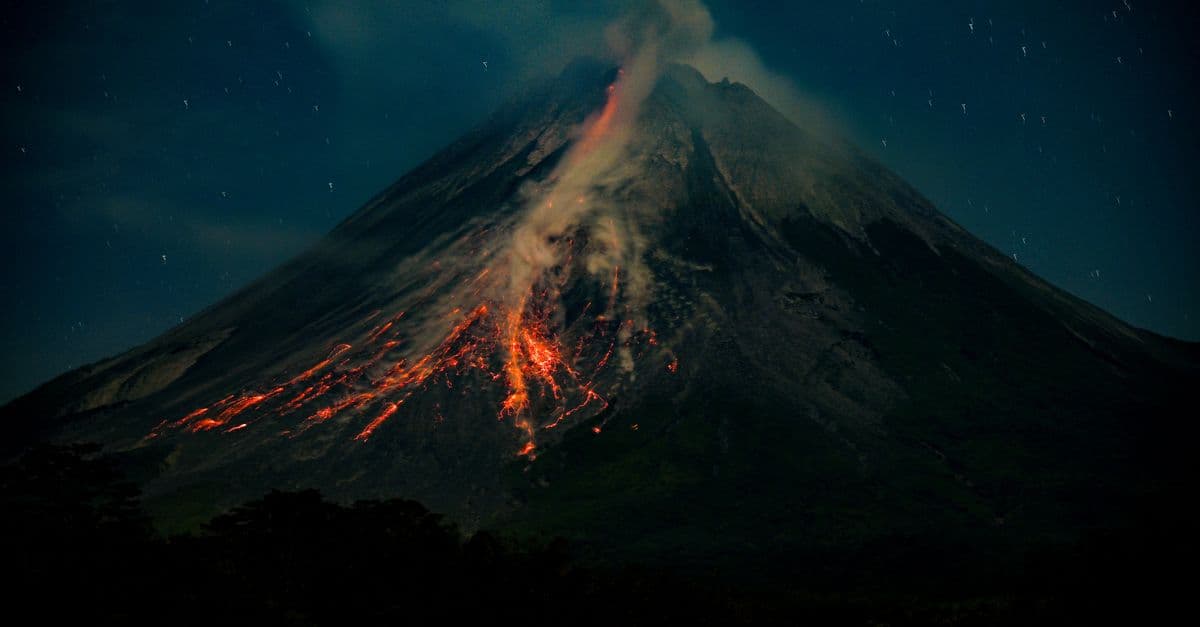
Plate Tectonics Explained — How and Why Earth's Crust Moves
Plate tectonics explained: how Earth's rigid plates move, what drives them, what happens at their boundaries, and the evidence that settled the debate.
How Earthquakes Work — Plate Tectonics Explained
How shifting tectonic plates cause earthquakes, why we measure them with moment magnitude, and why prediction is still impossible.