How Volcanoes Work — Magma to Eruption
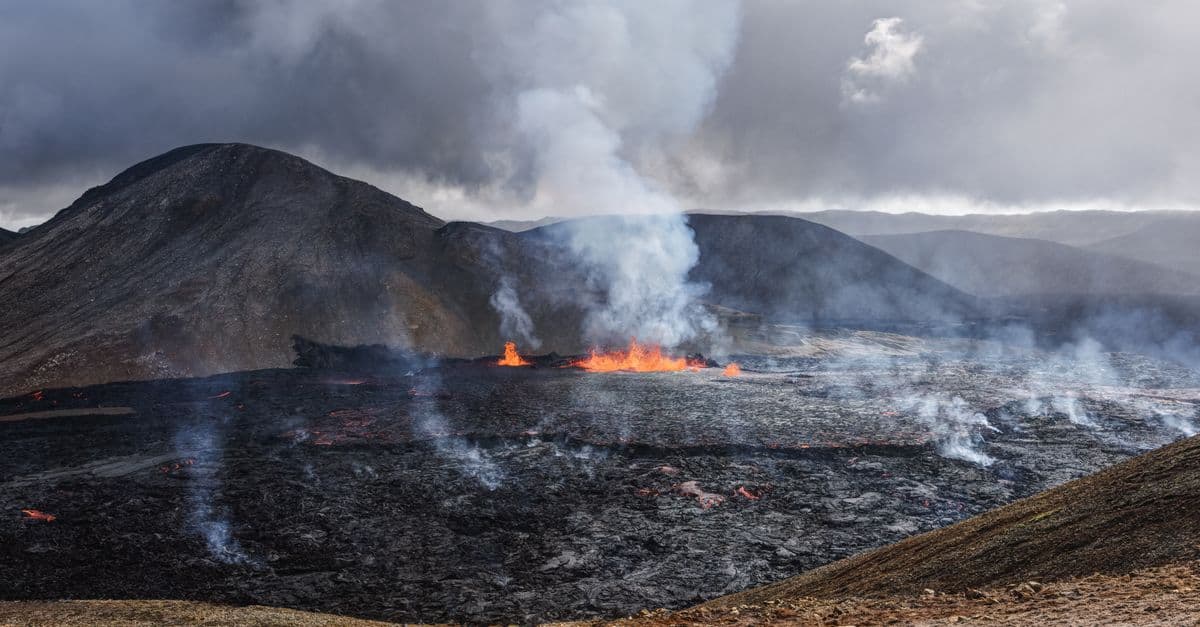
Photo: Rino Adamo / Pexels
Roughly 1,350 to 1,500 volcanoes on Earth have erupted within the last 10,000 years, and on any given day, around 40 to 50 of them are actively erupting somewhere on the planet, according to the Smithsonian Institution's Global Volcanism Program. A volcano is a vent where molten rock, ash, and gas escape from below the crust — but the interesting part isn't the hole. It's everything that happens underground first: partial melting deep in the mantle, magma rising through fractures, gas bubbles forming and expanding, and pressure building until the surface can no longer hold it back. For a related overview, see how volcanoes work.
Where magma actually comes from
The mantle is not a subterranean ocean of lava waiting to break out. It's solid rock — hot, but under enough pressure to stay crystalline, the way a pressure cooker keeps water from boiling even at high temperature. Magma only forms when a small fraction of that rock, typically 5 to 15 percent by volume, actually melts. The rest stays solid, acting like a sponge that releases melted liquid the way a wet towel releases water when squeezed.
There are three ways mantle rock crosses that melting threshold, and each one builds a different kind of volcano.
Decompression melting happens when solid mantle rock rises toward the surface and the pressure holding it in a solid state drops faster than its temperature does. Rock that was stable at 100 km depth is suddenly too hot to stay solid at 30 km depth, even though nothing was added to it. This is the mechanism beneath every mid-ocean ridge on Earth and beneath most hotspots.
Flux melting is different: it doesn't require the rock to move much at all. Instead, water and other volatile compounds released from a subducting oceanic plate soak into the overlying mantle wedge and lower its melting point, the same way road salt lowers the freezing point of water on an icy sidewalk. This is the dominant mechanism behind the volcanoes that ring the Pacific Ocean.
Heat-transfer melting occurs when magma that's already molten intrudes into cooler crust above it and partially melts the surrounding rock, the way a hot poker softens the wax around it. Because continental crust is rich in silica, this process tends to produce more silica-rich, more viscous melts than the other two.
Silica content — the proportion of silicon dioxide (SiO₂) in the melt — is the single variable that predicts almost everything about how a volcano will behave once that magma reaches the surface. Low-silica basaltic magma has a runny, honey-like consistency that lets dissolved gas bubble out gently. High-silica rhyolitic magma behaves more like cold toffee: stiff, sticky, and prone to trapping gas until the pressure has nowhere to go but out, violently.
Why volcanoes cluster where they do
Volcanoes aren't scattered randomly across the globe. They concentrate at three kinds of tectonic settings, and the type of setting predicts the type of eruption you'll get almost as reliably as silica content does. If you want the deeper mechanics of why plates move at all, see our companion piece on plate tectonics.
Divergent boundaries
At mid-ocean ridges, two plates pull apart and mantle rock rises to fill the gap, decompression-melting as it goes. The magma that erupts here is basaltic and the eruptions are almost always effusive — gentle lava flows rather than explosions. Iceland is the rare spot where a mid-ocean ridge, the Mid-Atlantic Ridge, actually breaches the ocean surface, which is why the country sits on some of the most geologically active real estate on the planet.
Convergent boundaries
Where one tectonic plate dives beneath another in a process called subduction, the descending plate carries water-bearing minerals down with it. As it heats up, that water is released and flux-melts the mantle wedge above. This produces the Pacific Ring of Fire, a roughly 40,000-kilometer horseshoe of subduction-zone volcanism that the U.S. Geological Survey and the Smithsonian's Global Volcanism Program both identify as hosting the large majority of the world's historically active, explosive volcanoes — including Japan's Mount Fuji, Indonesia's Krakatoa, and the volcanoes of the Cascade Range in the U.S. Pacific Northwest.
Hotspots
Not every volcano sits at a plate boundary. Hotspots are believed to be columns of unusually hot mantle rock, sometimes modeled as plumes rising from near the core-mantle boundary, that stay roughly fixed in place while the plate above drifts over them. The result is a conveyor belt of volcanoes: as the Pacific Plate has moved northwest over millions of years, it has dragged a chain of now-extinct volcanic islands and seamounts behind the currently active hotspot, producing the Hawaiian-Emperor seamount chain. Yellowstone is a continental hotspot working the same way, but trapped beneath thick continental crust that lets pressure build to far more dangerous extremes.
Types of volcanoes and how to tell them apart
The shape of a volcano is basically a record of how its magma has behaved over its lifetime. A steep, symmetrical cone means sticky magma that piles up near the vent instead of spreading out. A broad, gently sloped dome means runny magma that traveled far before cooling.
| Type | Shape | Magma composition | Typical eruption style | Example |
|---|---|---|---|---|
| Shield | Broad, gently sloped, shield-like | Basaltic, low-silica | Effusive lava flows | Mauna Loa, Hawaii |
| Stratovolcano (composite) | Steep, symmetrical cone | Andesitic to rhyolitic | Alternating explosive ash and lava | Mount Fuji, Vesuvius |
| Cinder cone | Small, steep, single-vent cone | Basaltic, gas-rich | Short-lived Strombolian bursts | Parícutin, Mexico |
| Caldera | Large collapsed depression | Often rhyolitic, high-silica | Catastrophic, rare, highly explosive | Yellowstone, Toba |
| Lava dome | Bulbous, rounded mound | Viscous rhyolite or dacite | Slow extrusion punctuated by collapse | Mount St. Helens' post-1980 dome |
| Fissure vent | Long crack rather than a cone | Basaltic | Curtain-of-fire effusive flows | Laki, Iceland (1783–84) |
Table: The six main volcano morphologies, ranked roughly from gentlest to most hazardous eruption style.
Eruption styles and the VEI scale
Eruptions sit on a spectrum. On one end is effusive activity: lava flows out with relatively little violence because gas escapes as fast as it forms. On the other end is explosive activity: gas-rich, viscous magma shatters into ash and pumice because the gas can't escape smoothly, so pressure builds until it fails catastrophically — similar to how a bottle of champagne stays calm when opened slowly but sprays everywhere when shaken first.
Volcanologists rank explosivity using the Volcanic Explosivity Index (VEI), a logarithmic scale from 0 to 8 first proposed by Christopher Newhall and Stephen Self in a 1982 paper in the Journal of Geophysical Research. Each step up the scale represents roughly a tenfold increase in the volume of ejected material.
- VEI 0–1 (Hawaiian, Strombolian): Gentle, frequent, often continuous. Kilauea's long-running effusive activity fits here.
- VEI 2–3 (Vulcanian): Moderate explosions, occurring somewhere on Earth every few years.
- VEI 4 (Sub-Plinian): Eyjafjallajökull's 2010 eruption, which grounded European air travel for days, was this scale.
- VEI 5 (Plinian): Mount St. Helens in 1980.
- VEI 6 (Colossal): Pinatubo in 1991, Krakatoa in 1883.
- VEI 7 (Super-colossal): Tambora in 1815, the largest eruption in recorded human history.
- VEI 8 (Supervolcanic): Yellowstone roughly 640,000 years ago; Toba roughly 74,000 years ago.
How is a VEI 8 different from a VEI 5?
The VEI scale is logarithmic, so each whole-number increase means roughly ten times more ejected volume. A VEI 5 eruption like Mount St. Helens ejected about 1 cubic kilometer of material. A VEI 8 supereruption ejects more than 1,000 cubic kilometers — enough to bury an area the size of a small country under meters of ash.
What's actually happening inside a magma chamber before an eruption
Beneath most active volcanoes sits a magma reservoir, sometimes called a magma chamber, although modern geophysics increasingly describes these as loosely connected networks of partially molten "mush" rather than a single open cavity of liquid rock. As fresh, hotter magma rises from depth and intrudes into this reservoir, several things happen at once: the reservoir's internal pressure increases, dissolved gases that were held in solution start to come out of the melt, and the ground surface above can swell by centimeters to meters as the whole system inflates. This is exactly analogous to what happens when you slowly warm a sealed can of soda — pressure climbs invisibly until something gives.
Eruption isn't triggered by pressure alone. It typically needs pressure to exceed the strength of the rock walls confining the chamber, or a rapid intrusion of new magma that destabilizes the system, or gas exsolution (bubbles coming out of solution) accelerating faster than gas can escape through cracks. Once a fracture reaches the surface, the drop in pressure lets dissolved gas expand explosively, which is why the final stage of many eruptions looks less like "the volcano got hotter" and more like "the cap finally popped."
Notable eruptions that shaped how we understand volcanoes
Each of the eruptions below taught volcanologists something new, and together they show the enormous range of what "an eruption" can mean.
Vesuvius, 79 AD. The eruption that buried Pompeii and Herculaneum under pyroclastic flows and ash is also the reason volcanologists call fast, sustained, ash-column-driven eruptions "Plinian" — after Pliny the Younger, whose eyewitness letters describing his uncle's death near the volcano became the first detailed scientific account of an eruption in Western literature.
Laki, Iceland, 1783–84. A fissure eruption, not a single cone, that released roughly 120 million tonnes of sulfur dioxide over eight months. The resulting haze and acid rain devastated Icelandic agriculture, killing roughly a fifth of the island's human population through the resulting famine, and is thought to have contributed to extreme weather and crop failures across Europe.
Tambora, Indonesia, 1815. A VEI 7 eruption, the largest in recorded history, that killed tens of thousands directly and injected enough sulfate aerosols into the stratosphere to measurably cool the global climate. The following year, 1816, became known as the "Year Without a Summer" across parts of Europe and North America, bringing crop failures, food shortages, and freak summer snowfalls.
Krakatoa, Indonesia, 1883. A VEI 6 eruption whose explosion was reportedly heard roughly 4,800 kilometers away in Rodrigues Island near Mauritius, one of the loudest sounds in recorded history. Volcanic tsunamis triggered by the collapse killed more than 36,000 people on the coasts of Java and Sumatra.
Mount Pelée, Martinique, 1902. A pyroclastic flow — a fast-moving, superheated avalanche of gas and ash — swept down the mountain and destroyed the city of Saint-Pierre in minutes, killing nearly all of its roughly 28,000 residents. It remains one of the deadliest volcanic disasters of the 20th century and a case study in why evacuation timing matters more than eruption size.
Mount St. Helens, Washington, 1980. A VEI 5 eruption preceded by weeks of earthquakes and a visibly bulging north flank. When that flank collapsed in the largest landslide ever recorded, it depressurized the magma system sideways, producing a lateral blast rather than a vertical one — a discovery that reshaped how volcanologists think about flank instability as an eruption trigger.
Pinatubo, Philippines, 1991. A VEI 6 eruption, and the best-documented forecasting success in volcanology's history. USGS and Philippine Institute of Volcanology and Seismology scientists tracked earthquake swarms and gas emissions for weeks, issued escalating warnings, and evacuated tens of thousands of people before the climactic eruption. It injected an estimated 20 million tonnes of SO₂ into the stratosphere, cooling the planet by roughly 0.5°C for about two years.
Hunga Tonga–Hunga Haʻapai, 2022. An underwater eruption whose plume reached 55 to 58 kilometers, higher than any eruption ever recorded by satellite, and whose water-vapor injection into the stratosphere — around 146 teragrams — was nearly four times larger than Pinatubo's. Because water vapor is a greenhouse gas, some researchers have studied whether the eruption could produce a small, temporary warming effect rather than the cooling associated with sulfate-heavy eruptions (NASA JPL).
Volcanic gases and their climate effects
Magma carries dissolved gases with it as it rises — mostly water vapor, carbon dioxide, and sulfur dioxide. As pressure drops near the surface, those gases exsolve out of the melt the way carbon dioxide fizzes out of a can of soda the instant you crack it open. That gas expansion, not the lava itself, is usually what drives an explosive eruption.
Whether an eruption cools or warms the planet depends heavily on which gas dominates and how high it reaches. Sulfur dioxide that makes it into the stratosphere converts into microscopic sulfate aerosol particles that reflect incoming sunlight back to space, cooling the surface for one to three years — this is the mechanism behind both Pinatubo's and Tambora's global cooling effects, documented in detail by climatologist Alan Robock's widely cited 2000 review in Reviews of Geophysics. Water vapor behaves differently: it's itself a greenhouse gas, so a water-vapor-dominated eruption like Hunga Tonga can theoretically nudge temperatures the other way, though the net effect is small and temporary compared to the scale of long-term human-caused warming.
Do volcanoes cause more warming than humans?
No. Global volcanic activity emits an estimated 0.3 to 0.4 gigatonnes of CO₂ per year, according to USGS estimates, compared to over 35 gigatonnes from human fossil fuel combustion and industry annually. Volcanoes are responsible for well under 1 percent of the CO₂ humans add to the atmosphere each year, and large eruptions more often cool the climate temporarily than warm it.
Beyond gas chemistry, ash itself is a serious hazard on its own. It's not soft or fluffy — it's made of tiny, sharp fragments of volcanic glass and rock — heavy enough in large accumulations to collapse building roofs, abrasive enough to sandblast aircraft windshields, and capable of melting and re-solidifying inside jet engines, which is why international aviation authorities ground flights over active ash plumes.
How scientists monitor an active volcano
No instrument can look inside a magma chamber directly, so volcanologists infer what's happening underground from surface signals, much like a doctor reading vital signs instead of directly observing an organ. The USGS Volcano Hazards Program and equivalent agencies worldwide combine four main data streams.
- Seismicity. Swarms of small earthquakes, often called volcano-tectonic events, track magma and gas moving through cracks in the crust as it forces its way toward the surface.
- Ground deformation. High-precision GPS stations and satellite-based InSAR (Interferometric Synthetic Aperture Radar) can detect ground swelling of just a few centimeters as a magma reservoir inflates — sometimes months or even years before an eruption (USGS).
- Gas emissions. A rising ratio of SO₂ to CO₂ in gas plumes, or a sudden spike in emission rate, often signals fresh magma approaching the surface and fracturing the rock above it.
- Thermal and satellite imaging. Infrared satellites and drone-mounted thermal cameras detect heat anomalies at vents, lava domes, and crater lakes that aren't always visible to the naked eye.
Can scientists actually predict when a volcano will erupt?
They can forecast, in the sense of estimating an elevated probability over days to weeks, but not predict an exact date and time the way a calendar event is scheduled. Pinatubo in 1991 is the field's clearest success story: escalating seismicity and gas readings let scientists issue warnings that led to evacuations before the climactic eruption, saving an estimated tens of thousands of lives, according to USGS accounts of the disaster response. Recent research is also exploring whether machine learning models trained on combined GNSS, InSAR, seismic, and gas datasets can improve forecast lead times further (EarthScope Consortium).
Supervolcanoes: how worried should you actually be
A "supervolcano" isn't a scientific term with rigid boundaries, but volcanologists generally use it for systems capable of producing a VEI 8 eruption — one that ejects more than 1,000 cubic kilometers of material. Yellowstone sits atop one of the best-studied supervolcano systems on Earth and has produced eruptions at this scale three times: roughly 2.1 million, 1.3 million, and 640,000 years ago. Despite persistent internet speculation, USGS monitoring of Yellowstone's seismicity, ground deformation, and gas emissions consistently shows activity within normal historical background ranges, with no indication of an imminent eruption.
Toba, in present-day Indonesia, erupted roughly 74,000 years ago in what may be the largest volcanic event of the last 2 million years. Some researchers have proposed that the resulting "volcanic winter" contributed to a genetic bottleneck in early human populations, though this hypothesis remains actively debated among archaeologists and geneticists, with more recent genetic and archaeological evidence complicating the picture rather than confirming it.
The comparative rarity of VEI 8 events is itself reassuring: the geologic record suggests they occur roughly once every 100,000 years or less frequently, globally, which puts the odds of one occurring within any individual human lifetime at extremely low.
What people get wrong about volcanoes
"Lava is the main danger." In most historical volcanic disasters, lava flows are actually one of the more survivable hazards because they move slowly enough to evacuate ahead of them (with rare exceptions like fast-moving basaltic flows in Congo). The deadlier hazards are pyroclastic flows, which can move at 100 to 700 km/h at temperatures exceeding 500°C, lahars (volcanic mudflows that can travel dozens of kilometers down river valleys with almost no warning), and ashfall, which collapses roofs and disrupts agriculture and aviation over enormous areas.
"A dormant volcano is safe." Dormancy is a human timescale label, not a geological guarantee. Volcanoes can sit quiet for centuries and still be fully capable of eruption; Vesuvius itself was assumed extinct by many residents of Pompeii before 79 AD.
"Magma and lava are the same thing." They're chemically identical molten rock — the label just changes depending on whether it's still underground (magma) or has reached the surface (lava), similar to how the same water is called groundwater below the surface and a spring or stream once it surfaces.
"All volcanoes look like Mount Fuji." Only stratovolcanoes have that classic symmetrical cone. Shield volcanoes like Mauna Loa are so broad and gently sloped that from ground level they barely look like a mountain at all, and fissure eruptions like Iceland's Laki don't produce a cone shape whatsoever — just a long crack in the ground.
FAQs
Q: What's the difference between magma and lava? A: They're the same molten rock at different locations. Magma is underground, inside the crust or mantle; once it erupts and reaches the surface, it's called lava.
Q: Why are subduction-zone volcanoes more explosive than Hawaiian volcanoes? A: Subduction-zone magma is typically higher in silica and dissolved water, making it viscous and prone to trapping gas until it explodes. Hawaiian basalt is much runnier and lets gas escape gradually, producing effusive rather than explosive eruptions.
Q: Can scientists predict eruptions? A: They can forecast elevated eruption probability days to weeks ahead using seismicity, ground deformation, and gas emissions data, but exact timing remains uncertain. Pinatubo in 1991 is considered the field's gold-standard forecasting success.
Q: Do volcanoes cause global warming? A: Not meaningfully over the long term — global volcanic CO₂ output is roughly 0.3 to 0.4 gigatonnes a year, under 1 percent of human fossil-fuel emissions. Large sulfur-rich eruptions like Pinatubo actually cool the planet for one to three years by reflecting sunlight.
Q: Is Yellowstone about to erupt? A: No. USGS monitoring shows ground deformation and seismicity within normal background ranges, and a supereruption within our lifetimes is considered extremely unlikely based on current data.
Q: Can you outrun a pyroclastic flow? A: No. Pyroclastic flows travel at 100 to 700 km/h at temperatures above 500°C. The only reliable protection is distance and early evacuation, which is why monitoring and warning systems matter so much.
Q: What's the difference between a shield volcano and a stratovolcano? A: Shield volcanoes are built from runny, low-silica basaltic lava that spreads out into broad, gently sloped domes, like Mauna Loa. Stratovolcanoes are built from thicker, higher-silica magma that piles up near the vent into steep, symmetrical cones, like Mount Fuji or Vesuvius.
Q: How does the VEI scale work? A: The Volcanic Explosivity Index runs from 0 to 8 and is logarithmic, meaning each step up represents roughly a tenfold increase in ejected material. It was introduced by volcanologists Christopher Newhall and Stephen Self in a 1982 paper.
Q: What actually kills people in a volcanic eruption? A: Historically, the deadliest hazards are pyroclastic flows, volcanic mudflows called lahars, and long-term famine or disease caused by ashfall and climate disruption — not lava flows, which usually move slowly enough to evacuate ahead of.
Q: Are underwater volcanoes dangerous? A: Yes, sometimes more so than land volcanoes in unexpected ways. The 2022 Hunga Tonga eruption was underwater, and the interaction between seawater and magma helped drive its plume to a record-breaking altitude of over 55 kilometers, along with a massive tsunami that struck Tonga's main islands.
The takeaway
A volcano is really the visible endpoint of a long underground story: mantle rock crossing its melting threshold, magma chemistry determining viscosity, gas building pressure faster than it can escape, and rock finally failing under the strain. Silica content is the single best predictor of how violent an eruption will be, and plate tectonic setting is the single best predictor of where a volcano will exist in the first place. Modern monitoring can't tell you the exact day an eruption will happen, but seismicity, ground deformation, and gas chemistry together give scientists a genuinely useful early-warning system — one that saved tens of thousands of lives at Pinatubo in 1991 and continues to improve as satellite and machine-learning tools mature.
Read next:
Sources
- USGS Volcano Hazards Program. Forecasting, detecting, and tracking volcanic eruptions from space. https://www.usgs.gov/publications/forecasting-detecting-and-tracking-volcanic-eruptions-space
- USGS. VHP uses monitoring data and volcanic history to forecast eruptions. https://www.usgs.gov/programs/VHP/vhp-uses-monitoring-data-and-volcanic-history-forecast-eruptions
- Newhall, C. & Self, S. (1982). The Volcanic Explosivity Index (VEI): An estimate of explosive magnitude for historical volcanism. Journal of Geophysical Research: Oceans.
- Global Volcanism Program, Smithsonian Institution.
- Robock, A. (2000). Volcanic eruptions and climate. Reviews of Geophysics.
- NASA Jet Propulsion Laboratory. Tonga Eruption Blasted Unprecedented Amount of Water Into Stratosphere. https://www.jpl.nasa.gov/news/tonga-eruption-blasted-unprecedented-amount-of-water-into-stratosphere/
- NASA GMAO. Unprecedented Amount of Water Vapor Injected into the Stratosphere by the Hunga Tonga Eruption. https://gmao.gsfc.nasa.gov/science-snapshots/unprecedented-amount-of-water-vapor-injected-into-the-stratosphere-by-the-hunga-tonga-eruption/
- EarthScope Consortium. Pairing machine learning with GNSS and InSAR could help forecast eruptions. https://www.earthscope.org/news/pairing-machine-learning-with-gnss-and-insar-could-help-forecast-eruptions/
Follow new articles
Add SciHub101 to your feed reader to see new science and technology stories.
About the Author
SciHub101 is an independent science and technology publication founded and edited by Buğra Sözeri, a software engineer and app developer based in Türkiye. AI tools assist with drafting and research. Source documentation in the existing archive is uneven, and articles are being reviewed and corrected. The Editorial Team byline identifies editorial responsibility; it does not certify specialist or independent human review. Where we compare products, anything built by our own team is labelled as such — see the editorial guidelines and About page for how corrections and disclosures work.
Related Articles
Quantum Physics Explained — A Beginner's Guide
Wave-particle duality, uncertainty, superposition, entanglement — what quantum physics actually says, what it predicts, and what it doesn't.
Supermassive Black Holes — Galactic Engines
Supermassive black holes anchor galaxies, power quasars, and shape cosmic evolution. From Sgr A* to M87*, here's what we know — and what we don't.
How Volcanoes Work: The Science of Earth's Most Powerful Force
A single eruption can cool the entire planet for years. Here's the science behind what makes volcanoes tick — from deep magma to explosive blasts.
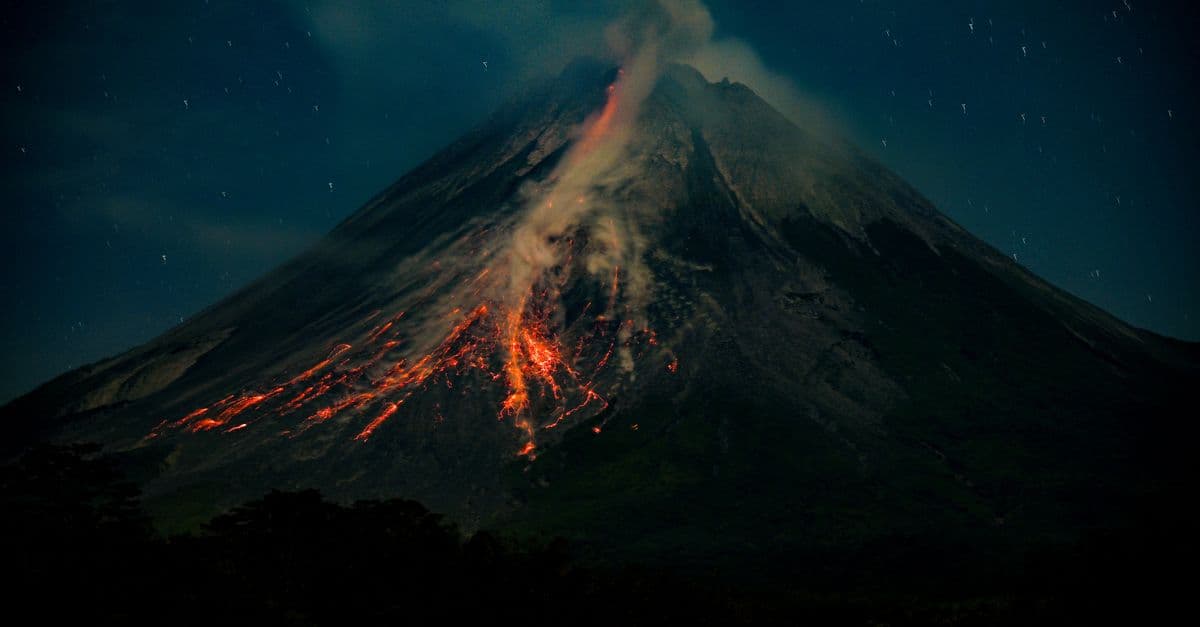
Plate Tectonics Explained — How and Why Earth's Crust Moves
Plate tectonics explained: how Earth's rigid plates move, what drives them, what happens at their boundaries, and the evidence that settled the debate.
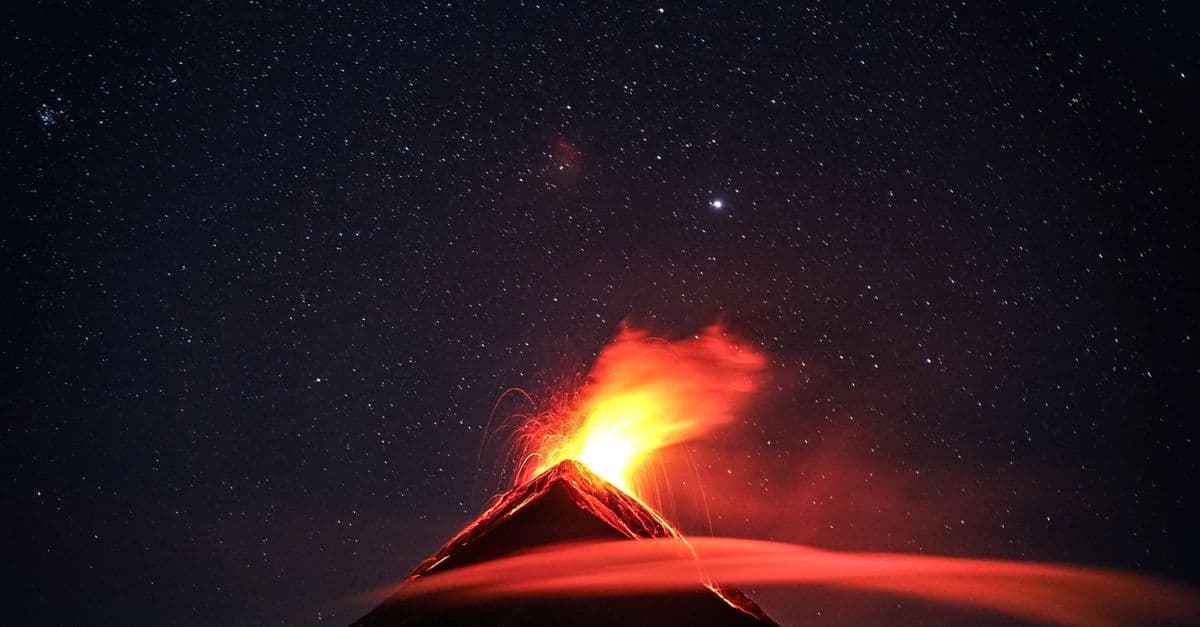
How Scientists Predict Volcanic Eruptions
Volcano prediction uses earthquakes, gas, ground deformation, heat, and history. This guide explains what scientists can forecast and what remains uncertain.