Why Volcanoes Erupt
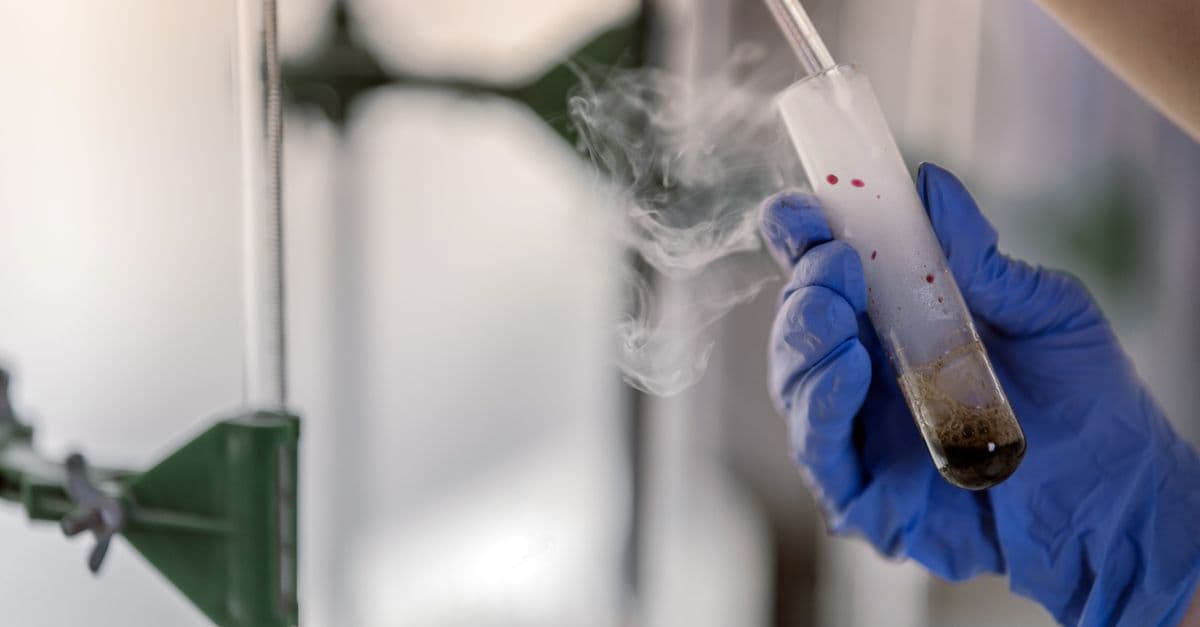
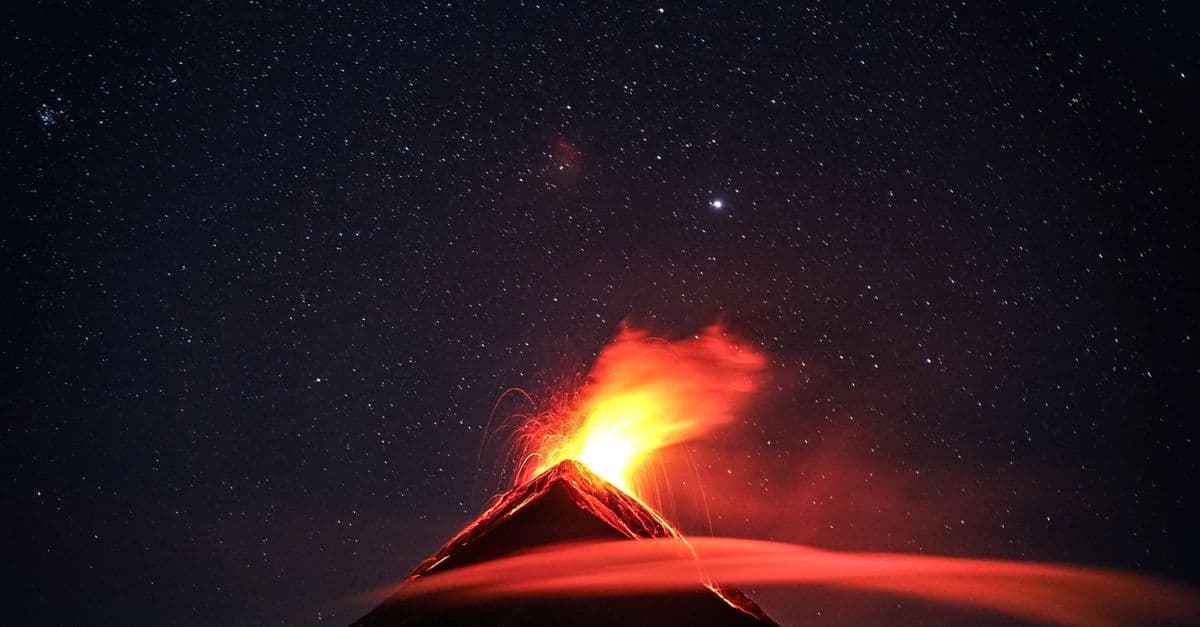
Photo: Mikhail Nilov / Pexels
Volcanoes erupt because molten rock, or magma, becomes less dense and more buoyant than the solid rock around it, forcing it upward until it finds an exit at the surface. Whether that exit is a gentle lava flow or a violent explosion depends mostly on one variable: how much gas is trapped in the magma and how easily that gas can escape. That single trade-off — thin, gas-poor magma versus thick, gas-rich magma — explains almost everything about why Kilauea oozes lava for months while Mount St. Helens can level a forest in seconds. For a broader overview, see how volcanoes work.
What actually triggers an eruption
An eruption is not a single event so much as the final step in a chain that starts tens to hundreds of kilometers below the surface. Rock in Earth's mantle is already close to its melting point almost everywhere; it just needs one of three nudges to cross the line from solid to liquid. Geologists call the resulting molten rock magma — a mixture of melted silicate minerals, suspended crystals, and dissolved gases that forms below ground, as distinct from lava, which is the same material once it reaches the surface and loses most of its gas.
The three nudges that generate magma are decompression, the addition of water or other volatiles, and the direct addition of heat. Each one operates in a specific tectonic setting, which is why volcanoes cluster where they do rather than appearing at random across the planet. Roughly 63% of all new crust produced on Earth forms through decompression melting at mid-ocean ridges, according to geodynamic modeling summarized in peer-reviewed crustal-production studies (arXiv preprint, Grose & Afonso) — most of it happens underwater and is never witnessed directly.
Once magma exists, it still has to move. Because molten rock is typically 10 to 20% less dense than the solid rock surrounding it, buoyancy pushes it upward through cracks, weak zones, and pre-existing conduits. As it rises, pressure drops, which allows dissolved gases inside the magma to come out of solution and form bubbles — the same physics that makes a shaken soda can fizz the moment you crack the seal. Whether that fizzing is a slow simmer or a violent burst is the difference between Hawaii and Mount St. Helens, and it comes down to the magma's chemistry, covered in the next section.
How magma actually forms: three mechanisms, three settings
Rock does not need to get hotter to melt. In two of the three main mechanisms behind magma generation, the temperature barely changes at all — what changes is pressure or chemistry. Understanding which mechanism is active at a given volcano tells you almost everything about what kind of eruption to expect there.
Decompression melting at spreading centers
At mid-ocean ridges, tectonic plates pull apart and hot mantle rock rises to fill the gap. As that rock moves upward, the pressure squeezing it decreases, and its melting point drops faster than its actual temperature does. The rock crosses its own melting threshold without gaining a single extra degree, a process geoscientists call decompression melting (Geosciences LibreTexts, Magma Generation). This is like the difference between boiling water on a stovetop and boiling it by pumping the air out of a sealed chamber — you don't need to add heat if you change the pressure instead. Most decompression melting happens at divergent plate boundaries, which is why the Mid-Atlantic Ridge and Iceland — sitting directly on that ridge — are geologically active despite being far from any subduction zone.
Flux melting at subduction zones
At convergent boundaries, one tectonic plate slides beneath another and carries seawater-soaked ocean crust down with it. As that slab descends and heats up, water and other volatiles are squeezed out of its minerals and rise into the overlying mantle wedge. Adding water to hot rock lowers its melting point dramatically, the same way road salt lowers the freezing point of ice, and the mantle above the slab begins to melt even without extra heat. This is called flux melting, and it is the dominant mechanism behind the volcanoes that ring the Pacific Ocean, including Mount St. Helens, Mount Fuji, and the volcanoes of Indonesia (Geosciences LibreTexts, Magma Generation). Flux-melted magma tends to be silica-rich and viscous, which sets up the explosive eruptions covered later in this article. Readers who want the full mechanics of how these plates move and collide in the first place can see our explainer on plate tectonics.
Hot-spot melting away from plate boundaries
Not every volcano sits on a plate boundary. Hawaii is in the middle of the Pacific Plate, thousands of kilometers from the nearest ridge or subduction zone, yet it hosts some of the most active volcanoes on Earth. The explanation is a hot spot: an unusually hot, buoyant plume of mantle material that rises from deep within the Earth and partially melts as it approaches the surface, combining decompression with a genuine boost in heat (Geosciences LibreTexts, Magma Generation). Because the Pacific Plate drifts slowly over this stationary plume, it has left behind a chain of extinct volcanic islands trailing away from the currently active Big Island, a geological trail of breadcrumbs recording millions of years of plate motion.
Why some eruptions ooze and others explode
Not all magma is created equal, and the difference is mostly a matter of chemistry. Magma's silica (SiO2) content determines how thick and sticky, or viscous, it is — and viscosity determines whether gas can escape smoothly or gets trapped until it blows the top off the volcano. Viscosity — a fluid's internal resistance to flow — is to magma what the difference between water and honey is to a kitchen: water pours freely, honey has to be forced.
Basaltic magma, like the kind erupting from Kilauea, is low in silica, typically around 45 to 55%, and correspondingly runny. Gas bubbles rise through it easily and escape at the surface in a continuous fizz, producing the gentle fountains and slow-moving lava flows typical of Hawaiian-style eruptions, which the USGS classifies as nonexplosive and generally rated 0 to 1 on the Volcanic Explosivity Index (USGS, Shield Volcanoes / NPS). Rhyolitic and dacitic magma, by contrast, is silica-rich — Mount St. Helens' 1980 dacite contained roughly 64% silica along with about 4% dissolved water (USGS, 1980 Cataclysmic Eruption) — and is so viscous that gas bubbles cannot rise and escape on their own.
That trapped gas is the real engine of an explosive eruption. As magma rises and pressure drops, dissolved water and carbon dioxide try to come out of solution and expand into bubbles, exactly like the fizz that erupts out of a shaken soda can the instant the seal breaks. In runny basalt, those bubbles pop freely at the surface. In sticky rhyolite or dacite, the bubbles get trapped, pressure builds inside a plug of viscous magma, and the whole system eventually fails catastrophically, fragmenting the magma into ash and pumice and launching it skyward in what volcanologists call a Plinian eruption. The May 18, 1980, eruption of Mount St. Helens illustrated this in the most dramatic way possible: a magnitude 5+ earthquake triggered a debris avalanche that stripped away the volcano's bulging north flank, instantly releasing the confining pressure on the pressurized cryptodome underneath. Hot water inside the system flash-boiled into steam and the whole slope detonated sideways, a lateral blast that the USGS still studies as a textbook case of sudden decompression triggering an explosion (USGS, 1980 Cataclysmic Eruption).
Why does dissolved gas matter so much?
Dissolved gas is the pressure source behind every explosive eruption. Magma holds water and carbon dioxide in solution the way a sealed soda holds carbon dioxide; when pressure drops as magma rises, that gas tries to expand into bubbles. If the magma is viscous enough to trap the bubbles, pressure builds until the rock fragments explosively.
The four main volcano types, compared
Volcanoes are shaped by the same variables that control how they erupt: magma composition, gas content, and eruption frequency. Comparing the main types side by side makes the pattern obvious — thin, gas-poor magma builds low, wide volcanoes, while thick, gas-rich magma builds tall, dangerous ones.
| Volcano type | Typical magma | Eruption style | Shape | Real example |
|---|---|---|---|---|
| Shield volcano | Low-silica basalt | Effusive, gentle lava flows, VEI 0–1 | Broad, gently sloping dome | Kilauea, Hawaii |
| Stratovolcano (composite) | Intermediate to high-silica andesite/dacite | Explosive, alternating ash and lava, VEI 3–5+ | Steep, symmetrical cone | Mount St. Helens, USA |
| Cinder cone | Low-viscosity basalt with high gas content | Short-lived, explosive Strombolian bursts | Small, steep-sided cone of loose cinders | Paricutín, Mexico |
| Caldera / supervolcano | High-silica rhyolite | Rare but catastrophic, VEI 7–8 | Broad collapsed depression | Yellowstone, USA |
Magma chemistry sets the eruption style, and eruption style sets the shape — thin lava spreads wide, thick lava piles steep, and gas-choked rhyolite can collapse an entire magma chamber into a caldera.
For a closer look at what a worst-case scenario from the caldera category would actually mean for the planet, our piece on what would happen if Yellowstone erupted walks through the ashfall and climate consequences of a VEI 8 event.
How scientists know an eruption is coming
Volcanoes rarely erupt without warning signs, which is why the US Geological Survey runs continuous, multi-method monitoring networks at active systems like Kilauea and Mount St. Helens rather than relying on any single instrument. No individual method is reliable alone; combining several compensates for the blind spots each one has on its own (Volcano Monitoring: Deformation, Seismicity & Gas, SERC/IRIS).
Seismometers are the first line of defense. Rising magma cracks rock and forces its way through conduits, generating small earthquakes and a distinctive rumbling signal called volcanic tremor that intensifies as an eruption approaches. Networks of seismometers around a volcano let scientists track that unrest in near real time and estimate how deep the magma sits.
Ground deformation is the second major signal. As magma accumulates in a shallow chamber, it physically pushes the ground surface up and outward, sometimes by only millimeters, sometimes by meters. The USGS Hawaiian Volcano Observatory maintains more than 50 continuous GPS stations and over 100 survey benchmarks around Kilauea and Mauna Loa, supplemented by satellite radar (InSAR) that can detect surface swelling from orbit (USGS, California Volcano Observatory monitoring).
Gas monitoring rounds out the picture. Rising magma releases sulfur dioxide and other gases well before it reaches the surface, and spectrometers — both ground-based and airborne — track changes in gas output and composition as an early warning sign. A shift toward more sulfur dioxide, for instance, often signals that fresh, gas-rich magma is arriving from depth rather than degassed magma recirculating near the surface.
How far in advance can scientists predict an eruption?
Scientists can rarely predict the exact day or hour of an eruption, but combined seismic, deformation, and gas monitoring typically gives days to weeks of warning for well-monitored volcanoes as unrest intensifies. Poorly monitored or remote volcanoes offer far less lead time, which is why global monitoring coverage remains uneven.
Two eruptions that show the mechanism in action
The chemistry and physics described above are not abstractions. Two of history's most studied eruptions, one from antiquity and one from the modern satellite era, show the same underlying mechanism playing out at very different scales and with very different kinds of evidence.
Vesuvius, 79 AD. Mount Vesuvius sits above a subduction zone along Italy's Campanian coast, feeding it exactly the kind of silica-rich, gas-trapping magma described earlier in this article. When the volcano erupted on August 24, 79 AD, it produced roughly 18 hours of falling pumice and ash, followed by a series of pyroclastic surges, fast-moving currents of superheated gas and debris reaching an estimated 700°C (1,300°F) and traveling well over 100 km/h (62 mph), that buried the cities of Pompeii and Herculaneum and killed an estimated 16,000 people (Bodies of Mount Vesuvius; SpokenPast). The eruption is unusually well documented for an ancient event because a 17-year-old eyewitness, Pliny the Younger, watched it from across the Bay of Naples and later described it in two letters to the historian Tacitus, the first known scientific eyewitness account of an eruption in history. Volcanologists still use the term "Plinian eruption" for this exact style, a towering, sustained ash column followed by column-collapse pyroclastic surges, in his honor (Pompeii Archaeological Park). Vesuvius is a textbook illustration of the flux-melting, high-silica mechanism this article describes: the same trapped-gas physics that made Mount St. Helens explosive in 1980 was already killing people in Roman Italy nearly two thousand years earlier.
Pinatubo, 1991. Mount Pinatubo in the Philippines produced the second-largest volcanic eruption of the 20th century, and it demonstrates the climate-scale consequence of gas content described earlier in this article: sulfur, not just ash, is what an eruption injects into the stratosphere. Pinatubo's climactic eruption released an estimated 15 to 20 megatons of sulfur dioxide into the stratosphere, where it reacted with water vapor to form a global layer of reflective sulfate aerosol droplets (USGS; Wikipedia, "1991 eruption of Mount Pinatubo"). That aerosol layer measurably cooled the Northern Hemisphere by roughly 0.5 to 0.6°C (0.9 to 1.1°F) over the following two years, with regional cooling reaching as much as 0.4°C in some areas during 1992 and 1993, before the aerosols settled out of the stratosphere and the effect faded by around 1994 (Parker et al., International Journal of Climatology, 1996; USGS). Unlike Vesuvius, Pinatubo's death toll stayed comparatively low, in the hundreds rather than the thousands, precisely because of the modern seismic and gas monitoring described in the next section, which gave authorities enough warning to evacuate tens of thousands of people before the climactic explosion. Pinatubo is, in effect, a real-world instrument for measuring exactly how much cooling a given mass of stratospheric sulfur produces, data that climate scientists still use today when modeling how a much larger eruption, or a deliberate geoengineering effort, might affect global temperature.
What people get wrong about volcanic eruptions
A persistent myth is that all volcanoes behave like Hawaii: slow lava rivers you can outrun on foot. That picture comes from decades of dramatic television footage of Kilauea, but it describes only one end of a spectrum. Stratovolcanoes fed by silica-rich, gas-trapping magma can go from quiet to catastrophic in minutes, as Mount St. Helens demonstrated in 1980.
Another common mix-up is treating "dormant" and "extinct" as the same thing. A dormant volcano has not erupted in recorded history but still has an active magma supply and could erupt again; an extinct volcano has permanently lost its magma source. Mount St. Helens itself was widely considered dormant, not extinct, in the years before 1980 — its magma system was simply between active phases, not gone.
People also tend to assume magma equals lava, but the two terms describe the same material at different stages. Magma is molten rock still underground, carrying dissolved gas under pressure; lava is what remains after that material reaches the surface and sheds most of its gas. The moment of eruption is essentially the moment magma crosses that boundary and becomes lava, releasing its trapped gas along the way — which is exactly why the gas content of the magma, not just its temperature, decides whether the eruption is a flow or a blast.
Finally, many people assume volcanic hazard is only about the explosion itself. In reality, secondary hazards — pyroclastic flows, lahars (volcanic mudflows), ashfall disrupting aviation and agriculture, and long-term climate effects from stratospheric sulfur injection — often cause more death and disruption than the initial blast. Our deep dive on the deadliest volcanoes in history documents how often the secondary effects, not the eruption column itself, were what proved catastrophic.
Frequently asked questions
Q: What is the main cause of a volcanic eruption? A volcanic eruption happens when buoyant magma rises through the crust and the pressure from dissolved gas exceeds the strength of the rock trapping it. The trigger is usually decompression melting, flux melting, or hot-spot heating deep below, followed by gas expansion as the magma nears the surface.
Q: Why do some volcanoes erupt explosively while others just flow? It comes down to magma viscosity, driven mainly by silica content. Low-silica basaltic magma is runny enough that gas escapes smoothly, producing effusive lava flows, while high-silica magma is thick enough to trap gas until pressure builds and the eruption becomes explosive.
Q: Can scientists predict exactly when a volcano will erupt? Not with precision. Seismic activity, ground deformation, and gas emissions give warning that an eruption is becoming more likely, often days to weeks ahead for well-monitored volcanoes, but pinpointing the exact hour remains beyond current science.
Q: What is the difference between magma and lava? Magma is molten rock that is still underground and still holds dissolved gas under pressure. Lava is the same material after it reaches the surface, having released much of that gas — the terms describe the same substance at different stages of its journey upward.
Q: Why are volcanoes concentrated in certain regions like the Pacific "Ring of Fire"? Most volcanoes sit along plate boundaries where magma-generating processes are active: subduction zones produce flux melting and spreading centers produce decompression melting. The Pacific Ring of Fire is a nearly continuous chain of subduction zones circling the Pacific Plate, which is why it hosts roughly three-quarters of the world's active volcanoes above sea level.
The takeaway
An eruption is the visible endpoint of a much longer underground story: rock melts through decompression, added water, or added heat; the resulting magma rises because it is buoyant; and its silica content decides whether the trapped gas escapes gently or explosively. Shield volcanoes, stratovolcanoes, cinder cones, and calderas are not different phenomena so much as different points on the same viscosity spectrum. The next time a headline calls an eruption unpredictable, remember that the real story usually started months of measurable unrest earlier, recorded in seismometers, GPS stations, and gas spectrometers long before any ash reached the sky.
Read next:
Follow new articles
Add SciHub101 to your feed reader to see new science and technology stories.
About the Author
SciHub101 is an independent science and technology publication founded and edited by Buğra Sözeri, a software engineer and app developer based in Türkiye. AI tools assist with drafting and research. Source documentation in the existing archive is uneven, and articles are being reviewed and corrected. The Editorial Team byline identifies editorial responsibility; it does not certify specialist or independent human review. Where we compare products, anything built by our own team is labelled as such — see the editorial guidelines and About page for how corrections and disclosures work.
Related Articles

Why Do We See Our Breath When It's Cold? The Science
Exhaled air is warm and close to saturated with water vapor. When it mixes into cold air, the mixture cannot hold all of that vapor, and a small cloud of liquid droplets appears.

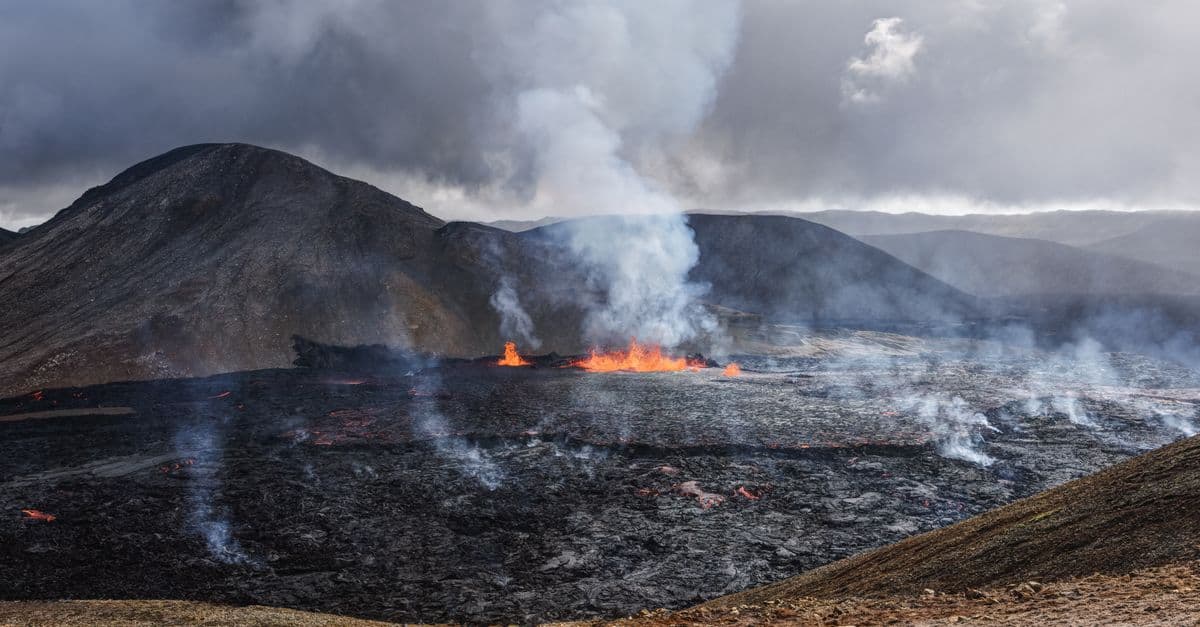
How Volcanoes Work — Magma to Eruption
Where magma comes from, why volcanoes form at plate boundaries and hotspots, eruption types, the VEI scale, and how scientists monitor them.
How Volcanoes Work: The Science of Earth's Most Powerful Force
A single eruption can cool the entire planet for years. Here's the science behind what makes volcanoes tick — from deep magma to explosive blasts.
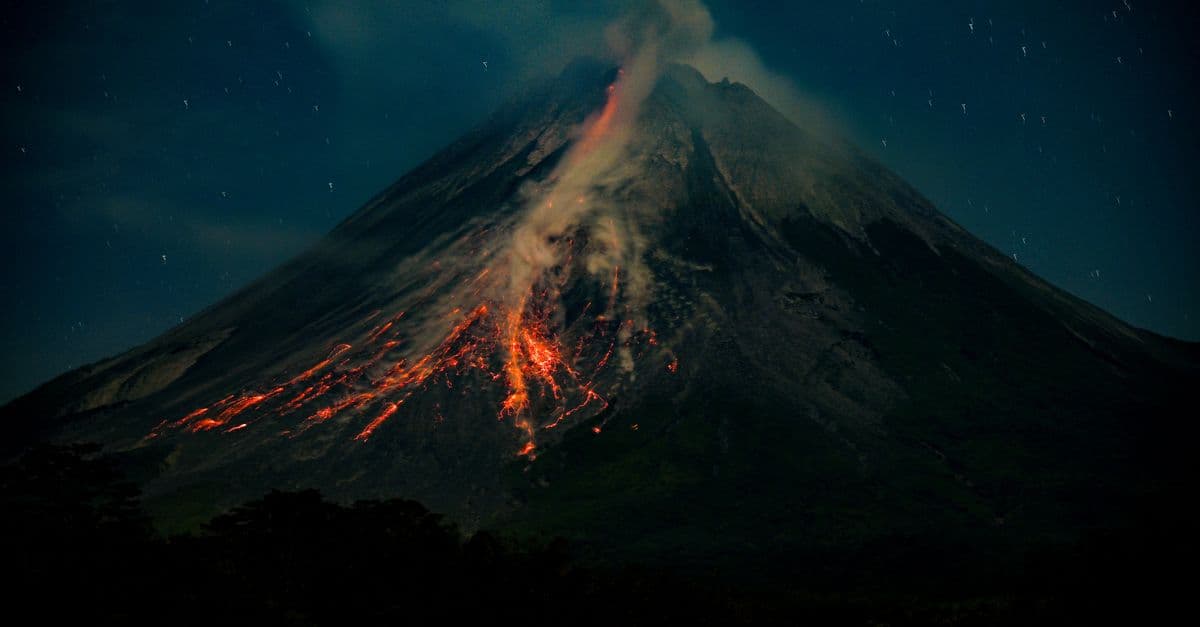
Plate Tectonics Explained — How and Why Earth's Crust Moves
Plate tectonics explained: how Earth's rigid plates move, what drives them, what happens at their boundaries, and the evidence that settled the debate.
How Scientists Predict Volcanic Eruptions
Volcano prediction uses earthquakes, gas, ground deformation, heat, and history. This guide explains what scientists can forecast and what remains uncertain.