How Volcanoes Work: The Science of Earth's Most Powerful Force
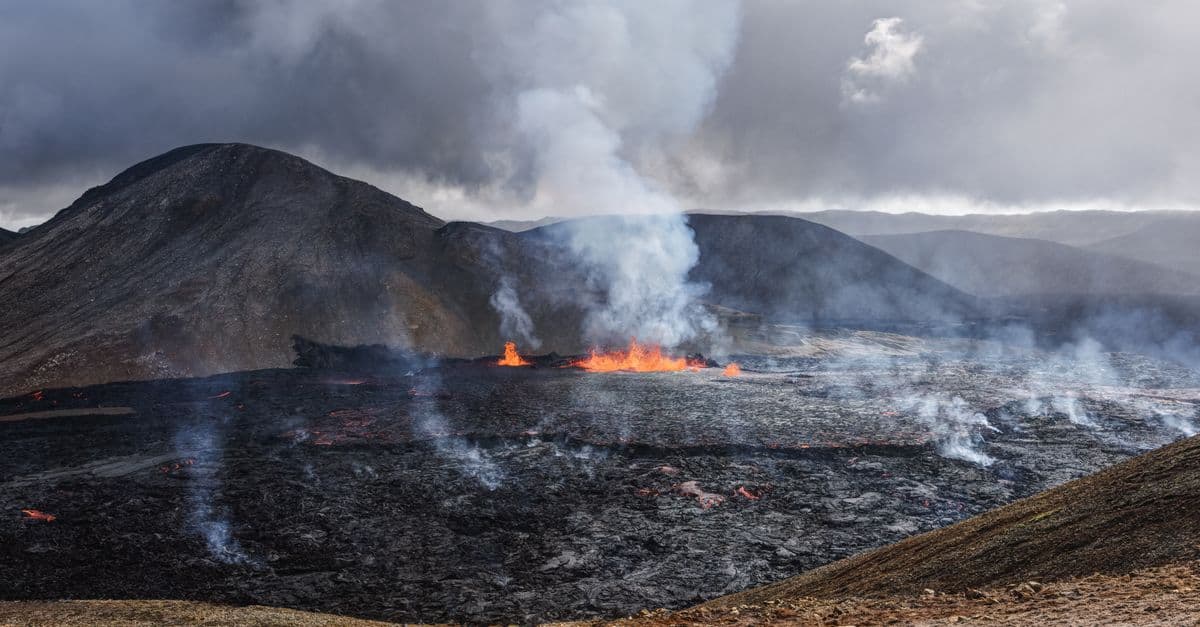
Photo: Annelies Brouw / Pexels
When Mount Pinatubo erupted in the Philippines in June 1991, it blasted roughly 20 million tonnes of sulfur dioxide into the stratosphere. Within a year, global average temperatures had dropped by about 0.5°C — a single geological event measurably cooling the entire planet (USGS). Volcanoes are not just hazards on a list of natural disasters. They built the continents, generated the early atmosphere and oceans, and continue to recycle Earth's crust in a planetary engine that has been running for roughly 4.5 billion years. Understanding how that engine works — what melts rock, what makes some eruptions gentle and others catastrophic, and how scientists now see them coming — explains a force that has shaped human history as much as it has shaped the planet's surface.
Key takeaways
- Magma forms when mantle rock melts due to reduced pressure, added water, or extreme heat — not simply because it gets hotter.
- Tectonic setting determines eruption style: subduction zones tend to produce explosive volcanoes; hotspots and mid-ocean ridges tend to produce gentler lava flows.
- Viscosity is the key variable: silica-rich magma traps gas and explodes; low-silica basaltic magma lets gas escape and flows.
- Volcanoes built the world we live on: much of Earth's early atmosphere and ocean water arrived via volcanic outgassing.
- Monitoring saves lives: USGS and PHIVOLCS use seismometers, GPS deformation networks, and gas sensors to give advance warning before major eruptions.
What is a volcano, actually
A volcano is not a single object so much as a plumbing system. Below the visible cone or fissure sits a reservoir of molten and partly molten rock — magma — connected to the surface by cracks and conduits that magma exploits whenever pressure below exceeds the strength of the rock above. What erupts at the top depends entirely on what is happening kilometers below, which is why two volcanoes standing a few hundred kilometers apart can behave in completely different ways.
Earth is a rocky planet with a hot interior, and that heat has to go somewhere. The core is estimated at roughly 5,000°C, comparable to the surface of the Sun, and most of that heat is a leftover from planetary formation and ongoing radioactive decay in the mantle and core (NASA). Volcanoes are one of the main ways that internal heat and material escape to the surface — the vents of a planetary engine, not a self-contained curiosity.
Roughly 1,350 volcanoes on land are considered potentially active, and on any given year about 50 to 80 of them are erupting somewhere on Earth. Thousands more erupt continuously and mostly unnoticed on the seafloor, quietly building new ocean crust along mid-ocean ridges.
The engine beneath: how magma forms
Most people assume rock melts because it gets hotter, the way ice melts on a stove. That is rarely what happens inside Earth. Most of the mantle is solid, not molten, even though it is unimaginably hot, because it is also under enormous pressure, and pressure keeps rock's melting point elevated. Magma forms when one of three things changes that balance: pressure drops, water is added, or temperature genuinely rises above normal.
Decompression melting happens at mid-ocean ridges, where two tectonic plates pull apart. As hot mantle rock rises to fill the widening gap, the pressure squeezing it decreases even though the temperature stays roughly the same. Rock that was solid at depth becomes partially molten as it rises, the geological equivalent of a can of soda fizzing open when pressure is released. This process produces basaltic magma continuously along the roughly 65,000-kilometer global mid-ocean ridge system, the longest continuous mountain range on the planet — though almost all of that volcanic activity happens quietly under kilometers of seawater.
Flux melting happens at subduction zones, where one tectonic plate dives beneath another. The descending slab of ocean crust carries water locked into its minerals, some of it seawater that soaked into the rock millions of years earlier. As the slab sinks and heats, it releases that water into the overlying mantle wedge. Water lowers the melting point of surrounding rock the way salt lowers the freezing point of icy roads, triggering melting at temperatures that would otherwise leave the rock solid. The magma this produces is richer in silica and more gas-laden than mid-ocean-ridge basalt, and it is the reason the Pacific Ring of Fire — the arc running from Japan and Indonesia through the Philippines, Alaska, and down the west coast of the Americas — hosts most of the world's explosive volcanoes.
Decompression melting driven by heat, not motion, produces the third major category: hotspots. Here, a plume of unusually hot material rises from deep in the mantle and punches through the overlying plate, largely independent of where plate boundaries happen to sit. Hawaii sits above such a hotspot; as the Pacific Plate drifts northwest over the stationary plume beneath it, a chain of progressively older volcanic islands trails behind, from the still-active Kilauea to the long-extinct Emperor Seamounts. Yellowstone is another hotspot, but sitting under thick continental crust rather than thin oceanic crust, which changes how magma there behaves and makes any future eruption potentially far more violent than Hawaii's gentle lava flows.
How does temperature alone factor in?
Genuine heating-driven melting is rarer than the other two mechanisms, but it does happen — most dramatically when a rising mantle plume delivers unusually hot material to a region, or when a body of magma intrudes into cooler crust and heats the surrounding rock enough to partially melt it too. This is a secondary effect in most systems; pressure and water content do more of the work in generating the magma that eventually erupts.
What makes an eruption explosive versus effusive
The single most important variable determining whether a volcano erupts violently or gently is magma viscosity — essentially, how thick and resistant to flow the molten rock is — which is controlled primarily by two factors: silica content and dissolved gas content.
Basaltic magma (roughly 45–52% silica) is comparatively runny, similar in behavior to warm honey rather than cold honey. Gas bubbles trapped inside it can migrate and escape gradually as the magma rises, much like carbon dioxide bubbling out of a soda bottle that has been opened slowly rather than shaken. Eruptions of basaltic magma tend to be effusive: lava fountains, spatter cones, and rivers of molten rock that advance at walking pace or slower. Hawaii's Kilauea, one of the most continuously active volcanoes on Earth, produces eruptions that tourists and scientists alike can observe from relatively close range because the lava rarely surprises anyone with a sudden explosion.
Rhyolitic magma (roughly 69% silica or higher) is the opposite: thick, sticky, and stubborn, closer to cold taffy than honey. Gas bubbles cannot migrate through it easily, so pressure builds inside the magma as it rises, the way pressure builds inside a shaken bottle with the cap still on. When that pressure finally exceeds the strength of the surrounding rock, the magma shatters explosively into ash and pumice, launching a column of gas and pulverized rock that can reach 40 kilometers into the atmosphere. Krakatoa's catastrophic 1883 eruption, Mount Pinatubo in 1991, and the May 18, 1980, eruption of Mount St. Helens were all driven by this kind of silica-rich, gas-charged magma.
Andesitic magma (roughly 52–63% silica) sits in between and can behave either way depending on gas content, magma supply rate, and the specific plumbing of the volcano in question. Stromboli, in Italy's Aeolian Islands, has erupted almost continuously for at least 2,000 years with small, rhythmic bursts of glowing lava every few minutes, earning it the nickname "Lighthouse of the Mediterranean" among sailors who used its glow for nighttime navigation.
There is a genuine outlier worth knowing about: Ol Doinyo Lengai in Tanzania is the only volcano on Earth known to erupt natrocarbonatite lava in recorded history, containing less than 3% silica. Its lava is so cool by volcanic standards — roughly 510°C to 600°C, compared with roughly 1,160°C for typical basaltic lava — that it glows black rather than red in daylight and is, unusually for lava, cool enough that a fall into a shallow flow would not be instantly fatal the way it would be at a typical basaltic eruption (Science).
Types of volcanic features
Not all volcanoes look alike, because not all magma behaves alike, and the shape a volcano builds over its lifetime is essentially a record of the magma that has passed through it.
| Type | Typical magma | Shape | Example |
|---|---|---|---|
| Shield volcano | Basaltic, low viscosity | Broad, gently sloping (10–12°) | Mauna Loa, Hawaii — the largest volcano on Earth by volume |
| Stratovolcano (composite) | Andesitic to rhyolitic | Steep, symmetrical cone | Mount Fuji, Mount Rainier, Mount St. Helens |
| Caldera | Rhyolitic, super-eruption | Collapsed basin, tens of km wide | Yellowstone (55 km), Toba, Sumatra |
| Cinder cone | Basaltic to andesitic, single event | Small, steep hill of loose fragments | Parícutin, Mexico |
| Lava dome | Rhyolitic, extremely viscous | Bulbous, slow-growing mound | Mount St. Helens' post-1980 dome |
Table: The five major volcanic landforms, the magma type that builds each, and a representative example.
Shield volcanoes form from repeated, layered flows of runny basaltic lava that spread out before cooling, building broad domes with gentle slopes — the shape of a warrior's shield lying flat on the ground, which is where the name comes from. Mauna Loa in Hawaii is the world's largest volcano by volume, rising nearly 9,000 meters from its base on the seafloor to its summit, taller than Mount Everest measured from base to peak.
Stratovolcanoes, also called composite volcanoes, are the classic cone-shaped peaks of popular imagination: Mount Fuji, Mount Rainier, Popocatépetl. They alternate between explosive ash eruptions and viscous lava flows over thousands of years, building steep, layered cones one eruption cycle at a time. Their steep slopes and history of explosive behavior make them, on average, the most dangerous volcano type for nearby populations.
Calderas form when a magma chamber empties so rapidly during a super-eruption that the ground above it can no longer support its own weight and collapses inward, leaving a wide depression rather than a peak. Yellowstone's caldera spans roughly 55 kilometers. The Toba caldera in Sumatra formed roughly 74,000 years ago in one of the largest known eruptions of the last two million years; some researchers have proposed it triggered a multi-year volcanic winter severe enough to bottleneck the early human population, though that specific hypothesis remains actively debated among archaeologists and geneticists.
Cinder cones are the smallest and simplest type, built from a single sustained eruptive episode that piles up loose fragments of solidified lava (scoria) around a vent. Parícutin, in the Mexican state of Michoacán, famously grew out of a cornfield starting in 1943 and reached 336 meters tall within nine years before falling permanently dormant — a rare case of a volcano being born and studied from its very first day.
Lava domes form when magma is too viscous to flow far and instead piles up directly over the vent, growing slowly outward and upward like toothpaste squeezed from a tube. The lava dome that has been regrowing inside Mount St. Helens' crater since 1980 is a textbook example, and dome collapses are a serious hazard because they can trigger sudden pyroclastic flows without the buildup typical of a full explosive eruption.
Eruption forecasting and monitoring
Unlike earthquakes, which strike with essentially no useful advance warning, volcanoes generally give observable signs before they erupt — the trick is having the instruments in place to catch them. The USGS Volcano Hazards Program and sister observatories worldwide, including the Philippine Institute of Volcanology and Seismology (PHIVOLCS), monitor active systems continuously using several complementary tools.
Seismometers detect the characteristic earthquake swarms and harmonic tremor that magma generates as it forces its way through cracks in the surrounding rock — volcanic eruptions are almost always preceded by increasing seismicity, and shallow earthquakes and sustained tremor remain the single most reliable indicator of an approaching eruption (USGS).
GPS deformation networks track the ground itself, because a volcano's flanks swell measurably as magma accumulates beneath it, sometimes by centimeters over weeks, and settle again once magma migrates elsewhere or erupts.
Gas analyzers sample the sulfur dioxide, carbon dioxide, and hydrogen sulfide a volcano releases, since a rising ratio of these magmatic gases often signals that fresh magma is approaching the surface rather than degassing quietly at depth.
How accurately can scientists predict an eruption?
There is no reliable way to predict the exact hour or day of an eruption from months out, but combining seismicity, deformation, and gas data lets scientists identify windows of elevated hazard weeks to months in advance for well-monitored volcanoes. The 1991 Pinatubo eruption is the field's clearest success story: PHIVOLCS and USGS scientists tracked escalating seismicity and gas emissions over several weeks and used that data to justify evacuating more than 60,000 people before the climactic eruption. Despite being the second-largest eruption of the 20th century, the death toll was held to roughly 800 — tragic, but far below what it would have been without that forecasting effort.
Long-dormant systems like Yellowstone are monitored continuously as a precaution, and researchers estimate the annual probability of a Yellowstone super-eruption at roughly 1 in 730,000 — a useful reminder that "monitored closely" and "imminent threat" are not the same thing.
Volcanoes as architects of the living planet
Before a volcano is a hazard, it is a creator, and it is worth remembering that most of the geological record of volcanic activity is beneficial rather than destructive. Volcanic soils rank among the most fertile on Earth because erupted ash and lava weather relatively quickly into mineral-rich ground packed with phosphorus, potassium, and other nutrients plants need. Java and Bali in Indonesia, both densely populated and agriculturally productive despite sitting directly on the Pacific Ring of Fire, owe much of their soil richness to centuries of volcanic activity depositing fresh mineral material.
Hydrothermal vents on the ocean floor — essentially underwater volcanic and geothermal systems — support entire ecosystems powered not by sunlight but by chemical energy extracted from mineral-rich, superheated water. These chemosynthetic communities, first discovered near the Galápagos Islands in 1977, fundamentally changed scientific understanding of where life can exist and what conditions early life on Earth may have required, since they demonstrated for the first time that whole food webs could function entirely independent of the Sun.
Over geological time, volcanic outgassing supplied a substantial share of the water vapor, carbon dioxide, and nitrogen that formed Earth's oceans and early atmosphere, effectively terraforming a bare rocky planet into one capable of supporting life. The same process, at vastly smaller scale, continues today every time a volcano erupts.
Why do so many people live near active volcanoes?
Volcanic soils are extraordinarily fertile, and the dense populations found near active volcanoes in Indonesia, Italy, Japan, and Central America reflect centuries of productive agriculture on volcanic land — a calculated, often generational tradeoff between real risk and a genuinely valuable resource that is hard to replicate elsewhere.
What people get wrong about volcanoes
A few misconceptions come up constantly, and they are worth addressing directly because they shape how people evaluate real volcanic risk.
The first is the idea that volcanoes can be "stopped." They cannot, with current technology. The most successful intervention on record is the 1973 effort on Heimaey, Iceland, where residents pumped roughly 6.8 million cubic meters of cold seawater onto an advancing lava flow over five months, cooling and solidifying its leading edge into a barrier that helped protect the town's harbor (USGS Open-File Report 97-724). That operation redirected and slowed a flow; it did not stop the eruption itself, and nothing currently can.
The second misconception is that "overdue" is a meaningful concept in volcanology the way it might be for, say, scheduled maintenance. Volcanic recurrence intervals are irregular, driven by the slow, variable accumulation of magma rather than any kind of clock. Yellowstone's last major caldera-forming eruption was roughly 640,000 years ago, but that number alone tells you almost nothing about when the next one might happen, and current monitoring shows no signs pointing toward an imminent super-eruption there.
The third is conflating volcanic CO2 emissions with the scale of human-caused climate change. Volcanoes do release carbon dioxide continuously, and major eruptions do inject sulfate aerosols into the stratosphere that reflect sunlight and cause temporary global cooling — the Pinatubo eruption's roughly 0.5°C cooling effect lasted about two years before fading. But that cooling is short-lived, and global volcanic CO2 output is estimated at roughly 100 times smaller than annual human CO2 emissions from fossil fuels, meaning volcanoes are not a meaningful driver of the long-term warming trend, even though any single eruption looks dramatic in the moment.
The fourth is assuming all lava is roughly the same. As the Ol Doinyo Lengai example shows, lava composition varies enormously across the planet, from scorching silica-poor basalt at over 1,100°C to Tanzania's unusually cool, low-silica carbonatite flows — a reminder that "lava" describes a category, not a single substance.
The takeaway
Volcanoes are not random acts of geological violence; they are the visible, occasionally dramatic byproduct of a predictable physical system driven by pressure, water, and heat moving through Earth's interior. Whether a given eruption floods a landscape gently or blows a mountaintop into the stratosphere comes down almost entirely to the chemistry of the magma involved, and that chemistry is set long before anything reaches the surface. Modern monitoring cannot stop an eruption, but it has already proven it can save tens of thousands of lives by reading the signs magma leaves behind on its way up — which is arguably the more consequential achievement than any explosion itself.
FAQ
Q: Can we stop a volcanic eruption? A: Not with current technology. Iceland's 1973 Heimaey operation, which sprayed seawater onto an advancing lava flow for five months, successfully redirected and slowed lava to protect the town's harbor, but it did not stop the underlying eruption. No technology exists to halt an eruption once it begins (USGS).
Q: How many active volcanoes are there on Earth? A: About 1,350 potentially active volcanoes exist above sea level, with roughly 50 to 80 erupting in any given year. Thousands more are active on the seafloor, mostly along mid-ocean ridges, and mostly unnoticed because they erupt under kilometers of seawater.
Q: Are supervolcano eruptions overdue? A: "Overdue" is a misleading framework for geology — volcanic systems don't run on fixed schedules. Yellowstone's last major eruption was roughly 640,000 years ago, but the recurrence interval is irregular, and current monitoring shows no signs of an impending super-eruption.
Q: Do volcanic eruptions affect climate? A: Major eruptions inject sulfur dioxide into the stratosphere, where it forms aerosols that reflect sunlight. The 1991 Pinatubo eruption cooled global temperatures by roughly 0.5°C for about two years. This effect is temporary; volcanic CO2 emissions are roughly 100 times smaller than human CO2 emissions annually, so volcanoes are not a meaningful driver of long-term climate warming.
Q: Why do people live near active volcanoes? A: Volcanic soils are extraordinarily fertile because erupted material weathers quickly into mineral-rich ground. Dense populations near volcanoes in Indonesia, Italy, Japan, and Central America reflect centuries of productive agriculture on volcanic land — a tradeoff between risk and resource that communities have made for generations.
Q: What is the difference between magma and lava? A: Magma is molten rock while it is still underground; lava is the same material once it reaches the surface. The distinction matters because magma's behavior underground — how much gas it holds, how viscous it is — determines what kind of lava, ash, or explosive eruption eventually appears at the surface.
Q: What was the deadliest volcanic eruption in recorded history? A: The 1815 eruption of Mount Tambora in Indonesia is generally considered the deadliest, killing roughly 10,000 people directly and contributing to an estimated 90,000 total deaths through the famine and disease triggered by the resulting "Year Without a Summer" in 1816 (Britannica).
Q: How does the Volcanic Explosivity Index (VEI) work? A: The VEI is a logarithmic scale from 0 to 8 that ranks eruptions primarily by the volume of material ejected, similar in concept to the Richter scale for earthquakes. Each step up represents roughly a tenfold increase in ejected volume; Mount St. Helens in 1980 was a VEI 5, while Tambora in 1815 was a VEI 7, one of only a handful of VEI 7 or larger eruptions in the last 10,000 years.
Q: Can volcanoes form in the middle of a continent, away from any plate boundary? A: Yes, through hotspot volcanism. Yellowstone sits above a mantle plume that has nothing to do with a nearby plate boundary; the plume punches through the North American Plate regardless of where the plate edges happen to be, which is also why hotspot volcanoes like Hawaii can appear in the middle of an ocean plate far from any subduction zone or ridge.
Q: Is there any lava on Earth that isn't dangerous to touch? A: Not exactly "safe," but Ol Doinyo Lengai in Tanzania erupts unusually cool natrocarbonatite lava, around 510–600°C compared with roughly 1,160°C for typical basalt. It is still far too hot to touch safely, but the lower temperature and different chemistry make it behave and even appear differently from any other lava on the planet (Science).
Read next:
Follow new articles
Add SciHub101 to your feed reader to see new science and technology stories.
About the Author
SciHub101 is an independent science and technology publication founded and edited by Buğra Sözeri, a software engineer and app developer based in Türkiye. AI tools assist with drafting and research. Source documentation in the existing archive is uneven, and articles are being reviewed and corrected. The Editorial Team byline identifies editorial responsibility; it does not certify specialist or independent human review. Where we compare products, anything built by our own team is labelled as such — see the editorial guidelines and About page for how corrections and disclosures work.
Related Articles
Machine Learning for Solar Panel Efficiency: Squeezing More Power from Every Panel
ML is improving solar energy output at every stage — from materials discovery to real-time inverter control — helping solar remain the world's fastest-growing energy source.
How Earthquakes Work: Fault Lines, Seismic Waves, and the Limits of Prediction
Every year, roughly 500,000 earthquakes are detectable by instruments. About 100,000 are felt by people. Here's the science of why the ground shakes.
How Volcanoes Work — Magma to Eruption
Where magma comes from, why volcanoes form at plate boundaries and hotspots, eruption types, the VEI scale, and how scientists monitor them.
Plate Tectonics Explained — How and Why Earth's Crust Moves
Plate tectonics explained: how Earth's rigid plates move, what drives them, what happens at their boundaries, and the evidence that settled the debate.
Countries With the Most Active Volcanoes (2025)
Which countries host the most active volcanoes depends on how you define active. This ranking compares the Smithsonian's Holocene counts with recent-eruption counts, and explains why the United States, Japan, Indonesia, Russia, and Chile keep swapping places.