Machine Learning for Solar Panel Efficiency: Squeezing More Power from Every Panel

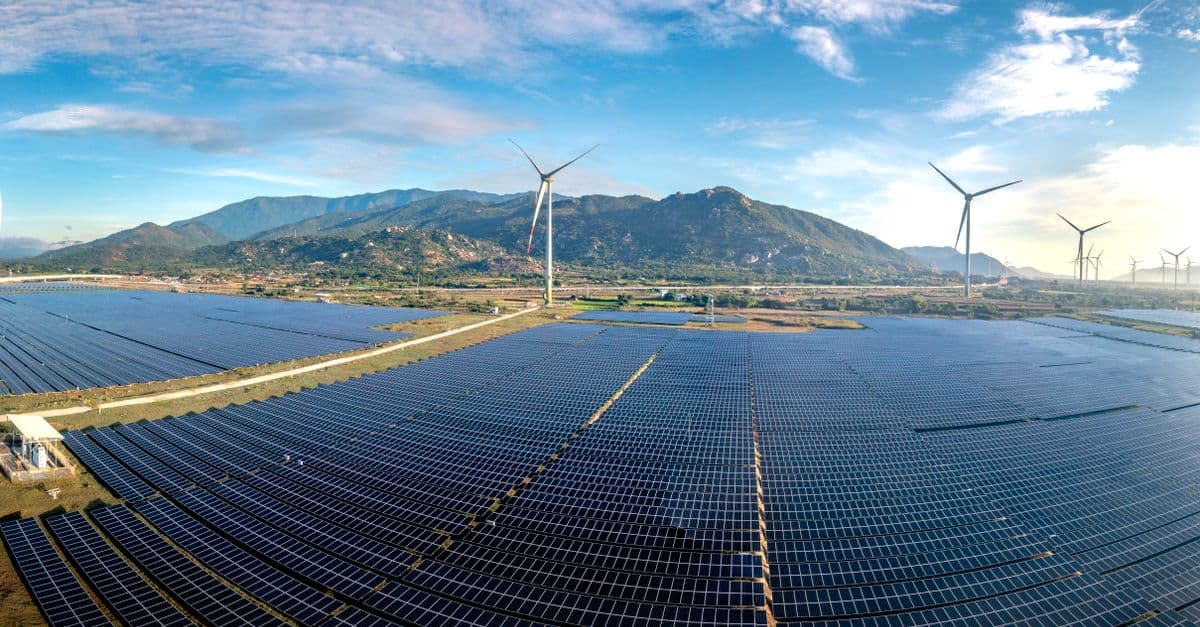
Photo: Hoài Nam / Pexels
Solar photovoltaic power has become the cheapest source of electricity in history — the International Energy Agency called it in 2020, and the cost reductions have continued since. But "cheapest" doesn't mean "optimized." The average commercial solar installation operates at 15–22% of its theoretical maximum efficiency, losses accumulate through panel soiling, shading, inverter mismatch, and suboptimal tilt angles, and predicting output accurately enough to integrate solar into grid operations remains a forecasting challenge. Machine learning is attacking each of these inefficiencies from a different angle, producing marginal gains that aggregate to significant real-world value at scale.
Key takeaways
- ML-based solar forecasting models reduce prediction errors by 20–40% compared to traditional physical models, enabling better grid integration and energy trading decisions.
- Automated fault detection using current-voltage analysis and thermal imaging AI identifies panel defects that would otherwise remain undetected for months, recovering lost output.
- Neural networks for materials discovery are accelerating the search for higher-efficiency perovskite and multijunction solar cell formulations.
- Most ML gains in deployed solar are incremental optimizations, not step-change improvements — but given the scale of global solar capacity, even 1–2% efficiency gains translate to substantial additional clean energy output.
Solar's Persistent Efficiency Gap
A silicon solar panel with a rated 20% efficiency doesn't produce 20% of all incoming sunlight under real operating conditions. Temperature affects performance (panels produce less at high temperatures despite more sunlight in summer). Soiling from dust, bird droppings, and pollen accumulates. Partial shading from a single obstacle reduces output from an entire string of panels in traditional series configurations. Manufacturing variations between panels cause "mismatch losses" when panels in the same array perform at slightly different levels. Inverters may not be optimally configured for the specific panel array characteristics.
The cumulative effect of these real-world factors can reduce output by 15–30% from nameplate ratings. Identifying and mitigating each one requires granular monitoring and sophisticated optimization — exactly what ML handles well.
Solar Output Forecasting
Accurate solar power forecasting matters for two constituencies: grid operators managing the balance between supply and demand in real time, and solar plant owners trading power in day-ahead electricity markets.
Traditional physics-based forecasting models use numerical weather prediction (NWP) outputs — cloud cover, irradiance, temperature — as inputs to irradiance models and then panel performance models. These work well in clear conditions but degrade when cloud movement is rapid or spatially heterogeneous.
SolarAnywhere (Clean Power Research) and Solargis both incorporate ML components into their forecasting platforms. Their hybrid approaches use NWP output as a starting point and apply neural networks trained on the historical relationship between model outputs and actual measured irradiance at specific locations — effectively correcting for systematic model biases at the site level.
Research published in Solar Energy and Renewable Energy journals consistently shows that ensemble ML models — combining multiple modeling approaches — outperform any single physics-based model by 20–40% in mean absolute error for day-ahead forecasting. The improvement is most pronounced for partially cloudy days, which are the hardest forecasting cases and the ones where forecast error is most costly.
Google's DeepMind, in partnership with Alphabet's energy trading unit, developed an ML-based solar output forecasting system that improved 36-hour forecast accuracy enough to increase the value of solar energy deliveries in energy markets. In a published case study, the system reduced forecast error significantly compared to baseline, translating to millions of dollars in improved energy trading outcomes annually across Google's data center solar portfolio.
Fault Detection and Predictive Maintenance
A solar installation may have thousands of panels. A single faulty panel or underperforming string might reduce output by a fraction of a percent — undetectable in aggregate monitoring, but persistent and cumulative. Traditional operations and maintenance protocols catch some of these faults through periodic aerial thermography surveys, but surveys are expensive and infrequent.
ML-based fault detection works in two ways: analyzing the electrical signature of the array in real time, or processing aerial thermal imaging.
Electrical signature analysis uses current-voltage (I-V) curve measurements. A healthy panel produces a characteristic I-V curve shape; defects — cracked cells, soiling, partial shading, junction degradation — each produce distinctive curve anomalies. ML models trained on databases of labeled I-V curves can classify fault types with high accuracy. Solaredge and Enphase, the two largest microinverter and power optimizer manufacturers, both incorporate ML fault detection into their monitoring platforms, enabling panel-level fault identification rather than waiting for a string-level performance drop that's obvious without analysis.
Aerial thermography AI processes drone or helicopter thermal images to identify hot spots — thermal anomalies indicating cell defects, soiling, or bypass diode failures. Companies like DroneBase (now Zeitview) and Raptor Maps offer AI-powered drone inspection services for utility-scale solar farms. Their ML systems automatically flag anomalous panels in thermal images, produce georeferenced reports, and track fault progression over time. What once required a thermal imaging specialist reviewing images manually can now be processed at the rate of hundreds of panels per minute.
In a documented deployment across a 500MW utility-scale solar farm in the US Southwest, Raptor Maps identified faults affecting approximately 3% of panels that had been producing at degraded output levels undetected for an estimated 6–18 months — representing cumulative energy losses of hundreds of MWh.
Inverter and System-Level Optimization
Inverters — the devices that convert DC power from panels to AC power for the grid — have their own optimization problems. Maximum Power Point Tracking (MPPT) algorithms control inverter operating parameters to extract maximum power from the panel array in real time. Traditional MPPT algorithms use deterministic control logic. ML-based MPPT approaches can adapt to unusual conditions — rapid irradiance changes during cloud transients, temperature extremes — more effectively than fixed algorithms.
Power Factor Correction and reactive power management at the grid connection point are increasingly handled by ML controllers trained on grid voltage and frequency data. These controllers contribute to grid stability during solar variability events — a function that becomes more important as solar penetration of grid capacity increases.
At the portfolio level, ML optimization algorithms manage multiple solar farms simultaneously — adjusting output from individual plants to meet grid dispatch requirements while maximizing revenue across a mix of spot market, day-ahead, and contract positions. This portfolio optimization is far too complex for manual management and represents a growing share of the value delivered by solar fleet management platforms.
Materials Discovery for Next-Generation Solar
Current commercial silicon solar cells operate at 20–24% efficiency. Theoretical maximum for silicon is about 29% (the Shockley-Queisser limit). Getting from 24% to 29% is important but represents incremental progress. Breaking beyond 29% requires tandem cell designs that combine silicon with perovskite materials — a class of crystalline compounds with highly tunable band gaps.
Perovskite solar cells have demonstrated efficiencies above 26% in research settings, but stability remains a challenge: lead-based perovskites degrade under humidity, heat, and UV exposure. Finding stable, efficient, and preferably lead-free perovskite formulations is a massive chemical search space.
The Materials Project and NOMAD Laboratory have assembled databases of computed and experimental materials properties. ML models trained on these databases can predict the properties of unmeasured compounds — band gap, stability, carrier lifetime — enabling researchers to computationally screen millions of candidate formulations before synthesizing only the most promising candidates.
A 2021 paper in Nature from researchers at Stanford and MIT used deep learning to identify thermally stable perovskite compositions that would have taken decades to discover by traditional experimental methods. The model's predictions pointed researchers toward formulations that were subsequently validated in the lab.
IBM Research and Fraunhofer ISE have both developed ML-accelerated materials characterization workflows that identify degradation pathways in perovskite films — critical information for designing stability improvements.
Grid Integration and Curtailment Reduction
As solar capacity grows, curtailment — forcing solar plants to reduce output because the grid can't absorb all the power — becomes an increasing problem. In California, hundreds of GWh of solar are curtailed annually because midday solar production exceeds instantaneous demand or grid transmission constraints.
ML-based grid management systems, described in more detail in the related article on AI and renewable energy grids, directly address curtailment by improving dispatch decisions, enabling more flexible demand response, and optimizing battery storage charge/discharge timing to absorb solar production that would otherwise be curtailed.
For individual solar plant owners, ML forecasting tools enable better battery dispatch strategies — charging batteries during high-production periods and discharging during peak demand periods when electricity prices are highest. This improves the economics of solar-plus-storage systems, accelerating further deployment.
Limitations and Honest Assessment
The efficiency ceiling for silicon is near. ML can help close the gap between actual and theoretical maximum silicon cell efficiency, but it cannot break the physics. Step-change improvements require new materials (perovskites, multijunction cells) where ML accelerates discovery but doesn't guarantee commercial viability.
Forecasting in complex terrain remains hard. Mountain valleys, coastal fog patterns, and urban heat islands create irradiance variability that ML models trained on flat terrain forecasting datasets handle less well.
Data quality limits performance. ML fault detection and forecasting systems require accurate sensor data — irradiance measurements, current-voltage monitoring, temperature sensors. Installations without adequate monitoring instrumentation can't benefit from these applications. The monitoring investment is often not made for smaller installations.
AI's own energy footprint. Training large ML models for materials discovery or complex optimization problems has a non-trivial carbon cost. This is generally small relative to the energy gains from optimized solar operation, but it's a cost worth acknowledging.
FAQ
How much more energy can ML optimization actually extract from an existing solar installation? The aggregate gain depends on the baseline quality of the installation and monitoring. Studies of ML-based fault detection, forecasting, and inverter optimization suggest total improvement potential of 2–8% of annual energy output for typical utility-scale plants. For installations with significant undetected faults, the recovery from fault identification alone can exceed 5%.
Can homeowners with rooftop solar benefit from ML optimization? Increasingly yes. Platforms like Enphase's monitoring system and Tesla's Powerwall software use ML to optimize battery dispatch and identify panel-level underperformance. The direct energy gains for homeowners are modest (1–3%), but the value from improved battery scheduling and export timing can be financially meaningful in time-of-use electricity markets.
What's the difference between solar irradiance forecasting and solar power forecasting? Irradiance forecasting predicts the amount of solar radiation reaching a location. Power forecasting takes irradiance and converts it to expected panel output, accounting for panel efficiency curves, temperature coefficients, inverter performance, and system losses. ML is applied at both stages, but the error sources are different.
Are perovskite solar cells commercially available yet? As of early 2026, perovskite-silicon tandem cells are in early commercial deployment. Companies including LONGi Green Energy and Oxford PV have begun limited production of tandem cells with efficiencies above 28%, but volume production and durability at 25-year panel lifetimes remain in development. Full commercial maturity is likely 3–7 years away.
Does soiling really significantly reduce solar output, and can AI help? Yes, significantly. Studies in arid and semi-arid environments (the Middle East, Atacama, US Southwest) show soiling losses of 0.5–7% per month without cleaning. ML models trained on soiling rate data can optimize cleaning frequency and timing — cleaning after specific dust events rather than on fixed schedules — reducing water and maintenance costs while maintaining output. Autonomous cleaning robots with path optimization algorithms are commercially deployed at several utility-scale plants in the Middle East.
Read next:
Follow new articles
Add SciHub101 to your feed reader to see new science and technology stories.
About the Author
SciHub101 is an independent science and technology publication founded and edited by Buğra Sözeri, a software engineer and app developer based in Türkiye. AI tools assist with drafting and research. Source documentation in the existing archive is uneven, and articles are being reviewed and corrected. The Editorial Team byline identifies editorial responsibility; it does not certify specialist or independent human review. Where we compare products, anything built by our own team is labelled as such — see the editorial guidelines and About page for how corrections and disclosures work.
Related Articles
AI for Wildfire Detection and Prevention: From Spark to Satellite in Minutes
AI systems are detecting wildfires minutes after ignition using camera networks and satellite imagery, giving firefighters a critical head start before fires become catastrophic.
How Volcanoes Work: The Science of Earth's Most Powerful Force
A single eruption can cool the entire planet for years. Here's the science behind what makes volcanoes tick — from deep magma to explosive blasts.

How AI Optimizes Renewable Energy Grids: What It Really Does
Solar and wind output swings with the weather, but a grid must balance supply and demand every second. Here is what machine learning actually does for grid operators, which claims are documented, and where the limits are.
How Solar Panels Actually Work: From Photon to Grid (2026)
A deep-dive into the full physics of solar energy — the photovoltaic effect, silicon p-n junctions, Shockley-Queisser efficiency limits, perovskite tandem cells, inverters, and the real economics of solar in 2026.

AI & Environmental Impact Assessments: Automating Sustainability Reviews
How machine learning speeds up environmental impact assessments for infrastructure projects, from satellite-based biodiversity scans to supply-chain carbon models.

AI & Carbon Markets: Monetizing Climate Action Through Smart Trading
How machine learning prices carbon credits, flags fraudulent offsets, and reshapes climate finance — and where its limits are.