How AI Optimizes Renewable Energy Grids: What It Really Does
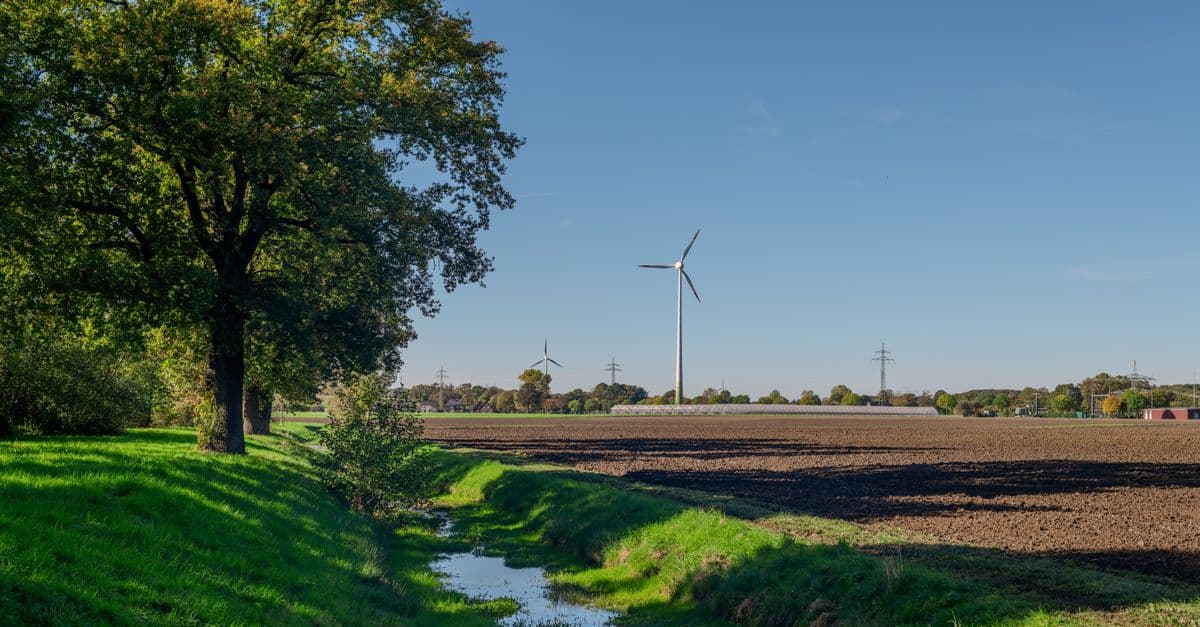
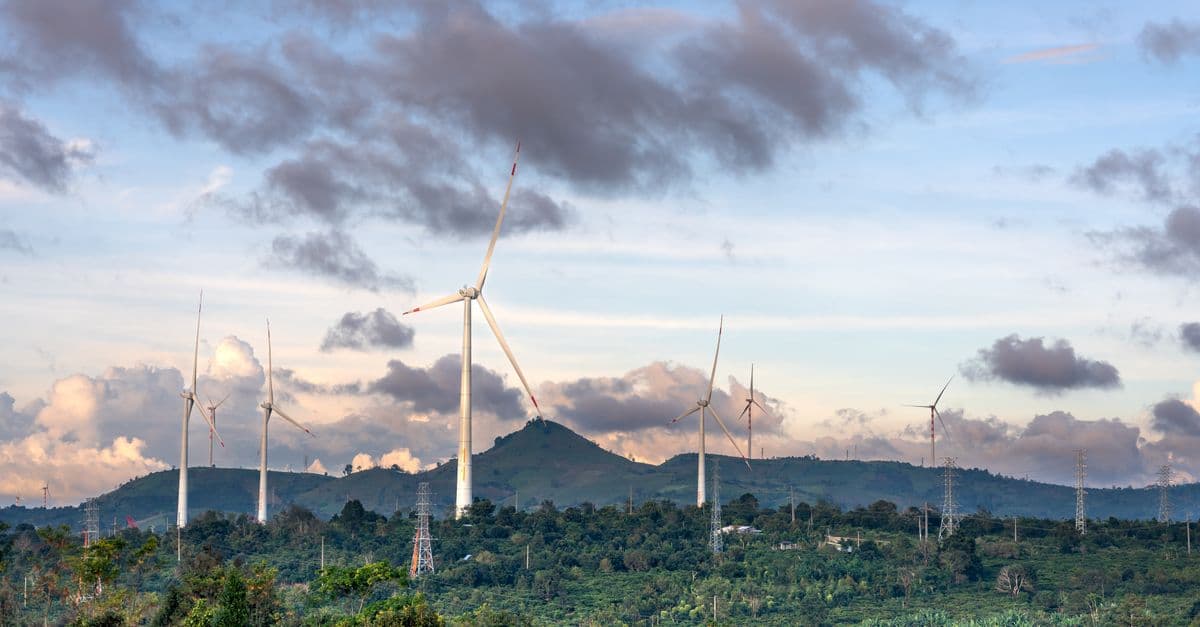
Photo: SK Strannik / Pexels
An electric grid has no slack. Electricity is consumed the instant it is generated, so operators must match supply to demand second by second, and wind and solar plants make that harder because their output follows the weather rather than a dispatch order. AI helps in a few specific ways: forecasting generation, scheduling batteries and backup plants, and squeezing more capacity out of existing wires.
This article explains how each of those works, which results are documented in public sources, and which popular claims do not hold up. It also covers what AI cannot do, because several of the grid's hardest problems are physics, not prediction.
Key takeaways
- The job is balancing, not generating. AI does not make wind or solar more powerful. It helps operators predict output and schedule other resources around it.
- Forecasting is the core use. Neural networks predict wind and solar output at horizons from minutes to days, and weather models such as DeepMind's GraphCast now run a 10-day global forecast in under a minute.
- Documented result: a 2019 Google DeepMind system forecast wind output 36 hours ahead and raised the value of 700 MW of wind power by roughly 20%, though the company called the results early.
- Batteries do much of the physical work. South Australia's Hornsdale battery cut grid-service costs mainly through speed, not through software alone.
- Limits: AI cannot eliminate variability, supply the inertia that rotating generators provide, or make a grid immune to cyberattack. A single "accuracy percentage" for AI forecasting is not meaningful without the horizon and metric.
Why a grid with lots of wind and solar is hard to run
The balance is measured in frequency
A grid's alternating current runs at a nominal frequency: 50 hertz in most of the world and 60 hertz in the Americas and a few Asian countries. According to Wikipedia's entry on utility frequency, a generator's frequency depends on the balance between the mechanical power driving it and the electrical load on it. When load exceeds supply, the shaft slows and frequency falls; when supply exceeds load, frequency rises.
Frequency is therefore the grid's vital sign. Small deviations are normal, but protective relays typically trip when frequency falls roughly 0.5 to 2 hertz below nominal, triggering load shedding or islanding to protect the rest of the network. Think of it like a bathtub with the drain and tap both open: the water level (frequency) holds steady only if inflow and outflow match, and operators have very little buffer to work with.
Rotating generators give the grid a flywheel
Conventional power plants contain heavy spinning machines. The same utility-frequency reference notes that rotating synchronous generators store kinetic energy, which resists rapid frequency changes. Solar panels and most wind turbines connect through inverters and are not mechanically coupled to the grid, so they provide little of this inertia. As they replace synchronous generators, the rate at which frequency changes after a disturbance can rise sharply, stressing remaining equipment and causing false protective trips.
This is an important limit on what AI can do. A better forecast helps operators plan, but it does not add physical inertia in the first second after a plant trips. That job belongs to batteries, synchronous condensers, and inverters designed to mimic inertia, which are hardware solutions.
The duck curve
The California Independent System Operator (CAISO) coined the term "duck curve" in 2012 to describe net demand, which is demand minus solar and wind output, over a day. As solar grows, net demand dips at midday, when panels produce the most, then climbs steeply at sunset when demand stays high and solar fades. According to Wikipedia's duck curve entry, the afternoon ramp in 2020 was cited at between 10 and 17 gigawatts in three hours, which flexible generation must supply.
The midday dip creates the opposite problem. When solar output exceeds what the grid can use or move, operators order plants to reduce output, which is called curtailment. Wikipedia's curtailment entry collects figures from several regions:
| Region | Curtailment | Year |
|---|---|---|
| California | 460 GWh, 0.2% of generation | 2018 |
| California | 500 to 700 GWh per month in spring | 2024 to 2025 |
| Western China (wind) | about 20% | 2018 |
| Ireland (wind) | 1.2 TWh | 2022 |
| UK (wind) | 1.35 TWh | early 2023 |
| Australia (wind and solar) | 4.5 TWh | 2024 |
Source: Wikipedia, "Curtailment (electricity)," summarizing regional reports. Definitions and reporting periods differ between regions, so the rows are not directly comparable.
Curtailment is not always a failure. The same source notes that capturing every surplus kilowatt-hour may require transmission lines or storage that cost more than the lost output, so some curtailment is economically rational. Better forecasting of prices, wind, and solar is one of the listed mitigation options, alongside transmission upgrades, demand response, and storage.
What AI forecasting actually predicts
Horizons and methods
"Forecasting" covers very different problems depending on how far ahead you look. The table summarizes the usual split described in Wikipedia's entries on solar power forecasting and wind power forecasting.
| Horizon | Typical use | Common inputs and methods |
|---|---|---|
| Seconds to minutes | Turbine control, real-time grid management | Sensor data, statistical and machine-learning models |
| Under 1 hour (nowcasting) | Reserve adjustments, solar ramps | Ground sky cameras, time-series and machine-learning models |
| About 4 to 6 hours | Intra-day dispatch | Satellite cloud images, irradiance models |
| 6 hours to several days | Day-ahead markets, unit commitment | Numerical weather prediction (NWP) output, often post-processed by statistical or ML models |
| Weeks to a year | Maintenance scheduling | Climatology, long-range models |
Two points matter. First, the simplest forecast, called persistence, assumes output stays at its current level. It is a naive baseline whose accuracy falls off quickly with time, which is why any ML model should be compared against it. Second, the solar-forecasting entry notes that intra-day and day-ahead horizons are the most important under many jurisdictions' power-market rules.
Why "85% to 95% accurate" is not a useful claim
Popular articles often quote a single accuracy figure, such as "AI predicts wind output 90% accurately." No public source supports a universal number. Forecast error depends on:
- The horizon. A one-hour forecast is easier than a day-ahead one.
- The site. A single wind farm is harder to forecast than an aggregate of hundreds, because individual errors partly cancel.
- The metric. Error can be expressed as a percentage of installed capacity, of actual output, or relative to a baseline such as persistence. The same model can look excellent or mediocre depending on the choice.
- The weather. Fronts, fog, wildfire smoke, and convective storms cause errors that ordinary days do not.
The only specific error figure in the Wikipedia wind-forecasting entry is an average uncorrected error of 8.8% in Germany over two years, with no stated capacity basis or horizon. That illustrates the problem: a number without its definition is not evidence. A careful vendor or operator reports the error metric, the horizon, and the baseline.
How the models work
Most grid forecasters combine two layers.
Layer one is physics. Weather models, called numerical weather prediction, solve the equations of atmospheric flow on a grid of points. They produce forecasts of wind speed, cloud cover, and temperature, but they run on coarse grids and arrive hours late. The wind-forecasting entry notes mesoscale grid spacing of a few kilometers to about 50 kilometers, forecasts of 48 to 172 hours, and model runs two to four times daily.
Layer two is learning. A machine-learning model takes those weather forecasts plus the site's own history and learns the mapping from "forecast weather" to "actual output." This corrects systematic errors that physics models make for a particular site, such as local terrain effects on wind or the way a specific solar farm's panels are tilted. Common architectures are:
- Gradient-boosted trees and random forests, which handle tabular inputs well and are widely used for this kind of problem.
- Recurrent networks such as LSTMs (long short-term memory networks), which process a sequence and keep a running memory of what came earlier, like a person reading a sentence word by word and remembering the subject.
- Transformers, which use attention to weigh which past moments or nearby sites matter most for a prediction. Our explainer on transformers covers the mechanism, and the article on time series forecasting covers the underlying statistics.
No single architecture is best for every site and horizon, which is another reason a lone accuracy figure says little.
AI weather models
Recently, machine learning has also been applied to the weather itself. A 2023 paper in Science by Remi Lam and colleagues at Google DeepMind, "Learning skillful medium-range global weather forecasting," describes GraphCast, which forecasts the next 10 days globally at 0.25 degree resolution for hundreds of variables. The authors report that it "significantly outperforms the most accurate operational deterministic systems" on 90% of 1,380 verification targets, and that a forecast takes under one minute to produce.
For the grid, the interest is speed and cost: if forecasts can be produced faster and cheaper, operators can run more of them and with more scenarios. The IEA's 2025 report Energy and AI says AI "has been improving the accuracy of weather forecasts" and reduces the computational demand for them. Better global weather is not the same as better site-level power forecasts, which still require the conversion from weather to output, but it improves the first layer.
What the documented results look like
Google DeepMind and wind
In February 2019, Google DeepMind described a neural network trained on public weather forecasts and historical turbine data that predicted wind output 36 hours ahead and recommended hourly delivery commitments a day in advance. Applied to 700 MW of wind capacity in the central United States, it increased the value of the wind energy by roughly 20% compared with having no time-based commitments, according to DeepMind's announcement.
The mechanism is commercial rather than physical. Scheduled power, which can be promised for a set amount at a set time, is often more valuable to a grid than variable power. The company stated that it was still refining the algorithm and added: "We can't eliminate the variability of the wind." The result is a good example of what AI does: it reduces uncertainty, which makes the output easier to sell.
Better forecasts mean fewer spinning reserves
The wind-forecasting entry notes that better forecasts let utilities run fewer spinning reserves, usually gas-based generators, and that reliable uncertainty estimates let wind producers significantly increase trading income compared with point forecasts alone. Imbalance penalties, charged when a producer delivers different from what it promised, generally fall on wind producers and can be asymmetric. The economic case for forecasting is therefore as much about market penalties as about physics.
What the IEA says about grids
The International Energy Agency's 2025 report Energy and AI gives two estimates for AI in electricity networks. It finds that "up to 175 GW of additional transmission capacity could be unlocked in existing lines," and that in its Widespread Adoption Case, AI in power plant operations and maintenance could yield "potential cost savings of up to USD 110 billion annually by 2035." Both figures come from scenario modeling, not observed outcomes, and the second applies to plant operations broadly. They indicate the order of magnitude that analysts see, not a forecast.
A related idea is dynamic line rating, which sets how much current a power line can safely carry based on real-time weather rather than a conservative fixed limit. Cool, windy conditions let lines carry more, and weather forecasts help predict when. This is one way AI-assisted forecasting can raise capacity without building new lines.
From forecast to dispatch
An illustrative example
A forecast is only useful if it changes a decision. Here is a simplified, hypothetical example. The numbers are invented to show the logic and do not describe a real grid.
A small grid has 800 MW of solar capacity, three gas units of 250 MW each, and a 200 MW battery that holds 400 MWh. Midday demand is 500 MW, so on a sunny day solar produces a 300 MW surplus. At 6 pm, solar is zero and demand peaks at 1,000 MW. Gas units need 45 minutes to start and ramp.
- Without a forecast: The operator sees solar fading at 5 pm and begins starting the third gas unit too late. For about half an hour, supply is short and the operator must shed load or buy emergency power.
- With a forecast at 2 pm: The system predicts the solar drop and the evening peak. It schedules the battery to charge from the midday surplus (the 300 MW surplus lasts long enough to fill 400 MWh), starts the third gas unit at 4:15 pm so it is ready before demand climbs, and plans to discharge the battery at 200 MW across the two peak hours.
- Arithmetic check: Three gas units supply 750 MW and the battery 200 MW, a total of 950 MW against a 1,000 MW peak. The 50 MW gap is covered by demand response, for example industrial customers who agree to reduce load for payment.
Real systems solve this as a mathematical optimization problem called unit commitment and economic dispatch, with thousands of generators and transmission constraints. Machine learning mostly supplies the inputs (forecasts) and sometimes speeds up the solver. The optimization itself is usually classical mathematics, and operators typically keep a human or rule-based check on the result.
Batteries and what Hornsdale really shows
The best-known grid battery is the Hornsdale Power Reserve in South Australia. According to Wikipedia's entry, it connected to the grid on December 1, 2017 at 100 MW and 129 MWh, then expanded to 150 MW and about 193.5 MWh in 2020.
Popular accounts say the battery "replaced a gas plant." The documented story is narrower and more interesting. The battery responds within 100 milliseconds, compared with 6,000 milliseconds under earlier contingency frequency-control arrangements. The entry reports that, in a model by the consultancy Aurecon, grid-service costs fell by about A$116 million in 2019, with frequency control ancillary services (FCAS) prices falling 91%, from $470 per MWh to $40 per MWh. About A$80 million of the modelled saving came from contingency services, which cover the sudden loss of a generator, and about A$36 million from regulation services, which handle small continuous deviations.
On December 14, 2017, when a 560 MW unit at Loy Yang tripped in Victoria, frequency fell to 49.8 hertz and the battery injected power within seconds. The Wikipedia entry does not describe the battery as using AI, and the savings came mainly from its speed and size. Software that decides when to charge, discharge, and bid is part of how such batteries earn money, but the physical advantage is the fast inverter. Our article on why grid storage is hard explains the cost and chemistry limits.
Virtual power plants and flexible demand
A virtual power plant aggregates many small resources, such as home batteries, rooftop solar, EV chargers, and water heaters, so they act like one plant. Wikipedia defines it as a system for aggregating distributed energy resources to function as a single power plant, and discusses schemes in several countries, including a Tesla-backed program in South Australia.
Here learning algorithms matter because the task is large-scale coordination. A system must predict each household's consumption and battery state, decide whose battery to call on, and respect each owner's preferences. Our article on electric vehicles and the power grid covers how EV charging could become one of the biggest flexible loads.
Where AI does not help, or helps less than claimed
Physics problems
AI cannot add inertia, build a transmission line, or make the sun shine. If the binding constraint is that a region lacks wires to move power, no forecast will fix it. The curtailment table above includes losses as large as about 20% of wind output in western China in 2018. Curtailment has several causes, including limited transmission, market rules, and forecast error, and the sources reviewed here do not apportion them.
Rare events
Machine-learning models learn from history. A model trained on ordinary years may fail on an unprecedented event, such as a heat dome, a record wildfire smoke season, or a winter storm that freezes turbines and gas wells. These are the moments when grids are most stressed, and also when historical data is thinnest. Operators therefore pair ML with probabilistic forecasts, which give a range rather than a single number, and keep reserves for the tails.
Cybersecurity
Putting more software in control of the grid creates more targets. The 2015 attack on Ukraine's grid is the standard reference: on December 23, 2015, attackers using spear-phishing emails and BlackEnergy malware took control of SCADA systems and remotely switched off substations, cutting power to about 230,000 consumers for 1 to 6 hours, according to Wikipedia's account. That attack did not involve AI, but it shows why operators are cautious about automated control. The more a decision loop is automated, the more a compromise of its inputs or of the control system itself matters. Common safeguards include human approval for critical commands, redundancy, and testing models against manipulated data.
AI's own appetite for power
AI is also a new load. Data centers running AI workloads draw large amounts of electricity, and grid operators must plan for them. Our article on how AI data centers use electricity covers that side of the ledger. Whether AI's grid benefits outweigh its demand depends on the scenario, and the IEA's report treats both in separate chapters.
Common misconceptions
| Claim | What the evidence supports |
|---|---|
| "AI removes the intermittency problem" | It reduces uncertainty, but DeepMind itself stated it cannot eliminate wind variability |
| "AI prevents blackouts" | Forecasting reduces some operator errors, but equipment failures, storms, and cyberattacks still cause outages, and no public source supports a figure such as "80% to 90% prevented" |
| "A 150 MW battery replaced a gas plant" | Hornsdale's documented value is fast frequency control, with modelled 2019 savings of about A$116 million in grid-service costs |
| "AI forecasts are 90% accurate" | Accuracy depends on horizon, site, metric, and baseline, so a single number says little |
| "Most grids already run on AI" | Public sources describe pilots, specific forecasting tools, and market optimization, but there is no reliable count of fully AI-driven grids |
What to watch next
Three developments matter for readers following the field.
- Probabilistic forecasting. Instead of one number, models produce a distribution, which lets operators size reserves to a chosen risk level. This is already standard in research and is spreading in operations.
- Faster weather models. If AI weather models like GraphCast become part of operational forecasting chains, more ensemble runs become affordable.
- Coordination of small devices. Virtual power plants and managed EV charging convert millions of small loads into a flexible resource, and doing that reliably is largely a software and data problem.
For the broader picture of where solar and wind stand, see our overview of renewable energy, the explainers on solar panels and wind turbines, and the thought experiment what if we gave AI control of the power grid. A ranking of the countries furthest along is in countries that run on the most renewable electricity.
What this means
The strongest case for AI on renewable grids is modest and concrete: a better forecast converts an unpredictable resource into a schedulable one, and schedulable power is worth more and needs less standby capacity behind it. The documented numbers, such as a roughly 20% value gain on 700 MW of wind, show real but bounded benefits, and the big system-level figures are scenarios. The hard constraints, such as inertia, transmission, storage cost, and cybersecurity, remain engineering problems that no algorithm dissolves. Treat any article that quotes one tidy accuracy percentage as marketing and ask for the horizon, the metric, and the baseline.
Frequently asked questions
Q: How does AI predict solar and wind power? A: It combines weather forecasts, satellite or sky-camera images, and a site's own generation history. A model learns how forecast weather translates into real output at that site, correcting errors that weather models make. The best method depends on the horizon: cameras and time-series models for the next hour, satellite images for several hours, and weather-model output for days.
Q: How accurate are AI forecasts of renewable generation? A: There is no single figure. Error depends on the horizon, the site, the weather, and whether it is measured against installed capacity, actual output, or a baseline like persistence. Operators and vendors should report all of those. DeepMind's 2019 wind work reported value gains rather than a single accuracy rate.
Q: Does AI make renewable energy cheaper? A: It can lower costs in specific ways, such as reducing imbalance penalties, reserves, and curtailment. DeepMind reported roughly 20% more value from 700 MW of wind with day-ahead commitments, and the IEA's 2025 scenarios estimate large savings by 2035. These are modeled or company-reported results and depend on market design.
Q: Can AI prevent blackouts? A: It can reduce some risks by improving forecasts and reserve planning, but it cannot prevent outages caused by storms, equipment failure, or attacks, and it does not supply the inertia that stabilizes frequency after a plant trips. No public source supports a claim that AI prevents a fixed share of blackouts.
Q: Will batteries make AI unnecessary? A: No. Batteries move energy in time, and software decides when to charge and discharge. They work together. Hornsdale in South Australia showed that a fast battery can cut frequency-control costs sharply, and forecasts help decide how much energy to hold and when.
Q: Is AI grid management already deployed? A: Parts of it are. Forecasting models, market optimization, and aggregated resource control are used by operators and companies. Fully autonomous grid dispatch is not documented in the sources reviewed here, and human oversight remains standard for critical commands.
Sources
- Wikipedia, Utility frequency
- Wikipedia, Duck curve
- Wikipedia, Curtailment (electricity)
- Wikipedia, Solar power forecasting
- Wikipedia, Wind power forecasting
- Wikipedia, Hornsdale Power Reserve
- Wikipedia, December 2015 Ukraine power grid cyberattack
- Google DeepMind, Machine learning can boost the value of wind energy (February 26, 2019)
- IEA, Energy and AI (2025), AI for energy optimisation and innovation
- Lam R et al. (2023), Learning skillful medium-range global weather forecasting, Science 382, 1416-1421, doi:10.1126/science.adi2336
Read next:
Follow new articles
Add SciHub101 to your feed reader to see new science and technology stories.
About the Author
SciHub101 is an independent science and technology publication founded and edited by Buğra Sözeri, a software engineer and app developer based in Türkiye. AI tools assist with drafting and research. Source documentation in the existing archive is uneven, and articles are being reviewed and corrected. The Editorial Team byline identifies editorial responsibility; it does not certify specialist or independent human review. Where we compare products, anything built by our own team is labelled as such — see the editorial guidelines and About page for how corrections and disclosures work.
Related Articles

Countries with the Most Coral Reefs (2025 Ranked)
Australia's Great Barrier Reef is the world's largest coral structure at 348,000 km². Indonesia has the most coral biodiversity. But 50% of the world's coral reefs have died since 1950 — bleaching events driven by ocean warming are accelerating. Here's the full coral reef ranking and the scale of the crisis.
Machine Learning for Climate Prediction: What AI Can Forecast
AI weather models now produce 10-day global forecasts in under a minute. Climate projections are a harder problem, and the gap between the two is where the real science sits.
Renewable Energy Explained — Solar, Wind, and Beyond
How solar panels and wind turbines work, why their costs fell about 90%, how fast they are spreading, and what storage and grids must still solve.
Machine Learning for Solar Panel Efficiency: Squeezing More Power from Every Panel
ML is improving solar energy output at every stage — from materials discovery to real-time inverter control — helping solar remain the world's fastest-growing energy source.
Smart Cities and AI — How Machine Learning Reduces Urban Energy Waste
Cities use roughly two-thirds of the world's energy, and much of it runs on fixed schedules. Machine learning can forecast demand and adjust traffic signals, lighting, and building controls ahead of time. Here is what has been measured, what is vendor claim, and where the method breaks.
AI-Powered Carbon Capture Technology: What Machine Learning Can Do
Machine learning is helping chemists screen millions of candidate sorbents for direct air capture. Here is what the evidence shows, what plants cost today, and where the claims run ahead of the data.