How Do Solar Panels Work — and Are They Worth It?
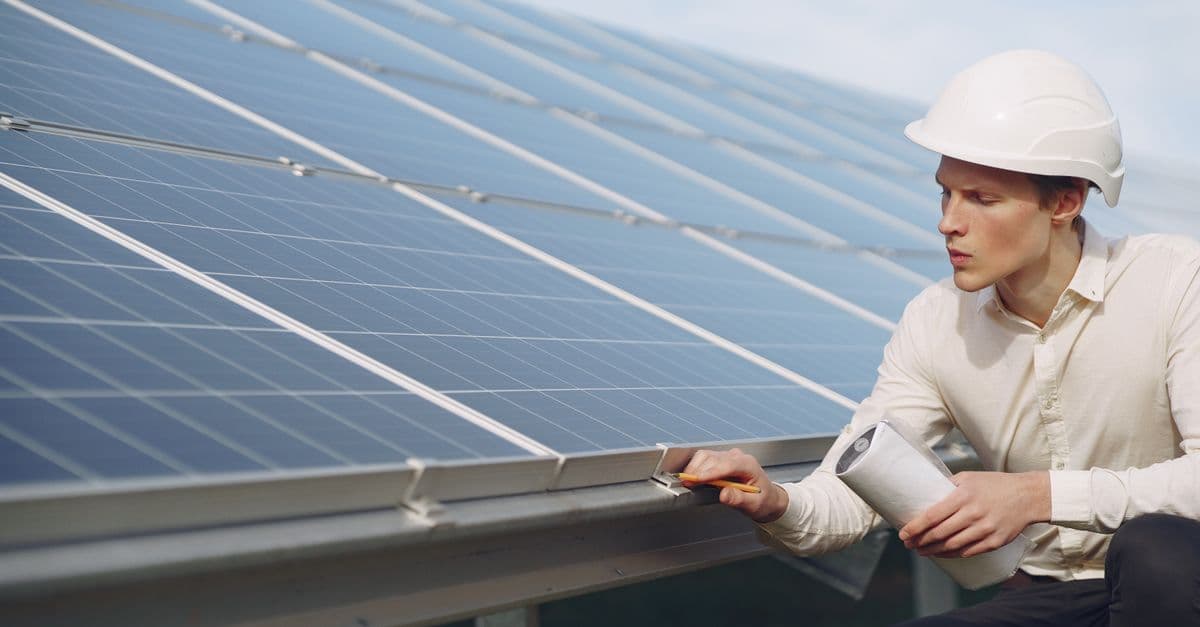
Photo: Gustavo Fring / Pexels
Solar panels turn sunlight directly into electricity. They have no moving parts, last 25-30+ years, and are now the cheapest form of new power generation in most countries. The basic physics behind them won the Nobel Prize 100 years ago. Here's how they actually work, what they cost, and whether they pay off — for households and for the planet.
Key takeaways
- Solar panels use the photoelectric effect — sunlight knocks electrons loose from silicon, generating current.
- Modern panels are 20-23% efficient at converting sunlight to electricity.
- Costs have dropped 90%+ in the last decade; payback periods are typically 7-12 years.
- Solar is now the cheapest source of new electricity in most countries.
- Environmental impact of manufacturing is offset within 1-3 years of operation.
The basic physics — the photoelectric effect
In 1905, Albert Einstein explained the photoelectric effect: when light hits certain materials, it can knock electrons loose. The amount of energy depends not on the brightness but on the wavelength (colour) of the light. He won the Nobel Prize for this in 1921 — not for relativity.
That's the foundation of solar panels. Sunlight (made of photons) hits a material. Photons knock electrons loose. The freed electrons flow as electrical current.
How a solar cell works
A solar cell is two layers of silicon:
The layers
- N-type silicon (top layer) — doped with phosphorus to have extra electrons.
- P-type silicon (bottom layer) — doped with boron to have "holes" (missing electrons).
At the boundary, electrons from N-type rush over to fill holes in P-type, creating an electric field.
The process
- Photons strike the cell. Each photon carries enough energy to knock an electron loose from the silicon atomic lattice.
- The electric field at the boundary pushes electrons toward the N-type side and holes toward the P-type side.
- Connected to a circuit, the electrons flow through the external wire (doing useful work like powering your home) before returning to the P-type side and recombining.
That flow of electrons is electrical current. Connect many cells together and you have a panel; many panels and you have an array.
Solar panel components
A complete solar installation includes:
Solar panels
The main collectors. Usually crystalline silicon. Modern panels are 20-23% efficient. Highest commercial efficiency reaches ~25%; experimental tandem cells exceed 30%.
Inverter
Converts the panels' DC output to AC for home use. Two types:
- String inverters — one large inverter for the whole array. Cheaper.
- Microinverters — one per panel. More expensive but better in shaded conditions and easier to monitor.
Mounting hardware
Roof or ground mounts that orient panels optimally toward the sun.
Battery storage (optional)
Stores excess daytime production for night use. Increasingly common as battery costs drop.
Net metering or grid-tie
Connects the system to the grid, so excess power is exported (sometimes credited) and grid power is available when needed.
Types of solar panels
Monocrystalline
Made from a single crystal of silicon. Highest efficiency (20-23%), most expensive. Usually black.
Polycrystalline
Made from multiple crystals. Lower efficiency (16-18%) but cheaper. Usually blue.
Thin-film
Various technologies (cadmium telluride, CIGS, amorphous silicon). Lower efficiency but cheaper and flexible. Used for utility-scale and specific applications.
Perovskite (emerging)
A new class of materials with rapidly improving efficiency. Tandem perovskite-silicon cells could exceed 30%. Stability and longevity are still being improved.
How much electricity?
Roughly:
- A 6 kW system (about 18 panels) produces 6,000-9,000 kWh/year in good locations — enough to cover most household electricity use.
- Larger systems scale linearly, limited by roof space.
- Production is highest in summer, lowest in winter; sunny days, lowest in cloudy or shaded conditions.
Local conditions matter enormously. The same panel produces 2× more energy in Phoenix than in Glasgow.
Cost and payback
Falling costs
Solar panel prices have dropped ~90% since 2010. A residential installation that cost $40,000+ in 2010 might cost $15,000 today. Utility-scale solar is now under $30/MWh in many markets — cheaper than coal or gas.
Payback period
Depends on:
- Local electricity prices (higher prices = faster payback).
- Solar incentives (tax credits, rebates).
- Local sunshine (more sun = faster payback).
Typical residential payback: 7-12 years. After payback, electricity is essentially free for the panel's remaining 15-20+ years of life.
Total cost of ownership
Over 25 years, solar typically beats grid electricity by 50-70% in cost. With batteries, slightly less but more independence.
Environmental impact
Manufacturing
Making solar panels requires energy and produces emissions — primarily silicon refining, glass, and aluminium.
Carbon payback
Modern panels pay back their manufacturing emissions in 1-3 years of operation. Over 25 years, they produce 10-30× the emissions saved.
End of life
Panels are roughly 80-90% recyclable. The recycling industry is still maturing; large volumes of decommissioned panels will start appearing in the 2030s.
Land use
Utility-scale solar takes substantial land. But rooftop solar uses existing space. Combined approaches can minimise impact.
Grid Integration and Smart Metering
Solar panels don't operate in isolation; they're part of an electrical grid that must balance supply and demand constantly. When millions of homes generate solar power simultaneously on a sunny afternoon, the grid must either absorb that power, store it, export it, or curtail production.
Source: International Energy Agency (2025) — Solar now provides 15% of global electricity generation.
Net metering is the mechanism that makes residential solar economically viable. When your panels produce more than you use, excess electricity flows back to the grid and your meter runs backward, crediting you. At night or on cloudy days, you draw power from the grid. The credit you accumulate during sunny periods offsets nighttime consumption. In most US states and many countries, this policy is standard, though it faces pushback from utilities concerned about lost revenue.
Grid-scale solar farms present different integration challenges. A 500 MW solar plant can generate massive power surges when clouds clear or reduce output rapidly when they arrive. Electricity grids—which run at 50 or 60 Hz—require constant frequency regulation. The rapid variability of solar requires either battery storage, demand flexibility, or complementary dispatchable power sources (hydro, gas, nuclear) to remain stable.
Modern grids solve this through software: AI forecasting algorithms predict solar output hours ahead based on weather data, automated demand response programs shift consumption toward peak solar generation, and battery plants (which have become far cheaper than 10 years ago) smooth the variability. Denmark and Germany, which generate 40-50% of their electricity from solar and wind, have built sophisticated smart grid infrastructure to manage these swings.
Environmental Lifecycle Analysis: The Full Picture
Solar's environmental credentials look good at first glance—zero direct emissions during operation—but manufacturing and end-of-life disposal complicate the story.
Source: National Renewable Energy Laboratory (2024) — Solar panel manufacturing emissions range from 40–80 g CO₂ equivalent per kilowatt-hour over the panel's lifetime.
Manufacturing impacts are concentrated in silicon purification, which consumes enormous energy. Making pure silicon from quartzite (sand) requires melting at ~2,000°C, a process historically powered by coal in China. This is improving as renewable electricity grids expand. Aluminum frames, glass, and copper wiring add additional emissions. Total manufacturing carbon for a modern panel: ~40–80 kg CO₂ equivalent per panel.
Carbon payback time is the critical metric. How long does a panel need to operate to produce as much energy as was consumed making it? Modern panels achieve carbon payback in 1–3 years, meaning over a 25-year lifespan, they generate 8–25 times their manufacturing carbon as renewable energy. Older panels (pre-2015) took 5+ years; today's panels, benefiting from efficiency improvements and renewable manufacturing, are even better.
End-of-life recycling is the emerging bottleneck. A typical panel contains silicon, glass, aluminum, copper, and some panels contain small amounts of lead or cadmium. The recycling process mechanical shredding, thermal processing, and recovery of materials—is not yet profitable at scale. Most decommissioned panels (2–3% of installed base per year by 2030) currently go to landfills, though emerging technologies can recover ~85% of material value.
The European Union has mandated higher collection and recycling rates (85–95% by 2030), spurring investment in recycling infrastructure. Second Life Markets, a startup, recovers panels that are degraded for residential use (still 80% efficiency) but not economical for commercial deployment. This extends panel life and delays end-of-life recycling.
Comparing Solar to Other Renewable Energy Sources
While this article focuses on solar, the broader question is: how does solar compare to wind, hydro, and emerging alternatives?
| Energy Source | Capacity Factor (%) | Cost ($/MWh) | Land Use (m²/MW) | Variability |
|---|---|---|---|---|
| Solar PV | 15-25 | $30-40 | 4,000-10,000 | High (daily/seasonal) |
| Onshore Wind | 25-40 | $25-50 | 300-500 | Medium (hourly/seasonal) |
| Offshore Wind | 40-50 | $60-100 | (none) | Lower |
| Hydroelectric | 40-50 | $60-100 | 100-300 | Low (controllable) |
| Geothermal | 70-90 | $70-120 | 100-150 | Very low |
Solar excels on cost and rooftop deployability but loses on land efficiency and capacity factor (the fraction of maximum output achieved on average). Wind requires less land and generates more energy per installed watt but depends on wind resources. Hydro is reliable but geographically limited. The optimal strategy combines all three: solar dominates daytime and summer, wind provides winter and night baseline, hydro and storage handle the gaps.
Countries like Denmark (80% wind), Costa Rica (99% renewables via hydro), and California (now 60%+ solar+wind) demonstrate that high renewable penetration is technically feasible. The limiting factor is grid infrastructure, not generation technology.
Regional Variations in Solar Viability
Solar's economics vary dramatically by location. A home in Phoenix receives ~2,500 peak sun hours per year; one in Seattle receives ~1,400. This difference halves the annual energy output and roughly doubles the payback period.
Source: National Solar Radiation Database (2026) — Global solar irradiance ranges from 800 kWh/m²/year (high latitude) to 2,300 kWh/m²/year (equatorial).
Tropical and subtropical regions (0–30°N/S) enjoy year-round high solar potential. India, Africa, Middle East, and parts of Australia have the highest technical potential. Yet deployment lags in many African nations due to lack of capital, grid infrastructure, and policy frameworks.
Mid-latitude regions (30–50°N/S) including most of Europe, North America, and temperate Asia have moderate but reliable potential. Seasonal variation is pronounced (much more production in summer), but modern electric heaters, heat pumps, and vehicle charging can shift demand toward summer generation.
High-latitude regions (>50°N/S) have poor solar potential but are not ruled out. Scandinavia, Canada, and Russia are deploying solar at increasing rates, accepting longer payback periods for energy independence. These regions often combine solar with wind, hydro, and nuclear for a diverse portfolio.
Urban vs. rural deployment also matters. Urban rooftops can host distributed solar, reducing transmission losses. Rural utility-scale farms achieve lower per-watt costs but transport electricity over longer distances. The combination—rooftop solar on homes and businesses, plus large farms supplying baseline power—is emerging as the optimal design.
AI and Machine Learning in Solar Optimization
Modern solar farms and smart grids increasingly use AI to predict output, optimize dispatch, and maintain equipment.
Forecasting is critical for grid integration. Convolutional neural networks trained on satellite imagery, weather data, and historical generation can predict solar output 1–24 hours ahead with ~85% accuracy. This allows grid operators to schedule backup generation or demand response before a cloud front arrives, preventing frequency deviations that could destabilize the grid.
Optimal tilt and tracking use machine learning to learn the local microclimate (shadows, reflections, nearby structures) and adjust panel angle dynamically. Single-axis and dual-axis trackers can increase annual output by 20–30% but add mechanical complexity and cost. AI-optimized static or seasonal adjustments capture most of the benefit at lower cost.
Fault detection via machine learning identifies failing panels, inverters, or wiring before they cause power loss or safety hazards. Thermal imaging combined with deep learning can spot cell cracks or junction defects that humans would miss in visual inspections.
Grid orchestration uses reinforcement learning to optimize the dispatch of thousands of distributed solar systems, batteries, and electric vehicles to smooth demand and supply. Tesla's Autobidder software, used to manage large battery installations, is an example of this approach moving into commercial deployment.
Common Misconceptions
"Solar panels don't work in cloudy regions"
They work less well, but they work. Germany leads Europe in solar deployment despite modest sunshine. UK has growing solar industry. Diffuse light (cloud-filtered) still activates the photoelectric effect; panels just produce 20-40% of their rated output instead of 100%.
"Solar panels stop working at night"
True, but with batteries or grid connection, this isn't a practical problem. Net metering or batteries handle continuity. The grid absorbs nighttime power seamlessly; battery costs are now low enough that 100% solar + battery is economically competitive in many markets.
"Solar panels degrade quickly"
Modern panels lose ~0.5% efficiency per year, a slowing degradation curve. After 25 years, a typical panel still produces ~85% of its original output—well above the manufacturer's warranty level. Many panels installed in the 1990s are still generating 70-80% of their rated power.
"Snow ruins solar panels"
Snow reduces production while it's on the panels but slides off as panels warm and the winter sun angle increases reflectivity from the snow surface. Modern panels are designed to handle snow loads (100+ kg/m²), and snow clearing on particularly valuable systems is simple and fast.
"Solar isn't economical without subsidies"
In most markets, solar is now cheaper than fossil fuel power even without subsidies. The US Inflation Reduction Act reduced costs further via tax credits, but economics alone (purely from electricity savings) justify residential and utility-scale solar in most of the developed world.
"Solar requires massive land and hurts agriculture"
Utility-scale solar does take land, but agrivoltaics—co-locating crops and panels—is advancing. Crops grow under elevated panels with reduced water needs; ground-mounted systems can use land between panel rows for grazing or dual-use farming. Rooftop solar, which dominates residential deployment, uses no land at all.
What's coming next
Tandem cells
Combining multiple semiconductor layers tuned to different wavelengths. Efficiencies above 30% are reaching commercial readiness. Perovskite-silicon tandems, demonstrated at 30%+ efficiency in laboratories, should hit mass production by 2028.
Perovskites
Cheaper than silicon, easier to manufacture, but stability has been a challenge. Major progress in recent years has extended perovskite cell lifetimes from months to years. Full commercialization requires durability testing over 20+ years.
Solar + storage integration
Battery costs have dropped 90% in the last decade. Solar + battery is becoming the default residential setup for new installations, providing 24/7 power without grid reliance. Residential systems with 10 kW solar and 10 kWh battery now cost $10,000–$15,000 installed, paying back in 8–12 years even in moderate-sun regions.
Floating solar
Panels on lakes and reservoirs reduce water evaporation by 70-80% (saving millions of gallons in dry regions) and cool the panels (improving efficiency by 5-10%). Thousands of MW of floating solar are now deployed globally, particularly in Southeast Asia.
Vehicle-integrated solar
Solar panels on EVs (Lightyear One, Sono Motors Sion, Aptera). Current deployments provide 10-20 km of daily range supplement—not enough to run a car independently but reducing grid charging needs. Improving cell efficiency and vehicle surface area might eventually make solar EVs practical for supplementary power.
Building-integrated solar (BIPV)
Solar tiles, transparent solar windows (becoming window-integrated), and architectural solar that doesn't look like traditional panels. Aesthetic improvements are driving adoption in residential markets. Efficiency remains lower than module-based solar but is improving rapidly.
The takeaway
Solar panels turn sunlight into electricity through physics that won the Nobel Prize a century ago, using technology that costs 90% less than a decade ago and pays back its investment within 7–12 years. The economics now beat fossil fuels in most markets. Combined with batteries and smart grid software, they enable households and utilities to run on clean energy 24/7.
The remaining challenges aren't technical but systemic: grid integration infrastructure, recycling capacity for end-of-life panels, and policy consistency to support continued deployment. Solar is no longer emerging technology—it's the fastest-growing energy source globally, now providing 15% of world electricity generation. The question isn't whether to deploy more solar, but how fast grids can absorb it and what complementary technologies (wind, hydro, storage, demand flexibility) we need to run entirely on renewables.
For individual households, the decision is straightforward: if your roof has sun and your electricity prices exceed $0.12/kWh, solar pays for itself. The remaining question is storage—is a battery worth the added cost for energy independence, or is grid connection sufficient? For most households, grid connection is optimal. For those living in areas with frequent outages, adding battery storage makes sense despite the extra cost.
Frequently Asked Questions
Q: Should I buy or lease solar panels?
A: Buying generally has better long-term economics—you capture all 25+ years of electricity production value, typically saving $10,000–$30,000 over the system's lifetime. Leasing has zero up-front cost and simpler maintenance but locks you into fixed monthly payments that don't decline as the system ages, yielding only 40-60% of the financial benefit of ownership.
Q: Can solar panels power my entire house?
A: Depends on roof size, energy use, and local conditions. A typical household using 8,000 kWh/year needs a 6–8 kW system (18–25 panels), which fits most roofs in sunny regions. In high-sun areas (Phoenix, Spain, India), 100% solar coverage is routine. In cloudy regions (Seattle, Northern Europe), 60–80% coverage is more typical, with grid connection covering the remainder.
Q: What about powering an electric vehicle too?
A: Adding an EV roughly doubles a typical home's electricity use from 8,000 to 16,000 kWh/year. A 12–15 kW solar system can cover both home and EV charging in sunny regions, requiring 35–45 panels and more roof space. Grid connection or home battery storage handles charging at night and during low-sun periods.
Q: Are solar panels safe?
A: Yes—they have no moving parts and produce DC at low voltage per panel (typically 40 V). Properly installed systems are very safe. Grid-tied systems shut down during utility outages for worker safety. Add a battery system and backup breakers to maintain power during blackouts.
Q: What happens during a power outage?
A: Standard grid-tied solar automatically shuts off during outages (a safety requirement to prevent backfeeding electricity to workers repairing the grid). Adding a battery with an automatic transfer switch lets your home keep running during outages, though you'll consume battery charge and may need to ration power depending on battery capacity.
Q: How do solar panels perform in winter or cloudy climates?
A: Solar output is 40-60% lower in winter due to lower sun angle and shorter days, and 20-40% lower on cloudy days than sunny ones, but panels still generate electricity. Modern panels in cloudier regions (UK, Germany, Scandinavia) produce 40-60% of their sunny-region counterparts annually, extending payback periods to 10-15 years instead of 7-10, but still positive economics.
Read next:
Follow new articles
Add SciHub101 to your feed reader to see new science and technology stories.
About the Author
SciHub101 is an independent science and technology publication founded and edited by Buğra Sözeri, a software engineer and app developer based in Türkiye. AI tools assist with drafting and research. Source documentation in the existing archive is uneven, and articles are being reviewed and corrected. The Editorial Team byline identifies editorial responsibility; it does not certify specialist or independent human review. Where we compare products, anything built by our own team is labelled as such — see the editorial guidelines and About page for how corrections and disclosures work.
Related Articles

Deforestation Explained — Causes, Effects, and Real Solutions
The world clears about 10.9 million hectares of forest a year, slightly more than the area of Iceland. Here is what drives it, what it costs the climate, and which fixes have measurable results.
How Do Electric Cars Actually Work?
An EV is dramatically simpler than a petrol car — a battery, a motor, some software. Here's how the parts work together, the trade-offs versus combustion, and what's coming next.
How Do Wind Turbines Work — and Can They Power the World?
A modern wind turbine is a 200-metre engineering marvel that converts moving air into electricity. Here's how they work, where they fit in the energy transition, and the realistic limits.
What Is Green Hydrogen — and Could It Replace Fossil Fuels?
Green hydrogen is made by splitting water with renewable electricity, so burning it releases only water. It is promising for industries that cannot easily electrify, but it is costly and wasteful elsewhere.
Largest Solar Farms in the World
The largest solar farms rank by installed capacity, from China's Tengger park to the UAE's Al Dhafra site. Here is how capacity, land, and real output compare.
How Solar Panels Convert Light to Electricity
A photon from the sun hits silicon, kicks out an electron, and creates electricity. This simple fact is reshaping civilization.