How Do Electric Cars Actually Work?
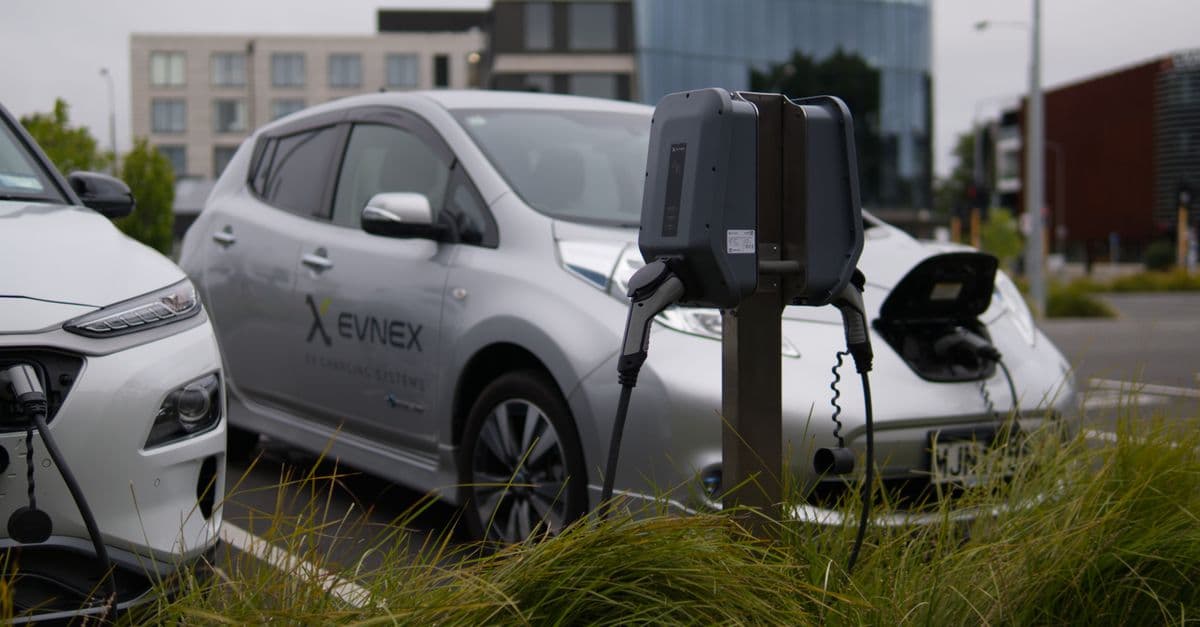
Photo: Ed Harvey / Pexels
An electric car has dramatically fewer moving parts than a petrol car. Where a combustion engine has thousands of components, an EV motor has barely a handful. The simplicity is part of why EVs accelerate faster, last longer, and require less maintenance — and why automakers around the world are restructuring their entire supply chains around them. Here's how they actually work.
Key takeaways
- An EV runs on a battery powering an electric motor that drives the wheels — that's basically it.
- Modern EVs use lithium-ion batteries; future EVs may use solid-state, sodium-ion, or other chemistries.
- Regenerative braking captures energy when slowing down, charging the battery.
- EVs are typically 3-4× more energy-efficient than petrol cars per kilometre.
- Range, charging speed, and charging infrastructure are the main practical limitations.
The basic components
Battery pack
The defining part of an EV. Modern packs use thousands of small lithium-ion cells (similar to laptop batteries) wired together. Typical capacity ranges:
- Small EV: 40-50 kWh (~150-250 km range)
- Mid-size: 60-90 kWh (~300-500 km)
- Large/luxury: 100-150 kWh (~500-700 km)
Battery pack typically weighs 300-700 kg — a significant portion of the car's total weight.
Electric motor
Converts electrical energy from the battery into mechanical rotation of the wheels. Modern EVs use:
- Permanent magnet synchronous motors — most common, very efficient.
- Induction motors — used by some Teslas, no rare earth magnets needed.
- Switched reluctance motors — newer alternative, no rare earths, becoming common.
A single motor weighs roughly 50-100 kg and produces 100-500+ kW of power. EVs may have one, two, or four motors (one per axle, or one per wheel).
Inverter
Converts the battery's DC (direct current) into AC (alternating current) that the motor uses. Also controls motor speed and torque precisely.
Reduction gear
Most EVs use a single-speed reduction gear (no multi-speed transmission needed). Electric motors produce maximum torque from zero RPM — you don't need gears to keep the motor in its power band.
Onboard charger
Converts AC from the grid into DC that the battery can store. Handles charging from home outlets and AC public chargers.
DC fast charging port
Bypasses the onboard charger; high-power DC goes directly to the battery for fast charging at public stations.
Battery management system
The brain that monitors every cell, balancing them, controlling temperature, and protecting against damage.
Cooling system
Keeps batteries and motor at optimal temperatures. Crucial for safety and longevity.
What happens when you drive
Accelerating
Press the accelerator. The inverter sends precisely the right AC waveform to the motor based on requested torque. Wheels turn. EVs accelerate smoothly with no gear shifts and no engine RPM ramping.
Cruising
The motor uses minimal energy to maintain speed. Highway driving uses more energy per km than urban driving (more wind resistance), the opposite of combustion cars.
Braking
Most EVs use regenerative braking — the motor runs in reverse, generating electricity instead of consuming it, slowing the car. Energy that would be wasted as heat in friction brakes is recovered into the battery.
Friction brakes only kick in for harder stops or at very low speeds. EV brake pads last 2-3× longer than in combustion cars.
Stopping
The motor stops drawing power. EVs idle at 0 watts. No fuel burns waiting at red lights.
How Efficient Are They? The Physics of Motors vs. Engines
Electric motors are extraordinarily efficient — typically converting 85-90% of input energy into motion. A combustion engine is 20-35% efficient at best, meaning 65-80% of fuel energy becomes waste heat.
But comparing fairly requires looking at the entire energy chain — well-to-wheel efficiency including generation, transmission, and charging losses:
| Energy Source | Well-to-Wheel Efficiency | Notes |
|---|---|---|
| Petrol car | 17-25% | Extraction → refining → transmission → combustion losses |
| EV from coal grid | 30-35% | Coal → power plant → transmission → charging losses |
| EV from natural gas grid | 40-45% | More efficient than coal |
| EV from renewable grid | 75-85% | Minimal conversion losses |
| EV (global average grid mix 2025) | 55-65% | Mix of renewables and fossil sources |
Even on dirty grids (coal-heavy), EVs typically beat petrol cars. On renewable-heavy grids, EVs are vastly cleaner. As grids decarbonize, every existing EV becomes cleaner over time — the same petrol car just gets dirtier.
Source: MIT Energy Initiative (2024) — Well-to-wheel lifecycle analysis; International Energy Agency transportation efficiency studies.
Electric Motor Types and Mechanics
Modern EVs use one of three motor types:
Permanent Magnet Synchronous Motors (PMSM)
The most common type. Uses permanent magnets (rare earth neodymium) to create a magnetic field. The motor's rotor aligns with the stator's rotating magnetic field produced by the inverter.
Advantages:
- Extremely efficient (90%+)
- Maximum torque from zero RPM
- Smooth acceleration
- Compact
Disadvantages:
- Requires rare earth magnets (supply chain risk)
- Can lose magnetism at very high temperatures
Used by: Porsche Taycan, BMW i4, most Chinese EVs (BYD, NIO)
Induction Motors
No permanent magnets; magnetic field induced by the inverter. Tesla Model 3/Y standard range use this.
Advantages:
- No rare earth materials needed
- Better high-temperature performance
- Robustness
Disadvantages:
- Slightly lower efficiency (~85-88%)
- Larger than PMSM for same power
- More complex control electronics
Used by: Tesla (Model 3/Y base), some Hyundai/Kia models
Switched Reluctance Motors (SRM)
Newest type; no permanent magnets or field windings. Rotor has no magnets; current pulses create magnetic attraction.
Advantages:
- No rare earth magnets
- Very simple design
- Cost-effective
Disadvantages:
- Torque ripple (uneven acceleration feel)
- Noisier than PMSM
- Requires sophisticated control
Used by: Some newer Chinese EVs (BYD); emerging in mass-market cars
Source: IEEE Transactions on Industrial Electronics (2023-2024) — Comparative analysis of EV motor types; automotive engineering references.
Battery Chemistry and How It Works
Modern EV batteries are lithium-ion. The general chemistry:
Cathode (positive): Lithium metal oxide (LiCoO₂, LiFePO₄, NCA, NMC) Anode (negative): Graphite Electrolyte: Lithium salt dissolved in organic solvent Separator: Porous material preventing short circuits
How charging works (simplified):
- External charger forces electrons from cathode to anode through external circuit
- Lithium ions move through electrolyte from cathode to anode, storing energy
- Electrons build up at anode; ions at cathode deficient
- When you accelerate, ions flow back, electrons deliver power to motor
Different cathode chemistries:
| Chemistry | Energy Density | Cost | Lifespan | Use Case |
|---|---|---|---|---|
| LFP (LiFePO₄) | 150-160 Wh/kg | Low | Excellent (3000+ cycles) | Budget EVs, commercial vehicles |
| NCA | 200-220 Wh/kg | High | Good | Performance EVs (Tesla) |
| NMC | 180-220 Wh/kg | Medium-high | Good-excellent | Mid-range EVs |
| LCO | 150-250 Wh/kg | Very high | Moderate | Niche/luxury |
Note: Energy density in Wh/kg is theoretical; actual battery packs include packaging, cooling, management systems that reduce effective density by 20-30%.
Source: Battery Innovation Roadmap (2024); Cell manufacturers' technical data sheets.
Temperature Effects on EVs — Winter Performance Deep Dive
Cold weather affects EVs more than petrol cars. Here's the physics:
Battery capacity loss
Lithium-ion electrochemical reactions slow in cold. At 0°C, battery capacity is typically 85-90% of rated value. At -20°C, it drops to 50-60%. This capacity returns when warmed; it's not permanent damage.
Why? Electrolyte viscosity increases, slowing ion flow. Resistance increases, reducing power delivery.
Heating load
Interior cabin heating is a massive power draw in EVs (3-5 kW continuous). In cold, this can reduce range by 20-40%.
Why? Petrol cars use waste heat from the engine for free heating. EVs must use battery power.
Motor efficiency
Electric motors are actually more efficient in cold (superconductivity-like effects at lower temperatures), but battery limitations dominate.
Mitigation strategies:
- Precondition while plugged in — use grid power to warm the battery before driving
- Heated seats/steering wheel — uses far less power than cabin heating
- Efficient heating mode — many EVs use heat pump technology, 2-3× more efficient than resistive heating
- Garage charging — prevents cold battery soak
Cold-weather range loss is real but manageable for daily driving. Long road trips in cold require advance planning.
Charging Standards and Global Variability
EV charging is fragmented globally — no single universal standard yet:
| Standard | Primary Region | Type | Max Power | Connector |
|---|---|---|---|---|
| Tesla Supercharger | USA, Germany, globally expanding | DC | 250+ kW | Proprietary (changing to NACS) |
| CCS (Combined Charging System) | Europe, USA, most global | AC + DC | 350 kW (Mega) | Type 2 connector |
| CHAdeMO | Japan, declining | DC | 150 kW | Round connector |
| GB/T | China | AC + DC | 360 kW | Proprietary |
| NACS (Tesla standard) | USA, globally expanding | AC + DC | 250+ kW | Proprietary (now opening) |
This fragmentation forces EV owners to use multiple apps, multiple payment methods, and potentially multiple adapters. The industry is slowly consolidating around CCS and NACS, but legacy infrastructure persists.
Source: International Energy Agency (2025) — Global EV charging infrastructure status report.
Economic Analysis: Total Cost of Ownership
EVs are increasingly cost-competitive. Over a 10-year lifespan:
| Cost Category | Petrol Car | EV |
|---|---|---|
| Purchase price | $30,000 | $40,000 |
| Fuel/electricity | $12,000 | $3,000 |
| Maintenance | $5,000 | $1,000 |
| Insurance | $7,000 | $7,500 |
| Registration/taxes | $3,000 | $2,000 |
| Depreciation | $10,000 | $8,000 |
| Total 10-year cost | $67,000 | $61,500 |
Note: Assumes electricity at average USA rates; petrol $3-4/gallon; EV depreciation higher due to battery uncertainty (improving).
Regional electricity prices matter enormously. In Norway (cheap hydro), EVs are vastly cheaper to operate. In some regions with expensive electricity, the savings shrink.
Government incentives and subsidies vary by region (USA, EU, China, others). In some places, tax credits narrow the purchase price gap significantly.
Environmental Impact Over Full Lifecycle
Manufacturing an EV battery generates 50-100 kg CO₂-equivalent per kWh. A 60 kWh battery = 3-6 tonnes CO₂ debt.
A petrol car generates ~5 tonnes CO₂ in manufacturing.
But:
- An EV recovers its manufacturing carbon debt in 1-3 years of driving (depending on grid carbon intensity)
- Over 200,000 km lifecycle, an EV produces 50-70% fewer emissions than a petrol car, even on a coal-heavy grid
- On renewable grids, EVs produce 80-90% fewer emissions
Battery mining (lithium, cobalt, nickel) has environmental costs (water use, mining tailings). But:
- Battery recycling recovers 90-95% of materials
- Per-mile, EV material intensity is lower than petrol cars (oil extraction and refining also have costs)
EVs aren't perfect environmentally, but they're clearly superior to combustion engines over their lifetime.
Source: International Council on Clean Transportation (2024) — Lifecycle emissions analysis; MIT Energy Initiative comparative studies.
Grid Impact and Vehicle-to-Grid (V2G) Technology
Mass EV adoption changes electricity grids:
Peak demand challenge
If everyone charges after work (5-7 PM), peak demand spikes massively. Without control, grids would need 40-60% more peak capacity.
Solutions:
- Smart charging — shift charging to off-peak hours (midnight-6 AM)
- V2G (Vehicle-to-Grid) — cars store energy, feed back during peak demand
- Grid storage — stationary batteries absorb excess renewable energy
- Demand response — dynamic pricing encourages off-peak charging
V2G potential:
If 50% of cars have V2G capability, they could store grid-scale battery capacity equivalent to 100+ GWh — significant for grid stabilization with high renewable penetration.
Early V2G pilots exist (Norway, Germany); widespread adoption requires standardized bidirectional chargers and grid-friendly inverters.
Common Misconceptions (Detailed Rebuttal)
"EVs are dirtier when you count manufacturing"
Truth: Manufacturing is more carbon-intensive per car. But over a 200,000 km lifecycle, EVs produce 50-70% fewer emissions even on coal-heavy grids. On clean grids, EVs produce 80-90% fewer emissions. The manufacturing debt is repaid in 1-3 years of driving.
"EVs catch fire more than petrol cars"
Truth: Statistically, EVs catch fire LESS than petrol cars (~25 per 100,000 vehicles for EVs vs. ~1,500 per 100,000 for petrol cars). EV fires are harder to extinguish and get disproportionate media coverage.
"Batteries degrade rapidly"
Truth: Modern batteries degrade ~0.5% per 1,000 km over the first 100,000 km, then slower. At 200,000 km, 80%+ capacity remains. Battery warranties of 8-10 years are common. Some Teslas exceed 500,000 km with 80%+ capacity.
"Lithium and cobalt will run out"
Truth: Sufficient reserves exist for global EV transition. Mining capacity and recycling are short-term bottlenecks, not absolute scarcity. LFP (lithium-iron-phosphate) batteries eliminate cobalt entirely.
"I can't drive far in an EV"
Truth: Increasingly false. Charging infrastructure is rapidly improving. Road trip planning now automatic in navigation apps. Adds 30-90 min per 500 km vs. petrol cars, not a dealbreaker for most.
Future Battery Technologies
Solid-State Batteries
Replace liquid electrolyte with solid ceramic/polymer. Benefits:
- 50-100% higher energy density (300+ Wh/kg)
- Faster charging (5-10 min for 300 km)
- Better safety (no liquid to leak/burn)
- Longer lifespan
Timeline: Pre-production now (2024-2025); volume production starting late 2020s.
Companies: Toyota, Samsung, Nissan, QuantumScape, Solid Power
Sodium-Ion Batteries
Cheaper than lithium (sodium is abundant). Lower energy density but suitable for:
- Budget EVs
- Grid storage
- Commercial vehicles
Timeline: Commercial production starting 2025-2026.
Companies: CATL, BYD (Blade battery), Nissan
Lithium-Sulfur and Lithium-Metal
Theoretical energy density 5-10× lithium-ion. Still experimental.
Timeline: 2030s or later.
What's Coming Next
800V battery architectures
Enable 350+ kW charging. Fast enough that charge time becomes non-limiting for road trips.
Wireless charging
Inductive pads in roads/parking. Slower but convenient for daily driving. Pilot projects in Korea, USA.
Autonomous EV taxi fleets
Combine EVs, autonomy, and shared mobility. Could reduce transportation carbon 80-90% vs. private petrol cars.
Swappable battery packs
China's Nio pioneered battery swapping (3-minute full charge equivalent). Reduces battery ownership cost; simplifies charging infrastructure. Scaling challenges remain.
Charging
Home charging
Most EV charging happens at home overnight at slow rates (3-22 kW). A typical home charger fully charges a mid-size EV in 4-12 hours. Cost: roughly equivalent to driving petrol cars at $1-2/gallon, depending on electricity rates.
Public charging
- Level 2 chargers (3-22 kW): destination charging at malls, hotels, workplaces.
- DC fast chargers (50-350 kW): can deliver 200-300 km of range in 15-30 minutes.
Infrastructure
The biggest practical concern for EV adoption. Tesla's Supercharger network is industry-leading; non-Tesla networks (Electrify America, IONITY, EVgo) vary widely in reliability. Many regions still have charging deserts.
Charging speed limits
Even fast chargers slow down as the battery fills (taper). Going from 10% to 80% is typically much faster than 80% to 100%. Hence "always charge to 80%" advice for road trips.
Range and how to predict it
EV range depends heavily on:
- Speed — wind resistance scales with speed cubed.
- Temperature — cold weather reduces range 20-40%.
- Acceleration patterns — aggressive driving reduces range.
- Heating/cooling — interior climate control significantly draws power.
- Tire pressure and condition.
Real-world range averages 70-90% of EPA-rated range, depending on conditions.
Battery longevity
Modern EV batteries are surprisingly durable:
- Most lose 5-10% capacity in the first 100,000 km.
- After 200,000 km, typical EVs retain 80%+ original capacity.
- Battery warranties are typically 8 years/160,000 km.
- Some Teslas have crossed 500,000+ km with 80%+ capacity.
Old EV batteries can be repurposed for grid storage, where reduced capacity matters less.
Common misconceptions
"EVs are dirtier than petrol cars when you count manufacturing"
Manufacturing an EV produces more emissions than manufacturing a petrol car. But over the full lifecycle (typically 15+ years), EVs produce fewer total emissions, even on dirty grids. Cleaner grids extend the advantage.
"EVs catch fire more"
Statistically, EVs catch fire less often than petrol cars (which have flammable fuel). EV fires are harder to extinguish and get more news coverage, distorting perception.
"Batteries don't last"
Modern lithium-ion batteries with proper thermal management routinely last 200,000+ km with minimal degradation. The 80% capacity threshold is when warranty replacements may apply, not when the car is unusable.
"There aren't enough lithium/cobalt"
Reserves are sufficient for global EV transition. Mining capacity is the short-term bottleneck. Battery recycling is becoming a major industry.
"I can't take an EV on a road trip"
Increasingly straightforward in most regions. Trip planners route through charging stops automatically. Adds 30-90 minutes per ~500 km vs petrol cars.
What's coming next
Solid-state batteries
Replace liquid electrolyte with solid materials. Promise higher energy density, faster charging, better safety. Production at scale starting late 2020s.
Sodium-ion batteries
Cheaper alternative to lithium-ion. Lower energy density but suitable for some applications and grid storage.
Bidirectional charging (V2G)
Cars feed power back to the grid during peak demand. Could help stabilise grids with high renewable penetration.
Faster charging
800V architectures are enabling 350+ kW DC charging. 10-min charges for 300 km range becoming achievable.
Wireless charging
Inductive charging pads embedded in roads or parking spots. Pilot projects exist; commercial deployment is years away.
Frequently Asked Questions
Q: Are EVs really better for the environment than petrol cars?
A: Yes, in nearly every realistic scenario, especially over the full lifecycle. Battery production is carbon-intensive but that debt is offset within 1-3 years of driving by fuel and energy efficiency savings. Over 200,000 km, an EV produces 50-90% fewer emissions than a petrol car, depending on the electricity grid's carbon intensity.
Q: Why are EVs so expensive compared to petrol cars?
A: Battery cost. Batteries currently represent 30-40% of an EV's price. As batteries cheapen (~10-15% per year historically), EV prices are converging with petrol cars. Total cost of ownership often already favours EVs when accounting for lower fuel and maintenance costs.
Q: Is it safe to charge an EV in the rain or during a storm?
A: Completely safe. Chargers and connectors are designed with weatherproofing, ground faults protection, and insulation. In fact, modern chargers are safer than home electrical outlets in rain. Charging is disabled automatically if moisture is detected inside the port.
Q: What happens to EV batteries when they reach end-of-life?
A: They are increasingly recycled. Companies like Redwood Materials recover up to 95% of lithium, cobalt, and nickel from spent batteries. Batteries with 80%+ capacity can be repurposed for stationary grid storage. Some automakers are establishing closed-loop recycling systems.
Q: Will the entire automotive industry become obsolete because of EVs?
A: The industry will restructure rather than become obsolete. Manufacturers, suppliers, and dealerships all face significant transitions in the shift from combustion to electric powertrains. Some adapt successfully; others struggle or exit the market. New supply chains and manufacturing processes are emerging.
Q: How far can modern EVs really drive before needing to charge?
A: Modern EVs typically range 300-600 km on a single charge, depending on battery size and driving conditions. Fast chargers can restore 200-300 km in 15-30 minutes. Road trip planning is now automatic in navigation apps. Range concerns, while real for some uses, are rapidly diminishing with improving battery technology and charging infrastructure.
The takeaway
An EV is a battery, a motor, and some clever electronics. It's mechanically simpler, more efficient, cleaner over its lifetime, and increasingly competitive in price with combustion cars. The transition to EVs is one of the biggest industrial shifts in history — affecting transportation, energy, materials, and labour. Range and charging concerns are real but rapidly diminishing as technology and infrastructure improve. The future of personal transportation is electric. The questions aren't about whether it's happening, but about speed, equity, and infrastructure.
Read next:
Follow new articles
Add SciHub101 to your feed reader to see new science and technology stories.
About the Author
SciHub101 is an independent science and technology publication founded and edited by Buğra Sözeri, a software engineer and app developer based in Türkiye. AI tools assist with drafting and research. Source documentation in the existing archive is uneven, and articles are being reviewed and corrected. The Editorial Team byline identifies editorial responsibility; it does not certify specialist or independent human review. Where we compare products, anything built by our own team is labelled as such — see the editorial guidelines and About page for how corrections and disclosures work.
Related Articles
How Do Solar Panels Work — and Are They Worth It?
Solar panels turn sunlight directly into electricity using the photoelectric effect. They're now the cheapest form of new power generation in most of the world. Here's how they work and whether they pay off.
Climate Change Explained — The Science, Causes, and Consequences
Climate change is happening, it's caused mainly by human emissions, and the evidence comes from thousands of independent measurements. Here's the science, the consequences, and the realistic path forward.
How Lithium-Ion Batteries Work
The battery in your phone contains enough energy to seriously injure you. Understanding it reveals one of chemistry's most elegant solutions.
Is Nuclear Power Safe? The Real Risks and Benefits
Nuclear power has the lowest death rate per kWh of any major energy source. It's also the most feared. Here's what the data actually says — beyond Chernobyl, beyond Fukushima.

What Is Green Hydrogen — and Could It Replace Fossil Fuels?
Green hydrogen is made by splitting water with renewable electricity, so burning it releases only water. It is promising for industries that cannot easily electrify, but it is costly and wasteful elsewhere.
How Do Wind Turbines Work — and Can They Power the World?
A modern wind turbine is a 200-metre engineering marvel that converts moving air into electricity. Here's how they work, where they fit in the energy transition, and the realistic limits.