What Is Green Hydrogen — and Could It Replace Fossil Fuels?
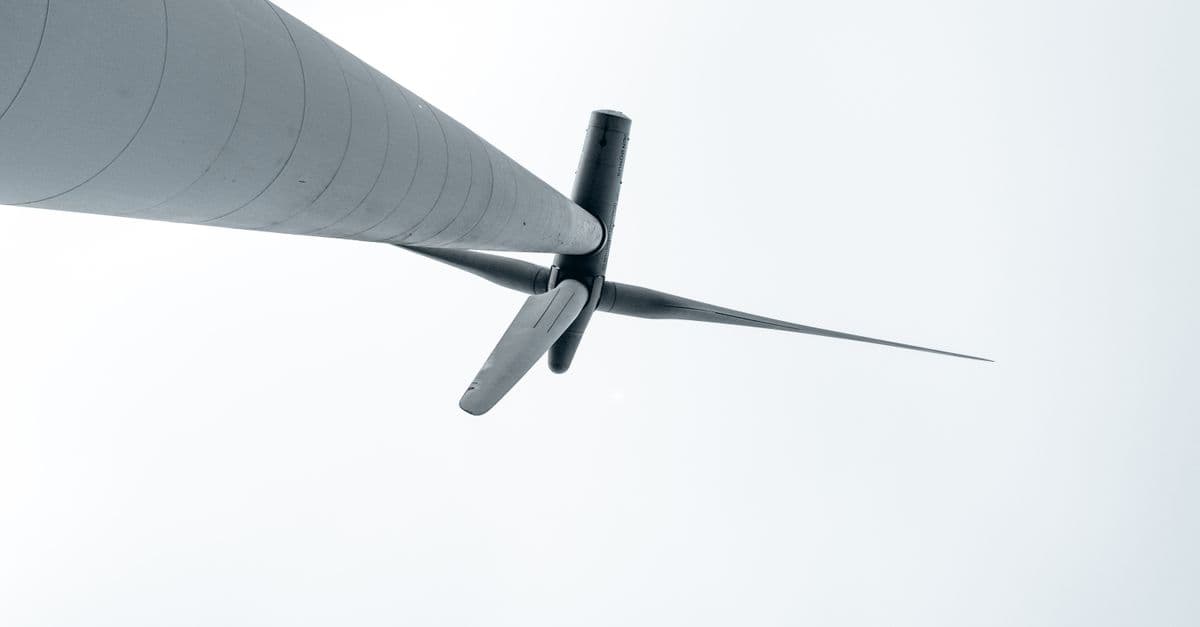
Photo: Vadym Alyekseyenko / Pexels
Hydrogen burns clean: its only exhaust is water. The trouble is where the hydrogen comes from. Today almost all of it is stripped out of natural gas or coal, which releases carbon dioxide on the way. Green hydrogen swaps that step for electrolysis, using renewable electricity to split water into hydrogen and oxygen. The result could clean up steel, fertilizer, shipping, and other industries that batteries cannot easily serve. It is also expensive, energy-hungry, and a poor fit for many jobs it has been pitched for.
This article explains how green hydrogen is made, what the latest numbers say about its scale and cost, and where the physics favors it or works against it.
Key points
- Green hydrogen comes from electrolysis powered by wind, solar, or other low-carbon electricity. Most hydrogen today does not.
- The International Energy Agency (IEA) says global hydrogen demand was almost 100 million tonnes (Mt) in 2024, and low-emissions production was still under 1 percent of it.
- It fits best where hydrogen is already a raw material (fertilizer, refining) or where no good electric option exists (primary steel, long-distance shipping, aviation).
- It fits worst in cars and home heating, where each conversion step wastes energy that direct electricity would keep.
How does green hydrogen differ from grey, blue, and other colors?
Hydrogen is a colorless gas, so the color labels describe how it was made, not what it looks like. They are an industry shorthand rather than a legal standard, and the boundaries blur at the edges.
| Label | How it is made | Main emissions issue |
|---|---|---|
| Grey | Steam reforming of natural gas (or gasification of coal) | CO₂ released to the air |
| Blue | Same as grey, plus carbon capture and storage | Residual CO₂ plus methane leaks upstream |
| Green | Electrolysis powered by renewable electricity | Depends on the electricity and equipment, near zero in the best cases |
| Pink | Electrolysis powered by nuclear electricity | Low, but depends on nuclear supply |
| Turquoise | Methane pyrolysis, which yields solid carbon instead of CO₂ | Upstream methane leaks; solid carbon must be used or stored |
The U.S. Department of Energy states that about 95 percent of hydrogen in the United States is produced by steam reforming of natural gas (DOE Hydrogen Fuel Basics). Globally the picture is similar. The IEA reports that hydrogen production in 2024 consumed about 290 billion cubic meters of natural gas and 90 million tonnes of coal equivalent (IEA, Global Hydrogen Review 2025).
The blue label deserves a caution. Capturing carbon at a reforming plant does not touch the methane that leaks while the gas is drilled and piped. That is why the climate case for blue hydrogen depends heavily on how tightly the gas supply chain is run, a problem covered in why methane matters for climate change and in the explainer on how carbon capture works.
How is green hydrogen made?
The core reaction is simple enough to fit on one line: water plus electricity gives hydrogen plus oxygen (2 H₂O → 2 H₂ + O₂). The device that does it is an electrolyzer, a stack of cells in which two electrodes sit in a water-based electrolyte. Electric current drives the water apart, with hydrogen collecting at one electrode and oxygen at the other. The step-by-step engineering is covered in a separate piece on how green hydrogen is made.
Think of an electrolyzer as a fuel cell run in reverse. A fuel cell combines hydrogen and oxygen to release electricity and water, and the DOE notes that an electrolyzer works much like it, only backward (DOE). What you put in as electricity comes back out as chemical energy you can store, with some lost as heat along the way.
What are the main electrolyzer types?
The DOE describes four technologies, which differ in the electrolyte they use and the temperature they run at (DOE, Hydrogen Production: Electrolysis).
| Type | Electrolyte | Operating temperature | Notes |
|---|---|---|---|
| Alkaline | Liquid potassium or sodium hydroxide solution | About 60–90°C | Long-established, widely used |
| Proton exchange membrane (PEM) | Solid plastic membrane passing protons | About 70–90°C | Compact; handles variable power well |
| Anion exchange membrane (AEM) | Solid polymer passing hydroxide ions | About 50–80°C | Newer, less proven at scale |
| Solid oxide (SOEC) | Solid ceramic passing oxide ions | About 650–850°C | Can use outside heat to cut the electricity needed |
The high-temperature solid oxide design is the one that changes the arithmetic. Because it borrows heat from an industrial process or a nuclear plant, it needs less electricity per kilogram of hydrogen. The price is a harsher operating environment that tests materials, which is why it remains less mature than the other three.
How much energy does it take?
A kilogram of hydrogen holds roughly 33 kilowatt-hours of usable chemical energy. Real electrolyzer systems need on the order of 50 kilowatt-hours of electricity or more to make it, once the power electronics, pumps, and gas cleanup are counted. In other words, a third or more of the electricity never makes it into the hydrogen.
That ratio is the first of several efficiency penalties in the hydrogen chain. It explains why the cost of the electricity going in matters more than almost anything else when pricing the hydrogen coming out.
The pitch for green hydrogen is not that it is efficient. It is that it can reach places electricity cannot: a blast furnace, a fertilizer plant, a container ship crossing an ocean.
How big is green hydrogen today?
Small, and still smaller than the headlines suggest. The IEA's Global Hydrogen Review 2025 reports almost 100 Mt of hydrogen demand in 2024, up 2 percent from the year before. Low-emissions production grew about 10 percent in 2024 but remained under 1 percent of global production (IEA, Global Hydrogen Review 2025). The report adds that demand for new uses, such as transport and power, was below 1 percent of the total, with growth coming mostly from the refining and industrial uses that already existed.
Installed water-electrolysis capacity worldwide was about 2 gigawatts (GW) in 2024, with more than 1 GW added in the first seven months of 2025. China accounted for 65 percent of both installed capacity and capacity that had reached a final investment decision, and for nearly 60 percent of global electrolyzer manufacturing capacity. Chinese factories could build around 20 GW a year against demand of roughly 2 GW in 2024 (IEA). That mismatch is the signature of an industry that built for a boom that has arrived more slowly than planned.
Why is the project pipeline shrinking?
The IEA recorded something new in 2025: cancellations and delays cut the pipeline of low-emissions hydrogen projects expected by 2030 from 49 million tonnes per year to 37, the first decline of its kind. Electrolysis projects accounted for more than 80 percent of that drop. Even so, more than 200 low-emissions production projects have reached a final investment decision since 2020, and the IEA estimates projects that are operating or committed could supply about 4 percent of hydrogen production in 2030 (4.2 million tonnes per year).
Buyers are part of the story. The IEA counted signed offtake agreements of 1.7 million tonnes per year in 2024, down from 2.4 million in 2023. A producer generally cannot finance a plant without a customer willing to sign a multi-year contract at a price that covers the cost, and the falling offtake figures suggest buyers are cautious about paying a premium over fossil hydrogen.
What does green hydrogen cost?
The honest answer is that it varies with local electricity prices, how many hours a year the electrolyzer runs, and how much the equipment costs. The IEA's 2024 review put the cost gap between low-emissions hydrogen from renewables and unabated fossil hydrogen at roughly USD 1.5 to 8 per kilogram depending on region, and said it could narrow to USD 1 to 3 per kilogram by 2030 in its Net Zero scenario (IEA, Global Hydrogen Review 2024). Those are scenario results, not forecasts, and they hinge on policy support.
Equipment is a big driver. The IEA's 2025 review puts installed electrolyzer costs outside China at USD 2,000 to 2,600 per kilowatt, against USD 600 to 1,200 per kilowatt inside China. Chinese units installed outside China fall between those ranges, at USD 1,500 to 2,400 per kilowatt. A fourfold gap in capital cost between regions will shape which countries become hydrogen manufacturers.
What drives the price per kilogram?
Three levers dominate, and they interact.
- Electricity price. Because an electrolyzer swallows so much power, every cent per kilowatt-hour shows up in the final price. Sites with very cheap solar or wind have a structural advantage.
- Utilization. An electrolyzer fed only by solar might run a quarter of the hours in a year. Its expensive stack then sits idle most of the time, and the capital cost is spread over fewer kilograms.
- Equipment and financing costs. Stack lifetime, balance-of-plant costs, and the interest rate on the loan all feed through.
The tension is plain. Running on cheap, intermittent renewables lowers the electricity bill but hurts utilization. Running on grid power all year fixes utilization but may raise emissions and cost. Project developers spend a great deal of effort choosing sites where the sun or wind is strong and steady.
How do subsidies change the math?
Governments have stepped in to close the gap, and the details have shifted more than once. In the United States, the Section 45V clean hydrogen production credit is worth up to $3 per kilogram, based on the emissions intensity of the hydrogen. The One Big Beautiful Bill Act of 2025 moved the deadline forward, so only facilities that begin construction before the end of 2027 qualify, five years earlier than the previous law allowed (H2 Tech summary of the enacted deadline).
In Europe, the European Hydrogen Bank's first auction, announced on April 30, 2024, awarded €720 million to seven projects in Spain, Portugal, Norway, and Finland. Winning bids asked for a subsidy of only €0.37 to €0.48 per kilogram, against a ceiling of €4.50, and the projects are expected to produce 1.58 million tonnes of renewable hydrogen over ten years (EU Clean Hydrogen Observatory). Bids that low suggest that some buyers will cover most of the green premium themselves, though it is an early signal from a small auction.
Where does green hydrogen make sense?
The best rule of thumb is that hydrogen belongs where nothing simpler can do the job. Analysts at the German research institute Fraunhofer IEE reached a similar conclusion, recommending that hydrogen be reserved for uses with no good alternatives to fossil fuels, such as synthetic fuels for aircraft and ships, ammonia, methanol, steel, and power plants (Fraunhofer IEE press release, 2020).
Replacing grey hydrogen in existing uses
Industry already burns through close to 100 Mt of hydrogen a year, and the IEA says that demand comes almost entirely from refining, ammonia, methanol, and fossil-based direct reduced iron. Switching those from fossil to green hydrogen needs no new end-use technology, only a cleaner supply. For that reason, it is the nearest-term opening. Ammonia is the standout because it is the basis of nitrogen fertilizer, and the world's food supply leans on it, a dependence unpacked in the history of artificial fertilizer.
Making steel without coal
Conventional steelmaking uses coke (coal) in a blast furnace to strip oxygen from iron ore. The IEA estimates the iron and steel sector emits about 2.6 gigatonnes of CO₂ a year directly, roughly 7 percent of global energy-system emissions, or about 10 percent counting indirect emissions from electricity and off-gases (data for 2019, IEA Iron and Steel Technology Roadmap).
Hydrogen offers a different route called direct reduction. Hot hydrogen gas passes over iron ore pellets and takes away the oxygen as water vapor, leaving solid "sponge iron" that an electric arc furnace then melts into steel. The Swedish HYBRIT initiative, a joint effort by steelmaker SSAB, miner LKAB, and utility Vattenfall launched in 2016, is working on exactly this chain, including storing the hydrogen. HYBRIT says the technology could remove at least 10 percent of Sweden's CO₂ emissions, and that its hydrogen storage pilot in Luleå, completed in February 2025, showed storage at industrial scale is technically feasible (HYBRIT).
A second Swedish project, Stegra in Boden, is building a large plant of this type. Stegra says its final electrolyzer module was installed on April 2, 2026, and that the plant will cut steel emissions by more than 7 million tonnes a year once fully operating (Stegra). Stegra has not stated a start date on that page, and first-of-a-kind plants frequently run behind schedule, so treat it as an important test case rather than a proven result.
Fuels for ships and aircraft
Ships and long-haul aircraft need fuels that pack a lot of energy into a small volume and weight. Pure hydrogen is poor at that, as the storage section explains. The usual answer is to turn hydrogen into a liquid carrier. Green ammonia and green methanol suit shipping, while synthetic kerosene made from hydrogen and captured CO₂ could run in existing jet engines. Each conversion step costs energy and money, so these e-fuels are expected to stay premium products for years.
Heavy trucks, rail, and heat
Long-haul trucks and non-electrified freight rail are the contested ground. Batteries compete hard for trucking, and the case for hydrogen there depends on payload, route, and refueling time. Industrial heat is another candidate. Cement kilns and glass furnaces need very high temperatures, and hydrogen combustion can supply them, though burning hydrogen at those temperatures raises its own engineering problems, including nitrogen oxide formation.
Storing energy over seasons
Batteries are efficient for hours to days. Hydrogen is far less efficient but can be stored in large volumes for months, which matters for grids that rely heavily on solar and wind. This role is still mostly on paper, because the round trip from electricity to hydrogen and back wastes most of the energy. The wider storage challenge is laid out in why grid storage is hard.
Where does green hydrogen not make sense?
Three uses keep coming up in marketing and keep losing on the numbers.
Passenger cars
A battery car moves electricity from the grid into a battery and then into a motor. A hydrogen car makes hydrogen from electricity, compresses it, carries it, and converts it back to electricity in a fuel cell before the motor. A study by the consultancy Horváth & Partners, cited by Volkswagen, put well-to-wheel efficiency at about 70 to 80 percent for a battery car and about 25 to 35 percent for a fuel-cell car. In that account, about 45 percent of the energy is lost in electrolysis and a further 55 percent of the remainder in the fuel cell, so a hydrogen car needs two to three times as much electricity per kilometer (Charged EVs, reporting the Volkswagen analysis). The study comes from a carmaker with a stake in the answer, but the direction of the result is not in dispute among engineers. Our explainer on how electric cars work shows why the battery route is so direct.
Home heating
A heat pump does not burn anything. It moves heat from outdoor air or the ground into a building, delivering several units of heat for each unit of electricity. A 2020 Fraunhofer IEE study found that the green electricity needed to make hydrogen for building heat is 500 to 600 percent more than what an equivalent set of heat pumps would use, and its executive director concluded that the efficiency gap is too large to justify widespread hydrogen heating (Fraunhofer IEE). The study was commissioned by a German information center for heat-pump and refrigeration technology, so weigh it with that in mind, but the physics behind it is straightforward. The mechanics are covered in how heat pumps move heat efficiently.
General-purpose storage
For short-term balancing, batteries win on efficiency and cost. Hydrogen only comes into its own when storage must last weeks to seasons, where batteries become prohibitively expensive per unit of energy. Anyone proposing hydrogen for a daily storage job should be asked why a battery will not do.
Why is hydrogen hard to store and move?
Hydrogen is the lightest and smallest molecule there is, and that causes practical headaches.
- Low density. Hydrogen has the highest energy per unit of mass of any fuel, but at ambient conditions it takes up a huge volume for its energy content.
- Compression or cooling. The DOE lists storage as compressed gas at 350 to 700 bar (5,000 to 10,000 psi), or as a liquid at cryogenic temperature, since hydrogen boils at −252.8°C (DOE, Hydrogen Storage). Both options cost energy.
- Leakage and embrittlement. Small molecules find small gaps, and hydrogen can make some metals brittle over time, which limits the use of existing natural gas pipelines without modification.
Hydrogen leaks matter for climate as well. Hydrogen is not a greenhouse gas itself, but when it escapes into the air it reacts in ways that lengthen the life of methane and raise ozone and stratospheric water vapor. A five-model study led by the CICERO climate research center in Oslo estimated hydrogen's 100-year global warming potential at 11.6, meaning a kilogram leaked warms about as much as 12 kilograms of CO₂ over a century (CICERO; Sand et al., Communications Earth & Environment, 2023). That number is small next to methane, but it means a large leaky hydrogen economy would give back some of the climate benefit.
These handling problems are why many projects aim to convert hydrogen into ammonia or other carriers at the production site. Ammonia is easier to liquefy and ship, then either used directly or split back into hydrogen at the destination, though that cracking step costs energy too.
What is the biggest green hydrogen project, and how is it going?
The largest single project under construction is NEOM Green Hydrogen Company in Saudi Arabia, an equal joint venture of ACWA Power, Air Products, and NEOM. It pairs 4 GW of solar and wind generation with 2.2 GW of electrolysis supplied by thyssenkrupp nucera, and is designed to make about 1.2 million tonnes of green ammonia a year. As of July 2026, production was expected to begin in 2027, and Air Products and Yara were finalizing a deal to market the ammonia (Hydronews, July 3, 2026). Air Products said on June 30, 2026, that it was finalizing a marketing and distribution agreement with Yara for ammonia from the project, and separately that it would not proceed with its Louisiana Clean Energy Complex, citing returns that did not meet its criteria (Air Products release, June 30, 2026).
Note that the 4 GW figure often quoted for NEOM refers to the renewable generation behind the plant, not to the electrolyzers, which total 2.2 GW. For a ranking of the largest projects worldwide, see biggest hydrogen projects in the world. Solar and wind farms of this size are tracked in largest solar farms in the world.
The Louisiana decision is a useful reminder that even a company with deep hydrogen experience will walk away when the returns do not work. Announcements are not production, and the IEA's pipeline revision shows how many have slipped.
What would have to happen for green hydrogen to scale?
Four things need to line up, and none is guaranteed.
- Cheaper clean electricity, in large amounts. Hydrogen production competes with every other use for new wind and solar. The electricity source matters, too. Where grids still burn fossil fuels, running an electrolyzer from the grid can create more emissions than the grey hydrogen it replaces. The generation side is explained in how solar panels work and how wind turbines work, and the leading countries are ranked in countries with the most renewable energy.
- Cheaper, longer-lived electrolyzers. The wide gap between Chinese and non-Chinese equipment prices suggests costs can fall, but trade rules and quality concerns will shape who benefits.
- Reliable customers. The IEA found offtake deals fell in 2024. Purchase mandates, such as requirements that refineries or fuel suppliers use a share of renewable hydrogen, are one way policymakers can create that demand.
- Infrastructure. Pipelines, storage caverns, ports, and ammonia terminals take years to build.
Nuclear power is a competing way to make low-carbon hydrogen, often called pink hydrogen, and some countries plan to use it. Whether that is cost-competitive depends on new reactor costs and on how safe and acceptable nuclear power is to the public, which we examine in is nuclear power safe. Carbon capture sits on the other side of the debate. It is the main alternative for cutting emissions from fossil-based hydrogen, and the case for and against it is covered in what is carbon capture. All of this sits within the larger effort to stabilize the climate described in climate change explained.
What do people get wrong about hydrogen?
"Hydrogen is an energy source." It is not found free in useful amounts on Earth. It is an energy carrier, like a battery, and making it takes more energy than you get back. The question is always where the input energy comes from.
"We will all drive hydrogen cars." The efficiency numbers above, plus the cost of refueling stations, make this unlikely for passenger cars. Battery vehicles have a structural advantage.
"Hydrogen will replace natural gas in homes." Pilot projects exist, but the efficiency comparison with heat pumps is hard to overcome, and the supply of green hydrogen is limited. Fraunhofer's analysis estimated that Germany's green hydrogen potential is 50 to 150 terawatt-hours, only 5 to 25 percent of the demand projected for 2050, and that putting hydrogen into building heat would raise demand by a further 25 to 40 percent.
"Green hydrogen is already cheap." It is not. The IEA still counts a cost gap against fossil hydrogen, and subsidies are doing much of the work.
"Hydrogen is too dangerous to handle." Hydrogen is flammable and leaks easily, but refineries and chemical plants already handle close to 100 Mt of it every year. The risk is manageable with the right engineering, though it calls for different safeguards than natural gas does.
"Green hydrogen means zero emissions." Direct emissions at the point of use are zero. Lifecycle emissions depend on the electricity used, the equipment made, and any leakage. The U.S. credit mentioned above is tiered precisely because hydrogen from different sources has different carbon footprints.
Frequently asked questions
Q: What is green hydrogen in simple terms? A: It is hydrogen gas made by using renewable electricity to split water into hydrogen and oxygen in an electrolyzer. Because the power comes from wind, solar, or similar sources, the process releases little or no carbon dioxide, unlike hydrogen made from natural gas or coal.
Q: How much of the world's hydrogen is green? A: Very little. The IEA reports that low-emissions hydrogen, which includes green and fossil hydrogen with carbon capture, made up less than 1 percent of global production in 2024, out of almost 100 Mt of total demand. It expects it to reach about 4 percent by 2030 if operating and committed projects are completed.
Q: Why is green hydrogen so expensive? A: Making it takes a lot of electricity, and the electrolyzers are costly. They also sit idle when the wind or sun is down. The IEA puts the cost gap against fossil hydrogen at roughly USD 1.5 to 8 per kilogram, depending on region, with subsidies filling part of it.
Q: Will hydrogen cars replace electric cars? A: Unlikely. A battery car delivers roughly 70 to 80 percent of the original electricity to the wheels in the Horváth & Partners analysis, against 25 to 35 percent for a hydrogen fuel-cell car. That means a hydrogen car needs two to three times as much electricity per kilometer.
Q: Can green hydrogen heat homes? A: Technically yes, but a 2020 Fraunhofer IEE study found it would need 500 to 600 percent more green electricity than heat pumps for the same buildings. Heat pumps are the more efficient option for most homes.
Q: Is hydrogen safe? A: It is flammable and must be handled carefully, but it has been used at industrial scale for decades. The bigger practical issues are its tendency to leak, its low energy density by volume, and its effects on some metals. Leaked hydrogen also has an indirect warming effect, estimated at 11.6 times CO₂ over 100 years.
Q: Which industries benefit most from green hydrogen? A: Those where hydrogen is already a raw material, such as ammonia for fertilizer and oil refining, and those that lack easy electric alternatives, such as primary steelmaking, shipping, and aviation. Fraunhofer's analysts and the IEA's demand data point in the same direction.
The takeaway
Green hydrogen is best understood as a chemical tool, not an energy revolution. It can replace the fossil hydrogen already used in fertilizer and refining, and it opens a route to steel, ships, and aircraft that electrons alone cannot reach. It does so at the cost of heavy electricity use, awkward storage, and prices that still lean on subsidies. The numbers from the IEA show a young industry whose pipeline has already shrunk once, while the efficiency math shows why it will not take over cars or home heating. Whether it ends up a few percent of the energy system or much more will be decided less by chemistry than by electricity prices, factory costs, and whether buyers sign contracts.
Sources
- IEA, Global Hydrogen Review 2025 and Global Hydrogen Review 2024.
- U.S. Department of Energy, Hydrogen Production: Electrolysis, Hydrogen Storage, and Hydrogen Fuel Basics.
- Fraunhofer IEE, "Green hydrogen or green electricity for building heating?", July 14, 2020.
- Sand et al., "A multi-model assessment of the Global Warming Potential of hydrogen," Communications Earth & Environment 4, 203 (2023), summarized by CICERO.
- IEA, Iron and Steel Technology Roadmap; HYBRIT; Stegra.
Read next:
Follow new articles
Add SciHub101 to your feed reader to see new science and technology stories.
About the Author
SciHub101 is an independent science and technology publication founded and edited by Buğra Sözeri, a software engineer and app developer based in Türkiye. AI tools assist with drafting and research. Source documentation in the existing archive is uneven, and articles are being reviewed and corrected. The Editorial Team byline identifies editorial responsibility; it does not certify specialist or independent human review. Where we compare products, anything built by our own team is labelled as such — see the editorial guidelines and About page for how corrections and disclosures work.
Related Articles
The Plastic Pollution Crisis Explained
We produce 400 million tonnes of plastic per year. Most ends up in landfills, in the ocean, or as microplastics in our food. Here's the science of plastic pollution and what's actually being done.
Is Nuclear Power Safe? The Real Risks and Benefits
Nuclear power has the lowest death rate per kWh of any major energy source. It's also the most feared. Here's what the data actually says — beyond Chernobyl, beyond Fukushima.
Countries That Produce the Most Solar Power (Ranked)
China installed 278 GW of new solar capacity in 2024 alone — more than the entire installed base of the United States. With 888 GW of total solar PV capacity, China now hosts nearly half of all solar power on Earth. This article ranks the top solar nations by installed capacity and explains how the global solar revolution became so geographically concentrated.

Direct Air Capture: How It Works, What It Costs, and Where It Fits
Direct air capture (DAC) machines pull carbon dioxide out of ambient air with chemical sorbents or solvents, then release it as a pure stream for storage or use. The technology works. The constraint is energy and cost: reported prices run from about $600 to more than $1,000 per tonne, and operating capacity is a tiny fraction of annual emissions.
Renewable Energy Explained — Solar, Wind, and Beyond
How solar panels and wind turbines work, why their costs fell about 90%, how fast they are spreading, and what storage and grids must still solve.
Countries with the Most Wind Power Capacity (2025 Ranked)
China has about 641 GW of installed wind capacity, nearly half of the world's roughly 1,291 GW. The United States, Germany, India, and Brazil follow. Denmark ranks 17th by capacity but gets about 59% of its electricity from wind. Here is the 2025 ranking, what it measures, and what it leaves out.