Why Methane Matters For Climate Change
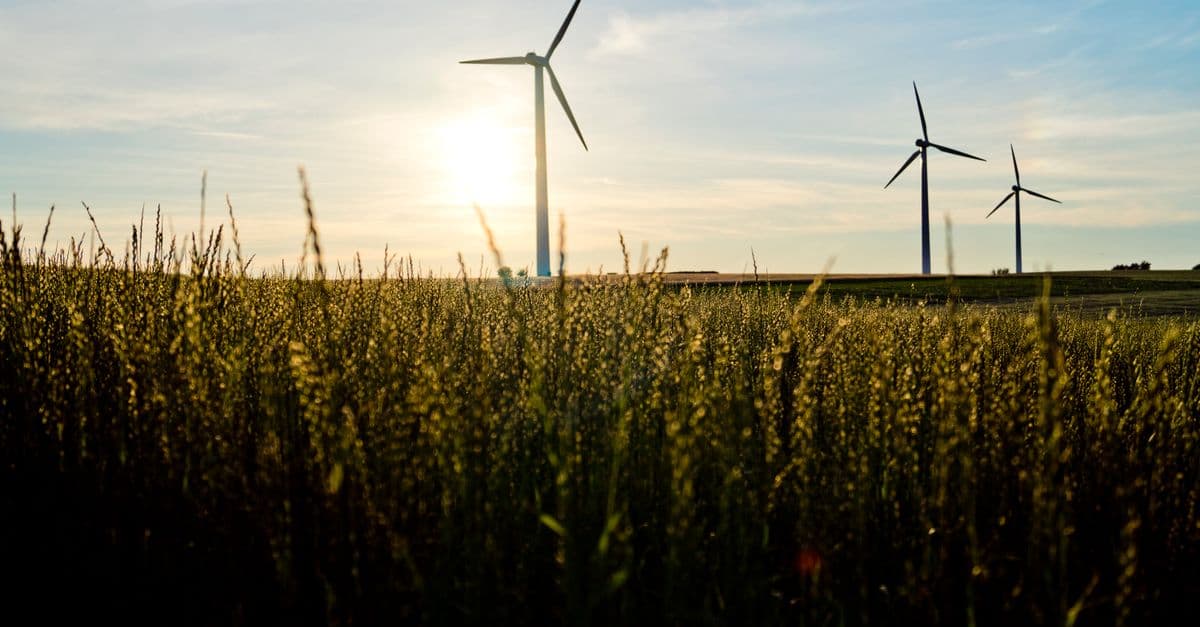
Photo: Francesco Ungaro / Pexels
Carbon dioxide gets most of the attention, and for good reason: it is the largest driver of long-term warming. Yet the International Energy Agency (IEA) attributes around 30 percent of the rise in global temperatures since the Industrial Revolution to methane (IEA Global Methane Tracker 2025). The molecule packs far more heat-trapping power than CO2, but it disappears from the air after about 12 years. That pairing makes methane the rare climate problem where action today shows up in the temperature record within a lifetime, not a century.
This article explains why methane traps so much heat, why it vanishes so quickly, where it comes from, what the numbers say about cutting it, and how satellites and new regulations are changing who gets to hide a leak.
What makes methane such a strong heat-trapper?
Methane (CH₄) is the simplest hydrocarbon: one carbon atom bonded to four hydrogens. It is colorless and odorless, and it is the main ingredient in natural gas. Microbes make it wherever organic matter rots without oxygen, including wetlands, rice paddies, landfills, and the stomachs of cattle. People also release it when they drill, process, and pipe fossil fuels.
Like any greenhouse gas, methane absorbs infrared radiation that the warm surface of the Earth tries to send back to space, then re-emits some of it downward. Per molecule it does this far more effectively than CO2. A useful picture is a window. A molecule of CO2 is a patch of mildly tinted glass in a window that is already mostly shaded. Methane is a patch of heavy curtain hanging over an open gap that CO2 left uncovered. There is also far less of it, which is why a few extra parts per billion matter.
Scientists compare gases with the global warming potential (GWP), a number that says how much heat one tonne of a gas traps over a set period, relative to one tonne of CO2. The period you pick changes the answer a lot, because gases decay at different speeds.
| Gas | GWP over 20 years | GWP over 100 years | Typical atmospheric lifetime |
|---|---|---|---|
| Carbon dioxide | 1 | 1 | Centuries for a meaningful share |
| Methane (fossil origin) | 82.5 | 29.8 | About 12 years |
| Methane (non-fossil origin) | About 80 | 27.0 | About 12 years |
Source: IPCC Sixth Assessment Report (AR6), Working Group I, Chapter 7, Section 7.6.1.1. The 100-year values match the Greenhouse Gas Protocol's AR6 table.
The fossil and non-fossil values differ because the fossil figure includes the extra CO2 that is released when methane finally oxidizes. For methane from living things, that carbon was recently in the air anyway, so accounting rules leave it out. The Greenhouse Gas Protocol explains the distinction in its guidance on which value to use.
Over 20 years a tonne of methane warms the planet about 80 times as much as a tonne of CO2. Over 100 years the multiplier falls below 30. The same molecule, two very different headlines.
Why does methane disappear so much faster than CO2?
Methane has a built-in cleanup crew. In the lower atmosphere it reacts with hydroxyl radicals (OH), reactive fragments of water vapor chemistry that scientists nickname the atmosphere's detergent. The reaction breaks methane down, ultimately into CO2 and water vapor, in about 12 years on average.
Carbon dioxide has no such drain. It moves among the atmosphere, the ocean, plants, and soils, and a sizable portion of any pulse lingers for centuries. The picture is a bathtub. Methane goes into a tub with a wide-open drain, so the water level tracks how fast the tap runs. CO2 goes into a tub whose drain is nearly plugged, so the level keeps rising as long as the tap is on, and does not fall quickly even after you turn it off.
That difference explains the vocabulary climate scientists use. Methane is a short-lived climate forcer, and CO2 is a long-lived one. If methane emissions fell sharply this year, the atmospheric concentration would start dropping within a decade, because the existing stock keeps being destroyed at the old rate while the new supply shrinks. If CO2 emissions fell sharply, the concentration would stop climbing, or climb more slowly, but would not fall in any hurry.
Is methane really "worse" than CO2?
Neither gas is simply worse. The two do different jobs in the climate system, and the best way to see it is by time scale.
CO2 sets how hot the planet ends up over centuries. Methane governs how fast we get there in the next few decades. A grease fire flares up fast and burns out, while a peat fire smolders for years. Methane is the grease fire. Stopping a grease fire quickly stops the damage it was causing, but only the peat fire decides whether the building is still standing a century from now. Both need attention, and cutting one does not substitute for the other.
How much methane is in the air, and is it still rising?
The U.S. National Oceanic and Atmospheric Administration (NOAA) measures global methane at monitoring stations worldwide. Its running record shows a global monthly mean of 1,934.57 parts per billion (ppb) in June 2026, up from 1,929.17 ppb in June 2025, with a preliminary annual increase of 4.77 ppb (plus or minus 0.43) for 2025 (NOAA Global Monitoring Laboratory). NOAA cautions that first estimates of each year's growth are often biased and get revised.
For perspective, NOAA reported that methane rose by 15.3 ppb in 2020 and then by a record 17 ppb in 2021, the largest jump since systematic measurements began in 1983. The 2021 average, 1,895.7 ppb, was about 162 percent above pre-industrial levels (NOAA via Climate.gov). The agency noted that scientists estimated 2021 emissions were about 15 percent higher than in the 1984 to 2006 period. Pinning down exactly why the growth spiked is still an active research topic, partly because both human and natural sources moved.
For comparison with the CO2 side of the problem, see the broader explanation in climate change science: how it actually works.
Where does methane come from?
The most complete accounting is the Global Methane Budget, a collaboration of dozens of research groups, whose latest edition covers 2000 to 2020 and was published in Earth System Science Data in 2025 (Saunois et al., ESSD). Its headline numbers, in teragrams (million tonnes) of methane per year:
- Total emissions, 2010 to 2019: 575 Tg per year from top-down estimates (which infer sources from atmospheric measurements), with a range of 553 to 586.
- Human-caused share: about 369 Tg per year, roughly 65 percent of the total.
- Single year 2020: 608 Tg, the highest of the period and about 12 percent above the 2000s average.
- Wetlands and inland waters: the largest natural source, and the largest source of uncertainty, with a bottom-up estimate of 248 Tg per year spanning a wide range of 159 to 369.
Human emissions fall into a few big buckets. The United Nations Environment Programme and the Climate and Clean Air Coalition (CCAC) split them this way in their 2021 Global Methane Assessment: oil and gas about 23 percent, coal mining 12 percent, landfills and wastewater about 20 percent, livestock about 32 percent, and rice cultivation 8 percent (SEI summary of the Global Methane Assessment).
| Source group | Approximate share of human-caused methane | How it forms | How fixable it is |
|---|---|---|---|
| Fossil fuels (oil, gas, coal) | About 35% | Leaks, venting, flaring, and mine ventilation | Often cheap; leaked gas is lost product |
| Agriculture (livestock, rice) | About 40% | Gut fermentation in ruminants; flooded rice soils | Harder; needs feed, herd, and water management changes |
| Waste (landfills, wastewater) | About 20% | Oxygen-starved decay of organic matter | Proven; gas capture and diversion of organic waste |
Sources: UNEP and CCAC, Global Methane Assessment (2021), via the SEI summary above; IEA Global Methane Tracker 2025 for the fossil fuel share. Exact percentages shift with the year and method.
The IEA's tracker adds detail on the fossil side. Methane from fossil fuel operations exceeded 120 Mt in 2024, nearly a third of all human-caused methane, with another 20 Mt or so from bioenergy, mostly the incomplete burning of traditional biomass. Abandoned oil and gas wells and coal mines add roughly 8 Mt, nearly 5 Mt of it from coal mines and just over 3 Mt from wells, and the IEA estimates there are about 8 million abandoned onshore wells worldwide (IEA Global Methane Tracker 2025, key findings).
Why do wetlands and warming matter?
Natural wetlands emit methane when oxygen-poor, waterlogged soils feed microbes that produce it. Warmer temperatures can speed up that microbial activity, which raises a worrying possibility: climate change could increase natural methane emissions, which in turn cause more warming. The budget authors list improving wetland mapping and inland-water models among their top research priorities, precisely because this is the largest uncertainty in the whole accounting. What can be said safely is that the human share is better pinned down than the natural one, and that the human share is the part policy can change.
What does the case for cutting methane rest on?
The central argument is speed and cost. The Global Methane Assessment found that human-caused methane emissions could be cut by up to 45 percent this decade, avoiding nearly 0.3 degrees Celsius of warming by 2045. It estimated annual benefits that include 260,000 premature deaths avoided, 775,000 asthma-related hospital visits avoided, 73 billion hours of lost labor from extreme heat avoided, and 25 million tonnes of crop losses avoided (SEI summary). The health and crop figures arise because methane is also a building block of ground-level ozone, a pollutant that harms lungs and plants.
On cost, the assessment concluded that roughly 60 percent of the targeted measures are low cost, and about half of those have negative costs, meaning they save or earn money. The greatest potential for negative-cost action is in oil and gas, where captured gas can be sold.
How much of the fossil fuel leakage could be fixed?
The IEA's 2025 tracker puts a number on it: around 70 percent of fossil fuel methane emissions could be avoided with existing technology, often at low cost. About 35 Mt could be cut at no net cost at 2024 average energy prices, and around 30 percent of the oil and gas industry's emissions could be avoided with measures that earn an internal rate of return above 25 percent. Globally, about 150 billion cubic meters of natural gas are flared each year, mostly routinely, and the IEA says better methane control could have brought nearly 100 billion cubic meters of gas to market. Targeted fossil fuel measures alone would avoid roughly 0.1 degrees Celsius of warming by 2050 (IEA).
This is the rare climate lever where mitigation and profit can point the same way. A leaking valve costs money to fix, but the gas it stops wasting can be sold. The reason it is not fixed everywhere has less to do with technology than with attention, incentives, and who owns the leaking asset.
What is the Global Methane Pledge?
Launched at the COP26 climate summit in Glasgow on November 2, 2021, the Global Methane Pledge commits participants to work toward a collective 30 percent reduction in global methane emissions from 2020 levels by 2030. The pledge's website lists 159 participating countries plus the European Commission, and says meeting it could reduce warming by at least 0.2 degrees Celsius by 2050 (Global Methane Pledge). It is voluntary and collective, not a national legal target, so it works only as far as members translate it into rules.
The IEA reports that methane pledges now cover around 80 percent of global oil and gas production, but only about 5 percent of production is covered solely by voluntary industry pledges, and about half the industry has not set near-zero methane targets. Nearly 100 countries had engaged on national methane action plans. For readers tracking where national emissions overall come from, countries with the highest CO₂ emissions provides the carbon dioxide side of the ledger.
How do satellites find leaks that inventories miss?
For years, national methane totals came from "bottom-up" inventories: count the wells, pipelines, and cows, multiply by standard emission factors, and add them up. That approach misses the abnormal events, such as a stuck valve venting for weeks or a compressor failure, which can dwarf routine emissions from the same site.
Satellites now offer a "top-down" check. Instruments measure sunlight reflected off the ground and track how much of it is absorbed at wavelengths methane absorbs. A plume shows up as a patch with a deeper absorption signal. The IEA says more than 25 satellites can now monitor methane. Super-emitting events at oil and gas facilities detected by the European Sentinel-5P satellite reached a record high in 2024, and Carbon Mapper, which analyzed more than 2,000 plumes, found that about one quarter of emission sources at oil and gas facilities were recurrent, meaning the same sites leaked again and again. The orbital side of the technology is explained more broadly in how satellites orbit Earth, and machine learning is increasingly used to sift the data, as described in real-time emissions tracking with AI.
How big is the gap between reported and measured emissions?
Large. The IEA estimates that energy-related methane emissions are about 80 percent higher than the total countries report to the United Nations Framework Convention on Climate Change (UNFCCC), and the gap is narrowest in Europe. The agency also finds emission intensities vary more than 100-fold between the best and worst oil and gas performers. That spread is why operators with similar assets can look completely different, and why a global average hides a lot.
What happened to MethaneSAT?
MethaneSAT, a satellite built by the Environmental Defense Fund's subsidiary to measure emissions from oil and gas regions in fine detail, launched in March 2024. The mission lost contact on June 20, 2025. The operators said the satellite had lost power and was likely unrecoverable, and that the engineering team was still investigating the cause. EDF said it would continue to process the data it had already retrieved and release more regional scenes (MethaneSAT). The loss narrowed one source of independent measurement, though other public and commercial satellites continue to collect data.
What are regulators doing with the data?
The European Union's methane regulation for the energy sector, Regulation (EU) 2024/1787, turns monitoring into legal obligation. Under it, operators of existing sites had to submit a leak detection and repair program by May 5, 2025. Leaking components above set thresholds must be repaired or replaced immediately after detection and no later than five days afterward. Routine venting and flaring are restricted, and the regulation has a reach far beyond Europe: exporters to the EU are expected to apply equivalent monitoring, reporting, and verification measures by January 1, 2027, and maximum methane intensity values apply from 2030 (European Parliament Legislative Observatory summary).
The import requirements turn a domestic regulation into a trade lever. A producer in another country that wants to sell gas, oil, or coal into Europe will have to document how it measures and cuts leaks. Whether that works in practice depends on enforcement and on how verifiers treat independent satellite data, which is still evolving.
How can livestock, rice, and waste emissions be reduced?
Agriculture is the largest human source, and it is harder to change because it is bound up with food.
Livestock. Cattle and other ruminants host microbes in a stomach chamber called the rumen that break down tough plant fiber and release methane as a byproduct, mostly by belching. One feed additive, 3-nitrooxypropanol (3-NOP), blocks an enzyme involved in the last step of methane formation. A meta-analysis of dairy cattle trials in the Journal of Dairy Science (funded by the additive's maker, DSM), covering 13 articles and 48 treatment means, found that 3-NOP cut methane production by 32.7 percent and methane yield per unit of feed by 30.9 percent at an average dose of 70.5 milligrams per kilogram of dry matter (Kebreab et al., J. Dairy Sci.). The effect depends on diet, dose, and the type of farm, and an additive does little for grazing herds that cannot be dosed daily.
Rice. Flooded paddies are oxygen-poor, which favors methane-producing microbes. Draining fields periodically during the growing season lets oxygen in and reduces methane, though it requires reliable water control and can raise other emissions, so it is not a universal fix.
Waste. Landfills release methane as buried food and paper rot. Capturing landfill gas and burning it or using it for energy converts methane into CO2, which is far less warming per tonne. Keeping organic waste out of landfills through composting or digestion removes the source. The assessment's regional breakdown shows that Europe and India have their largest opportunities in waste.
Individuals can contribute at the margins, but most of the leverage sits in infrastructure and policy. The carbon footprint guide on reducing your carbon footprint covers household actions, including food choices.
What can methane on Mars teach us about methane on Earth?
Methane has also been reported beyond Earth, and the reasoning scientists use there mirrors the reasoning above. A gas that atmospheric chemistry destroys fairly quickly should vanish unless something keeps resupplying it, so a persistent signal points to an active source. The debate over methane readings from the Curiosity rover on Mars is covered in the Curiosity rover methane mystery. On Earth, the same logic runs in reverse: because methane is destroyed within about a decade, its steady rise in our air is direct evidence of continuing emissions, from living things and from industry.
What do people get wrong about methane?
"It breaks down quickly, so it does not matter." This reverses the logic. Quick breakdown is why cutting it works fast. The IEA's 30 percent figure shows how much past emissions have already contributed.
"All methane sources are equally easy to fix." They are not. Fossil leaks often pay for themselves. Livestock and rice are bound to food systems.
"Methane is 80 times worse than CO2." That statement is only true over 20 years. Over 100 years the AR6 figure for fossil methane is 29.8. Quoting a GWP without its time horizon is the most common error in coverage of this topic. Some researchers argue that neither horizon fully captures how short-lived and long-lived gases differ, and have proposed alternative metrics, but the 20-year and 100-year numbers remain the standard in reporting.
"Cutting methane means we can ignore CO2." The opposite is true. The Global Methane Assessment frames methane cuts as complementary to deep CO2 cuts. Methane cuts reduce warming in the next decades, but they do nothing about the carbon that will persist for centuries. Technologies that remove or store carbon, such as those in how carbon capture works in practice and how biochar stores carbon in soil, address the long-lived side.
"Natural gas is clean, so leaks are a small concern." Burning gas emits less CO2 than burning coal. The IEA estimates gas has about 35 percent lower lifecycle emissions than coal on average, and that more than 95 percent of gas consumed in 2024 had lower lifecycle emissions than coal. But the advantage shrinks as leakage rises, which is why controlling methane is part of making gas a defensible bridge fuel in the first place. Cutting fossil demand over time also eases the leakage problem, which links methane policy to the engineering of the clean power system, including the storage problems laid out in why grid storage is hard.
Frequently asked questions
Q: How much more heat does methane trap than carbon dioxide? A: Per tonne, the IPCC's Sixth Assessment Report gives methane a 20-year global warming potential of 82.5 for fossil methane, so about 80 times CO2. Over 100 years the value falls to 29.8 for fossil methane and 27.0 for non-fossil methane, because methane breaks down so much faster.
Q: How long does methane stay in the atmosphere? A: About 12 years on average, according to the IPCC. It reacts with hydroxyl radicals and is converted into CO2 and water vapor. CO2 has no comparable chemical drain, and a portion of any emission persists for centuries.
Q: What are the biggest human sources of methane? A: Agriculture (livestock and rice) accounts for roughly 40 percent, fossil fuels for about 35 percent, and landfills and wastewater for about 20 percent, per the UNEP and CCAC assessment. Q: How much warming could methane cuts avoid? A: The 2021 Global Methane Assessment found a 45 percent cut in human methane emissions this decade would avoid nearly 0.3 degrees Celsius by 2045. The Global Methane Pledge says its 30 percent goal could reduce warming by at least 0.2 degrees Celsius by 2050. The IEA estimates fossil fuel measures alone would avoid roughly 0.1 degrees Celsius by 2050.
Q: Can satellites really detect individual methane leaks? A: Yes, for large ones. Instruments measure how much sunlight methane absorbs and can map plumes from individual facilities. The IEA says more than 25 satellites can monitor methane, and large leaks seen by Sentinel-5P hit a record in 2024. Small leaks usually need aircraft, drones, or ground sensors.
Q: What happened to the MethaneSAT satellite? A: It launched in March 2024 and lost contact on June 20, 2025. Operators said it lost power and was likely unrecoverable. The Environmental Defense Fund said it would continue processing data already collected.
Q: Is the amount of methane in the air still increasing? A: Yes. NOAA reported a global monthly mean of 1,934.57 ppb in June 2026, up from 1,929.17 ppb a year earlier. The growth rate has varied from year to year, with record jumps in 2020 and 2021.
The takeaway
Methane matters because it combines three traits that rarely come together: it traps heat far more strongly than CO2, it is responsible for around 30 percent of the warming seen so far, and it disappears from the atmosphere in about a decade. That last trait turns what could be a gloomy statistic into a practical opportunity. The IEA says around 70 percent of fossil fuel methane could be avoided with existing technology, and the Global Methane Assessment found that a large share of targeted measures cost little or even pay for themselves. The hard part is the human side: measuring leaks honestly, enforcing the rules, and shifting agriculture and waste systems that are tied to everyday life. Cutting methane will not decide how hot the planet is in 2100, which CO2 does. It will help determine how fast the next 20 years warm, which is the span in which most current adaptation decisions will be made.
Sources
- IEA, Global Methane Tracker 2025 and key findings.
- Saunois et al., Global Methane Budget 2000 to 2020, Earth System Science Data, 2025.
- UNEP and CCAC, Global Methane Assessment (2021), via the SEI summary.
- NOAA Global Monitoring Laboratory, methane trends; Climate.gov on the 2021 record.
- Global Methane Pledge; MethaneSAT; European Parliament summary of Regulation (EU) 2024/1787.
- Greenhouse Gas Protocol, AR6 GWP values.
Read next:
Follow new articles
Add SciHub101 to your feed reader to see new science and technology stories.
About the Author
SciHub101 is an independent science and technology publication founded and edited by Buğra Sözeri, a software engineer and app developer based in Türkiye. AI tools assist with drafting and research. Source documentation in the existing archive is uneven, and articles are being reviewed and corrected. The Editorial Team byline identifies editorial responsibility; it does not certify specialist or independent human review. Where we compare products, anything built by our own team is labelled as such — see the editorial guidelines and About page for how corrections and disclosures work.
Related Articles
Climate Change Science: How It Actually Works
From the greenhouse effect to tipping points — the peer-reviewed science behind climate change, carbon budgets, feedbacks, and 2100 scenarios.
Real-Time Emissions Tracking: AI Makes Carbon Visible
How AI, satellites, and grid-data APIs turn a once-a-year carbon estimate into a live number companies and regulators can act on today.


Why the Climate Change 'Hoax' Claim Doesn't Hold Up
A serious examination of climate change skepticism — the actual claims, the evidence behind them, and why no large-scale scientific conspiracy could survive global scrutiny.