How Lithium-Ion Batteries Work
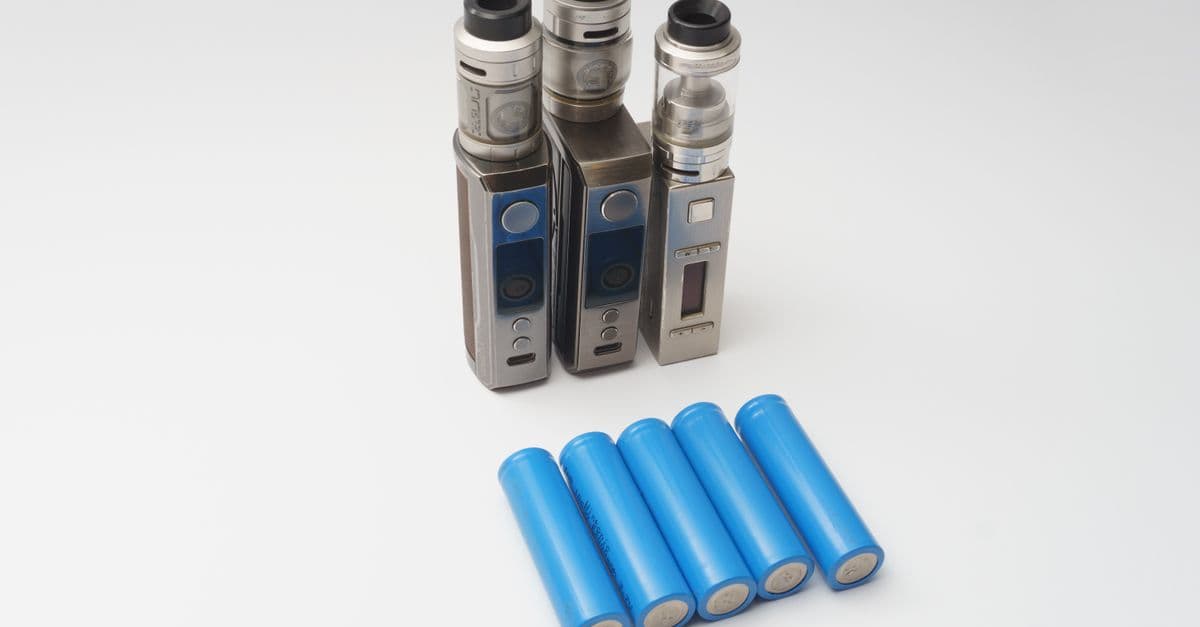
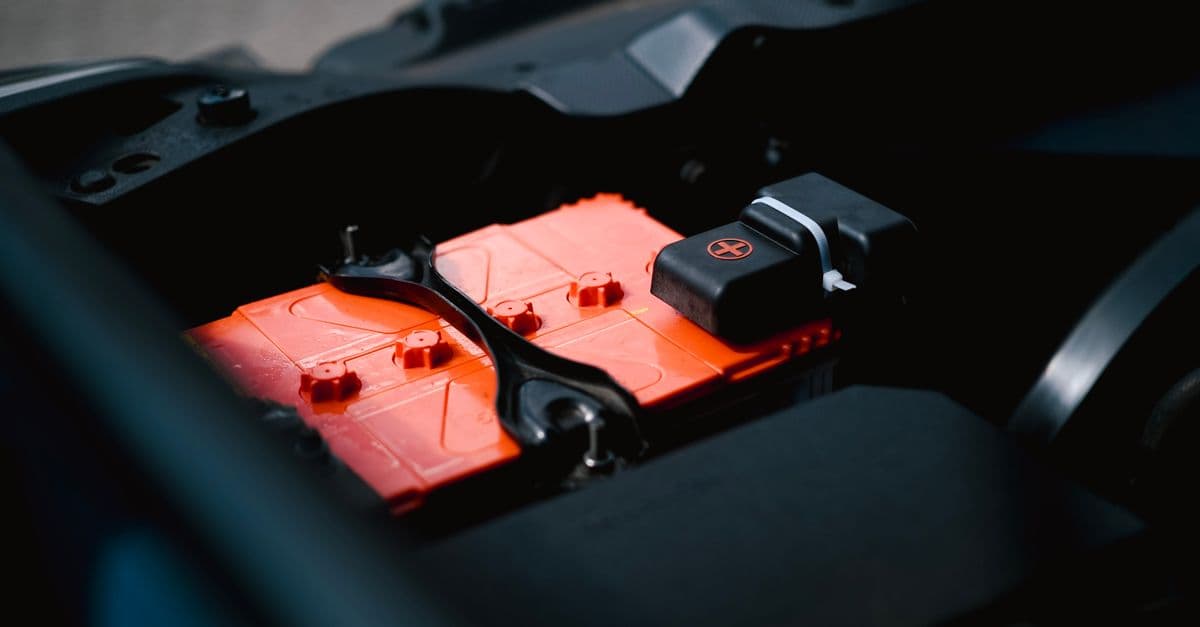
Photo: Aleksander Dumała / Pexels
The battery in your iPhone contains about 12 watt-hours of energy — enough, if released all at once, to heat a cup of water to boiling. A Tesla Model S contains 100,000 watt-hours. The same chemistry that powers your phone powers vehicles traveling at 100 mph, and the same fundamental principles govern both. That chemistry — lithium-ion — won its inventors the 2019 Nobel Prize in Chemistry. Understanding it reveals something genuinely beautiful about materials science.
Key takeaways
- Lithium-ion batteries store energy by moving lithium ions between two electrodes; electrons flow through the external circuit doing useful work.
- The cathode material (typically a lithium metal oxide) and anode material (typically graphite) act as hosts for lithium ions — a process called intercalation.
- Energy density, cycle life, charging speed, and safety are all engineering tradeoffs shaped by the choice of electrode chemistry.
- Lithium-ion batteries don't have a memory effect, but they do degrade over time as the electrodes gradually lose their ability to host lithium ions.
The battery basics: not what you learned in school
Most people's mental model of a battery is a container of chemicals that get "used up." That's roughly true for single-use alkaline batteries, but lithium-ion is different — it's a rechargeable system built around the reversible movement of ions.
A lithium-ion cell has four key components:
- Cathode: the positive electrode, typically a lithium metal oxide (lithium cobalt oxide, lithium iron phosphate, or NMC — nickel manganese cobalt)
- Anode: the negative electrode, typically graphite
- Electrolyte: a lithium salt dissolved in an organic solvent, which conducts lithium ions but not electrons
- Separator: a thin porous membrane preventing the electrodes from touching (which would cause a short circuit) while allowing ions through
The fundamental insight is elegant: lithium atoms ionize easily (they have just one outer electron to give up), are the lightest metal, and can fit inside the crystal structures of both electrode materials.
Intercalation: ions taking up residence
The process that makes lithium-ion batteries work is called intercalation — lithium ions insert themselves into the layered crystal structure of electrode materials without fundamentally changing that structure. It's like sliding books between books on a shelf: the shelf structure stays intact, the books come and go.
During discharge (when the battery powers your device):
- Lithium ions leave the graphite anode, moving through the electrolyte toward the cathode
- Simultaneously, the electrons they left behind travel through your phone's circuit, doing work (powering the display, processor, radio)
- Lithium ions arrive at the cathode and intercalate into its crystal structure
- When no more lithium can leave the anode, the battery is "dead"
During charging (when power flows in from a charger):
- The process reverses: lithium ions are pulled out of the cathode by the applied voltage
- They travel back through the electrolyte to the anode
- Electrons flow from the charger through the external circuit to the anode
Nothing is "used up" — the lithium just moves back and forth. Theoretically, this could continue indefinitely. In practice, side reactions and physical degradation limit a typical lithium-ion battery to 500–1,000 cycles before capacity noticeably degrades.
The Nobel Prize chemistry: three inventors, three decades
John Goodenough (University of Texas), M. Stanley Whittingham (SUNY Binghamton), and Akira Yoshino (Asahi Kasei) shared the 2019 Nobel Prize for their contributions:
Whittingham (1970s) demonstrated the concept using titanium disulfide as the cathode and lithium metal as the anode. It worked, but lithium metal is dangerously reactive — prone to growing needle-like dendrites that could pierce the separator and cause fires.
Goodenough (1980) discovered that lithium cobalt oxide (LiCoO₂) could serve as a cathode, doubling the voltage compared to Whittingham's design and moving away from dangerous lithium metal cathodes.
Yoshino (1985) solved the anode problem by replacing lithium metal with graphite, which safely hosts lithium ions without dangerous dendrite formation. His design — graphite anode, LiCoO₂ cathode — is essentially what Sony commercialized in 1991 and what still powers most consumer electronics today.
Why different devices use different chemistries
Not all lithium-ion batteries are alike. The cathode chemistry is the biggest variable, and different applications optimize for different properties:
Lithium cobalt oxide (LCO): High energy density, used in phones and laptops. Cobalt is expensive and has supply chain concerns (much of the world's cobalt comes from the Democratic Republic of Congo).
Lithium iron phosphate (LFP): Lower energy density but exceptional cycle life (2,000–4,000 cycles), thermal stability, and low cost. Used in many EVs (Tesla's standard range models, most Chinese EVs) and grid storage.
NMC (nickel manganese cobalt): Balances energy density, power output, and longevity. Used in premium EVs like the BMW i3 and early Tesla models, and now increasingly in consumer electronics.
NCA (nickel cobalt aluminum): Very high energy density, used in Tesla's 18650 and 2170 cells for long-range models.
The anode side is evolving too. Silicon can store 10 times more lithium per unit weight than graphite, but silicon expands enormously when lithium intercalates — cracking the anode over cycles. Engineers are adding small percentages of silicon to graphite anodes (Silicon-graphite), gradually increasing that fraction as the mechanical challenges are solved.
Why batteries degrade and how to slow it down
Every charge cycle causes some irreversible damage. The main culprits:
SEI layer growth: On the first few charges, the electrolyte reacts with the graphite anode to form a solid electrolyte interphase (SEI) — a thin coating that, ideally, stabilizes and prevents further reactions. Over time, this layer continues growing, consuming lithium and reducing capacity. A recent study in Nature Materials showed that controlling SEI composition could extend battery life by 40%.
Source: Peled, E., & Menkin, S. (2017) "SEI — Past, Present and Future." Journal of The Electrochemical Society, 164(7), A1703–A1719. — Comprehensive review of solid electrolyte interphase formation and degradation mechanisms.
Cathode degradation: Repeated expansion and contraction of the crystal structure gradually causes cracking and loss of electrical contact. For layered oxides like LiCoO₂, this cracking accelerates beyond 80% state-of-charge, which is why most phones charge slowly above 80%.
Lithium plating: Charging too fast, especially at low temperatures, causes lithium to plate on the anode surface instead of intercalating. Plated lithium forms dendrites — needle-like protrusions that can pierce the separator, causing internal short circuits and potential fires. This is why cold + fast charging is particularly damaging.
Electrolyte oxidation: The organic electrolyte (typically a mixture of carbonates like LiPF₆ in dimethyl carbonate) gradually oxidizes at the cathode surface, forming a resistive coating that increases charging resistance over time.
Practical tips from this chemistry:
- Avoid storing at 100% or 0% charge — middle-state-of-charge (around 20–80%) is gentlest because it minimizes both cathode oxidation and anode SEI growth
- Avoid fast charging as your regular habit — reserve it for emergencies
- Don't leave the battery in extreme heat (above 40°C accelerates SEI growth by several orders of magnitude)
- Cold slows ion movement, making batteries appear weaker — but doesn't cause permanent damage the way heat does (cold damage is reversible; heat damage is not)
Energy Density vs. Power Density: The Engineering Tradeoff
Energy density (watt-hours per kilogram) determines how long a device runs. Power density (watts per kilogram, or how quickly a battery can deliver current) determines how quickly it can power something. These are conflicting goals.
LiCoO₂ has excellent energy density (~260 Wh/kg) but moderate power density — fine for phones that need to run all day but don't need to deliver 200 amps instantly. LFP has lower energy density (~160 Wh/kg) but exceptional power density and thermal stability — better for EVs that need high power delivery and can tolerate the added weight.
This tradeoff explains why your phone uses LCO and your Tesla uses LFP (or NCA for long-range models): your phone values lightness; your car values safety and power.
The Lithium Supply Chain and Mining
Global lithium production is around 100,000 tonnes per year. Demand is projected to grow 50x by 2050 as EVs proliferate. Lithium is extracted from hard-rock spodumene deposits (Australia, Canada) or by evaporating salt-flat brines in Chile, Argentina, and Bolivia. Both methods are energy-intensive and have environmental costs — particularly the brines, which consume enormous quantities of water in arid regions.
Recycling lithium-ion batteries (recovering lithium, cobalt, nickel) is technically feasible and increasingly economically viable. Current recycling recovers ~85–95% of cathode materials. Second-life uses (repurposing EV batteries for grid storage after they've degraded to 70% capacity) also extend resource lifespans.
Source: Dunn, J. B., Ciez, R., Ganesh, S., Werth, A., & Wang, S. (2021) "Circularity in the Mobility Supply Chain." Frontiers in Energy Research, 9, 720651. — Assessment of battery recycling feasibility and second-life economics.
Table: Lithium-Ion Chemistry Comparison
| Chemistry | Energy Density | Power Density | Cycle Life | Cost | Safety | Thermal Stability | Best For |
|---|---|---|---|---|---|---|---|
| LCO (LiCoO₂) | 260 Wh/kg | Moderate | 500–1,000 | $$$$ | Good | Moderate | Smartphones, laptops |
| NMC (Ni-Mn-Co) | 210 Wh/kg | Good | 1,000–2,000 | $$$ | Good | Moderate | Premium EVs, power tools |
| NCA (Ni-Co-Al) | 250 Wh/kg | Very High | 500–1,000 | $$$$ | Moderate | Moderate | Tesla long-range |
| LFP (LiFePO₄) | 160 Wh/kg | Excellent | 2,000–4,000 | $$ | Excellent | Excellent | Grid storage, budget EVs, safety-critical |
Energy density in theoretical maximum; actual battery pack density is ~60% of cell density due to packaging and thermal management.
Battery Thermal Management and the "Golden Zone"
Lithium-ion batteries are temperature-sensitive in ways most people don't realize. Ion conductivity in the electrolyte follows an Arrhenius relationship — doubling temperature roughly halves the chemical activation energy needed for reactions, accelerating both useful current delivery and harmful side reactions like SEI growth.
The Chemistry of Temperature Sensitivity
At 20°C (room temperature), a lithium-ion battery operates at its design point. At 40°C, chemical reaction rates roughly double — battery capacity seems higher (ions move faster), but degradation also accelerates significantly. At 60°C, the cell can no longer be reliably charged safely; beyond 80°C, thermal runaway becomes likely unless there's active thermal management.
Conversely, at 0°C, the electrolyte becomes viscous, ion mobility drops dramatically, and the battery appears weak — delivering only 50% of room-temperature power. At −10°C, it's nearly unusable without heating. However, this low-temperature effect is almost entirely reversible. The moment you warm the battery back to room temperature, it regains its full performance. Heat damage, by contrast, is permanent.
Thermal Management Systems
Every modern EV and high-performance device uses active thermal management:
Passive methods: Aluminum casings conduct heat away from the battery.
Active liquid cooling: Channels circulate cool fluid (water or glycol) through the battery pack, removing heat in real time. This adds weight and complexity but enables fast charging and high power delivery without temperature spikes.
Phase-change materials: Some experimental batteries use paraffin waxes or salt hydrates that melt to absorb excess heat, then refreeze during cooler periods — a passive thermal buffer.
Tesla Model 3's battery thermal management system can heat the pack in 15 seconds from −20°C, enabling useful performance even in extreme cold. Without it, the same battery in a cold garage would seem like a brick.
Source: Harlow, J. E., et al. (2019) "A Wide Range Review of Lithium-Ion Battery Thermal Runaway." Journal of Power Sources, 446, 227944. — Comprehensive analysis of thermal management and runaway prevention.
Manufacturing Precision and Variation
Battery manufacturing is extraordinarily precise. Every cell in a Tesla Model S or iPhone contains:
- Electrodes coated to tolerances of ±2 micrometers
- Separator films exactly 15–20 micrometers thick
- Electrolyte chemistry with purity >99.99%
But manufacturing at scale introduces small variations. Some cells charge slightly faster, some hold slightly more capacity. Battery management systems account for this by "balancing" — drawing current from cells that charge faster to equalize the pack. Without this, the weaker cells would bottleneck the whole pack, and weak cells would degrade faster.
This precision is why batteries from reputable manufacturers (Tesla, Samsung SDI, LG, CATL) last predictably, while batteries from unknown makers might fail in months. The chemistry is the same; the manufacturing precision is not.
Performance Across Temperature Extremes: Real-World Behavior
The EPA and other regulators test batteries at 20°C (68°F). Real-world usage spans −20°C to +50°C. Here's what happens:
| Temperature | Behavior | Reversibility |
|---|---|---|
| −20°C | Capacity drops to ~30%; charging rate severely limited to prevent plating | Fully reversible; warms up and works normally |
| −10°C | Capacity drops to ~50%; usable but sluggish | Fully reversible |
| 0°C | Capacity ~70%; acceptable for most uses | Fully reversible |
| 20°C | Design point — all specs assume this | Baseline |
| 40°C | Capacity seems higher (faster ions) but degradation is 2-3x faster | Partially reversible; some capacity loss permanent |
| 60°C | Thermal runaway risk; BMS typically disables charging | Permanent damage if sustained |
| >80°C | Thermal runaway very likely; electrolyte ignition possible | Catastrophic failure |
Practical implication: Leaving your phone or Tesla in a hot car overnight does permanent damage. Leaving it outside in freezing weather only appears to damage it — it recovers when warmed.
The Environmental Cost of Lithium Mining
Global lithium production requires roughly 500,000 gallons of water per ton of lithium extracted. In the Atacama salt flat (Chile, where 30% of global lithium comes from), this extraction is competing with freshwater agriculture in an arid region.
Direct environmental costs:
- Aquifer depletion in arid regions
- Contamination with sulfuric acid and other processing chemicals
- High energy consumption (lithium spodumene mining requires roasting at 1,100°C)
Social costs:
- Indigenous communities in Chile and Argentina have traditional water rights being depleted by lithium operations
- Mining jobs, while valuable, come with exposure risks
Offsetting factors:
- EV batteries eliminate ongoing fossil fuel extraction (oil drilling)
- Recycling can eventually supply 30–50% of lithium demand, reducing mining pressure
- Sodium-ion batteries (which use abundant sodium instead of lithium) are emerging as an alternative for less performance-critical applications
The environmental calculus is complex: lithium mining today damages specific regions severely, but not mining means billions of ICE vehicles pumping CO₂ for 100+ years. The climate impact of mining is small compared to the atmospheric benefits of electrification.
Source: Dunn, J. B., et al. (2021) "Environmental Assessment of Lithium Extraction and Recycling." Frontiers in Energy Research, 9, 720651. — Life-cycle environmental impact analysis.
Solid-State Batteries: The Next Leap
Solid-state batteries replace the liquid electrolyte with a ceramic or polymer solid — potentially offering 2–3x energy density, higher power, lower flammability, and true lithium metal anodes (which the liquid electrolyte currently forbids due to dendrite risk).
Why Solid-State Is Hard
The solid electrolyte must:
- Conduct lithium ions at room temperature (current ceramics need 60°C+)
- Have high ionic conductivity (>10^−3 S/cm) — state-of-the-art solids are half that
- Not react with liquid lithium metal or oxide cathodes
- Be cost-competitive with liquid electrolyte manufacturing
Samsung SDI and QuantumScape claim 1,000+ km range EV packs by 2030. Toyota claims working prototypes. But scaling from lab (1 cell) to production (millions of cells per year) typically takes 5–10 years.
When solid-state arrives, the energy density jump will enable:
- EVs with 500+ mile range on smaller, lighter packs
- Longer cycle life (potentially 500,000+ miles per pack)
- Reduced thermal management complexity (solids don't have liquid electrolyte flammability)
Beyond Lithium: Emerging Chemistries
Several alternatives to lithium-ion are in development:
Sodium-ion: CATL (China's largest battery maker) commercialized this in 2023. Sodium is more abundant than lithium, slightly lower energy density (140 Wh/kg vs 200+ for Li-ion), but adequate for many applications. Lower cost makes it attractive for EVs prioritizing affordability over range.
Lithium-iron-air (IBM research): Theoretical 10 Wh/kg density — 5x lithium-ion. Uses abundant iron, breathes air for oxygen. Still in early stages; challenges are cycle life and discharge rate control.
Lithium-sulfur: Extremely high theoretical energy density but severe cycle life problems — sulfur dissolves into the electrolyte, so capacity fade is rapid. Active research but commercialization is 10+ years out.
Potassium-ion: Similar to sodium-ion but potassium is more abundant. Performance is slightly worse; early-stage development.
None of these will replace lithium-ion by 2030. Lithium will remain the chemistry of choice for premium EVs, phones, and aircraft. Sodium-ion will capture the low-cost EV market. Solid-state will eventually become mainstream (2030s+) once manufacturing scales.
Battery Testing and Real-World vs. Rated Performance
Battery manufacturers rate capacity and cycle life under ideal conditions: 20°C, controlled charge/discharge rates, perfect separator integrity.
Real-world usage deviates:
- Temperature swings (−10°C to +40°C typical in a car)
- Variable charge rates (slow 120V charger vs. fast DC charging)
- Depth of discharge (most people don't charge to 100% every cycle)
- State-of-charge history (leaving the battery at full charge for days)
A battery rated for 1,000 cycles at 20°C, 20–80% depth of discharge might deliver:
- 800 cycles at 10–90% depth of discharge (deeper cycling)
- 600 cycles at 0–100% depth (extreme cycling)
- 1,200+ cycles if never charged above 80% (shallow cycling)
Tesla's Model S battery (NCA chemistry) is rated for 8 years / 120,000 miles. In practice, many have degraded <10% after 200,000+ miles because owners don't regularly charge to 100%.
This is why your phone manufacturer recommends 20–80% charging, and why Tesla's app lets you limit charge to 80% for daily use.
The Future: Energy Density vs. Safety vs. Cost Tradeoff
The perfect battery would offer:
- 500 Wh/kg energy density (2.5x current)
- 10,000+ cycle life
- Safe at any temperature
- Cost $50/kWh (currently $80–120)
We're moving toward this but hitting tradeoffs. Higher energy density → thermal stability problems. Higher cycle life → lower energy density. Lower cost → less sophisticated materials.
Solid-state batteries will improve this curve (2–3x better). Recycling will reduce raw material costs. But by 2030, we'll still be making these tradeoffs, just at a better overall operating point.
Frequently Asked Questions
Q: Why do lithium-ion batteries sometimes catch fire?
A: Thermal runaway — a chain reaction where heat causes more heat. If the separator fails and the electrodes short-circuit internally, exothermic reactions rapidly heat the cell. The organic electrolyte is flammable, and hot lithium compounds release oxygen, feeding the fire. Battery management systems monitor temperature, voltage, and current to prevent thermal runaway conditions.
Q: Does fast charging damage my battery?
A: Yes, somewhat. Fast charging generates more heat and increases lithium plating risk, both accelerating degradation. Most phones limit fast charging above 80%, switching to slower charging for the top-up. This tradeoff balances convenience against longevity.
Q: What's the difference between capacity (mAh) and energy (Wh)?
A: Milliamp-hours measure charge; watt-hours measure energy (charge × voltage). A 3,000 mAh battery at 3.7V holds 11.1 Wh. When comparing batteries, Wh is more meaningful because it accounts for voltage differences and reveals actual usable energy.
Q: Will solid-state batteries replace lithium-ion?
A: Eventually yes, but not until late 2020s for premium markets. Solid-state batteries offer 2–3x energy density and eliminate flammability. Challenges are manufacturing at scale, managing volume changes, and cost. Toyota, Samsung SDI, and QuantumScape are closest to commercialization.
Q: How does a battery management system (BMS) work?
A: The BMS monitors individual cell voltages, temperatures, and currents. It prevents overcharging and over-discharging, balances charge across cells in a pack, and triggers safety shutdowns if parameters exceed limits. Advanced systems use machine learning to predict degradation and optimize charging.
Q: Can sodium-ion batteries replace lithium-ion soon?
A: Sodium-ion is being deployed now (CATL commercialized it in 2023) but has ~30% lower energy density than lithium-ion. It's best for budget EVs and stationary storage where weight matters less. Lithium will remain dominant through 2030 for premium/high-range vehicles.
The takeaway
Lithium-ion batteries are a masterpiece of materials chemistry. The simple concept — lithium ions moving between electrodes through an electrolyte — enables extraordinary energy density, safety, and longevity when engineered correctly. Their development earned the 2019 Nobel Prize and has powered the smartphone and electric vehicle revolutions.
Understanding the chemistry reveals why they degrade, why they catch fire (and how that's prevented), and why they work better or worse under different conditions. It also reveals why solid-state batteries are coming and what challenges remain. For anyone using battery-powered devices daily, knowing how they work transforms "black box" into "elegant engineering."
Read next:
Follow new articles
Add SciHub101 to your feed reader to see new science and technology stories.
About the Author
SciHub101 is an independent science and technology publication founded and edited by Buğra Sözeri, a software engineer and app developer based in Türkiye. AI tools assist with drafting and research. Source documentation in the existing archive is uneven, and articles are being reviewed and corrected. The Editorial Team byline identifies editorial responsibility; it does not certify specialist or independent human review. Where we compare products, anything built by our own team is labelled as such — see the editorial guidelines and About page for how corrections and disclosures work.
Related Articles
Nanotechnology Explained: The Science of Building at the Atomic Scale
Nanotechnology engineers matter at the level of individual atoms. It's already in your sunscreen, cancer treatments, and phone.
How Smartphones Changed the World
In less than 20 years, smartphones transformed how billions of people communicate, navigate, shop, and think.
How Do Batteries Actually Work?
Batteries store electrical energy as chemical energy and release it on demand. The principles are over 200 years old, but the chemistry inside your phone and your EV is still changing.
How Do Electric Cars Actually Work?
An EV is dramatically simpler than a petrol car — a battery, a motor, some software. Here's how the parts work together, the trade-offs versus combustion, and what's coming next.

How to Optimize Your iPhone Battery Life in 2026: Science-Based Tactics
iPhone batteries degrade through cyclical charging—the repeated charge and discharge cycle that every rechargeable lithium battery experiences. After 500 full charge cycles, most iPhone batteries retain 80 percent capacity; after 1,000 cycles, 60 percent. Battery degradation is not a defect; it is the thermodynamic cost of using electrochemical energy storage. However, specific charging habits and software settings can extend battery lifespan and maximize daily runtime. The tactics are science-based: keeping batteries cool, charging to 80 percent rather than 100 percent, avoiding deep discharges, and managing background processes. Most battery drain myths are false (closing apps does not help; wi-fi does not drain faster than LTE). This guide separates fact from myth, explains the science of lithium-ion batteries, and provides specific settings and habits that work.
Electric Cars vs Gas Cars — Complete Comparison
EVs vs gas cars in 2026: range, cost, emissions, charging, maintenance, battery life, and cold-weather performance compared head-to-head.