Electric Cars vs Gas Cars — Complete Comparison
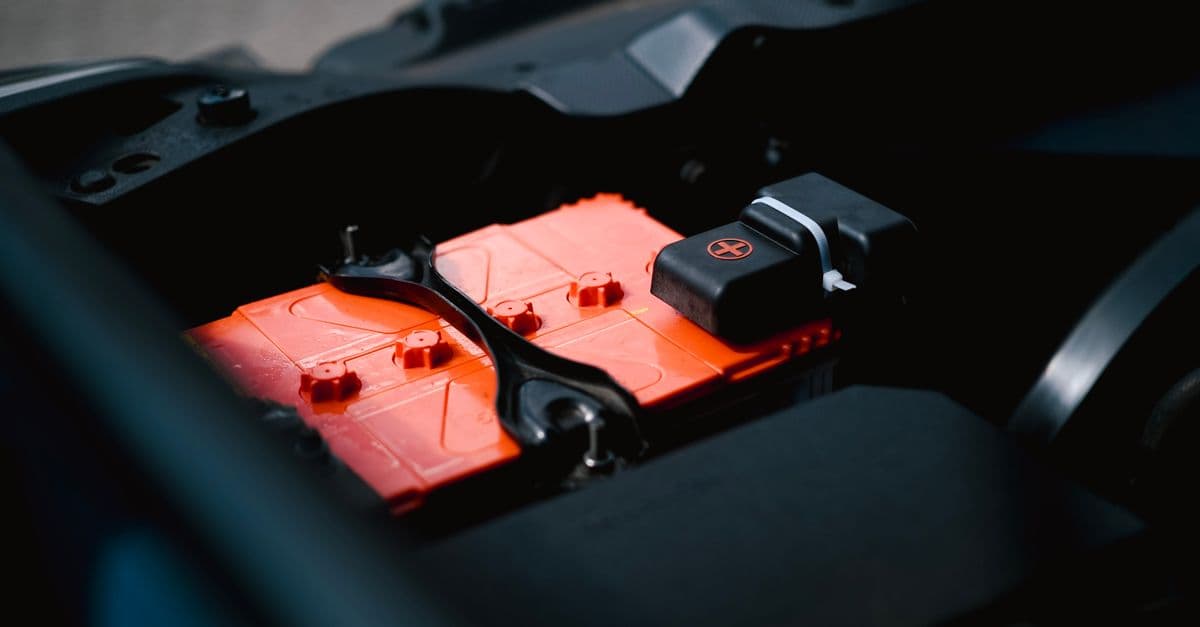
Photo: Ayyeee Ayyeee / Pexels
Electric vehicles crossed 20% of new car sales globally in 2025, and the question every buyer asks is the same: should I switch? The honest answer depends on how you drive, where you live, and how long you keep cars. This guide compares the two technologies on every dimension that matters.
Powertrain Differences
A modern internal combustion engine (ICE) is a small chemical plant. Thousands of precision-machined moving parts — pistons, crankshaft, valves, timing chain, fuel injectors, turbocharger, transmission, differential, exhaust, catalytic converter — convert about 20–30% of gasoline's chemical energy into wheel motion. The rest becomes heat and noise.
An EV powertrain is radically simpler. A typical electric drive unit has about 20 moving parts: a rotor inside a stator, a single-speed reduction gear, and an inverter. Energy goes from battery → inverter → motor → wheels at about 85–90% efficiency. No spark plugs, no oil, no transmission fluid, no exhaust, no idle.
That simplicity drives most of the practical differences below.
Head-to-Head Comparison
| Dimension | Gas car (2026) | Electric car (2026) |
|---|---|---|
| Typical range | 300–500 mi | 200–400 mi (350+ on premium models) |
| Refuel time | ~5 min | 20–40 min DC fast charge to 80%; 6–10 hr home Level 2 |
| Energy cost per mile (US average) | $0.12–$0.18 | $0.04–$0.06 (home charging) |
| Maintenance over 100k mi | $9,000–$12,000 | $4,000–$6,000 |
| Purchase price premium | — | ~$5,000–$15,000 higher for comparable model |
| Tailpipe emissions | 350–450 g CO₂/mi | 0 |
| Lifecycle CO₂ (US grid) | ~350 g/mi | ~150 g/mi |
| Cold weather range loss | ~10–15% | 20–40% |
| Towing range hit | ~15–20% | 40–50% |
| Drivetrain moving parts | ~2,000 | ~20 |
| Acceleration (0–60, similar class) | 6–9 s | 3–6 s |
Range and Refueling
A modern gas sedan does 350–450 miles on a tank and refills in five minutes anywhere. A 2026 EV like a Tesla Model Y Long Range or Hyundai Ioniq 6 advertises 320–360 miles EPA, and real-world highway range at 75 mph is typically 230–280 miles. DC fast charging on a 250 kW charger takes a Model Y from 10% to 80% in about 25 minutes.
For daily driving (Americans average 37 miles/day) this is a non-issue — most EV owners charge at home overnight and never visit a public charger except on trips. For long-distance driving, EVs require planning. Tesla's Supercharger network, now open to most brands, has largely solved this on US interstates; rural and cross-country routes still have gaps.
Cost of Ownership
EVs typically cost more upfront and less to run. A 2026 Model Y at ~$45,000 vs. a comparable RAV4 Hybrid at ~$35,000 — but over 100,000 miles the Model Y saves roughly $8,000 in fuel and $4,000 in maintenance, closing or reversing the gap depending on electricity and gas prices.
Maintenance savings come from things EVs don't have: no oil changes, no spark plugs, no fuel filters, no timing belts, no transmission services. Brake pads last 2–3× longer because regenerative braking handles most deceleration. The big-ticket items that remain — tires (slightly faster wear from torque and weight), cabin filters, brake fluid, coolant — are shared with gas cars.
Emissions: Lifecycle, Not Just Tailpipe
A common gas-car talking point is "what about the battery?" Manufacturing an EV does emit more CO₂ than building a gas car — battery production alone adds roughly 4–7 tonnes of CO₂. But this is repaid through cleaner driving within 1–2 years on the current US grid, and faster on cleaner grids.
The Union of Concerned Scientists' lifecycle analyses, updated annually, consistently find that EVs produce lower total emissions than gas cars in every US region, including coal-heavy grids. Nationally, an average EV is responsible for emissions equivalent to a hypothetical 91 mpg gasoline car. As grids decarbonize, this gap widens — see our renewable energy explained guide for grid context.
Charging Infrastructure
As of early 2026, the US has roughly 220,000 public charging ports across about 65,000 stations — versus around 145,000 gas stations. The numbers favor EVs on paper, but the comparison is misleading: gas stations refuel a car in 5 minutes, public chargers in 30–60. Effective throughput per location still favors gasoline.
The decisive variable is home charging. EV owners with garages or driveways do 80–90% of their charging at home and rarely interact with public infrastructure. Apartment dwellers without dedicated parking face a real obstacle that policy is slowly addressing.
Cold Weather
EVs lose 20–40% of range in cold weather, depending on temperature, battery preconditioning, and how aggressively the cabin heater runs. Reasons: lithium-ion chemistry is slower at low temperatures, regen is reduced to protect cells, and cabin heating draws meaningful battery power (gas cars get free heat from engine waste). Modern EVs with heat pumps (most premium 2024+ models) mitigate this significantly. Gas cars also lose efficiency in winter — roughly 10–15% — but it's less noticeable because tanks are larger.
Towing
Towing crushes EV range. A Ford F-150 Lightning towing 6,000 lb sees its 240-mile range drop to around 110–130 miles. Gas trucks lose maybe 15–20% of theirs. For heavy-towing use cases (RVs, livestock trailers, long-distance hauling), gas and diesel remain practically better in 2026. For light, occasional towing — a small boat or trailer on weekend trips — EVs are workable.
Battery Longevity
The fear that EV batteries die at 100,000 miles has not held up. Tesla's fleet data shows the Model 3 retains about 90% capacity at 200,000 miles. Tesla, Hyundai/Kia, Ford, and GM all offer 8-year / 100,000-mile (often 150,000-mile) battery warranties guaranteeing at least 70% capacity. Real-world degradation patterns suggest most modern EV batteries will outlast the rest of the car. Battery replacements, though rare, are expensive — $10,000–$20,000 — but warranty terms cover most failures. See our deeper EV battery technology article for chemistry details.
Grid Impact
EV charging adds load to the grid, but less than commonly feared. If every US car were electric tomorrow, total electricity demand would rise about 25%. Spread over 20 years and with smart charging (cars choosing to fill up during low-demand overnight hours), most grid operators believe the increase is manageable and even beneficial — EVs become flexible loads that smooth demand curves.
2026 Market Snapshot
EVs were roughly 22% of US new-car sales in 2025 and projected near 30% in 2026, with China above 50% and Europe near 35%. Tesla still leads in volume but lost share as legacy automakers shipped competitive products. Average EV transaction prices fell about $9,000 over 2022–2025 as battery costs dropped below $100/kWh at the pack level.
So Which Should You Buy?
Strong case for EV:
- You can charge at home
- Most of your driving is local
- You keep cars for 5+ years (lower TCO wins)
- You value performance and quiet
- Your local electricity is cheap or your grid is clean
Stay with gas (for now):
- You apartment-park with no charging access
- You routinely tow heavy loads cross-country
- You drive 500+ mile days regularly in winter
- You only keep cars 2–3 years (depreciation still rougher on EVs)
For most American drivers — short commutes, home parking, longer ownership — the math now favors EVs. For others, hybrids and plug-in hybrids are a sensible middle ground.
FAQ
Q: How long does an EV battery last? A: Modern EV batteries typically retain 85–90% capacity at 200,000 miles based on Tesla, Hyundai, and Chevy fleet data. Manufacturer warranties guarantee at least 70% for 8 years / 100,000–150,000 miles.
Q: Are EVs really better for the environment given battery mining? A: Yes, by every credible lifecycle analysis. Battery manufacturing adds emissions upfront but is repaid within 1–2 years of driving on US grids and faster on cleaner ones. The gap widens as grids decarbonize.
Q: What does it actually cost to charge at home? A: At the US average of 16¢/kWh, charging a typical EV from empty to full costs $9–$14 for 250–300 miles of range — about 4–6¢ per mile, roughly one-third the cost of gasoline.
Q: How fast is fast charging? A: On a 250 kW DC charger, a modern EV adds 150–200 miles of range in 15–20 minutes. The first 10–80% is fastest; the last 20% slows significantly to protect the battery.
Q: Can EVs handle cold winters? A: Yes, but expect 20–40% range loss. Heat pumps and battery preconditioning (warming the battery while plugged in before driving) substantially reduce the hit. Norway, the world's most EV-saturated market, runs them year-round in arctic conditions.
Q: Are EVs more expensive to insure? A: Currently yes, typically 15–25% more, mostly because repair costs are higher (specialist labor, battery and sensor proximity to collision zones). The gap is narrowing as repair networks expand.
Sources
- US Department of Energy, AFDC. EV and gasoline cost comparisons, 2025.
- Union of Concerned Scientists. "Driving Cleaner: Electric Cars and the Environment," 2024 update.
- BloombergNEF. "Electric Vehicle Outlook 2025."
- Tesla Vehicle Safety and Impact Report 2024 (battery longevity data).
- US EIA. "Electric vehicles and the grid," 2024.
Follow new articles
Add SciHub101 to your feed reader to see new science and technology stories.
About the Author
SciHub101 is an independent science and technology publication founded and edited by Buğra Sözeri, a software engineer and app developer based in Türkiye. AI tools assist with drafting and research. Source documentation in the existing archive is uneven, and articles are being reviewed and corrected. The Editorial Team byline identifies editorial responsibility; it does not certify specialist or independent human review. Where we compare products, anything built by our own team is labelled as such — see the editorial guidelines and About page for how corrections and disclosures work.
Related Articles

How 5G Networks Actually Get Built — and Secured
5G cellular networks explained through the deployment fight: fiber costs, small cell permitting, Open RAN, and the security risks of virtualized cores.

How Camera Sensors Work — CCD vs CMOS
How digital camera sensors turn photons into pixels: photodiodes, Bayer filters, CCD vs CMOS, pixel size, noise, dynamic range, and computational photography.

Is Nuclear Power Safe? The Real Risks and Benefits
Nuclear power has the lowest death rate per kWh of any major energy source. It's also the most feared. Here's what the data actually says — beyond Chernobyl, beyond Fukushima.

What Is Green Hydrogen — and Could It Replace Fossil Fuels?
Green hydrogen is made by splitting water with renewable electricity, so burning it releases only water. It is promising for industries that cannot easily electrify, but it is costly and wasteful elsewhere.

Countries with the Most Data Centers (2025 Ranked)
The United States hosts more data centers than any other country by every count, but the totals vary from about 3,800 to 5,400 depending on the database. Here is the ranking, why facility counts and megawatts tell different stories, and what the IEA says about data centre electricity.

How Google DeepMind Uses AI to Cut Data Center Energy Consumption
DeepMind's reinforcement learning system cut Google's data center cooling energy by 40%—a case study in applying AI to climate-critical infrastructure.