Is Nuclear Power Safe? The Real Risks and Benefits
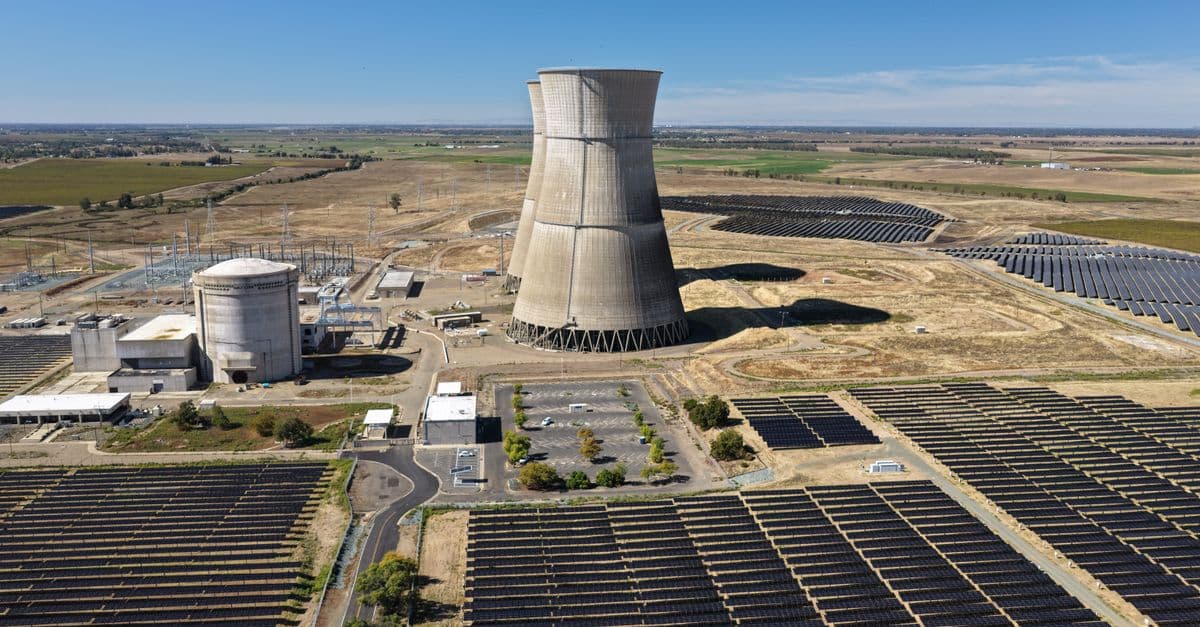
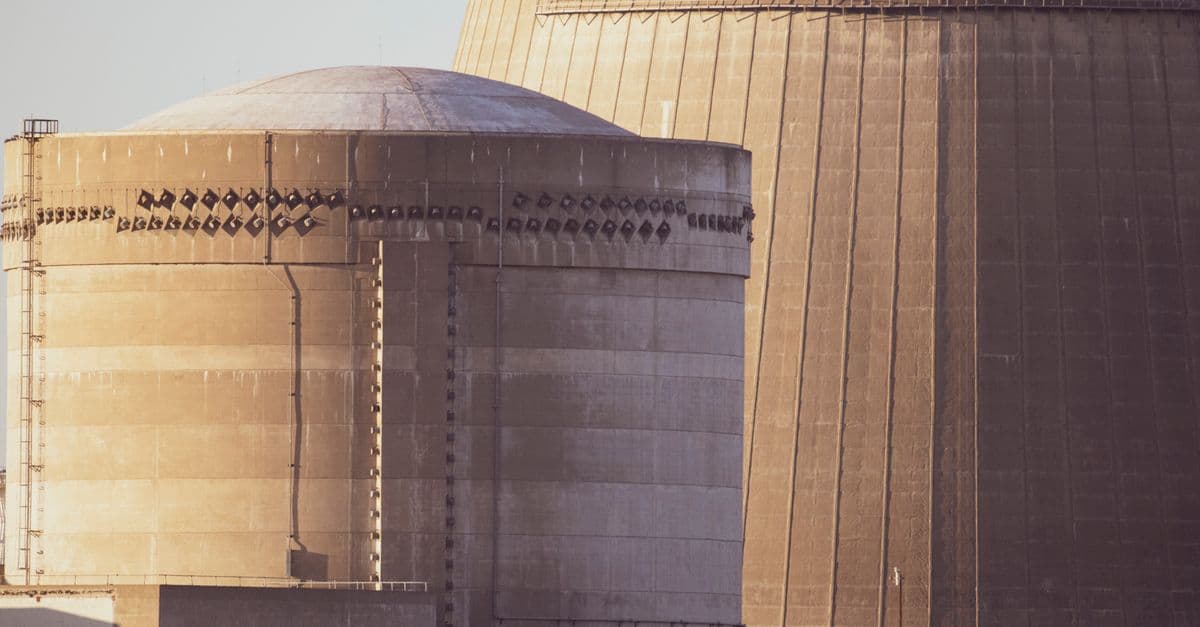
Photo: Sean P. Twomey / Pexels
Nuclear power has the lowest death rate per kWh of any major energy source — including wind and solar. It's also the most feared. Chernobyl and Fukushima dominate public memory, while the daily reality of nuclear power as an extraordinarily safe, low-carbon energy source rarely makes the news. Here's the data, the real risks, and why the debate over nuclear is genuinely complicated.
Key takeaways
- Nuclear has the lowest deaths per TWh of major energy sources (~0.03), comparable to wind and solar.
- Major accidents (Chernobyl, Fukushima) cause real harm but vastly less than people generally think.
- Modern reactor designs are far safer than the 1970s designs that caused the famous accidents.
- The biggest issues are cost, construction time, and political acceptance — not safety per se.
- Nuclear is one of several routes to deep decarbonisation; whether to use it is partly a values choice.
How nuclear works (briefly)
Nuclear power uses controlled fission — splitting uranium-235 atoms — to release heat. The heat boils water, the steam drives turbines, and turbines generate electricity.
Unlike fusion (combining light atoms), fission requires only conventional engineering. We've used it commercially since the 1950s. Roughly 10% of global electricity comes from nuclear power today.
Deaths per TWh — the unexpected leader
The most-cited safety comparison: deaths per terawatt-hour (TWh) of electricity produced. Including all causes — accidents, radiation, air pollution from emissions:
| Source | Deaths per TWh |
|---|---|
| Coal | 24.6 |
| Oil | 18.4 |
| Natural gas | 2.8 |
| Hydro | 1.3 (mostly from dam failures) |
| Wind | 0.04 |
| Nuclear | 0.03 |
| Solar | 0.02 |
Nuclear is roughly 800× safer than coal per kWh. Most people guess the opposite ranking.
The vast majority of fossil fuel deaths come from air pollution — coal especially. These deaths happen daily and quietly, while nuclear's rare, dramatic accidents dominate perception.
What about Chernobyl?
The 1986 Chernobyl accident in Soviet Ukraine was the worst nuclear accident in history. Reality:
- 31 immediate deaths from the explosion and acute radiation sickness.
- ~4,000 estimated long-term thyroid cancer deaths in exposed populations (WHO estimate).
- ~14 million people exposed to varying radiation levels.
- A still-restricted exclusion zone of ~2,600 km².
Real, serious harm. Also: the reactor design (RBMK) had no Western-style containment building, the operators were performing a dangerous experiment, the response was botched by Soviet politics. Modern reactors are designed to make Chernobyl-style runaway accidents physically impossible.
For perspective: 4,000 estimated cancer deaths over decades is comparable to a few weeks of normal coal-related air pollution deaths.
What about Fukushima?
The 2011 Fukushima accident, triggered by a magnitude 9.1 earthquake and 14-metre tsunami:
- 0 immediate deaths from radiation.
- ~2,200 deaths from the chaotic evacuation (mostly elderly people uprooted from care).
- ~1 worker has been officially attributed to radiation-induced cancer.
- 470,000 people displaced; many returned over subsequent years.
The earthquake and tsunami themselves killed ~18,000 people. The reactor accident killed essentially zero from radiation but caused major economic, political, and psychological harm.
Lessons learned: improved tsunami protection, backup power resilience, better emergency procedures.
What about Three Mile Island?
The 1979 partial meltdown at Three Mile Island in Pennsylvania:
- Zero deaths.
- No measurable health impact in surrounding population.
- Major political and economic consequences for nuclear industry.
Often cited as a major nuclear disaster but actually demonstrates that even with significant equipment failure, modern containment can prevent meaningful radiation release.
The waste problem
Nuclear waste is genuinely an issue, but smaller than commonly believed.
Volumes
All US commercial nuclear waste from 60+ years of operation would fit on a single American football field stacked ~3 metres deep. Compare with millions of tonnes of fly ash from coal plants annually.
Long-term storage
High-level waste needs containment for thousands to hundreds of thousands of years. Geological repositories (deep stable rock formations) are the standard solution. Finland has Onkalo, the first permanent storage facility, accepting waste in 2025.
Other countries
Most nuclear countries store waste in interim facilities (typically water pools or dry casks) while pursuing permanent solutions. Yucca Mountain (US) was halted politically; alternative sites are being considered.
Newer approaches
Some advanced reactors can use existing waste as fuel, dramatically reducing the long-term storage problem. Most of these are still in development.
What about bombs?
A common worry: nuclear power leads to nuclear weapons. Reality:
- Power reactors produce different isotopes than weapons. Spent fuel is plutonium, but weapons-grade plutonium requires specific reactor configurations.
- Weapons states pursued nuclear weapons separately from power programs.
- Most countries with nuclear power have not built weapons.
The link is real but indirect. Strict international oversight (IAEA) exists to prevent diversion.
Modern reactor designs
Current operating reactors are mostly designed in the 1960s-70s. Newer designs include:
Generation III+
Already deployed (e.g., AP1000, EPR). Improved safety features, passive cooling, lower maintenance.
Small modular reactors (SMRs)
Compact, factory-built reactors that can be deployed at smaller sites. Several designs in late development. Promise: lower upfront cost, faster deployment.
Advanced reactors
Various technologies — sodium-cooled, molten salt, gas-cooled. Some can use existing nuclear waste as fuel. Most are still in development.
Microreactors
Small reactors (~5-10 MW) for remote sites or specific applications. Mobile, deployable in months.
Cost is the real challenge
Nuclear's biggest practical problem isn't safety — it's cost.
- New nuclear plants in the West typically cost $10-15 billion and take 10-15 years to build.
- Construction delays and overruns are common.
- South Korea, China, France build cheaper but still expensive.
- New solar and wind costs have dropped dramatically; nuclear hasn't.
This is why many countries are reluctant to build new nuclear despite climate pressure.
Where nuclear fits in clean energy
Different paths to clean electricity exist:
Heavy-renewable
Mostly wind and solar plus storage. Works well in some regions; faces challenges with seasonal storage and reliable baseload.
Renewables + nuclear
Renewables for variable load, nuclear for baseload. Combination minimises both fossil fuels and storage needs.
Mostly nuclear
France traditionally got 70%+ of electricity from nuclear. Reliable but expensive in modern markets.
What works depends on geography
Sunny windy places favour renewables. Cloudy still places benefit more from nuclear. Most modern grids will likely have mixes.
Common misconceptions
"Nuclear is the most dangerous energy source"
Statistically, it's among the safest — including major accidents.
"Radiation from nuclear plants is dangerous in normal operation"
Workers receive minimal exposure. Communities near nuclear plants have similar background radiation as anywhere else, often less than aircrews experience.
"Nuclear waste lasts forever and we don't know what to do"
Long-lived but volumes are small. Long-term storage solutions exist; political acceptance is the challenge.
"Nuclear plants explode like bombs"
Physically impossible. The fuel concentrations and configurations needed for nuclear weapons can't exist in a power reactor.
"Modern nuclear is unsafe"
Newer designs have built-in safety features that make Chernobyl-style accidents physically impossible. Construction standards have improved dramatically.
Frequently asked questions
Is living near a nuclear plant dangerous?
Statistically, no measurable health effect from properly operating plants. Coal plants in the same area typically have larger health effects from air pollution.
Should we build more nuclear?
Genuinely contested. Climate hawks differ — some say yes (need clean baseload), some say renewables alone are enough. Policy questions, not science questions.
Why do some countries phase out nuclear?
Political and public opinion factors — Germany after Fukushima is a famous example. Sometimes economic factors (cheaper renewables make nuclear less competitive).
Are SMRs the future?
Possibly. Several pilots underway. Whether they live up to cost-reduction promises remains to be seen.
What about fusion?
Different technology, decades away from commercial deployment. Not a substitute for fission decisions today.
Global nuclear adoption and geopolitical landscape
As of 2026, 32 countries operate commercial nuclear power reactors. France leads in percentage of electricity from nuclear — approximately 70% of its electricity comes from fission, the highest share globally. This reliance emerged from deliberate policy in the 1970s following the oil crisis; France wanted energy independence. Today, France has some of the cheapest, lowest-carbon electricity in Europe.
United States operates 93 commercial reactors, the most in the world, though these represent only ~20% of US electricity (renewables and natural gas also large contributors). China is building reactors faster than any other nation, bringing 20+ new reactors online between 2020-2026 as part of climate and energy security goals.
Other significant nuclear nations: Russia, India, South Korea, Japan (restarting post-Fukushima), Canada, UK.
Germany and Sweden have taken opposite paths. Germany phased out nuclear by 2023 on political grounds (despite safety data). Sweden extended reactor lifespans and plans new capacity. Both achieved low-carbon electricity; Germany through renewables + storage, Sweden through nuclear + hydro.
The geopolitical angle: Countries like Russia and China have used nuclear technology as soft power, financing and building reactors in Middle Eastern and African countries. This raises non-proliferation concerns but also reflects real energy demand.
Source: International Atomic Energy Agency (IAEA, 2025) — Global nuclear capacity tracker; 32 countries operate 440 reactors; 60+ new reactors under construction worldwide.
Regulatory frameworks and safety culture
Modern nuclear safety rests on regulatory oversight and a culture of extreme conservatism. The Nuclear Regulatory Commission (NRC) in the US, and equivalent bodies internationally (UK's Office for Nuclear Regulation, France's ASN, Canada's CNSC), impose exhaustive design and operational standards.
Key principles:
- Defense-in-depth: Multiple independent safety systems so that no single failure leads to accident.
- Probabilistic safety analysis: Engineers calculate the odds of rare failure sequences and design to prevent them.
- Immediate shutdown capability: Reactors can be halted within seconds via control rods.
- Passive safety: Modern designs use gravity and convection to cool reactors if all active systems fail (no human operator or external power needed).
- Continuous monitoring: Ongoing environmental, radiation, and equipment monitoring.
A notable safety culture element: nuclear plants file hundreds of minor incident reports annually (a culture of transparency), investigate root causes, and share learnings across the industry. This transparency sometimes makes nuclear appear less safe (small incidents get reported) compared to coal plants, where health harms go unreported in official databases.
The precautionary principle in nuclear regulation is also worth noting: When in doubt, shut down a reactor pending investigation. This is more cautious than fossil fuel regulation, where plants often run despite known risks.
Decommissioning, waste storage timelines, and lifecycle costs
When a nuclear plant reaches end of life (typically 40-60 years), it must be decommissioned — a process that takes 10-30 years and costs $1-2 billion per plant.
Decommissioning involves:
- Cooling the reactor and removing spent fuel
- Decontaminating and dismantling radioactive equipment
- Demolishing the reactor building
- Storing or disposing of all materials
Most countries require funds to be set aside during operation (a "nuclear decommissioning reserve"), so decommissioning costs are known upfront. In contrast, coal plant health costs from air pollution (premature deaths, respiratory illness) are rarely internalized.
Waste storage timelines: High-level waste (spent fuel) remains hazardous for 100,000+ years. This has no parallel in fossil fuel byproducts (which are burned and released to the atmosphere immediately). However, the volume is tiny — all US commercial waste fits on a football field, while coal ash from annual US coal burning covers thousands of acres.
Permanent solutions being deployed:
- Finland's Onkalo facility (opening 2025) is the first permanent repository. It buries waste 450 meters deep in stable granite, designed for storage over 100,000 years.
- Sweden and France are developing similar repositories.
- The US (Yucca Mountain) had political opposition and cancelled the project; alternatives are being considered.
Advanced reactor designs promise to reduce waste: Fast breeder reactors can use 99% of uranium (vs 0.7% in conventional reactors), and some molten-salt reactors can consume existing high-level waste as fuel, reducing long-term storage burdens.
Climate mitigation role of nuclear
Nuclear power produces electricity with near-zero carbon emissions. Lifecycle carbon emissions from nuclear (accounting for mining, construction, decommissioning) are ~12 grams of CO2 per kWh — comparable to wind (11 g/kWh) and lower than solar (48 g/kWh).
Given climate urgency, nuclear's low-carbon output makes it valuable. A typical nuclear plant displaces 5-10 million tonnes of CO2 annually (equivalent to ~1 million cars taken off the road).
However, nuclear's role in climate mitigation faces practical limits:
- Construction time: A nuclear plant takes 10-15 years to build. Solar and wind can be deployed in 1-2 years. For urgent emissions reductions, renewables are faster.
- Cost per TWh: Nuclear costs ~$100-150 per MWh for new builds (all-in, including decommissioning and waste). Renewables cost ~$30-50 per MWh. For the same climate dollar, renewables displace more carbon.
- Grid requirements: Renewables need storage and grid flexibility; nuclear provides baseload. Combination approaches (nuclear + renewables + storage) are more robust than either alone.
Studies by the IPCC and MIT conclude that meeting climate targets requires decarbonization pathways that include both renewables and nuclear — not one or the other. The mix depends on geography and policy.
Source: IPCC Special Report on 1.5°C (2018) and MIT Deep Decarbonization study (2018) — Nuclear necessary for climate targets in 1.5°C pathways; cost and deployment speed favor renewables for near-term reductions.
Public perception versus actual risk
Perhaps the most instructive aspect of nuclear safety is the perception-reality gap. Surveys consistently show that people rank nuclear as more dangerous than fossil fuels — despite the opposite being true by every quantifiable measure (deaths, diseases, environmental damage).
Why the gap exists:
- Salience bias: Chernobyl and Fukushima are vivid, memorable events. Daily deaths from coal pollution aren't.
- Involuntary risk: People feel less control over radiation from a reactor than over choosing to drive a car.
- Media narrative: Disasters get coverage; normal operation doesn't.
- Fear of the unknown: Radiation is invisible; people more easily understand dangers of smoke and ash.
This perception gap has real policy consequences. Germany's energiewende (energy transition) phased out nuclear for political reasons, replacing it with renewables. This was safer from a carbon perspective (renewables instead of fossil fuels) but nuclear from a direct safety perspective. The policy choice reflected values (political acceptance, autonomy) rather than safety science.
Importantly: This isn't an argument that public concern is irrational. Larger risks than deaths might reasonably concern people (economic disruption from accidents, psychological stress from living near a reactor). The point is that framing nuclear as uniquely dangerous from a mortality standpoint misrepresents the evidence.
Insurance, liability, and the Price-Anderson Act
Nuclear plants are insured under schemes like the US Price-Anderson Nuclear Industries Indemnity Act (1957, renewed periodically). This limits utilities' liability for catastrophic accidents to ~$13 billion, with excess costs covered by a government insurance pool.
Critics argue this is a subsidy (if coal plants had to carry equivalent liability, coal electricity would be far more expensive). Supporters note that the cap is realistic; a Chernobyl-scale accident in the US could exceed $100 billion.
The economic risk is real — a major accident causes insurance claims, equipment loss, cleanup costs, and economic disruption. Fukushima's cleanup is estimated at $200+ billion. This is a legitimate cost of nuclear, not a safety issue per se, but an economic one that affects policy.
Modern advanced reactor designs in development
While most operating reactors are 40+ year old designs, new concepts aim to improve safety, reduce costs, and expand applications:
Molten salt reactors: Fuel is dissolved in molten salt (not solid pellets). Advantages include passive cooling (salt density decreases with temperature, improving heat removal), high operating temperatures (enabling industrial heat applications), and ability to use existing nuclear waste. Challenges: corrosion, material science, unproven at scale. Companies like TerraPower and Thorcon are developing designs.
Fast breeder reactors: Use neutrons at higher energies (vs thermal neutrons in conventional reactors). Can use 99% of natural uranium (vs 0.7%). Deployed in Russia and France; more are planned. Extra safety challenges: sodium coolant is chemically reactive.
Small modular reactors (SMRs): 100-500 MW designs (vs 1000+ MW conventional). Factory-built, potentially cheaper per unit. Use cases: remote locations, industrial heat, replacing retiring coal plants. NuScale and others have designs in late development. Risk: May not achieve projected cost reductions.
Traveling wave reactors: Theoretically burn existing nuclear waste. Very early stage; no commercial demonstration.
Most advanced reactors remain in the lab or early demonstration phase. None yet competes economically with renewables on a mature cost basis, though cost trajectories are improving.
Climate change and reactor location risks
As climate change advances, new risks for nuclear plants emerge: sea level rise, extreme heat, drought affecting water for cooling.
Fukushima showed that a 14-meter tsunami can overwhelm coastal plants. Post-2011, plants in vulnerable areas have upgraded — Japanese reactors have higher seawalls, European plants on rivers have improved flood defenses.
Future plants will likely be sited more carefully — away from coasts, in regions with stable water supplies, and designed for changed climate conditions. This is an adaptation challenge, not a new safety flaw.
The takeaway
Nuclear power has an extraordinary safety record, despite public perception suggesting otherwise. Deaths per unit of electricity from nuclear are among the lowest of any energy source — comparable to wind and solar, vastly lower than fossil fuels. Chernobyl and Fukushima were serious, but minor compared to the daily toll of air pollution from coal, oil, and gas.
The real issues facing nuclear are economic (construction cost and time), political (public acceptance, waste handling), and practical (grid integration). From a safety standpoint, modern reactor designs are far safer than older plants, and the regulatory and industrial culture ensures continuous improvement.
Whether to expand nuclear is a policy decision that depends on geography, climate urgency, available alternatives, and values. The evidence supports using nuclear as one tool among several (alongside renewables and storage) to achieve decarbonization. Dismissing nuclear on safety grounds, however, is not supported by data.
Frequently Asked Questions
Q: Is living near a nuclear plant dangerous?
A: No measurable health effect from properly operating plants. Radiation exposure to people living near nuclear stations is typically lower than background radiation from natural sources or air travel. Coal plants in the same area typically cause larger health impacts from air pollution. This is supported by epidemiological studies following multiple reactor locations.
Q: Should we build more nuclear to fight climate change?
A: This is genuinely contested among climate scientists. Some argue yes: nuclear provides low-carbon baseload and we need all decarbonized options. Others say renewables are faster, cheaper, and sufficient. The IPCC concludes that most 1.5°C pathways include both nuclear and renewables — not one or the other. Geographic and policy context matters.
Q: Why do some countries phase out nuclear?
A: Political factors (public opinion, government ideology) and economic factors (cheap renewables make nuclear less cost-competitive). Germany phased out nuclear post-Fukushima despite safety data. This reflects values (autonomy, political mandate) rather than safety science. Sweden extended reactor life and plans new capacity.
Q: Are small modular reactors (SMRs) the future?
A: Possibly, but unproven at scale. Several pilot projects underway (NuScale in Idaho, TerraPower in Wyoming). Promise: lower upfront cost, faster deployment, ability to replace retiring coal plants. Risk: May not achieve projected economics. Real-world results will clarify by 2027-2028.
Q: What about fusion — won't that solve the energy problem?
A: Fusion is a different technology, still 20-30+ years away from commercial viability (despite optimistic headlines). It's not a substitute for fission energy decisions today. For 2026-2050 climate targets, we work with fission, renewables, and efficiency. Fusion may matter post-2050.
Q: How long does nuclear waste stay dangerous?
A: High-level waste requires secure storage for 100,000+ years. Volumes are small (all US waste fits on a football field). Geological repositories (like Finland's Onkalo opening 2025) are designed for this timescale. Advanced reactors can reduce waste by using it as fuel, though this technology is still emerging.
Sources
"Mortality from electricity generation per kilowatt-hour across energy sources" — Roser, M. (2024). Our World in Data. Based on Markandya & Wilkinson (2007) and updates.
- Comprehensive death rate comparison across energy sources; nuclear ~0.03 deaths/TWh.
"Chernobyl: The True Scale of the Accident" — World Health Organization & UNSCEAR (2008, updated 2020). https://www.who.int/
- Official health impact assessment; 31 immediate deaths, ~4,000 estimated cancer deaths long-term.
"Fukushima Daiichi: Health Effects of the Accident" — Yasui, S., et al. (2018). Journal of Radiological Protection.
- Zero immediate radiation deaths; ~2,200 deaths from evacuation-related stress. 1 radiation-induced cancer attribution.
"Three Mile Island: The Accident and Recovery" — U.S. Nuclear Regulatory Commission (1979-present). https://www.nrc.gov/
- Zero fatalities; minimal health impact; major policy changes implemented afterward.
"Global Nuclear Power Plants and Capacity" — International Atomic Energy Agency (IAEA, 2025). https://www.iaea.org/
- Real-time tracker; 440 operating reactors, 32 countries, 60+ new reactors under construction.
"Nuclear Regulatory Framework and Safety Culture" — U.S. Nuclear Regulatory Commission & IAEA Standards (2020-2025).
- Defense-in-depth principles, probabilistic safety analysis, regulatory requirements.
"Lifecycle Carbon Emissions: Electricity Sources Compared" — MIT Energy Initiative (2018). Deep Decarbonization Pathway. https://climate.mit.edu/
- Nuclear ~12 g CO2/kWh, wind ~11 g/kWh, solar ~48 g/kWh, coal ~820 g/kWh.
"Nuclear Power and Climate Change: IPCC Assessment" — IPCC Special Report on 1.5°C (2018). https://www.ipcc.ch/
- Nuclear necessary in most 1.5°C scenarios; requires both nuclear and renewables for decarbonization.
"Finland's Onkalo Permanent Nuclear Waste Repository" — Posiva (2024). https://www.posiva.fi/
- First permanent disposal facility; 450 meters deep in granite, opens 2025.
"Price-Anderson Nuclear Industries Indemnity Act" — U.S. Congress (1957, renewed through 2046). https://www.nrc.gov/
- Liability cap at ~$13 billion; government insurance pool for excess losses.
"Advanced Reactor Designs: Molten Salt, Fast Breeder, SMRs" — U.S. Department of Energy (2024). https://www.energy.gov/
- Overview of emerging designs; cost projections, timelines, technical status.
"Public Perception vs. Actual Risk in Energy Sources" — Pidgeon, N., et al. (2017). Risk Analysis. Journal article on perception-reality gap in nuclear safety.
Read next
Follow new articles
Add SciHub101 to your feed reader to see new science and technology stories.
About the Author
SciHub101 is an independent science and technology publication founded and edited by Buğra Sözeri, a software engineer and app developer based in Türkiye. AI tools assist with drafting and research. Source documentation in the existing archive is uneven, and articles are being reviewed and corrected. The Editorial Team byline identifies editorial responsibility; it does not certify specialist or independent human review. Where we compare products, anything built by our own team is labelled as such — see the editorial guidelines and About page for how corrections and disclosures work.
Related Articles
What Is Green Hydrogen — and Could It Replace Fossil Fuels?
Green hydrogen is made by splitting water with renewable electricity, so burning it releases only water. It is promising for industries that cannot easily electrify, but it is costly and wasteful elsewhere.
Deforestation Explained — Causes, Effects, and Real Solutions
The world clears about 10.9 million hectares of forest a year, slightly more than the area of Iceland. Here is what drives it, what it costs the climate, and which fixes have measurable results.

Direct Air Capture: How It Works, What It Costs, and Where It Fits
Direct air capture (DAC) machines pull carbon dioxide out of ambient air with chemical sorbents or solvents, then release it as a pure stream for storage or use. The technology works. The constraint is energy and cost: reported prices run from about $600 to more than $1,000 per tonne, and operating capacity is a tiny fraction of annual emissions.
Countries That Produce the Most Solar Power (Ranked)
China installed 278 GW of new solar capacity in 2024 alone — more than the entire installed base of the United States. With 888 GW of total solar PV capacity, China now hosts nearly half of all solar power on Earth. This article ranks the top solar nations by installed capacity and explains how the global solar revolution became so geographically concentrated.
Countries with the Most Nuclear Power (Ranked)
The United States operates 94 nuclear reactors producing nearly 97 GW of electricity — more nuclear capacity than any other nation on Earth. But France is the world's most nuclear-dependent country: 70–75% of French electricity comes from its 57 reactors, the highest share of any major economy. This article ranks nuclear nations by capacity, reactor count, and electricity share.
Electric Cars vs Gas Cars — Complete Comparison
EVs vs gas cars in 2026: range, cost, emissions, charging, maintenance, battery life, and cold-weather performance compared head-to-head.