Countries with the Most Nuclear Power (Ranked)
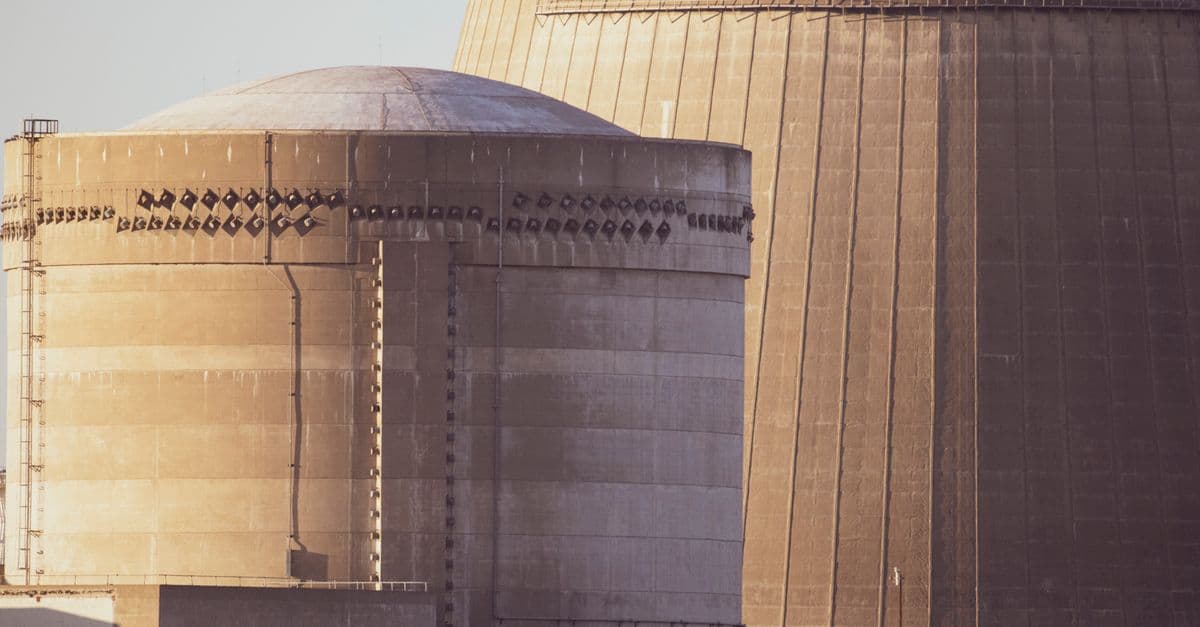
Photo: Sean P. Twomey / Pexels
The United States operates 94 nuclear reactors generating approximately 97 GW of electrical capacity — the world's largest nuclear fleet by any measure. France operates fewer reactors but derives 70 to 75 percent of its electricity from nuclear, the highest share of any large economy in the world. China, with 60 reactors in operation and 28 more under construction, is on a trajectory to surpass both within the next decade. Nuclear power generates roughly 10 percent of global electricity and approximately 25 percent of the world's low-carbon electricity — making it, alongside hydropower, one of the two most important sources of clean electricity despite decades of controversy over its safety and waste.
Methodology
Q: How is nuclear power capacity measured and which sources track it authoritatively? A: Nuclear power capacity is measured in gigawatts electric (GWe) — the electrical output capacity of a reactor after accounting for its own internal energy use. The International Atomic Energy Agency (IAEA) maintains the Power Reactor Information System (PRIS), which is the authoritative global database for reactor status, capacity, and generation data. PRIS tracks every reactor individually: its operational status (operating, under construction, shutdown, decommissioned), its net electrical capacity in MWe, and its generation history. The World Nuclear Association and US Energy Information Administration cross-reference PRIS data. Figures here are from IAEA PRIS as of end-2024.
Source: IAEA Power Reactor Information System (PRIS) — https://pris.iaea.org/pris/countrystatistics/countrystatisticslandingpage.aspx
Top countries by nuclear power capacity (end of 2024)
| Rank | Country | Operating reactors | Net capacity (GWe) | Nuclear share of electricity | Reactors under construction |
|---|---|---|---|---|---|
| 1 | United States | 94 | 96.9 | ~18–19% | 2 |
| 2 | France | 57 | 63.1 | ~70–75% | 1 |
| 3 | China | 60 | 58.8 | ~5% | 28 |
| 4 | Russia | 34 | 28.0 | ~20% | 4 |
| 5 | South Korea | 26 | 25.6 | ~30% | 3 |
| 6 | Ukraine | 15 | 13.1 | ~55% | 2 |
| 7 | Canada | 17 | 12.7 | ~15% | 0 |
| 8 | Japan | 14 | 12.6 | ~8–10% | 2 |
| 9 | India | 21 | 7.5 | ~3% | 8 |
| 10 | Spain | 7 | 7.1 | ~20% | 0 |
| 11 | Sweden | 6 | 7.0 | ~40% | 0 |
| 12 | United Kingdom | 9 | 5.9 | ~14% | 1 |
| 13 | UAE | 4 | 5.3 | ~20% (growing) | 0 |
| 14 | Pakistan | 6 | 3.3 | ~8% | 0 |
| 15 | Switzerland | 4 | 3.0 | ~35% | 0 |
Source: IAEA PRIS, Country Statistics, 2024 — https://pris.iaea.org/pris/countrystatistics/countrystatisticslandingpage.aspx
Cross-reference: World Nuclear Association, World Nuclear Power Reactors 2024 — https://world-nuclear.org/information-library/facts-and-figures/world-nuclear-power-reactors-and-uranium-requireme
Historical context: from weapons program to power plant
Nuclear power grew out of the Manhattan Project — the World War II program that produced the first atomic bombs. The physics underlying the bomb (fission of uranium-235 or plutonium-239 releasing enormous energy) was the same physics that, controlled, could boil water, drive steam turbines, and produce electricity. The question of controlled civilian application began before Hiroshima: Enrico Fermi's Chicago Pile-1, the world's first artificial nuclear reactor, went critical in December 1942 at the University of Chicago.
The first grid-connected nuclear power plant was the Soviet Obninsk reactor, which connected to the grid in June 1954 at 5 MWe — a demonstration unit rather than a commercial plant. The first commercial-scale plants followed: Calder Hall in the United Kingdom (1956), Shipping port in the United States (1958), and plants in France in the early 1960s. By the 1970s, nuclear power was expanding rapidly across the industrialized world. The promise was essentially unlimited cheap electricity — the famous (though never delivered) vision of power "too cheap to meter."
The Three Mile Island accident in Pennsylvania in March 1979, though it caused no immediate deaths, shook public confidence in nuclear power in the United States fundamentally. The much more severe Chernobyl disaster in April 1986 — which did kill operators and emergency responders and spread radioactive contamination across Europe — altered the trajectory of nuclear development globally. Orders for new reactors in the US had already slowed due to cost overruns and construction delays; after TMI and Chernobyl, they stopped almost entirely.
The Fukushima Daiichi accident in Japan in March 2011 — triggered by the Tohoku earthquake and tsunami — reignited nuclear debate. Japan shut down essentially its entire nuclear fleet for safety reviews, ultimately restarting only a fraction. Germany, which had been debating nuclear phase-out for years, accelerated its exit and shut its last three plants in April 2023.
Source: World Nuclear Association, History of Nuclear Energy — https://world-nuclear.org/information-library/current-and-future-generation/outline-history-of-nuclear-energy
The United States: large, aging, and slowly shrinking
The US nuclear fleet of 94 reactors is the world's largest by both unit count and capacity. These plants generated approximately 775 TWh of electricity in 2023 — about 18–19 percent of total US electricity consumption. US nuclear is heavily concentrated in the eastern half of the country: states such as Illinois (6 reactors), Pennsylvania (5), and South Carolina (4) are among the largest nuclear states by capacity.
The American fleet is aging. The median age of US reactors in 2024 was approximately 43 years. Most were built between the late 1960s and early 1980s; original 40-year operating licenses have been extended to 60 years by the Nuclear Regulatory Commission (NRC), and several operators have applied for further extensions to 80 years. Whether 80-year operation is technically safe is a question the industry is navigating as the first 60-year extended licenses approach expiration.
New construction has been agonizingly slow. The Vogtle Units 3 and 4 in Georgia, the first new reactors completed in the United States since the 1990s, came online in 2023 and 2024 respectively — years behind schedule and approximately $17 billion over budget, a cautionary tale about the difficulty of restarting nuclear construction in a country that has lost the institutional knowledge and supply chain for large-reactor construction.
Source: US Nuclear Regulatory Commission, Operating Nuclear Power Reactors — https://www.nrc.gov/reactors/operating/list-power-reactor-units.html
France: the world's most nuclear-dependent major economy
France derives approximately 70 to 75 percent of its electricity from nuclear — a share that has no parallel among major economies. The French nuclear program was built as a deliberate industrial and energy security strategy. After the 1973 oil crisis demonstrated France's vulnerability to energy imports — France has no significant domestic oil or gas reserves — the government under Prime Minister Pierre Messmer launched the Messmer Plan in 1974: a crash program to build 80 reactors within 15 years. The program was modified but substantially executed; by the 1980s, France had become the most nuclear nation on Earth by electricity share.
The consequences shaped French society and industry. Électricité de France (EDF) became one of the world's largest utilities, operating a standardized fleet of Pressurized Water Reactors of consistent design — giving France significant advantages in cost and operation relative to countries that built one-off or varied designs. France became a significant electricity exporter, selling nuclear power to Germany, Italy, Spain, and Switzerland, particularly during periods of high demand or when these countries' own capacity was short.
The French fleet's recent history has been turbulent. In 2022, EDF announced that approximately half the French reactor fleet required unexpected maintenance related to corrosion in cooling circuits — an issue discovered at one plant and found at many others. Approximately 30 of 56 reactors were offline simultaneously during winter 2022–2023, forcing France — historically a net exporter — to import electricity at high cost during the European energy crisis. The episode raised questions about the age and maintenance condition of the French fleet and accelerated EDF's nationalization by the French government.
France has committed to building six new European Pressurized Reactors (EPR2) with options for eight more, extending the nuclear era well into the second half of the century.
Source: French Ministry for Energy Transition — https://www.ecologie.gouv.fr/politiques-publiques/energie-nucleaire
China: the world's fastest nuclear expansion
China had 60 operating reactors at end-2024, with 28 more under construction — the world's largest nuclear construction program by a considerable margin. At current pace, China will have more nuclear capacity than the United States by approximately 2030 and will likely become the world's largest nuclear nation by mid-century.
China's nuclear program is driven by several needs: reducing air pollution from coal-fired power plants, meeting electricity demand from the world's second-largest economy, achieving stated carbon neutrality by 2060, and developing domestic industrial capability in nuclear technology that can be exported. China has developed its own reactor designs — the Hualong One (HPR1000) — and has begun exporting this design to Pakistan and pursuing contracts in other markets.
Chinese nuclear construction proceeds at a pace that the rest of the world struggles to match. The typical construction timeline for Chinese reactors has been 5–7 years, compared to 15–20 years for recent European and American projects. This difference reflects China's intact nuclear industrial supply chain, government-directed labor mobilization, standardized designs, and the political ability to site reactors without the years-long permitting battles that slow projects in democratic countries.
Source: World Nuclear Association, Nuclear Power in China — https://world-nuclear.org/information-library/country-profiles/countries-a-f/china-nuclear-power
Russia: nuclear as an export industry
Russia operates 34 reactors domestically, but its nuclear significance extends far beyond its home fleet. Rosatom, the Russian state nuclear corporation, is the world's largest nuclear fuel supplier and the dominant builder of nuclear power plants globally outside of China. Rosatom had approximately 34 nuclear power plants under construction or contracted in 17 countries as of 2024 — including Egypt, Turkey, India, Bangladesh, Iran, and multiple African nations.
Russia's VVER reactor design (a pressurized water reactor) has an extensive operational track record and comes with Russian-financed construction, Russian-supplied fuel, and Russian technical support — a package that developing nations find attractive compared to Western suppliers who often cannot offer equivalent financing. Western sanctions following the 2022 invasion of Ukraine have disrupted some Rosatom contracts but have not eliminated Russian nuclear export activity, partly because there are no Western-supplied reactor equivalents readily available at comparable terms.
Russia's domestic fleet includes some of the most advanced operating reactors in the world. The BN-800 fast neutron reactor at Beloyarsk — a type of reactor capable of breeding new fuel and consuming nuclear waste — is unique in the world at commercial scale. Russia's BN-1200 successor is under development.
Source: Rosatom, Annual Report 2023 — https://www.rosatom.ru/en/investor-relations/annual-reports/
South Korea: nuclear as strategic priority
South Korea has 26 operating reactors producing approximately 25.6 GW, with nuclear supplying roughly 30 percent of its electricity. South Korea pivoted away from nuclear under former President Moon Jae-in (2017–2022), whose government delayed or cancelled planned new reactors. President Yoon Suk-yeol reversed this policy after taking office in 2022, restoring the new-build program and declaring nuclear a core component of South Korea's clean energy strategy.
South Korea has developed its own APR-1400 reactor design, which has been built domestically and exported. The UAE's Barakah nuclear plant — now operating four APR-1400 units — is the first and most prominent South Korean nuclear export, marking the first nuclear power plant in the Arab world. The Barakah plant's completion demonstrates that countries with no history of nuclear engineering can build and operate reactors, provided they access skilled vendor support.
Source: Korea Hydro and Nuclear Power, Annual Report 2023 — https://www.khnp.co.kr/eng
Ukraine: nuclear under war conditions
Ukraine, with 15 operating reactors and 55 percent of its electricity from nuclear, is an extraordinary case. The Zaporizhzhia Nuclear Power Plant — Europe's largest, with six reactors — was seized by Russian forces in the opening weeks of the 2022 invasion and has been under Russian military occupation ever since. The IAEA has maintained a monitoring presence at the plant, reporting persistent concerns about power supply, staffing, and physical security. All six Zaporizhzhia reactors remain in cold shutdown but the plant's status under occupation creates ongoing nuclear safety concerns unprecedented in the history of the technology.
Ukraine's remaining reactors, operated from Kyiv, have continued to supply electricity despite attacks on transmission infrastructure, demonstrating the resilience of nuclear power to certain types of disruption — physical attacks on transmission lines are recoverable; attacks on reactor containment would not be.
Source: IAEA, Ukraine Nuclear Safety Updates — https://www.iaea.org/topics/nuclear-safety-in-ukraine
Japan: post-Fukushima recovery
Japan operated 54 reactors before the 2011 Fukushima accident. The government shut down the entire fleet for safety reviews. By 2024, only 14 reactors had been restarted following regulatory approval from Japan's Nuclear Regulation Authority (NRA), which adopted significantly more stringent safety standards after Fukushima. Nuclear now contributes approximately 8–10 percent of Japanese electricity, compared to roughly 30 percent before 2011.
Japan's nuclear trajectory is slowly recovering. The government's 2022 GX (Green Transformation) policy reversed the earlier phase-out policy and announced intentions to maximize existing reactor utilization and potentially build next-generation reactors. Several additional restarts are in the regulatory pipeline. Japanese energy policy is constrained by the country's near-total dependence on energy imports (Japan has no significant domestic oil, gas, or coal), making nuclear attractive as a source of domestic electricity not subject to fuel import price volatility.
Source: Nuclear Regulation Authority, Japan — https://www.nra.go.jp/english/
The nuclear renaissance: is it real?
Nuclear's share of global electricity peaked at approximately 17.5 percent in 1996 and declined to approximately 10 percent by the early 2020s as old plants retired faster than new ones were built. The question of whether a "nuclear renaissance" is underway — a phrase that circulated optimistically in the 2000s before the 2008 financial crisis and 2011 Fukushima dampened the mood — has resurfaced with more substance in the mid-2020s.
Several trends point toward renewed nuclear growth. First, climate urgency has focused attention on the scale of low-carbon electricity needed, and nuclear's ability to deliver firm, high-capacity-factor power (operating 90+ percent of the time) complements intermittent solar and wind. Second, advanced reactor designs — small modular reactors (SMRs) from companies including NuScale (US), Rolls-Royce (UK), and dozens of startups — promise lower capital costs, factory-built components, and faster deployment timelines. Third, data center electricity demand, driven by artificial intelligence, has created strong corporate appetite for 24/7 clean electricity that solar and wind cannot provide without storage.
None of this guarantees a renaissance. SMRs remain unproven at commercial scale. Nuclear construction costs in Western countries remain very high. Public acceptance varies significantly by country. But the combination of climate pressure, AI electricity demand, and government policy support in the US, UK, France, South Korea, and Japan has materially improved the outlook for nuclear compared to any point in the decade after Fukushima.
Source: IAEA, Energy, Electricity and Nuclear Power Estimates for the Period up to 2050 — https://www.iaea.org/publications/15004/energy-electricity-and-nuclear-power-estimates-for-the-period-up-to-2050
Geographic concentration of nuclear capacity defines future energy security
The world's 440+ operating nuclear reactors are concentrated in approximately 30 countries, with the top five (US, France, China, Russia, South Korea) accounting for more than 60% of global capacity. This concentration reflects not just geology or energy need but political/economic capacity: building or maintaining large nuclear fleets requires sustained government commitment, technical expertise, long-term financing, and public acceptance. China and Russia have demonstrated the capacity to build rapidly; France's 70-year commitment to nuclear has made it Europe's lowest per-capita carbon emitter. Meanwhile, the US, UK, and France face an urgent problem: aging fleets (US median reactor age 43 years) approaching end-of-life without sufficient new construction to replace them. Germany and several other democracies have chosen exit, not renewal. The gap between climate targets (which may require global nuclear capacity to double or triple) and actual construction trajectories in most countries suggests that decarbonization will depend disproportionately on whether China, Russia, South Korea, India, and developing markets can build faster than Western democracies can politically and financially manage. Nuclear power's future will be shaped less by the technology itself than by whether the countries building most of it reflect global climate interests.
Frequently asked questions
Q: Which country gets the highest share of its electricity from nuclear? A: France leads major economies at approximately 70–75 percent. Among smaller nations, Slovakia (approximately 60 percent), Ukraine (approximately 55 percent), and Hungary (approximately 49 percent) also have very high nuclear shares. France's dominance reflects the deliberate scale-up of its nuclear fleet in the 1970s and 1980s following the oil crisis.
Q: How many nuclear reactors are under construction globally? A: Approximately 60–65 reactors were under construction globally as of end-2024, according to IAEA PRIS. China alone accounts for more than 40 percent of those. Other significant builders include India (8 reactors under construction), Russia (4), and South Korea (3). The combined capacity under construction globally exceeds 60 GWe.
Q: Is nuclear power safe compared to other energy sources? A: By deaths per unit of electricity generated, nuclear is among the safest energy sources, comparable to wind and solar and far safer than coal, oil, or gas. Comprehensive analyses by Our World in Data, drawing on academic literature, place nuclear at approximately 0.03 deaths per TWh — lower than solar (0.02 per TWh, primarily installation accidents), wind (0.04), and orders of magnitude lower than coal (24 per TWh) or oil (18 per TWh). The major accidents — Chernobyl and Fukushima — dominate public perception; their actual death tolls (directly attributed deaths: 31 for Chernobyl, 1 directly for Fukushima) are dwarfed by routine mortality from fossil fuel air pollution.
Q: What happens to nuclear waste? A: Spent nuclear fuel remains radioactive for thousands of years and requires long-term storage. Currently, most spent fuel is stored in water-filled pools at reactor sites, then transferred to dry cask storage. No country has yet opened a permanent deep geological repository for high-level nuclear waste, though Finland is furthest advanced with its Onkalo repository. The volume of spent fuel is smaller than commonly imagined: all the spent nuclear fuel ever produced globally would fill approximately one football field to a depth of about 10 meters.
Q: Will small modular reactors change nuclear power's economics? A: SMRs — reactors of 300 MWe or less, potentially factory-built and shipped to site — could reduce the capital cost and construction time that make large nuclear expensive. NuScale's VOYGR design received US NRC design approval in 2022 (though the company's first project was cancelled in 2023 due to cost concerns). Rolls-Royce, EDF, GE-Hitachi, and dozens of startups are pursuing designs. Canada, the UK, and the US are the most active SMR markets. Whether factory construction actually delivers on cost promises remains to be demonstrated — the first SMRs are not expected online until the late 2020s at earliest.
The takeaway
Nuclear power's role in global electricity is concentrated in a handful of nations: the US, France, China, Russia, and South Korea together account for the vast majority of global capacity. France's extraordinary dependence on nuclear — over 70 percent of its electricity — is unique among major economies and has made it one of Europe's lowest per-capita carbon emitters historically. China's aggressive construction program will reshape the global nuclear landscape within a decade. The debate about nuclear's role in decarbonization continues: it offers firm, high-density, low-carbon power that solar and wind cannot replicate without storage, but at construction costs and timelines that challenge its competitiveness in most Western markets. The technology's future will be decided more in Beijing, Washington, Paris, and Seoul over the next decade than anywhere else.
Sources
- IAEA Power Reactor Information System (PRIS) — https://pris.iaea.org/pris/countrystatistics/countrystatisticslandingpage.aspx
- World Nuclear Association, World Nuclear Power Reactors 2024 — https://world-nuclear.org/information-library/facts-and-figures/world-nuclear-power-reactors-and-uranium-requireme
- World Nuclear Association, Outline History of Nuclear Energy — https://world-nuclear.org/information-library/current-and-future-generation/outline-history-of-nuclear-energy
- World Nuclear Association, Nuclear Power in China — https://world-nuclear.org/information-library/country-profiles/countries-a-f/china-nuclear-power
- US NRC, Operating Nuclear Power Reactors — https://www.nrc.gov/reactors/operating/list-power-reactor-units.html
- French Ministry for Energy Transition — https://www.ecologie.gouv.fr/politiques-publiques/energie-nucleaire
- Rosatom, Annual Report 2023 — https://www.rosatom.ru/en/investor-relations/annual-reports/
- IAEA, Energy, Electricity and Nuclear Power Estimates for the Period up to 2050 — https://www.iaea.org/publications/15004/energy-electricity-and-nuclear-power-estimates-for-the-period-up-to-2050
- IAEA, Nuclear Safety in Ukraine — https://www.iaea.org/topics/nuclear-safety-in-ukraine
- Nuclear Regulation Authority, Japan — https://www.nra.go.jp/english/
- Korea Hydro and Nuclear Power, Annual Report 2023 — https://www.khnp.co.kr/eng
Related Reading
Follow new articles
Add SciHub101 to your feed reader to see new science and technology stories.
About the Author
SciHub101 is an independent science and technology publication founded and edited by Buğra Sözeri, a software engineer and app developer based in Türkiye. AI tools assist with drafting and research. Source documentation in the existing archive is uneven, and articles are being reviewed and corrected. The Editorial Team byline identifies editorial responsibility; it does not certify specialist or independent human review. Where we compare products, anything built by our own team is labelled as such — see the editorial guidelines and About page for how corrections and disclosures work.
Related Articles
How Solar Panels Actually Work: From Photon to Grid (2026)
A deep-dive into the full physics of solar energy — the photovoltaic effect, silicon p-n junctions, Shockley-Queisser efficiency limits, perovskite tandem cells, inverters, and the real economics of solar in 2026.
Countries with the Most Electric Vehicles (Ranked)
China dominates global EV adoption: of the nearly 58 million electric cars on the world's roads at the end of 2024, China accounts for more than half. Chinese buyers purchased over 11 million new EVs in 2024 alone — more than were sold globally just two years earlier. Norway leads in EV penetration, with 29% of all cars on its roads now electric. This ranking covers the top countries by total EV stock, new sales, and market share, sourced from the IEA Global EV Outlook 2025.
Countries That Consume the Most Electricity (Ranked)
China used about 10,070 TWh of electricity in 2024, roughly a third of the world's total, followed by the United States and India. This ranking uses Ember data for 2024, adds per-person figures, and explains what drives the gaps.
Countries That Produce the Most Solar Power (Ranked)
China installed 278 GW of new solar capacity in 2024 alone — more than the entire installed base of the United States. With 888 GW of total solar PV capacity, China now hosts nearly half of all solar power on Earth. This article ranks the top solar nations by installed capacity and explains how the global solar revolution became so geographically concentrated.
Countries with the Most Reliable Electric Grids (Regulator Data)
Germany's regulator reported 12.8 minutes of unplanned outage per customer in 2023. US customers averaged about 11 hours in 2024, a hurricane year, and about 2 hours in routine conditions. A clean global ranking does not exist because countries count outages differently, so this article compares what each national source actually reports.
Is Nuclear Power Safe? The Real Risks and Benefits
Nuclear power has the lowest death rate per kWh of any major energy source. It's also the most feared. Here's what the data actually says — beyond Chernobyl, beyond Fukushima.