Biggest Hydrogen Projects in the World
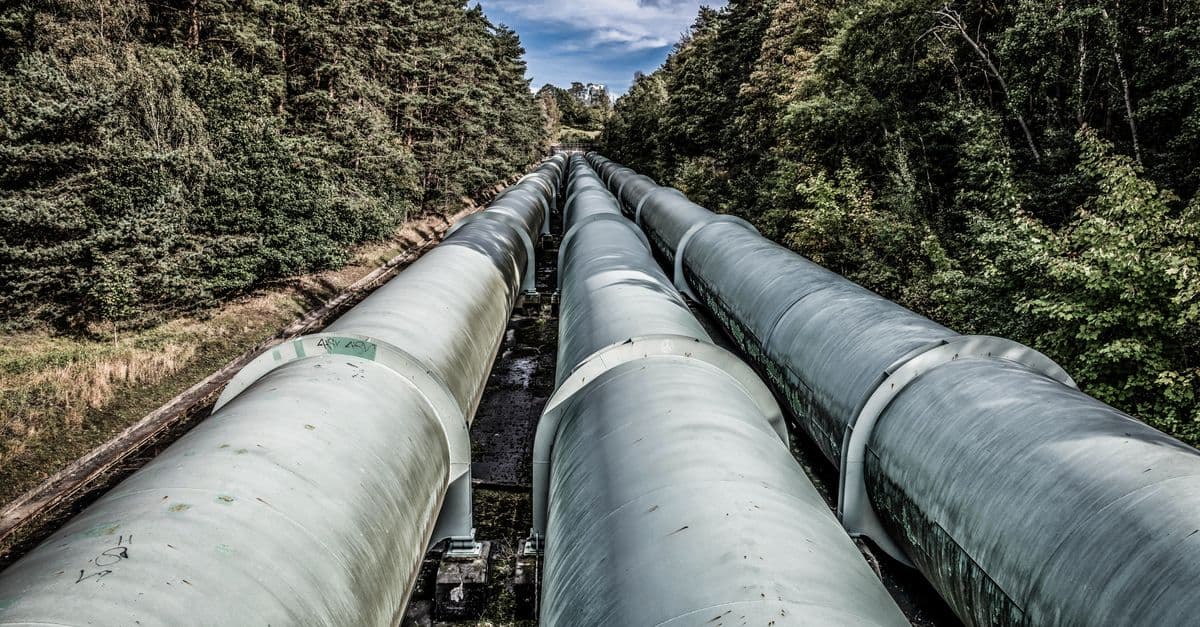
Photo: Wolfgang Weiser / Pexels
A single facility under construction in the Saudi Arabian desert, the NEOM Green Hydrogen Project, carries a price tag of $8.4 billion and a design capacity of 4 gigawatts (GW) of electrolysis, enough to turn roughly 600 metric tons of hydrogen out of its plant every day once fully commissioned. It is the largest of a new generation of hydrogen megaprojects spreading across Saudi Arabia, Australia, the United States, and Europe. None of them are trying to replace the electricity in your wall socket. They are trying to decarbonize the parts of heavy industry that batteries cannot touch: ammonia fertilizer, steelmaking, and long-haul shipping fuel.
What "biggest" means when you're talking about hydrogen
Hydrogen headlines love a single number, usually gigawatts of electrolysis capacity or tonnes of hydrogen produced per year, but those two metrics measure different things and get conflated constantly. Electrolysis capacity describes how much electricity a plant's water-splitting machines (electrolyzers) can draw at any given moment, similar to the horsepower rating on an engine. Annual output describes how much hydrogen actually leaves the plant over a full year, which depends on how often the electrolyzers run at that rated power.
This distinction matters more in hydrogen than in most energy sectors because green hydrogen plants are built to run on renewable electricity, which is intermittent by nature. A 4 GW electrolyzer fed mostly by solar power might only operate at full capacity a third of the time, because the sun sets and the wind sometimes stops. According to the International Energy Agency's Global Hydrogen Review, global installed electrolysis capacity doubled in 2025 to surpass 4 GW worldwide, with more than 2.5 GW under construction targeting operation in 2026, and it is worth noting that China alone accounts for roughly 65% of installed capacity and capacity that has reached a final investment decision (IEA Global Hydrogen Review 2025). That means the single biggest national hydrogen buildout by raw megawatts is not happening in the Middle East or Europe. It is happening in China, largely for domestic industrial use rather than export.
A second wrinkle: not all hydrogen is produced the same color-coded way, and "biggest hydrogen project" articles routinely blur green, blue, and gray hydrogen together. Green hydrogen is made by splitting water molecules with electricity from renewable sources. Blue hydrogen is made from natural gas, with the resulting carbon dioxide captured and stored underground rather than vented. Gray hydrogen, still the overwhelming majority of hydrogen produced worldwide, is made from natural gas with no carbon capture at all. When a ranking claims a project is the "biggest hydrogen project in the world," always check which color it means, because a blue hydrogen hub and a green hydrogen electrolyzer field are solving different problems with different economics.
How the biggest projects actually make hydrogen
Every green hydrogen megaproject follows the same basic chemistry: run an electric current through water and it splits into hydrogen and oxygen gas, a process called electrolysis. Think of it like reverse-engineering a fuel cell. A fuel cell combines hydrogen and oxygen to produce electricity and water as a byproduct; electrolysis runs that reaction backward, using electricity to pull water apart into its constituent gases. The machine that does this splitting is called an electrolyzer, and it is the single most expensive and most scrutinized piece of equipment in any hydrogen project's business case.
The catch is that electrolysis is an energy-hungry process, and the electricity has to come from somewhere. This is why nearly every "biggest hydrogen project" on any credible list is really a co-located renewable power project first and a hydrogen plant second. NEOM's hydrogen facility draws on 4 GW of dedicated wind and solar generation plus battery storage, built specifically to feed the electrolyzers around the clock rather than only when the sun is up (Saudipedia). The renewables are not a side project bolted onto the hydrogen plant. They are the plant, in terms of both capital cost and physical footprint.
A useful analogy is a distillery next to a wheat farm. You cannot build a whiskey distillery of a given size without also securing a wheat supply chain of matching size, or you'll have expensive equipment sitting idle waiting for raw material. Green hydrogen works the same way: the electrolyzer is the still, and clean electricity is the wheat. Build a big electrolyzer without enough dedicated renewable capacity behind it, and you either run it on grid power (which may not be clean, undermining the entire climate rationale) or you leave it idle much of the time, which wrecks the project's financial return.
What happens to the hydrogen once it's made?
Most large-scale hydrogen at these projects does not stay as pure hydrogen gas for long. It is typically converted immediately into ammonia (a compound of nitrogen and hydrogen, NH3) because ammonia is far easier and cheaper to ship and store than hydrogen itself, which is extremely low-density and prone to leaking through metal seals. NEOM will convert its output into roughly 1.2 million tonnes of green ammonia per year for export, mostly for fertilizer production and marine fuel (NEOM newsroom).
Why can't hydrogen just replace natural gas in pipelines?
Hydrogen molecules are roughly a third the size of natural gas molecules, which means they leak through fittings, valves, and pipe joints that hold natural gas without issue. Existing gas pipeline networks generally need significant retrofitting, or in many cases full replacement, before they can carry pure hydrogen safely at scale, which is one reason converting hydrogen to ammonia for transport is often cheaper than piping hydrogen directly.
The scoreboard: who is actually building the biggest projects
Ranking hydrogen megaprojects by a single clean metric is difficult because public announcements mix design capacity, under-construction figures, and aspirational multi-phase master plans that may never fully materialize. The table below separates operational and near-complete projects from earlier-stage regional hubs, and states the metric each figure actually represents.
Table 1. Major hydrogen and hydrogen-hub projects by scale, status, and headline metric
| Project | Location | Type | Headline scale | Status (mid-2026) |
|---|---|---|---|---|
| NEOM Green Hydrogen Project | Saudi Arabia (NEOM megacity) | Green hydrogen/ammonia | 4 GW electrolysis; ~1.2 million tonnes ammonia/year | Over 90% construction complete as of April 2026 |
| Australian Renewable Energy Hub (AREH) | Pilbara, Western Australia | Green hydrogen/ammonia | 26 GW renewables planned; 1.6 million tonnes H2/year target | Early-stage development, ARENA-backed feasibility funding |
| Hy2Infra (IPCEI) | France, Germany, Italy, Netherlands, Poland, Portugal, Slovakia | Cross-border hydrogen infrastructure | Up to 3.2 GW electrolysis; ~2,700 km pipeline; ~372 GWh underground storage | EU-approved, €6.9 billion public funding, phased buildout through the 2020s |
| US Regional Clean Hydrogen Hubs (H2Hubs) | Seven US regions incl. Gulf Coast, Appalachia, California, Pacific Northwest | Mixed green/blue hydrogen hub network | $7 billion federal funding, $40+ billion total planned investment | Early planning funding disbursed; two hubs saw federal funding cuts |
| Yuri Project | Pilbara, Western Australia | Green hydrogen (single electrolyzer) | 10 MW electrolyzer; up to 640 tonnes H2/year | Operational; Australia's largest single electrolyzer as of commissioning |
| China domestic electrolyzer buildout | Multiple provinces, China | Mixed green/industrial hydrogen | ~65% of global installed electrolysis capacity | Operational and expanding, largely for domestic industrial use |
Sources: NEOM newsroom, Blackridge Research project profiles, ARENA project pages, European Commission IPCEI documentation, US Department of Energy, IEA Global Hydrogen Review 2025. See full citations below each claim and in the Sources section.
Two things jump out from that table. First, "biggest" splits cleanly along two axes: single-site scale (NEOM wins by a wide margin) versus distributed hub scale (the EU's Hy2Infra and the US H2Hubs program are really networks of many smaller projects tied together by shared pipelines and funding, not single giant plants). Second, announced capacity and delivered capacity are very different things in this industry right now. AREH's 26 GW figure is a long-term master plan spanning multiple project phases, not a number that exists in the ground today (ARENA, pv magazine Australia).
Why these projects exist: the industries hydrogen can decarbonize that electricity can't
Batteries and direct electrification have made enormous inroads into passenger cars, home heating, and short-haul transport. But several major industrial processes resist electrification for reasons rooted in chemistry and physics, not just cost, and that is the real market these hydrogen megaprojects are chasing.
Ammonia and fertilizer. Roughly 70 to 80% of the ammonia produced worldwide today goes into nitrogen fertilizer, and essentially all of it is currently made from natural gas via a process called the Haber-Bosch process, which is one of the most carbon-intensive industrial chemical reactions on Earth. Green hydrogen swapped into that same Haber-Bosch process, instead of hydrogen derived from natural gas, produces "green ammonia" with a dramatically smaller carbon footprint. This is why NEOM's plant output is measured in tonnes of ammonia, not tonnes of hydrogen: ammonia is the actual commercial product, and hydrogen is the intermediate ingredient.
Steelmaking. Traditional steelmaking uses coal-derived coke to strip oxygen out of iron ore in a blast furnace, a chemical reaction that inherently produces carbon dioxide as a byproduct no matter how clean the electricity powering the furnace is. Hydrogen can perform that same oxygen-stripping job instead of coke, in a process called direct reduced iron, producing water vapor instead of CO2. Steelmakers in Sweden and Germany have been piloting hydrogen-based steel plants for exactly this reason, though at nowhere near the scale of the Middle Eastern hydrogen megaprojects yet.
Shipping fuel. Container ships and bulk carriers cannot practically run on batteries; the energy density needed for a multi-week ocean crossing would require a battery bank too heavy and too large for the cargo hold. Green ammonia, again produced from green hydrogen, is being tested as a marine fuel that ships can burn directly or run through onboard fuel cells, because it is far easier to store aboard a vessel than pure hydrogen gas.
Compare this to trying to heat a home. A heat pump moves existing heat around using electricity directly, at very high efficiency. There is no chemistry problem to solve, just an engineering and cost problem, which is why home heating electrifies relatively easily and cheaply. Steelmaking and fertilizer production have an actual chemical reaction that needs a hydrogen atom, or an equivalent reducing agent, present at the molecular level. You cannot electrify your way around that requirement. That is the core reason hydrogen megaprojects exist at all, and it is the detail most "hydrogen is the future" headlines skip.
The economics that make or break these projects
The single biggest number that determines whether a hydrogen megaproject survives past its groundbreaking ceremony is the cost per kilogram of hydrogen produced, usually compared against the cost of the gray (natural-gas-derived) hydrogen it is meant to displace. Gray hydrogen has historically cost roughly $1 to $2 per kilogram to produce at scale, while green hydrogen from dedicated renewables plus electrolysis has typically run several times higher, though costs have been falling as electrolyzer manufacturing scales up and renewable electricity gets cheaper.
Three factors dominate that cost gap, and every megaproject on the table above is really an attempt to solve one or more of them simultaneously.
Electrolyzer capital cost. Electrolyzers are still relatively expensive per unit of capacity, though costs have fallen as manufacturing has moved from custom, one-off builds toward standardized, factory-produced units, similar to how solar panel costs collapsed once manufacturing scaled globally. China's dominance in installed electrolysis capacity is closely tied to its dominance in electrolyzer manufacturing.
Renewable electricity cost and availability. Electrolysis is electricity-intensive, so a project sited where wind and solar are unusually cheap and abundant has a structural cost advantage over one sited where renewables are expensive or intermittent. This is exactly why NEOM, the Pilbara region of Western Australia, and similar sites were chosen: they combine strong, consistent solar and wind resources with large tracts of undeveloped land.
Policy support and offtake certainty. Building a multi-billion-dollar plant only makes financial sense if there is a buyer locked in for years of future output, and government subsidies or mandates often provide the missing bridge between today's higher green hydrogen costs and a buyer willing to pay for it. The EU's €6.9 billion in Hy2Infra public funding and the US Department of Energy's $7 billion H2Hubs program both exist specifically to de-risk projects that would not otherwise pencil out at current green hydrogen prices (European Commission IPCEI Hy2Infra).
That third factor is also the most fragile one, and it explains recent turbulence in the sector. The US federal government cut funding to at least two of the seven originally announced Regional Clean Hydrogen Hubs, rattling an industry that had built financial models around sustained federal support (Canary Media). A hydrogen megaproject is not just an engineering bet; it is a multi-decade policy bet, and policy support has proven far less stable than the underlying chemistry.
What people get wrong about the "hydrogen economy"
The phrase "hydrogen economy" conjures images of hydrogen-powered cars at every gas station and hydrogen heating every home, an image the industry itself promoted heavily in the 2000s. That version of the hydrogen economy has mostly not materialized, and understanding why helps explain why today's megaprojects look so different from that earlier vision.
Myth: hydrogen will replace gasoline in passenger cars. Battery electric vehicles have won that race almost everywhere except a handful of niche fleet applications, because batteries are simpler, more efficient end-to-end, and now benefit from a mature global charging and manufacturing supply chain that hydrogen fueling infrastructure never built at comparable scale. Round-trip efficiency is a major reason why: converting electricity to hydrogen via electrolysis, then back to motion via a fuel cell, loses substantially more energy at each conversion step than simply storing that electricity in a battery and using it directly.
Myth: any hydrogen project counts as "green." As covered above, the overwhelming majority of hydrogen produced and used worldwide today is gray hydrogen from unabated natural gas, not the green hydrogen that dominates headlines. When a country or company claims a "hydrogen strategy," check whether it is actually building green capacity or whether it is continuing gray hydrogen production while badging it under a hydrogen-economy banner.
Myth: bigger announced capacity means a project will get built. The hydrogen sector has a well-documented pattern of ambitious multi-gigawatt announcements that later shrink, delay, or quietly disappear once the financing, offtake agreements, and permitting reality set in. The IEA has flagged that more than 100 gigawatts of announced global electrolysis capacity risks never reaching a final investment decision if projects don't lock in financing before the end of the decade (IEA). Treat any capacity figure attached to the word "planned," "proposed," or "by 2030" as aspirational until a project reaches financial close, the point at which lenders and investors formally commit capital and construction can genuinely begin.
Myth: hydrogen and electrification are competing technologies. They are better understood as complementary tools aimed at different problems. Electrification is winning in transport, heating, and most consumer applications because it is simpler and more efficient. Hydrogen is being built out specifically for the sliver of heavy industry, chemistry, and long-haul freight where direct electrification does not work chemically or logistically. A useful shorthand: if a battery could plausibly do the job, hydrogen is probably the more expensive, less efficient answer; if the job requires a chemical reducing agent or an energy-dense fuel for a multi-week journey, hydrogen has a real role to play.
FAQ: what people also ask about the biggest hydrogen projects
Q: What is the biggest hydrogen project in the world? A: By single-site scale, the NEOM Green Hydrogen Project in Saudi Arabia is the largest, with 4 GW of dedicated electrolysis capacity and roughly 1.2 million tonnes of planned annual green ammonia output, backed by $8.4 billion in investment (NEOM). By distributed hub scale, the EU's Hy2Infra program and the US Regional Clean Hydrogen Hubs network are larger in total footprint but spread across many separate sites.
Q: How much does the NEOM hydrogen project cost? A: The project reached financial close at a total investment value of $8.4 billion, funded by a joint venture between NEOM Green Hydrogen Company, ACWA Power, and Air Products (NEOM newsroom).
Q: Why is most hydrogen converted to ammonia before it's shipped? A: Pure hydrogen gas is very low-density and leaks easily through pipe fittings and storage vessels designed for other gases, making it expensive to transport over long distances. Ammonia, made by combining hydrogen with nitrogen, is far denser and easier to store and ship in bulk, which is why most export-oriented hydrogen megaprojects, including NEOM, sell ammonia rather than hydrogen itself.
Q: What's the difference between green, blue, and gray hydrogen? A: Green hydrogen is made by electrolysis powered by renewable electricity. Blue hydrogen is made from natural gas, with the resulting carbon dioxide captured and stored rather than released. Gray hydrogen, still the majority of global hydrogen production, is made from natural gas with no carbon capture. The color labels describe the production method and emissions profile, not the physical gas itself, which is chemically identical regardless of how it was made.
Q: How much electrolysis capacity exists worldwide right now? A: According to the IEA's Global Hydrogen Review 2025, global installed electrolysis capacity doubled in 2025 to surpass 4 GW, with more than 2.5 GW under construction and targeting operation in 2026, and China accounting for roughly 65% of installed and financially committed capacity (IEA).
Q: What are the US Regional Clean Hydrogen Hubs? A: The US Department of Energy selected seven regional hubs in October 2023 to share $7 billion in federal funding, expected to unlock over $40 billion in total investment: Appalachian (ARCH2), California (ARCHES), Gulf Coast (HyVelocity), Heartland, Mid-Atlantic (MACH2), Midwest (MachH2), and Pacific Northwest (PNWH2) (White & Case). Federal funding to at least two hubs has since been reduced or reviewed under a change of administration (Canary Media).
Q: Why can't hydrogen just be electrified out of existence like gasoline cars? A: Because in applications like steelmaking and ammonia production, hydrogen participates directly in a chemical reaction as a reducing agent or a molecular building block, not just as an energy carrier. Batteries can supply energy to run a process, but they cannot supply the hydrogen atoms a blast furnace or a Haber-Bosch reactor chemically requires.
Q: What is Australia's Pilbara hydrogen hub and how big could it get? A: The Australian Renewable Energy Hub in the Pilbara region of Western Australia is a proposed 26 GW renewable energy and green hydrogen complex aiming for roughly 1.6 million tonnes of hydrogen per year at full build-out, though this remains an early-stage, multi-phase master plan backed by feasibility funding from the Australian Renewable Energy Agency rather than a fully financed, under-construction project (ARENA).
Q: Is green hydrogen actually cheaper than fossil-fuel-based hydrogen yet? A: In most markets, not yet on a like-for-like basis; gray hydrogen from unabated natural gas has historically been produced for roughly $1 to $2 per kilogram, while green hydrogen has typically cost several times more, though the gap is narrowing as electrolyzer manufacturing scales and renewable electricity prices fall in the best wind and solar locations.
Q: What does "reaching financial close" mean for a hydrogen megaproject? A: Financial close is the point at which a project's investors, lenders, and offtake partners formally sign binding agreements to fund construction, as distinct from an earlier announcement or feasibility study stage. NEOM's plant reached financial close before construction ramped toward its current completion level, which is a meaningfully stronger signal than a capacity figure attached only to a "planned" or "proposed" project.
The takeaway
The biggest hydrogen projects in the world are not competing with home electricity or gasoline cars; they are industrial infrastructure aimed squarely at fertilizer, steel, and shipping, the sectors where chemistry, not just cost, blocks direct electrification. NEOM's 4 GW plant leads on single-site scale, China leads on total installed capacity, and Europe and the United States are betting on distributed hub networks instead of single megaprojects. The number that actually separates a real project from a press release is not gigawatts announced but whether a project has reached financial close, because the hydrogen sector's history is full of ambitious capacity figures that quietly shrank once financing reality arrived. Other record-scale industrial projects are covered in biggest mines in the world.
Read next:
- The Largest Structures Ever Built
- The Fastest Man-Made Objects Ever Built
- Countries with the Most Data Centers
Sources
- NEOM Green Hydrogen Company financial close announcement, $8.4 billion investment
- NEOM: Accelerates Progress Towards Green Hydrogen Future
- Saudipedia: NEOM Green Hydrogen Project overview
- IEA, Global Hydrogen Review 2025, Executive Summary
- European Commission / IPCEI Hy2Infra project overview
- White & Case: Hydrogen Hub Projects Awarded $7 Billion by US Department of Energy
- Canary Media: Trump's cuts to billion-dollar hydrogen hubs rattle industry
- ARENA: Australian Renewable Energy Hub project page
- pv magazine Australia: 26 GW green hydrogen hub in the Pilbara
Follow new articles
Add SciHub101 to your feed reader to see new science and technology stories.
About the Author
SciHub101 is an independent science and technology publication founded and edited by Buğra Sözeri, a software engineer and app developer based in Türkiye. AI tools assist with drafting and research. Source documentation in the existing archive is uneven, and articles are being reviewed and corrected. The Editorial Team byline identifies editorial responsibility; it does not certify specialist or independent human review. Where we compare products, anything built by our own team is labelled as such — see the editorial guidelines and About page for how corrections and disclosures work.
Related Articles
Biggest Mines in the World: The Giant Holes Powering Modern Life
The biggest mines on Earth expose how copper, iron, coal, gold, and diamonds reach the global economy, and why size can mean depth, output, or area.

Biggest Cities in the World by Population: City, Metro, and Urban Area
Jakarta leads the UN's 2025 city ranking, yet Chongqing has more people inside its borders. See the biggest cities by city, urban area, and metro definition.

The Largest Structures Ever Built: Towers, Bridges, Dams, and Walls
The Burj Khalifa in Dubai stands 828 meters tall — for context, you could stack almost two Empire State Buildings on top of each other and still not reach its antenna. But height is only one dimension of 'largest.' The world's longest bridge stretches 164.8 km across China. The Great Wall of China, including all branches, runs over 21,000 km. The largest building by floor area is a Boeing factory in Washington State that covers 398,000 square meters under a single roof. What engineering limits the next record depends on which dimension you're measuring and why physics makes every additional meter harder than the last.

The Most Abundant Elements in the Universe: Why the Cosmos Is Mostly Hydrogen and Helium
Hydrogen makes up approximately 74% of all ordinary matter in the universe by mass — about 92% of all atoms. Helium accounts for roughly 24% of ordinary mass. Everything else — every carbon atom in every living cell, every silicon atom in every rock, every iron atom in every star's core — adds up to approximately 2% of the universe's total atomic mass. The dominance of hydrogen and helium is not a coincidence or a geological quirk. It is a direct record of the conditions that existed in the first three minutes after the Big Bang. Understanding why the cosmos is almost entirely these two lightest elements tells you how the universe was born and how it will eventually end.
What Is Green Hydrogen — and Could It Replace Fossil Fuels?
Green hydrogen is made by splitting water with renewable electricity, so burning it releases only water. It is promising for industries that cannot easily electrify, but it is costly and wasteful elsewhere.