How Electrolysis Splits Water
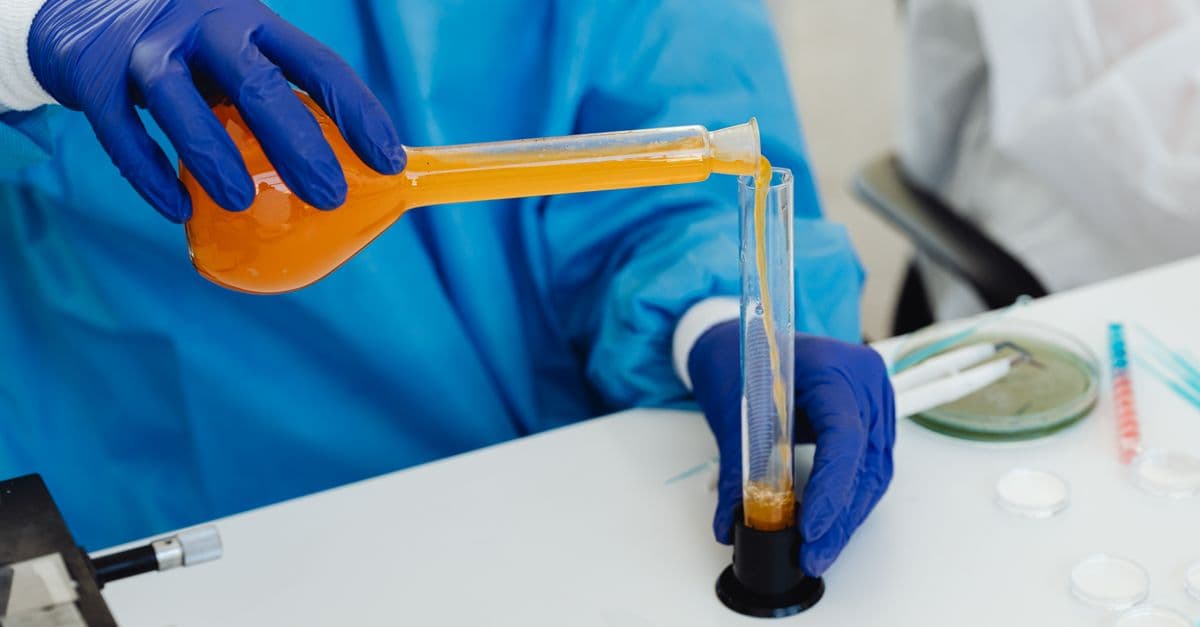
Photo: www.kaboompics.com / Pexels
Run electric current through water and two gases bubble up at separate electrodes, one twice the volume of the other. That two-to-one ratio is not a coincidence. It is a direct readout of water's own formula, H2O, and it is exactly what English chemist William Nicholson and surgeon Anthony Carlisle observed in May 1800, within about six weeks of Alessandro Volta announcing the first practical battery, making water electrolysis one of the earliest demonstrations that electricity could drive a chemical transformation.
What electrolysis actually is, and why it needed a battery to exist
Electrolysis — using an electric current to drive a chemical reaction that would not happen on its own — could not exist as a laboratory technique before 1800, because there was no reliable source of continuous electric current. Static electricity generators produced brief sparks, not the steady flow needed to pull water molecules apart. That changed when Alessandro Volta built the first voltaic pile, a stack of alternating zinc and copper discs separated by brine-soaked cloth, and announced it to the Royal Society of London in a letter read in the spring of 1800.
Nicholson and Carlisle read about Volta's invention, built their own pile, and almost immediately started testing what continuous current could do to different substances. According to the historical account preserved by the Royal College of Surgeons and chemistry historians, they connected two platinum wires to their pile and dipped the free ends into a tube of water. Within minutes, bubbles formed at each wire. One produced roughly twice the volume of gas as the other. When they tested the gases, the larger volume was flammable, meaning hydrogen, and the smaller volume supported combustion, meaning oxygen. They had split water into its constituent elements using nothing but electricity, a result so immediately significant that other scientists across Europe began repeating and extending the experiment within the same year.
This matters for more than trivia. It demonstrates something central to how science advances: a new tool (a stable current source) immediately reveals new phenomena (electrochemical decomposition) that were invisible without it. The same pattern repeats throughout the history of chemistry, from the telescope revealing craters on the Moon to mass spectrometers revealing the exact composition of unknown compounds. For a modern parallel on how physical tools reveal chemical structure, see how mass spectrometry identifies molecules.
The reaction, broken into its two half-reactions
Electrolysis of water breaks the overall reaction, 2H2O → 2H2 + O2, into two separate half-reactions that happen simultaneously at two different electrodes submerged in the same water. Each electrode does a different chemical job, and understanding that division is the key to understanding the entire process.
At the cathode (the negative electrode), water molecules gain electrons and are reduced to hydrogen gas and hydroxide ions. Reduction — a chemical process in which a species gains electrons, lowering its charge — is written as: 2H2O + 2e⁻ → H2 + 2OH⁻. At the anode (the positive electrode), water molecules lose electrons and are oxidized to oxygen gas. Oxidation — the opposite process, in which a species loses electrons — is written as: 2H2O → O2 + 4H⁺ + 4e⁻.
It helps to think of the electrolysis cell as a relay race with two different finish lines. Electrons enter the circuit at the power source, travel through the external wire to the cathode, and are handed off to water molecules there, reducing them into hydrogen gas. Meanwhile, at the anode, water molecules give up electrons, which travel back through the wire to the power source, completing the circuit. The electrons themselves never travel through the water; they travel through the metal wire and the external circuit, while ions carry the charge through the liquid itself.
Balancing electrons between the two half-reactions is what produces the characteristic 2:1 hydrogen-to-oxygen volume ratio. Producing one oxygen molecule at the anode requires four electrons. Those same four electrons, delivered through the external circuit, are enough to produce two hydrogen molecules at the cathode, since each hydrogen molecule only needs two electrons. The gas volumes coming off each electrode directly mirror water's own atomic ratio of two hydrogen atoms for every one oxygen atom in H2O. Nothing about the electrode material or the current source changes that ratio, because it is fixed by stoichiometry, not by engineering.
Why does electrolysis produce twice as much hydrogen gas as oxygen gas?
Water's formula, H2O, contains two hydrogen atoms for every oxygen atom. Electrolysis breaks this apart through two balanced half-reactions: producing one oxygen molecule at the anode requires four electrons, and those same four electrons are enough to produce two hydrogen molecules at the cathode. The 2:1 volume ratio observed at the two electrodes directly reflects this atomic ratio, and it holds regardless of scale, from a classroom demonstration to an industrial electrolyzer.
Why pure water is a surprisingly poor conductor
A common assumption is that water conducts electricity well because it is a liquid and liquids "flow" charge easily. In reality, pure water is a poor conductor, because it contains very few free ions available to carry charge from one electrode to the other. This is why electrolysis demonstrations, from Nicholson and Carlisle's original setup to modern classroom versions, almost always add a small amount of an electrolyte, commonly sodium sulfate or dilute sulfuric acid, to the water first.
The added ions do not get consumed in the main hydrogen-and-oxygen-producing reaction. They exist purely to carry current through the solution, so the reactions happening at each electrode can proceed at a practical rate rather than an impractically slow one. Without them, even a strong voltage source struggles to push meaningful current through the water, and gas production crawls to a near halt.
Think of it like trying to pass a message through a silent, empty auditorium versus an auditorium already full of people mid-conversation. Pure water is the empty auditorium: charge has almost no path to travel, because there is no one nearby to relay it forward. Adding an electrolyte fills the auditorium with people (ions) who can hand off the message (charge) from one to the next in rapid succession, letting current flow efficiently even though none of those particular people are themselves the message being delivered. The electrolyte enables the conversation without becoming the subject of it.
This distinction between "carrying" a reaction and "participating" in a reaction shows up constantly in chemistry, and it is one of the more counterintuitive ideas for students first encountering electrochemistry. A catalyst in many reactions plays a similar role: present throughout, essential to the rate, but chemically unchanged at the end.
The voltage it costs to force apart a stable molecule
Water is a thermodynamically stable molecule under everyday conditions, meaning it sits in a low-energy configuration that it has no natural tendency to leave. Pulling it apart into hydrogen and oxygen therefore costs energy, and that energy has to come from somewhere, in this case an external electrical circuit. The minimum theoretical voltage needed to split water is approximately 1.23 volts under standard conditions, a value derived from the standard reduction potentials of the two half-reactions measured against a reference electrode.
In practice, real electrolysis cells require a higher voltage than this theoretical minimum, because of resistance losses in the wires and solution and because of what electrochemists call overpotential — extra voltage needed beyond the thermodynamic minimum to overcome the activation barrier of actually forming gas bubbles at the electrode surface and moving them away fast enough to keep the reaction going. Overpotential is not a design flaw so much as a physical reality of getting a reaction to happen at a usable speed rather than an infinitely slow one; the same tradeoff between thermodynamic minimum and practical requirement shows up in almost every real chemical or physical process, from battery charging to distillation.
This gap between the roughly 1.23-volt theoretical minimum and the higher voltage real electrolyzers actually need is why electrolyzer efficiency is one of the largest engineering focuses in hydrogen fuel research today. Reducing overpotential, often through catalyst coatings such as platinum, iridium oxide, or nickel deposited directly on the electrode surface, is one of the primary ways engineers make water electrolysis more energy-efficient at industrial scale. A better catalyst does not change the 1.23-volt thermodynamic floor; it narrows the gap between that floor and the voltage a real cell needs to run at a commercially useful rate.
Three ways to build an electrolyzer, and how they compare
The basic chemistry Nicholson and Carlisle discovered — reduction at the cathode, oxidation at the anode, current carried by ions — is the same in every water electrolyzer ever built. What differs across electrolyzer designs is the electrolyte, the operating temperature, and the membrane or separator that keeps the hydrogen and oxygen gas streams apart while still allowing ions through. Three designs dominate current industrial and research use, and each represents a different tradeoff between cost, efficiency, and technological maturity.
Alkaline electrolyzers are the oldest and most industrially mature design, using a liquid potassium hydroxide solution as the electrolyte and operating at roughly 60 to 80°C. Proton exchange membrane (PEM) electrolyzers — which use a solid polymer membrane instead of a liquid electrolyte to conduct protons directly between electrodes — run at a similar temperature range but respond faster to fluctuating power input, which matters when the electricity source is variable, such as solar or wind. Solid oxide electrolyzers (SOE) operate at a much higher temperature, roughly 700 to 850°C, using a ceramic material that conducts oxide ions, and they can reach the highest efficiency of the three when waste heat from another industrial process is available to help drive the reaction.
| Electrolyzer type | Electrolyte / membrane | Operating temperature | Typical system efficiency | Technology maturity |
|---|---|---|---|---|
| Alkaline | Liquid potassium hydroxide | 60–80°C | 63–71% | Commercially mature, decades of industrial use |
| PEM (proton exchange membrane) | Solid polymer membrane | 50–80°C | 67–74% | Commercial, growing fast, faster load response |
| Solid oxide (SOE) | Ceramic oxide-ion conductor | 700–850°C | Up to roughly 85–95% with waste heat integration | Early commercial, limited by high-temperature materials |
System efficiency ranges are drawn from industry and technical comparisons of the three dominant electrolyzer designs; solid oxide's higher upper bound depends on access to external waste heat, which is not available at every installation.
Alkaline systems remain the cheapest to build per unit of hydrogen output capacity and have the longest industrial track record, which is why they still dominate large-scale ammonia and chemical-industry hydrogen production. PEM systems cost more per unit of capacity but ramp up and down faster, which makes them a natural fit for pairing with intermittent renewable electricity, since a wind farm's output can swing significantly within an hour. Solid oxide systems are the least mature of the three commercially, constrained largely by the difficulty of building ceramic components that survive years of operation at 700°C or higher without degrading, but they offer the clearest efficiency advantage when integrated with a facility that already produces waste heat, such as a steel plant or a nuclear reactor.
The Hofmann voltameter and how the 2:1 ratio was proven in the lab
The classic laboratory demonstration of water electrolysis uses a Hofmann voltameter, a glass apparatus consisting of two graduated vertical tubes connected to a central reservoir, with one electrode sealed into the bottom of each tube. As current passes through acidified or salted water, gas collects at the closed top of each tube, displacing the water level downward, and the volume in each tube can be read directly off the graduated markings etched into the glass.
| Electrode | Gas produced | Relative volume collected |
|---|---|---|
| Cathode (negative) | Hydrogen (H2) | 2 parts |
| Anode (positive) | Oxygen (O2) | 1 part |
The Hofmann voltameter turns the abstract stoichiometry of water electrolysis into a directly readable, graduated measurement — the physical demonstration that made the 2:1 ratio undeniable to nineteenth-century chemists and still makes it undeniable in classrooms today.
The apparatus, developed decades after Nicholson and Carlisle's original experiment, gave chemists a precise, repeatable way to confirm what the earlier researchers had first observed with a crude glass tube and platinum wire: that water splits into hydrogen and oxygen in a fixed, reproducible volume ratio no matter how the experiment is set up. That reproducibility, more than any single measurement, is what convinced the chemistry community that electrolysis was revealing something fundamental about water's molecular composition rather than producing some artifact of a particular apparatus. The same logic — that a result which repeats reliably across independent setups is more trustworthy than a single striking observation — underlies how crystallography confirmed molecular structures decades later; for a related look at how physical structure gets revealed experimentally, see how crystals grow from solutions.
Where electrolysis matters far beyond the classroom demonstration
Modern interest in water electrolysis centers heavily on green hydrogen — hydrogen produced by using electricity from renewable sources such as solar or wind to power the same basic reaction Nicholson and Carlisle first observed in 1800, generating hydrogen gas without the carbon emissions associated with the far more common industrial method of extracting hydrogen from natural gas through steam methane reforming. Because hydrogen can serve as both an industrial feedstock (in ammonia production, oil refining, and steelmaking) and a potential fuel for sectors that are hard to electrify directly, such as heavy shipping and some heavy industry, scaling up clean electrolysis has become a major focus of energy policy in multiple countries.
The gap that still separates electrolysis from being a cheap, universal clean hydrogen source is largely economic rather than chemical. The U.S. Department of Energy's Hydrogen Shot initiative, launched in 2021, set an explicit target of cutting the cost of clean hydrogen produced this way by roughly 80 percent, to $1 per kilogram, by 2031, with an interim target of $2 per kilogram by 2026. Subsequent DOE analysis has noted that reaching the full $1-per-kilogram target without additional subsidy or further technology improvement remains uncertain, underscoring that the obstacle to widespread green hydrogen is not the electrochemistry itself, which has been well understood since the 1800s, but the cost of electricity, electrolyzer hardware, and supporting infrastructure at the scale needed to matter for global energy use.
This distinction matters for how readers should interpret hydrogen headlines. A breakthrough that improves catalyst durability or shaves a fraction of a volt off overpotential is a genuine engineering achievement, but it does not change the underlying thermodynamics: 1.23 volts remains the floor no matter how good the catalyst gets, and the practical challenge is closing the gap between that floor and an economically competitive operating voltage at industrial scale, not discovering some entirely new reaction pathway.
What people consistently get wrong about electrolysis
A common misconception is that electrolysis "creates" hydrogen and oxygen out of nothing, as if the process were manufacturing new matter. In reality, electrolysis rearranges atoms that are already present in the water molecules, releasing them as separate gases rather than generating anything new. Energy conservation still applies fully throughout the process: the electrical energy put into the cell is converted into chemical potential energy stored in the separated H2 and O2 gases, which is precisely why burning hydrogen back together with oxygen later releases roughly that same amount of energy as heat. Electrolysis and combustion are, in that sense, mirror images of the same energy transaction run in opposite directions.
A second common misconception is that any water can be split efficiently with a simple 9-volt battery and two loose wires, a demonstration many people encounter in school. That demonstration does technically work, producing visible bubbles at each wire, but it works slowly and inefficiently, because informal classroom versions often skip proper electrolyte concentration, use non-catalytic electrode materials such as plain pencil graphite or steel, and run at whatever voltage a battery happens to supply rather than an optimized one. Both electrolyte concentration and electrode material strongly affect reaction rate and the practical voltage required, which is exactly why industrial electrolyzers invest heavily in engineered electrolytes and catalyst-coated electrodes rather than relying on whatever happens to be handy.
A third, subtler misconception worth addressing is the assumption that a more efficient electrolyzer automatically means "greener" hydrogen. Efficiency describes how much of the electrical energy input ends up stored in the hydrogen gas rather than lost as heat or resistance. Whether the resulting hydrogen is actually low-carbon depends entirely on where that electrical energy came from in the first place. A highly efficient electrolyzer run on electricity generated by burning coal produces hydrogen with a substantial carbon footprint upstream, even though the electrolysis step itself emits nothing directly. The climate benefit of electrolytic hydrogen is inseparable from the carbon intensity of the electricity grid feeding it.
The takeaway
Electrolysis works by using electrons supplied through an external circuit to force water's atoms into a new, higher-energy arrangement: hydrogen gas collecting at one electrode, oxygen gas at the other, in the exact 2:1 ratio dictated by water's own molecular formula, H2O. That basic chemistry has not changed since Nicholson and Carlisle first watched bubbles rise from a platinum wire in 1800; what has changed is the engineering built around it, from Hofmann's graduated glass tubes to today's PEM and solid oxide electrolyzers chasing incremental efficiency gains near the 1.23-volt thermodynamic floor. The persistent gap between that theoretical minimum and the higher voltage real electrolyzers still require is where nearly all modern research effort goes, because closing it, combined with access to genuinely low-carbon electricity, is what would turn electrolysis from a two-century-old demonstration into a viable, large-scale source of clean hydrogen fuel.
Read next:
- How Crystals Grow From Solutions
- Why Centrifuges Separate Mixtures
- How Mass Spectrometry Identifies Molecules
FAQ
Q: What are the two half-reactions in water electrolysis?
At the cathode, water gains electrons and is reduced to hydrogen gas and hydroxide ions. At the anode, water loses electrons and is oxidized to oxygen gas and hydrogen ions. Balancing electrons between the two half-reactions produces the characteristic 2:1 ratio of hydrogen to oxygen gas volume that appears at every scale, from a Hofmann voltameter to an industrial electrolyzer.
Q: Why does pure water need an added electrolyte to undergo electrolysis efficiently?
Pure water has very few free ions, making it a poor conductor on its own. Adding an electrolyte like dilute sulfuric acid or sodium sulfate supplies ions that carry current through the solution, allowing the electrode reactions to proceed at a practical rate without those added ions themselves being consumed in the reaction.
Q: What voltage is needed to split water?
The theoretical minimum voltage is approximately 1.23 volts under standard conditions, based on the standard reduction potentials of the two half-reactions. Real electrolysis cells require more voltage than this due to resistance losses and overpotential, the extra energy needed to form and release gas bubbles at the electrode surface at a usable rate.
Q: Who first demonstrated water electrolysis?
English chemist William Nicholson and surgeon Anthony Carlisle demonstrated sustained water electrolysis in May 1800, within about six weeks of Alessandro Volta announcing the first practical electric battery, making it one of the earliest electrochemical experiments in scientific history.
Q: What is the difference between alkaline, PEM, and solid oxide electrolyzers?
Alkaline electrolyzers use a liquid potassium hydroxide electrolyte and are the most industrially mature. PEM electrolyzers use a solid polymer membrane, respond faster to variable power input, and typically reach slightly higher efficiency. Solid oxide electrolyzers operate at 700 to 850°C and can achieve the highest efficiency of the three, but remain the least commercially mature due to high-temperature material durability challenges.
Q: Why is water electrolysis important for clean energy?
Electrolysis powered by renewable electricity can produce "green hydrogen" without the carbon emissions of steam methane reforming, the dominant current industrial method for producing hydrogen. The U.S. Department of Energy has set a Hydrogen Shot target of cutting green hydrogen production costs to $1 per kilogram by 2031, though it has noted that reaching this target without further cost reductions or subsidy remains uncertain.
Q: Does a more efficient electrolyzer always mean cleaner hydrogen?
No. Electrolyzer efficiency measures how much input electricity ends up stored in the hydrogen gas rather than lost as heat. Whether the resulting hydrogen is actually low-carbon depends on the source of that electricity; an efficient electrolyzer running on coal-generated electricity still produces hydrogen with a substantial upstream carbon footprint.
Follow new articles
Add SciHub101 to your feed reader to see new science and technology stories.
About the Author
SciHub101 is an independent science and technology publication founded and edited by Buğra Sözeri, a software engineer and app developer based in Türkiye. AI tools assist with drafting and research. Source documentation in the existing archive is uneven, and articles are being reviewed and corrected. The Editorial Team byline identifies editorial responsibility; it does not certify specialist or independent human review. Where we compare products, anything built by our own team is labelled as such — see the editorial guidelines and About page for how corrections and disclosures work.
Related Articles
Biggest Hydrogen Projects in the World
NEOM's $8.4B plant leads a wave of gigawatt-scale hydrogen projects reshaping fertilizer, steel, and shipping. Here's how the biggest ones actually work.
Sodium-Ion Batteries Explained: Chemistry, Advantages, Trade-Offs and Uses
Sodium-ion batteries move sodium instead of lithium ions. See how the cathode, hard-carbon anode and electrolyte work, the numbers, and where they fit.
Volta's Battery: The Electrochemistry Behind the First Cell
The redox chemistry, electrode potentials, and metal chemistry that made Volta's zinc-copper pile the first device to produce continuous electric current