Volta's Battery: The Electrochemistry Behind the First Cell

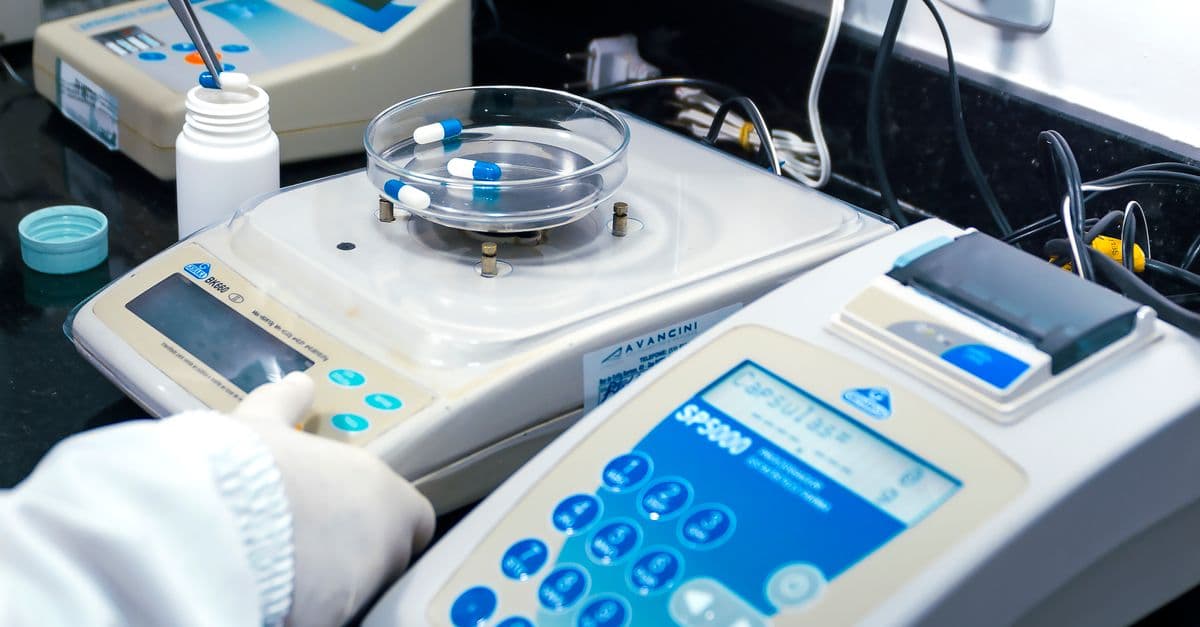
Photo: Mikhail Nilov / Pexels
On March 20, 1800, Alessandro Volta sent a letter to the Royal Society of London describing a stack of zinc and copper discs, separated by brine-soaked cardboard, that produced a continuous electric current. That letter, published in the Society's Philosophical Transactions that spring, didn't just introduce a gadget. It handed chemists the first tool for studying electron transfer as a controllable, repeatable reaction, which is the entire foundation of electrochemistry, the branch of chemistry that explains everything from why iron rusts to how a phone battery charges.
What Volta actually built, and why it worked
Volta's device, later called the voltaic pile, was mechanically simple: alternating discs of zinc and copper, stacked in pairs, with a layer of cloth or cardboard soaked in brine or dilute acid between each pair. Stack enough pairs and connect a wire from the top disc to the bottom one, and current flows continuously until the chemicals run out.
The pile worked because zinc and copper have very different appetites for electrons. Chemists measure that appetite with a number called the standard electrode potential, which ranks how strongly a given metal (or ion) tends to gain or lose electrons compared to a reference point. Zinc's standard reduction potential is about -0.76 volts (V); copper's is about +0.34 V, according to standard reference tables used in undergraduate electrochemistry courses (University of Wisconsin electrochemistry tutorial). The gap between those two numbers, 1.10 V, is the maximum voltage a single zinc-copper cell can generate under standard conditions.
That's a big claim to unpack. "Standard reduction potential" measures how much a half-reaction (a chemical equation showing just the electron-gaining or electron-losing step at one electrode) wants to run in the direction of gaining electrons, relative to hydrogen gas reacting at a reference electrode, arbitrarily set to 0 V. A very negative number, like zinc's, means that metal would much rather give electrons away than take them. A more positive number, like copper's, means the opposite tendency wins out. Put a very negative electrode next to a more positive one, connect them with a conductor, and electrons flow from the negative electrode to the positive one, the same way water flows downhill from a higher point to a lower one.
Stacking cells in series adds their voltages, the same way stacking batteries end-to-end in a flashlight adds up to more than one battery's worth of push. A pile of 20 cells could produce roughly 15 volts, enough to draw visible sparks and decompose water, both effects Volta and his contemporaries observed and reported within months of the 1800 announcement (Britannica: Alessandro Volta).
The redox reaction, step by step
Every battery, from Volta's pile to a modern lithium-ion cell, runs on the same underlying pattern: a reduction-oxidation (redox) reaction, meaning one substance loses electrons (oxidation) while another gains them (reduction), and the reaction is arranged so those electrons have to travel through an external wire to get from one substance to the other.
In a zinc-copper cell with dilute sulfuric acid as the electrolyte, the two half-reactions are:
- At the zinc electrode (the anode, where oxidation happens): Zn → Zn²⁺ + 2e⁻
- At the copper electrode (the cathode, where reduction happens): 2H⁺ + 2e⁻ → H₂
Zinc atoms give up two electrons each and dissolve into the electrolyte as zinc ions. Those two electrons don't jump straight into the electrolyte, they travel out through the external circuit, powering whatever is connected, and arrive at the copper disc. There, hydrogen ions from the acidic electrolyte pick up the electrons and combine into hydrogen gas, which bubbles off the copper surface. The copper metal itself isn't consumed; it just acts as an inert, conductive site where the reduction happens, which is why Volta's copper discs didn't dissolve the way his zinc discs did.
Why did Volta think electricity came from metals, not animals?
Luigi Galvani had shown in the 1780s that a dead frog's leg twitched when touched by two different metals, and he concluded the frog's tissue generated the electricity ("animal electricity"). Volta disagreed: he suspected the frog tissue was simply a moist conductor reacting to a current generated by the two dissimilar metals themselves. When Volta built a pile using only metal and brine-soaked cardboard, with no animal tissue at all, and still got a sustained current, he confirmed his hypothesis and effectively ended the animal-electricity debate (Britannica: Alessandro Volta).
Why is an electrolyte necessary?
A battery needs two separate paths for charge to complete its circuit: electrons travel through the external wire, and ions have to travel through the internal path to balance the charge building up at each electrode. The electrolyte, a substance containing free-moving ions, is what carries that internal ionic current. Without it, positive charge would pile up at the zinc electrode and negative charge at the copper electrode until the reaction stalled out almost immediately. Salt water and dilute sulfuric acid both work because they dissociate into mobile ions that can carry charge between the discs.
Why zinc and copper specifically
Volta could have picked any two metals with sufficiently different electrode potentials, and in fact he tested several pairs, including silver and zinc, before settling on his favored combinations. What made zinc and copper such a workable pair was a combination of three things: a large potential gap (1.10 V, among the widest available with common metals of the era), ready availability, and practical durability, since copper doesn't corrode quickly in brine and zinc, while it does dissolve, does so at a controllable rate.
Contrast that with a pair like copper and silver, whose potentials sit closer together (silver's standard reduction potential is about +0.80 V), producing a noticeably weaker cell. Or with a pair like magnesium and copper, whose gap is enormous (magnesium's potential is around -2.37 V) and produces much higher voltage per cell, but with a metal, magnesium, that reacts too aggressively and burns through supply quickly. Think of electrode potential like water pressure at two ends of a pipe: the bigger the pressure difference, the harder the water pushes through, but if one side reacts so violently it drains itself in seconds, that pressure difference is useless for sustained flow. Volta's genius was finding a pair with enough of a push to be useful and enough chemical patience to be sustained.
The results Volta reported, and what they proved
Volta's original experiments, and the ones repeated across Europe within months of his announcement, established several facts that read as ordinary chemistry today but were revolutionary in 1800.
The current was continuous, not a single spark. Electrostatic generators of the era, like the Leyden jar, discharged in an instant. Volta's pile kept producing measurable current for hours, limited only by how quickly the zinc dissolved and the acid or salt solution depleted.
The output was scalable and predictable. Adding cells in series increased voltage in a linear, additive way. This meant electricity had gone from an unpredictable curiosity to something a scientist could dial up or down, the same conceptual leap that separates alchemy from chemistry.
The reaction could drive other chemical reactions. Within weeks of Volta's pile reaching London, William Nicholson and Anthony Carlisle used one to decompose water into hydrogen and oxygen gas, the first deliberate electrolysis experiment, demonstrating that electrical current could force a non-spontaneous chemical reaction to run (Britannica: Alessandro Volta).
| Property | Volta's pile (1800) | Modern AA alkaline cell | Lithium-ion cell |
|---|---|---|---|
| Electrode materials | Zinc, copper | Zinc, manganese dioxide | Graphite, lithium metal oxide |
| Electrolyte | Brine or dilute sulfuric acid | Potassium hydroxide paste | Lithium salt in organic solvent |
| Voltage per cell | ~0.76 V | ~1.5 V | ~3.6-3.7 V |
| Rechargeable | No | No | Yes |
| Energy density | Very low | ~100-150 Wh/kg | ~150-260 Wh/kg |
Table: How Volta's original pile compares to two widely used modern battery chemistries. Alkaline and lithium-ion figures are approximate manufacturer and industry averages; Volta's pile figure is the standard zinc-copper cell potential confirmed by modern electrochemical measurement.
From Volta's pile to Faraday's laws
Volta's pile didn't just demonstrate that chemistry could make electricity, it made electricity into a lab tool other scientists could use to ask new questions, and the person who used it most systematically was Michael Faraday.
Working through the 1830s with electrochemical cells descended directly from Volta's design, Faraday established two quantitative laws of electrolysis in 1833: first, that the mass of a substance deposited or released at an electrode is directly proportional to the amount of electric charge passed through the circuit, and second, that for a fixed amount of charge, the mass of different substances deposited is proportional to their chemical equivalent weight (Britannica: Faraday's laws of electrolysis). Faraday also coined the vocabulary electrochemists still use today, including electrode, cathode, anode, ion, and electrolyte, in correspondence with the philosopher William Whewell while working out these laws (Faraday's laws of electrolysis, Wikipedia summary of primary sources).
That's the direct chain: Volta supplies a reliable, sustained current in 1800; Faraday uses that kind of current to quantify the relationship between electric charge and chemical change in 1833; and that quantitative relationship becomes the mathematical backbone of every industrial electrochemical process running today, from aluminum smelting to chlorine production.
Why the redox mechanism scales to every modern battery
It's worth being precise about what "the same principle" means when people say lithium-ion batteries work "just like Volta's pile." The high-level pattern is identical: an anode material loses electrons through oxidation, a cathode material gains electrons through reduction, and the electrolyte carries the compensating ion flow while the electrons take the long way around through an external circuit. But the chemistry inside modern cells is far more sophisticated, engineered specifically to solve the two problems that limited Volta's pile: low voltage per cell and a one-way, non-rechargeable reaction.
The 2019 Nobel Prize in Chemistry, awarded to M. Stanley Whittingham, John B. Goodenough, and Akira Yoshino, recognized exactly this engineering arc. Whittingham showed in the early 1970s that lithium ions could be stored reversibly between the atomic layers of a titanium disulfide material. Goodenough improved on that in 1980 by finding a lithium-cobalt-oxide cathode material that was far more stable. Yoshino then combined Goodenough's cathode with a carbon-based anode to assemble the first commercially viable lithium-ion battery in 1985, the direct ancestor of the cell in your phone (Nobel Prize in Chemistry 2019, press release).
The redox logic underneath is the same electron-transfer bookkeeping Volta stumbled onto with zinc and copper. The difference is that lithium-ion chemistry is reversible, meaning the reaction can be driven backward by applying an external voltage, pushing lithium ions back to the anode side and letting you charge the battery again, something zinc and copper in acid simply cannot do because the zinc metal, once dissolved into solution, doesn't easily plate back onto the electrode in a usable form.
What's the relationship between Volta's battery and modern chemical batteries?
Every chemical battery, disposable or rechargeable, runs on the same two-electrode redox structure Volta discovered: an anode that oxidizes and loses electrons, a cathode that reduces and gains them, and an electrolyte that completes the ionic circuit. What differs across 220 years of engineering is the choice of materials, which determines voltage, rechargeability, energy density, and safety, not the underlying electrochemical principle.
Why doesn't Volta's pile produce electricity indefinitely?
The reaction runs out of reactants. Zinc atoms convert into zinc ions and leave the electrode permanently; hydrogen ions in the electrolyte get consumed as hydrogen gas. Once either supply is significantly depleted, the reaction slows and the current drops. Refreshing the electrolyte and cleaning the zinc surface can partially restore function, but the zinc metal that already dissolved is gone for good, which is why Volta's pile, like a modern alkaline battery, is a single-use device rather than a rechargeable one.
Where electrochemistry shows up today
Electrochemistry stopped being a novelty within a generation of Volta's announcement, and it now sits underneath a surprising number of everyday and industrial processes.
Corrosion and cathodic protection. Rust is an electrochemical redox reaction: iron oxidizes in the presence of water and oxygen, losing electrons the same way Volta's zinc did. Engineers exploit this directly with sacrificial anodes, deliberately attaching a more reactive metal like zinc or magnesium to a ship's hull or a buried pipeline. Because that sacrificial metal has a more negative electrode potential than iron, it oxidizes preferentially, protecting the structural steel exactly the way Volta's zinc disc gave up its electrons before the copper did anything.
Industrial electrolysis. Chlorine, aluminum, and high-purity hydrogen are all produced today by running an external current through a cell to force a non-spontaneous reaction forward, the same electrolysis principle Nicholson and Carlisle demonstrated on water within weeks of Volta's 1800 announcement. Aluminum smelting alone consumes a meaningful share of global industrial electricity because separating aluminum from its oxide ore requires driving electrons uphill against their natural tendency.
Electrochemical sensors. Glucose monitors, breathalyzers, and many gas detectors work by measuring the tiny current produced when a target molecule undergoes oxidation or reduction at a specially prepared electrode. The current is proportional to the concentration of the substance being measured, a direct descendant of the proportional relationship Faraday first quantified in 1833.
Fuel cells. A hydrogen fuel cell runs the same overall chemistry as Volta's original pile but with the electrodes separated so hydrogen gas is oxidized at one side and oxygen is reduced at the other, producing electricity plus water as the only byproduct. The mechanism is a mirror image of the exact half-reactions Volta unknowingly used, just with gases instead of dissolving metal.
What people get wrong about "the first battery"
A few misconceptions persist about Volta's pile, worth clearing up because they distort how people understand the chemistry.
It is often said Volta "discovered electricity." He didn't. Static electricity, lightning, and electrostatic phenomena were well studied by the late 1700s through devices like the Leyden jar. What Volta discovered was a way to make electric current continuous and chemically sustained, rather than a single instantaneous discharge. That distinction, continuous current versus a spark, is the entire reason his invention mattered enough to launch a scientific field.
It's also common to hear that "the copper reacts" in a zinc-copper cell. It doesn't, chemically. Copper metal is the reduction site, meaning the reaction (hydrogen ions gaining electrons) happens at its surface, but the copper atoms themselves aren't oxidized or consumed in a standard zinc-copper acid cell. This is a frequent source of confusion because people assume both electrodes in a battery must be "used up" symmetrically; in reality, one electrode typically degrades much faster than the other, and battery engineers exploit that asymmetry deliberately (it's why a sacrificial zinc anode protects steel without protecting itself indefinitely, either, but the zinc is the intentionally expendable part).
Finally, people sometimes assume "higher electrode potential gap" always means "better battery." It's one factor among several. Lithium-based chemistries, for instance, achieve high voltage partly through a large potential gap, but their real advantage over zinc-copper cells is reversibility and energy density, not voltage alone. A pair of metals with a huge potential gap but poor reversibility, or one that reacts dangerously fast, makes a worse practical battery than a more modest, well-behaved pair.
FAQ
Q: What two metals did Volta use, and why that pair? A: Zinc and copper, separated by brine- or acid-soaked cardboard. Their standard electrode potentials (roughly -0.76 V for zinc and +0.34 V for copper) sit far enough apart to drive a useful current, while both metals were cheap, available, and stable enough for repeated experimentation.
Q: How many volts did a single Voltaic cell produce? A: About 0.76 V per zinc-copper pair, a figure that matches modern electrochemical measurements of the same reaction closely. Stacking cells in series added their voltages, so a pile of 20 cells could reach roughly 15 V.
Q: What is a standard electrode potential, in plain terms? A: It's a number, measured in volts against a fixed reference point (the standard hydrogen electrode, defined as 0 V), that ranks how strongly a metal or ion tends to gain electrons versus give them up. More negative means "wants to give electrons away"; more positive means "wants to take them."
Q: Why doesn't the copper disc dissolve the way the zinc disc does? A: Because copper is the reduction site in a standard zinc-copper acid cell. Hydrogen ions from the electrolyte gain electrons and become hydrogen gas at the copper surface; the copper metal itself isn't part of that reaction and stays intact.
Q: How is Volta's pile connected to Faraday's discoveries? A: Faraday used electrochemical cells built on Volta's design to run systematic experiments through the 1830s, leading to his 1833 laws of electrolysis, which quantified exactly how much chemical change a given amount of electric charge produces. Those laws remain the mathematical foundation of industrial electrochemistry.
Q: Is a lithium-ion battery "the same" chemistry as Volta's pile? A: The underlying pattern, oxidation at one electrode, reduction at the other, ions carried by an electrolyte, electrons carried by an external wire, is identical. The specific materials are completely different, and lithium-ion chemistry is reversible (rechargeable) in a way Volta's zinc-copper reaction is not.
Q: Why can't you recharge a Voltaic pile the way you recharge a phone battery? A: Once zinc metal oxidizes into zinc ions and dissolves into the electrolyte, reversing that with an external voltage doesn't reliably redeposit clean, usable zinc metal back onto the electrode. Rechargeable chemistries, like lithium-ion, are specifically engineered around materials, such as layered lithium compounds, that can shuttle ions back and forth without breaking down.
Q: What's the difference between a battery and electrolysis, chemically? A: They're the same redox mechanism running in opposite directions. A battery lets a spontaneous redox reaction happen and captures the resulting electron flow as usable current. Electrolysis applies an external voltage to force a non-spontaneous redox reaction to run anyway, which is how industrial processes produce chlorine, aluminum, and hydrogen.
Q: Did Volta know about electrons when he built the pile? A: No. Electrons weren't identified as particles until J.J. Thomson's cathode-ray experiments in 1897, nearly a century after Volta's letter to the Royal Society. Volta worked entirely from empirical observation of voltage, current, and materials, without any theoretical model of what was actually moving through the wire.
Q: How does a sacrificial anode use the same chemistry as Volta's pile? A: A sacrificial anode, typically zinc or magnesium attached to a ship's hull or a pipeline, has a more negative electrode potential than the steel it's protecting. It oxidizes preferentially, giving up electrons the way Volta's zinc did, so the structural steel is spared. The anode is deliberately consumed and replaced periodically, the same one-way oxidation Volta observed in his zinc discs.
The takeaway
Volta's pile worked because he found a pair of metals separated by enough of an electrode-potential gap to push electrons through an external circuit, and enough chemical staying power to keep doing it for hours rather than an instant. That's a narrower, more specific achievement than "inventing electricity," and it's the reason the device mattered: it turned an unpredictable spark into a controllable, measurable reaction that Faraday could quantify three decades later and that engineers are still refining, materials layer by materials layer, in every lithium-ion cell built today. The chemistry hasn't changed since 1800. The materials have.
Read next:
Follow new articles
Add SciHub101 to your feed reader to see new science and technology stories.
About the Author
SciHub101 is an independent science and technology publication founded and edited by Buğra Sözeri, a software engineer and app developer based in Türkiye. AI tools assist with drafting and research. Source documentation in the existing archive is uneven, and articles are being reviewed and corrected. The Editorial Team byline identifies editorial responsibility; it does not certify specialist or independent human review. Where we compare products, anything built by our own team is labelled as such — see the editorial guidelines and About page for how corrections and disclosures work.
Related Articles

Yutu-2 Rover Geological Findings: Exploring the Moon's Far Side
China's Yutu-2 rover explored the Moon's far side, discovering subsurface layers and geological features revealing the Moon's complex evolution.

Solar Wind Experiments on Moon: Collecting Particles from the Sun
Apollo solar wind collectors captured particles directly from the Sun's wind, analyzing isotope ratios that revealed solar composition and isotopic variations over time.
Sodium-Ion Batteries Explained: Chemistry, Advantages, Trade-Offs and Uses
Sodium-ion batteries move sodium instead of lithium ions. See how the cathode, hard-carbon anode and electrolyte work, the numbers, and where they fit.