Battery Invention: From Volta Pile to Lithium-Ion
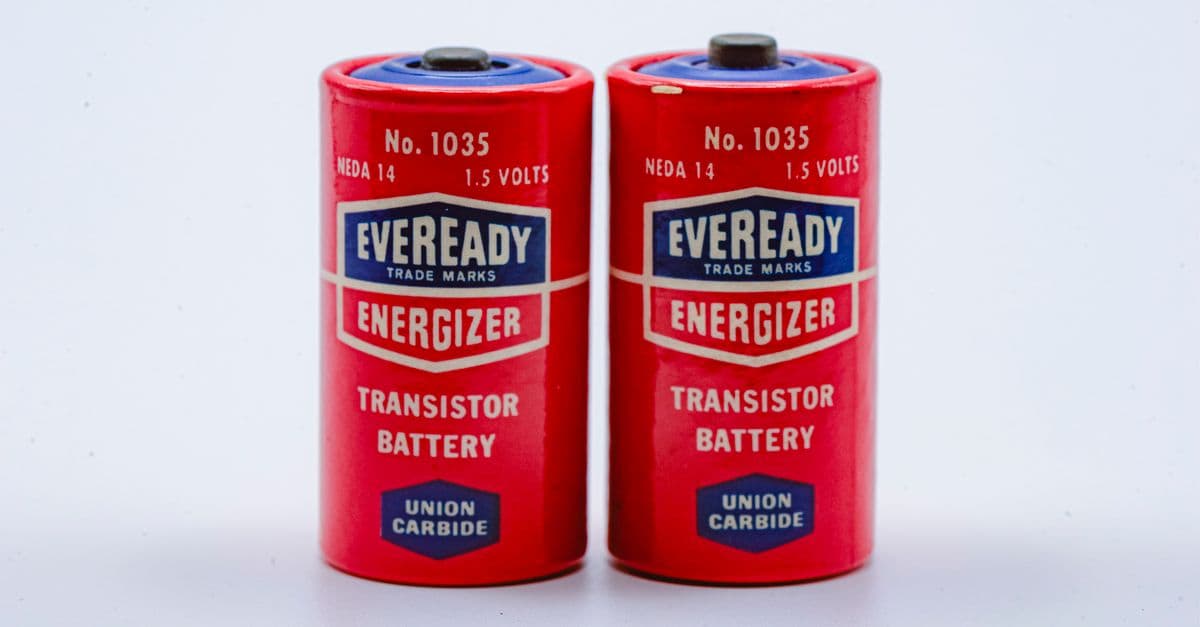
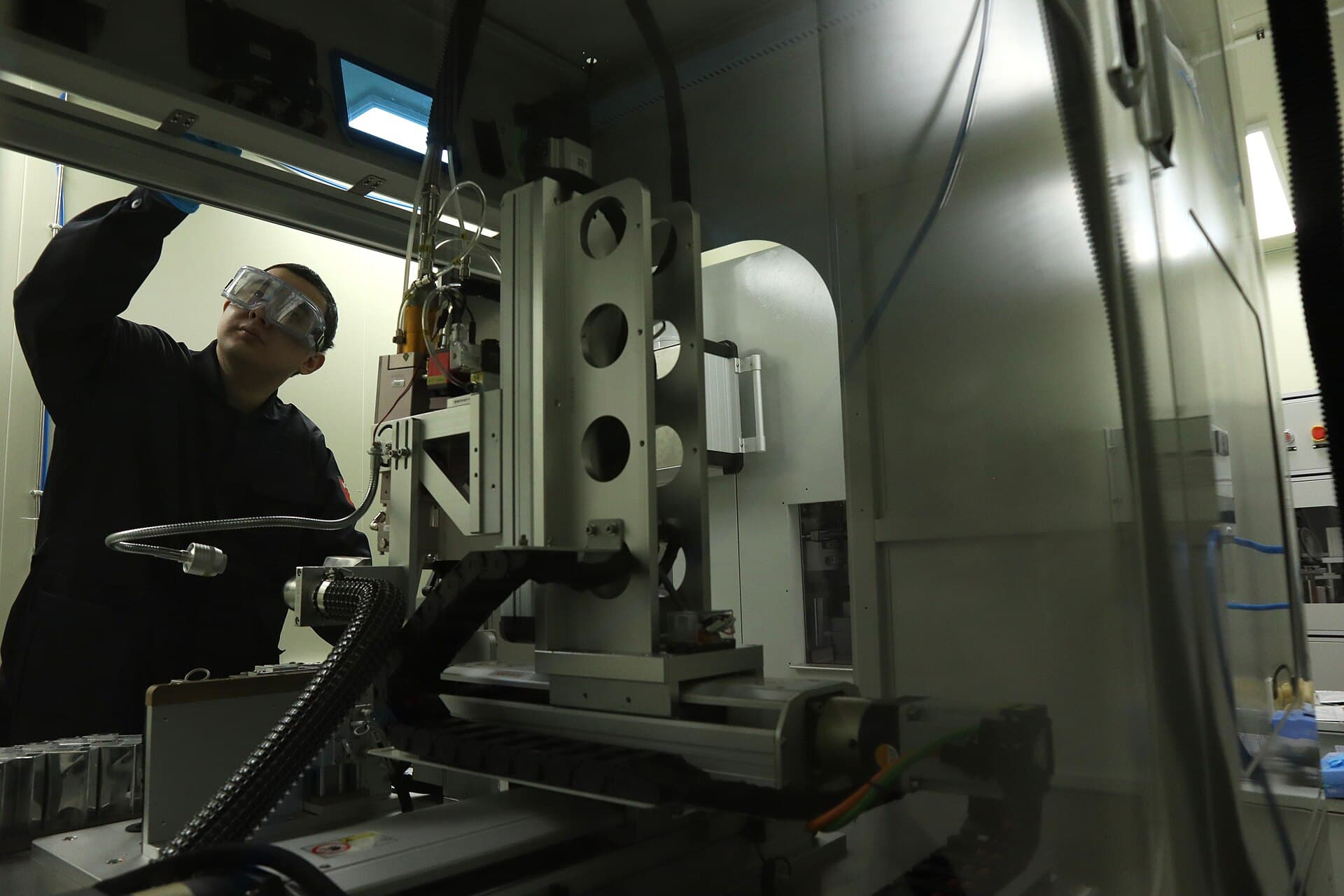
Photo: Jason Nelson / Pexels
On March 20, 1800, Alessandro Volta mailed a letter to the Royal Society in London describing a stack of zinc and silver discs, separated by brine-soaked cardboard, that produced a steady electric current. It was the first battery. Everything that followed — the lead-acid cell in your car, the alkaline batteries in a remote control, the lithium-ion pack in your phone — is a two-century argument about how to make Volta's stack safer, lighter, and more durable.
What Volta actually built (and why Galvani was wrong)
Volta's pile did not come out of nowhere. It came out of a fight. A decade earlier, the Italian anatomist Luigi Galvani had been dissecting frog legs when he noticed the muscles twitched violently whenever they touched two different metals at once. Galvani decided the frog tissue itself was generating electricity, a force he called "animal electricity" (National Museum of American History).
Volta, a physicist at the University of Pavia, disagreed. He suspected the frog leg was not a generator at all, just a very sensitive detector. The electricity, he argued, came from the contact between the two dissimilar metals, with the moist tissue acting only as a conductor between them. To prove it, Volta stripped the frog out of the circuit entirely.
He stacked alternating discs of zinc and silver (later copper and pewter), separating each pair with cardboard or cloth soaked in salt water. By 1799 he had built a column nearly two feet tall. When he connected a wire to the top and bottom of the pile, current flowed continuously, not in the brief spark of a Leyden jar, but in a steady stream that could power a device for as long as the chemicals inside kept reacting (National MagLab).
Galvani was not entirely wrong. Nerve and muscle cells do generate their own tiny electrical signals, which is why his frog legs twitched in the first place. But Volta was right about the mechanism that mattered for his pile: it was the dissimilar metals reacting with the salt water, not the frog, that produced the current. That distinction, chemistry generating electricity rather than electricity being an inherent property of living tissue, is the founding idea of every battery built since.
Inside the pile: the chemistry that makes electrons move
A battery is a box that turns a chemical reaction into a directional flow of electrons. That's the whole trick, and it has not changed since 1800.
Think of it like a water tower connected to two reservoirs at different heights. The chemical reaction inside a battery creates a difference in electrical potential, the electrochemical equivalent of a height difference, between two electrodes. Connect a wire between them, and electrons flow downhill from the high-potential side to the low-potential side, the same way water flows downhill through a pipe. The device on the wire, a light bulb, a motor, a phone screen, is the waterwheel that does useful work as the current passes through.
In Volta's pile, zinc gives up electrons more easily than silver does. When the salt-water-soaked cardboard sits between them, zinc atoms dissolve into the solution and leave electrons behind on the zinc disc. Those electrons want to move to the silver disc, where the reaction is more favorable, but they can only get there by traveling through an external wire, which is exactly what generates current.
How does a battery generate electricity?
Every battery pairs two materials with different appetites for electrons, called electrodes, in a chemical medium called an electrolyte that lets ions move between them but blocks electrons from taking a shortcut. The electrode that loses electrons (oxidizes) is the anode; the one that gains them (reduces) is the cathode. Electrons forced to travel the long way around, through an external circuit, are the current you use.
From novelty to necessity: the 19th-century battery race
Volta's pile had two serious flaws: the electrolyte dried out and stopped working within hours, and the reaction that generated current also generated hydrogen bubbles that coated the copper electrode and choked the flow, a problem chemists later called polarization. For most of the 19th century, battery inventors were really just chasing fixes for those two problems.
Daniell's two-liquid fix
British chemist John Frederic Daniell solved the polarization problem in 1836 by physically separating the zinc and copper reactions into two different liquids using a porous barrier. His cell produced a steadier voltage for longer, and it became the standard power source for early telegraph networks, the first industry that depended entirely on batteries rather than static electricity generators.
Planté's rechargeable breakthrough
The bigger leap came in 1859, when French physicist Gaston Planté built the first practical rechargeable battery. His design used two lead sheets, separated by rubber strips and rolled into a spiral, immersed in a roughly 10 percent sulfuric acid solution (Magnet Academy). Running current backward through the cell reversed the chemical reaction and restored the electrodes, meaning the same battery could be drained and refilled thousands of times instead of thrown away.
That single idea, that a battery's chemistry could run in both directions, is the dividing line between "primary" batteries (use once, discard) and "secondary" batteries (recharge and reuse). Planté's lead-acid design is still, remarkably, the battery under the hood of most gasoline cars today, more than 165 years later.
Leclanché and the birth of the disposable battery
Seven years after Planté, in 1866, French engineer Georges Leclanché took the opposite approach: instead of making batteries reusable, he made them cheap, stable, and safe enough for ordinary people to own. His cell paired a zinc rod with a manganese dioxide and carbon cathode, wrapped in porous material and dipped in a jar of ammonium chloride solution. It replaced Planté's corrosive sulfuric acid with a much gentler electrolyte and became the direct ancestor of the modern dry cell (National MagLab). By the early 20th century, "dry cell" versions of Leclanché's chemistry, sealed so the electrolyte could not spill, were sold in general stores as the first mass-market disposable batteries, the direct predecessor of the AA battery in your junk drawer.
The rechargeable revolution: nickel, cadmium, and the search for energy density
Lead-acid batteries are reliable, but they are heavy, because lead is a dense metal and sulfuric acid is a dense liquid. As electric devices moved from stationary telegraph offices toward things people wanted to carry, weight became the enemy.
In 1899, Swedish inventor Waldemar Jungner patented the nickel-cadmium battery, which paired a nickel oxide hydroxide electrode with a metallic cadmium electrode in an alkaline potassium hydroxide electrolyte (Tekniska museet). The nickel-cadmium, or NiCd, cell packed more energy per kilogram than lead-acid, sealed cleanly so it could sit in any orientation, and tolerated cold weather far better. It became the standard rechargeable battery for power tools, portable radios, and early cordless devices for most of the 20th century, even though cadmium's toxicity and a frustrating "memory effect" (where partially recharging a cell repeatedly reduced its usable capacity) were long-standing complaints.
That tradeoff, more energy per kilogram in exchange for new engineering headaches, became the recurring theme of 20th-century battery research. Every generation solved the previous generation's weight problem and inherited a new problem instead.
Lithium enters the picture: Whittingham, Goodenough, and Yoshino
The chemistry that eventually replaced nickel-cadmium in almost every portable device came from three researchers working decades apart, a collaboration in the loosest sense, since none of them set out to work together.
In the early 1970s, British-born chemist M. Stanley Whittingham, working at Exxon during the oil-shock years, discovered that lithium ions could slide in and out of a titanium disulfide crystal structure without destroying it, a process called intercalation. That made it possible to build a rechargeable battery around lithium, the lightest metal on the periodic table and one of the most electrochemically reactive, without the electrode falling apart after a few charge cycles.
In 1980, American physicist John B. Goodenough, then at Oxford, improved on Whittingham's idea by replacing titanium disulfide with lithium cobalt oxide as the cathode material. The swap nearly doubled the voltage the cell could produce, up to about four volts, and set the template that almost every lithium-ion battery still uses today (Nobel Prize press release).
Goodenough's cathode alone was not a safe, sellable battery. Pure lithium metal on the negative electrode was dangerously reactive and prone to forming needle-like structures called dendrites that could pierce the battery's internal separator and cause a short circuit. In 1985, Japanese chemist Akira Yoshino solved that problem by replacing metallic lithium with a carbon-based material that could still absorb lithium ions during charging but without the fire risk. Yoshino's anode, paired with Goodenough's cathode, was the first lithium-ion battery design stable and safe enough to manufacture at scale.
What makes lithium-ion batteries different?
Lithium-ion batteries store energy by shuttling lithium ions back and forth between two electrodes made of layered materials, rather than by permanently dissolving and redepositing metal the way lead-acid and nickel-cadmium cells do. That "rocking chair" mechanism causes far less physical wear per cycle, which is why lithium-ion cells typically survive hundreds to thousands of recharges while storing two to five times more energy per kilogram than older chemistries.
Sony's 1991 launch and the portable electronics boom
Whittingham, Goodenough, and Yoshino did the chemistry. Sony did the manufacturing. In 1991, Sony released the first commercially sold lithium-ion battery, built around Goodenough's lithium cobalt oxide cathode and Yoshino's carbon anode, initially to power its own Handycam camcorders (IEEE Spectrum). The three scientists shared the 2019 Nobel Prize in Chemistry "for the development of lithium-ion batteries," an unusually long 28-year gap between the invention and its recognition, reflecting how much time it took the technology to reshape the world enough for the Nobel committee to be certain of its impact.
That 1991 launch is one of those quiet hinge points in technology history, the kind that does not make headlines at the time but rewires an entire industry within a decade. Camcorders, laptops, and cordless phones had all existed before lithium-ion, but they were bulky and short-lived because nickel-cadmium and nickel-metal-hydride batteries simply could not pack enough energy into a pocket-sized shape. Lithium-ion changed the math. Within a decade, it made the first practical laptops, the first mp3 players, and eventually the smartphone possible, not because any of those devices needed a battery breakthrough specifically, but because none of them could have existed as pocketable, all-day products without one.
Why lithium-ion won: energy density compared
"Better battery" is a vague phrase. What actually changed, generation to generation, is energy density, how much energy a battery stores for its weight, measured in watt-hours per kilogram (Wh/kg). Here is how the major chemistries stack up.
Battery chemistry energy density comparison
| Chemistry | Inventor / era | Typical energy density | Rechargeable | Still in common use |
|---|---|---|---|---|
| Voltaic pile (zinc-silver) | Volta, 1800 | Not practically comparable (unstable output) | No | No |
| Lead-acid | Planté, 1859 | 30–50 Wh/kg | Yes | Yes (car starter batteries) |
| Zinc-carbon dry cell | Leclanché, 1866 | ~65–90 Wh/kg | No | Rare (mostly replaced by alkaline) |
| Nickel-cadmium (NiCd) | Jungner, 1899 | 45–80 Wh/kg | Yes | Limited (power tools, aviation) |
| Lithium-ion | Whittingham/Goodenough/Yoshino, 1970s–1991 | 150–300+ Wh/kg | Yes | Yes (phones, laptops, EVs) |
Energy density ranges compiled from published battery engineering references; actual performance varies by cell design and manufacturer (Grepow, Wikipedia: Nickel–cadmium battery).
The pattern in that table is the whole story of battery history compressed into one column. Each new chemistry did not just tweak the old design, it roughly doubled or tripled how much usable energy fit into the same weight. Lead-acid batteries are still around, not because they are advanced, but because their low cost and high surge-current capability still make them the cheapest way to crank a gasoline engine's starter motor, a job that does not require lithium-ion's energy density.
What people get wrong about battery history
The most common misconception is that Volta "invented electricity." He did not. Static electricity had been studied and generated since the 1600s, and the Leyden jar, a capacitor that stores a single burst of charge, predates Volta's pile by decades. What Volta invented was continuous current, a source that could power a device for minutes or hours instead of delivering one spark and going dark. That distinction matters because a capacitor and a battery solve different problems, and conflating "first electrical device" with "first battery" erases exactly the innovation that made Volta's pile useful.
A second misconception is that lithium-ion batteries are a single, uniform technology. In practice, "lithium-ion" is a family of related chemistries that differ mainly in cathode material, lithium cobalt oxide (LCO) for high energy density in phones, lithium iron phosphate (LFP) for lower cost and better thermal stability in many electric vehicles and grid storage systems, and nickel manganese cobalt oxide (NMC) as a middle ground favored by many automakers. When a headline says "lithium-ion battery fire" or "lithium-ion battery breakthrough," it is worth asking which specific chemistry the story is actually about, because the safety and performance profiles differ meaningfully between them.
A third misconception is that older battery chemistries have vanished. Lead-acid, nickel-cadmium, and zinc-carbon batteries are all still manufactured today, not as relics, but because each one still wins on some axis, cost, cold-weather tolerance, or shelf life, that lithium-ion does not automatically dominate. Battery history is not a straight line of replacement; it is a widening menu of tradeoffs, with each chemistry surviving in the niche where its specific weaknesses matter least.
The next chapter: what comes after lithium-ion
Battery research today is chasing the same two goals Volta's successors chased two centuries ago: more energy per kilogram, and fewer safety compromises to get there. Energy storage has other approaches too, such as the supercapacitor.
Solid-state batteries replace the liquid electrolyte inside a lithium-ion cell with a solid material, which removes the flammable liquid that causes most lithium battery fires and, in principle, allows for higher energy density because a solid electrolyte can be paired with a pure lithium metal anode without the dendrite-puncture risk that stopped Goodenough's early designs. Several major automakers and battery manufacturers have announced solid-state prototypes and pilot production lines, though as of 2026 the technology remains in limited, high-cost early deployment rather than mainstream vehicles.
Sodium-ion batteries swap lithium for sodium, an element that is roughly a thousand times more abundant in the Earth's crust and does not require the geopolitically concentrated mining operations that lithium and cobalt do. Sodium-ion cells currently offer lower energy density than lithium-ion, which limits them mostly to stationary grid storage and lower-cost vehicles rather than premium electronics, but the raw-material cost advantage has made them a serious research priority at companies including CATL and BYD.
Recycling is the quieter half of the next chapter. As lithium-ion batteries from the first wave of mass-market electric vehicles and laptops begin reaching end-of-life in large numbers, extracting and reusing their lithium, cobalt, and nickel is becoming both an environmental necessity and, increasingly, a cheaper source of raw material than fresh mining. That closes a loop Volta could not have imagined: a battery whose old age becomes the raw material for the next battery.
The takeaway
Every battery, from Volta's zinc-and-silver stack to the lithium-ion cell in a smartphone, does the same basic job: use a chemical reaction to push electrons through a wire instead of letting them recombine on the spot. What changed across two centuries was not the concept but the materials, lighter metals, safer electrolytes, and electrode structures that could survive thousands of charge cycles instead of one. The 1991 Sony launch and the 2019 Nobel Prize mark lithium-ion's arrival as the dominant chemistry of the portable era, but lead-acid, nickel-cadmium, and their descendants never actually disappeared. They just found the jobs lithium-ion still cannot do as cheaply. Another famous invention story is the Wright brothers and controlled flight.
Read next:
- History of Computing: From the Abacus to Artificial Intelligence
- How the Transistor Changed Everything
- The Internet
Frequently Asked Questions
Q: Who invented the first battery? A: Alessandro Volta built the first true battery, the voltaic pile, in 1799–1800. It stacked alternating zinc and silver discs separated by brine-soaked cardboard, producing the first steady, continuous electric current from a device.
Q: Was Volta's battery rechargeable? A: No. The voltaic pile was a "primary" cell, meaning it could not be recharged once its chemical reaction ran its course. The first practical rechargeable battery, the lead-acid cell, arrived nearly 60 years later, invented by Gaston Planté in 1859.
Q: What is the difference between a primary and a secondary battery? A: A primary battery, like Volta's pile or a disposable alkaline battery, undergoes a one-way chemical reaction and is discarded once depleted. A secondary battery, like lead-acid or lithium-ion, can have its chemical reaction reversed by applying an external current, allowing it to be recharged and reused many times.
Q: Who invented the lithium-ion battery? A: No single person did. M. Stanley Whittingham developed the first lithium intercalation electrode in the 1970s, John B. Goodenough improved it into a high-voltage lithium cobalt oxide cathode in 1980, and Akira Yoshino built the safe carbon anode that made a commercial product possible in 1985. All three shared the 2019 Nobel Prize in Chemistry for the work.
Q: When did lithium-ion batteries go on sale? A: Sony released the first commercial lithium-ion battery in 1991, initially to power its Handycam camcorders, using Goodenough's cathode chemistry and Yoshino's anode design.
Q: Why is lead-acid still used if lithium-ion is better? A: Lithium-ion has higher energy density, but lead-acid batteries are cheaper to manufacture and can deliver the very high burst of current needed to start a gasoline engine. That combination of low cost and high surge current is why lead-acid remains the standard car starter battery even though it is far heavier than lithium-ion for the same stored energy.
Q: What does energy density actually mean for a battery? A: Energy density measures how much energy a battery can store relative to its weight, expressed in watt-hours per kilogram (Wh/kg). Higher energy density means a battery can either store more energy at the same weight or the same energy at a lower weight, which is why the jump from nickel-cadmium (45–80 Wh/kg) to lithium-ion (150–300+ Wh/kg) made genuinely pocketable laptops and phones possible.
Q: Are all lithium-ion batteries the same chemistry? A: No. Lithium-ion is a family of related chemistries that share the same basic ion-shuttling mechanism but use different cathode materials, including lithium cobalt oxide (common in phones), lithium iron phosphate (common in many EVs and grid storage), and nickel manganese cobalt oxide (common in other EVs). These variants trade off energy density, cost, and thermal stability differently.
Q: What might replace lithium-ion batteries in the future? A: Two candidates are furthest along: solid-state batteries, which replace the flammable liquid electrolyte with a solid one to improve safety and potentially energy density, and sodium-ion batteries, which use a far more abundant element than lithium at the cost of lower energy density. As of 2026, both remain limited to early or niche deployment rather than mainstream replacements for lithium-ion.
Q: Did Luigi Galvani's "animal electricity" theory turn out to be completely wrong? A: Not entirely. Galvani was wrong that the frog leg itself generated the current in his experiments, that came from the contact between the two dissimilar metals, as Volta proved. But nerve and muscle cells do generate their own small electrical signals as part of normal biology, which is a genuine phenomenon separate from the battery mechanism Galvani mistakenly credited for his observation.
Sources
- National Museum of American History — Battery: Voltaic Pile
- National MagLab — Voltaic Pile, 1800
- National MagLab — Planté Battery, 1859
- National MagLab — Leclanché Cell, 1866
- Tekniska museet — Waldemar Jungner, Accumulator
- Nobel Prize — The Nobel Prize in Chemistry 2019, Press Release
- IEEE Spectrum — Remembering Lithium-Ion Battery Pioneer John Goodenough
- Grepow — Battery Energy Density
- Wikipedia — Nickel–cadmium battery
Follow new articles
Add SciHub101 to your feed reader to see new science and technology stories.
About the Author
SciHub101 is an independent science and technology publication founded and edited by Buğra Sözeri, a software engineer and app developer based in Türkiye. AI tools assist with drafting and research. Source documentation in the existing archive is uneven, and articles are being reviewed and corrected. The Editorial Team byline identifies editorial responsibility; it does not certify specialist or independent human review. Where we compare products, anything built by our own team is labelled as such — see the editorial guidelines and About page for how corrections and disclosures work.
Related Articles
Camera Invention: From Camera Obscura to Digital Sensors
The camera evolved from the camera obscura to chemical photography and digital sensors. This guide explains the chain of inventions.

Antibiotics Invention: Penicillin, Fleming, Florey, and Chain
Antibiotics began with penicillin's discovery, but turning mold into medicine required chemistry, fermentation, wartime scale-up, and clinical testing.
The Invention of the Electric Battery — SciHub101
From Alessandro Volta's 1800 voltaic pile to the 2019 Nobel Prize for lithium-ion: how the battery became the defining technology of the portable power age.
The Invention of the Supercapacitor — SciHub101
How a misnamed physics error became the world's fastest energy storage device, from Becker's 1957 accident to today's electric brakes.
Sodium-Ion Batteries Explained: Chemistry, Advantages, Trade-Offs and Uses
Sodium-ion batteries move sodium instead of lithium ions. See how the cathode, hard-carbon anode and electrolyte work, the numbers, and where they fit.

How to Optimize Your iPhone Battery Life in 2026: Science-Based Tactics
iPhone batteries degrade through cyclical charging—the repeated charge and discharge cycle that every rechargeable lithium battery experiences. After 500 full charge cycles, most iPhone batteries retain 80 percent capacity; after 1,000 cycles, 60 percent. Battery degradation is not a defect; it is the thermodynamic cost of using electrochemical energy storage. However, specific charging habits and software settings can extend battery lifespan and maximize daily runtime. The tactics are science-based: keeping batteries cool, charging to 80 percent rather than 100 percent, avoiding deep discharges, and managing background processes. Most battery drain myths are false (closing apps does not help; wi-fi does not drain faster than LTE). This guide separates fact from myth, explains the science of lithium-ion batteries, and provides specific settings and habits that work.