The Invention of the Electric Battery
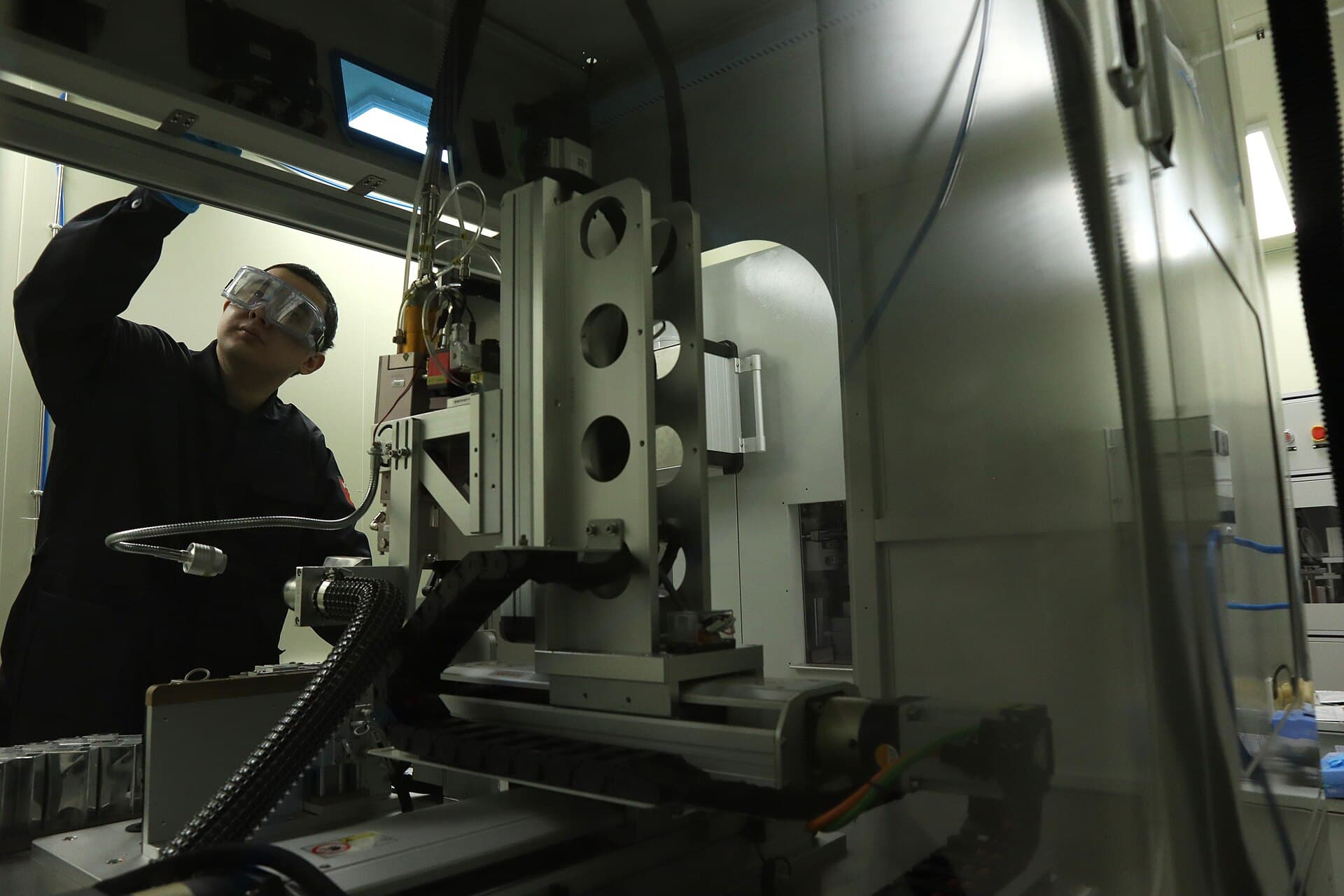
Photo: Pixabay / Pexels
The electric battery is a device that converts stored chemical energy into electrical current through electrochemical reactions. Alessandro Volta built the first one in 1800 — a stack of alternating zinc and silver discs separated by brine-soaked cloth — and demonstrated that sustained electric current could be produced without biological tissue. Two centuries of improvement followed: the lead-acid battery in 1859, the alkaline battery in 1959, and the lithium-ion battery in the 1980s and 1990s, which earned its inventors the 2019 Nobel Prize in Chemistry. Today's lithium-ion cells power everything from smartphones to electric vehicles.
The Frog Leg Debate That Sparked Electrochemistry
The battery was born from a scientific argument about dead frogs. In the 1780s, Luigi Galvani (1737–1798), a professor of anatomy at the University of Bologna, was dissecting frogs when he made a striking observation: the leg muscles of a dead frog twitched violently when touched simultaneously by two different metals — typically a brass hook and an iron scalpel — in the presence of atmospheric electricity or when the metals were connected across the frog's nerve and muscle. Electricity in living tissue later led to inventions such as the electroencephalogram (EEG).
Galvani published his observations in 1791 in a paper titled De Viribus Electricitatis in Motu Musculari Commentarius ("Commentary on the Effect of Electricity on Muscular Motion"). His interpretation was that the frog's body was the source of the electricity — that animal tissue contained a special form of electrical fluid he called "animal electricity," which flowed when the metals provided a conducting path.
Animal electricity — Luigi Galvani's hypothesis, proposed 1791, that biological tissues contain and generate an intrinsic electrical fluid distinct from the static electricity known from physics; partially correct in that biological cells do maintain electrical potentials, but wrong in attributing the current in his frog experiments to biological electricity rather than to the metal contact.
Galvani's contemporary and rival, Alessandro Volta (1745–1827), a professor of physics at the University of Pavia, was unconvinced. Volta repeated the experiments and began his own systematic investigation. He believed the frog was irrelevant — that the electricity came from the contact between dissimilar metals, and the frog's moist tissue was merely a conductor. To test this, he tried to produce electricity without any biological material at all.
Source: Galvani, L. (1791). De Viribus Electricitatis in Motu Musculari Commentarius. Istituto delle Scienze, Bologna. The foundational paper of bioelectricity, and the starting point for Volta's investigation into contact electricity.
The argument between Galvani and Volta was not mere academic disagreement. It addressed a fundamental question about the nature of electricity: was it a property of life, or a property of matter regardless of its biological status? The answer shaped the subsequent century of physics and chemistry.
Both men were partially right. Animal cells do maintain electrical potentials — voltage differences across their membranes, produced by ion pumps. This is the basis of nerve signals and muscle action. Galvani was observing a real phenomenon. But the large, sustained currents in his frog experiments came from the metal pairs, not the frog. Volta was right about the source of the galvanic current. The frog's nerve and muscle tissue simply acted as a moist conductor between the dissimilar metals — a biological electrolyte.
How Volta Built the First Battery
Volta's key insight, arrived at through experiments conducted between 1794 and 1799, was that any two dissimilar metals, separated by a moist conductor, would produce a voltage. The voltage depended on which metals were chosen, not on what the moist conductor was. He systematically tested metal pairs and ranked them in what he called an "electromotive series" — the first version of what is now called the electrochemical series or activity series of metals.
In 1800, Volta assembled his most important demonstration: the voltaic pile. It consisted of alternating discs of zinc and silver (or zinc and copper), each pair separated by a disc of cardboard or leather soaked in brine or dilute acid. He stacked dozens of these units on top of each other. When he connected a wire from the zinc at the bottom to the silver at the top, sustained electric current flowed through the wire. The more disc pairs he added, the stronger the current.
Voltaic pile — the first electric battery, constructed by Alessandro Volta in 1800; a stack of alternating zinc and silver (or copper) discs separated by brine-soaked pads, producing a sustained electrical current by electrochemical reactions at the metal-electrolyte interfaces.
Volta sent a description of his pile to the Royal Society of London in a letter dated March 20, 1800. The letter was read to the Society on June 26, 1800. The president, Sir Joseph Banks, recognized immediately that this was a major discovery — the first device capable of producing a continuous, controllable electrical current. Within weeks of the letter's circulation, chemists across Europe were building voltaic piles and using them to investigate electricity.
Source: Volta, A. (1800). "On the Electricity Excited by the Mere Contact of Conducting Substances of Different Kinds" — letter to Sir Joseph Banks, published in Philosophical Transactions of the Royal Society of London, Vol. 90, pp. 403–431. The paper announcing the voltaic pile.
The impact was immediate and dramatic. Within three months of the letter's publication, William Nicholson and Anthony Carlisle used a voltaic pile to decompose water into hydrogen and oxygen by electrolysis — the first demonstration that electricity could drive a chemical reaction. Humphry Davy, at the Royal Institution in London, used increasingly powerful voltaic piles to isolate previously unknown elements: potassium and sodium in 1807, calcium and magnesium in 1808. The voltaic pile created the new field of electrochemistry.
How a Battery Works: The Electrochemistry
All batteries, from Volta's pile to a modern lithium-ion cell, operate on the same fundamental principle: two electrodes of different chemical potential, separated by an electrolyte, with electrons flowing through an external circuit.
Electrode — a conductor through which electricity enters or leaves a battery; the anode is the negative electrode (where oxidation occurs, releasing electrons) and the cathode is the positive electrode (where reduction occurs, accepting electrons).
Electrolyte — an ionic conductor separating the electrodes; it allows ions to migrate between electrodes (completing the internal circuit) while blocking direct electron flow (forcing electrons through the external circuit).
In Volta's zinc-silver pile, the zinc anode dissolves oxidatively: zinc atoms lose electrons, becoming zinc ions that enter the electrolyte. The electrons released flow through the external wire to the silver cathode, where they participate in the reduction of hydrogen ions from the brine. The ion flow through the electrolyte and the electron flow through the wire together constitute the complete electrical circuit.
This is analogous to a river and a mill wheel. The electrochemical "height difference" between the two electrodes (their difference in electrochemical potential, measured in volts) is like the height of a waterfall. The current flowing through the external circuit is like the flow of water over the wheel. More height difference means more driving force; more flow means more power. The battery is "spent" when the chemical height difference is exhausted — when the electrode materials have been consumed or transformed to a lower-energy state.
The voltage of a cell is determined entirely by the choice of electrode materials and their electrochemical potentials. The capacity — how long the battery can sustain that voltage — depends on the mass of active material available to react. These two parameters are the fundamental engineering dials in battery design: voltage (chemistry selection) and energy density (mass of active material per unit volume or weight).
Source: Atkins, P.W. and de Paula, J. (2006). Physical Chemistry, 8th edition. Oxford University Press. Chapter 7 provides the thermodynamic derivation of electrode potentials and the relationship between Gibbs free energy and cell voltage.
The Evolution of Battery Chemistry
The voltaic pile worked but had problems. The zinc electrode corroded irregularly, the brine electrolyte needed constant replenishment, and internal chemical reactions caused the voltage to drop quickly under load. For the next 150 years, chemists and engineers developed a succession of improved battery designs.
The Daniell Cell (1836)
John Frederic Daniell (1790–1845), a British chemist and meteorologist, solved the polarization problem that plagued the voltaic pile in 1836. In Volta's pile, hydrogen gas produced at the silver cathode formed bubbles that insulated the electrode and caused the voltage to drop rapidly. Daniell separated the zinc and copper electrodes into separate electrolyte solutions — zinc sulfate around the zinc electrode, copper sulfate around the copper electrode — connected by a porous membrane or an inverted cup arrangement. The copper electrode was now in a copper sulfate solution, so copper ions from the solution deposited onto the copper cathode instead of hydrogen evolving. The result was a stable, consistent voltage of approximately 1.1 volts, with far less polarization drop.
Source: Daniell, J.F. (1836). "On Voltaic Combinations" — Philosophical Transactions of the Royal Society of London, Vol. 126, pp. 107–124. The original description of the Daniell cell.
The Daniell cell became the standard for telegraph systems throughout the mid-nineteenth century. Telegraphs required stable, sustained current over long periods; the consistency of the Daniell cell suited this precisely. The spread of the electric telegraph in the 1840s and 1850s created the first large commercial market for batteries — the first time battery manufacture was an industry rather than a laboratory activity.
The Lead-Acid Battery (1859)
Gaston Planté (1834–1889), a French physicist, discovered the lead-acid battery in 1859. It was the first rechargeable (secondary) battery — unlike the Daniell cell, which was consumed irreversibly, a lead-acid cell could be regenerated by passing current through it in the reverse direction.
Rechargeable battery — a battery in which the electrode reactions can be reversed by applying an external current, restoring the electrodes to their original state and allowing the battery to be reused.
Planté's cell used two lead plates immersed in sulfuric acid. During discharge, both plates are converted to lead sulfate. During charging, one plate reverts to lead metal and the other to lead dioxide. The voltage is approximately 2 volts per cell; six cells in series produce the 12-volt batteries still used in automobile starting systems today.
The lead-acid battery's durability, low cost, and rechargeability made it the dominant large-format battery chemistry for over 150 years. Despite its age, the lead-acid battery held nearly 40% of the global battery market by value as recently as 2020, primarily in automotive starter batteries and industrial uninterruptible power supplies.
Source: Berndt, D. (1997). Maintenance-Free Batteries, 3rd edition. Research Studies Press. The standard reference on lead-acid chemistry and engineering.
Zinc-Carbon and Alkaline (1866–1959)
Georges Leclanché (1839–1882), a French engineer, patented the zinc-carbon cell in 1866. It used zinc as the anode, manganese dioxide as the cathode, and ammonium chloride solution as the electrolyte — a design that evolved into the "dry cell" (the electrolyte thickened to a paste rather than a liquid) by the 1880s, making portable batteries practical. Dry cells powered early flashlights, portable radios, and consumer electronics through most of the twentieth century.
Lewis Urry (1927–2004), a Canadian-born chemist working at Eveready Battery Company (later Energizer) in Parma, Ohio, developed the modern alkaline battery in 1959. Urry recognized that replacing the acidic ammonium chloride electrolyte with alkaline potassium hydroxide, and using powdered zinc instead of a zinc cup, would dramatically increase the battery's capacity and shelf life. An alkaline cell has roughly five to eight times the energy capacity of an equivalent zinc-carbon cell.
Source: Eveready Battery Company. (1959). US Patent 2,960,558 — Lewis Urry, inventor, "Alkaline Dry Cell Battery." The original Eveready patent filing.
Urry's alkaline design became the dominant disposable battery chemistry worldwide. The AA, AAA, C, D, and 9-volt batteries in most household devices today use alkaline chemistry — a design now more than 60 years old, essentially unchanged in principle from Urry's 1959 patent.
The Lithium-Ion Revolution
The lithium-ion battery, which earned the 2019 Nobel Prize in Chemistry for M. Stanley Whittingham, John B. Goodenough, and Akira Yoshino, is the enabling technology of the mobile electronics era and the electric vehicle industry.
M. Stanley Whittingham and the First Lithium Battery (1970s)
M. Stanley Whittingham, a British-American chemist working at Exxon Research in the early 1970s, was the first to demonstrate a functional lithium battery using intercalation chemistry. Whittingham used titanium disulfide (TiS₂) as the cathode — a layered material whose crystal structure had gaps between the layers that could accommodate lithium ions. He used metallic lithium as the anode. Lithium ions discharged from the metallic anode, moved through the electrolyte, and inserted ("intercalated") themselves into the TiS₂ lattice. On charging, the process reversed.
Intercalation — the reversible insertion of an ion or molecule into the layered structure of a host material without destroying the structure; the principle underlying modern lithium-ion battery operation.
Whittingham's cell had a voltage of about 2 volts and recharged well. But metallic lithium anodes had a fatal flaw: on charging, lithium re-deposited onto the anode in irregular crystal spikes called dendrites that eventually grew through the electrolyte, reached the cathode, and short-circuited the cell — sometimes causing fires. The safety problem with metallic lithium anodes prevented commercialization.
Source: Whittingham, M.S. (1976). "Electrical Energy Storage and Intercalation Chemistry" — Science, Vol. 192, pp. 1126–1127. The founding paper of intercalation-based lithium batteries.
John B. Goodenough and the Oxide Cathode (1980)
John B. Goodenough (1922–2023), an American materials scientist at Oxford University, made the next decisive step in 1980. He replaced Whittingham's TiS₂ cathode with lithium cobalt oxide (LiCoO₂), a layered oxide material. The oxide cathode had approximately twice the voltage of TiS₂ — around 4 volts — dramatically increasing the energy density of the cell. Goodenough also investigated lithium manganese oxide and, in 1997, lithium iron phosphate (LiFePO₄), which offered lower voltage but exceptional safety and cycle life.
Goodenough published his LiCoO₂ results in 1980 in the Journal of Materials Chemistry. He was 57 years old. He received the Nobel Prize in 2019, at age 97, making him the oldest Nobel laureate in history.
Source: Mizushima, K., Jones, P.C., Wiseman, P.J., and Goodenough, J.B. (1980). "LiₓCoO₂ (0<x≤1): A New Cathode Material for Batteries of High Energy Density" — Materials Research Bulletin, Vol. 15, pp. 783–789. The paper introducing the LiCoO₂ cathode.
Akira Yoshino and the Commercial Lithium-Ion Cell (1985–1991)
Akira Yoshino, a Japanese chemist at Asahi Kasei Corporation, solved the metallic lithium anode problem. In 1985, he replaced the metallic lithium anode with carbon (specifically, petroleum coke, a form of graphite). Like Goodenough's oxide cathode, the carbon anode could intercalate lithium ions into its layered structure — storing lithium without forming metallic lithium and without the dendrite hazard. The cell was now a "lithium-ion" battery: lithium moved as ions between two intercalation hosts, never depositing as metal.
Yoshino filed his foundational patent in 1985. Sony and Asahi Kasei licensed the technology and produced the first commercial lithium-ion batteries in 1991, used in Sony's handheld video camera. The design was essentially complete: a graphite anode, a lithium cobalt oxide cathode, a lithium salt dissolved in an organic solvent electrolyte, and a polymer separator between the electrodes.
Source: Yoshino, A. (1985). Japanese Patent 1,989,293 — "Secondary Battery." Yoshino's foundational patent for the carbon-anode lithium-ion cell. The Nobel Committee cited this patent in its 2019 Nobel Prize announcement.
The commercial lithium-ion battery delivered energy densities 2 to 3 times greater than nickel-cadmium and nickel-metal hydride batteries, which had been the dominant rechargeable technologies. Its voltage of approximately 3.6 volts per cell — compared to 1.2 volts for nickel-based cells — meant that fewer cells were needed for a given application, reducing weight further. The laptop computer, the mobile phone, the smartphone, the wireless headphone, the electric bicycle, and the electric vehicle all became practical on the basis of this chemistry.
The Battery Landscape Today
| Chemistry | Energy Density (Wh/kg) | Cycle Life | Primary Application |
|---|---|---|---|
| Lead-acid | 30–50 | 300–500 | Auto starter, UPS systems |
| Nickel-cadmium | 45–80 | 500–1,000 | Power tools (legacy) |
| Nickel-metal hydride | 60–120 | 300–500 | Hybrid vehicles (legacy) |
| Lithium-ion (LiCoO₂) | 150–200 | 300–500 | Consumer electronics |
| Lithium-ion (NMC) | 150–220 | 500–2,000 | EV batteries |
| Lithium iron phosphate (LFP) | 90–160 | 2,000–10,000+ | EV, grid storage |
| Sodium-ion | 100–160 | 1,000–3,000 | Grid storage (emerging) |
| Solid-state (projected) | 300–500 | >1,000 | EV (development) |
Energy density and cycle life vary with specific cell design and operating conditions; values reflect commercial products as of 2024.
Lithium-iron-phosphate (LFP) batteries, based on Goodenough's 1997 cathode chemistry, have become dominant in Chinese electric vehicles and grid-scale energy storage because of their exceptional cycle life and thermal safety. Tesla, BYD, and several major battery manufacturers now produce substantial volumes of LFP cells.
Solid-state batteries replace the liquid electrolyte with a solid ceramic or polymer conductor. This eliminates the flammable organic solvent, enables higher voltages, and potentially allows use of a metallic lithium anode without dendrite hazard — because the solid electrolyte is mechanically stiff enough to prevent dendrite penetration. Toyota, Solid Power, QuantumScape, and several other companies were at various stages of solid-state battery development as of 2024–2025, targeting commercialization in the late 2020s.
Sodium-ion batteries, which substitute the more abundant and less geographically concentrated sodium for lithium, offer a potentially lower-cost alternative for grid-scale storage where energy density is less critical than cost and cycle life. CATL, the world's largest battery manufacturer by volume, announced commercial sodium-ion cells in 2021.
Source: IEA (2024). Global EV Outlook 2024. International Energy Agency, Paris. Data on lithium-ion battery costs, market volumes, and chemistry trends in the electric vehicle sector.
The trajectory of lithium-ion battery cost is one of the most dramatic in technology history: from approximately $1,200 per kilowatt-hour in 1991 to below $100 per kilowatt-hour in 2024 — a cost reduction of more than 90% in 33 years, driven by manufacturing scale, improved cell designs, and supply chain development. For a related energy-storage device, see the supercapacitor.
The Nobel Prize Dispute
The 2019 Nobel Prize in Chemistry was awarded jointly to Whittingham, Goodenough, and Yoshino for the development of lithium-ion batteries. The award was broadly regarded as correct and overdue — the technology had been transforming global energy use for nearly three decades. But the award also omitted several researchers whose contributions were significant.
Rachid Yazami, a Moroccan-French scientist then at the Grenoble Institute of Technology, demonstrated that graphite could reversibly intercalate lithium electrochemically in 1980 — the same year as Goodenough's oxide cathode. His work provided an independent demonstration of the graphite anode concept that Yoshino later commercialized. Yazami has stated publicly that he was surprised not to be included in the Nobel.
Jeff Dahn, a Canadian electrochemist at Dalhousie University, made pivotal contributions to understanding lithium-ion cell degradation and to developing longer-lived cell chemistries. His group's work on electrolyte additives and cell testing methodology is cited as foundational by the battery industry. Dahn has argued in published interviews that the field involved many more contributors than a three-person Nobel prize can represent.
Source: Nobel Committee for Chemistry (2019). Scientific Background: Lithium-Ion Batteries. The Royal Swedish Academy of Sciences. The official technical background document explaining the Nobel Committee's reasoning for the 2019 prize.
The Nobel Prize's three-person limit is a structural constraint that makes it increasingly difficult to recognize genuinely collaborative or multi-decade technological developments. The lithium-ion battery's history involves at least ten to fifteen researchers whose work was essential. The prize necessarily simplified a complex intellectual lineage.
Unintended Consequences of the Battery Age
Lithium-ion batteries enable renewable energy storage at grid scale — they are a critical component in the transition away from fossil fuels. But they carry their own environmental burdens.
Lithium is concentrated in a small number of geographic locations. The "Lithium Triangle" — Bolivia, Chile, and Argentina — contains approximately 58% of global lithium reserves in brine deposits. The Democratic Republic of Congo holds approximately 70% of global cobalt reserves, much of it mined under documented conditions of severe labor exploitation, including child labor.
Source: USGS (2024). Mineral Commodity Summaries: Lithium and Cobalt. United States Geological Survey. Annual resource and production data.
Battery fires represent a distinct safety category that emerged with lithium-ion technology. Lithium-ion cells can enter thermal runaway — a self-sustaining exothermic reaction triggered by physical damage, overcharging, or manufacturing defects — which produces intense heat and, in some cases, fire or explosion. Airlines restrict the carriage of lithium batteries in checked baggage for this reason. Electric vehicle fires, while statistically no more frequent per vehicle than gasoline car fires, burn hotter and are more difficult to extinguish, presenting new challenges for fire services.
The battery also changed the nature of the power grid. For most of electrical history, power had to be used at the moment of generation — supply and demand had to be balanced continuously. Grid-scale batteries, installed in megawatt-hour capacities in California, Australia, and elsewhere from the mid-2010s onward, introduced the ability to store and discharge electricity across hours, cushioning the intermittency of solar and wind generation. The Hornsdale Power Reserve in South Australia, a 194 MWh Tesla lithium-ion installation completed in 2017, became famous for responding to grid frequency disturbances faster than any conventional power plant.
For the relationship between battery storage and the broader history of electrical generation, see the steam engine and the photovoltaic solar cell.
Frequently Asked Questions
Q: Who invented the battery?
A: Alessandro Volta built the first electric battery — the voltaic pile — in 1800. He invented it to demonstrate that two dissimilar metals in contact with a moist conductor could produce sustained electric current, refuting Galvani's theory that electrical current in his frog experiments came from biological "animal electricity." The development of practical rechargeable batteries involved many subsequent inventors: Planté (lead-acid, 1859), Whittingham, Goodenough, and Yoshino (lithium-ion, 1970s–1985).
Q: What is the difference between a primary and secondary battery?
A: A primary battery is single-use: the electrochemical reactions are irreversible under practical conditions (alkaline AA batteries, zinc-carbon). A secondary battery is rechargeable: the electrode reactions can be reversed by applying an external current (lead-acid, lithium-ion, nickel-metal hydride). The term "secondary" refers to the secondary current — the charging current — that restores the cell.
Q: Why do lithium-ion batteries degrade over time?
A: Several mechanisms cause degradation. Repeated insertion and removal of lithium ions gradually strains and fractures the electrode materials. Electrolyte decomposition deposits a passivation layer on the anode (the solid-electrolyte interphase, or SEI) that grows thicker with cycles, increasing internal resistance. Lithium plating at high charge rates or low temperatures deposits metallic lithium on the anode. All these effects reduce the amount of lithium available for cycling and increase internal resistance, lowering both capacity and power delivery.
Q: What is the energy density of modern lithium-ion batteries compared to gasoline?
A: Gasoline contains about 12,000–13,000 watt-hours per kilogram (Wh/kg) of chemical energy. Modern lithium-ion battery packs in electric vehicles deliver roughly 150–250 Wh/kg at the pack level. Gasoline's energy density advantage is roughly 50:1. However, electric motors convert around 85–90% of battery energy to motion, while internal combustion engines convert roughly 20–25% of gasoline's energy to motion. The effective "useful energy" ratio is closer to 10:1 — still a large gap, which explains why battery weight is a significant constraint in long-range electric vehicles.
Q: Will solid-state batteries replace lithium-ion?
A: Solid-state batteries offer higher energy density, improved safety, and potentially longer cycle life. Several manufacturers, including Toyota and QuantumScape, were targeting initial commercial production in the late 2020s as of 2024. The challenges are manufacturing (solid electrolytes are brittle and difficult to produce in thin, defect-free sheets) and cost (solid-state cells are currently far more expensive than liquid-electrolyte cells). Solid-state is likely to enter high-end applications (premium EVs, aerospace) before widespread commercial adoption.
Q: How does the Galvani-Volta debate relate to modern neuroscience?
A: Both men were right about part of the phenomenon they observed. Volta correctly identified the source of the current in the frog experiment as the metal contact, not biological electricity. Galvani correctly identified that biological tissues maintain electrical potentials — what we now call membrane potentials. The membrane potential of a nerve cell, maintained by sodium-potassium ion pumps and roughly -70 millivolts at rest, is the basis of the nerve impulse. Galvani's "animal electricity" was real — just not the source of the current in his specific experiments.
Read next:
Follow new articles
Add SciHub101 to your feed reader to see new science and technology stories.
About the Author
SciHub101 is an independent science and technology publication founded and edited by Buğra Sözeri, a software engineer and app developer based in Türkiye. AI tools assist with drafting and research. Source documentation in the existing archive is uneven, and articles are being reviewed and corrected. The Editorial Team byline identifies editorial responsibility; it does not certify specialist or independent human review. Where we compare products, anything built by our own team is labelled as such — see the editorial guidelines and About page for how corrections and disclosures work.
Related Articles

The Bicycle: From Running Machine to 1.6 Billion Wheels
Karl Drais built a steerable two-wheeler in 1817. It took 68 more years and four distinct designs to reach the bicycle you recognize today.

The Atomic Clock: The Device That Defines Time Itself
Louis Essen's 1955 cesium clock at NPL redefined the second and made GPS possible. Now optical clocks are 1,000 times more precise — and the second will be redefined again by 2030.
Battery Invention: From Volta Pile to Lithium-Ion
The battery begins with Volta's pile, but modern batteries evolved through chemistry, materials, portability, and rechargeable systems.
The Invention of the Supercapacitor
How a misnamed physics error became the world's fastest energy storage device, from Becker's 1957 accident to today's electric brakes.
The Lithium-Ion Battery: How Three Scientists Powered the Wireless Age
The lithium-ion battery's full history: Whittingham's 1976 Exxon work, Goodenough's LiCoO2 breakthrough, Yoshino's 1985 prototype, the 2019 Nobel Prize, and today.
Sodium-Ion Batteries Explained: Chemistry, Advantages, Trade-Offs and Uses
Sodium-ion batteries move sodium instead of lithium ions. See how the cathode, hard-carbon anode and electrolyte work, the numbers, and where they fit.