The Lithium-Ion Battery: How Three Scientists Powered the Wireless Age
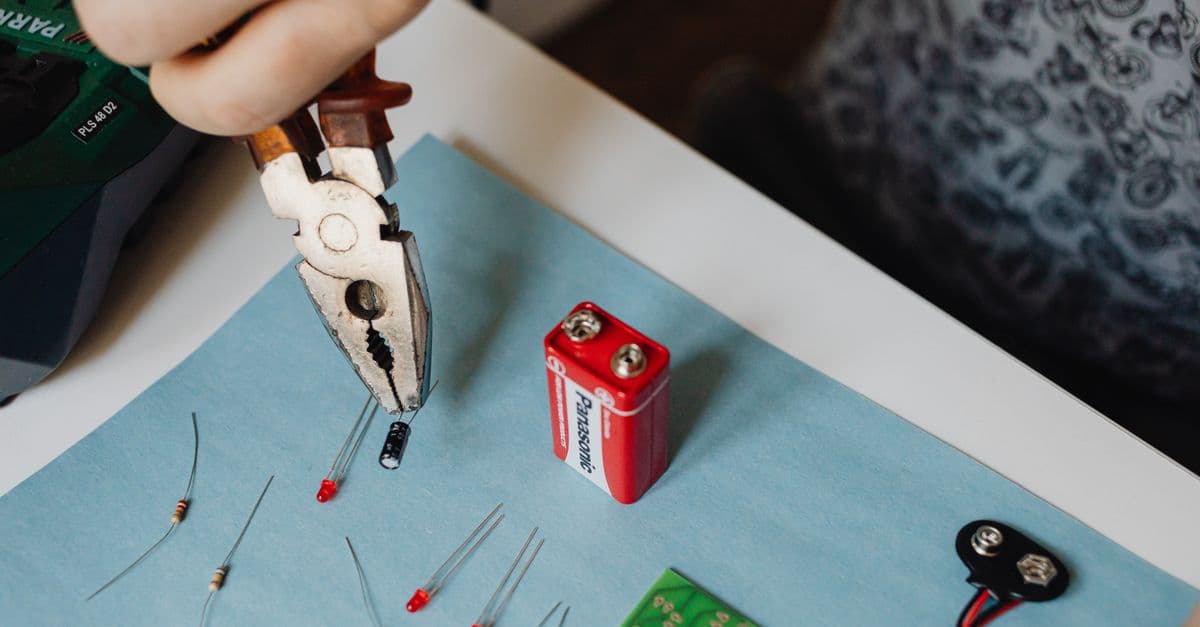
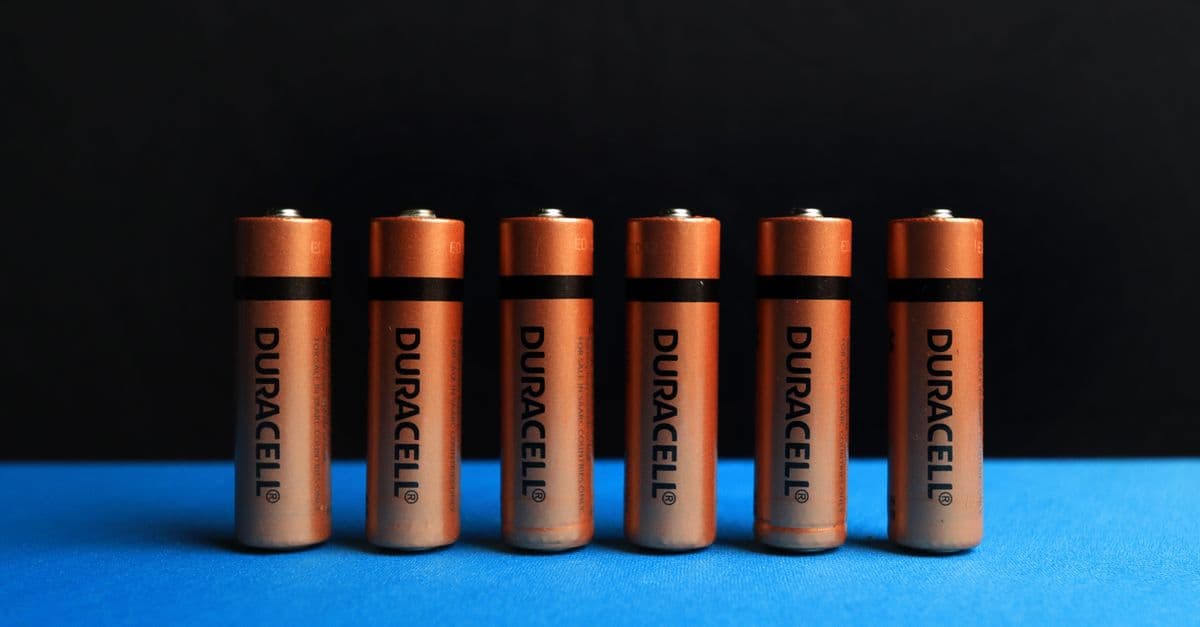
Photo: www.kaboompics.com / Pexels
Every smartphone, laptop, and electric vehicle runs on a technology that was assembled across three decades by scientists working for an oil company, a British university, and a Japanese chemical corporation. The lithium-ion battery is not the product of a single eureka moment — it is the result of three incremental discoveries, each of which was necessary but insufficient alone. Without Whittingham's 1976 intercalation cathode, Goodenough's 1980 high-voltage oxide, and Yoshino's 1985 safe anode, the device would not exist. In 2019, the Nobel Committee in Chemistry awarded all three men jointly. John Goodenough accepted the prize at 97, the oldest Nobel laureate in history.
What a Battery Is and Why Lithium Changes the Equation
A battery is a device that converts chemical energy into electrical energy through controlled electrochemical reactions. Every battery contains three essential components: an anode (negative electrode), a cathode (positive electrode), and an electrolyte (a medium through which ions travel between them).
During discharge, a chemical reaction at the anode releases electrons, which flow through an external circuit (powering a device) and ions, which move through the electrolyte to the cathode. During charging, electrical energy reverses the reaction, driving ions back to the anode and restoring the chemical potential energy.
The reason lithium is attractive for batteries is a combination of three properties. First, it is the lightest metal on the periodic table (atomic mass: 6.94 g/mol), so a given volume of lithium-based active material stores more energy per gram than heavier alternatives. Second, lithium has the most negative standard electrode potential of any element (-3.04 V versus the standard hydrogen electrode), which means lithium-based cells produce high voltages. Third, the lithium ion (Li+) is small enough to insert and extract from many electrode materials without destroying their crystalline structure — the process called intercalation.
Definition: Intercalation is the reversible insertion of an ion (in this case, Li+) into the layered atomic lattice of a host material without permanently altering the host's crystal structure. It is what makes a rechargeable lithium battery possible: the electrode material survives thousands of charge-discharge cycles.
The Story: From Exxon's Lab to a Nobel Prize
Whittingham and the Oil Company That Almost Invented It (1976)
The story begins, oddly, with an energy crisis. In 1973, the OPEC oil embargo drove Western oil companies to fund research into alternative energy storage and conversion technologies. M. Stanley Whittingham, then a researcher at Exxon's corporate research laboratory in New Jersey, was investigating superconducting materials when he noticed that titanium disulfide (TiS2) had an unusual property: lithium ions could be inserted into the gaps between its atomic layers and extracted again without the material falling apart.
Whittingham built the first lithium-ion cell in 1976 using metallic lithium as the anode and TiS2 as the cathode. The cell produced approximately 2 volts and could be recharged. Exxon filed a patent in 1977 and began manufacturing small prototypes.
The design had a fatal flaw. Metallic lithium is extremely reactive — it ignites on contact with moisture and can form needle-like structures called dendrites during charging, which can puncture the separator between anode and cathode and cause a short circuit, potentially leading to fire or explosion. TiS2 was also expensive and difficult to process. Exxon shut down the project on safety grounds.
Source: Electrochemical Society — M. Stanley Whittingham biography
What Whittingham left behind was the proof of concept: lithium ions could be cycled in and out of a host electrode material, and the resulting cell could store and release electrical energy reversibly.
Goodenough's LiCoO2 Breakthrough (1980)
John B. Goodenough was born in 1922 in Jena, Germany, and spent much of his career in physics before turning to materials chemistry. In 1976, he moved from MIT's Lincoln Laboratory to the Inorganic Chemistry Laboratory at the University of Oxford.
His group's challenge was to find a cathode material that could intercalate lithium ions like TiS2 but at a higher voltage — and without the safety risks of metallic lithium or the expense of titanium. In 1980, Goodenough and his collaborators demonstrated that lithium cobalt oxide (LiCoO2) could serve as a cathode material and produce approximately 4 volts — nearly twice the voltage of Whittingham's TiS2 cell.
Source: John B. Goodenough — Wikipedia
The practical significance of doubling the voltage is large. Because energy stored in a battery is proportional to voltage multiplied by charge capacity, a 4-volt cell stores roughly twice as much energy per charge carrier as a 2-volt cell. LiCoO2's layered crystal structure allowed lithium ions to move in and out efficiently, and the material was stable over many charge-discharge cycles.
Goodenough published the work in the journal Materials Research Bulletin in 1980. Oxford University, in a decision that is now studied in patent law curricula as a cautionary tale, did not patent the discovery. The technology was available to anyone.
Source: How Nobel Prize winner John Goodenough sparked the wireless revolution — University of Chicago News
John Goodenough received the Nobel Prize in Chemistry at age 97, making him the oldest Nobel laureate in history. He had submitted his LiCoO2 discovery to the scientific record in 1980 — 39 years before the prize. He died on June 25, 2023, at age 100.
Yoshino's Safe Anode and the 1985 Prototype (1985–1991)
The remaining problem was the anode. Both Whittingham and Goodenough's designs still used metallic lithium or lithium alloys, which retained the dendrite problem. Akira Yoshino, working at Asahi Kasei Corporation in Japan, solved it.
In 1985, Yoshino discovered that petroleum coke — a form of carbon with a partially disordered crystal structure — could reversibly store lithium ions without forming dendrites. Replacing metallic lithium with a carbon-based anode eliminated the explosive-reactivity risk. Combined with Goodenough's LiCoO2 cathode, Yoshino had a cell that was both high-energy and safe.
Yoshino patented the design in 1987. The patent described a cell with a carbonaceous anode (later refined to graphite), a LiCoO2 cathode, and a carbonate ester-based electrolyte. This architecture is, in its essentials, still the basis of the lithium-ion cells manufactured today.
Source: Akira Yoshino — Wikipedia
Sony licensed the design and in 1991 launched the world's first commercial lithium-ion battery, installed in its Handycam camcorders. The cell used graphite (more stable than petroleum coke) as the anode material and refined the electrolyte composition for improved safety. It stored roughly three times the energy of the nickel-cadmium batteries it replaced, at the same weight.
Source: Battery Design — SONY Lithium Ion Batteries: World's First Commercialized LiB 1991
| Year | Development | Who | Where |
|---|---|---|---|
| 1973 | OPEC embargo funds alternative energy research | — | Global |
| 1976 | First rechargeable Li-ion cell using TiS2 cathode | M. Stanley Whittingham | Exxon, USA |
| 1977 | Exxon patents lithium intercalation battery | Whittingham/Exxon | USA |
| 1980 | LiCoO2 cathode demonstrated at ~4V | John B. Goodenough | Oxford, UK |
| 1985 | Carbon anode prototype; Li-ion dendrite problem solved | Akira Yoshino | Asahi Kasei, Japan |
| 1987 | Yoshino patents full Li-ion cell architecture | Yoshino/Asahi Kasei | Japan |
| 1991 | First commercial Li-ion battery in Sony Handycam | Sony | Japan |
| 2008 | Tesla Roadster uses 53 kWh Li-ion pack; 245 mi range | Tesla | USA |
| 2019 | Nobel Prize in Chemistry awarded to all three | Nobel Committee | Sweden |
| 2023 | Global Li-ion production surpasses 1 TWh per year | — | Global |
How a Lithium-Ion Cell Works
A lithium-ion cell is a reversible electrochemical pump for lithium ions. During discharge, lithium ions stored in the graphite anode's layered structure are released, travel through the electrolyte, and insert into the LiCoO2 (or similar) cathode structure. The corresponding electrons flow through the external circuit, doing electrical work.
Think of the cell as a sponge-and-bucket system. The anode is a sponge saturated with lithium ions. The cathode is an empty bucket. Discharge moves ions from the sponge to the bucket via the electrolyte, while the electrons take the long way around (through your device's circuit). Charging pushes the ions back into the sponge using external electrical energy.
The electrolyte is typically a lithium salt (commonly LiPF6) dissolved in an organic carbonate solvent. It must conduct lithium ions well but block electrons — if electrons cross through the electrolyte internally, the cell short-circuits.
Why Lithium-Ion Batteries Degrade
Every charge-discharge cycle causes incremental damage. On the anode side, some lithium ions become trapped in the graphite structure after the first few cycles, reducing the available capacity irreversibly. A thin film called the solid electrolyte interphase (SEI) forms on the anode surface during the first charge cycle; this film is necessary for stable operation but grows slowly over time, increasing internal resistance.
At the cathode, repeated lithium insertion and extraction gradually strains the crystal structure of the oxide material, eventually causing microscopic cracks. High temperatures accelerate both degradation mechanisms — which is why batteries in laptops and phones age faster when they run hot.
Source: Lithium-ion battery — Wikipedia
The practical result is that most consumer lithium-ion batteries reach 80% of their original capacity after 300–500 full charge cycles, and 70% after 500–1000 cycles, depending on chemistry and operating conditions.
The People Who Shared the Nobel
M. Stanley Whittingham was born in 1941 in Nottingham, England. He completed his DPhil at Oxford in 1968 and joined Exxon's research laboratory in the early 1970s. After Exxon canceled the battery program, Whittingham continued working in electrochemistry and eventually joined Binghamton University (State University of New York), where he is still a Distinguished Professor. He received the Nobel Prize at age 77.
John B. Goodenough was born in 1922 in Jena, Germany, to American parents. He studied mathematics and physics at Yale and the University of Chicago, then spent years at MIT's Lincoln Laboratory before moving to Oxford in 1976. In 1986 he moved to the University of Texas at Austin, where he remained until his death. Goodenough died on June 25, 2023, at age 100, having received the Nobel Prize four years earlier. He had also, in his late 80s, proposed a new solid-state battery design using a glass electrolyte — work that remained scientifically contested but demonstrated an intellectual productivity that extended into his 10th decade.
Source: Remembering Lithium-Ion Battery Pioneer John Goodenough — IEEE Spectrum
Akira Yoshino was born in 1948 in Suita, Osaka. He studied petrochemistry at Kyoto University and joined Asahi Kasei Corporation in 1972, spending his career in industrial research rather than academia. His 1985 discovery translated Goodenough's cathode material into a commercial product by solving the anode problem. He received the Nobel Prize at age 71 and remains an honorary fellow at Asahi Kasei.
Source: Akira Yoshino — Asahi Kasei
Patent Disputes and Licensing Tensions
The central patent irony of lithium-ion battery history is Goodenough's non-patent. Oxford's technology transfer office declined to pursue a patent on the LiCoO2 cathode in 1980, believing the discovery was too fundamental to be patented and that commercialization was distant. That decision meant the most valuable materials discovery in battery history entered the public domain immediately.
Whittingham's intercalation patents were held by Exxon and eventually became part of an extensive portfolio that major battery manufacturers licensed. Yoshino's 1987 patent on the full cell architecture was the most commercially significant single intellectual property instrument in the technology's history, covering the cell design that Sony and subsequent manufacturers used. Asahi Kasei received substantial royalties through the 1990s and 2000s.
The battery industry today is characterized by dense cross-licensing rather than single-company patent control, in part because no one player holds the full stack of necessary innovations. LiCoO2 is in the public domain. TiS2 intercalation is expired. The improvements that define modern performance — NMC (nickel manganese cobalt) cathodes, silicon-composite anodes, advanced electrolyte additives — are all subject to overlapping patent portfolios held by cell manufacturers, materials companies, and research universities.
Source: IEEE Spectrum — Who Really Invented the Rechargeable Lithium-Ion Battery?
Unintended Consequences
The lithium-ion battery enabled the smartphone and laptop markets, which reshaped communication, commerce, and media. But several consequences were less anticipated.
The Tesla Roadster as catalyst. In 2008, Tesla launched the Roadster — a sports car built on a modified Lotus Elise chassis, equipped with a 53 kWh lithium-ion battery pack assembled from thousands of standard laptop-format 18650 cells. It achieved a range of 245 miles (394 km) on a single charge, demolishing the assumption that electric vehicles were inherently limited to short ranges. The Roadster demonstrated that lithium-ion technology, scaled up, could compete with gasoline on range.
Source: Tesla's Original Roadster: Specs and Range — notateslaapp.com
The cobalt supply chain problem. LiCoO2's cathode requires cobalt, of which approximately 70% of the world's supply comes from the Democratic Republic of Congo, where mining has been associated with severe human rights violations and child labor. The concentration of supply and the ethical concerns attached to it drove major manufacturers and researchers to pursue cobalt-reduced and cobalt-free chemistries — most significantly lithium iron phosphate (LFP), which Goodenough himself invented in 1997 and which now dominates the EV battery market due to its lower cost and absence of cobalt.
Source: IEA — Global EV Outlook 2024
Thermal runaway and fire risks. The organic electrolyte in lithium-ion cells is flammable. If a cell is punctured, overcharged, or short-circuited, the electrolyte can combust in a self-sustaining reaction called thermal runaway, which propagates rapidly through adjacent cells. This failure mode destroyed two Samsung Galaxy Note 7 phones in 2016, resulting in a global recall of approximately 2.5 million devices and an estimated $5.3 billion loss for Samsung.
Source: Samsung Galaxy Note 7 recall — Consumer Product Safety Commission, 2016
The lithium geography. Lithium itself is concentrated in a "lithium triangle" straddling Argentina, Bolivia, and Chile, which holds an estimated 58% of the world's identified lithium reserves. This concentration has geopolitical implications for the energy transition that were not apparent when Sony installed the technology in camcorders in 1991.
Where Lithium-Ion Stands Today
Global lithium-ion battery production surpassed 1 terawatt-hour (TWh) for the first time in 2023. By comparison, global production in 2018 was approximately 160 GWh — meaning output increased more than sixfold in five years.
Source: Benchmark Minerals — Battery Production Set to Pass 1 TWh in 2023
China manufactures approximately 77% of global battery cell capacity, concentrated in companies including CATL, BYD, CALB, and Gotion. CATL alone accounted for roughly 37% of global battery shipments in 2023. The United States and European Union are attempting to build domestic manufacturing capacity, in part through the US Inflation Reduction Act's battery manufacturing incentives.
The chemistry is shifting. LFP, once considered inferior to NMC for its lower energy density, has captured a growing share of EV applications due to its lower cost, longer cycle life, and absence of cobalt and nickel. The next generation of batteries — solid-state designs that replace the liquid electrolyte with a solid ceramic or polymer material — promises higher energy density and elimination of flammable electrolytes. Multiple manufacturers, including Toyota, Samsung SDI, and QuantumScape, have announced solid-state production targets in the 2027–2030 timeframe.
Source: IEA — Electric Vehicle Batteries, Global EV Outlook 2026
Q: Who invented the lithium-ion battery? Three scientists contributed the essential discoveries: M. Stanley Whittingham demonstrated the first rechargeable lithium cell in 1976 at Exxon, using a TiS2 cathode. John B. Goodenough discovered LiCoO2 as a high-voltage cathode material in 1980 at Oxford. Akira Yoshino developed a safe carbon anode in 1985 at Asahi Kasei, enabling a commercially viable cell. Sony commercialized the technology in 1991. All three received the Nobel Prize in Chemistry in 2019.
Q: Why did Goodenough not patent his LiCoO2 discovery? Oxford University's technology transfer office chose not to pursue a patent on Goodenough's 1980 LiCoO2 cathode, believing commercialization was too distant and the discovery too fundamental. As a result, the most valuable materials innovation in battery history entered the public domain immediately, and any manufacturer could use it without paying royalties.
Q: How does a lithium-ion battery charge and discharge? During discharge, lithium ions stored in the graphite anode travel through the electrolyte and insert into the cathode's crystal structure, while electrons flow through the external circuit doing electrical work. During charging, this process reverses: external electrical energy drives ions back into the anode. The electrode materials' layered crystal structures allow lithium ions to enter and exit (intercalate) without being permanently altered.
Q: Why do lithium-ion batteries degrade over time? Degradation happens on both electrodes. Some lithium becomes permanently trapped in the anode's graphite structure after early cycles. A resistive film called the solid electrolyte interphase (SEI) forms on the anode and grows slowly with use. The cathode's crystal structure accumulates microscopic stress damage over repeated charge-discharge cycles. High temperatures accelerate all three mechanisms.
Q: What is thermal runaway in a lithium-ion battery? Thermal runaway is a self-sustaining chain reaction that occurs when a lithium-ion cell overheats, is punctured, or is short-circuited. The organic electrolyte can ignite, releasing heat that triggers neighboring cells to fail in the same way. The 2016 Samsung Galaxy Note 7 recall was caused by batteries entering thermal runaway, resulting in approximately 2.5 million devices being recalled worldwide.
Q: What is a solid-state battery and how does it differ from lithium-ion? A solid-state battery replaces the liquid or gel electrolyte of a conventional lithium-ion cell with a solid ceramic or polymer material. This eliminates the flammable electrolyte that enables thermal runaway and theoretically allows higher energy density, because a solid electrolyte can support a lithium metal anode without the dendrite problem that made metallic lithium unsafe in liquid-electrolyte cells. Commercial solid-state batteries at automotive scale were not available as of early 2026, but multiple manufacturers had targeted 2027–2030 for initial production.
The Takeaway
The lithium-ion battery is unusual among major inventions in that its origin story is documented with near-complete precision: three scientists, three separate discoveries, three decades of work, one Nobel Prize. Whittingham proved the concept and demonstrated the risk. Goodenough solved the voltage problem with a discovery he did not bother to patent. Yoshino made it safe enough to put in consumer electronics. Sony turned it into a product, and Tesla turned that product into an energy storage platform capable of moving a car 245 miles. The battery in your phone tonight is Yoshino's 1987 patent running on Goodenough's 1980 cathode material, refined by 35 years of engineering iteration and manufactured at a scale that now exceeds a terawatt-hour per year.
Read next:
Weekly digest
Stay ahead of the curve
Get the best science, AI, and tech stories delivered to your inbox every week. No spam — unsubscribe any time.
About the Author
SciHub101 is an independent science and technology publication founded and edited by Buğra Sözeri, a software engineer and app developer based in Türkiye. Articles are drafted against peer-reviewed literature and primary sources, fact-checked, and edited by a human before publication. Where we compare products, anything built by our own team is labelled as such — see the editorial guidelines and About page for how corrections and disclosures work.
Related Articles
The Air Conditioner: The Invention That Reshaped Where Humans Can Live
Willis Carrier set out to fix a printing problem in 1902 Brooklyn. The machine he designed ended up reshaping cities, enabling the Sun Belt, and creating a climate paradox.

Artificial Fertilizer: The Invention That Feeds Half the World
How Fritz Haber and Carl Bosch synthesized nitrogen from air in 1909–1913, feeding billions — and triggering an environmental crisis that still grows.
The Invention of the Electric Battery — SciHub101
From Alessandro Volta's 1800 voltaic pile to the 2019 Nobel Prize for lithium-ion: how the battery became the defining technology of the portable power age.
Battery Invention: From Volta Pile to Lithium-Ion
The battery begins with Volta's pile, but modern batteries evolved through chemistry, materials, portability, and rechargeable systems.
The Invention of the Supercapacitor — SciHub101
How a misnamed physics error became the world's fastest energy storage device, from Becker's 1957 accident to today's electric brakes.
The X-Ray: Röntgen's Accidental Discovery That Transformed Medicine
How Wilhelm Röntgen's accidental November 1895 discovery of X-rays — using a Crookes tube and a glowing screen — earned the first Nobel Prize in Physics and created modern medical imaging.