The Smartphone: From IBM Simon to On-Device AI
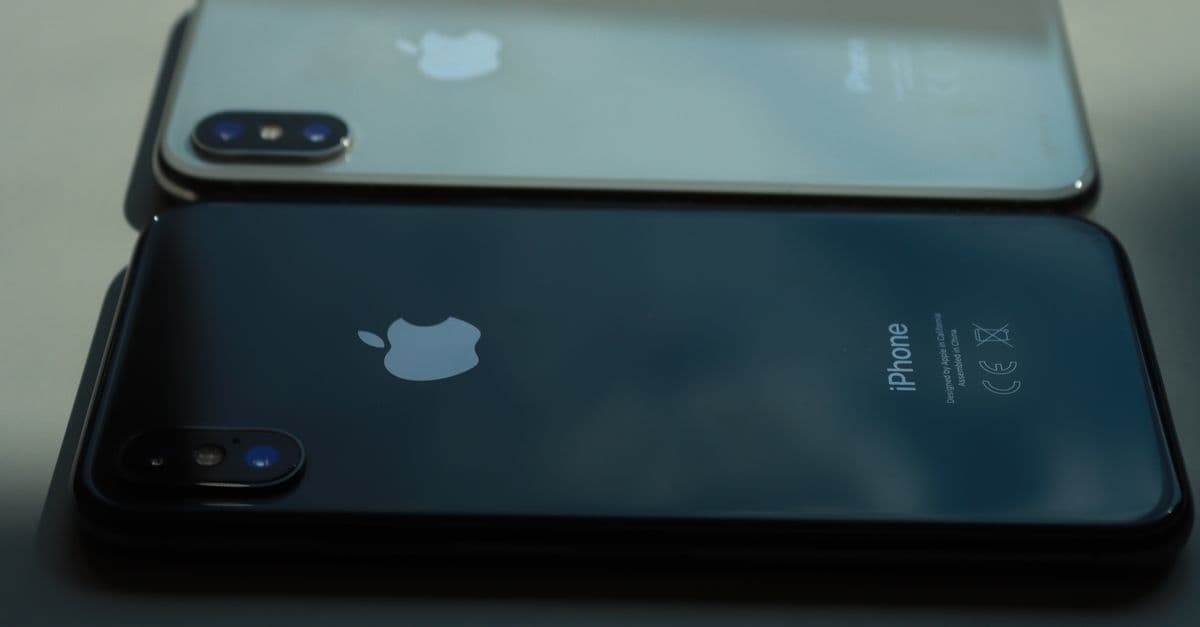
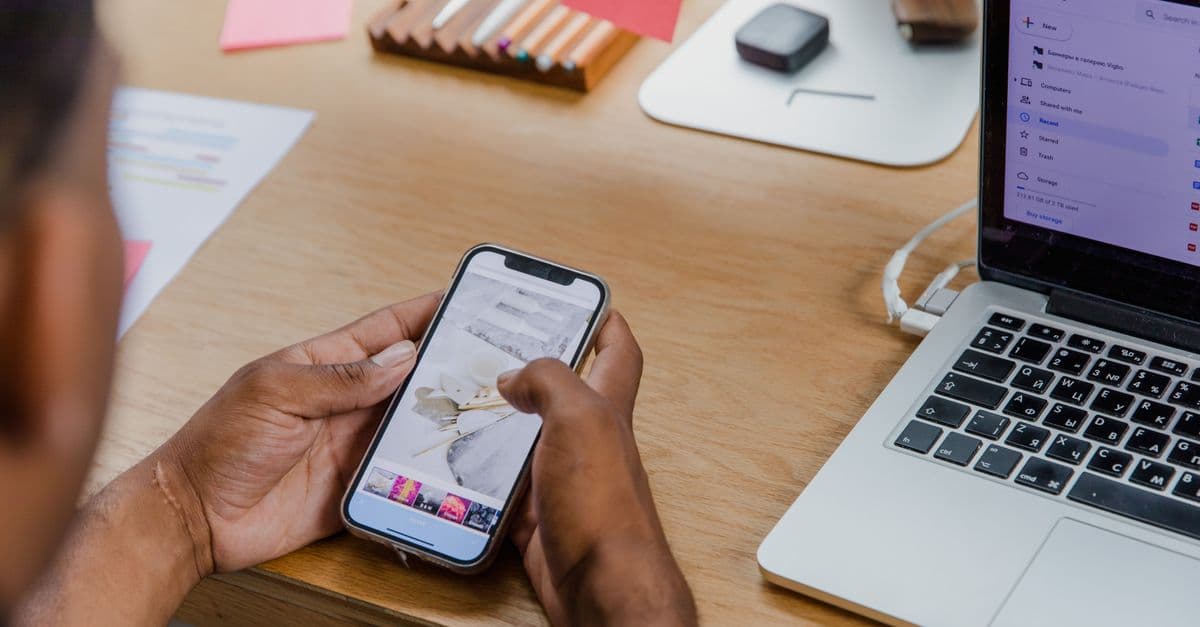
Photo: Efrem Efre / Pexels
On January 9, 2007, Steve Jobs walked onto a stage in San Francisco and announced three products: "a widescreen iPod with touch controls," "a revolutionary mobile phone," and "a breakthrough internet communications device." Then he paused. "These are not three separate devices. This is one device." The audience understood within seconds that the phone industry had just been reset. But the smartphone as a concept was not born that day — it was 15 years old.
Source: Apple Newsroom — Apple Reinvents the Phone with iPhone, January 9, 2007
What Makes a Phone "Smart"
A smartphone is a mobile telephone that integrates a general-purpose operating system capable of running third-party applications, combined with internet connectivity and a sensor array that extends beyond communication. The word captures a convergence rather than a single invention: telephony, pocket computing, mobile internet, and touchscreen interface engineering all had to reach maturity roughly simultaneously.
A feature phone makes calls and sends texts using fixed software. A smartphone runs a full operating system on which arbitrary software can be installed and executed, communicates across multiple wireless protocols, and typically includes a camera, GPS receiver, accelerometer, and multiple radios. The distinction is less about any one feature and more about the generality of the computing platform embedded in the device.
Definition: A smartphone is a handheld computing device that integrates cellular telephony with a general-purpose operating system, internet connectivity, and a touchscreen interface capable of running installable third-party software.
The Story: A 15-Year Run-Up to the iPhone
IBM Simon: The Prototype Nobody Remembers (1992–1994)
The IBM Simon Personal Communicator was announced at COMDEX on November 23, 1992, and sold commercially starting August 16, 1994. It was distributed by BellSouth Cellular in the United States and sold approximately 50,000 units before being discontinued in February 1995.
The Simon had a 4.5-inch black-and-white touchscreen (160 × 293 pixels) accepting stylus input, 1 MB of RAM, a 16 MHz processor, and a PCMCIA slot for installing additional software. It could send and receive faxes, email, and cellular pages. Its price was $899 with a two-year service contract, or $1,099 without one.
Source: IBM Simon — Wikipedia
By any functional definition, the Simon was a smartphone: it ran software applications, connected to the internet for messaging, and made cellular phone calls — decades before Apple's product. Its commercial failure had nothing to do with the concept being wrong. Battery life was approximately one hour. The device weighed over 510 grams (just over a pound). The cellular network it ran on was an analog AMPS system that would soon be obsolete. The hardware constraints of 1994 were simply incompatible with what the device was trying to be.
Source: History and Headlines — November 23, 1992: The First Smart Phone
| Year | Device | Significance |
|---|---|---|
| 1992 | IBM Simon (announced) | First device combining phone, PDA, email, fax |
| 1994 | IBM Simon (commercial release) | Sold to public; failed due to weight and battery life |
| 1999 | BlackBerry 850 | Push email; QWERTY keyboard; enterprise adoption |
| 2002 | BlackBerry 5810 | First BlackBerry with phone capability |
| 2002 | Palm Treo 180 | Combined Palm PDA with phone |
| 2007 | iPhone (original) | Multitouch screen; iOS; App Store model |
| 2008 | T-Mobile G1 (first Android) | Open platform; Google services integration |
| 2011 | Samsung Galaxy Nexus | Android matures; competitive with iOS ecosystem |
| 2019 | Samsung Galaxy Fold | First mass-market foldable smartphone |
| 2023 | On-device AI integration | Neural processing units in consumer devices |
BlackBerry and the Enterprise Era (1999–2007)
Research In Motion (RIM) released the BlackBerry 850 on January 19, 1999. It was not initially a phone — it was a two-way pager with a QWERTY keyboard and email capability. The name came from the small, rounded keys, which designers thought resembled blackberry drupelets.
The BlackBerry's defining technical feature was push email: messages were relayed directly from a corporate server to the device without the user needing to initiate a connection. For executives and lawyers accustomed to checking desktop email every 30 minutes, the always-on model was transformative. RIM's revenue rose 80% to $85 million in the year following the 850's launch.
Source: HISTORY — First BlackBerry device hits the market, January 19, 1999
By early 2010, BlackBerry devices held 43% of the US smartphone market. The device became so culturally embedded in professional life that it earned the nickname "CrackBerry" — a reference to how compulsively users checked it. The decline, when it came, was rapid: by 2013 BlackBerry held less than 3% of global smartphone market share. The iPhone had arrived.
Source: Britannica — BlackBerry
January 9, 2007: The iPhone Keynote
Jobs's announcement of the original iPhone at Macworld 2007 combined three hardware and software innovations that, separately, existed before Apple. The multitouch capacitive screen was technically known since the 1960s but had never been implemented in a consumer phone. The mobile operating system (initially called iPhone OS, later iOS) was a stripped version of Mac OS X. The App Store, which transformed the economics of the software industry, launched in July 2008 — a year after the phone.
What Apple contributed was integration: a processor fast enough to run a real operating system, a battery capable of lasting a full day, a screen large and precise enough to be used without a stylus, and a software architecture that made third-party development commercially viable. The original iPhone was released commercially on June 29, 2007, at $499 (4 GB model) or $599 (8 GB model) with a two-year AT&T contract.
Source: Apple Newsroom — Apple Reinvents the Phone with iPhone, January 9, 2007
The IBM Simon weighed 510 grams and had one hour of battery life in 1994. The iPhone launched in 2007 at 135 grams with up to 8 hours of talk time. The smartphone concept required 13 years of hardware miniaturization to become practical.
Android: The Open Counterweight (2008)
Google acquired Android Inc. in 2005 for approximately $50 million. Andy Rubin, Android's co-founder, had developed the platform originally for digital cameras before pivoting to mobile phones after recognizing the market opportunity.
The first Android device, the T-Mobile G1 (HTC Dream), launched on October 22, 2008. It ran Android 1.0, included the Google Play Store (then called Android Market), and featured a physical slide-out QWERTY keyboard alongside a touchscreen. It was thicker and less polished than the iPhone, but its open licensing model — available free to any manufacturer — proved decisive.
By allowing any hardware manufacturer to run Android, Google seeded a global competitive ecosystem that drove down device prices while rapidly expanding the addressable market. Samsung, HTC, Motorola, LG, and later Xiaomi, OPPO, and dozens of others could build Android phones without licensing a proprietary platform. The model succeeded: by 2013 Android held more than 70% of global smartphone market share, a position it has maintained since.
How a Smartphone Works
A smartphone is a layered engineering system. Understanding it means understanding what each layer does.
The Hardware Stack
The central processing unit in a modern smartphone is a system-on-a-chip (SoC) — a single piece of silicon integrating the main processor cores, a graphics processing unit, a neural processing unit (NPU), memory controllers, and radio modems. Apple's A-series chips and Qualcomm's Snapdragon series are the dominant examples. An NPU is specifically designed to accelerate machine learning inference, enabling on-device AI features without sending data to a remote server.
The screen is a capacitive touchscreen — typically AMOLED (Active-Matrix Organic Light Emitting Diode) in premium devices. Touch works by sensing changes in a grid of electrical capacitors embedded beneath the glass surface: where a conductive finger touches the screen, the local capacitance changes, and the device triangulates the touch position from multiple sensors.
The camera system in a modern smartphone contains two to five separate lenses with different focal lengths. The device's software computationally combines exposures from multiple sensors — a technique called computational photography — to produce images that no single lens element could capture on its own.
The Software Stack
Above the hardware sits the operating system: iOS or Android in the vast majority of devices. The OS manages hardware resources, provides APIs for applications, handles security sandboxing (preventing one app from accessing another's data), and controls the radios.
Above the OS sit applications — discrete software programs installed from a curated distribution store. The App Store model that Apple introduced in 2008 moved software distribution from physical media and individual downloads to a centralized marketplace with automatic updates and payment processing. Apple takes a 15–30% commission on App Store transactions, a revenue model that became the subject of antitrust scrutiny in both the United States and European Union.
The Apple-Samsung Patent War
The most expensive smartphone patent dispute in history began in April 2011, when Apple filed suit against Samsung in the Northern District of California, accusing the South Korean company of infringing design patents related to the iPhone's physical appearance and utility patents covering software interactions.
Apple's core argument was that Samsung had deliberately copied the iPhone's rounded-rectangle form factor, icon grid layout, and swipe-to-scroll behavior. Samsung filed counter-suits, accusing Apple of infringing its own patents on wireless communications standards. By late 2011, the companies were litigating approximately 20 cases in 10 countries.
In August 2012, a federal jury in San Jose returned a verdict largely in Apple's favor, awarding $1.049 billion in damages — the largest patent infringement award on record at the time. The jury found that Samsung had willfully infringed Apple's design and utility patents and had diluted Apple's trade dress related to the iPhone's distinctive appearance. Samsung's counter-claims were rejected.
Source: LegalClarity — Apple Inc. v. Samsung: Billion-Dollar Patent Ruling
The litigation continued through multiple appeals, retrials, and damage recalculations over the following six years. The companies reached a settlement in the United States in 2018. The case's long-term significance was twofold: it established that smartphone design patents carry enforceable commercial value, and it accelerated Samsung's effort to differentiate its hardware designs from Apple's in ways that are now visible in Samsung's product lines.
Unintended Consequences of the Smartphone
The smartphone's social consequences were neither designed nor entirely predictable at launch.
The attention economy. App designers discovered early that variable-reward notifications — the smartphone equivalent of a slot machine pull — drove engagement more effectively than any other mechanism. Push notifications, red badges, and social media feeds optimized for time-on-screen created behavioral loops that psychologists have studied as compulsive. The smartphone made the internet ambient and always accessible, which proved to be a design choice with consequences for sleep, concentration, and adolescent mental health that researchers are still quantifying.
Disrupted incumbent industries. The smartphone did not merely compete with existing products — it displaced entire categories. Standalone GPS devices (Garmin, TomTom), point-and-shoot cameras, portable media players, handheld gaming consoles, alarm clocks, and pocket calculators all saw their markets collapse within five to ten years of the iPhone's launch. Kodak, which had dominated photographic film, filed for bankruptcy in 2012 in part because the smartphone made casual photography a no-cost activity.
The mobile internet as the default internet. In high-income countries, most adults now access the web primarily on a smartphone rather than a desktop computer. In developing economies — across sub-Saharan Africa, South and Southeast Asia, and Latin America — the smartphone is often the first and only internet-connected device a household owns. Google and Facebook restructured their products around mobile-first usage in the early 2010s, and the advertising economics of the internet shifted accordingly.
Source: Pew Research Center — Mobile Technology and Home Broadband 2024
Where the Smartphone Stands Today
Global smartphone shipments reached 1.17 billion units in 2023, according to IDC data — a decline of 3.2% year over year attributed to macroeconomic conditions and elevated channel inventory. Apple led the market for the first time annually, shipping 234.6 million units (20.1% share). Samsung shipped 226.6 million units (19.4% share). Xiaomi, OPPO, and Transsion Holding held the next positions.
Source: IDC — Apple Grabs the Top Spot in the Smartphone Market in 2023, January 2024
The frontier in 2025 and 2026 is in two directions. Foldable smartphones — devices with screens that physically fold, effectively functioning as both a phone and a small tablet — launched commercially with the Samsung Galaxy Fold in 2019 and have expanded gradually, though remain a small fraction of overall shipments due to durability concerns and high prices. On-device AI, driven by NPUs powerful enough to run smaller language models locally without sending data to a cloud server, is being built into flagship devices across manufacturers as of 2025.
The On-Device AI Shift: 2024–2026
For the first fifteen years of the smartphone era, nearly every significant AI feature — voice assistants, translation, visual search — worked by shipping your data to a remote server, running a computation in a data center, and sending the result back. That model is changing. Between late 2023 and 2026, the leading smartphone manufacturers each moved to embed neural processing units (NPUs) powerful enough to run useful language models directly on the device, without a network connection and without data leaving the hardware.
The pivotal silicon arrived first. In October 2023, Qualcomm announced the Snapdragon 8 Gen 3 at its annual Snapdragon Summit, specifically advertising the chip's Hexagon NPU as capable of running large language models on-device. The NPU delivers AI tasks 98% faster and 40% more efficiently than the previous generation and can generate 15 tokens per second for on-device LLM inference — enough for real-time text generation. The chip launched in Android flagship phones in late 2023 and early 2024.
Source: Qualcomm — "Qualcomm Launches Premium Snapdragon 8 Gen 3 to Bring Generative AI to the Next Wave of Flagship Smartphones," October 2023. qualcomm.com
Google moved first at the software layer. In December 2023, Google pushed Gemini Nano — its smallest, most efficient language model — to the Pixel 8 Pro via a feature drop update. Running on the Tensor G3 chip, Gemini Nano powered two features: Summarize in Recorder (on-device meeting summarization) and Smart Reply in Gboard (contextual reply suggestions in messaging apps). Google explicitly positioned the Pixel 8 Pro as "the first smartphone with AI built in." When the Pixel 9 series launched in August 2024, Gemini Nano XS shipped on every model in the lineup — the first time Google embedded an on-device LLM across an entire phone family at launch, including multimodal capability to interpret images and audio locally.
Source: Google Blog — "Pixel 8 Pro — the first smartphone with AI built in — is now running Gemini Nano," December 2023. blog.google
Source: Google Blog — "14 new AI features in Google's Pixel 9 series devices," August 2024. blog.google
Samsung announced Galaxy AI at Galaxy Unpacked on January 17, 2024, shipping it with the Galaxy S24 series. The feature set included Live Translate (real-time two-way call translation), Circle to Search (gesture-driven visual search), and Generative Edit (AI-powered photo manipulation). Some Galaxy AI features run on-device; others route through cloud servers — Samsung did not always distinguish clearly between the two in its marketing, a distinction that matters for privacy and offline functionality.
Source: Samsung Global Newsroom — "Enter the New Era of Mobile AI with Samsung Galaxy S24 Series," January 2024. news.samsung.com
Apple announced Apple Intelligence at WWDC on June 10, 2024, as a suite of on-device and hybrid AI features built into iOS 18, iPadOS 18, and macOS Sequoia. The on-device processing requires an A17 Pro chip or any M-series Apple Silicon, which restricted initial compatibility to the iPhone 15 Pro and iPhone 15 Pro Max — a hardware gate that underscored the resource intensity of running AI locally. Apple's architecture runs most operations on-device but routes more demanding requests to its Private Cloud Compute infrastructure, which uses server-side Apple Silicon and is designed so that Apple itself cannot inspect the queries.
Source: Apple WWDC 2024 — Apple Intelligence announced June 10, 2024. techdefenders.com/apple-intelligence
Source: Apple Support — "How to get Apple Intelligence," support.apple.com/en-us/121115
The practical ceiling for on-device models in 2025 and 2026 sits roughly in the 3 billion parameter range for devices running without throttling. The math is not mysterious: a 3B parameter model quantized to 4-bit precision requires approximately 1.5 GB of RAM — workable on a flagship phone with 8–12 GB. A 7B model at the same precision needs around 3.5 GB and risks thermal throttling during sustained inference, because the memory bandwidth gap between mobile SoCs (50–90 GB/s) and data center GPUs (2,000–3,000 GB/s) means the NPU runs at a fraction of a server's throughput. The phone gets warm; performance degrades. Gemini Nano, Apple's on-device models, and comparable Android implementations are all designed around this constraint. The result is models that handle summarization, reply suggestions, and image description well but struggle with the multi-step reasoning tasks that larger server-side models handle comfortably.
Source: Semiengineering — "The On-Device LLM Revolution," semiengineering.com
Source: arxiv.org — "A Performance Evaluation of a Quantized Large Language Model on Various Smartphones," arxiv.org/abs/2312.12472
Q: Who invented the first smartphone? IBM and BellSouth created the IBM Simon Personal Communicator, announced in November 1992 and sold publicly from August 1994. It combined a touchscreen, phone capability, email, fax, and installable software — meeting any functional definition of a smartphone. It sold approximately 50,000 units before being discontinued in February 1995.
Q: When did Steve Jobs announce the iPhone? Steve Jobs announced the original iPhone at the Macworld Conference and Expo in San Francisco on January 9, 2007. The device went on sale commercially on June 29, 2007. The App Store, which transformed the device's software economics, launched on July 10, 2008.
Q: What is Android and who made it? Android is a mobile operating system developed by Android Inc., which Google acquired in 2005 for approximately $50 million. Andy Rubin co-founded Android. The first Android phone, the T-Mobile G1, launched October 22, 2008. Google licenses Android free to hardware manufacturers under an open-source model, which is why it dominates global market share.
Q: How much did Apple win in the Apple vs. Samsung patent case? In August 2012, a federal jury awarded Apple $1.049 billion in damages — the largest patent infringement award on record at the time. The case, filed in 2011, centered on Samsung allegedly copying the iPhone's design and software interactions. The two companies reached an out-of-court settlement in the United States in 2018.
Q: How many smartphones are sold each year? According to IDC data, global smartphone shipments were 1.17 billion units in 2023. Annual shipments have been broadly in the 1.2–1.4 billion range since the mid-2010s, fluctuating with macroeconomic conditions.
Q: What is an on-device AI smartphone? An on-device AI smartphone has a neural processing unit (NPU) — a specialized processor designed to run machine learning models efficiently — embedded in its system-on-a-chip. This allows AI features like voice recognition, image processing, real-time translation, and generative text to run locally without sending data to a remote server, improving both speed and privacy. Major manufacturers began advertising NPU specifications as a key selling point from 2023 onward.
The Takeaway
The smartphone's history is a case study in the gap between invention and viability. IBM's Simon proved the concept in 1994; the hardware constraints of that era made it commercially irrelevant. BlackBerry proved the corporate use case. The iPhone proved that design and software polish could move the device from a business tool to a mass consumer product. Android proved that an open platform could scale globally in ways no proprietary system could match. What followed — the app economy, the attention economy, the collapse of several adjacent hardware categories, and the restructuring of internet access around mobile devices — was the consequence of a convergence that took 15 years to become technically possible and about five years to rearrange large parts of the economy once it arrived.
Read next:
Weekly digest
Stay ahead of the curve
Get the best science, AI, and tech stories delivered to your inbox every week. No spam — unsubscribe any time.
About the Author
SciHub101 is an independent science and technology publication founded and edited by Buğra Sözeri, a software engineer and app developer based in Türkiye. Articles are drafted against peer-reviewed literature and primary sources, fact-checked, and edited by a human before publication. Where we compare products, anything built by our own team is labelled as such — see the editorial guidelines and About page for how corrections and disclosures work.
Related Articles

The Stethoscope: How a Rolled Tube of Paper Became Medicine's Most Iconic Tool
René Laennec invented the stethoscope in 1816 from rolled paper to examine a patient's heart. Two centuries later, AI is listening through the same basic principle.
The Sewing Machine: Howe, Singer, and the First Patent War
The sewing machine's full history: Elias Howe's 1846 lockstitch patent, Isaac Singer's 1851 improvements, the first US patent pool in 1856, and today's global garment industry.
How to Optimize Your iPhone Battery Life in 2026: Science-Based Tactics
iPhone batteries degrade through cyclical charging—the repeated charge and discharge cycle that every rechargeable lithium battery experiences. After 500 full charge cycles, most iPhone batteries retain 80 percent capacity; after 1,000 cycles, 60 percent. Battery degradation is not a defect; it is the thermodynamic cost of using electrochemical energy storage. However, specific charging habits and software settings can extend battery lifespan and maximize daily runtime. The tactics are science-based: keeping batteries cool, charging to 80 percent rather than 100 percent, avoiding deep discharges, and managing background processes. Most battery drain myths are false (closing apps does not help; wi-fi does not drain faster than LTE). This guide separates fact from myth, explains the science of lithium-ion batteries, and provides specific settings and habits that work.
Smartphones: Computers in Your Pocket
Smartphones evolved from simple phones to pocket computers. iPhone's touchscreen revolutionized interface design. Mobile computing became dominant.
How Smartphones Changed the World
In less than 20 years, smartphones transformed how billions of people communicate, navigate, shop, and think.