The Air Conditioner: The Invention That Reshaped Where Humans Can Live
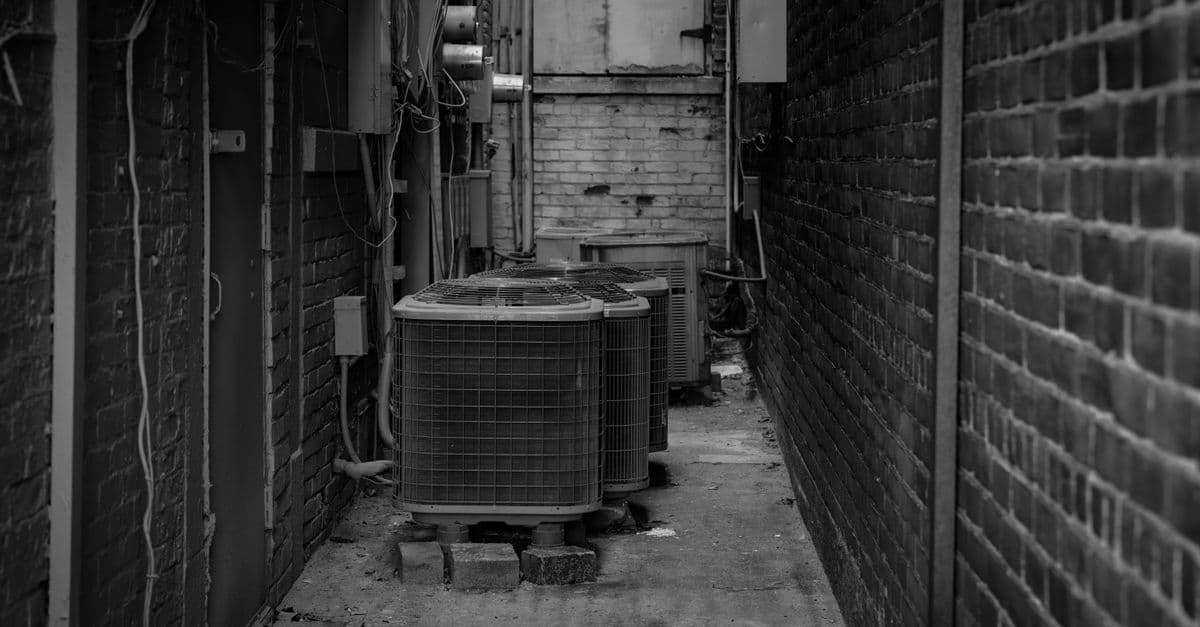
Photo: Chris F / Pexels
On July 17, 1902, a 25-year-old engineer named Willis Carrier signed off on a set of mechanical drawings for a system designed to fix a humidity problem at a Brooklyn printing plant. He was not trying to make people comfortable. He was trying to keep paper from warping. The machine he designed that morning — the world's first modern air conditioning system — would go on to reverse centuries of human settlement patterns, enable the demographic transformation of the American South, make indoor labor tolerable in tropical regions, and place a device now generating roughly 10% of global electricity consumption inside 2 billion homes worldwide. The air conditioner may also be accelerating the very climate problem that makes it increasingly necessary.
Why Humidity Was Destroying the Printing Business
The Sackett-Wilhelms Lithography and Printing Company in Brooklyn printed high-quality, multi-color commercial materials. Multi-color printing requires multiple passes through a press: a sheet of paper must register precisely against each successive color plate, with tolerances measured in fractions of a millimeter. The problem was seasonal humidity.
In New York's humid summers, paper absorbed moisture from the air, swelling slightly and becoming dimensionally unstable. Between printing passes, the paper would change size and shape. Colors that aligned perfectly in the dry months would print out of register in summer, producing blurred colors, ghosting, and waste. The printing company was losing money to the weather.
The Buffalo Forge Company, where Carrier worked as a junior engineer, received the contract to solve the problem. Carrier's approach was systematic: to control humidity, you need to control the temperature at which air contacts a cold surface, because air releases its moisture when cooled to its "dew point." His solution used chilled coils through which air was circulated. The coils cooled the air below its dew point, causing water vapor to condense on the coils' surface. The air that emerged was dry and cool.
Source: Willis Carrier official company history — "1876-1902: The Invention that Changed the World"; Library of Congress Research Guides — "Patent for the Air Conditioner Issued to Willis H. Carrier" (February 2022).
The system went operational in the summer of 1902. By October 1903, Carrier wrote to his home office that "the cooling coils which we sold this company have given excellent results during the past summer." Paper stayed flat. Colors registered. The printing plant's productivity improved measurably.
Carrier had solved a manufacturing problem. What he had also done — though neither he nor his employer fully recognized it at the time — was demonstrate that the climate inside a building could be mechanically decoupled from the climate outside it.
The Story Behind the Discovery: A Train Station Epiphany
Carrier received US Patent No. 808,897 for his "Apparatus for Treating Air" on January 2, 1906. But the scientific formalization of what he had done — the mathematical theory that would allow his system to be engineered for any climate and any application — came to him on a fog-shrouded train platform in Pittsburgh in 1902.
As Carrier later described it, he was standing in the Pittsburgh train station watching fog move through the station and realized he was seeing air close to 100% relative humidity — air that had been cooled almost exactly to its dew point. He mentally reversed the process: if he knew the temperature and humidity he wanted to deliver to a space, he could calculate precisely what temperature the cooling coils needed to reach to achieve it, and how much water they would need to remove from the air per hour.
This insight led to what Carrier called his "Rational Psychrometric Formulae," published in 1911 and presented to the American Society of Mechanical Engineers. The paper established the mathematical relationship between dry-bulb temperature, wet-bulb temperature, dew point, and relative humidity — the psychrometric equations that every HVAC engineer uses today. It transformed air conditioning from an improvised industrial fix into an engineered science.
Source: Willis Carrier official company history — timeline page; Empire State Plaza / NY State (official historical record) — "First Form of Modern Air Conditioning."
Think of Carrier's 1902 machine as a prototype and his 1911 paper as the instruction manual that allowed anyone to build one. Before the paper, each installation was custom-engineered through trial and error. After it, engineering firms could calculate what system any space required.
The Timeline of Air Conditioning
| Year | Event |
|---|---|
| 1902 | Willis Carrier designs first modern air conditioning system for Sackett-Wilhelms, Brooklyn |
| 1906 | Carrier receives US Patent No. 808,897 — "Apparatus for Treating Air" |
| 1911 | Carrier publishes Rational Psychrometric Formulae, formalizing the engineering science |
| 1914 | First residential air conditioning installation (Charles Gates mansion, Minneapolis) |
| 1922 | Carrier invents centrifugal chiller — makes large-scale commercial AC feasible |
| 1925 | First theater air conditioning (Rivoli Theatre, New York) — summer blockbuster season born |
| 1929 | First residential window unit introduced (Frigidaire division of General Motors) |
| 1931 | H.H. Schultz and J.Q. Sherman patent self-contained room cooler — predecessor to window unit |
| 1939 | Packard introduces first automobile air conditioning |
| 1945 | Frigidaire introduces self-contained window unit at $350 (≈$5,600 today) |
| 1950s | Residential AC spreads rapidly in the American South and Southwest |
| 1960s | AC adoption drives Sun Belt population boom; Houston, Phoenix, Las Vegas grow rapidly |
| 1974 | Rowland and Molina publish CFC-ozone depletion paper |
| 1987 | Montreal Protocol bans CFC refrigerants |
| 1992 | R-134a (HFC) replaces R-12 CFC in most applications |
| 2016 | Kigali Amendment to Montreal Protocol targets HFC phase-down |
| 2024 | 2 billion air conditioners in operation globally; AC uses roughly 10% of global electricity |
How Air Conditioning Actually Works
The basic air conditioning cycle is the same as the refrigeration cycle described in the companion article on the refrigerator. Both exploit a fundamental property of refrigerants: they absorb heat when they evaporate from liquid to gas, and release heat when they condense from gas to liquid.
An air conditioner moves heat from inside a building to outside it. Here is the cycle:
The evaporator coil sits inside the building, filled with a refrigerant at low pressure. Warm indoor air blows across the coil. The refrigerant absorbs heat from the air and evaporates — transitions from liquid to gas. The air leaving the coil is cooler and drier (because cold coils also condense water vapor).
The compressor pumps the gaseous refrigerant from low pressure to high pressure. Compression raises the refrigerant's temperature significantly — the gas is now hot and at high pressure.
The condenser coil sits outside the building. The hot, high-pressure gas flows through it, and a fan blows outdoor air across the coil. The refrigerant releases its heat to the outdoor air and condenses back to liquid.
The expansion valve reduces the liquid refrigerant's pressure rapidly, cooling it to the low-pressure liquid state needed to enter the evaporator. The cycle repeats.
Source: Carrier Corporation — "Keeping the World Cool," technical explainer; Willis Carrier company history.
Think of it as a heat pump operating in reverse: the air conditioner is not creating cold, it is moving heat. Every British Thermal Unit (BTU) of heat removed from inside the building is deposited outside it — plus the heat generated by the compressor doing work. An air conditioner running on a hot day is actively making the outdoor environment hotter, a consequence with implications at urban scale.
The coefficient of performance (COP) of a modern residential air conditioner is typically between 2.5 and 5: for every watt of electrical energy consumed, the system moves 2.5 to 5 watts of heat from inside to outside. This is why heat pumps are more energy-efficient than electric resistance heating — a heat pump moving heat into a building in winter can deliver three to five times more warmth per unit of electricity than a resistance heater.
The People Involved
Willis Haviland Carrier (1876–1950)
Carrier was born in Angola, New York, and studied mechanical engineering at Cornell University, graduating in 1901. His Brooklyn printing plant project came within a year of graduation. Over the following decades, he built an organization around his invention: Carrier Engineering Corporation was founded in 1915 with six fellow engineers who had left Buffalo Forge. The company survived the Great Depression partly because Carrier convinced his partners to bet on large-scale commercial installations — the centrifugal chiller he invented in 1922 was critical to this strategy.
The centrifugal chiller replaced the reciprocating (piston-driven) compressors of early systems with a centrifugal compressor — essentially a turbine running in reverse — that was far better suited to large-scale applications such as department stores, office buildings, and eventually entire skyscrapers. Carrier unveiled the centrifugal chiller on May 22, 1922, in Newark, New Jersey, before 300 guests.
Source: Carrier Corporation — "Carrier Celebrates 100th Anniversary of Centrifugal Chiller" (2022); ACR News (2022) — centrifugal chiller anniversary account.
Carrier lived to see air conditioning transform American consumer culture — movie theaters, department stores, hotels, and eventually homes. He died in 1950, when residential air conditioning was just beginning its explosive postwar growth.
Stuart Cramer and the Term "Air Conditioning"
The term "air conditioning" was coined not by Carrier but by Stuart Cramer, a textile engineer in North Carolina who was using humidity control systems in cotton mills. Cramer's 1906 paper used the phrase "air conditioning" to describe the control of temperature, humidity, and air quality collectively. Carrier adopted the term. Cramer's contribution to the vocabulary of the field is rarely acknowledged.
The Centrifugal Chiller and the First Movie Theaters
The centrifugal chiller mattered because it solved a scale problem. Reciprocating compressors — the kind in early refrigeration systems — were mechanically limited in the amount of refrigerant they could move per unit time. Scaling up required multiple compressors in parallel, which was expensive and maintenance-intensive. The centrifugal compressor scaled up smoothly: a larger impeller moved more refrigerant, and the relationship between size and capacity was predictable from first principles.
The first public building to be air-conditioned in a way that created a genuine consumer experience was the Rivoli Theatre in New York, cooled by Carrier equipment for the summer season of 1925. The reaction was not subtle. People who had avoided summer indoor entertainment came to theaters specifically for the cool air, creating the phenomenon of the summer blockbuster — large-audience commercial entertainment concentrated in the summer months — that has structured Hollywood economics ever since.
Source: Carrier Corporation — "History of Innovation."
Department stores followed theaters. Hotels followed department stores. By the late 1920s, air conditioning had proven its commercial value decisively in every large-scale application to which it had been applied.
Patent and Priority Disputes
Carrier's patents were defensible because his contributions were specific and documented. The 1906 patent for the apparatus, the 1911 psychrometric formulae, and the 1922 centrifugal chiller patents formed a coherent portfolio that gave Carrier Engineering a substantial competitive advantage through the 1920s and 1930s.
The contested terrain was residential applications. General Electric, Westinghouse, and the Frigidaire division of General Motors all entered the residential cooling market in the late 1920s, each with proprietary designs that navigated around Carrier's core patents. Frigidaire introduced a self-contained room cooler in 1929. H.H. Schultz and J.Q. Sherman independently patented a self-contained window-mounted unit in 1931 that is the clear ancestor of the modern window air conditioner.
The window unit democratized air conditioning in a way that the large central system never could: it required no ductwork, no building modification, and could be installed by a homeowner. At $350 in 1945 (approximately $5,600 in 2024 dollars), it was expensive but within reach of middle-class American households in the postwar economic expansion.
Source: Willis Carrier FAQ page — company history of residential development.
Unintended Consequences: The Sun Belt, CFCs, and the Climate Paradox
The air conditioner's most consequential unintended effect was demographic. Before widespread residential air conditioning, the American South and Southwest were climatically inhospitable for year-round sedentary indoor work. Cities like Houston, Phoenix, Miami, and Las Vegas had small populations limited by the summer heat. Air conditioning removed that constraint. Another invention with far-reaching side effects is artificial fertilizer.
Between 1950 and 2000, the Sun Belt — broadly the southern tier of US states — grew from roughly 28% of the US population to over 40%. Phoenix grew from 106,000 people in 1950 to 1.3 million in 2000. Las Vegas grew from 24,000 to 478,000. Houston grew from 596,000 to 1.95 million. This demographic shift reshaped American politics, economics, and culture in ways that are still unfolding. The air conditioner did not cause all of this growth, but without it, the growth was climatically impossible.
Source: VTDigger historical analysis; various US Census Bureau records for Sun Belt city populations.
The refrigerant story is a cautionary tale in regulatory science. Early air conditioning and refrigeration systems used refrigerants including ammonia, sulfur dioxide, and methyl chloride — effective but toxic. Chlorofluorocarbons (CFCs), developed by Thomas Midgley Jr. at General Motors in 1928, seemed like the ideal solution: they were chemically inert, non-toxic, non-flammable, and effective refrigerants. By the 1960s and 1970s, CFCs were used in virtually all air conditioning and refrigeration systems worldwide.
In 1974, chemists F. Sherwood Rowland and Mario Molina published a paper in Nature demonstrating that CFCs, once released into the atmosphere, would migrate to the stratosphere and catalytically destroy ozone molecules. A single CFC molecule, they calculated, could destroy thousands of ozone molecules before being deactivated. The stratospheric ozone layer, which absorbs ultraviolet-B radiation, was at risk.
Source: Nature (1974) — Rowland and Molina, "Stratospheric sink for chlorofluoromethanes: chlorine atom-catalysed destruction of ozone."
The discovery of the Antarctic ozone hole in 1985 confirmed the theory. The Montreal Protocol, signed in 1987 and ratified by every nation on earth, phased out the production and use of CFCs. The hydrofluorocarbons (HFCs) introduced as replacements do not damage the ozone layer — but they are potent greenhouse gases, with global warming potentials 140 to over 11,000 times that of carbon dioxide on a 100-year time horizon.
The climate paradox is therefore precise: HFC refrigerants currently account for roughly 1–3% of global greenhouse gas emissions. The Kigali Amendment to the Montreal Protocol (2016) commits signatory nations to phase down HFC production and use by 80% by 2047, replacing them with low-global-warming-potential alternatives. But air conditioning demand is growing fastest in the hottest regions of the world — South and Southeast Asia, Sub-Saharan Africa, the Middle East — where rising temperatures are making cooling a survival necessity rather than a comfort luxury.
Source: Knowable Magazine (2022) — "Rethinking air conditioning amid climate change"; Nature Communications (2026) — "Rising Air-Conditioning Use Intensifies Global Warming."
The feedback loop is not theoretical. Air conditioning removes heat from buildings and deposits it outdoors, raising outdoor ambient temperatures. Higher outdoor temperatures increase the demand for air conditioning. The electricity consumed by air conditioners is generated largely by fossil fuels, releasing CO₂ that warms the global climate. Warmer climates require more air conditioning. The machine that makes hot environments livable is a meaningful contributor to making the environment hotter.
The Global Picture Today
Approximately 2 billion air conditioning units are in operation worldwide as of 2024. The International Energy Agency (IEA) estimates that air conditioning accounts for roughly 10% of global electricity consumption — approximately 2,000 TWh per year. In some regions, the figure is higher: in the United States, space cooling accounts for around 17% of residential electricity use.
The growth is concentrated where it has always been most justified climatically. Southeast Asia, India, the Middle East, and Africa together represent the largest growth markets. India alone, where summer temperatures regularly exceed 45°C (113°F) in major cities, is projected to install 200 million new air conditioning units by 2040. The energy and refrigerant implications of this growth are one of the defining infrastructure and environmental challenges of the coming decades.
Source: IEA — "The Future of Cooling" (2018); Knowable Magazine — climate paradox analysis.
Technological responses include passive cooling architecture (designs that reduce heat gain without mechanical energy), thermally active building systems, district cooling networks (large centralized chillers serving multiple buildings more efficiently than individual units), and next-generation refrigerants with near-zero global warming potential. Progress is real but uneven: the efficiency of the best commercial air conditioners has improved by roughly 60% since 1990, but this efficiency gain has been more than offset by the growth in installed units and usage hours.
FAQs
Q: Did Willis Carrier invent air conditioning to cool people or machines? A: Machines, specifically paper. The original 1902 installation at the Sackett-Wilhelms Lithography Company in Brooklyn was designed to control humidity to prevent paper from warping during multi-color printing. The goal was dimensional stability of the paper stock, not human comfort. Comfort cooling came later, when Carrier and others recognized the commercial potential of applying the technology to theaters, department stores, and eventually homes.
Q: How does an air conditioner actually create cold air? A: It does not create cold — it moves heat. A refrigerant circulates through a closed loop: it evaporates inside the building (absorbing heat from the indoor air and cooling it), is compressed and condensed outside (releasing that heat to the outdoor air), and returns to start the cycle. The indoor air is cooled because heat is extracted from it; the outdoor air is warmed because that heat is deposited there. The air conditioner is a heat-moving machine, not a cold-producing one.
Q: What are CFCs and why were they banned? A: CFCs (chlorofluorocarbons) were synthetic refrigerants developed in the late 1920s that seemed ideal — non-toxic, non-flammable, chemically stable, and effective. They were used in virtually all air conditioning and refrigeration systems from the 1950s through the 1980s. In 1974, chemists Rowland and Molina demonstrated that CFCs, once released into the atmosphere, migrate to the stratosphere and catalytically destroy ozone. The discovery of the Antarctic ozone hole in 1985 confirmed this. The 1987 Montreal Protocol banned CFC production and use, and they have been largely replaced by HFCs — which do not damage the ozone layer but are potent greenhouse gases.
Q: What is the climate paradox of air conditioning? A: Air conditioning consumes roughly 10% of global electricity, most of which is generated by burning fossil fuels, which release CO₂ and warm the global climate. Warmer climates increase demand for air conditioning. The HFC refrigerants used in modern systems are also potent greenhouse gases when they leak. The machine that makes hot environments livable contributes materially to making the environment hotter — a feedback loop that makes the long-term sustainability of current cooling approaches genuinely uncertain.
Q: How did air conditioning change American demographics? A: Before widespread residential air conditioning, the American South and Southwest were climatically hostile to year-round sedentary indoor work and living. The rapid spread of residential AC in the 1950s and 1960s made cities like Phoenix, Houston, Miami, and Las Vegas tolerable in summer. The Sun Belt's population grew from roughly 28% of the US total in 1950 to over 40% by 2000. Phoenix, for example, grew from 106,000 people in 1950 to over 1.3 million by 2000. Air conditioning did not create the Sun Belt alone, but without it, this scale of growth was not climatically possible.
Q: How many air conditioners are there worldwide and who has the most? A: Approximately 2 billion units are in operation globally as of 2024. The United States has the highest current penetration rate — around 90% of homes have some form of air conditioning. China has the largest installed base by absolute numbers. The fastest growth is in South and Southeast Asia, India, and Sub-Saharan Africa, where rising incomes and rising temperatures are driving installation rates that will shape global energy demand for decades.
The Takeaway
Willis Carrier signed his drawings on a July morning in 1902 to solve a paper-warping problem for a print shop. What he actually produced was a technology that decoupled human settlement from climate — that made the previously uninhabitable livable, the previously unproductive productive, and the previously brief bearable. The machine that followed from those drawings is now essential infrastructure on a planetary scale, consuming a tenth of humanity's electrical output, and confronting us with an uncomfortable arithmetic: the device we built to manage the consequences of a warming world is also, at scale, one of its contributors. That is not an argument against air conditioning. It is an argument for building it better.
Read next:
Follow new articles
Add SciHub101 to your feed reader to see new science and technology stories.
About the Author
SciHub101 is an independent science and technology publication founded and edited by Buğra Sözeri, a software engineer and app developer based in Türkiye. AI tools assist with drafting and research. Source documentation in the existing archive is uneven, and articles are being reviewed and corrected. The Editorial Team byline identifies editorial responsibility; it does not certify specialist or independent human review. Where we compare products, anything built by our own team is labelled as such — see the editorial guidelines and About page for how corrections and disclosures work.
Related Articles

The Airplane: Wright Brothers, Kitty Hawk, and the Patent War That Shaped Aviation
How Orville and Wilbur Wright achieved controlled powered flight on December 17, 1903 at Kitty Hawk — and how their patent war nearly strangled the industry they created.
The Lithium-Ion Battery: How Three Scientists Powered the Wireless Age
The lithium-ion battery's full history: Whittingham's 1976 Exxon work, Goodenough's LiCoO2 breakthrough, Yoshino's 1985 prototype, the 2019 Nobel Prize, and today.
Willis Carrier: The Engineer Who Invented Modern Air Conditioning
Willis Carrier invented the first modern air conditioning system in 1902 to solve a humidity problem at a Brooklyn printing plant. His psychrometric equations still govern HVAC design today.

How Does a Refrigerator Work? The Cool Science Behind Everyday Chill
Refrigerators don't make cold — they move heat out of one place into another. Here's how the four-step refrigeration cycle keeps your food fresh, and why it works.
Battery Invention: From Volta Pile to Lithium-Ion
The battery begins with Volta's pile, but modern batteries evolved through chemistry, materials, portability, and rechargeable systems.

The Mechanical Clock: How Humanity Learned to Slice Time
From the verge escapement of 1275 to atomic clocks accurate to one second in 300 million years — the 750-year story of how timekeeping reshaped civilization.