The Mechanical Clock: How Humanity Learned to Slice Time
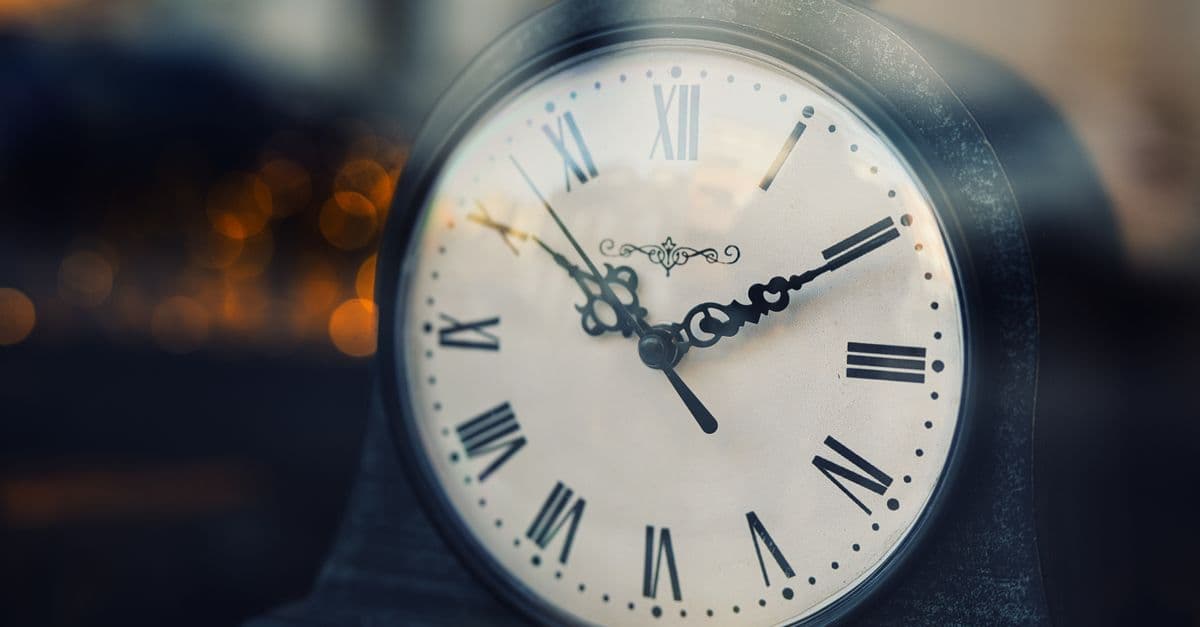
Photo: ᛟᛞᚨᛚᚹ ᚨᚱᚲᛟᚾᛊᚲᛁ / Pexels
The question "what time is it?" is so ordinary it barely registers as a question. But for most of human history, no one could answer it with precision, and the inability to do so had profound consequences: agricultural communities planted at the wrong seasons, religious communities prayed at imprecise hours, and navigators on open ocean had no way to know where on earth they were standing. The mechanical clock, which emerged in Europe sometime around 1275, was not merely a convenience. It was a reorganization of how human society understood and coordinated itself — and one specific refinement of it, a pocket-watch built by a self-taught carpenter in the 18th century, saved more sailors' lives than any other instrument in maritime history.
What Timekeeping Looked Like Before the Escapement
Time had been measured before the mechanical clock — just not precisely. Water clocks (clepsydrae) measured the flow of water from one vessel to another, achieving rough accuracy over hours but drifting significantly over longer periods. Sundials worked in daylight and clear weather. Hourglasses were reliable for fixed intervals but required constant tending. Candle clocks burned at known rates.
All of these systems share a fundamental limitation: they measure time through a continuous process — water flowing, wax burning, sand falling. Continuous processes are hard to divide precisely, easy to perturb (a gust of wind, a change in temperature, a slight tilt), and impossible to pause and restart cleanly. A water clock that runs five minutes fast at dawn might run four minutes slow by afternoon if the water temperature changes.
Source: Wikipedia — "History of timekeeping devices," citing primary sources in the history of horology; Britannica — "Verge escapement."
What medieval European clockmakers needed was a mechanism that measured time not continuously but in discrete steps — a way to divide the continuous flow of a falling weight or an unwinding spring into uniform, countable intervals. That mechanism was the escapement.
How the Verge Escapement Changed Everything
The verge escapement — "verge" from the Latin virga, a rod — emerged in Europe sometime around 1275, though the exact date and inventor are unknown. The earliest clear written reference is from 1271, when an astronomer named Robertus Anglicus described clockmakers attempting to build such a device; by 1300, mechanical escapement clocks clearly existed. Richard of Wallingford described one in detail in 1327 for a clock at St. Albans Abbey.
The mechanism works like this: a toothed crown wheel (the escape wheel) is driven by a falling weight through a gear train. A vertical shaft — the verge — has two small metal flags (pallets) attached to it at angles. As the crown wheel turns, its teeth catch the upper pallet and push the verge to rotate. The lower pallet then catches a tooth on the opposite side, stopping the wheel. The verge rocks back, releasing the lower pallet, and the crown wheel advances one more tooth. The cycle repeats.
Think of it as a controlled stutter: instead of the weight driving the gear train freely (which would send the hands spinning uselessly fast), the verge forces the system to advance one tooth at a time, with each tooth-click representing one unit of time. The gear ratios translate these clicks into the sweep of an hour hand.
The verge was not accurate by modern standards. Early tower clocks might gain or lose 15 minutes per day, and some early public clocks required daily adjustment against sundials. But "15 minutes per day" is a revolution over "two hours per day" — and for medieval society, whose primary timekeeping need was to divide the day into canonical hours for prayer, this was sufficient.
Source: American Physical Society (APS News, 2017) — "June 16, 1657: Christiaan Huygens Patents the First Pendulum Clock"; History of Information (2022) — "Huygens Invents the Pendulum Clock, Increasing Accuracy Sixty Fold."
The verge's key contribution was conceptual: it demonstrated that continuous motion could be divided into discrete, countable steps. Every subsequent timekeeping improvement — pendulum, balance spring, quartz oscillator, atomic resonance — is a refinement of this basic insight.
Galileo's Observation and Huygens's Revolution
The next great step came from an observation Galileo Galilei reportedly made in 1583, while attending mass in the Pisa Cathedral. He noticed a chandelier swinging back and forth and timed the oscillations against his own pulse. The chandelier — whether it was swinging in large arcs or small ones — always seemed to take the same amount of time to complete one swing.
Galileo had observed what became known as the isochronism of the pendulum: for small angles of swing, the period of a pendulum depends on its length, not on the amplitude of its swing. A pendulum 99.4 cm (39.1 inches) long swings with a period of almost exactly two seconds. Change the length, and you change the period with mathematical precision.
Galileo never built a pendulum clock before his death in 1642, though his son Vincenzio attempted a design based on his notes. The practical realization fell to Christiaan Huygens, a Dutch mathematician and natural philosopher, who built the first successful pendulum clock in 1656 and patented it the following year.
The improvement was dramatic. Where a verge escapement might lose or gain 15 minutes per day, Huygens's pendulum clock lost or gained approximately 15 seconds per day — a 60-fold improvement in accuracy. This was not merely quantitative: it made precise timekeeping available not just to church towers and royal courts but potentially to any sufficiently skilled clockmaker.
Source: History of Information (2022) — "Huygens Invents the Pendulum Clock, Increasing Accuracy Sixty Fold"; APS News (2017) — patent date confirmation.
Huygens also developed the balance spring (hairspring) for portable watches in 1675, applying the same oscillating-regulator principle to a device that could work horizontally and in a pocket. The balance spring made accurate portable clocks possible for the first time. It also set up the century's most urgent and consequential timekeeping challenge.
The Timeline of Major Timekeeping Milestones
| Year | Event |
|---|---|
| c. 1271 | First written references to attempts at mechanical escapement in Europe |
| c. 1275–1300 | Verge escapement clock in use in European monasteries and towers |
| 1327 | Richard of Wallingford describes his clock at St. Albans Abbey in detail |
| 1583 | Galileo observes pendulum isochronism at the Cathedral of Pisa |
| 1656 | Christiaan Huygens builds and patents first pendulum clock |
| 1675 | Huygens develops the balance spring for portable watches |
| 1714 | British Parliament passes the Longitude Act, offering £20,000 prize |
| 1735 | John Harrison completes H1, his first sea clock |
| 1759 | Harrison completes H4 — a pocket watch accurate to within 5 seconds over 81 days at sea |
| 1761 | H4's first sea trial to Jamaica; longitude problem effectively solved |
| 1773 | Harrison receives final prize money after King George III intervenes |
| 1927 | Warren Marrison and J.W. Horton build first quartz clock at Bell Labs |
| 1955 | Louis Essen builds first accurate cesium atomic clock at NPL, UK |
| 1967 | Second redefined in terms of cesium atomic transitions |
| 1994 | GPS system fully operational — atomic clocks become infrastructure |
| 2013 | Optical lattice clocks achieve accuracy of 1 second in 300 million years |
John Harrison and the Longitude Problem: The Greatest Navigation Crisis in History
In the 18th century, longitude was unsolvable at sea. Latitude was easy — the angle of the sun or stars above the horizon gave a reliable reading anywhere on earth. But longitude required knowing the time difference between your current position and a reference meridian. Every four minutes of time difference corresponded to one degree of longitude. The problem: an accurate clock was needed to know the time at the reference meridian. And no clock accurate enough existed.
The consequences were not abstract. On October 22, 1707, a British Royal Navy fleet under Admiral Sir Cloudesley Shovell misjudged its position by more than 30 miles and ran onto the Scilly Isles off the southwest tip of England. Four ships sank. Over 1,400 sailors drowned. It was one of the greatest peacetime naval disasters in British history, and it was entirely a navigation error caused by the inability to determine longitude.
In 1714, the British Parliament responded by passing the Longitude Act, establishing a Board of Longitude and offering a prize of £20,000 — approximately £3 million in 2020 purchasing power — to whoever could solve the longitude problem with a practical, repeatable method.
Source: Royal Museums Greenwich — "Longitude found: the story of Harrison's timekeepers"; USNI Naval History Magazine (2019) — "John Harrison and the Longitude Problem."
The astronomical establishment, led by figures like the Astronomer Royal Nevil Maskelyne, believed the solution would come from the sky: a sufficiently detailed table of lunar positions (a "lunar distance" method) could allow a navigator to calculate longitude from the angle between the moon and a known star. They were not wrong — the method worked — but it was slow, required clear skies, and demanded mathematics that most ship's officers could not reliably perform under watch.
John Harrison, a self-taught carpenter and clockmaker from Lincolnshire, believed the answer was a clock. His first sea clock, H1, was completed in 1735 — a large, complex brass instrument about 70 cm (27.5 inches) on a side, mounted on gimbals to remain level as the ship rolled. It performed well on a trial voyage to Lisbon in 1736 but Harrison, dissatisfied, refused to submit it for the longitude prize. He spent the next two decades building H2 and H3, each an improvement over the last, each rejected by Harrison himself as insufficiently accurate.
H4 was different. Completed in 1759 after Harrison had spent nearly 25 years working on the problem, it looked nothing like what anyone expected: it was a large pocket watch, approximately 13 cm (5 inches) in diameter, with a fast-beating balance wheel controlled by a temperature-compensated spiral spring. It weighed 1.45 kg (3.2 lb).
On its first sea trial to Jamaica in November 1761, over a voyage of 81 days, H4 lost only five seconds. The resulting longitude error was less than two nautical miles — a margin that would have easily avoided the Scilly Isles disaster of 1707.
Source: Worn & Wound (2022) — "The Greatest Horological Masterpieces of All Time: the Harrison H4"; Barrington Watch Winders — "The Timepiece That Solved the Longitude Problem."
The Board of Longitude's Obstruction
Harrison's prize claim should have been straightforward after the Jamaica trial. The terms were clear; H4 had met them. But the Board of Longitude, dominated by the astronomical faction led by Maskelyne, moved the goalposts. They required a second trial. The second trial, to Barbados in 1764, H4 performed even better — it was accurate to within 39 seconds over a 47-day voyage, well inside the prize threshold.
The Board paid Harrison £10,000 — roughly half the prize — while imposing new conditions: he must explain his design and build two copies. Maskelyne, now Astronomer Royal, personally conducted many of the assessments and was not, to put it charitably, a neutral observer.
Harrison spent the rest of his life fighting for the full prize. He built H5 and went directly to King George III, who conducted personal trials of H5 at his private observatory at Kew and was reportedly furious at the Board's treatment of the elderly clockmaker. George III reportedly told Harrison: "By God, Harrison, I will see you righted." Parliament passed a special act in 1773, awarding Harrison an additional £8,750. He was 79 years old. He died three years later, on his 83rd birthday.
Source: Royal Museums Greenwich — "Longitude found"; USNI Naval History Magazine (2019).
The marine chronometer that Harrison developed became standard equipment on British naval and merchant vessels within a generation. By the early 19th century, every Royal Navy ship carried at least one. By the mid-19th century, it was an industry.
The Pendulum Clock's Long Decline and the Quartz Revolution
Pendulum clocks dominated precision timekeeping for nearly 270 years — from Huygens in 1656 to the 1920s. By the late 19th century, the best pendulum clocks, operating in temperature-controlled environments with barometric compensation, were accurate to within fractions of a second per day. They were used to set the time signals broadcast from observatories to ships at sea, and to coordinate the railroad timetables that organized industrial society.
The pendulum's weakness was vibration. Any mechanical shock disturbed the pendulum's swing. Precise pendulum clocks had to be isolated from ground vibration — impractical for portable use, and increasingly limiting even for laboratory use as the 20th century demanded ever-greater precision.
In 1927, Warren Marrison and J.W. Horton at Bell Telephone Laboratories built the first quartz clock. The principle was piezoelectricity: when an electric field is applied to a quartz crystal, it vibrates at a highly stable frequency determined by its cut and dimensions. Conversely, when the crystal vibrates, it generates an electric signal. A quartz oscillator therefore provides a voltage signal that oscillates at a precisely defined rate — typically 32,768 Hz (32,768 cycles per second) in modern quartz watches, chosen because it is 2 to the 15th power and easy to divide down to one-per-second with a binary counter circuit.
Source: Leapsecond.com — "Marrison: The Inventor of the Quartz Clock" (primary source archive); History of Information — quartz clock 1927 entry.
The first quartz clock was accurate to about half a second per day. Within a decade, improvements brought this to about a millisecond per day. Quartz clocks displaced pendulum clocks in meteorological observatories, broadcast time signals, and eventually consumer wristwatches. The shift from spring-balance mechanical movements to quartz oscillators in consumer watches happened rapidly in the 1970s — the "Quartz Crisis" that nearly destroyed the Swiss watchmaking industry.
Atomic Clocks: When the Second Was Redefined
Quartz clocks were accurate enough for most purposes, but not accurate enough for the demands of physics, telecommunications, and navigation that emerged after World War II. The limiting factor was the crystal: even with careful cutting and temperature compensation, different quartz crystals vibrated at slightly different rates, and all of them drifted over time.
The solution came from atomic physics. In 1955, Louis Essen at the National Physical Laboratory in the UK built the first accurate cesium atomic clock, based on the resonant frequency at which cesium-133 atoms transition between two hyperfine ground states. That frequency is 9,192,631,770 cycles per second — a property of nature, not of any manufactured object.
The International System of Units (SI) redefined the second in 1967 based on this cesium transition: one second is exactly 9,192,631,770 periods of the radiation corresponding to the transition between the two hyperfine levels of the ground state of the cesium-133 atom. This definition remains in force today.
Source: NIST — definition of the SI second; cross-reference with the atomic clock article for deeper technical detail.
Modern cesium fountain clocks (the current primary standard at national metrology institutes including NIST in the US and PTB in Germany) are accurate to approximately 1 second in 300 million years. Optical lattice clocks — the experimental frontier — achieve accuracy of around 1 second in 15 billion years, approaching the age of the universe itself.
How a Quartz Watch Actually Works
The mechanism that keeps time in a modern quartz wristwatch is worth understanding in its own right. A battery provides an electric field to a small quartz tuning fork (cut in a characteristic U-shape visible in any opened watch). The piezoelectric effect causes the crystal to vibrate at 32,768 Hz. The watch's integrated circuit counts these vibrations, dividing by 32,768 to produce a one-second pulse. The pulse drives a stepper motor that advances the seconds hand by one step.
The quartz crystal's frequency is affected by temperature: most consumer crystals have a temperature coefficient of about 0.04 parts per million per degree Celsius. This means a watch on your wrist (roughly 35°C) runs at a slightly different rate than the same watch in a cold room. Consumer watches are specified to lose or gain about 15 seconds per month under normal conditions — vastly worse than an atomic clock, but precise enough for scheduling a meeting.
Temperature-compensated crystal oscillators (TCXOs) and oven-controlled crystal oscillators (OCXOs) correct for this drift. The GPS receiver in your phone contains an OCXO that keeps the crystal at a constant temperature, achieving accuracy far better than a standard watch crystal — necessary because GPS navigation requires clock errors below one microsecond.
Where Timekeeping Stands Today
The global smartwatch and wearable market reached approximately $100 billion in 2025, driven by health-monitoring features that have nothing to do with timekeeping but depend entirely on it: heart rate sensors, sleep tracking, activity measurement — all require continuous, precise timestamping of sensor readings.
The most profound consequence of modern timekeeping is infrastructure. The internet, mobile phone networks, financial trading systems, and the power grid all require time synchronization accurate to microseconds or better. This synchronization comes from GPS satellites, each carrying multiple atomic clocks; the GPS system is, among other things, the world's most pervasive free time-distribution network.
When the GPS signal is lost — through jamming, solar storms, or equipment failure — entire systems that depend on precise timing can fail. Power grids that synchronize generators across hundreds of miles of transmission line use GPS timestamps. High-frequency trading systems that sequence transactions in microseconds are GPS-dependent. The mechanical clock's 750-year evolution has produced something so deeply embedded in modern infrastructure that its absence would be catastrophic rather than merely inconvenient.
FAQs
Q: Who invented the mechanical clock? A: No single inventor is known. The verge escapement — the mechanism that made the mechanical clock possible — emerged in Europe around 1275–1300, with multiple craftsmen in different regions working on the problem simultaneously. The earliest documented description of a working escapement is from Richard of Wallingford at St. Albans Abbey in 1327. The mechanical clock was an invention without a single inventor.
Q: What problem did John Harrison's H4 actually solve? A: H4 solved the longitude problem: the inability of ship navigators to determine their east-west position at sea. Without an accurate clock, navigators could not calculate the time difference between their current position and a known reference meridian — and without that time difference, longitude was unknown. H4 was accurate enough (losing only about 5 seconds over 81 days at sea) to calculate longitude to within 2 nautical miles, making it viable as a navigational instrument.
Q: How is a quartz clock different from a pendulum clock? A: A pendulum clock uses the swing of a pendulum as its regulating oscillator — the thing that counts time. A quartz clock uses the vibration of a quartz crystal at a precise frequency (32,768 Hz in consumer watches). Quartz is far more accurate: a good pendulum clock might lose or gain a few seconds per day; a basic quartz watch loses or gains about 15 seconds per month. The fundamental principle is the same — both count oscillations of a stable physical system — but quartz oscillates roughly 1 billion times faster than a pendulum, giving far more resolution per unit time.
Q: Why was the Board of Longitude unfair to Harrison? A: The Board, dominated by astronomers who had invested professionally in the lunar distance method, repeatedly moved the requirements for Harrison's prize after he met each stated threshold. After two successful sea trials, they required him to explain his design and build copies. Nevil Maskelyne, the Astronomer Royal who served on the Board, was simultaneously developing and promoting the competing lunar distance method — a clear conflict of interest. Harrison received partial payment throughout the process but only received close to full acknowledgment in 1773, 59 years after the prize was first announced, after direct intervention by King George III.
Q: What is an atomic clock and why is it so accurate? A: An atomic clock uses the electromagnetic resonance frequency of atoms — specifically, the frequency at which atoms transition between two specific energy states — as its oscillator. Cesium-133 atoms transition at exactly 9,192,631,770 cycles per second, a frequency defined by quantum mechanics and therefore identical for every cesium atom anywhere in the universe. Because the oscillator is a property of nature rather than a manufactured component, atomic clocks do not drift the way mechanical or quartz clocks do. Modern cesium fountain clocks are accurate to about 1 second in 300 million years. For a deeper technical exploration, see the companion article on the atomic clock.
Q: How did the clock change society beyond just knowing what time it was? A: The mechanical clock made coordinated, scheduled activity possible at a scale that was previously unachievable. Medieval factories, guilds, and monasteries could divide the day into precise work periods. The railroad required timetables — which required standardized time across regions — which eventually led to time zones. The Industrial Revolution's factory discipline, with fixed shift times and production schedules, depended on widespread clock access. Modern society's entire coordination layer — financial markets, power grids, telecommunications, air traffic control — runs on clock signals accurate to microseconds. The clock did not just tell time: it reorganized what humans could do together.
The Takeaway
The mechanical clock's 750-year evolution is a story of precision relentlessly outrunning the demands placed on it. Each generation found a way to make timekeeping more accurate, and each improvement opened new demands: accurate enough for monastic hours became accurate enough for ocean navigation became accurate enough for railroad schedules became accurate enough for GPS satellites became accurate enough for quantum computing experiments. The lesson is not just about clocks — it is about precision as an enabling technology. When Harrison built H4 in his workshop, he had no concept of atomic physics or GPS. He was trying to keep a ship off the rocks. The clock he built changed navigation. The principle he applied changed the definition of the second itself.
Read next:
Follow new articles
Add SciHub101 to your feed reader to see new science and technology stories.
About the Author
SciHub101 is an independent science and technology publication founded and edited by Buğra Sözeri, a software engineer and app developer based in Türkiye. AI tools assist with drafting and research. Source documentation in the existing archive is uneven, and articles are being reviewed and corrected. The Editorial Team byline identifies editorial responsibility; it does not certify specialist or independent human review. Where we compare products, anything built by our own team is labelled as such — see the editorial guidelines and About page for how corrections and disclosures work.
Related Articles

The Contraceptive Pill: How a Hormone Changed Everything
How Gregory Pincus, John Rock, Margaret Sanger, and Katharine McCormick created oral contraception — Enovid's 1960 FDA approval and its lasting effects.

The Automobile: How the Car Changed Everything
From Karl Benz's 1886 Patent-Motorwagen to today's electric vehicles, discover how the automobile was invented, who built it first, and why it reshaped civilization.

The Atomic Clock: The Device That Defines Time Itself
Louis Essen's 1955 cesium clock at NPL redefined the second and made GPS possible. Now optical clocks are 1,000 times more precise — and the second will be redefined again by 2030.
Battery Invention: From Volta Pile to Lithium-Ion
The battery begins with Volta's pile, but modern batteries evolved through chemistry, materials, portability, and rechargeable systems.

The Invention of GPS
How Bradford Parkinson, Ivan Getting, and Roger Easton built a satellite navigation system for nuclear bombers that became the infrastructure of everyday life.