The Contraceptive Pill: How a Hormone Changed Everything

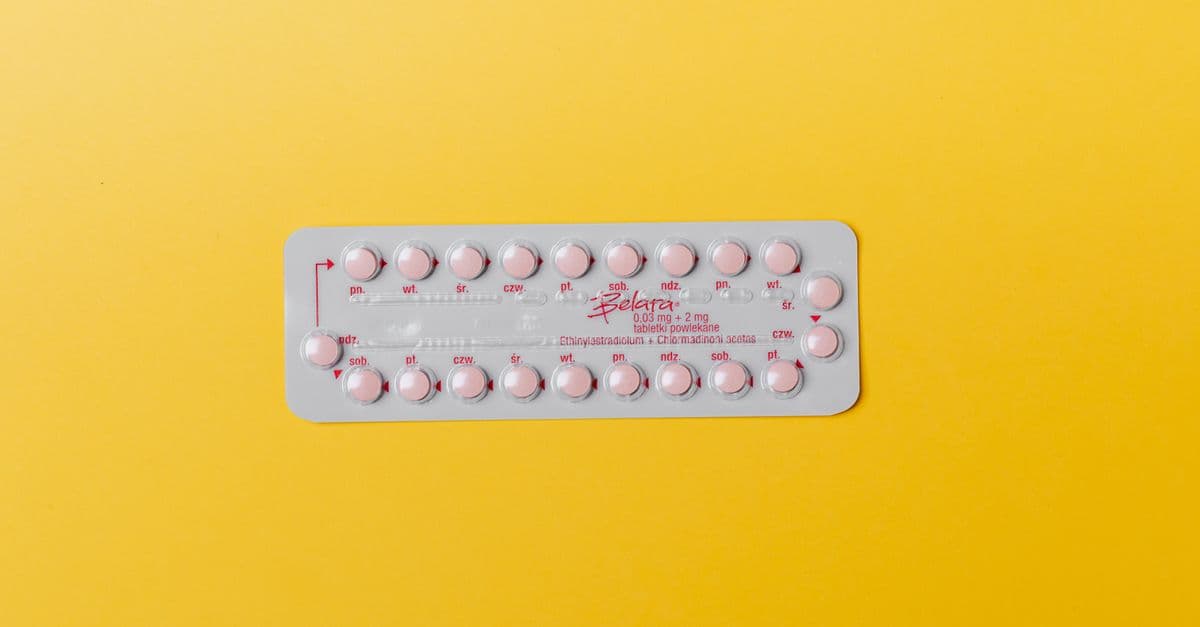
Photo: cottonbro studio / Pexels
On June 23, 1960, the U.S. Food and Drug Administration approved Enovid as an oral contraceptive — a small pill containing synthetic estrogen and progesterone that, taken daily, prevented pregnancy with over 99 percent effectiveness. The approval came four years after field trials in Puerto Rico, a decade after the project's funding began, and after decades of failed attempts to develop any reliable hormonal method. The pill did not merely give women a new contraceptive option; it separated reproductive decisions from the act of sex itself for the first time in human history, and its cultural, legal, and medical consequences have never fully stopped unfolding.
Why Contraception Was So Hard to Make
Definition: Hormonal contraception works by introducing synthetic versions of the hormones estrogen and/or progesterone into the bloodstream at levels sufficient to suppress ovulation, thicken cervical mucus (blocking sperm), and thin the uterine lining. When ovulation is suppressed, no egg is available for fertilization.
Before the pill, the reliable contraceptive options available to women were physical barriers (the diaphragm, condoms), the rhythm method (imprecise and poorly understood for most of history), or abstinence. None of these were under the complete control of women, and none were reliably effective. Oral contraception was theoretically attractive — a pill, taken daily, with no device to fit, no partner cooperation required — but developing one required solving two linked problems.
The first was biological: identifying which hormones, in which doses, reliably suppressed ovulation in humans without intolerable side effects. The second was practical: synthesizing sufficient quantities of those hormones cheaply enough to make a commercial product. Both problems remained unsolved until the 1950s, when three lines of work converged.
Hormonal biology. In the 1930s and 1940s, researchers including George Corner and Willard Allen had established that progesterone, produced by the corpus luteum after ovulation, suppresses further ovulation — the basis of the body's natural contraception during pregnancy. The question was whether administered progesterone could replicate this effect outside of pregnancy.
Synthetic hormone chemistry. In 1943, Russell Marker, a chemist at Penn State, developed a process for synthesizing progesterone from a Mexican wild yam (cabeza de negro, Dioscorea mexicana). This dropped the price of progesterone from roughly $80 per gram to $2 per gram, making large-scale human trials financially conceivable. Marker eventually founded what became Syntex, one of the companies that would supply hormones for the pill.
The motivation. Margaret Sanger, founder of Planned Parenthood, had been advocating for an oral contraceptive since the 1910s. By the late 1940s she had a specific vision: a "magic pill" that any woman could take. She needed a scientist willing to pursue it and a funder willing to back them.
Source: PBS American Experience — "A Timeline of Contraception," pbs.org/wgbh/americanexperience/features/pill-timeline.
Source: PMC/NCBI — "Half a century of the oral contraceptive pill: Historical review," pmc.ncbi.nlm.nih.gov/articles/PMC3520685.
The Money: Katharine McCormick
The pill would not exist without Katharine Dexter McCormick. That statement is nearly literal.
McCormick was born in 1875, educated at MIT as one of the second women ever to earn a biology degree from the institute, and married in 1904 to Stanley McCormick, heir to the International Harvester fortune. Stanley suffered severe schizophrenia and spent most of his life institutionalized; Katharine managed his fortune, which she used for decades to fund research into mental illness and birth control.
When Margaret Sanger introduced her to biologist Gregory Pincus at a dinner in 1952, McCormick pulled out her checkbook. At the end of their first meeting, she wrote Pincus a check for $40,000. Over the following decade, she contributed $150,000–$180,000 annually to his research, totaling more than $2 million (equivalent to over $23 million in 2024 dollars). No government funding, no university endowment, no pharmaceutical company R&D budget funded the pill's development. One woman's private fortune did.
McCormick's contribution went beyond writing checks. She visited Pincus's laboratory regularly, reviewed research reports, and pushed for faster clinical progress at moments when Pincus was cautious. She died in 1967, seven years after the pill's approval, having lived to see the outcome of the project she funded.
Source: PBS American Experience — "Katharine Dexter McCormick (1875–1967)," pbs.org/wgbh/americanexperience/features/pill-katharine-dexter-mccormick-1875-1967.
Source: Amazing Women in History — "Katharine McCormick, biologist & millionaire philanthropist," amazingwomeninhistory.com.
| Year | Event |
|---|---|
| 1910s | Margaret Sanger begins advocacy for oral contraception |
| 1937 | American Medical Association recognizes contraception as legitimate medical practice |
| 1951 | Sanger meets Gregory Pincus; Katharine McCormick begins funding |
| 1952 | Pincus and John Rock begin collaboration |
| 1953 | Carl Djerassi synthesizes norethindrone (synthetic progesterone) at Syntex |
| 1955 | Pincus and Rock report that progesterone suppresses ovulation in women |
| 1956 | Field trials begin in San Juan, Puerto Rico |
| 1957 | FDA approves Enovid for menstrual disorders (not yet as contraceptive) |
| 1960 | FDA approves Enovid as oral contraceptive (June 23) |
| 1965 | Griswold v. Connecticut — Supreme Court rules contraception is a constitutional right for married couples |
| 1972 | Eisenstadt v. Baird — right extended to unmarried individuals |
| 2019 | 151 million women use oral contraceptives globally (UN data) |
Gregory Pincus, John Rock, and the Science
Gregory Pincus was a biologist at the Worcester Foundation for Experimental Biology in Shrewsbury, Massachusetts, with a controversial history. In 1934, while at Harvard, he had produced fatherless rabbit embryos through parthenogenesis — work that attracted sensational press coverage and led to him not receiving tenure, leaving Harvard in what became a defining professional wound. By the early 1950s, he was running an independent research foundation and was willing to pursue the contraceptive project that more establishment researchers avoided.
John Rock was Pincus's clinical counterpart: a Harvard-trained gynecologist and a practicing Roman Catholic, which would later give his advocacy for the pill an unexpected political dimension. Rock believed the pill merely mimicked the body's natural hormonal state during pregnancy — a form of "natural" contraception compatible with Catholic teaching. The Church disagreed.
Their collaboration worked as follows: Pincus ran the animal and biochemical research, identifying which synthetic progestins suppressed ovulation most effectively. Rock ran the clinical trials in women. By 1955, they had jointly reported that progesterone consistently suppressed ovulation in small samples of women without apparent safety issues.
A critical discovery occurred during the development of the Searle-manufactured hormone tablets. The pharmaceutical company had inadvertently contaminated early batches with a small amount of synthetic estrogen (mestranol) in addition to the progestin. When Pincus and Rock tested uncontaminated batches, breakthrough bleeding increased. They concluded that the combination of estrogen and progestin was more effective and better tolerated than progestin alone. This accidental finding led to the combination pill formulation that has been standard ever since.
Source: Mayo Clinic Proceedings — "Gregory Pincus — Codeveloper of 'The Pill'," mayoclinicproceedings.org.
Source: Harvard Countway Library — "Gregory Pincus and Enovid," collections.countway.harvard.edu/onview/exhibits/show/conceiving-the-pill.
The Puerto Rico Trials
In 1956, the first large-scale field trials began in San Juan, Puerto Rico. The location was not accidental. Puerto Rico had no anti-contraception laws (unlike many U.S. states), an active public health infrastructure, and a population of women who, as trial coordinators hoped, would participate in contraceptive research.
The trials were managed on the ground by Dr. Edris Rice-Wray, a physician and public health official who served as the project's daily coordinator. Initial results showed high effectiveness but also a significant side-effect rate: about 17 percent of participants reported nausea, dizziness, or headaches. Rice-Wray reported these findings honestly, including a recommendation to reduce the dosage. The trials continued.
The ethical status of the Puerto Rico trials has been disputed ever since. Participants were informed they were testing a birth control pill, but were not always fully informed about the experimental nature of the drug, the known animal studies showing side effects, or the possibility of unknown long-term risks. By contemporary standards of informed consent, the trials fell short. By the standards of their time, they were not unusually deficient. The trial women were also overwhelmingly poor, which raises questions about voluntariness that the historical record does not fully resolve.
Three women died during the trials. Pincus did not authorize autopsies. The connection to the pill was never established, but the absence of investigation left a lasting controversy.
Source: Wikipedia — "Contraceptive trials in Puerto Rico," citing Rock, Pincus, and Garcia protocols.
Source: The Harvard Crimson — "The Bitter Pill: Harvard and the Dark History of Birth Control," thecrimson.com (2017).
FDA Approval and the Menstrual Disorder Loophole
The FDA's approval pathway for Enovid illustrates how invention often advances through adjacent problems. In 1957, the FDA approved Enovid not as a contraceptive but as a treatment for "severe menstrual disorders and gynecological conditions" — a legitimate use that Searle had also documented. The dosage was 20 mg of norethynodrel, substantially higher than needed for contraception.
Within three years, nearly 500,000 American women were taking Enovid for their "menstrual disorders." The FDA, Searle, and the medical community understood what was happening. The 1960 contraceptive approval reflected a pre-existing market reality more than it created a new one.
Enovid's initial formulation contained doses of synthetic estrogen and progestin significantly higher than modern pills. A 1960 Enovid tablet delivered approximately 150 micrograms of mestranol and 10 mg of norethynodrel — compared to modern low-dose pills containing 20–35 micrograms of ethinyl estradiol. The high-dose formulations produced more pronounced side effects, including an elevated risk of blood clots that became apparent in epidemiological studies in the mid-1960s. Reformulations progressively reduced hormone doses through the 1970s and 1980s.
Source: PBS American Experience — "A Timeline of Contraception," pbs.org/wgbh/americanexperience/features/pill-timeline.
Source: PMC/NCBI — "Half a century of the oral contraceptive pill," pmc.ncbi.nlm.nih.gov/articles/PMC3520685.
Griswold v. Connecticut: The Law Catches Up
By the time Enovid was approved as a contraceptive in 1960, 30 U.S. states had laws restricting or prohibiting contraception. Connecticut's statute, dating to 1879, banned the use of contraception outright and made it illegal for anyone — including physicians — to provide contraceptive counseling.
Estelle Griswold, executive director of the Planned Parenthood League of Connecticut, deliberately challenged the law by opening a birth control clinic in New Haven in 1961 and dispensing contraceptive advice to married couples. She and Dr. C. Lee Buxton were arrested, tried, and fined $100 each. They appealed, and the case reached the Supreme Court as Griswold v. Connecticut.
On June 7, 1965, the Supreme Court ruled 7-2 that Connecticut's law violated a constitutional right to marital privacy implied by the Bill of Rights. Justice William O. Douglas, writing for the majority, described "penumbras" of constitutional rights — an interpretive move that generated immediate controversy but has never been overturned. The decision invalidated contraception bans for married couples nationwide.
Seven years later, Eisenstadt v. Baird (1972) extended the right to unmarried individuals. Griswold itself became a foundational precedent for Roe v. Wade (1973) and, more recently, the basis for the dissent in the Supreme Court's 2022 Dobbs decision, where Justice Clarence Thomas explicitly called for revisiting Griswold.
Source: HISTORY.com — "U.S. Supreme Court strikes down Connecticut law banning contraception, June 7, 1965," history.com/this-day-in-history.
Source: Oyez — "Griswold v. Connecticut," oyez.org/cases/1964/496.
Unintended Consequences: Medicine, Culture, and Demographics
The pill's effects extended well beyond contraception.
Labor force participation. Economists Claudia Goldin and Lawrence Katz, in a 2002 paper in the Journal of Political Economy, found that access to oral contraception in U.S. states in the early 1970s (particularly for women under 21) was associated with higher rates of women entering professional careers and graduate school. The mechanism: the pill allowed women to invest in long-term careers by lowering the cost of delaying marriage and childbearing.
The sexual revolution. The pill did not cause the sexual revolution alone, but it changed its economics. Separating sex from reproduction lowered the personal cost of non-marital sexual activity. Combined with the social upheaval of the 1960s — civil rights, antiwar movements, feminist organizing — the pill became associated with a shift in sexual norms whose full scope historians still debate.
Male contraceptive failure. Despite decades of research, an oral male contraceptive has not reached market as of 2026. Several candidates progressed to clinical trials, including a progestin-androgen combination studied in WHO trials in the 1990s and a dimethandrolone undecanoate formulation studied in the 2010s and 2020s. All encountered obstacles: either unacceptable side effects (some participants reported mood changes, acne, and libido changes — side effects women had accepted in female pills for decades), or insufficient pharmaceutical industry investment. The asymmetry reflects both biology (male contraception requires suppressing millions of sperm continuously rather than one egg monthly) and commercial calculation.
Cardiovascular risk. Modern low-dose combined pills carry a small but documented increase in venous thromboembolism (blood clots) risk, from approximately 2 cases per 10,000 woman-years in non-users to 3–4 cases per 10,000 woman-years in pill users. The absolute risk remains low for most women, but the interaction with other risk factors — smoking, age, certain inherited clotting conditions — requires clinical assessment. This risk led to the development of progestin-only pills ("mini-pills") for women who cannot use estrogen.
Source: Claudia Goldin and Lawrence Katz — "The Power of the Pill: Oral Contraceptives and Women's Career and Marriage Decisions," Journal of Political Economy (2002).
Source: UN Department of Economic and Social Affairs — Contraceptive Use by Method 2019 Data Booklet, un.org.
The People Behind the Pill and Their Fractured Recognition
The pill had four essential contributors, and the historical record has treated them very unequally.
Gregory Pincus received substantial public recognition during his lifetime, appearing on the cover of Time magazine in 1967 and receiving numerous scientific honors. He died in 1967 of a rare bone marrow disease, likely related to his extensive laboratory exposure to biological materials.
John Rock became the public advocate for the pill's compatibility with Catholic teaching, arguing in his 1963 book The Time Has Come that the pill used the body's natural hormones and was morally equivalent to the rhythm method. The Vatican's 1968 encyclical Humanae Vitae, which reaffirmed the prohibition on artificial contraception, rejected Rock's argument explicitly. He lived to 94, dying in 1984.
Margaret Sanger received some credit during her lifetime for her role in initiating the project, though she died in September 1966, six years after the pill's approval. Her legacy has become more contested in recent decades as her eugenicist beliefs — documented in her writings and speeches — have received closer historical scrutiny.
Katharine McCormick received almost no public credit until well after her death. Without her funding, the project would not have happened — the Worcester Foundation had no other source of support for this research — yet her name appears in few popular accounts of the pill's history.
For context on other inventions that reshaped medicine and biology, see the history of penicillin, mRNA vaccines, and CRISPR gene editing.
Where the Pill Stands Today
The United Nations estimated in its 2019 Contraceptive Use by Method Data Booklet that 151 million women worldwide use oral contraceptives, making the pill one of four contraceptive methods with over 100 million global users. Modern formulations use hormone doses five to ten times lower than the original Enovid, with significantly reduced side-effect profiles.
Third- and fourth-generation progestins have further reduced androgenic side effects. Extended-cycle formulations allow users to have fewer or no withdrawal bleeds. The pill is now prescribed for conditions beyond contraception: endometriosis, polycystic ovarian syndrome, acne, and dysmenorrhea.
New hormonal delivery methods — patches, vaginal rings, long-acting injectable progestins, hormonal IUDs — offer alternatives to daily pill-taking. Non-hormonal options, including copper IUDs and, in development, non-hormonal pills that block a fertilization protein rather than suppressing ovulation, represent the next frontier.
The pill's fundamental mechanism — manipulating the hormonal signals that govern the menstrual cycle — remains unchanged from what Pincus identified in the 1950s. What has changed is dosing, delivery, and the pharmacological sophistication of the molecules used.
Source: UN DESA — Contraceptive Use by Method 2019 Data Booklet, un.org/development/desa/pd.
Source: SingleCare — "Birth control statistics 2026," singlecare.com/blog/birth-control-statistics.
FAQs
Q: Who invented the contraceptive pill?
A: The oral contraceptive pill was developed primarily by biologist Gregory Pincus and gynecologist John Rock, with critical funding from philanthropist Katharine McCormick and the advocacy of Margaret Sanger. Pharmaceutical support came from G.D. Searle & Company. The FDA approved the first oral contraceptive, Enovid, on June 23, 1960.
Q: Why were the trials conducted in Puerto Rico?
A: Puerto Rico had no anti-contraception laws (many U.S. states still did in the mid-1950s), an established public health infrastructure, and a population willing to participate. The trials were also geographically removed from U.S. media scrutiny at a time when contraception remained socially and legally contentious on the mainland.
Q: What did Griswold v. Connecticut decide?
A: The Supreme Court ruled 7-2 in 1965 that Connecticut's law banning contraception violated a constitutional right to marital privacy implied by the Bill of Rights. It invalidated contraception bans for married couples nationwide, and was later extended to unmarried individuals in Eisenstadt v. Baird (1972).
Q: How does the contraceptive pill work?
A: Combined oral contraceptives contain synthetic estrogen and progestin. Taken daily, they suppress the hormonal signals from the pituitary gland that trigger ovulation. They also thicken cervical mucus to impede sperm and alter the uterine lining. The result is over 99 percent effectiveness with perfect use (about 91 percent with typical use).
Q: How many women use the pill today?
A: The United Nations estimated in its 2019 Contraceptive Use by Method Data Booklet that approximately 151 million women worldwide use oral contraceptives.
Q: Why has a male contraceptive pill not been developed?
A: Biology and commercial factors both play a role. Male contraception requires suppressing continuous sperm production (millions per day) rather than a single monthly ovulation event. Clinical trials of hormonal male contraceptives have encountered side effects that, while similar in type to those of female pills, caused regulatory and commercial hesitancy. As of 2026, no hormonal male contraceptive has received regulatory approval.
Read next:
Weekly digest
Stay ahead of the curve
Get the best science, AI, and tech stories delivered to your inbox every week. No spam — unsubscribe any time.
About the Author
SciHub101 is an independent science and technology publication founded and edited by Buğra Sözeri, a software engineer and app developer based in Türkiye. Articles are drafted against peer-reviewed literature and primary sources, fact-checked, and edited by a human before publication. Where we compare products, anything built by our own team is labelled as such — see the editorial guidelines and About page for how corrections and disclosures work.
Related Articles

The Safety Elevator: The Invention That Built the Modern City
How Elisha Otis's 1853 rope-cutting stunt solved humanity's fear of falling and made the skyscraper — and the modern vertical city — structurally possible.

The Mechanical Clock: How Humanity Learned to Slice Time
From the verge escapement of 1275 to atomic clocks accurate to one second in 300 million years — the 750-year story of how timekeeping reshaped civilization.
The IUD — A History of the Intrauterine Device From Silkworm Gut to Hormonal Revolution — SciHub101
From Richard Richter's 1909 silkworm-gut ring to the Dalkon Shield disaster and Mirena's hormonal breakthrough, the IUD's story spans medicine, law, and reproductive rights.

How the Endocrine System Works: Hormones, Glands, and the Body's Chemical Messaging Network
A single drop of blood carries signals from the brain to the pancreas, the adrenal glands, the thyroid, and the gonads — all simultaneously. Hormones travel in concentrations so tiny that a teaspoon of testosterone spread across 500 Olympic swimming pools would still be detectable by a target cell. Here is how the endocrine system orchestrates the body without a single wire.

Cortisol and the Stress Response — How Your Body Handles Pressure
How cortisol works, what the HPA axis does, why chronic stress harms the body, and what the evidence actually says about cortisol and health.
Oxytocin — The Bonding Hormone and What It Actually Does
What oxytocin really does in the brain and body — from childbirth to trust, social bonding, and why calling it just the 'love hormone' misses the complexity.