The IUD — A History of the Intrauterine Device From Silkworm Gut to Hormonal Revolution — SciHub101
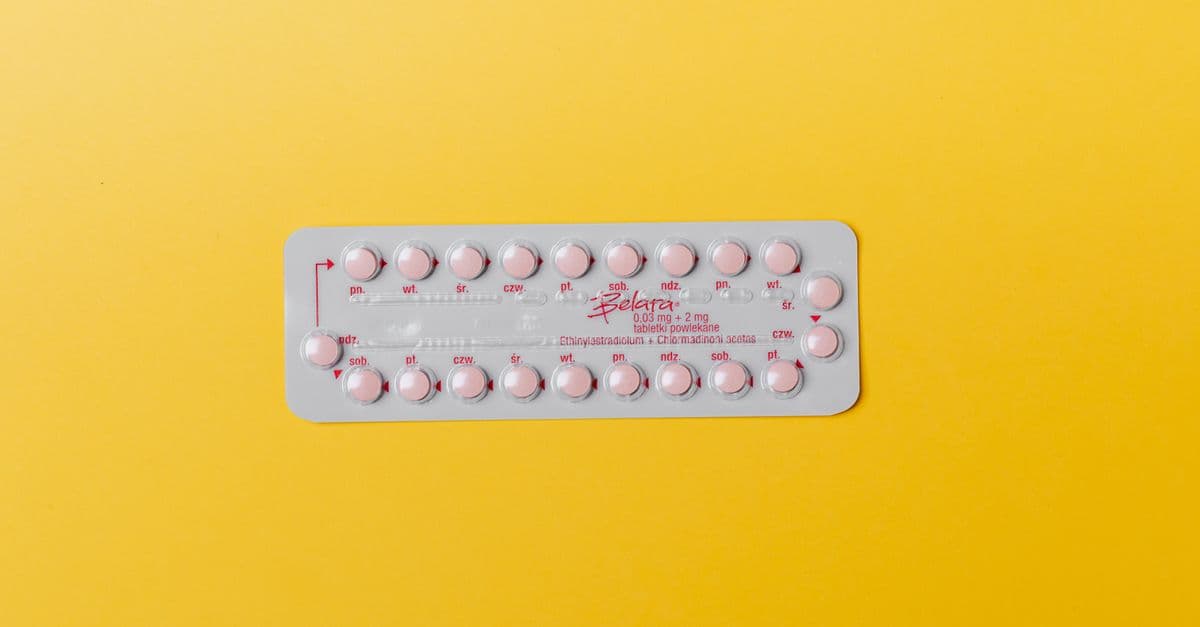
Photo: www.kaboompics.com / Pexels
The intrauterine device is one of the most effective contraceptive methods available — more reliable than the daily pill, requiring no action at the moment of intercourse, and reversible within a single clinic visit — yet it spent much of its history as a source of medical scandal, regulatory paralysis, and avoidable harm. The story of the IUD is not a smooth arc of scientific progress. It is a story of a sound medical principle repeatedly implemented badly, damaged by a single catastrophically defective product, and rescued by a generation of clinicians and researchers who refused to abandon a genuinely useful tool. More than 100 million people worldwide now use an IUD. Understanding how that number was nearly made impossible to reach requires going back to 1909.
What an IUD Is — and How It Works
An intrauterine device is a small object inserted through the cervix and placed inside the uterine cavity, where it prevents pregnancy. The word "intrauterine" simply means "within the uterus." Modern IUDs are T-shaped, approximately 32 mm wide and 36 mm long — roughly the size of a matchstick — and sit in the uterine cavity with two flexible arms that open after insertion.
There are two principal types of modern IUD, defined by their mechanism:
Copper IUDs (including the ParaGard, approved by the FDA for use in the US) release copper ions continuously into the uterine cavity. Copper is spermicidal: it impairs sperm motility and viability, preventing fertilization. Copper also alters the uterine lining in ways that inhibit implantation should fertilization occur. The ParaGard is approved for up to 10 years of use and is the only non-hormonal IUD currently available in the United States.
Source: Copper IUD mechanism and FDA approval details are described in the Copper IUD Wikipedia article and on the FDA's ParaGard device page.
Hormonal IUDs (Mirena, Kyleena, Liletta, Skyla in the US) release a continuous low dose of levonorgestrel, a synthetic progestin, directly into the uterine cavity. The primary mechanism is thickening cervical mucus to impede sperm passage and preventing the uterine lining from developing in a way that supports implantation. At the doses used by hormonal IUDs, ovulation is not consistently suppressed — these devices work primarily at the local level, which is why their systemic hormonal effects are minimal compared to combined oral contraceptives.
Source: Hormonal IUD mechanism, including the local vs. systemic distinction, is described in the Intrauterine Device Wikipedia article and in multiple clinical guidelines from ACOG.
The IUD is among the most effective reversible contraceptives available. The Mirena hormonal IUD has a typical-use failure rate of approximately 0.1–0.2 percent per year — comparable to surgical sterilization and substantially better than the pill (typical use failure rate around 7 percent) or condoms (typical use failure rate around 13 percent).
Source: Comparative contraceptive failure rates are from the Trussell et al. contraceptive failure study, Contraception journal, 2011, the standard reference for this data.
The History of the IUD
Richard Richter and the First Documented IUD (1909)
The first published description of an intrauterine contraceptive device comes from Dr. Richard Richter, a German physician who in 1909 described a ring made from strands of silkworm gut — the thread obtained from silkworm larvae at the moment of spinning — placed inside the uterus.
Source: Richard Richter's 1909 IUD publication is referenced in the Reproductive Health Access Project's IUD history and in the PubMed review of intrauterine device history (Lippes, 1999).
Richter's device was never commercially distributed, and his publication received limited attention. The mechanism was not well understood — the 1909 scientific community had no clear model for how a foreign object in the uterus prevented pregnancy, which made the concept simultaneously interesting and suspect.
A more influential figure was Ernst Gräfenberg, a German gynecologist who refined the concept in the 1920s and 1930s, developing a ring device made from silver wire wound into a coil. Gräfenberg reported high success rates in preventing pregnancy, but his work was received with significant professional hostility. The German Society of Gynaecology condemned the Gräfenberg ring in 1930, partly on medical grounds (concerns about infection) and partly on the moral objections of the period. Gräfenberg himself was forced to flee Nazi Germany in 1940; the device was named after him but largely disappeared from use for two decades.
Source: Ernst Gräfenberg's silver ring IUD and his forced emigration from Germany are described in the adyn.com IUD history article and the Dittrick Medical History Center at Case Western Reserve.
The 1960s IUD Boom — Lippes Loop and the Copper Revolution
The IUD returned to serious medical attention in the early 1960s, driven partly by demographic concern about global population growth and partly by the limits of hormonal contraception. The birth control pill, approved by the FDA in 1960, required daily compliance and carried cardiovascular side effects that made it unsuitable for some women. An IUD required only a single insertion.
In 1962, Dr. Jack Lippes, then at the University at Buffalo's School of Medicine, developed what became the most widely used IUD of its era: the Lippes Loop. The Loop was a double-S shaped piece of polyethylene — a flexible plastic that could be straightened for insertion through a thin tube and would resume its shape inside the uterus. It came in four sizes to fit different uterine dimensions. A nylon removal string allowed patients and clinicians to confirm placement and facilitate removal.
Source: Dr. Jack Lippes's 1962 development of the Loop and its design details are documented in the American Journal of Obstetrics and Gynecology's 2018 retrospective on the Lippes Loop and the University at Buffalo research highlights.
The Loop became the world's most popular IUD of the 1960s, used by millions of women globally. The nylon string — suggested to Lippes by Jaime Zipper, a Chilean physician who was independently developing IUD designs — proved crucial for patient monitoring and device retrieval.
The copper IUD development followed from an accidental discovery. In 1969, Jaime Zipper found that copper wire placed in the reproductive tracts of rabbits was protective against pregnancy, attributing the effect to copper's toxic effects on sperm enzymes and uterine lining cells. Zipper collaborated with Howard Tatum to develop a T-shaped plastic device wound with copper wire — the Cu-7 and its successor designs — which dramatically improved contraceptive efficacy compared to inert plastic devices.
Source: Jaime Zipper's 1969 discovery of copper's spermicidal properties and the subsequent development of the copper IUD are described in the Reproductive Health Access Project's IUD history and the Copper IUD Wikipedia article.
The Dalkon Shield Disaster (1970–1974)
Into the growing IUD market came the Dalkon Shield, developed by Hugh Davis, a physician at Johns Hopkins, and electrical engineer Irwin Lerner. Davis published results in 1970 claiming an extremely low 1.1 percent pregnancy rate for the Shield. The A.H. Robins Company acquired the rights and began marketing the device aggressively to physicians. Within three years, 2.2 million women in the United States had been fitted with a Dalkon Shield.
The device had two fundamental design flaws.
The shape: The Shield was crab-shaped with sharp plastic fins around its perimeter, intended to hold it in place against expulsion. The fins abraded the uterine wall, increasing the risk of bleeding, pain, and embedment.
The removal string: Every IUD requires a string passing through the cervix to allow removal. Lippes had used a monofilament (single-strand) nylon string. Davis and Lerner used a multifilament string — braided from multiple fibers — that was not sealed at either end. The capillary spaces between the fibers provided a pathway for bacteria in the vagina to wick upward into the normally sterile uterine cavity. This bacterial wicking caused pelvic inflammatory disease (PID) at a rate dramatically higher than any other IUD.
Source: The Dalkon Shield's multifilament string design and its role in causing PID are documented in the Intrauterine Device Wikipedia article, the adyn.com IUD history, and the Reproductive Health Access Project's IUD history.
Reports of serious infections began accumulating from 1971. Women developed PID, septic abortions, and permanent infertility. At least 18 US women died from Dalkon Shield-related sepsis. The FDA requested A.H. Robins to suspend US sales in June 1974, and the company complied, though it continued marketing the device internationally for several years after the US suspension.
More than 300,000 lawsuits were filed against A.H. Robins. The company eventually filed for bankruptcy protection in 1985 under the weight of the litigation. A trust fund established as part of the bankruptcy proceedings eventually paid claims to more than 200,000 women.
Source: The 300,000+ lawsuits and A.H. Robins's 1985 bankruptcy are documented in the adyn.com IUD history and widely reported in US legal history sources.
The collateral damage was immense and extended far beyond A.H. Robins: the Dalkon Shield disaster so thoroughly contaminated public and medical opinion of IUDs in the United States that IUD use collapsed from a high of approximately 10 percent of contraceptive users in the early 1970s to under 2 percent by the late 1980s. Manufacturers who made safe, well-designed devices — including Ortho Pharmaceutical (Lippes Loop) and GD Searle (the copper Cu-7) — voluntarily withdrew from the US market in the early 1980s because the litigation environment had made liability insurance unaffordable, regardless of the quality of their products.
The result was that American women were denied access to proven, effective IUDs for nearly two decades because of one company's negligent design. This outcome had no parallel in the rest of the world, where IUDs remained widely used throughout the 1970s and 1980s.
Mirena and the Hormonal IUD Revolution (1976–2001)
While the US IUD market collapsed, Finnish researchers at the pharmaceutical company Leiras Oy were developing a fundamentally different type of IUD. The Mirena (levonorgestrel intrauterine system, LNG-IUS) released a continuous low dose of levonorgestrel — 20 micrograms per day — directly into the uterine cavity. The device had been in development since the early 1970s, based on work by Tapani Luukkainen at the University of Helsinki.
Source: Mirena's Finnish origins and Tapani Luukkainen's role in its development are described in the Intrauterine Device Wikipedia article and clinical reviews of levonorgestrel IUDs.
Mirena became available in Finland in 1976, in much of Western Europe through the 1990s, and received FDA approval in the United States in December 2000. It rapidly became the world's most prescribed IUD. Beyond contraception, Mirena proved clinically effective for the treatment of heavy menstrual bleeding (menorrhagia), with many users experiencing significantly reduced or absent periods — an effect that many found desirable and that led to widespread off-label and later licensed use for this indication.
Source: Mirena's FDA approval in December 2000 and its use for menorrhagia are documented in the FDA's Mirena product information and in ACOG practice bulletins on heavy menstrual bleeding.
A Timeline of Key IUD Milestones
| Year | Event | Significance |
|---|---|---|
| 1909 | Richard Richter describes silkworm gut ring | First published intrauterine contraceptive |
| 1920s–30s | Ernst Gräfenberg develops silver wire ring | Early clinical use; professional hostility |
| 1960 | FDA approves the oral contraceptive pill | Demand for alternatives grows |
| 1962 | Jack Lippes introduces the Lippes Loop | First mass-adopted plastic IUD |
| 1969 | Jaime Zipper discovers copper's spermicidal properties | Copper IUD technology foundation |
| 1970 | A.H. Robins begins marketing the Dalkon Shield | Beginning of the worst product disaster in contraceptive history |
| 1974 | FDA requests Dalkon Shield suspension | 2.2 million women already fitted |
| Early 1980s | Lippes Loop, Cu-7 withdrawn from US market | Liability environment collapses US IUD access |
| 1985 | A.H. Robins files for bankruptcy | 300,000+ lawsuits pending |
| 1976 | Mirena approved in Finland | Hormonal IUD enters clinical use |
| 1984 | Paragard (copper T 380A) approved in US | Copper IUD returns to US market |
| 2000 | FDA approves Mirena in US | US hormonal IUD access begins |
| 2019 | UN reports 100M+ global IUD users | IUD is third most common contraceptive globally |
Source: Timeline dates drawn from the Reproductive Health Access Project, adyn.com IUD history, and the Intrauterine Device Wikipedia article.
The People Behind the IUD
Richard Richter (dates of birth and death uncertain): A German physician who published the first documented description of an intrauterine contraceptive in 1909. His silkworm gut ring was never commercially developed, but his published description provided the conceptual foundation on which subsequent researchers built.
Ernst Gräfenberg (1881–1957): German gynecologist who developed the silver Gräfenberg ring in the 1920s and reported clinical results. Forced to flee Nazi Germany in 1940, he eventually settled in New York, where he continued clinical work. He is better known today for his name being given to the Gräfenberg spot (G-spot) than for his IUD work, but the latter was his more clinically significant contribution.
Jack Lippes (born 1924): University at Buffalo gynecologist who developed the Lippes Loop in 1962. His device was safe, effective, and widely used. Its withdrawal from the US market in 1985 — not because of any safety problem with the Loop but because of the post-Dalkon Shield litigation environment — is one of the more absurd outcomes of tort law's interaction with medical technology policy.
Jaime Zipper (1922–2012): Chilean gynecologist and physician-scientist who discovered copper's spermicidal properties in 1969 and collaborated on the development of copper IUDs. He spent his career in Chile and was a central figure in global IUD research through the 1980s.
Hugh Davis (1931–1996): Johns Hopkins gynecologist who co-developed the Dalkon Shield and published the misleading 1970 efficacy data that helped launch its commercial adoption. Davis had a financial interest in the device that he did not disclose in his 1970 publication — a conflict of interest that would be disqualifying under modern research ethics standards.
Source: Hugh Davis's undisclosed financial interest in the Dalkon Shield is described in adyn.com's IUD history and in multiple accounts of the Dalkon Shield litigation.
The Patent and Legal Landscape
The Dalkon Shield litigation established several important legal precedents for medical device product liability in the United States.
The MDL (multi-district litigation) consolidation of tens of thousands of Dalkon Shield cases in federal court was one of the earliest and largest mass tort proceedings in US history. The ultimate resolution — a Chapter 11 reorganization of A.H. Robins that created a $2.475 billion claimants' trust — established the bankruptcy-based mass tort resolution model that was subsequently applied to asbestos litigation (Manville Corporation) and eventually to the opioid crisis settlements.
Source: The A.H. Robins Chapter 11 and the $2.475 billion trust are documented in US Bankruptcy Court records and in legal history reviews of mass tort litigation.
The Dalkon Shield disaster also directly motivated the Medical Device Amendments of 1976 to the Federal Food, Drug, and Cosmetic Act, which gave the FDA authority to require pre-market review of medical devices classified as Class III (high risk). Before 1976, medical devices were not subject to FDA pre-market approval. The Dalkon Shield was already on the market when the 1976 amendments were enacted — it was exactly the kind of product the new law was designed to prevent.
Source: The Medical Device Amendments of 1976 and their Dalkon Shield motivation are documented by the FDA's history of device regulation.
The Unintended Consequences of the Dalkon Shield Disaster
The most significant unintended consequence of the Dalkon Shield was not any individual injury, serious as those were. It was the systemic collapse of IUD access in the United States.
When manufacturers withdrew safe IUDs from the US market in the early 1980s, millions of American women who would have chosen an IUD were forced into alternatives: the pill (with its systemic hormonal effects), barrier methods (with their higher failure rates), or sterilization (irreversible). The population-level effect of this forced contraceptive shift on unintended pregnancy rates is difficult to measure precisely, but researchers have consistently found that US IUD use rates were dramatically lower than those of comparable countries through the 1980s and 1990s in ways that correlate with the post-Dalkon Shield market collapse.
Source: US IUD use rates compared to other developed countries during the 1980s–1990s are described in the Contraception journal's worldwide IUD use review (2014).
A second unintended consequence was the reinforcement of a false clinical belief that IUDs were inappropriate for women who had not yet had children. This belief — based partly on the Dalkon Shield complications, which included complications in both parous and nulliparous women — became entrenched in US clinical practice to the point where many physicians in the 1990s and 2000s declined to offer IUDs to teenagers or young women who had never given birth. Professional guidelines from ACOG now explicitly state that age and parity are not contraindications to IUD use, but the clinical culture change was slow.
Source: ACOG's clinical guidance on IUD use in adolescents and nulliparous women is from ACOG Committee Opinion 735 (2018).
Where the IUD Stands Today
The IUD is now the third most commonly used contraceptive method globally, accounting for approximately 17 percent of women using any form of contraception. An estimated 100 million or more women use IUDs worldwide.
Source: IUD's 17 percent global contraceptive market share is from the UN's Contraceptive Use by Method 2019 Data Booklet.
Use is strikingly uneven by region. In China, IUD use has historically been extremely high — state family planning policies promoted IUDs as the preferred post-first-birth contraceptive for decades. In Western Europe and Canada, IUD use is moderate and growing. In the United States, IUD use began recovering after 2000 with Mirena's approval, accelerated after 2016 when concerns about potential changes to the Affordable Care Act and contraceptive coverage prompted many women to seek long-acting reversible contraception, and continues to grow.
The current lineup of IUDs available in the US covers a range of user needs:
| Device | Type | Duration | Hormone dose |
|---|---|---|---|
| ParaGard | Copper | Up to 10 years | None |
| Mirena | Hormonal | Up to 8 years | 20 mcg/day LNG |
| Kyleena | Hormonal | Up to 5 years | 17.5 mcg/day LNG |
| Liletta | Hormonal | Up to 8 years | 18.6 mcg/day LNG |
| Skyla | Hormonal | Up to 3 years | 14 mcg/day LNG |
Source: IUD duration and hormone specifications are from FDA-approved prescribing information for each device.
Research continues on next-generation IUDs. Multi-purpose prevention technologies (MPT-IUDs) combine contraception with protection against sexually transmitted infections, including HIV. Frameless IUDs that anchor to the uterine fundus with a single anchoring knot rather than a rigid frame may reduce the expulsion and pain problems associated with conventional T-shaped devices. Drug-releasing IUDs that deliver antifungal or antibacterial agents are in development for women with recurrent vaginal infections.
FAQs About the IUD
Q: Does the IUD cause abortions? A: This is a contested question that depends on when one considers pregnancy to begin. The copper IUD's primary mechanism is preventing fertilization by impairing sperm function. The hormonal IUD's primary mechanisms are thickening cervical mucus (preventing sperm from reaching the egg) and preventing the uterine lining from supporting implantation. Medical organizations including ACOG and the WHO define pregnancy as beginning at implantation, under which definition the IUD is contraceptive rather than abortifacient. Those who define pregnancy as beginning at fertilization may reach a different conclusion about the copper IUD, though evidence that it prevents implantation of a fertilized egg — rather than preventing fertilization itself — is limited.
Q: Is the IUD safe for women who have never been pregnant? A: Yes. ACOG explicitly states that age and parity (whether a woman has given birth) are not contraindications to IUD use. The belief that IUDs are only appropriate for women who have already had children was a clinical misconception reinforced by the post-Dalkon Shield era and has been definitively corrected in professional guidelines.
Q: What happened to the women harmed by the Dalkon Shield? A: A $2.475 billion claimants' trust was established as part of A.H. Robins's 1985 Chapter 11 bankruptcy reorganization. More than 200,000 women filed claims. Awards varied based on documented harm. Many women who experienced infertility from Dalkon Shield-associated PID received compensation, though no financial settlement could restore their fertility.
Q: How does the copper IUD work as emergency contraception? A: If inserted within 5 days of unprotected intercourse, the copper IUD is more than 99 percent effective at preventing pregnancy — making it the most effective form of emergency contraception available. The mechanism is primarily the copper's spermicidal and anti-implantation effects creating a hostile uterine environment. Additionally, a copper IUD inserted as emergency contraception remains effective for up to 10 years, making it a dual-purpose option.
Q: Why is the IUD less commonly used in the US than in many other countries? A: Multiple factors: the Dalkon Shield disaster collapsed the US IUD market in the 1970s–1980s and created lasting clinical and public skepticism; the litigation environment drove all manufacturers but Paragard out of the US market for years; the US healthcare system's historical emphasis on physician-initiated prescribing rather than patient-initiated choice made the pill easier to access than an IUD requiring an office insertion procedure; and insurance coverage for the upfront insertion cost was inconsistent before the Affordable Care Act's contraceptive mandate.
Q: Can the IUD protect against cancer? A: Studies suggest copper IUDs may reduce the risk of endometrial (uterine) cancer, possibly by inducing a local inflammatory response in the uterine lining that has anti-tumor effects. The reduction in risk observed in some studies is substantial — up to 50 percent — but causality is not definitively established, and this is not a licensed indication for IUD use. Hormonal IUDs reduce heavy menstrual bleeding, which reduces iron-deficiency anemia, but their relationship to cancer risk is more complex and varies by cancer type.
Source: Research on IUDs and endometrial cancer risk reduction is summarized in a 2020 meta-analysis in Obstetrics & Gynecology and referenced in review articles on the Intrauterine Device Wikipedia article.
The Takeaway
The IUD's modern success story took a century to write and required surviving a disaster that was entirely avoidable. Richard Richter described a workable concept in 1909. Jack Lippes built a safe, effective implementation of it in 1962. Hugh Davis, through negligent design and undisclosed financial conflicts, nearly destroyed the entire technology's credibility with a single defective product in 1970. The subsequent 30-year deficit in IUD access for American women — driven not by the IUD's inherent risks but by the failure of one manufacturer and the liability environment that failure created — is a cautionary lesson about how tort law and market dynamics can interact to deny patients access to proven medicine. The copper IUD that can be inserted as emergency contraception today, and the hormonal IUD that reduces heavy periods to nothing for eight years, are the same basic technology Richter sketched in 1909. The century in between was spent learning how not to build it, and then learning how to build it right.
Read next:
Weekly digest
Stay ahead of the curve
Get the best science, AI, and tech stories delivered to your inbox every week. No spam — unsubscribe any time.
About the Author
SciHub101 is an independent science and technology publication founded and edited by Buğra Sözeri, a software engineer and app developer based in Türkiye. Articles are drafted against peer-reviewed literature and primary sources, fact-checked, and edited by a human before publication. Where we compare products, anything built by our own team is labelled as such — see the editorial guidelines and About page for how corrections and disclosures work.
Related Articles
CRISPR Gene Editing: The Invention That Rewrites DNA — SciHub101
How Doudna and Charpentier repurposed a bacterial immune system into a precise gene-editing tool, winning the 2020 Nobel and sparking a decade of scientific and ethical debate.

The Seatbelt: How Nils Bohlin's 1959 Design Saves a Million Lives
Nils Bohlin's three-point seatbelt, introduced by Volvo in 1959 and given free to the world, remains the single most effective automotive safety device ever made.

Antibiotics Invention: Penicillin, Fleming, Florey, and Chain
Antibiotics began with penicillin's discovery, but turning mold into medicine required chemistry, fermentation, wartime scale-up, and clinical testing.

The Discovery of Penicillin — SciHub101
How a contaminated petri dish in 1928 led to the world's first antibiotic, saving an estimated 200 million lives across eight decades of medicine.

The Contraceptive Pill: How a Hormone Changed Everything
How Gregory Pincus, John Rock, Margaret Sanger, and Katharine McCormick created oral contraception — Enovid's 1960 FDA approval and its lasting effects.

The Stethoscope: How a Rolled Tube of Paper Became Medicine's Most Iconic Tool
René Laennec invented the stethoscope in 1816 from rolled paper to examine a patient's heart. Two centuries later, AI is listening through the same basic principle.