The Seatbelt: How Nils Bohlin's 1959 Design Saves a Million Lives
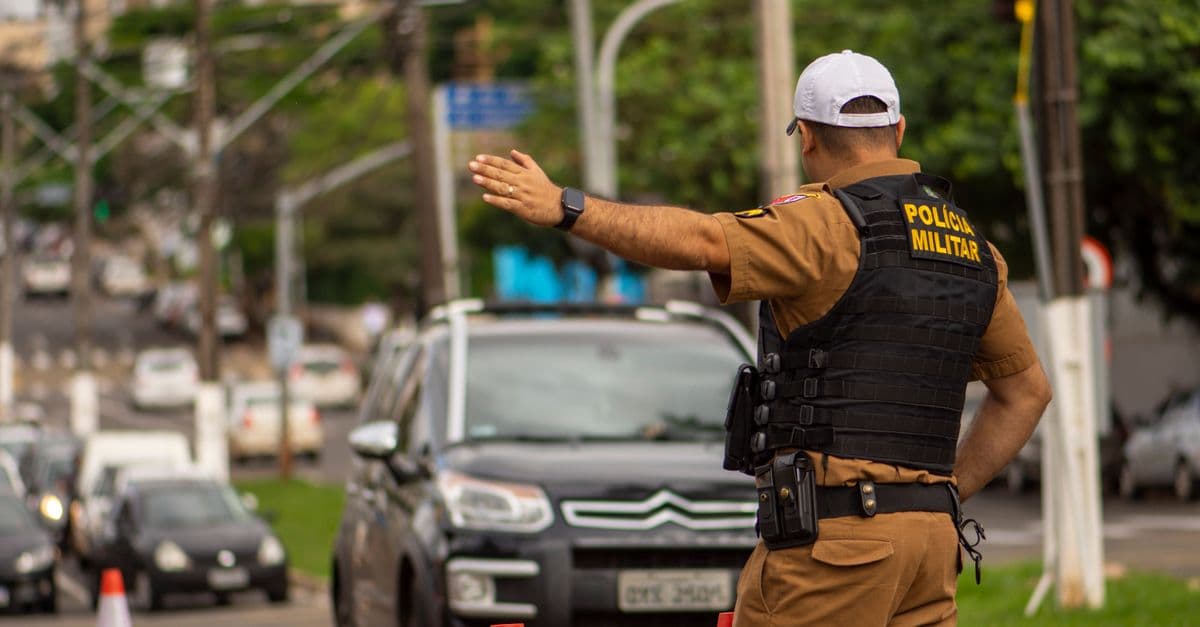
Photo: ArtHouse Studio / Pexels
In a car crash at 50 kilometers per hour (31 mph), an unbelted body continues moving forward at that speed after the car stops — smashing into the steering wheel or windshield with roughly the same force as falling from a three-story building. Nils Bohlin, a Swedish engineer who had spent his career stopping human bodies from ejecting at even higher velocities, understood this better than most. In 1959, working at Volvo, he produced a solution so effective that German patent registrars later named it one of the eight most significant patents in the hundred years between 1885 and 1985 — sharing that list with Benz, Edison, and Diesel.
Before Bohlin: What Counted as a Seatbelt
Early automobiles had no seatbelts at all. The lap belt — a single strap across the hips — was introduced in American cars in the 1950s, and US federal regulations required lap belts in front outboard seats beginning in 1964. The lap belt was better than nothing, but it introduced a problem that engineers recognized but struggled to solve.
Lap belt — a restraint consisting of a single strap across the occupant's hips only; it prevents ejection from the vehicle but allows the upper body to jackknife forward freely, creating a fulcrum effect that can cause severe spinal and abdominal injuries.
In a frontal crash, a lap belt holds the pelvis in place. The upper torso, restrained by nothing, continues forward and rotates over the lap belt. This jackknifing motion — the body folding at the waist over a fixed point — places enormous compressive load on the lumbar spine and can drive abdominal organs into the belt itself. The medical literature refers to "seatbelt syndrome": the distinctive pattern of lumbar fractures, bowel injuries, and abdominal lacerations produced specifically by lap belt loading in crashes.
The solution — also adding a diagonal strap across the upper torso — was understood in principle. Racing drivers used four-point harnesses that kept the entire body fixed in the seat. Airlines fitted passengers with lap belts from the 1940s onward. Military pilots used complex shoulder harness systems. The engineering challenge for passenger cars was different: the restraint had to be comfortable enough that ordinary drivers would actually use it voluntarily, easy enough to fasten with one hand in the dark, and effective across the full range of body sizes from a small woman to a large man.
Nobody had solved all three requirements simultaneously before 1959.
Source: NHTSA (2024) — Seatbelt and child restraint countermeasures documentation; history of lap belt federal requirements.
Nils Bohlin: From Ejection Seats to Car Seats
Nils Ivar Bohlin was born in Härnösand, Sweden, in 1920. He trained as a mechanical engineer and joined the Swedish aircraft manufacturer Saab in 1942. His work there was in aviation safety — specifically, developing ejection seats for fighter aircraft. An ejection seat must propel a pilot clear of a failing aircraft at high speed without killing the person it is saving: the geometry of restraint, the distribution of force across the body, and the management of deceleration loads are central engineering problems in both ejection seats and automotive seatbelts.
Bohlin joined Volvo in 1958, recruited to be the company's first dedicated safety engineer. Volvo had been building lap belt installations into its cars since the mid-1950s and was actively seeking to improve occupant protection. Bohlin's aviation background gave him an unusual analytical framework: he understood the human body as an engineering object with specific load tolerances, and he understood restraint systems as force-distribution problems rather than simply tethering problems.
Source: Volvo Group (2024) — Heritage documentation on the three-point safety belt; Bohlin's background at Saab confirmed.
Nils Bohlin — Swedish mechanical engineer (1920–2002) who developed the three-point seatbelt at Volvo in 1959 after a career designing ejection seats for military aircraft at Saab; holder of US Patent 3,043,625.
His starting insight was anatomical. The human body tolerates deceleration forces well when those forces are distributed across the pelvis and the ribcage — the two strongest bony structures in the torso. The pelvis is a rigid basin of thick bone designed to transmit the weight of the entire upper body. The ribcage is a springy structure of bone and cartilage that can absorb compressive loads without catastrophic failure. The abdomen between them, and the neck above the ribcage, are comparatively fragile.
A restraint system that loads the pelvis and the ribcage simultaneously — spreading the crash deceleration across both structures — would be far safer than one that loaded either alone. The lap belt loaded only the pelvis (and frequently missed it, slipping up onto the abdomen if positioned incorrectly). A shoulder-only harness would load the clavicle and the soft tissue of the neck. Bohlin needed a belt that hit both targets.
The Geometry of the Three-Point Belt
Bohlin's solution was geometrically specific, and the geometry is what made it work. The belt consists of a diagonal strap running from the shoulder diagonally across the chest to the opposite hip, combined with a horizontal lap belt across the pelvis. The two straps meet at a single buckle positioned low on the outboard hip — not at the center of the abdomen where many earlier combined designs had placed it. The anchor point for the diagonal strap sits at a pillar beside and slightly behind the occupant's shoulder.
This configuration produces a restraint that forms a V-shape with the peak pointing downward and outboard, toward the floor beside the seat. In a frontal crash, the diagonal strap catches the shoulder and chest, preventing the upper body from rotating forward. The lap section simultaneously holds the pelvis in place. The load is distributed across the two strongest structures simultaneously, and the path of the force vector keeps the belt away from the abdomen and neck.
Think of it this way: a crash is not a single event but a sequence. First, the car decelerates. Then, if unrestrained, the body decelerates against whatever it hits — the steering wheel, the dashboard, the windshield. The seatbelt's job is to make the body decelerate with the car, spreading that process over the full distance of belt stretch and seat travel rather than compressing it into the instant of impact with a hard surface. The longer the deceleration distance, the lower the peak force on any single body part. Bohlin's geometry maximized that distance while keeping belt forces away from the fragile regions.
Source: Volvo Cars (2024) — Press release: "3-point safety belt from Volvo — the most effective lifesaver in automotive history"; Bohlin design rationale confirmed.
Force-limiting seatbelt — a modern refinement of Bohlin's design that incorporates a mechanism allowing a small amount of controlled belt payout under high loads, capping peak force on the occupant's chest at roughly 4,500 to 5,500 newtons; reduces rib fracture risk in high-severity crashes.
A critical practical constraint guided the design: one-hand operation. Bohlin insisted that a person should be able to fasten the belt with a single hand in a dark car without looking at the buckle. A belt that required two hands, or careful visual alignment, would not be used consistently. The single buckle positioned at the hip, with the diagonal strap already routed across the chest, allowed exactly that.
August 1959: Patent, Launch, and the Open Decision
Bohlin filed the US patent application on August 17, 1959. The US Patent Office issued Patent No. 3,043,625 on July 10, 1962, assigned to Aktiebolaget Volvo. The patent title was a formal engineering document: it described the belt as positioned "effectively, and in a physiologically favorable manner, preventing the body of the strapped person being thrown forward."
The first production vehicles fitted with Bohlin's three-point belt as standard equipment were the Volvo Amazon (model 120) and the Volvo PV 544, introduced in the Nordic markets in August 1959. Volvo thus became the first automaker in the world to offer the three-point belt as standard equipment — not as an optional accessory but as a component installed in every car.
Source: Volvo Cars (2024) — Media release documentation; Amazon and PV 544 introduction dates confirmed.
The decision that followed was extraordinary in commercial terms. Volvo chose to make the patent open and free, available to any vehicle manufacturer worldwide without licensing fees or royalties. The company's reasoning was explicit: the patent represented knowledge that could save lives beyond Volvo's own customers, and the commercial value of keeping it proprietary was outweighed by the public health value of universal adoption.
This was not legally required. Volvo held a valid patent. They could have licensed the technology and extracted royalties from every car sold worldwide for the patent's full term. Instead, they made it free. The decision is now frequently cited in intellectual property discussions as a landmark example of a company voluntarily waiving commercial rights on a life-saving technology.
Source: Tech and Media Law Firm (2024) — "Open Patent Rights for Seatbelts" — legal analysis of Volvo's open patent decision and its historical context.
| Year | Event |
|---|---|
| 1920 | Nils Bohlin born in Härnösand, Sweden |
| 1942 | Bohlin joins Saab, begins designing ejection seats for military aircraft |
| 1955 | Volvo begins offering optional lap belt installations |
| 1958 | Bohlin recruited to Volvo as its first dedicated safety engineer |
| 1959 | Three-point belt filed for patent (August 17); introduced on Volvo Amazon and PV 544 |
| 1962 | US Patent 3,043,625 issued July 10 |
| 1963 | Volvo opens the patent for free use by all manufacturers |
| 1964 | US federal government requires lap belts in all new passenger car front seats |
| 1968 | US federal government adds shoulder belt requirement to front outboard seats |
| 1974 | Integrated lap-and-shoulder belt required in US new cars |
| 1984 | New York becomes first US state to mandate seatbelt use by law |
| 2002 | Nils Bohlin dies in Gothenburg, Sweden |
| 2009 | NHTSA estimates seatbelts have saved 255,000 lives in the US since 1975 |
| 2022 | US seatbelt usage rate reaches 91.6% of drivers and front-seat passengers |
| 2024 | NHTSA cumulative estimate: nearly 375,000 US lives saved since 1975 |
The Physics of What Happens in a Crash
Understanding why the three-point belt works requires understanding what a crash actually does to an occupant's body. Newton's first law is the operative principle: an object in motion continues in motion unless acted upon by an external force. When a car decelerates in a crash, the car is acted upon by the crash force. The occupant is not — yet. The occupant continues forward at the car's pre-crash velocity until something stops them.
In a 50 km/h (31 mph) frontal crash that brings the vehicle to a complete stop, an unrestrained front-seat occupant travels forward and impacts the steering wheel or windshield. The deceleration at impact occurs over a very short distance — perhaps 2 to 5 centimeters of deformation between face and glass — meaning the peak deceleration force is extremely high. Forces of 50 to 100 g (50 to 100 times gravitational acceleration) acting on the head are not uncommon in unrestrained frontal impacts. Human tissue cannot survive those loads.
A seatbelt changes the deceleration geometry entirely. The restrained occupant decelerates with the car, over the full distance the car travels during the crash — typically 30 to 60 centimeters of crush zone deformation plus whatever belt stretch and seat displacement occur. That distance might be 15 to 30 times the impact distance of an unrestrained body against the interior. Since force equals mass times deceleration, and deceleration decreases as stopping distance increases, spreading the stop over a longer distance dramatically reduces peak force on any body part.
The three-point geometry then determines where those reduced forces act. The diagonal strap engages the clavicle and the upper ribcage. The lap section engages the pelvis. Peak forces of roughly 4,500 to 5,500 newtons act on these structures — significant loads, capable of causing rib fractures in severe crashes, but far below the forces that would cause fatal head or spinal injuries in an unrestrained impact.
Source: NCBI / NIH — StatPearls (2024), "Seat Belt Injury" — biomechanics of restraint loading and force distribution.
The lap-only belt's failure mode — the jackknife over the lap — is eliminated because the diagonal strap prevents the upper torso from rotating forward. The shoulder-only harness's failure mode — cervical spine loading as the head continues forward — is eliminated because the lap belt keeps the pelvis, and therefore the lower trunk, from sliding forward, limiting the forward excursion of the head relative to the fixed upper torso anchor point.
Modern seatbelts incorporate two refinements of Bohlin's original design. Pretensioners are small pyrotechnic devices that fire in a crash, rapidly retracting the belt to eliminate any slack before the occupant loads it — reducing the forward distance the body travels before the belt engages. Load limiters (also called force limiters) allow a controlled amount of belt payout under very high loads, capping peak chest force and reducing rib fracture risk in severe crashes. Both are reactive additions to the basic three-point geometry; the fundamental anatomy is Bohlin's.
From Volvo to Worldwide: The Adoption Story
The open patent did not immediately produce universal adoption. Automakers in the early 1960s were resistant to seatbelts for a familiar commercial reason: acknowledging that cars needed safety equipment implied acknowledging that cars were dangerous, which manufacturers feared would depress sales. This argument — that safety sells fear — dominated the industry's response to reformers through the early 1960s.
The pivotal intervention was regulatory. Ralph Nader's 1965 book "Unsafe at Any Speed" documented automotive safety failures and catalyzed public and congressional pressure. The National Traffic and Motor Vehicle Safety Act of 1966 gave the US government authority to set mandatory safety standards for new vehicles. The three-point belt became federally required in US front outboard seats in 1968 — nine years after Bohlin had solved the engineering problem.
Even mandatory equipment did not guarantee use. A belt installed in a car does nothing if the driver does not fasten it. Through the 1970s, US seatbelt usage rates were estimated at around 11 to 14 percent of drivers. The combination of public awareness campaigns, mandatory usage laws (New York first, in 1984; all other states except New Hampshire by 2020), and design improvements that made buckling easier gradually raised that figure.
By 2022, the US usage rate was 91.6 percent of front-seat occupants. NHTSA estimates that seatbelt use saved approximately 14,955 lives in the US in 2017 alone, and that cumulative savings since 1975 approach 375,000 lives in the US. The Volvo Group's estimate for global lives saved since 1959 is more than one million.
Source: NHTSA (2024) — "Seat Belts Save Lives" fact sheet; usage statistics and lives saved calculations.
Source: Volvo Group (2024) — Heritage page on the three-point safety belt; global one million lives estimate.
The three-point belt's relationship with other automotive safety systems is complementary, not redundant. The airbag (introduced commercially in the late 1980s) is designed to work in combination with a worn seatbelt, not as a replacement for it. An airbag deploying against an unbelted occupant can itself cause severe injury because the occupant is in the wrong position — already moving forward — when the bag fires. The seatbelt holds the occupant in position so the airbag can do its job. For a detailed look at how airbags work and why they require a belted occupant, see The Air Bag.
The Lasting Recognition
German patent registrars, reviewing the hundred-year period from 1885 to 1985, identified Bohlin's three-point seatbelt as one of eight patents with the greatest significance for humanity. The list placed Bohlin alongside Karl Benz (the automobile), Thomas Edison (the light bulb), and Rudolf Diesel (the diesel engine). The patent office that made this assessment was assessing significance by a specific metric — lives directly attributable to the invention — and by that measure, the seatbelt is difficult to argue with.
Bohlin himself received numerous awards but remained a working engineer at Volvo until late in his career. He died in Gothenburg, Sweden, in 2002 at age 82, having spent four decades watching the technology he developed become a global standard. The Volvo Amazon that first carried his belt as standard equipment is now a collector's object. The belt itself is so ubiquitous that most drivers fasten it without conscious thought — which is, of course, exactly what Bohlin designed for.
For context on the vehicle the belt was designed to protect occupants of, see The Automobile.
Source: National Inventors Hall of Fame (2024) — Inductee profile for Nils I. Bohlin; German patent significance ranking confirmed.
What People Get Wrong About the Seatbelt
The most persistent misconception is that seatbelts can trap occupants in a burning or submerged car. The data do not support this as a meaningful risk: according to NHTSA, fire and submersion together account for less than one-half of one percent of crash fatalities in the US. The belt, by contrast, directly reduces the risk of death in the other 99-plus percent of crashes. Trading a near-certain life-safety benefit for protection against an extremely rare scenario is not a favorable trade-off.
A second misconception concerns rear passengers. Many people believe the seatbelt matters mainly for front-seat occupants. In a crash, an unbelted rear-seat passenger becomes a projectile that can strike and kill front-seat occupants — even if those occupants are belted. Rear-seat belt use protects not just the rear passenger but also the people in front of them.
A third misconception is that airbags replace seatbelts. They do not — they supplement them. An airbag deploys in approximately 30 milliseconds, but it requires the occupant to be in the correct seated position when it fires. A seatbelt maintains that position. Without the belt, the occupant may have already moved out of the airbag's protective zone before the bag fully deploys.
Source: NHTSA (2024) — Frequently cited misconceptions about seatbelt use; fire and submersion fatality statistics.
FAQs
Q: Who invented the three-point seatbelt?
A: Nils Ivar Bohlin, a Swedish mechanical engineer working at Volvo, developed the three-point seatbelt in 1959. He filed the US patent application on August 17, 1959, and US Patent 3,043,625 was issued on July 10, 1962. Bohlin had previously designed ejection seats for military aircraft at Saab, giving him expertise in human body load tolerance that directly informed his seatbelt design.
Q: Why did Volvo give the seatbelt patent away for free?
A: Volvo made the three-point seatbelt patent open and free to all manufacturers in 1963, reasoning that the potential to save lives beyond Volvo's own customers outweighed the commercial value of patent exclusivity. The decision is now cited as a landmark example of a company voluntarily waiving commercial rights on a life-saving technology. It meant competitors could immediately adopt the design without licensing costs.
Q: How many lives has the seatbelt saved?
A: NHTSA estimates that seatbelts have saved nearly 375,000 lives in the United States since 1975. The Volvo Group's estimate for global lives saved since 1959 is more than one million. In the US alone, NHTSA credits seatbelts with saving approximately 14,955 lives in 2017 and preventing over 100,000 serious injuries annually.
Q: What is wrong with a lap belt alone?
A: A lap belt restrains only the pelvis. In a frontal crash, the upper body is free to jackknife forward over the lap belt, placing extreme compressive load on the lumbar spine and driving abdominal organs into the belt. This produces a specific injury pattern called "seatbelt syndrome," including lumbar vertebra fractures and bowel lacerations. The three-point belt prevents this by simultaneously restraining both the pelvis and the upper torso.
Q: Why does a seatbelt sometimes cause injuries in a crash?
A: In severe crashes, the forces involved are large enough that even properly distributed loads can fracture ribs or cause clavicle injuries. Modern belts include load limiters that cap peak chest force at around 4,500 to 5,500 newtons to reduce this risk. These injuries, while real, are almost always far less severe than the head and spinal injuries that would occur without the belt. The belt trades a potentially fatal unrestrained impact for a survivable restrained one.
Q: Do seatbelts work differently for rear passengers?
A: The three-point belt geometry is the same front and rear, with the anchor points adjusted for each seating position. Rear-seat belts are equally important: an unbelted rear passenger in a crash becomes a projectile that can fatally injure front-seat occupants even if those occupants are belted. As of 2020, 30 US states and DC require rear-seat belts for all passengers, and all states except New Hampshire require them for children.
The Takeaway
The three-point seatbelt is the highest-performing safety technology ever fitted to a passenger vehicle. It was engineered by a man who understood human body mechanics from designing systems to save pilots at supersonic ejection speeds, built on a geometrically specific insight about where crash forces should and should not land, and then released to the world for free. The gap between invention in 1959 and full adoption — measured in decades and mandated only through legislation — is its own lesson about how technological solutions that require behavior change propagate through society. Every car sold today carries Bohlin's geometry. Most of the people it has saved never knew his name.
Read next:
Weekly digest
Stay ahead of the curve
Get the best science, AI, and tech stories delivered to your inbox every week. No spam — unsubscribe any time.
About the Author
SciHub101 is an independent science and technology publication founded and edited by Buğra Sözeri, a software engineer and app developer based in Türkiye. Articles are drafted against peer-reviewed literature and primary sources, fact-checked, and edited by a human before publication. Where we compare products, anything built by our own team is labelled as such — see the editorial guidelines and About page for how corrections and disclosures work.
Related Articles

The IUD — A History of the Intrauterine Device From Silkworm Gut to Hormonal Revolution — SciHub101
From Richard Richter's 1909 silkworm-gut ring to the Dalkon Shield disaster and Mirena's hormonal breakthrough, the IUD's story spans medicine, law, and reproductive rights.
The Barcode: How Stripes on a Package Changed Global Commerce
From Woodland's 1948 beach sketch to the first Wrigley gum scan in 1974, discover how the barcode rewired retail, logistics, and supply chains worldwide.
The Automotive Airbag: From a Near-Miss on a Country Road to 67 Million Recalled Vehicles — SciHub101
John Hetrick patented the airbag in 1952 after swerving to avoid a deer. It took 37 more years for a US mandate—and the Takata scandal nearly destroyed trust in the device that saves 50,000 lives a year.
Countries with the Highest Road Traffic Death Rates (2025 Ranked)
Libya, Thailand, and Zimbabwe have the world's highest road death rates. Globally, 1.19 million people die on roads every year — a preventable public health crisis. Norway and Sweden have achieved near-zero road death targets. Here's the data on traffic fatalities and what Vision Zero countries actually do differently.