The Automotive Airbag: From a Near-Miss on a Country Road to 67 Million Recalled Vehicles — SciHub101
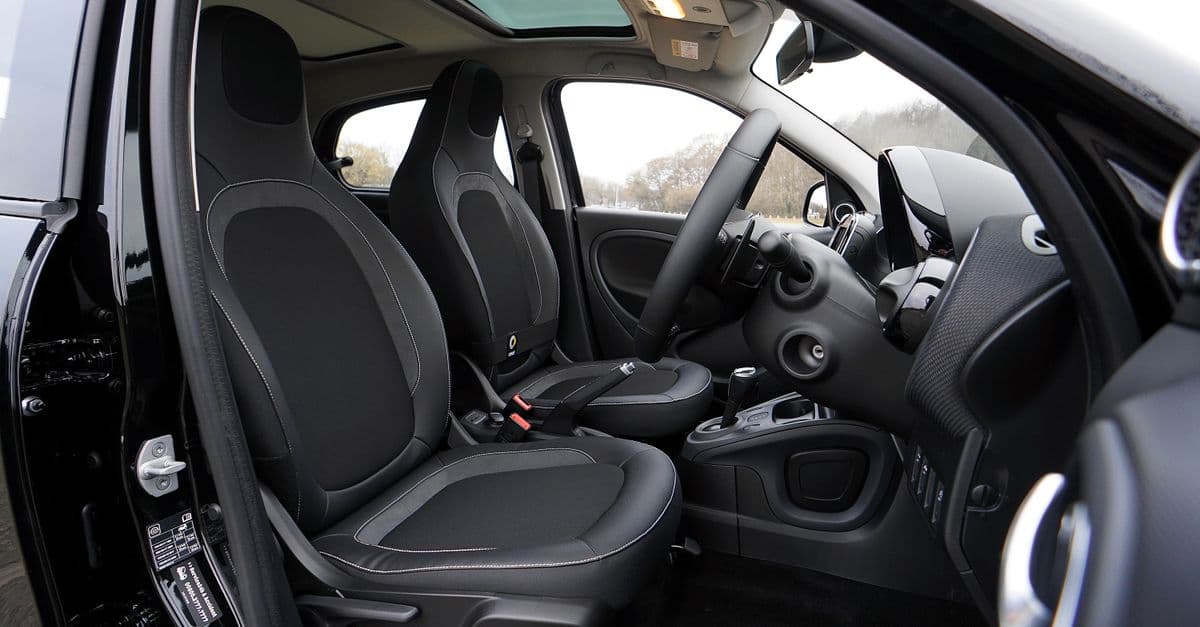
Photo: Mike Bird / Pexels
On a Sunday drive in 1952, John Hetrick, his wife, and their young daughter swerved off a Pennsylvania road to avoid a deer and slammed into a ditch. Nobody was injured, but the instinct Hetrick and his wife shared in that moment — both throwing their arms in front of their daughter — became an obsession. He spent the next year designing a device that would do what human arms could not: deploy fast enough and with enough cushioning to protect a passenger in a real collision. He filed a patent for the automotive safety cushion in 1953. It took until 1989 — thirty-six years after that patent — before the United States government required airbags in new passenger cars. In the decades between those two dates, tens of thousands of people died in accidents that airbags, had they been deployed, might have survived.
Source: John W. Hetrick — Wikipedia
The Sunday Drive That Started Everything
Hetrick's original design used compressed air stored in a canister. In a collision, the impact would rupture a disk and release the air into a canvas bag. The physics were sound in principle and completely impractical in engineering: compressed air cannot inflate a bag fast enough to matter in a crash. A serious vehicle collision occurs in roughly 100 to 200 milliseconds — the airbag must be fully deployed before 30 milliseconds have elapsed, which is faster than the human blink reflex (approximately 150 milliseconds).
Compressed air was the wrong propellant. But Hetrick had identified the right problem — and his 1953 patent documented the concept of a bag deploying from a vehicle surface to cushion an occupant — establishing intellectual priority even before the engineering was workable.
For fifteen years after Hetrick's patent, the airbag problem sat largely unsolved. The automobile industry in the 1950s was not designing for safety. Cars of the era had rigid steering columns that impaled drivers, dashboards with metal knobs, and no energy-absorbing crumple zones. The cultural and regulatory assumption was that accidents were caused by bad drivers, not bad design, and that safety features would imply that the product was dangerous — a marketing liability.
Allen Breed and the Crash Sensor That Made Deployment Possible
The breakthrough that made practical airbags possible came from an engineer named Allen K. Breed. In 1968, Breed developed the world's first crash-sensing technology suitable for automotive use — an electromagnetic sensor capable of detecting the deceleration signature of a collision within milliseconds and sending an electrical signal to trigger deployment.
Source: Airbags — Patent Analysis, Innovation, and Future — CopperPod IP
The sensor Breed designed worked on a simple principle: a steel ball rested in a tube held in place by a small magnet. In a collision, the deceleration force overcame the magnet's hold, the ball rolled forward and completed an electrical circuit, triggering the inflation mechanism. The system was mechanically simple, fast, and — crucially — reliable enough to distinguish a real crash from a pothole or curb strike.
Breed's sensor solved the detection problem. It did not immediately solve the inflation problem. Early development used compressed gas, mechanical springs, and other approaches before engineers settled on chemical inflation — a controlled explosive reaction that generates large volumes of gas almost instantaneously. The standard propellant used from the 1970s onward was sodium azide (NaN₃), which decomposes explosively when electrically ignited to produce nitrogen gas. Sodium azide bags inflate in approximately 30 milliseconds — within the window needed to protect an occupant.
Source: The History (and Future) of Airbags — Hendrick Honda
How an Airbag Works
The modern airbag system has three components that must work in precise sequence within a fraction of a second: the sensor, the inflator, and the bag itself.
The sensor (now electronic accelerometers, not Breed's mechanical ball) detects crash deceleration. Modern systems use multiple redundant accelerometers mounted throughout the vehicle, processing their combined data through a central airbag control unit (ACU). The ACU applies crash algorithms to determine whether the deceleration profile matches a collision severe enough to warrant deployment. This prevents deployment during hard braking or minor impacts.
When the ACU determines deployment is warranted, it sends an electrical signal to the inflator — a small metal canister containing a chemical propellant. The current ignites a squib (a miniature explosive charge), which ignites the propellant. Modern inflators use sodium azide or sodium borohydride compounds rather than pure sodium azide, producing nitrogen gas rapidly enough to inflate the bag in 20–40 milliseconds. The inflated bag is the size of a beach ball and hits the occupant's face and chest at roughly 200 kilometers per hour (124 miles per hour). The bag begins deflating immediately through vents in the fabric, absorbing the occupant's energy over a longer time interval than the steering wheel or dashboard would.
Source: The Evolution of Airbag Technology: Are Modern Airbags Safer? — Willis Law Firm
Think of it like catching an egg: if you hold your hands rigid, the egg breaks on contact. If you allow your hands to give with the egg's momentum — extending the time of deceleration — the egg survives. The airbag does for the human head what yielding hands do for the egg.
What Airbag Sensors Detect
| Signal type | What it measures | Threshold for deployment |
|---|---|---|
| Deceleration | Rate of velocity change (g-force) | Typically 10–30 g depending on system |
| Crash signature | Duration and shape of deceleration pulse | Must match collision profile, not braking |
| Occupant weight | Seat pressure sensors | Suppresses deployment for lightweight occupants |
| Seatbelt status | Whether belt is buckled | Adjusts inflation force accordingly |
Three Decades of Industry Resistance
When General Motors tested a prototype airbag system in 1971–72 and offered it as an option on Cadillac, Buick, and Oldsmobile models from 1974 to 1976, the take rate was so low that GM discontinued the offering. The technical problems were real — early airbags deployed unpredictably, and several deployments caused burns and injuries from the inflation gases. But the deeper issue was institutional: the American automobile industry actively lobbied against mandatory airbag requirements for over fifteen years.
Source: GM Air Cushion Restraint System: The Whole Story — Curbside Classic
The National Highway Traffic Safety Administration (NHTSA) first proposed airbag requirements in 1969. The industry responded with legal challenges, technical objections, and lobbying campaigns arguing that airbags were dangerous and that seatbelts alone were sufficient. The regulatory back-and-forth continued for fifteen years. In 1984, Transportation Secretary Elizabeth Dole issued a compromise: passive restraints — either automatic seatbelts or airbags — would be required beginning in the 1987 model year, with a full mandate by September 1, 1989, unless enough states passed mandatory seatbelt laws.
Source: History of NHTSA's upgrade of FMVSS 208 addressing airbag induced fatalities — PubMed
While American manufacturers argued and litigated, Mercedes-Benz moved forward. In December 1980, the first Mercedes-Benz S-Class vehicles (the 126 model series) were delivered to customers with driver airbags and seat belt tensioners — making Mercedes the first automaker to offer airbags as standard equipment in a production vehicle, developed in partnership with Bosch.
Source: 40 years ago: Mercedes-Benz launched the driver's airbag — Mercedes-Benz USA Media
By the time the US mandate took full effect in 1989 — thirty-six years after Hetrick's patent, twenty-one years after Breed's sensor — Mercedes had been equipping luxury cars with airbags for nearly a decade. The delay cost lives that cannot be precisely counted but that epidemiological models consistently estimate in the tens of thousands.
A Timeline of the Automotive Airbag
| Year | Event |
|---|---|
| 1952 | John Hetrick swerves to miss a deer in Pennsylvania; begins designing a safety cushion |
| 1953 | Hetrick receives US patent No. 2,649,311 for the automobile cushion safety device |
| 1968 | Allen Breed patents electromagnetic crash sensor — the key missing technology |
| 1971–72 | GM tests airbag system on government fleet vehicles |
| 1974–76 | GM offers airbags as option on select models; low take rate leads to discontinuation |
| 1980 | Mercedes-Benz delivers first production cars with driver airbags (S-Class) |
| 1984 | NHTSA issues rule requiring passive restraints beginning 1987 model year |
| 1989 | Full US mandate: all new passenger cars must have driver airbag or passive belts |
| 1993 | US mandate extended to require dual airbags (driver and passenger) |
| 1998 | Side airbags and curtain airbags begin appearing as standard equipment |
| 2008 | First Takata airbag recalls initiated |
| 2015 | NHTSA declares Takata recall a national emergency; 42 million vehicles initially affected |
| 2017 | Takata files for bankruptcy; pleads guilty to federal wire fraud |
| 2024 | NHTSA reports 88% of recalled Takata airbags have been repaired or replaced |
Source: Automotive Archaeology: Where Eaton Crash Tested the First Practical Airbags — The Truth About Cars
The Takata Catastrophe: When a Safety Device Became a Killer
The Takata airbag scandal is the largest automotive recall in history and the most disturbing case study in how a safety device can fail. Takata Corporation, a Japanese supplier, produced airbag inflators using ammonium nitrate as the propellant — an unusually energetic compound that was cheaper and lighter than alternatives but had a critical flaw.
Ammonium nitrate is hygroscopic: it absorbs moisture from the air. When ammonium nitrate cycles through humid and dry conditions repeatedly over years, its physical structure changes. The chemical decomposition that produces inflation gas becomes unpredictable. Instead of a controlled burn that fills the bag, the inflator can rupture catastrophically — sending metal fragments from the canister housing into the passenger compartment at high velocity, like shrapnel from a small grenade.
Source: Takata Airbag Recall: Timeline, NHTSA Investigation, Deaths & Legal Rights — AED Injuries Law
The problem was worst in vehicles sold in hot, humid climates — the American Southeast, Hawaii, Puerto Rico — where temperature swings and high humidity accelerated the ammonium nitrate degradation. But vehicles across the United States and worldwide were affected.
The first recalls began in 2008, initially covering a limited number of vehicles. For years, Takata and automakers resisted expanding the recall scope, contesting NHTSA's requests for additional data and arguing that the failure rate was low. Deaths occurred. In 2015, NHTSA declared the recall a national emergency and ordered Takata to expand it to cover all affected vehicles. The final count reached approximately 67 million vehicles in the United States and over 100 million worldwide — affecting 19 automakers across virtually every brand.
Source: Takata's deadly airbags have affected over 67 million cars — Fox Business
At least 28 people died in the United States from Takata inflator ruptures, with fatalities continuing as recently as September 2024. Worldwide, at least 44 deaths were confirmed. Hundreds of people suffered serious injuries — lacerations, eye injuries, and in several cases amputations from metal fragments.
Source: Takata Airbag Recall: Everything You Need to Know — Consumer Reports
In November 2015, NHTSA imposed a civil penalty of up to $200 million against Takata. In 2017, Takata pleaded guilty to federal wire fraud charges related to falsified safety test data — the company had concealed evidence of inflator problems for years — and agreed to pay $1 billion in penalties. The same year, Takata filed for Chapter 11 bankruptcy protection. Its airbag manufacturing assets were acquired by Key Safety Systems, a Chinese-owned competitor.
The Takata scandal illustrates the failure mode of a safety system that itself becomes a hazard. It also illustrates the regulatory cost of allowing a single supplier to capture an enormous share of a critical market without sufficient oversight of their manufacturing process.
Beyond the Driver: How Airbags Proliferated Across the Vehicle
The driver-side airbag of 1980 was a single bag in the steering wheel center. Modern vehicles contain a distributed system of airbag modules covering most of the occupant space.
Passenger airbag: Deployed from the dashboard opposite the driver. Larger than the driver bag because it must cover greater distance. First mandated in the US for all new cars by 1999.
Side impact airbags: Mounted in the seat back or door panel, deploy to protect the torso in a side collision — one of the most dangerous crash modes because there is less vehicle structure between the occupant and the striking object.
Side curtain airbags: Deploy from the roofline downward to cover the window area, protecting the head from window glass intrusion and ejection through the window in rollovers.
Knee airbags: Deployed below the dashboard to prevent the occupant's knees and legs from striking hard surfaces, reducing lower limb injuries.
Rear seat airbags: Some newer vehicles include airbags for rear-seat passengers — historically one of the most underprotected positions in the vehicle in frontal crashes.
Pedestrian airbags: Volvo introduced an external airbag system in 2012 on the V40 model, deploying from the hood edge to cushion a pedestrian's head impact with the windshield base in a pedestrian collision.
Source: The Evolution of Airbag Technology: Are Modern Airbags Safer? — Willis Law Firm
A premium vehicle in 2025 may contain 8 to 12 airbag modules. The management system — which must determine which bags to deploy, in what sequence, at what inflation force, based on crash direction, speed, occupant size, and seatbelt status — is a software-intensive safety system requiring extensive calibration.
What People Get Wrong About Airbags
The most dangerous misconception is that airbags replace seatbelts. They do not. Airbags are Supplemental Restraint Systems — the SRS designation on dashboards is explicit about this. Without a seatbelt, an occupant moves forward significantly during the pre-impact phase of a collision before the airbag deploys. The airbag then meets an occupant already in rapid forward motion, striking them with much greater relative force than a belted occupant, who is held closer to the seat. Unbelted occupants receiving airbag deployment face significantly higher risk of serious injury from the bag itself.
Early airbags also caused deaths among smaller-statured drivers seated close to the steering wheel and young children placed in forward-facing car seats in the front passenger position. This produced the clear recommendation, still current: children under 13 should sit in the back seat, and rear-facing infant seats must never be placed in front of an active passenger airbag.
Modern airbags use adaptive inflation — adjusting deployment force based on occupant size (detected by seat weight sensors) and seatbelt status — which has significantly reduced out-of-position injury risks compared to first-generation systems.
FAQs
Q: How fast does an airbag deploy? A modern airbag inflates in approximately 20–40 milliseconds — faster than the human eye can follow and well within the 100–200 millisecond window of a typical frontal collision. It begins deflating almost immediately through built-in vents, which is why the bag is soft when you touch it after deployment.
Q: Can you drive a car after the airbags have deployed? Technically yes, in the sense that the engine may still run, but the vehicle is effectively totaled for safety purposes. Deployed airbags must be replaced, and the deployment event typically damages or triggers replacement of seat belt pretensioners, the airbag control unit, and nearby sensors. The repair cost typically exceeds the vehicle's value for older cars.
Q: Why do airbags smell like burning after deployment? The propellant combustion produces hot gases and some byproducts, including small amounts of irritating compounds. The airbag fabric itself is coated with a talc or corn-starch lubricant that helps the bag deploy smoothly — this powder is what most people see as "smoke" after deployment. The smell is from the inflator reaction products.
Q: Is a Takata airbag still dangerous in 2026? As of April 2024, NHTSA reported that approximately 88% of recalled Takata airbags had been repaired or replaced. The remaining 12% — several million vehicles — still carry unrepaired inflators. Vehicle owners can check recall status on the NHTSA website using their VIN (Vehicle Identification Number). The risk is highest for older vehicles in hot, humid climates.
Q: Do airbags save lives? Yes, substantially. NHTSA estimates that airbags saved approximately 50,000 lives in the United States between 1987 and 2017. The frontal airbag system alone reduces driver fatality risk in frontal crashes by approximately 29%, according to IIHS research. Side curtain airbags reduce SUV driver fatality risk in side crashes by 45%.
Q: What happens to used airbag inflators? Deployed inflators must be handled as hazardous waste due to residual propellant and combustion products. They are removed during vehicle scrapping and recycled through specialized facilities. Undeployed Takata inflators recalled from vehicles have been particularly challenging because they must be removed, safely stored, and disposed of without triggering deployment.
The Takeaway
John Hetrick threw his arm in front of his daughter in 1952 and spent a year building the concept that would eventually protect hundreds of millions of people. The distance between that concept and a working, mandated system was thirty-seven years — filled with regulatory battles, industry resistance, and a critical engineering gap that Allen Breed's crash sensor finally bridged. The Takata scandal, which turned a life-saving device into a shrapnel hazard in 67 million vehicles, is the other face of the same story: a system built on sound physics, undermined by cost-cutting chemistry, and made worse by corporate concealment. The airbag has saved an estimated 50,000 American lives since 1987. The same technology has killed at least 44 people worldwide in the decade since its worst failure was exposed. Both numbers matter.
Read next:
Weekly digest
Stay ahead of the curve
Get the best science, AI, and tech stories delivered to your inbox every week. No spam — unsubscribe any time.
About the Author
SciHub101 is an independent science and technology publication founded and edited by Buğra Sözeri, a software engineer and app developer based in Türkiye. Articles are drafted against peer-reviewed literature and primary sources, fact-checked, and edited by a human before publication. Where we compare products, anything built by our own team is labelled as such — see the editorial guidelines and About page for how corrections and disclosures work.
Related Articles

The Atomic Clock: The Device That Defines Time Itself — SciHub101
Louis Essen's 1955 cesium clock at NPL redefined the second and made GPS possible. Now optical clocks are 1,000 times more precise — and the second will be redefined again by 2030.
The 3D Printer: How Additive Manufacturing Changed Everything — SciHub101
How Chuck Hull's 1984 stereolithography patent grew into a technology that builds jet engine parts, human tissue, and entire houses layer by layer.
The Seatbelt: How Nils Bohlin's 1959 Design Saves a Million Lives
Nils Bohlin's three-point seatbelt, introduced by Volvo in 1959 and given free to the world, remains the single most effective automotive safety device ever made.

The Electric Guitar: How a Frying Pan and a Pine Log Rewired Popular Music — SciHub101
From Beauchamp's 1931 Frying Pan to Fender's Stratocaster, the electric guitar's invention reshaped jazz, rock, and every genre that followed. Here's the full story.

George de Mestral: The Engineer Who Invented Velcro After a Hike
George de Mestral invented Velcro in 1955 after examining cockleburs under a microscope during a 1941 hunting trip. His biomimicry insight became one of the most widely used fasteners on Earth.