George de Mestral: The Engineer Who Invented Velcro After a Hike
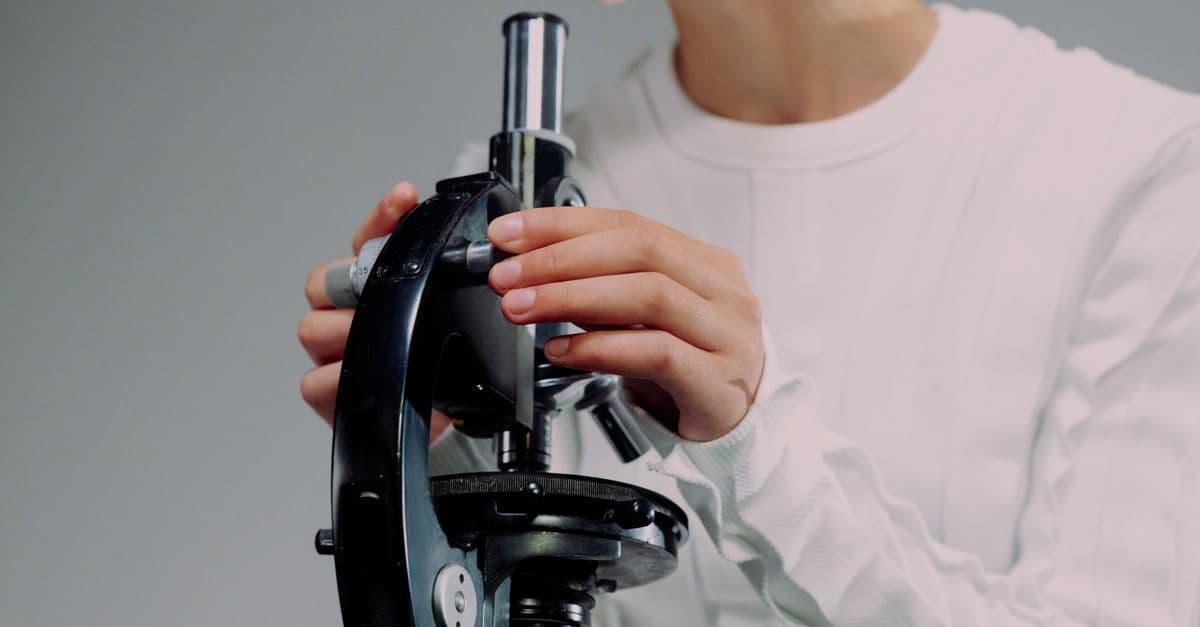
Photo: Ron Lach / Pexels
A man comes home from a hunting trip with cockleburs stuck to his pants and his dog's fur. Most people pull them off and throw them in the trash. George de Mestral pulled them off, took them to his microscope, spent the next 14 years figuring out how to manufacture what he saw, and produced one of the most widely used fasteners in human history. The mechanism he replicated is the same one nature had been using to disperse seeds for millions of years — and the study of such nature-derived engineering solutions now has its own name: biomimicry. De Mestral was doing it before anyone had coined the term.
Born to Invent: Early Life and Education in Switzerland
George de Mestral was born on June 19, 1907, in Saint-Saphorin-sur-Morges, a small town on the north shore of Lake Geneva in the canton of Vaud, Switzerland. His family background was middle-class, with a modest technical tradition. De Mestral showed an aptitude for invention from early childhood: at the age of 12 he designed a toy airplane and received his first patent for it — an unusual achievement for a child, and evidence of an early ability to move from observation to working prototype.
He attended the École polytechnique fédérale de Lausanne (EPFL), one of the two Swiss Federal Institutes of Technology, graduating in 1930 with a degree in electrical engineering. EPFL trained engineers in precision design and systematic problem-solving, the Swiss technical tradition that had produced watchmakers, precision instruments, and later the Large Hadron Collider. De Mestral graduated into the Swiss engineering workforce and eventually found employment as a design engineer.
Source: Wikipedia — George de Mestral https://en.wikipedia.org/wiki/George_de_Mestral
EPFL (École polytechnique fédérale de Lausanne) — one of Switzerland's two Federal Institutes of Technology (the other being ETH Zurich), located on the shores of Lake Geneva. Founded in 1853, it is consistently ranked among the world's leading engineering and technology universities. Its graduates have contributed to precision engineering, materials science, and applied physics across Europe and globally.
He was by his own account an outdoorsman as much as an engineer. He hunted, hiked, and spent time in the Swiss Alps and Jura Mountains. This combination — rigorous technical training and time spent in natural environments — was the predisposition that made the cocklebur incident productive rather than merely annoying.
The Hunting Trip: What He Saw Under the Microscope
The incident that started everything occurred during a hunting expedition de Mestral took with his Irish setter, probably in the early 1940s (Wikipedia cites 1941 as the year he noticed the burrs during a return from an Alpine hunting trip, though some sources place the decisive examination closer to 1948 when he began systematic development). The Jura Mountains and the Alpine foothills surrounding Lausanne are well-supplied with burdock (Arctium species) and similar hooked-seed plants. De Mestral returned from the expedition to find both his woolen hunting trousers and his dog's coat densely covered with seed pods. They were difficult to remove — not because they were sharp, but because they gripped tenaciously from every direction without losing their grip no matter how you pulled.
He removed them, as anyone would. Then, unusually, he took a sample to his microscope.
Source: Wikipedia — George de Mestral https://en.wikipedia.org/wiki/George_de_Mestral
What he saw under magnification was not what he had expected. The cocklebur surface was covered in tiny hooks — hundreds of them, each with a recurved tip, like a miniature grappling hook or a fish hook with the barb facing outward. These hooks did not penetrate the fabric or fur they clung to. They caught the small loops naturally present in the texture of woven cloth and in the curl of animal hair. The attachment mechanism required no adhesive, no pressure, and no alignment: any contact between the hooked surface and a looped surface resulted in grip. And because the hooks were flexible rather than rigid, they released when subjected to peeling force — pulling the hook-covered surface directly away from the loop-covered surface — without permanent deformation.
De Mestral recognized immediately that this was a functional fastener system. Two mating surfaces — one covered with tiny hooks, one covered with tiny loops — would attach when pressed together and release when peeled apart. The attachment was strong enough for practical fastening, the release was clean enough for repeated use, and the system required no precise alignment. It was, in principle, a better button.
Biomimicry — the design practice of using biological structures, systems, or processes as inspiration or direct models for human engineering solutions. The cocklebur's seed-dispersal mechanism — evolved over millions of years to attach seeds to passing animals — is a classic example: it solves the problem of temporary attachment and controllable release with a precision that took de Mestral 14 years to replicate in manufacturable form.
Fourteen Years From Microscope to Market
The gap between "I understand what this does" and "I can manufacture it at scale" was, in de Mestral's case, fourteen years. The journey tells you a great deal about the difficulty of translating biological structures into industrial materials.
His first experiments used cotton. He visited Lyon, France — then the center of Europe's silk and textile weaving industry — and worked with skilled weavers to produce cotton strips with tiny hooks woven into one side and tiny loops into the other. Cotton worked in principle but failed in practice: the natural fiber hooks were too soft and irregularly shaped. They crushed under repeated use and lost their grip quickly. The system needed hooks with consistent geometry, adequate stiffness, and enough elasticity to spring back after each release cycle.
Source: Smithsonian / Lemelson Center — "George de Mestral: Velcro Inventor" https://invention.si.edu/invention-stories/george-de-mestral-velcror-inventor
The solution was synthetic fiber. In the early 1950s, nylon had become commercially available. Unlike cotton, nylon could be formed into precise shapes and retained those shapes under mechanical stress. Working with weavers and textile engineers in Lyon, de Mestral developed a method of weaving nylon into the required hook form. The key discovery was that nylon thread woven into loops and then cut at a precise angle produced consistent, durable hooks. The loops were left uncut on the complementary strip.
The result was a fastener with approximately 300 hooks per square centimeter, each hook engaging with a loop under light pressure and releasing under peeling force of about 0.3 newtons per square centimeter. The attachment was strong, repeatable, and — crucially — manufacturable at scale.
Nylon — a synthetic polyamide polymer developed by DuPont in the 1930s. It was the first commercially successful synthetic fiber, initially introduced in 1938 as a replacement for silk in women's stockings. Nylon's properties — tensile strength, elasticity, resistance to heat and abrasion, and ability to be precisely formed — made it the material solution that cotton could not be for de Mestral's fastener system.
De Mestral filed his patent with the Swiss government in 1951. The patent was granted in 1955. He named the product by combining the French words velours (velvet) and crochet (hook) into the portmanteau "Velcro." He founded Velcro S.A. in Switzerland to manufacture and market the fastener, and the patent was extended to multiple countries including the United States by 1957.
Source: Wikipedia — George de Mestral https://en.wikipedia.org/wiki/George_de_Mestral
The Product Nobody Wanted (At First)
The early commercial reception was cool. The fashion industry, which de Mestral first targeted, was not interested. Velcro's texture and appearance in the early versions were less refined than buttons, zippers, or clasps, and fashion buyers were not persuaded by engineering logic. The fastener was dismissed in some quarters as a gimmick.
The breakthrough came from an unlikely direction: outdoor and sporting equipment. Ski clothing manufacturers recognized that Velcro solved a practical problem — adjustable closures on ski boots, cuffs, and jackets that could be operated with gloved hands, without precise finger alignment. Skiers in the late 1950s adopted it. Divers followed, for the same reason: adjustable equipment closures that worked with wet hands and thick neoprene gloves. The outdoor sports market validated the technology commercially and gave it enough revenue to survive until broader adoption arrived.
Source: APS News — "1990: Death of George de Mestral" https://www.aps.org/apsnews/2004/02/death-george-mestral-velcro
The most consequential early institutional adopter was NASA. The American space program, beginning in the late 1950s, confronted a specific version of the hand-dexterity problem: astronauts wearing pressurized spacesuits had severely limited finger mobility. Manipulating small fasteners — buttons, buckles, zippers — was difficult or impossible. Velcro solved this. NASA used Velcro extensively in early Mercury, Gemini, and Apollo spacecraft, both on astronaut equipment and on interior surfaces where loose objects needed to be temporarily fixed in zero gravity. Velcro's association with the space program gave it considerable public visibility and legitimacy in the 1960s and removed any remaining doubt about its engineering seriousness.
| Year | Event |
|---|---|
| 1907 | Born June 19, Saint-Saphorin-sur-Morges, Switzerland |
| 1919 | Age 12: patents his first invention, a toy airplane |
| 1930 | Graduates from EPFL with degree in electrical engineering |
| 1941 | Hunting trip in the Alps; cockleburs inspire the Velcro concept |
| 1948 | Begins systematic development; first cotton experiments in Lyon |
| 1951 | Files Swiss patent application |
| 1955 | Swiss patent granted; product named "Velcro" |
| 1957 | Patent extended to United States and other countries |
| 1958–60 | Ski and outdoor sports industry adoption |
| 1960s | NASA adopts Velcro for Mercury, Gemini, Apollo programs |
| 1970s | Children's shoe market expansion (Velcro-closure shoes) |
| 1990 | Dies February 8, Commugny, Switzerland, aged 82 |
The Mechanism: How Hook-and-Loop Fastening Actually Works
The genius of de Mestral's system is that it exploits two different mechanical properties in a single interface. The hook side requires stiffness: a hook that deforms permanently under load will not re-engage on the next attachment cycle. The loop side requires flexibility: a rigid loop structure would make peeling (disengagement) require too much force and might damage the hook. Nylon provides both, because the hook geometry retains stiffness against lateral force (which is what keeps the fastener engaged) while allowing elastic deflection during the peeling motion.
When the two surfaces are pressed together, the hooks push through the loops and the recurved hook tips snap into engagement, much like a carabiner gate clicking shut. The mechanism does not require precise alignment because the hooks and loops are distributed uniformly over the entire surface — wherever a hook contacts a loop, engagement occurs. This omnidirectional engagement is what makes Velcro usable with gloves, in the dark, or by young children who cannot manage zipper alignment.
Disengagement works on a different mechanical principle. When you peel Velcro — pulling one surface away from the other at an angle rather than straight off — the peeling front concentrates the separation force on a small number of hook-loop pairs at a time, rather than on all of them simultaneously. This is the same principle that makes adhesive tape peel easily despite having substantial total adhesion: the energy is not applied all at once, but progressively. The characteristic ripping sound of Velcro separation is each individual hook-loop pair releasing in rapid sequence.
Source: Velcro Companies — "An Idea That Stuck: The Story of George de Mestral" https://www.velcro.com/news-and-blog/2016/11/an-idea-that-stuck-how-george-de-mestral-invented-the-velcro-fastener/
Peel force vs. shear force — these are two different directions of mechanical stress on a fastener. Velcro (and adhesive tape) are strong in shear — force applied parallel to the bonded surface — but intentionally weak in peel — force applied at an angle that progressively separates the bond from one edge. This asymmetry is a design feature: it makes controlled release easy (peel) while maintaining hold under the loads that actually matter in use (shear).
Velcro in Medicine, Space, and the Body
Beyond clothing and footwear — which remain the dominant commercial applications — Velcro found adoption in surgical and medical contexts that de Mestral had not originally anticipated. Orthopedic braces use hook-and-loop closures because they allow precise tension adjustment by patients who may have limited hand strength or dexterity. Compression garments for managing lymphedema and post-surgical swelling use Velcro for the same reason. Blood pressure cuffs use it for secure, adjustable attachment around varying arm circumferences.
The most dramatic medical application reported in some sources is in the development of artificial heart implants: researchers used Velcro-type hook-and-loop interfaces to secure experimental artificial heart components to the natural heart tissue in early trials. Whether this became a standard clinical technique is not definitively confirmed by the sources available to this article, but the application illustrates the range of environments — from the inside of a spacesuit to the inside of a chest cavity — into which a well-designed fastener can migrate.
Source: Smithsonian / Lemelson Center — "George de Mestral: Velcro Inventor" https://invention.si.edu/invention-stories/george-de-mestral-velcror-inventor
Children's footwear became a major market in the 1970s and 1980s: Velcro-closure shoes allowed young children to fasten their own shoes before they had developed the fine motor skills needed for lace tying. This application alone affected hundreds of millions of children globally and became the context in which most people of those generations first encountered the material.
For more on this invention's full technical history and modern variants, see The Velcro Fastener.
The Patent Expiration and the Velcro That Isn't Velcro
The original Velcro patents expired in the 1970s, opening the market to competitors. Within a few years, the generic hook-and-loop fastener market was dominated by manufacturers who could produce functionally identical products. The Velcro brand retained market presence through quality and brand recognition, but the technology became generic. This is the same trajectory followed by aspirin, zipper patents, and many other 20th-century material innovations.
The word "Velcro" is technically a registered trademark owned by Velcro Companies (the commercial successor to de Mestral's original Velcro S.A.), not a generic term for hook-and-loop fasteners. Velcro Companies has run public campaigns asking people to use "hook and loop" as the generic term rather than "Velcro" — to protect the trademark from genericization, the legal process by which a brand name becomes common property after entering everyday language as a common noun (as happened with "escalator," "aspirin," and "zipper"). Whether these campaigns will succeed is unclear; the word has already entered general use as a common noun in most languages.
Source: Wikipedia — George de Mestral https://en.wikipedia.org/wiki/George_de_Mestral
What De Mestral's Career Tells Us About Biomimicry
De Mestral did not use the word "biomimicry." The term was popularized by biologist Janine Benyus in her 1997 book Biomimicry: Innovation Inspired by Nature, decades after de Mestral's work. But his process was a textbook example of the practice: observe a biological structure performing a function well, analyze the mechanism, identify the engineering principle, and replicate it in synthetic materials.
The burdock's hook-and-loop mechanism was not an accident of plant anatomy. It is the product of natural selection operating over millions of years on the problem of seed dispersal. Plants whose seeds clung longest and most broadly to passing animals dispersed their seeds farther. The hooks that worked best — strong enough to hold, flexible enough to release, shaped to catch loops in fur without tangling permanently — propagated. By the time de Mestral examined a cocklebur under his microscope, he was looking at a solution that had been refined by evolutionary pressure for a very long time.
The history of technology is full of cases where engineers reinvented, with difficulty, solutions that biology had already found. Sharkskin-inspired swimwear, lotus-leaf-inspired water-repellent surfaces, kingfisher-beak-inspired high-speed train nose cones: all follow the same logic de Mestral applied in Lyon in the early 1950s. What distinguishes his case is that he had no framework called "biomimicry" to guide him — he simply saw something that worked and asked how to make it work in nylon.
Source: APS News — "1990: Death of George de Mestral" https://www.aps.org/apsnews/2004/02/death-george-mestral-velcro
Personal Life and Later Years
De Mestral married and had children; details of his personal life are not extensively documented in scientific literature. He appears to have been primarily defined by his professional work rather than by public intellectual life in the manner of some inventor-celebrities of the 20th century. He was not a prolific writer, public speaker, or media personality. His legacy rests almost entirely on the single invention and the methodical persistence required to bring it from microscope to market.
He retired in Switzerland and died on February 8, 1990, in Commugny, a small municipality in the canton of Vaud near where he had been born 82 years earlier. He was inducted into the National Inventors Hall of Fame in the United States in 1999, nine years after his death.
The Velcro brand continued after his death as a global fastener manufacturer. The underlying technology — hook-and-loop fastening — now appears in products from military equipment to sports gear to hospital gowns to children's toys, made by dozens of manufacturers in dozens of countries. The cocklebur, via de Mestral's microscope and fourteen years of textile engineering, became the template for an industrial product used billions of times a day.
What People Get Wrong About the Velcro Story
The most common version of the story — "de Mestral saw cockleburs, had a flash of inspiration, and invented Velcro" — compresses fourteen years of material development into a single insight. The insight was real and important. But the development was not a flash. Cotton failed. Synthetic fiber was the solution, and synthetic fiber with the right properties (nylon) did not become commercially available until the early 1950s, a decade after the hiking incident.
De Mestral's genius was not the microscope observation. Many people noticed that cockleburs stuck to clothing. His contribution was the combination of technical knowledge (EPFL engineering training), analytical attention (examining the mechanism rather than just the fact of adhesion), persistence (continuing through the cotton failures), and timing (reaching the development phase when nylon was available). The invention emerged from the intersection of a specific natural observation, a specific engineering education, and a specific moment in materials science history.
A second misconception is that Velcro was immediately embraced as a revolutionary product. It was not. The fashion industry rejected it. Its first commercial success came in sporting goods, and its broader cultural acceptance took roughly 20 years from patent to ubiquity.
FAQs
Q: How did George de Mestral get the idea for Velcro?
A: During a hunting trip in the Swiss Alps in the early 1940s, de Mestral noticed cockleburs clinging tenaciously to his woolen trousers and his Irish setter's fur. He removed them, then examined them under a microscope. He saw that the burr surface was covered with tiny curved hooks that caught the natural loops in fabric and fur. He spent the next 14 years developing a synthetic version of this hook-and-loop mechanism.
Q: When was Velcro patented?
A: De Mestral filed his patent in Switzerland in 1951; it was granted in 1955. The patent was subsequently extended to the United States and other countries by 1957. The original patents have long since expired (1970s), making hook-and-loop fastener technology freely available to all manufacturers.
Q: What does "Velcro" mean?
A: Velcro is a portmanteau of two French words: velours (velvet) and crochet (hook). De Mestral coined the name when he founded his company, Velcro S.A., to manufacture the product. The name is a registered trademark; the generic technical term for the product type is "hook-and-loop fastener."
Q: Why did it take 14 years to develop Velcro after de Mestral saw the cocklebur?
A: The initial material — cotton — did not work. Cotton hooks lacked the stiffness and dimensional consistency to engage reliably and recover their shape after repeated use. De Mestral needed a material that could be formed into precise, consistent hook geometry with enough elasticity to spring back after each release cycle. Nylon, which provided those properties, only became commercially available in the early 1950s.
Q: What was NASA's role in Velcro's commercial success?
A: NASA adopted Velcro extensively for Mercury, Gemini, and Apollo spacecraft and astronaut equipment in the 1960s. Astronauts in pressurized suits have severely limited finger dexterity; Velcro closures could be operated with gloved hands without precise alignment. NASA also used Velcro on interior spacecraft surfaces to secure equipment in zero gravity. The association with the space program gave the product high-profile visibility and technical credibility during its formative commercial period.
Q: Is the cocklebur mechanism that inspired Velcro a form of biomimicry?
A: Yes, in principle, though the term "biomimicry" was not current when de Mestral did his work. He replicated in synthetic nylon the hook-and-loop seed-dispersal mechanism that burdock plants had evolved over millions of years. The burdock hook is a biological solution to the problem of temporary attachment and controlled release — exactly the engineering problem that Velcro solves. Janine Benyus's 1997 book Biomimicry: Innovation Inspired by Nature popularized the term for this class of engineering practice, retrospectively categorizing de Mestral's work as an early example.
The Takeaway
George de Mestral's career illustrates a principle that is easy to state and hard to practice: the gap between noticing something interesting and making something useful out of it is almost always measured in years of sustained technical work, not in moments of inspiration. The cocklebur insight was the beginning, not the invention. What turned the observation into Velcro was an engineering education that let de Mestral understand what he was looking at, fourteen years of materials experimentation that found the right synthetic solution, and the patience to persist through an initial commercial rejection. The burdock plant had been solving the attachment problem for millions of years. It took de Mestral's microscope and Lyon's nylon weavers to translate the solution into a language that factories could speak.
Read next:
Weekly digest
Stay ahead of the curve
Get the best science, AI, and tech stories delivered to your inbox every week. No spam — unsubscribe any time.
About the Author
SciHub101 is an independent science and technology publication founded and edited by Buğra Sözeri, a software engineer and app developer based in Türkiye. Articles are drafted against peer-reviewed literature and primary sources, fact-checked, and edited by a human before publication. Where we compare products, anything built by our own team is labelled as such — see the editorial guidelines and About page for how corrections and disclosures work.
Related Articles
Konstantin Tsiolkovsky: The Deaf Schoolteacher Who Invented Space Travel
Konstantin Tsiolkovsky derived the rocket equation in 1903, proposed liquid propellants and multi-stage rockets, and laid the theoretical foundation for all human spaceflight. He was nearly deaf.
Structural Battery Composites Explained: When Materials Carry Loads and Store Energy
Structural batteries combine mechanical load-bearing and electrochemical storage in one composite system. Learn the materials science, accounting challenges, prototypes and limits behind the idea.
Velcro: How a Dog Walk Became a $2.8 Billion Fastener Industry — SciHub101
How Swiss engineer George de Mestral turned burdock burrs stuck to his dog into the hook-and-loop fastener that NASA used, kids wear, and trademark lawyers fight over.
Nanotechnology Explained: The Science of Building at the Atomic Scale
Nanotechnology engineers matter at the level of individual atoms. It's already in your sunscreen, cancer treatments, and phone.
Willis Carrier: The Engineer Who Invented Modern Air Conditioning
Willis Carrier invented the first modern air conditioning system in 1902 to solve a humidity problem at a Brooklyn printing plant. His psychrometric equations still govern HVAC design today.