The Zipper: 62 Years From Patent to Pocket
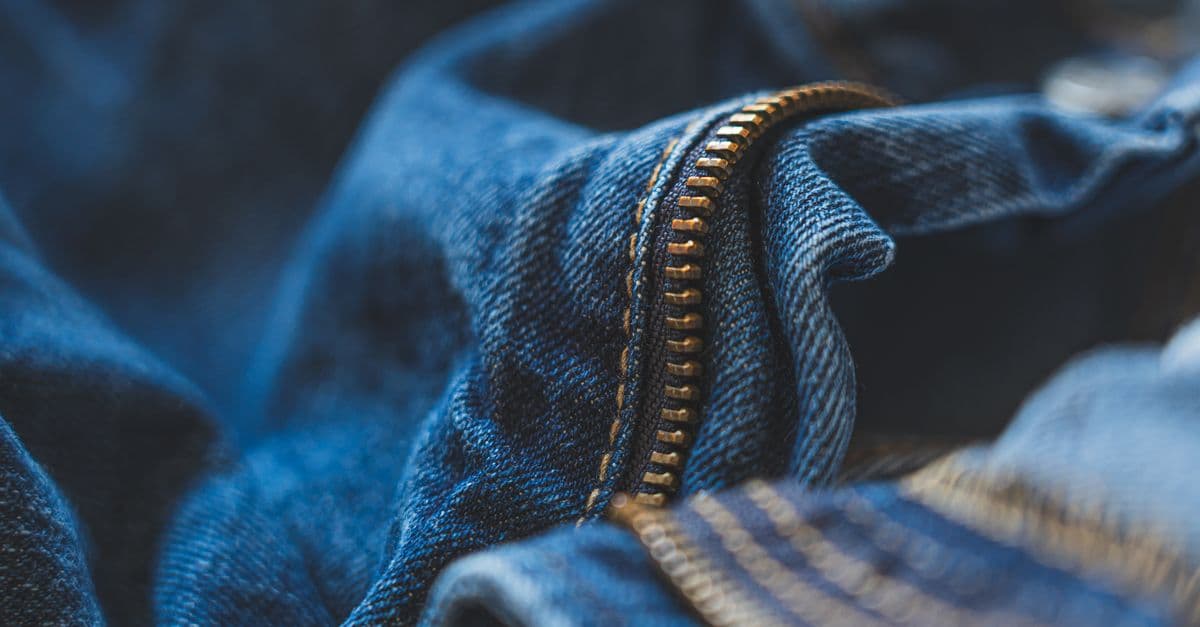
Photo: Castorly Stock / Pexels
The zipper is one of those inventions that appears obvious in retrospect but required three distinct engineering breakthroughs across six decades to actually work. The concept of an automatic clothing closure was patented in 1851 by Elias Howe, who promptly ignored it. Forty-two years later, Whitcomb Judson displayed a device at the 1893 Chicago World's Fair that was theoretically the same idea — and it fell apart. The version that finally worked was invented by a Swedish engineer named Gideon Sundback, perfected between 1909 and 1917, manufactured for the US military in World War I, named by a rubber company in 1923, and now produced at a rate of roughly 10 billion units per year by a Japanese company that controls 40% of the global market.
The Problem the Zipper Had to Solve
By the mid-19th century, garment fastening involved a combination of hooks-and-eyes, buttons with buttonholes, lacing, and pins. Each method had limitations. Buttons require skill to fasten quickly; hooks-and-eyes are fiddly; lacing is slow. High boots in particular — a standard footwear item through the late 19th century — required either a button hook tool or significant manual effort to close a row of ten to twenty buttons along the shaft.
The problem that inventors attempted to solve was not decorative fastening but utilitarian: how do you close a long opening in a garment or boot quickly, reliably, and with one hand, without needing a separate tool?
Source: YKK Americas — "History of the Zipper," documenting the fastening problem context and the evolution from Judson to Sundback. ykkamericas.com/history-of-the-zipper
A zipper achieves this by using a slider to progressively engage and disengage two parallel rows of interlocking teeth. The slider's Y-shaped channel brings the teeth together as you pull in one direction and separates them as you pull in the other. The elegance is in the mechanical simplicity — one motion, no separate tool, no need to look at what you're doing.
Getting there required solving three successive engineering problems: making a fastener that would not spontaneously open, making one that could be reliably manufactured, and making a slider that engaged the teeth symmetrically every time.
Elias Howe's 1851 Patent: The Concept Nobody Used
Elias Howe is famous for the lockstitch sewing machine, patented in 1846. That patent earned him a fortune and one of the most contentious patent disputes of the 19th century. What is less known is that in 1851, Howe also patented what he called an "Automatic, Continuous Clothing Closure."
The device was a drawstring-like mechanism with an elaborate arrangement of hooks and clasps. It bore only a conceptual resemblance to the modern zipper — there were no interlocking teeth and no slider in the modern sense — but the fundamental idea of a continuous, automatic closure was present.
Source: South Florida Reporter (2023) — "In 1851, Elias Howe Patented The 'Automatic, Continuous Clothing Closure.' Howe Never Marketed It." southfloridareporter.com/in-1851-elias-howe-patented-the-automatic-continuous-clothing-closure
Howe never attempted to commercialize the closure. He was already consumed by the sewing machine dispute, which involved claims against Singer, Grover & Baker, and several other manufacturers who had incorporated his lockstitch design without licensing it. His 1851 closure patent expired without any commercial development, and the idea sat dormant for 42 years.
Source: Wikipedia — Elias Howe article, documenting the 1851 patent and his focus on sewing machine litigation. en.wikipedia.org/wiki/Elias_Howe
Whitcomb Judson's Clasp Locker: The First Public Demonstration
Whitcomb L. Judson was a Chicago mechanical engineer and inventor with a history of failed ventures. His motivation for developing an automatic fastener is often cited as a desire to help a friend with back pain who had difficulty bending to button his boots. The historical record on this specific motivation is thin — what is documented is the patent.
On November 7, 1891, Judson filed a patent application for a "Clasp Locker or Unlocker for Shoes." The patent was granted in August 1893 — US Patent 504,038. The device used a series of hooks and loops on two parallel chains, engaged by a sliding clasp. It was considerably more complicated to manufacture than a button, and the hooks could disengage under lateral stress.
Source: Wikipedia — Whitcomb L. Judson article, covering the 1891 patent filing and August 1893 grant. en.wikipedia.org/wiki/Whitcomb_L._Judson
Judson displayed the Clasp Locker at the 1893 World's Columbian Exposition in Chicago. The demonstration was not a success. The device attracted attention but no significant commercial interest. The hooks-and-eyes design had a fatal tendency to pop open spontaneously, particularly under the stress of wearing.
Judson partnered with a Washington, DC, promoter named Colonel Lewis Walker to form the Universal Fastener Company, later the Hookless Fastener Company, to commercialize the device. Walker would prove more important to the story than Judson: it was Walker's company that eventually hired Gideon Sundback.
Source: America Comes Alive (2023) — "Gideon Sundback's Invention of the Zipper," covering Judson's Chicago World's Fair display and Walker's role in forming Universal Fastener Company. americacomesalive.com/gideon-sundbacks-invention-of-the-zipper
The Universal Fastener Company's first commercial client was the US Postal Service, which ordered mailbags with Judson fasteners. The bags opened spontaneously. The post office cancelled the contract. Judson refined the design several times between 1893 and his death in 1909, each iteration partially addressing the reliability problem but not solving it fundamentally.
Gideon Sundback: The Engineer Who Made It Work
Gideon Sundback was born in 1880 in Svabesholm, Sweden. He trained as an electrical engineer in Germany and emigrated to the United States in 1905, initially working for Westinghouse Electric in Pittsburgh. He applied to the Universal Fastener Company at Hoboken, New Jersey, in 1906, attracted by the fastener problem as an engineering challenge.
Within two years, Sundback had become the company's chief engineer. He also married Elvira Aronson, daughter of the plant manager Peter Aronson, which bound his professional and personal life to the company's fate. When Elvira died in 1911, Sundback threw himself into work. His grief drove an obsessive focus on the fastener problem that lasted the next several years.
Source: America Comes Alive (2023) — Sundback biography, covering his immigration, joining Universal Fastener, marriage, and Elvira's death. americacomesalive.com/gideon-sundbacks-invention-of-the-zipper
The fundamental problem with Judson's design was that the hooks-and-eyes could engage and disengage in multiple orientations. A properly engaged hook could be pulled apart by lateral stress because the hook was not truly locked. What was needed was an interlocking geometry that could only be separated by the slider — not by pulling the two sides of the fastener apart.
Sundback's breakthrough was to abandon hooks entirely and design interlocking teeth with a cup-and-socket geometry. Each tooth had a small projection (a "nib") on one side and a corresponding cup on the other. When the slider brought two teeth together, the nib of one tooth locked into the cup of the adjacent tooth from the other side. The only way to separate them was to run the slider backward — there was no lateral stress that could open the fastener.
Source: JSTOR Daily (2023) — "How WWI Made the Zipper a Success," explaining Sundback's interlocking tooth design and its military adoption. daily.jstor.org/how-wwi-made-the-zipper-a-success
He also significantly increased the tooth density. Where earlier designs had four or fewer interlocking elements per inch, Sundback's design had ten to eleven per inch — a density that made the fastener flexible enough to bend around curves while remaining secure.
Timeline: From Concept to Global Standard
| Year | Milestone |
|---|---|
| 1851 | Elias Howe patents "Automatic, Continuous Clothing Closure" — never marketed |
| 1891 | Whitcomb Judson files first clasp locker patent |
| 1893 | Judson's Clasp Locker displayed at Chicago World's Fair; US Patent 504,038 |
| 1906 | Sundback joins Universal Fastener Company |
| 1909 | Sundback becomes chief engineer; Elvira dies 1911; intensive redesign begins |
| 1913 | Sundback patents "Hookless Fastener No. 1": 10–11 interlocking teeth per inch |
| 1917 | US Patent 1,219,881 granted for "Separable Fastener" — the modern design |
| 1918–19 | US military orders 24,000 units for flight suits and field gear |
| 1923 | B.F. Goodrich coins "zipper" for rubber galoshes using Sundback's fastener |
| 1934 | Hookless Fastener Company turnover exceeds 60 million units annually |
| 1934 | Tadao Yoshida founds Yoshida Kogyo K.K. in Japan — later renamed YKK |
| 2024 | YKK surpasses 10 billion zipper units in a single fiscal year |
Source: YKK Americas — "History of the Zipper." Multiple dates confirmed across YKK Americas, JSTOR Daily, and America Comes Alive sources.
The Patent: Sundback's 1913 and 1917 Designs
Sundback filed his first major patent — "Hookless Fastener No. 1" — on March 20, 1913, with the patent granted on April 29, 1913. This date is sometimes observed as National Zipper Day in the United States.
Source: America Comes Alive (2023) — documenting the April 29, 1913 patent grant date and National Zipper Day observation.
His second, more refined patent — "Separable Fastener," US Patent 1,219,881 — was granted in 1917. This design added the feature of a fully separable bottom stop, allowing the fastener to be opened completely (as in a jacket front) rather than only partially. Together, the 1913 and 1917 patents constitute the basic modern zipper design.
Sundback also invented the manufacturing machine that produced the fasteners. Called the "S-L" (scrapless) machine, it cut and shaped Y-profile wire, then attached each formed tooth to a cloth tape in a single continuous process. The machine could produce several hundred feet of zipper chain per day, which was the first time the fastener had been producible at industrial scale.
Source: Lightning Fastener Co. Ltd — St. Catharines Heritage (2014) — documenting Sundback's manufacturing machine and the S-L process. stcatharinesheritage.wordpress.com/2014/05/01/lightning-fastener-co-ltd
The company moved manufacturing to St. Catharines, Ontario, where Sundback became president of the Lightning Fastener Company — the Canadian subsidiary. The Canadian facility operated for decades and gave Sundback a Canadian civic identity that he maintained for the rest of his life despite remaining an American citizen.
How B.F. Goodrich Named the Zipper
Sundback's fastener was called the "Hookless Fastener" by its manufacturer until 1923. The name "zipper" was coined — accidentally, as a brand identifier rather than a generic name — by the B.F. Goodrich Company of Akron, Ohio.
Goodrich had licensed Sundback's design to use on rubber galoshes (waterproof overshoes) and was looking for a name for the new boot model. The company called the boot the "Zipper Boot," from the onomatopoeic sound the slider made when run quickly along the fastener — a sharp "zip." The product was marketed as "the boot with the zipper."
Source: Back Then History (2023) — "The History of Zippers," covering B.F. Goodrich's 1923 coinage of "zipper." backthenhistory.com/articles/the-history-of-zippers
The name caught on with the public, but Goodrich had not trademarked "zipper" as a generic term — only as a product name. Courts eventually ruled that "zipper" had become a generic descriptor for the fastener type, not a protectable brand. Goodrich retained the "Zipper Boot" trademark but lost exclusive rights to the word itself.
This is the same fate that befell "escalator" (Otis Elevator Company), "aspirin" (Bayer), and "thermos" (Thermos GmbH) — product names that passed into common use and became legally generic.
World War I and Civilian Adoption
The zipper remained a niche product through the 1910s, used primarily on specialty items like money belts and tobacco pouches. The large-scale adoption trigger was World War I.
The US Navy ordered approximately 10,000 Sundback fasteners for flying suits in 1917–1918. The Army followed with additional orders for field equipment. Military procurement gave the Hookless Fastener Company its first large-volume customer with consistent quality requirements, which in turn drove improvements in manufacturing consistency.
Source: JSTOR Daily (2023) — "How WWI Made the Zipper a Success," documenting the Navy and Army orders and their manufacturing quality effects. daily.jstor.org/how-wwi-made-the-zipper-a-success
Post-war civilian adoption was gradual. Zippers appeared in children's clothing in the 1920s, partly because children found them easier to manage than buttons. The fashion industry adopted them for women's dresses and men's trousers through the 1930s, though there was initial resistance from tailors whose craft skills were threatened by the faster, simpler fastener.
By the mid-1930s, Elsa Schiaparelli — the Italian fashion designer and Coco Chanel's great rival in Paris couture — used decorative zippers prominently in her collections, transforming them from utilitarian hardware into visible design elements. The zipper was no longer something hidden inside a seam; it was a feature.
YKK: The Company That Won the Zipper War
The American Talon Company (successor to Hookless Fastener) dominated the zipper market through the 1940s and 1950s. In 1934, a Japanese entrepreneur named Tadao Yoshida founded a textile manufacturing business in Tokyo. He saw the zipper as an essential industrial fastener and began production under the name San-S Shoko, which evolved into Yoshida Kogyo K.K. — YKK.
Source: The Hustle (2023) — "One zip to rule them all: After years of dominance, YKK now faces competition," covering YKK's founding and rise. thehustle.co/ykk-japan-china-zippers
YKK's competitive advantage was vertical integration. The company manufactured its own brass alloy, produced its own slider components, and controlled quality at every stage of production. It also produced the machines that made its zippers, which meant proprietary manufacturing technology that competitors could not easily copy.
By the 1970s and 1980s, YKK had overtaken Talon as the dominant global manufacturer. Talon's market share fell to under 10% by the 1980s as YKK's quality, consistency, and price became the industry standard.
Source: Fashion Law (2023) — "The Humble Zipper is at the Center of an Almost $20 Billion Global Battle," documenting Talon's decline and YKK's ascent. thefashionlaw.com/the-humble-zipper-is-at-the-center-of-an-almost-20-billion-global-battle
Today YKK holds approximately 40% of the global zipper market. The company surpassed 10 billion zipper units in a single fiscal year (April 2024 to March 2025) for the first time in its history.
Source: YKK Corporation press release (April 10, 2025) — "YKK Surpasses 10 Billion Annual Global Zipper Unit Sales in FY2024." ykk.com/english/newsroom/g_news/2025/20250410.html
The global zipper market was valued at approximately $14.6 billion in 2024 and is projected to reach $28.7 billion by 2034.
Source: Market.us (2024) — Zipper Market Size, Share, Growth report, citing 2024 market value. market.us/report/zipper-market
Unintended Consequences: The Zipper's Hidden Effects
The decline of skilled tailoring. Before the zipper, garment openings required carefully positioned buttonholes or hooks-and-eyes installed by hand. Both skills required training. The zipper replaced a significant portion of garment hand-finishing work with a machine-inserted tape, reducing the skill level required to produce a finished garment and contributing to the industrialization of clothing manufacture.
Fast fashion enablement. The zipper is one of several fastening and finishing innovations (along with mechanized buttonhole machines and snap fasteners) that made garment production faster and cheaper. It is not the sole cause of fast fashion, but it is part of the manufacturing efficiency story.
Luggage and gear revolution. Before zippers, luggage used leather straps, buckles, and latches. The adoption of zippers in travel bags, backpacks, and eventually sleeping bags and tents transformed the outdoor equipment market. The ability to quickly and fully seal an opening — rather than latching a buckle or tying a strap — changed what was feasible in waterproof gear design.
The fly controversy. Zippers replaced buttons on trouser flies through the 1930s in the United States, and through the 1940s–50s in Europe. The transition was not universally welcome. A 1934 editorial in Esquire magazine advocated for the zipper fly as modern and practical; traditional tailors resisted. The garment trade adopted zippers for flies gradually, and hand-stitched button flies remain a feature of bespoke tailoring to this day.
FAQs
Q: Why did Elias Howe never develop his 1851 closure patent? A: Almost certainly because he was fully occupied with his sewing machine patent disputes. The lockstitch sewing machine was commercially enormously valuable, and Howe spent years pursuing infringement claims against major manufacturers including Singer. His 1851 closure patent was a secondary idea that generated no commercial follow-through before it expired.
Q: What was wrong with Judson's 1893 design? A: The hooks-and-eyes used in Judson's Clasp Locker could be pulled apart by lateral stress — tension applied across the fastener rather than along it. A properly closed hook could be popped open by the normal forces applied to a garment being worn. The design required too precise an alignment to close reliably and was not stable once closed.
Q: What was Sundback's specific technical breakthrough? A: Replacing hooks with interlocking cup-and-socket teeth that could only be separated by the slider, not by lateral stress. Each tooth has a small projection (nib) that locks into a corresponding cup in the adjacent tooth from the opposite tape. The geometry is stable in all directions except along the slider path. He also increased tooth density from four to ten or eleven per inch, which made the fastener flexible enough for curved openings.
Q: How did "zipper" become the generic name? A: B.F. Goodrich coined it in 1923 as a brand name for a rubber galosh that used Sundback's fastener: the "Zipper Boot." The onomatopoeic word caught on with the public as a generic descriptor. Courts later ruled it had become generic and could not be trademarked by Goodrich, placing the word in the public domain the same way "escalator" and "aspirin" became generic.
Q: Why does YKK dominate the zipper market? A: Vertical integration and manufacturing consistency. YKK produces its own metal alloys, manufactures its own slider components, and builds its own production machinery. This means the company controls quality at every stage and maintains proprietary manufacturing knowledge that competitors cannot easily replicate. Combined with scale economies from producing billions of units annually, YKK's cost-and-quality position has been difficult to challenge.
Q: Do zippers have a weak point? A: Yes — the slider. Most zipper failures in garments are slider failures, not tooth failures. The slider's Y-shaped channel wears over time, particularly if the zipper is used with debris in the teeth (sand is particularly damaging), and the channel widens until it no longer brings the teeth into full engagement. Replacing just the slider can restore a worn zipper without replacing the whole tape-and-teeth assembly.
The Takeaway
The zipper is a three-act invention. Howe conceived the idea and did nothing with it. Judson built a version that the concept required but the physics didn't support. Sundback redesigned the geometry from the interlocking element up, then invented the machine that could produce it in quantity. The name came from a rubber company's marketing department, the scale came from a world war, and the market dominance came from a Japanese entrepreneur who understood that making the machine that makes the product is the most defensible competitive position in manufacturing. From Howe's 1851 patent to Sundback's working design in 1913 was 62 years. From Sundback's design to your jacket pocket took roughly another decade. The zipper has been structurally unchanged for over a century.
Read next:
Follow new articles
Add SciHub101 to your feed reader to see new science and technology stories.
About the Author
SciHub101 is an independent science and technology publication founded and edited by Buğra Sözeri, a software engineer and app developer based in Türkiye. AI tools assist with drafting and research. Source documentation in the existing archive is uneven, and articles are being reviewed and corrected. The Editorial Team byline identifies editorial responsibility; it does not certify specialist or independent human review. Where we compare products, anything built by our own team is labelled as such — see the editorial guidelines and About page for how corrections and disclosures work.
Related Articles
Anesthesia: The Invention That Made Modern Surgery Possible
How William Morton's 1846 ether demonstration at Mass General transformed surgery from conscious agony into painless procedure — and why we still don't fully understand it.

The Invention of the World Wide Web
How Tim Berners-Lee's 1989 proposal at CERN became the Web, released to the public domain in 1993, and grew into the infrastructure of modern life.