Anesthesia: The Invention That Made Modern Surgery Possible
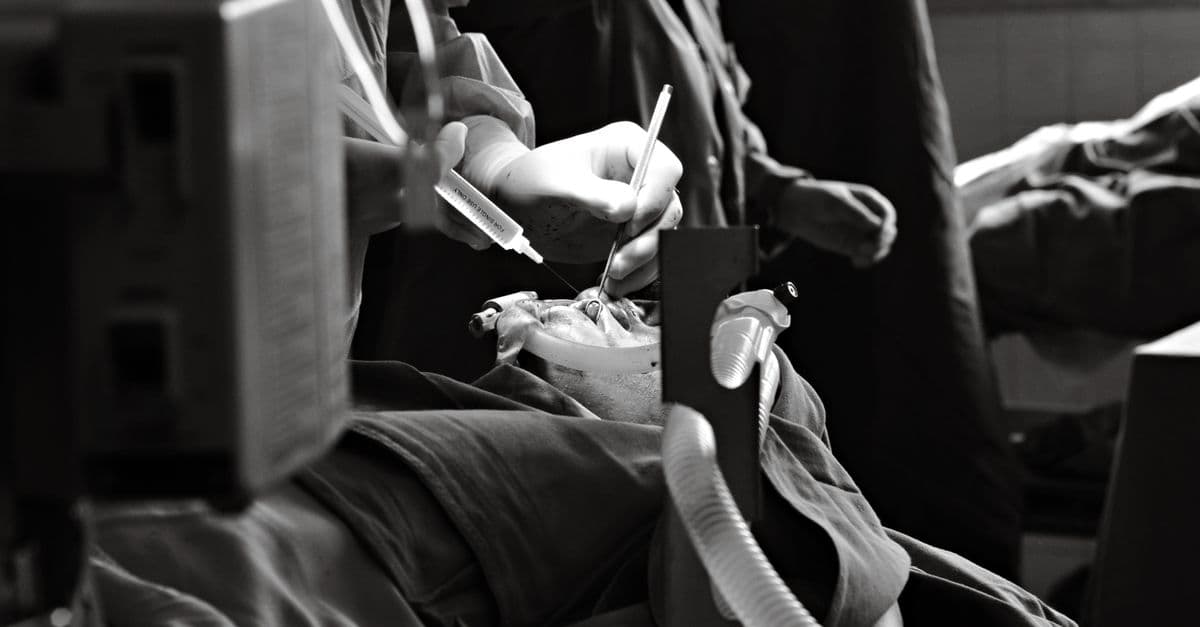
Photo: DΛVΞ GΛRCIΛ / Pexels
Before October 16, 1846, surgery was a test of endurance for both patient and surgeon. Patients screamed, fainted, or died from shock. Surgeons trained for speed above all else — the fastest could amputate a leg in under 90 seconds — not for precision. Then, in a semicircular amphitheater at Massachusetts General Hospital, a dentist named William Morton placed a glass inhaler over a young printer's face, and the operating theater fell silent in a way it never had before.
That morning changed what medicine could accomplish. It also ignited one of the most bitter priority disputes in scientific history — a dispute that remains, technically, unresolved.
What Surgery Looked Like Before Anesthesia
Understanding what anesthesia actually gave the world requires understanding what came before it. Before 1846, surgeons operated on fully conscious patients who were, at best, given alcohol or opium to dull their senses. Neither worked well. Opium reduced anxiety somewhat; it did not stop pain. Alcohol in sufficient quantities caused its own cardiovascular risks.
The operating amphitheaters at major teaching hospitals were designed to maximize the number of students who could observe a procedure. They were, in effect, theaters — and the patient's screams were part of the performance. Surgeons at London's St. Bartholomew's Hospital reportedly had to compete with the sound of patients to be heard by students standing in the gallery above.
The practical consequence was that surgery was restricted to what could be completed quickly. Abdominal surgery was nearly impossible: opening the body cavity meant prolonged agony, and infection killed most patients who survived the procedure itself. Surgeons could remove surface tumors, amputate limbs, and extract teeth — but they could not repair, explore, or reconstruct. Other inventions also reshaped medicine, such as the X-ray.
Source: Massachusetts General Hospital, Department of Anesthesia (2021) — Official 175th anniversary historical account of ether's first use.
The death rate from surgical shock alone — the cardiovascular collapse caused by extreme pain — was substantial. A procedure that took two minutes on an unconscious patient could take ten on a struggling, terrified, conscious one. Time was suffering, and suffering was risk.
The Story Behind the Discovery
The man who walked into the Ether Dome on the morning of October 16, 1846 had been a dentist for less than a decade. William Thomas Green Morton, 27 years old, had been experimenting with sulfuric ether for several months at the suggestion — or at least with the knowledge — of Charles Thomas Jackson, a Harvard chemistry professor. Morton had tested ether on himself, on his pet dog, and on dental patients before requesting permission from the chief of surgery at Massachusetts General, John Collins Warren, to demonstrate the substance on a surgical patient.
Warren agreed, perhaps skeptically. The patient was Gilbert Abbott, a 20-year-old printer who had a vascular tumor on the left side of his jaw. Morton administered ether vapor through a custom-designed glass globe with a sponge soaked in sulfuric ether inside it. Abbott inhaled. Within minutes, he was unconscious.
Warren removed the tumor. Abbott felt nothing. When he regained consciousness, he reported only a sensation "like a scraping." Warren turned to the assembled students and said, in a line that became one of medicine's most quoted: "Gentlemen, this is no humbug."
Source: Celebrate Boston / Massachusetts General Hospital Museum (2021) — "First Public Demonstration of Anesthetic (1846)," historical record of the Ether Day proceedings.
Word spread with the velocity of a genuine revolution. Within two months, ether anesthesia was being used in hospitals in London, Paris, and Edinburgh. Robert Liston, then the fastest surgeon in Europe, performed the first ether-anesthetized surgery in Britain at University College Hospital on December 21, 1846.
The People Involved — and the One Who Got There First
Morton was not the first person to use ether on a surgical patient. That distinction belongs to Crawford Williamson Long, a physician practicing in Jefferson, Georgia. On March 30, 1842 — four years before Ether Day — Long removed a cyst from the neck of James Venable while Venable was anesthetized with ether. He charged Venable 25 cents.
Long continued using ether for several procedures over the following years: a second cyst removal from the same patient in June 1842, and a toe amputation on July 3, 1842. He had six witnesses for at least some of these operations. He did not publish any account of his findings until 1849, three years after Morton's public demonstration had already reorganized the entire field.
The reason Long delayed publishing remains somewhat opaque. He later said he wanted to gather more cases before making a formal claim. By the time his account appeared — with sworn testimonials from patients and witnesses — Morton had already received international acclaim and a (disputed) financial award from the French Academy of Sciences.
Source: Britannica — "Crawford Williamson Long" biographical entry; The Conversation (2019) — "The surprising (and Long) story of the first use of ether in surgery."
Then there is Horace Wells, a Hartford dentist who deserves his own chapter in the story, though it ends in tragedy. In December 1844, Wells attended a public exhibition of nitrous oxide — "laughing gas" — and observed that a man who inhaled it injured his leg during a demonstration but felt no pain. The next day, Wells had a colleague pull one of his own teeth while he breathed nitrous oxide. He reported feeling nothing. Wells was convinced he had found the solution to surgical pain.
In January 1845, Wells traveled to Boston to demonstrate nitrous oxide at Harvard Medical School. The patient moaned during the procedure — possibly from residual sensation, possibly from fear — and the assembled students and physicians declared the demonstration a failure. They hissed him out of the room. Wells was publicly humiliated and returned to Hartford in disgrace.
His story does not improve. By 1847, Morton's success had made the priority question a matter of public debate, and the credit Wells believed he deserved was being claimed by others. He began experimenting with chloroform, became addicted to its vapors, and in January 1848 was arrested in New York City after throwing sulfuric acid at two people on the street while under its influence. On January 24, 1848, he took his own life in the Tombs prison by slashing his femoral artery with a razor after inhaling chloroform. He was 33 years old.
Source: PMC / NCBI (2024) — "Horace Wells: A Pioneer in Modern Anesthesia and Pain-Free Medical Practices."
The American Medical Association formally recognized Wells as the discoverer of practical anesthesia in 1870 — 22 years after his death.
The Timeline of Anesthesia's First Century
| Year | Event |
|---|---|
| 1842 | Crawford Long uses ether on James Venable in Jefferson, Georgia — first use, unwitnessed publicly |
| 1844 | Horace Wells self-experiments with nitrous oxide; begins dental practice using it |
| January 1845 | Wells's failed public demonstration at Harvard Medical School |
| October 16, 1846 | William Morton's successful public ether demonstration at Massachusetts General Hospital |
| December 21, 1846 | Robert Liston performs first ether-anesthetized surgery in Britain |
| November 1847 | James Young Simpson introduces chloroform in Edinburgh |
| January 1848 | Horace Wells dies by suicide in New York City |
| 1849 | Crawford Long publishes his 1842 account of ether use |
| 1870 | American Medical Association recognizes Wells for discovering practical anesthesia |
| 1934 | Cyclopropane introduced as a safer inhalation agent |
| 1956 | Halothane developed, becomes the standard inhalation anesthetic for decades |
| 1977 | Propofol synthesized; approved for clinical use in the late 1980s |
| 1990s | Sevoflurane and desflurane emerge as modern inhalation standards |
How Anesthesia Actually Works — and Why We Still Don't Fully Know
This is where the story becomes genuinely strange. Anesthesia has been in continuous clinical use for nearly 180 years. It is administered approximately 40,000 times every day in the United States alone. And yet the precise mechanism by which general anesthetics render a person unconscious remains, at the molecular and neural circuit level, incompletely understood.
The leading explanation involves gamma-aminobutyric acid type A (GABA-A) receptors — proteins on the surface of neurons that act as the brain's primary "stop" signal. When a GABA-A receptor is activated, it allows negatively charged chloride ions to flow into the neuron, making the cell less likely to fire. Most modern anesthetics, including propofol (the intravenous white emulsion familiar from Michael Jackson's fatal misuse), potentiate these receptors. They make the brain's inhibitory machinery work harder and longer.
Think of GABA-A receptors as the brakes on a car. Anesthetics don't cut the engine — they amplify and extend every application of the brakes, until the car (the conscious mind) rolls to a stop.
But this doesn't fully explain why patients don't simply fall asleep. They lose consciousness in a fundamentally different way than natural sleep — brain activity patterns during anesthesia are measurably distinct from sleep on an electroencephalogram. And different anesthetic drugs with very different molecular structures produce equivalent unconsciousness via what appear to be partially overlapping but not identical mechanisms.
Source: Cell / Neuron (2024) — "Propofol anesthesia destabilizes neural dynamics across cortex," published by Cell Press.
The thalamus — the brain's sensory relay hub — appears to be a critical target. Anesthetics seem to disrupt thalamocortical communication, effectively cutting the feedback loops that maintain conscious awareness. It is less like turning off a light switch and more like removing the conductor from an orchestra: the musicians may still play individual notes, but the coordinated signal that produces meaning collapses.
Sevoflurane, the most commonly used inhalation agent in modern surgery, works through a similar GABA-potentiating mechanism but is also non-flammable, fast-acting, and quickly metabolized, which is why it has displaced older agents like halothane. The precise target sites on GABA-A receptors for different agents are still the subject of active research.
James Young Simpson and the Chloroform Interlude
While Morton's ether was transforming surgery in hospitals from Boston to Berlin, a Scottish obstetrician named James Young Simpson was looking for something better. Ether had real limitations: it was irritating to the mucous membranes, prone to causing post-operative nausea and vomiting, and required relatively large concentrations to achieve deep anesthesia. It was also flammable, which became a serious concern in operating rooms heated by gas lamps.
In November 1847, Simpson and two of his colleagues were sampling various compounds at his dinner table in Edinburgh — a remarkably casual approach to pharmacological investigation — when they inhaled chloroform and all three fell unconscious. Simpson's niece, who was present, reportedly described them as lying "under the table in a state of insensibility."
Simpson introduced chloroform into obstetric practice almost immediately. Its most significant cultural breakthrough came in 1853, when Queen Victoria used chloroform during the birth of her eighth child, Prince Leopold. Royal endorsement silenced many of the remaining moral objections to pain relief in childbirth (some clerics had argued that labor pain was God-given and should not be suppressed).
Source: The Lancet Respiratory Medicine (2015) — "René Théophile Hyacinthe Laënnec" and associated histories of 19th-century anesthetic development.
Chloroform's dominance proved short-lived. By the early 20th century, it became clear that its therapeutic window — the gap between an effective anesthetic dose and a lethal one — was dangerously narrow. It caused fatal cardiac arrhythmias with little warning. Ether, for all its unpleasantness, was considerably safer. Chloroform was progressively abandoned through the first half of the 20th century.
Patent and Priority Disputes: A Cautionary Tale
The question of who invented anesthesia became one of the most contentious patent disputes of the 19th century. Morton, upon returning from his triumphant Ether Day demonstration, immediately attempted to patent his "discovery." He tried to disguise the substance by calling it "Letheon" and refused to reveal its composition to physicians who wanted to use it — a stance that caused immediate and justified outrage.
The patent was eventually granted (US Patent No. 4848, issued November 12, 1846), but it was effectively unenforceable. Within weeks of Ether Day, physicians across the country had identified the substance as sulfuric ether, which had been a known compound for centuries. Morton could not prevent its use.
The more consequential dispute was over who deserved the financial reward. France's Institut de France offered a prize for the invention of surgical anesthesia. Both Morton and Jackson claimed credit. Jackson argued he had been the intellectual source and Morton merely his instrument. Long argued he had done it four years earlier. Wells's supporters argued nitrous oxide deserved priority over ether entirely.
The prize money was ultimately awarded jointly to Morton and Jackson — a compromise that satisfied no one. Morton spent much of the rest of his life and much of his personal fortune pursuing recognition and compensation through Congress, which repeatedly declined to act. He died in 1868 at age 48, frustrated and largely broke.
Source: Library of Congress, Research Guides (2022) — "Patent for the Air Conditioner Issued to Willis H. Carrier," which includes parallel case histories of major invention patents.
Long received state recognition in Georgia but never received the national credit he arguably deserved. A statue of Crawford Long stands in the United States Capitol's National Statuary Hall, representing the state of Georgia — a posthumous acknowledgment of a contribution the medical establishment largely ignored during his lifetime.
Unintended Consequences: Awareness, Addiction, and the Opioid Thread
The introduction of anesthesia did not eliminate surgical risk — it transformed it. Two consequences in particular remain medically significant.
The first is anesthesia awareness, formally called intraoperative awareness: the phenomenon of a patient regaining some degree of consciousness during surgery while remaining paralyzed and unable to communicate. Because modern anesthesia protocols typically include muscle-paralyzing agents (to prevent movement during surgery), a patient who becomes partially conscious cannot signal distress by moving or crying out.
The incidence is approximately 1 to 2 cases per 1,000 general anesthetic administrations under baseline conditions — rising to around 1 in 100 in cardiac surgery and obstetric procedures where anesthetic dosing must be more conservative. In absolute terms, given that anesthesia is used roughly 40,000 times daily in the United States, this represents a significant number of individuals annually.
Source: PMC / NCBI (2011) — "Awareness Under General Anesthesia," Anesthesiology Research and Practice; and PubMed (2004) — "The incidence of awareness during anesthesia: a multicenter United States study."
The second consequence is the relationship between pain management and addiction. The willingness to suppress surgical pain — once considered either impossible or morally problematic — opened a door that proved far more difficult to manage than the original problem. The use of opioids for post-surgical pain management, while clinically necessary in many contexts, seeded a pattern of prescribing that contributed to the opioid epidemic of the late 20th and early 21st centuries. Anesthesia's children include not only the possibility of painless surgery but also decades of agonizing public health consequences from inadequately regulated pain management.
Where Anesthesia Stands Today
Modern general anesthesia combines three distinct pharmacological functions that early pioneers had no way to separate: unconsciousness (hypnosis), pain suppression (analgesia), and muscle relaxation (paralysis). Ether achieved all three imperfectly in a single drug. Contemporary anesthesiologists use combinations of agents, each optimized for one function.
Propofol — synthesized in 1977 and approved for clinical use in the late 1980s — produces unconsciousness rapidly and wears off quickly, making it ideal for short procedures and for induction before maintenance with an inhalation agent. Sevoflurane, introduced in the 1990s, is the most commonly used maintenance agent in the developed world: non-flammable, pleasant-smelling, and excreted quickly from the lungs.
The monitoring technology has transformed in parallel. The Bispectral Index (BIS) monitor, introduced in the 1990s, processes EEG signals into a single numerical score (0 to 100) intended to estimate depth of anesthesia, though its reliability remains debated. End-tidal concentration monitoring for inhalation agents provides direct measurement of the anesthetic level being delivered to the brain.
The specialty of anesthesiology now encompasses not just surgical anesthesia but critical care medicine, pain management, and palliative care. An anesthesiologist's scope of practice in a modern hospital extends far beyond the operating theater.
Source: NIH/NCBI StatPearls (2024) — "Propofol," pharmacology and clinical use reference.
The approximately 40 million general anesthetics administered in the United States each year have a mortality rate attributable directly to the anesthesia itself of roughly 1 in 100,000 — a figure that would have been incomprehensible to John Collins Warren as he watched Gilbert Abbott's jaw being sutured in October 1846. Another life-saving medical device with its own history is the defibrillator.
FAQs
Q: Who really invented anesthesia? A: The honest answer is that multiple people contributed. Crawford Long used ether in surgery in 1842, four years before anyone else, but did not publish his findings until 1849. William Morton gave the first successful public demonstration in 1846, which drove global adoption. Horace Wells first demonstrated the concept of inhaled anesthesia, though his public demonstration failed. Priority depends on how you define "invention" — first use, first success, or first adoption.
Q: Why did ether replace chloroform and not the other way around? A: Chloroform had a narrow therapeutic window — the gap between an effective anesthetic dose and a lethal one was dangerously small, and it could cause fatal cardiac arrhythmias without warning. Ether was less pleasant but considerably safer at the doses needed for surgery. By the early 20th century, the clinical evidence clearly favored ether for safety, even though chloroform had been more widely used in the 1850s and 1860s.
Q: Do we actually understand how anesthesia works? A: Partially. The dominant mechanism involves potentiation of GABA-A receptors, which amplify the brain's inhibitory signaling until conscious awareness collapses. But the complete picture — why different drugs with different molecular structures produce the same result, and precisely how the thalamus and cortex lose coordinated activity — is still an active area of research. The 2024 Cell/Neuron study on propofol identified destabilization of cortical neural dynamics as a key mechanism, which helps but does not fully close the question.
Q: What is anesthesia awareness and how common is it? A: Anesthesia awareness is when a patient regains some degree of consciousness during surgery while still under the effects of muscle-paralyzing agents. The baseline rate is approximately 1 to 2 per 1,000 general anesthetic cases. It is more common in cardiac surgery (around 1%) and obstetric procedures. Most episodes are brief and do not involve pain, but some result in post-traumatic stress disorder.
Q: Is propofol the same drug that killed Michael Jackson? A: Yes. Propofol is the same drug, sold under the brand name Diprivan. It is a legitimate and widely used anesthetic in clinical settings, administered intravenously in precisely controlled doses by trained anesthesiologists with continuous monitoring. Jackson was using it as a sleep aid at home without any of these safeguards — a combination of inappropriate setting, dose, and the absence of monitoring that led directly to respiratory arrest.
Q: How did Crawford Long lose credit for the invention? A: Long did not publish his 1842 findings until 1849, by which point Morton's 1846 public demonstration had already transformed surgical practice worldwide. The medical establishment had organized itself around the narrative of Ether Day. Long made his case, with witness testimonials, but could not overcome a three-year gap in which the entire profession had already adopted a different founding story. His recognition came posthumously — his statue now stands in the US Capitol representing Georgia.
The Takeaway
Anesthesia did not simply make surgery painless — it redefined what surgery could be. The shift from speed-constrained amputations to reconstructive, abdominal, and neurosurgery is directly traceable to that October morning in Boston. The people who got there — Long before Morton, Morton before the world acknowledged Long — remind us that scientific priority is often less about who did something first and more about who told the story most effectively, at the right moment, in front of the right audience. The mechanism itself, 180 years later, remains a partial mystery: we have been switching off consciousness with great precision and great safety, without entirely knowing how we do it.
Read next:
Follow new articles
Add SciHub101 to your feed reader to see new science and technology stories.
About the Author
SciHub101 is an independent science and technology publication founded and edited by Buğra Sözeri, a software engineer and app developer based in Türkiye. AI tools assist with drafting and research. Source documentation in the existing archive is uneven, and articles are being reviewed and corrected. The Editorial Team byline identifies editorial responsibility; it does not certify specialist or independent human review. Where we compare products, anything built by our own team is labelled as such — see the editorial guidelines and About page for how corrections and disclosures work.
Related Articles

Artificial Fertilizer: The Invention That Feeds Half the World
How Fritz Haber and Carl Bosch synthesized nitrogen from air in 1909–1913, feeding billions — and triggering an environmental crisis that still grows.

The Zipper: 62 Years From Patent to Pocket
Elias Howe patented a clothing closure in 1851 and ignored it. It took Judson, Sundback, and 62 years of iteration to produce the zipper in your jacket.

How Surgery Became Safe: Anesthesia, Antiseptics, and the Sterile Revolution
Before 1846, surgery meant unbearable agony and a near-certain chance of fatal infection. Here's how medicine solved both problems within a generation.
Why Anesthesia Is Still a Mystery
We've used general anesthesia since 1846 and perform 300 million surgeries a year with it — but we still don't know exactly how it works.

Organ Transplantation: Christiaan Barnard's First Heart Transplant Explained
How the first human-to-human heart transplant in 1967 worked, why it nearly ended the field, and what finally made transplantation routine
The Invention of MRI
How Lauterbur's 1973 Nature paper and Mansfield's math turned nuclear magnetic resonance into the scanner that sees inside living tissue without radiation.