Organ Transplantation: Christiaan Barnard's First Heart Transplant Explained
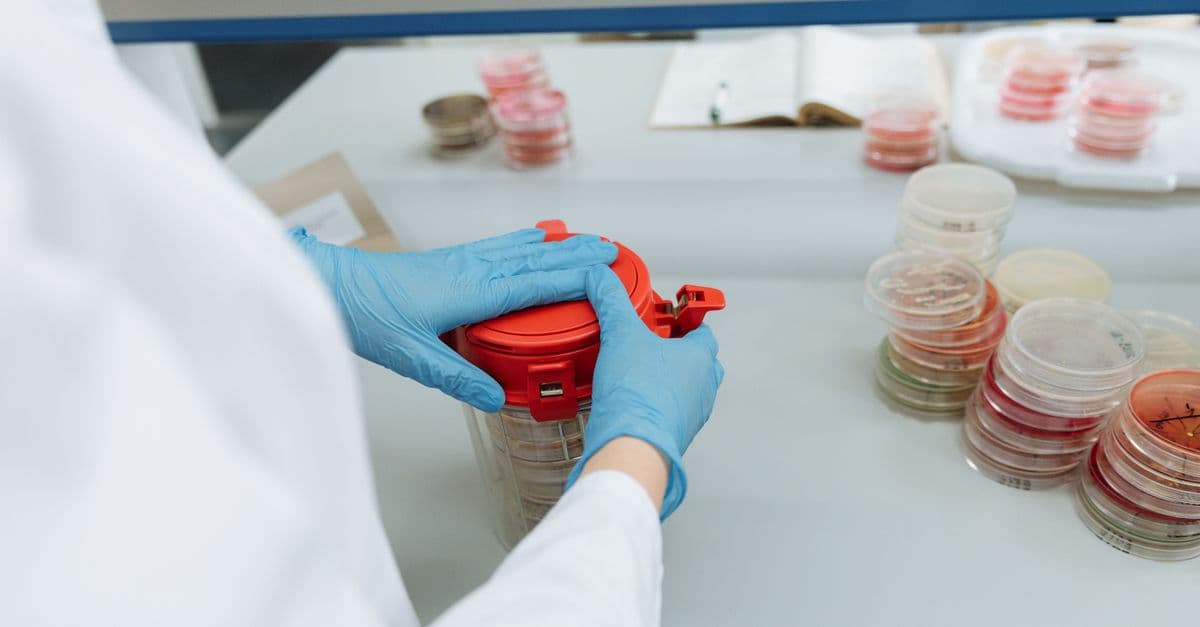
Photo: Edward Jenner / Pexels
On December 3, 1967, a surgical team at Groote Schuur Hospital in Cape Town, South Africa, removed the heart of a young woman who had been declared dead and sewed it into the chest of a 54-year-old grocer. The heart started beating again, and the patient, Louis Washkansky, lived for 18 days before pneumonia killed him. That short survival is the key to the story: the surgery was the easy part, and controlling the immune system was the hard part. This article explains how the operation worked, why the first wave of transplants failed, and what finally made organ transplantation routine.
Educational content, not medical advice. Talk to your doctor before changing any medication, treatment, or routine. Information here reflects current research but every person's situation differs.
Key Takeaways
- Christiaan Barnard performed the first human-to-human heart transplant on December 3, 1967, at Groote Schuur Hospital in Cape Town.
- The operation succeeded technically; the recipient died after 18 days because suppressing the immune system left him open to infection.
- Most early heart transplant patients died within months, and many teams stopped. A few surgeons kept going until cyclosporine arrived in the early 1980s.
- Brain-death criteria, written in 1968, gave surgeons a legal and ethical route to donor hearts that were still beating.
- Organ shortage, not surgical skill, now limits how many patients can be treated.
Why a failing heart was a death sentence in 1967
Before the 1960s, a heart that could no longer pump enough blood had no replacement. Doctors could treat symptoms with rest, salt restriction, and drugs that helped the body shed fluid, but the muscle itself kept deteriorating. Open-heart surgery had existed for only about a decade and could repair valves or bypass blocked vessels. It could not substitute for a heart that was worn out.
Think of the problem like a car whose engine is beyond repair. A mechanic can patch the radiator and replace the spark plugs, but if the block itself is cracked, the only real fix is a new engine. The trouble is that a human body is not a car. Fit a donor "engine" and the body treats it as an invader.
That is the barrier that mattered most. Surgeons had learned to cut out an organ and stitch it into another animal, and by the mid-1960s they could do so in dogs with little difficulty. The animals died anyway. For readers who want the underlying biology, the article on how the immune system recognizes threats explains how white blood cells tell self from non-self.
The surgeons and the animal work that came first
Barnard did not appear from nowhere. He earned his medical degree at the University of Cape Town in 1945. In December 1955 he went to the University of Minnesota in Minneapolis on a two-year scholarship, where he ended up working in the open-heart surgery program of Walt Lillehei and met Norman Shumway, who would later lead heart transplantation in the United States. He completed an MSc in surgery and a PhD in 1958, returned to South Africa that year to lead experimental surgery at Groote Schuur Hospital, and became head of cardiothoracic surgery there in 1961 (Wikipedia, Christiaan Barnard).
Meanwhile, Shumway's team at Stanford University had spent years refining how to transplant a heart in dogs. Shumway and his colleague Richard Lower published their landmark canine report in Surgical Forum in 1960. It described orthotopic heart transplantation in dogs, meaning the donor heart goes where the old one was. The key technical idea was to leave a cuff of the recipient's atria (the heart's two upper chambers) in place and sew the donor atria to it, which cut down the number of delicate connections to the great vessels.
One earlier attempt shows how little was settled. On January 23, 1964, James Hardy at the University of Mississippi transplanted a chimpanzee heart into a dying man, Boyd Rush. The heart beat for roughly 60 to 90 minutes and Rush never regained consciousness (Wikipedia, Heart transplantation). Hardy's operation is usually recorded as the first heart transplant of any kind, and Barnard's is the first from one human to another.
The immune barrier: why transplanted organs get attacked
Every cell in your body wears molecular name tags. The most important set is the human leukocyte antigen (HLA) system, a family of proteins on cell surfaces that display fragments of what is happening inside the cell. T cells, the immune system's patrolling inspectors, check these tags constantly. When they meet a tag they do not recognize, they attack.
A donor organ arrives covered in the wrong name tags. The recipient's T cells read it as an infection and launch the same kind of assault they would mount against a virus. This is rejection. It is not a malfunction; it is the immune system doing exactly what evolution built it to do. For the detailed mechanism of how T cells read these tags, see the article on the T-cell receptor and immune recognition.
Surgeons talk about three broad patterns of rejection, which differ mainly in speed.
| Type | Timing | What drives it |
|---|---|---|
| Hyperacute | Minutes to hours after the blood supply is connected | Antibodies already in the recipient's blood attack the graft's blood vessels |
| Acute | Days to months | T cells recognize donor HLA proteins and attack the tissue |
| Chronic | Years | Slow vessel and tissue scarring, in the heart often called cardiac allograft vasculopathy |
Matching blood groups helps avoid the fastest form. The blood type classification article explains why an ABO mismatch can be catastrophic, and the same logic applies to donated organs.
A kidney transplant showed the problem could be bypassed
The first lasting success with any organ came in 1954. At Peter Bent Brigham Hospital in Boston (now Brigham and Women's Hospital), Joseph Murray transplanted a kidney from Ronald Herrick into his identical twin, Richard. Because the twins shared the same genes, and therefore the same name tags, no anti-rejection medication was needed, and Richard lived about eight more years (Wikipedia, Organ transplantation). The case proved that a transplanted organ could work in a human body for years when rejection was absent.
It also made the next problem obvious. Most patients do not have an identical twin, so the immune system had to be suppressed with drugs. In the early 1960s, drugs such as azathioprine, combined later with corticosteroids, became the standard way to hold rejection back. Those drugs are blunt tools. They damp down much of the immune response, not just the attack on the graft, which is why infection became the major killer of early transplant patients.
Inside Barnard's operation
Groote Schuur Hospital in 1967 was well equipped for heart surgery, and Barnard's team had prepared for months. The recipient was Louis Washkansky, 54, a grocer with diabetes and heart disease that could not be cured. Barnard later said he had told Washkansky the operation had an 80% chance of success, a figure that medical ethicists Peter Singer and Helga Kuhse have criticized as unfounded (Wikipedia, Christiaan Barnard).
The donor was Denise Darvall, a young woman injured on December 2, 1967, while crossing a street in Cape Town. Examination found two serious skull fractures, no detectable brain electrical activity, and no response when ice water was poured into her ear. Her father, Edward Darvall, gave permission for the donation. According to the same biography, Barnard injected potassium into her heart to stop it, rather than waiting for it to stop by itself, after his brother Marius urged that approach.
What the surgeons actually did
The core of the operation had four stages, and each one is a place where things can go wrong.
- Open the chest and connect the heart-lung machine. The patient is cooled slightly and connected to a machine that takes over circulation and oxygenation, which allows the heart to be stopped and removed.
- Remove the diseased heart. The surgeon cuts across the great vessels and the atria, leaving a cuff of the recipient's atria behind.
- Sew in the donor heart. The donor's atria are stitched to the cuffs, and then the aorta and the pulmonary artery are connected. The order matters because each join must be watertight under blood pressure.
- Restart the heart. Warm blood flows through the coronary arteries (the heart's own blood supply) and the muscle begins to contract, sometimes only after an electrical shock.
In Cape Town, the donor heart began beating once warm blood reached it, and the team was able to wean Washkansky off the heart-lung machine. The surgery lasted several hours and involved a team of roughly 30 people, including Barnard's brother Marius.
The 18 days that followed
Washkansky regained consciousness and, for a while, seemed to improve. He was given immunosuppressive drugs to hold back rejection. Eighteen days after the operation, he died of pneumonia, possibly connected to the drugs that were suppressing his defenses. The date is usually given as about December 21, 1967.
Here is the real lesson of those 18 days. The heart worked. The surgery was not what killed him. The immune system was suppressed enough that an ordinary infection became lethal, and it was not suppressed precisely enough to stop rejection without opening the door to infection. That trade-off defined transplant medicine for the next 15 years.
The rush of transplants and the crash that followed
News of Barnard's operation spread around the world. Three days later, on December 6, 1967, Adrian Kantrowitz in New York performed the first pediatric heart transplant; the infant's heart stopped after seven hours. On January 6, 1968, Norman Shumway performed the first adult heart transplant in the United States, at Stanford. In May 1968, Donald Ross's team performed the first in the United Kingdom (Wikipedia, Heart transplantation).
During 1968, about 107 transplants were performed by 64 teams in 24 countries, and only about a third of the recipients lived longer than three months. Results like that were hard to defend. Most surgical teams stopped. Shumway's group at Stanford was the exception, as the only major American program to keep going through the bad years and to improve the procedure through the 1970s (Wikipedia, Norman Shumway).
Barnard also kept going. His second patient, Philip Blaiberg, received a heart on January 2, 1968, and survived about 19 months. A later recipient, Dirk van Zyl, received a heart in 1971 and lived for more than 23 years. Between December 1967 and November 1974, Groote Schuur performed ten heart transplants and one heart-lung transplant, and four of the ten heart patients lived longer than 18 months.
Barnard's heterotopic transplant
Barnard developed a variation known as the heterotopic or "piggy-back" transplant. Instead of removing the patient's heart, the surgeon leaves it in place and connects a donor heart alongside it, so the two work together. The approach helps when the donor heart is too small to carry the full load or when the recipient has high pressure in the lung circulation, which can overwhelm a new heart. He performed the first one in 1974.
In a series of 49 consecutive heterotopic transplants in 43 patients at Groote Schuur between November 1974 and December 1983, one-year survival exceeded 60%, compared with under 40% for standard transplants of that era. Five-year survival exceeded 36%, against under 20% (Wikipedia, Christiaan Barnard). Those standard-transplant numbers show how grim the baseline was before the field had a better drug.
Cyclosporine: the drug that changed the odds
The turning point was a chemical found in a fungus. In 1970, scientists at the pharmaceutical company Sandoz isolated fungal strains from soil samples collected in Norway and Wisconsin. The Norwegian strain, Tolypocladium inflatum, later supplied the compound. Its immune-suppressing effect was identified on January 31, 1972, in a screening program led by Hartmann Stähelin, and its chemical structure was worked out in 1976 (Wikipedia, Ciclosporin).
What made it different was selectivity. Cyclosporine binds a protein inside T cells and blocks an enzyme called calcineurin. That stops the cells from switching on the gene for interleukin-2, a chemical signal T cells use to multiply. Older drugs suppressed many kinds of dividing cells. Cyclosporine mainly dampened T cells, the main drivers of rejection, though it brought a cost of its own: it can damage the kidneys and raise blood pressure.
Roy Calne's group at the University of Cambridge reported its benefit in kidney transplants in 1978, and Thomas Starzl used it in liver transplants starting in March 1980. The U.S. Food and Drug Administration approved it in 1983, after which it came into widespread use for heart transplantation and allowed much smaller doses of corticosteroids (Wikipedia, Heart transplantation). The 1983 date marks its approval, not its discovery, a distinction that matters because the drug spent more than a decade in the pipeline.
| Year | Event |
|---|---|
| 1954 | First lasting kidney transplant, between identical twins in Boston |
| 1964 | Chimpanzee heart transplanted into a human by James Hardy |
| 1967 (Dec 3) | Barnard performs the first human-to-human heart transplant |
| 1968 | About 107 heart transplants worldwide; roughly one-third of recipients survive beyond three months |
| 1972 | Cyclosporine's immune-suppressing effect identified at Sandoz |
| 1978 to 1980 | Cyclosporine reported in kidney (Calne) and liver (Starzl) transplants |
| 1983 | U.S. FDA approves cyclosporine |
| 2022 | First gene-edited pig heart placed in a human patient |
Defining death: the ethics that made donor hearts available
A heart can be used only if it is still being perfused with blood until the moment of removal. That requires a donor who is dead by neurological criteria, with a body still kept running by a ventilator. In 1967 there was no accepted legal standard for that situation, and Barnard's operation exposed the gap.
In 1968, a committee at Harvard Medical School published a pivotal report defining irreversible coma, and a consensus gradually formed around what is now called brain death. A 1981 U.S. presidential commission report, which favored a whole-brain definition of death, formed the basis for the Uniform Determination of Death Act, which has been enacted in 39 states (Wikipedia, Brain death).
Brain death is also a narrow category. Less than 3% of U.S. deaths occur in a way that allows organs to be recovered after brain death, so donors are scarce by definition. Surgeons have therefore turned to donation after circulatory death, in which the heart has stopped. In April 2023, Stanford surgeons performed the first beating-heart transplants from such donors (Wikipedia, Heart transplantation).
The case of Barnard's second donor shows how contentious this still was in the 1960s. Philip Blaiberg's heart came from Clive Haupt, a 24-year-old man classified as Coloured (mixed race) under apartheid, who had suffered a stroke (Cape Argus). In apartheid-era South Africa, a white recipient receiving a heart from a donor who was not white drew sharp criticism, particularly in the African-American press.
How common transplants are now
Organ transplantation is no longer an experiment. UNOS, the nonprofit that runs the U.S. transplant network under contract, reported that 48,149 organ transplants were performed in the United States in 2024, the first time the country passed 48,000 in a single year. That is about 132 transplants a day, from 16,988 deceased donors and 7,030 living donors (UNOS).
Worldwide, the Global Observatory on Donation and Transplantation reported more than 173,000 solid organ transplants in 2024. Kidneys are the most common organ transplanted, followed by liver and heart, and transplantation still meets only a fraction of worldwide need (ESOT summary of the 2024 GODT report). For a country-by-country comparison of volumes, see the ranking of countries with the most organ transplants, and for donation rates see countries with the most organ donors.
Heart transplants are a small share of the total. About 5,000 are performed worldwide each year according to one summary, a 53% increase between 2011 and 2022, with more than half done in the United States. For comparison, roughly 800,000 people have the most severe class of heart failure (New York Heart Association Class IV), far more than the number of hearts available (Wikipedia, Heart transplantation).
What survival looks like today
One published summary of 2018 orthotopic heart transplant data reports survival of 91.5% at one year, 85.9% at three years, and 80.3% at five years. Compare that to 1968, when only about a third of recipients lived beyond three months. Individual outcomes depend heavily on age, other illnesses, and how sick the patient was at the time of surgery, so population numbers cannot predict a specific person's course.
Why survival numbers from different eras are hard to compare
It is tempting to line up "about a third survived three months in 1968" against "80.3% at five years" and conclude that medicine improved by a fixed factor. The comparison is directionally right, but three things make it rougher than it looks.
First, the endpoints differ. The 1968 figure counts the share of recipients alive after three months, an early checkpoint. The modern figures follow patients for one, three, and five years. A heart transplant is most dangerous in the first weeks, so a modern program that loses few patients early will look very different from a 1968 program on any later checkpoint.
Second, the patients differ. The earliest recipients were chosen when the operation was entirely new, often because they were close to death. Barnard's own series shows how selection and technique interact: four of his first ten heart recipients lived longer than 18 months, yet the others died earlier, and one patient lived more than 23 years. Modern teams select recipients with more careful screening and treat them with a far wider drug toolkit.
Third, the data sources differ. Early counts come from individual surgeons and press reports, while modern figures come from national registries that track every transplant. A registry captures failures that a handful of enthusiastic surgeons might not publish.
None of this changes the central point. Cyclosporine, better monitoring, and more careful donor and recipient selection moved heart transplantation from a gamble to a treatment, though the exact size of the improvement depends on which numbers you compare.
A worked comparison from Barnard's own series
The heterotopic series gives a cleaner comparison, because both groups were treated at the same center in the same period, using the same surgical team. Standard transplants in that period had one-year survival below 40% and five-year survival below 20%. The piggy-back approach exceeded 60% at one year and 36% at five years. The gap suggests that when a donor heart is marginal or the recipient's lung pressures are high, supporting a failing heart in parallel can protect the patient.
The result has limits. The patients were not randomly assigned, and surgeons chose heterotopic transplants for particular circumstances. The comparison is a hint about what worked in practice, not a controlled trial. It is also a reminder that the early transplant era was not a single story of failure; it contained sustained, careful efforts to improve the odds with the tools available.
Why the heart came after the kidney, and what that says about risk
Kidney transplantation came first for practical reasons, and the logic helps explain why Barnard's operation was so dramatic. A person with failed kidneys can be kept alive on dialysis while waiting for a donor. There is time to match tissue, to try again if a graft fails, and to treat complications. A person with a failed heart has no equivalent for the long term, and the old heart cannot be put back once it is removed.
That asymmetry raised the stakes of every early heart transplant. If a kidney failed, the patient could return to dialysis. If a heart failed, the patient died. The surgeons who attempted it were accepting an operation with a severe downside in exchange for a chance at a long life. That is also why the ethics of consent and the honesty of survival estimates, such as the 80% figure that Barnard quoted to Washkansky, drew scrutiny in later decades.
The pattern repeated across organs. Liver transplantation moved from experiment to routine after cyclosporine became available, with Thomas Starzl using it in liver transplants from 1980 (Wikipedia, Ciclosporin). For the organs themselves, see the explainers on how the liver works and how the kidneys work. Understanding what each organ does clarifies why failure in one is manageable and in another is immediately life-threatening.
What patients live with after the operation
The operation is not a cure in the way that antibiotics cure a bacterial infection. A transplant trades one serious condition for a lifelong medical relationship. Recipients take immunosuppressive drugs for as long as the graft lasts, and those drugs raise the risk of infection, certain cancers, and kidney disease.
Two infections in particular matter in transplant medicine because they exploit a weakened immune system. Cytomegalovirus is widely carried and can cause serious illness in transplant recipients, and the Epstein-Barr virus has long been linked to lymphoproliferative disease after transplantation. Transplant teams monitor for both.
Monitoring for rejection is also routine. Hearts are checked with tests of blood and tissue and, in many centers, with imaging, so that doctors can adjust drug doses before the graft is damaged. Dose adjustment is a balancing act: too little and the immune system attacks, too much and infection or cancer becomes the greater threat.
One finding illustrates how subtle matching can be. A 2007 Johns Hopkins study found that men receiving female hearts had a 15% higher adjusted five-year mortality risk than men receiving male hearts. The result shows that even factors beyond blood type and HLA can affect outcomes, although it describes a population trend and not a certainty for any single patient.
Where transplantation is heading
The most pressing problem is supply, and several approaches are being pursued in parallel.
Xenotransplantation (animal organs). On January 7, 2022, David Bennett received a gene-edited pig heart at the University of Maryland. He died on March 8, 2022 (Wikipedia, Heart transplantation). The case showed that a pig heart could function in a human for weeks, and it also confirmed that immune and infectious risks remain unresolved. Barnard himself tried xenotransplantation in two patients decades earlier, using a baboon heart and a chimpanzee heart. For the genetic tools involved, see the articles on genetic engineering and modified organisms and CRISPR gene editing in 2026.
Growing replacement tissue. Laboratory-grown mini-organs, or organoids, are valuable for research on how organs develop and respond to drugs, but they are far from replacing a whole heart. The article on organoids explains what they can and cannot model, and how stem cells work in regenerative medicine describes the broader field.
Better matching and allocation. Software can improve which patient receives which organ, an area covered in AI in organ transplantation.
Tolerance. The long-term hope is to train the immune system to accept a graft without lifelong drugs. This has been achieved in some animal models, but it has not become routine in people.
Common misunderstandings about the first heart transplant
"The first transplant failed." The patient died, but the operation achieved what it set out to do technically. What failed was the control of rejection and infection, and that is a separate problem from the surgery.
"Barnard invented heart transplantation." He performed the first human-to-human operation. The surgical technique had been developed in animals at Stanford, and Hardy had transplanted a chimpanzee heart three years earlier. Barnard's contribution was the decision to proceed and the preparation of a surgical team. His heterotopic transplant was an original development.
"The patient's heart was removed while the donor was alive." Barnard's operation relied on a donor who had been declared dead after severe head injuries and no detectable brain electrical activity, with family permission. How death was determined, however, was contested then, and it is the reason brain-death criteria were later formalized.
"Anti-rejection drugs are optional if the match is good." Even close relatives need immunosuppression unless they are identical twins, because the HLA match is rarely perfect. The 1954 twin case worked precisely because the match was exact.
FAQ
Q: Who performed the first human heart transplant? A: Christiaan Barnard led the team at Groote Schuur Hospital in Cape Town that performed the first human-to-human heart transplant on December 3, 1967. James Hardy had transplanted a chimpanzee heart into a human in January 1964, so Barnard's is the first from one person to another.
Q: How long did Louis Washkansky live after the transplant? A: Washkansky survived 18 days and died of pneumonia, which may have been linked to the immunosuppressive drugs he was taking. The heart itself functioned during that time. Barnard's second patient, Philip Blaiberg, survived about 19 months.
Q: Why did early heart transplant patients die so often? A: Surgeons could not control rejection without crippling the rest of the immune system. In 1968, about 107 transplants were performed worldwide and only about a third of recipients lived beyond three months. Infection and rejection were the main causes of death.
Q: What made heart transplants more successful? A: The main change was cyclosporine, a drug that blocks calcineurin in T cells and reduces the immune attack on the graft. It was approved by the U.S. FDA in 1983 and allowed much smaller doses of corticosteroids. Better donor selection and monitoring also helped.
Q: Why is there an organ shortage? A: Hearts and many other organs can be recovered only from donors who die in specific circumstances, such as brain death while on a ventilator. Less than 3% of U.S. deaths occur that way. Worldwide, transplantation meets only a fraction of need, and living donors can supply only some organs such as a kidney.
Q: Can animal organs be used for transplants? A: Experimental cases exist. In January 2022, a gene-edited pig heart was transplanted into David Bennett at the University of Maryland, and he died in March 2022. Xenotransplantation is still experimental, with immune and infection risks that researchers are working to address.
Q: Do transplant recipients take medication for life? A: Generally yes. Recipients take immunosuppressive drugs for as long as the graft functions, which raises the risk of infection, certain cancers, and kidney disease. Doctors adjust doses over time, and what a given person needs depends on the organ, their health, and how the graft is doing.
The takeaway
Barnard's operation is remembered as a surgical feat, but its real legacy is a set of questions it forced into the open. How do you define death so that a beating heart can be taken, and how do you hold back the immune system without handing the patient to the next infection? Those questions took 15 years and one fungal compound to answer well enough for transplantation to become a routine treatment, with more than 48,000 operations in the United States in 2024. The remaining barrier is not technique but supply, and that is where xenotransplantation, better allocation, and new donor categories are pushing today.
References
- Wikipedia contributors. Christiaan Barnard. Training, the December 3, 1967 operation, later Groote Schuur results.
- Wikipedia contributors. Heart transplantation. History, 1968 results, survival, xenotransplant cases.
- Wikipedia contributors. Ciclosporin. Discovery, clinical use, and 1983 FDA approval.
- Wikipedia contributors. Organ transplantation. The 1954 kidney transplant and the donor shortage.
- Wikipedia contributors. Brain death. The 1968 Harvard report and the Uniform Determination of Death Act.
- Wikipedia contributors. Norman Shumway.
- UNOS. U.S. surpassed 48,000 organ transplants in 2024. January 15, 2025.
- ESOT. 2024 report of the Global Observatory on Donation and Transplantation.
- Lower, R.R., & Shumway, N.E. (1960). "Studies on Orthotopic Homotransplantation of the Canine Heart." Surgical Forum, 11, 18-19.
Read next:
Follow new articles
Add SciHub101 to your feed reader to see new science and technology stories.
About the Author
SciHub101 is an independent science and technology publication founded and edited by Buğra Sözeri, a software engineer and app developer based in Türkiye. AI tools assist with drafting and research. Source documentation in the existing archive is uneven, and articles are being reviewed and corrected. The Editorial Team byline identifies editorial responsibility; it does not certify specialist or independent human review. Where we compare products, anything built by our own team is labelled as such — see the editorial guidelines and About page for how corrections and disclosures work.
Related Articles
Pavlov's Classical Conditioning: Learning Theory Explained
How Ivan Pavlov's dogs revolutionized understanding of learned behavior and memory formation

Neuroplasticity: The Brain's Ability to Rewire Itself Explained
How the brain's remarkable ability to form new connections enables learning, recovery, and adaptation throughout life

Countries with the Most Doctors Per Capita (Physicians Per 1,000 People Ranked)
Cuba has 9.54 physicians per 1,000 people — the highest doctor-to-population ratio of any large nation on earth. That is nearly three times the OECD average of 3.7, and more than six times the WHO's minimum recommended threshold of 1.5. Behind Cuba sit Monaco, Greece, Belgium, and Lithuania in a top five dominated by an unexpected mix of a Caribbean socialist state and small European nations.
AI in Organ Transplantation: Matching, Allocation, and Saving More Lives
Machine learning is being tested on organ matching, graft-survival prediction, and kidney nonuse. Here is what the evidence shows and where it stops.
Blood Type Classification: Understanding Transfusions Explained
How Karl Landsteiner discovered ABO blood groups enabling safe blood transfusions
Germ Theory: Pasteur & Koch's Microbial Discovery Explained
How germ theory revealed that microorganisms cause disease revolutionizing medicine and public health