Pavlov's Classical Conditioning: Learning Theory Explained

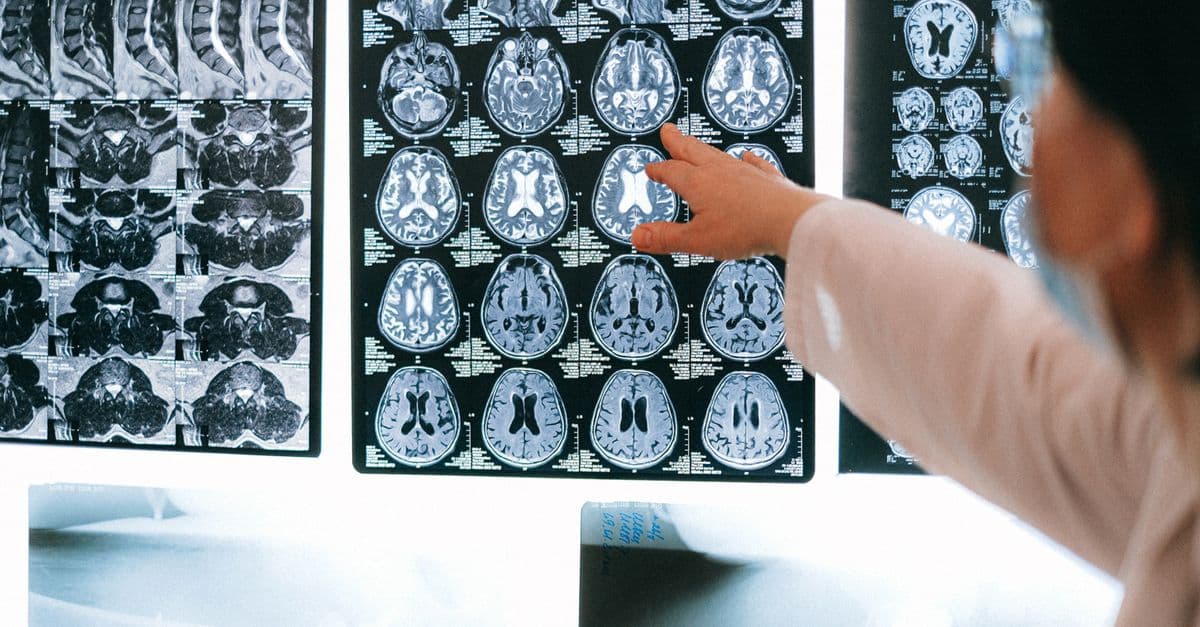
Photo: RDNE Stock project / Pexels
A dog does not know what a bell means. Ring one next to a puppy that has never been fed on a schedule and nothing happens — no drool, no interest, nothing. But ring that same bell forty times right before a bowl of meat powder arrives, and the dog's mouth starts watering the instant the bell sounds, food or no food. Ivan Pavlov turned that simple observation into one of the most tested ideas in the history of science: classical conditioning, the process by which a neutral signal becomes a trigger for an automatic response. It explains phobias, food cravings, drug tolerance, chemotherapy nausea, and a good chunk of what advertising does to your brain.
Educational content, not medical advice. Talk to a licensed clinician before changing any treatment, medication, or therapy routine. Research findings summarized here describe group-level patterns, not guarantees for any individual case.
Key Takeaways
- Classical conditioning links a neutral stimulus with a reflex-triggering stimulus so the neutral one alone eventually produces the reflex
- Pavlov discovered it by accident while measuring dog saliva for digestion research, not by studying behavior on purpose
- The Rescorla-Wagner model (1972) reframed conditioning as the brain tracking prediction error, not just pairing frequency
- The same mechanism explains phobias (Watson's 1920 Little Albert study), chemotherapy-induced nausea, and fatal heroin overdoses in unfamiliar settings
- Extinction suppresses a conditioned response but does not erase the original memory trace, which is why relapse and "spontaneous recovery" happen
What classical conditioning actually is
Classical conditioning is a form of associative learning: an organism links two events that occur close together in time until one predicts the other. Pavlov's terminology, still used in every psychology textbook, breaks the process into four parts. The unconditioned stimulus (US) is something that triggers a response automatically and without any learning — food in a dog's mouth, a loud bang, a shot of nicotine. The unconditioned response (UR) is that automatic reaction — salivation, a startle, a dopamine spike. The conditioned stimulus (CS) is the originally neutral signal, like a bell or a light, that gets paired repeatedly with the US. Once learning occurs, that same signal on its own produces the conditioned response (CR), a learned version of the original reflex.
This is different from the kind of learning most people picture when they hear "training an animal." Sit-and-stay commands, tricks for treats, and workplace incentive programs are operant conditioning, where a voluntary behavior gets strengthened or weakened by what happens after it. Classical conditioning does not require the animal to do anything at all. The dog does not choose to salivate at the bell; the response is involuntary, wired into the autonomic nervous system, the same way your pupils contract in bright light whether you want them to or not.
Pavlov did not set out to discover any of this. He was a physiologist studying digestion, measuring how much saliva dogs produced when food entered their mouths, and he won the 1904 Nobel Prize in Physiology or Medicine for that separate body of work on the digestive system (NobelPrize.org). It was a nuisance in the data that changed his career: his lab dogs, fitted with surgical fistulas that let researchers collect and measure saliva directly from the salivary ducts, started drooling before food even appeared — at the sight of the lab assistant who usually fed them, or at the sound of his footsteps in the hallway (Britannica). Most researchers would have treated that as measurement noise to control for. Pavlov treated it as the finding.
How Pavlov proved it was learning, not instinct
What were the original experiments?
Between the 1890s and 1900s, Pavlov systematically paired a neutral stimulus — most famously a bell, though metronomes, buzzers, and lights were also used — with the presentation of food. Before conditioning, the bell alone produced no salivation; food alone reliably triggered it. After repeated pairings, the bell alone triggered salivation, even with no food present (EBSCO Research Starters). The dog had learned that the bell predicted the food.
That single result would have been interesting but limited. What made the work foundational was Pavlov's insistence on mapping the boundaries and rules of the phenomenon, the same way a chemist maps a reaction's conditions rather than just confirming it happens once.
Acquisition described how the association strengthened with repeated CS-US pairings, following a curve that rose quickly at first and then leveled off — the dog didn't need infinite trials to "get it," but a handful of trials produced most of the learning, with diminishing returns after that. Extinction showed that if the bell rang over and over without food ever following, salivation gradually faded. Crucially, Pavlov noticed that a rested dog would sometimes salivate at the bell again after extinction, a phenomenon he called spontaneous recovery — evidence that extinction suppresses a response rather than deleting the original memory. Stimulus generalization showed dogs would salivate somewhat at tones similar to the training bell, and stimulus discrimination showed that training could narrow the response back down to only the exact original tone if similar tones were never paired with food. Pavlov compiled these findings into his 1927 book, Conditioned Reflexes, which remains the reference text for the field.
Why did Pavlov's method matter as much as his findings?
Pavlov measured saliva volume with surgical precision instead of asking dogs how they "felt," turning behavior into hard numbers. That objectivity is what let psychology claim to be an experimental science rather than philosophical guesswork, and it set the template every later conditioning study — including studies on humans — would follow.
The mechanism: what's actually happening in the brain
The oldest explanation for conditioning was pure temporal contiguity: pair two things close enough in time, often enough, and the brain wires them together. That model held for decades but couldn't explain several odd results — for instance, that a CS conditioned alongside a second, already-established CS gained almost no associative strength of its own, a phenomenon called "blocking."
In 1972, psychologists Robert Rescorla and Allan Wagner proposed a fix that reframed conditioning entirely: what drives learning isn't just pairing frequency, it's prediction error, the gap between what the animal expects and what actually happens (ScienceDirect: Rescorla-Wagner model). Each trial nudges the CS's predictive "strength" toward the outcome, in proportion to how surprising that outcome was. A stimulus that already reliably predicts the food adds nothing more; a stimulus that predicts nothing gets strengthened fast at first, then more slowly as it becomes a good predictor. It is the same math, structurally, that shows up decades later in reinforcement-learning algorithms that train computers to play games and generate text — the machine gets better by minimizing the gap between its prediction and the outcome, exactly the way Pavlov's dogs did.
Think of it like tuning an old analog radio dial. Each turn (each trial) moves you closer to the station, but a huge static burst (a big prediction error) prompts a bigger correction than a signal that's already coming through cleanly. The brain isn't recording a simple checklist of "bell happened, food happened" — it's constantly adjusting its best guess about what predicts what, and it adjusts hardest when it's most wrong.
At the tissue level, associative learning depends on synaptic plasticity — the strengthening or weakening of connections between neurons based on how often they fire together, a principle often summarized as "neurons that fire together, wire together." Eric Kandel's Nobel-winning work on the sea slug Aplysia showed that even simple forms of associative learning involve measurable, lasting changes in synaptic strength at the cellular level, work that helped establish that learning has a physical, traceable signature in neural tissue rather than being some purely abstract mental event. For a deeper look at how those physical changes accumulate into stored experience, see our explainer on how memory works in the brain.
How does extinction actually work, mechanistically?
Extinction is new learning layered on top of old learning, not deletion of it. When a CS repeatedly appears without the US, the brain forms a second memory — "this cue no longer predicts the outcome" — that competes with and usually suppresses the original association. Because the original trace survives underneath, conditioned responses can resurface later through spontaneous recovery, renewal in a new context, or reinstatement if the US reappears even once.
From dogs to humans: fear, phobias, and one deeply unethical study
Pavlov's principles translate almost exactly onto human emotional learning, and the demonstration that made that case was also one of psychology's most notorious ethical failures. In 1920, John B. Watson and Rosalie Rayner conditioned a nine-month-old infant, known in the literature as "Little Albert," to fear a white rat. Albert initially showed no fear of the rat. Watson and Rayner then paired the rat's appearance with a loud, startling noise — a hammer struck against a steel bar — several times. Afterward, Albert became distressed at the sight of the rat alone, and that fear generalized to other furry white objects, including a rabbit, a fur coat, and a Santa Claus mask (Simply Psychology summary of Watson & Rayner, 1920). It was the first clear demonstration that human emotional responses obey the same conditioning laws Pavlov found in dogs — but Watson and Rayner never attempted to extinguish Albert's fear before the study ended, a lapse that would not pass any modern research ethics board.
That mechanism — neutral stimulus paired with a frightening or painful unconditioned stimulus — is the same one behind real-world phobias and post-traumatic stress. A car backfiring near a combat veteran, a specific smell present during a medical trauma, or a particular room where a panic attack occurred can all become conditioned stimuli that trigger fear responses years later, independent of any conscious decision to be afraid.
Why does exposure therapy work, and how well does it actually work?
Exposure therapy applies Pavlov's extinction principle deliberately: repeatedly presenting the feared stimulus in a safe setting, without the frightening outcome, until the fear response weakens. A meta-analysis covering 65 studies and nearly 4,930 patients found exposure-based therapy produced large effects compared to waitlist or treatment-as-usual conditions for PTSD, and performed comparably to other trauma-focused therapies and to SSRIs at the end of treatment (ScienceDirect meta-analysis). For specific phobias, exposure therapy is considered the first-line treatment, with research supporting both single, extended sessions and treatment spread across multiple sessions (Nature Scientific Reports, 2020).
It doesn't work for everyone equally well. Studies of spider phobia patients found that people who could complete the full planned exposure session in the allotted time showed noticeably better short- and long-term outcomes than those who couldn't tolerate the full session (PMC: fear extinction and exposure outcomes). That individual variability is one of the more active areas of current anxiety research.
Beyond fear: cravings, cancer nausea, and lethal drug overdoses
Not every application of classical conditioning involves fear, and some of the clearest real-world cases involve appetite, illness, and drug response instead.
Chemotherapy-induced anticipatory nausea is one of the cleanest clinical examples of classical conditioning outside a lab. Chemotherapy drugs are a powerful unconditioned stimulus for nausea; the sights, sounds, and smells of the treatment room are the neutral stimuli present alongside every infusion. After several rounds, many patients start feeling nauseated at the smell of the clinic or the sight of the IV pole before any drug enters their body — the room itself has become a conditioned stimulus. Roughly one in three chemotherapy patients develops anticipatory nausea, and about one in ten develops anticipatory vomiting, typically emerging by around the third treatment session and sometimes appearing up to 48 hours before the actual infusion (National Cancer Institute; CURE oncology coverage). Younger patients and those who experienced severe post-treatment nausea early on are at elevated risk (PubMed: Andrykowski, 1993).
Conditioned taste aversion shows how conditioning bends its own rules under the right biological pressure. Psychologist John Garcia found that rats could form a strong aversion to a taste after a single pairing with illness, even when the sickness came hours later — a pairing gap that should make ordinary conditioning nearly impossible, since most associative learning requires the CS and US to occur close together in time. Garcia also found that rats readily linked taste with illness but not with a shock or a sound, while they readily linked sound with shock but not with illness ("belongingness," now generally discussed as biological preparedness) (American Scientist coverage of Garcia's taste-aversion research). The likely evolutionary logic: an animal that gets sick after eating something needs to learn "avoid that food" fast and permanently, because a second exposure to a genuine poison could be fatal. This is why people who get food poisoning from a specific dish can develop a lasting aversion to that food even when they consciously know the restaurant, not the ingredient, was the problem.
Conditioned drug tolerance is arguably the highest-stakes application of Pavlov's framework. Siegel's model holds that the environment surrounding drug use — the room, the ritual, the paraphernalia — becomes a conditioned stimulus that triggers the body's compensatory physiological response in advance of the drug itself, the way an anticipatory immune-style counter-reaction blunts the drug's impact. Take the same dose in a novel setting, where those conditioned cues are absent, and the body never mounts its usual defense — a mechanism that helps explain why so many heroin "overdose" deaths occur not because the dose was unusually large, but because the setting was unusually unfamiliar (Siegel & Ellsworth, 1986). This same conditioned-cue mechanism is a major reason relapse risk spikes when people in recovery return to places associated with past use, which connects directly to how habits move from effortful choices to automatic behavior as environmental cues take over from conscious decision-making.
Where the "conditioning" framing breaks down
People often assume classical conditioning explains all learning, and it doesn't. It explains associative, largely involuntary learning — the pairing of stimuli that produces reflexive, autonomic, or emotional responses. It does not explain skill acquisition, problem-solving, language learning, or most of what happens when someone studies for an exam; those rely more heavily on other mechanisms, including operant conditioning (learning from consequences) and the broader neuroplastic reorganization covered in our piece on how the brain rewires itself.
A second common misconception is that extinguishing a conditioned response erases it. It doesn't. Pavlov's own spontaneous-recovery observation showed that the original association survives extinction training in some dormant form, which is consistent with more recent human research on PTSD and anxiety treatment, where relapse after successful exposure therapy remains a documented risk rather than a rare fluke.
A third misconception, popular in self-help writing, treats conditioning as something that only happens to animals or "primitive" parts of the brain, while human reasoning sits above it, immune to reflexive learning. The Little Albert study and decades of fear-conditioning research say otherwise: the amygdala-centered circuitry that links neutral cues to fear responses operates largely outside conscious control, in humans exactly as in Pavlov's dogs, and no amount of "knowing better" automatically switches it off. That's precisely why exposure therapy, not persuasion or willpower, is the evidence-based treatment for phobias.
Reconsolidation: the newer, messier frontier
Perhaps the most consequential update to Pavlov's original model came in 2000, when neuroscientists Karim Nader, Glenn Schafe, and Joseph LeDoux showed that recalling a fear memory in rats made it briefly unstable again — vulnerable to disruption in a way a dormant memory isn't — before it "reconsolidates" back into long-term storage (Nature, 2000 — study summarized via Nature Neuropsychopharmacology coverage). Blocking protein synthesis in the amygdala during that brief reactivation window weakened the fear response afterward, essentially editing the memory rather than just suppressing it with new extinction learning.
That finding launched a wave of human research into whether reactivating a fear memory and then administering a drug like propranolol, a beta-blocker that dampens the stress-hormone signaling involved in memory reconsolidation, could reduce a memory's emotional charge without requiring full exposure therapy. Results have been genuinely mixed: some studies find a real reduction in the later expression of the fear response when propranolol is given around memory reactivation, while others fail to replicate a reliable effect, and researchers still debate whether the drug is producing true amnesia for the emotional content or a milder, temporary blunting effect (ScienceDirect debate on propranolol and PTSD). It's an honest illustration of how a tidy century-old mechanism keeps generating open, unresolved questions once neuroscience starts probing its molecular basis.
Pavlov's four conditioning phenomena at a glance
| Phenomenon | What happens | Everyday example |
|---|---|---|
| Acquisition | CS and US are repeatedly paired; the CS gains predictive strength, fast at first, then more slowly | Learning that a specific ringtone means a work email, not a text from a friend |
| Extinction | CS repeatedly presented without the US; the conditioned response weakens | A car alarm phobia fading after months of alarms that never precede danger |
| Spontaneous recovery | A weakened response reappears after a rest period, without any new pairings | An "extinguished" fear of dogs resurfacing unexpectedly years later |
| Generalization | Stimuli similar to the original CS also trigger the response, to a lesser degree | Fearing all wasps after one bee sting, despite bees and wasps being different insects |
Table: the core conditioning phenomena Pavlov identified between the 1900s and 1920s, still used as the standard framework in behavioral neuroscience.
What this means
Classical conditioning is not a quaint historical curiosity from an early-1900s dog lab — it is a live, load-bearing mechanism running constantly in human bodies, from the nausea a cancer patient feels at the smell of a hospital to the exact reason a heroin dose that was safe last week can kill this week in an unfamiliar room. The Rescorla-Wagner reframing, Nader's reconsolidation work, and ongoing research into propranolol and memory all show the model is still being actively rebuilt, not just taught from a 1927 textbook. What hasn't changed is the core insight Pavlov stumbled into while trying to measure dog spit: the nervous system is constantly, involuntarily, learning what predicts what, whether or not you decide to let it.
Read next:
- Neuroplasticity: The Brain's Ability to Rewire Itself Explained
- How Memory Works in the Brain Explained
- How Habits Move From Effort To Automatic
FAQ
Q: What's the difference between classical and operant conditioning? A: Classical conditioning pairs a neutral stimulus with one that already triggers an automatic, involuntary response, so the neutral stimulus alone eventually triggers it too. Operant conditioning, developed later by B.F. Skinner, strengthens or weakens a voluntary behavior based on the consequences (rewards or punishments) that follow it. A dog salivating at a bell is classical; a dog sitting on command for a treat is operant.
Q: How does extinction work in classical conditioning? A: Extinction happens when the conditioned stimulus repeatedly appears without the unconditioned stimulus that originally followed it. The brain forms a new, competing memory that this cue no longer predicts the outcome, which suppresses the conditioned response without deleting the original association — which is why spontaneous recovery and relapse remain possible.
Q: Can classical conditioning happen in humans, not just animals? A: Yes. The Little Albert study in 1920 demonstrated conditioned fear in a human infant, and modern clinical research documents classical conditioning in phobias, PTSD, chemotherapy-related nausea, and drug tolerance. Human conditioning frequently happens without conscious awareness of the learning process.
Q: Why does Pavlov's work still matter today? A: Pavlov established that learning follows discoverable, measurable rules rather than being unpredictable or purely subjective. That foundation underlies exposure therapy for anxiety and PTSD, addiction treatment protocols, chemotherapy-side-effect management, and ongoing neuroscience research into memory reconsolidation.
Q: Is all learning a form of classical conditioning? A: No. Classical conditioning explains associative, largely involuntary learning. Skill acquisition, language learning, and deliberate studying depend more on operant conditioning, observational learning, and general neuroplastic brain reorganization, not simple stimulus pairing.
Q: Can a conditioned fear or craving ever be permanently eliminated? A: Full elimination is difficult. Extinction training and exposure therapy suppress conditioned responses effectively enough that they rarely reappear in daily life, but the original association can persist at some level, which is why relapse and spontaneous recovery are documented outcomes even after successful treatment.
Q: What is the Rescorla-Wagner model and why did it matter? A: Proposed in 1972, it reframed conditioning around prediction error rather than simple repetition: associative strength grows in proportion to how surprising an outcome is, and stops growing once a stimulus reliably predicts that outcome. It explained results simple pairing theories couldn't, such as "blocking," where an already-predictive stimulus prevents a new stimulus from gaining much associative strength.
Q: How does classical conditioning explain drug overdoses? A: The environment surrounding regular drug use becomes a conditioned cue that triggers the body's compensatory physiological response before the drug takes effect, effectively building tolerance in advance. Using the same dose in an unfamiliar setting removes that cue, so the body doesn't mount its usual defense, and a routine dose can become fatal.
Q: Does classical conditioning explain phobias better than "the person is just naturally afraid"? A: Generally, yes. Most specific phobias trace to an identifiable conditioning event, or to secondhand conditioning from watching someone else's fear response, rather than being present from birth. That distinction matters clinically because conditioned fears respond well to exposure-based extinction therapy.
Q: Why did rats in Garcia's experiments learn taste aversion after just one pairing, when most conditioning needs many repetitions? A: Garcia's rats showed that conditioning isn't a single uniform process — animals appear biologically "prepared" to learn certain pairings (taste with illness) rapidly and durably, even across long delays, because that pairing had clear survival value. The same rats needed many repeated pairings to link a taste with an unrelated cue like shock, which they weren't biologically primed to associate.
References
Pavlov, I.P. (1927). Conditioned Reflexes: An Investigation of the Physiological Activity of the Cerebral Cortex. Oxford University Press.
Rescorla, R.A., & Wagner, A.R. (1972). "A Theory of Pavlovian Conditioning: Variations in the Effectiveness of Reinforcement and Non-reinforcement." Classical Conditioning II: Current Research and Theory, 64-99.
Watson, J.B., & Rayner, R. (1920). "Conditioned Emotional Reactions." Journal of Experimental Psychology, 3(1), 1-14. Summary: Simply Psychology
Nader, K., Schafe, G.E., & LeDoux, J.E. (2000). "Fear Memories Require Protein Synthesis in the Amygdala for Reconsolidation After Retrieval." Nature, 406, 722-726.
Siegel, S., Hinson, R.E., Krank, M.D., & McCully, J. (1982). "Heroin 'Overdose' Death: Contribution of Drug-Associated Environmental Cues." Science, 216(4544), 436-437. science.org
Andrykowski, M.A., et al. (1993). "The Development of Anticipatory Nausea in Patients Receiving Adjuvant Chemotherapy for Breast Cancer." PubMed; National Cancer Institute PDQ, cancer.gov
Garcia, J., & Koelling, R.A. (1966). "Relation of Cue to Consequence in Avoidance Learning." Psychonomic Science, 4(3), 123-124. Overview: American Scientist
Fanselow, M.S., & Poulos, A.M. (2005). "The Neuroscience of Mammalian Associative Learning." Annual Review of Neuroscience, 28, 1-23.
Follow new articles
Add SciHub101 to your feed reader to see new science and technology stories.
About the Author
SciHub101 is an independent science and technology publication founded and edited by Buğra Sözeri, a software engineer and app developer based in Türkiye. AI tools assist with drafting and research. Source documentation in the existing archive is uneven, and articles are being reviewed and corrected. The Editorial Team byline identifies editorial responsibility; it does not certify specialist or independent human review. Where we compare products, anything built by our own team is labelled as such — see the editorial guidelines and About page for how corrections and disclosures work.
Related Articles

PCR Invention: Copying DNA Millions of Times Explained
How Kary Mullis's 1983 idea became the polymerase chain reaction, how the three-step cycle works, and why it underpins diagnostics, forensics, and research

Organ Transplantation: Christiaan Barnard's First Heart Transplant Explained
How the first human-to-human heart transplant in 1967 worked, why it nearly ended the field, and what finally made transplantation routine
Eric Kandel's Sea Slug Memory Research Explained
How studying sea slug neurons revealed molecular mechanisms of learning and long-term memory formation

How Learning Actually Works — The Science of Getting Better at Anything
Decades of cognitive science research have transformed our understanding of how brains learn. The methods most students use are among the worst. Here's what actually works.

Why Do We Forget? The Science of Memory Decay and Forgetting
Forgetting is not a failure of memory but an adaptive feature of the mind. Information is encoded in the brain through synaptic strengthening, stored in distributed patterns across neural networks, and retrieved by reconstructing those patterns. Forgetting occurs through two mechanisms: decay (the gradual weakening of memories over time if unused) and interference (new information competing with or overwriting old information). The forgetting curve, first measured by Hermann Ebbinghaus in 1885, shows that memories fade rapidly at first, then stabilize. Motivated forgetting — the intentional suppression of unwanted memories — involves the prefrontal cortex inhibiting memory retrieval circuits. Understanding forgetting reveals that memory loss can be adaptive: it reduces cognitive clutter and allows the mind to prioritize relevant, recent information.
Pavlov's Classical Conditioning: The Methodology and Science Behind Conditioned Reflexes
Ivan Pavlov's conditioned reflex research was built on surgical precision, quantitative measurement, and decades of systematic trials. Here is how the methodology actually worked and why it still shapes behavioral science.