PCR Invention: Copying DNA Millions of Times Explained
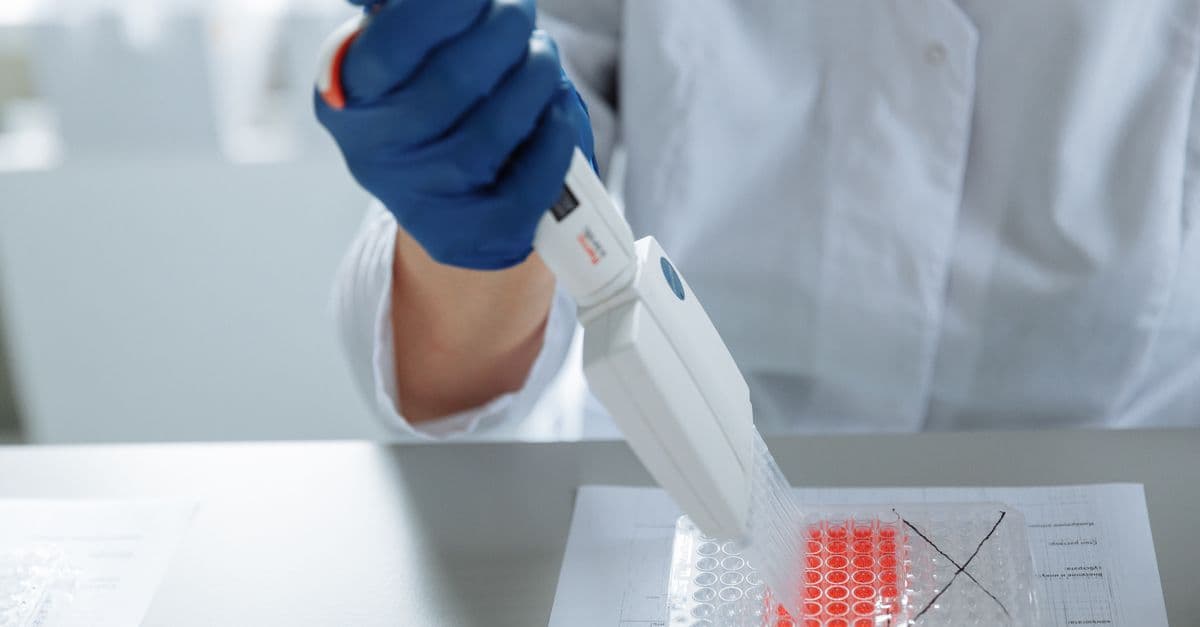
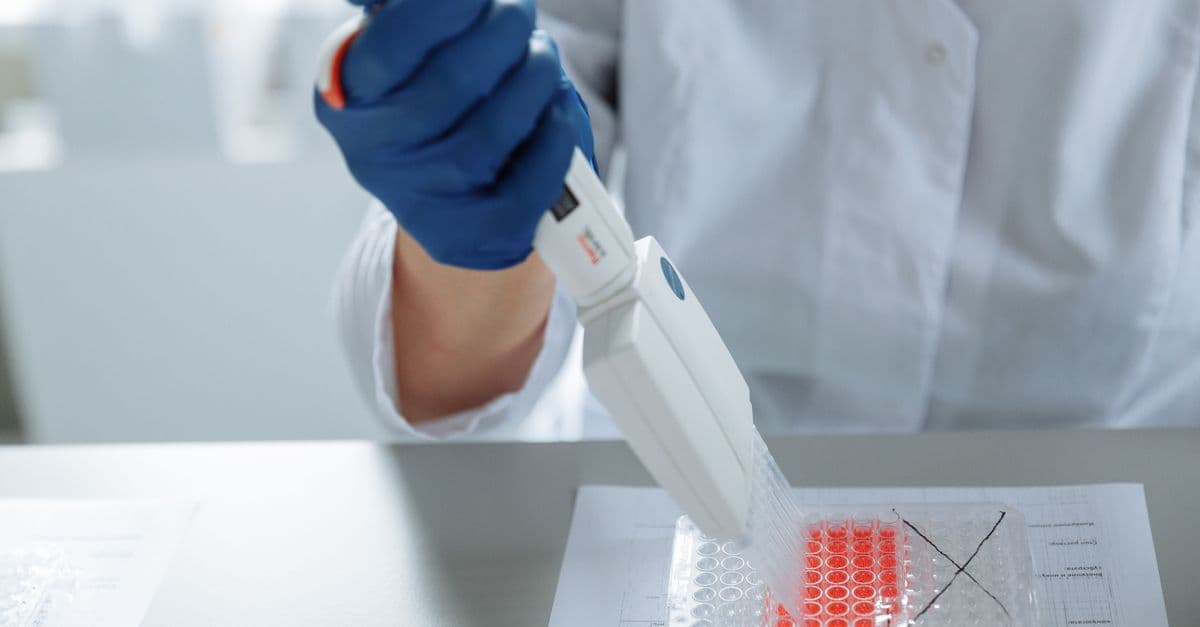
Photo: Thirdman / Pexels
Before 1983, getting enough of a specific piece of DNA to study meant persuading bacteria to copy it for you, a process that took days to weeks. Then a chemist at the biotechnology company Cetus had an idea: heat a sample to pull the two DNA strands apart, cool it so short guide sequences attach, let an enzyme copy each strand, and repeat. Each round doubles the target, so 30 rounds yield about a billion copies. That method, the polymerase chain reaction (PCR), now sits behind everything from virus tests to crime-scene profiles. This article explains how it works and how it came about.
Key Takeaways
- PCR copies a defined stretch of DNA by repeating a three-step temperature cycle, doubling the target each time.
- Kary Mullis conceived it at Cetus Corporation in 1983 and shared the 1993 Nobel Prize in Chemistry with Michael Smith.
- A heat-stable enzyme, Taq polymerase, removed the need to add fresh enzyme every cycle and made the process automatable.
- Variants such as RT-PCR, real-time PCR, and digital PCR measure as well as copy, and are the basis of many diagnostic tests.
- PCR finds genetic material; it cannot by itself say whether that material is alive or harmful, and contamination is its biggest practical risk.
How scientists copied DNA before PCR
If you wanted many copies of a gene in the 1970s, you used molecular cloning. You cut the gene out, spliced it into a small circular piece of DNA called a plasmid, put the plasmid into bacteria, and let the bacteria multiply. Every time a bacterium divided, it copied the plasmid, so a single successful insertion could become billions of copies. The approach worked, and it earned its inventors a great deal of credit, but it was slow and demanded skilled hands. It also required you to purify the copies out of the bacteria afterward. The petri dish, discussed in the invention of the petri dish, was the humble workhorse behind this era of microbiology.
The bottleneck was the starting material. A drop of dried blood, a single hair root, or a few cells from a biopsy holds tiny amounts of DNA. Cloning could amplify it, but not quickly, and the whole workflow was impractical for routine testing. What biologists wanted was something like a photocopier for a single paragraph of the genome.
The idea was not entirely new. In 1971, Kjell Kleppe and colleagues in H. Gobind Khorana's laboratory described copying a short DNA template with primers in a test tube, but the work drew little attention at the time (Wikipedia, Polymerase chain reaction). What was missing was a way to turn the one-off copying into a repeatable, exponential chain.
What Kary Mullis added in 1983
Kary Mullis worked as a DNA chemist at Cetus Corporation in Emeryville, California, for about seven years. In 1983 he developed PCR, and he demonstrated that it worked on December 16 of that year. Colleagues were initially skeptical (Wikipedia, Kary Mullis). Mullis later said the idea came to him while he was driving near his country home in Mendocino County, California.
His central insight was to combine two things that already existed. DNA polymerase, the enzyme that builds new DNA strands, can extend a short guide sequence called a primer along a template. And heat can separate the two strands of a double helix. If you use two primers, one for each strand and each pointing toward the other, then the copies made in one round become templates in the next. The result is a chain reaction in the mathematical sense: the number of copies grows exponentially.
Think of a chain letter in which each recipient sends two copies to new people. After 10 rounds, 1,024 people have it, and after 30 rounds the whole planet would be buried. PCR works the same way, except the "recipients" are DNA molecules and the "letter" is a defined stretch of sequence marked off by the two primers.
The enzyme that made it practical
The early version of PCR had an awkward flaw. The heat that separates DNA strands also destroys most enzymes, so fresh polymerase had to be added after every heating step. A heat-stable polymerase removed that chore. Taq polymerase comes from Thermus aquaticus, a bacterium that lives in hot environments of 50 to 80 °C, and Alice Chien and colleagues isolated it in 1976. Its half-life is about 40 minutes at 95 °C, long enough to survive dozens of cycles (Wikipedia, Taq polymerase). Thermophilic microbes found in Yellowstone's Mushroom Spring in the 1960s had first shown that heat-resistant enzymes exist.
Once Taq was adopted, the whole reaction could be loaded into one tube and left to run in a machine that raised and lowered the temperature on a schedule. That machine, the thermal cycler, turned a delicate procedure into a routine one.
Recognition and the business side
In 1985, Mullis, Randall Saiki, and Henry Erlich published, with colleagues, a paper on amplifying human β-globin gene sequences to diagnose sickle cell anemia. Mullis and Michael Smith shared the 1993 Nobel Prize in Chemistry; Smith was honored for a different technique, site-directed mutagenesis. Cetus sold its PCR patent to Roche Molecular Systems for $300 million, and Mullis received a $10,000 bonus. In December 1999, a U.S. district court ruled in a case brought by Promega that the 1990 Taq patent, by then owned by Roche, had been issued partly on misleading claims and was unenforceable (Wikipedia, Kary Mullis; Wikipedia, Taq polymerase).
Mullis died in 2019. His later public statements on unrelated scientific topics, including HIV and climate, were widely criticized, and they have no bearing on the soundness of the method he conceived.
| Year | Event |
|---|---|
| 1960s | Heat-stable enzymes found in a microbe in Yellowstone's Mushroom Spring |
| 1971 | Kleppe and colleagues in Khorana's lab describe in-vitro DNA copying with primers |
| 1976 | Taq polymerase isolated from Thermus aquaticus |
| 1983 | Mullis develops PCR at Cetus; first demonstration on December 16 |
| 1985 | Saiki, Mullis, Erlich, and colleagues publish PCR for sickle cell diagnosis |
| 1993 | Nobel Prize in Chemistry shared by Mullis and Michael Smith |
How the three-step cycle works
PCR needs a small list of ingredients, and each has a clear job.
| Ingredient | What it does |
|---|---|
| Template DNA | The sample containing the stretch you want to copy |
| Two primers | Short DNA sequences that match the ends of the target; they mark where copying starts |
| DNA polymerase (usually Taq) | Builds new strands by adding nucleotides to the primers |
| Nucleotides (dNTPs) | The four DNA building blocks, supplied in excess |
| Buffer and magnesium | Keep the enzyme working and stabilize the primer attachment |
A typical run is 20 to 40 cycles, and each cycle has three temperature steps (Wikipedia, Polymerase chain reaction).
Step 1: Denaturation (94 to 98 °C, 20 to 30 seconds). Heat breaks the hydrogen bonds that hold the two strands together. The double helix, described in Watson and Crick's work on DNA structure, unzips into single strands. If you want a refresher on how that structure works, see how DNA works.
Step 2: Annealing (50 to 65 °C, 20 to 40 seconds). The temperature drops so that the primers can find and attach to their matching sequences on the single strands. A common rule is to set the annealing temperature about 3 to 5 °C below the primers' melting temperature (the temperature at which half of a primer-template pair comes apart). Too low and primers stick to the wrong places; too high and they will not stick at all.
Step 3: Extension (usually 72 °C). Taq polymerase reads the template and adds nucleotides to the end of each primer. A rule of thumb for most polymerases is about 1,000 bases per minute at their optimum temperature. The same copying process in living cells is described in DNA replication and genetics explained, and the underlying proof that DNA copies itself in this semiconservative fashion is in the Meselson-Stahl experiment.
Why the numbers explode
In an ideal reaction each cycle doubles the amount of target, so after n cycles you have 2 to the power of n copies. The table shows how quickly that adds up.
| Cycles | Copies per starting molecule (ideal) |
|---|---|
| 10 | 1,024 |
| 20 | 1,048,576 |
| 30 | 1,073,741,824 |
That is the theory. In practice, the reaction goes through three phases: exponential amplification, a leveling-off as the enzyme and building blocks are used up, and a plateau when no more product forms. So the real yield after 30 cycles is lower than a billion, and the exact number depends on how efficient each cycle was.
A subtle point is that the first cycles make products of uneven length, because the copies extend beyond the second primer. Products with exactly the length between the two primers appear from the third cycle onward, and because they are copied without any longer overhang, they come to dominate the mixture. The primers define the target's ends, and this is why PCR yields a clean, single-sized product instead of a smear.
Why Taq makes mistakes, and how labs fix that
Taq polymerase is fast and robust, but it has no proofreading ability. It lacks the 3' to 5' exonuclease activity that lets other polymerases back up and remove a wrongly added nucleotide. Its error rate was originally measured at about 1 in 9,000 nucleotides (Wikipedia, Taq polymerase).
For most diagnostic uses, that does not matter. If you are asking whether a viral sequence is present, an occasional wrong base in some copies will not change the answer. It matters when you want to clone or sequence the product and need it to be exact. In that case, labs use a proofreading enzyme such as Pfu, which is more accurate but slower, or blend a little Pfu with Taq to get a compromise. Engineered enzymes like Q5 polymerase are reported to be about 280 times less error-prone than Taq.
Errors build on one another. A mistake made in an early cycle is copied in every later round, so it ends up in a large share of the final product. That is the same principle as a typo in a document that is photocopied, then re-photocopied from the copies.
The PCR family: from copying to counting
The basic method copies DNA. Several variants were built to measure, detect RNA, or work without a heat cycler.
| Variant | What it adds | Typical use |
|---|---|---|
| Reverse transcription PCR (RT-PCR) | An enzyme first converts RNA to complementary DNA (cDNA), which is then amplified | Detecting RNA viruses; measuring gene activity |
| Real-time PCR (qPCR) | Fluorescence is read every cycle, so you watch the product build up | Quantifying starting material; most modern diagnostic tests |
| Digital PCR (dPCR) | The sample is split into thousands of tiny partitions, each read as positive or negative | Absolute counts; rare mutations; viral load |
| Nested PCR | Two rounds with two primer sets, the second binding inside the first product | Improving specificity |
| Isothermal methods such as LAMP | Amplification at a constant temperature, no cycler needed | Field and point-of-care diagnostics |
Real-time PCR and the Cq value
In real-time PCR, a fluorescent signal is recorded after each cycle. Some dyes, such as SYBR Green, glow when bound to any double-stranded DNA, which is cheap but also picks up unwanted products such as primer dimers. Probe-based methods, such as TaqMan, use a fluorescent tag that is released only when the target sequence is copied, which makes them more specific and allows several targets to be tracked in different colors (Wikipedia, Real-time polymerase chain reaction).
The key output is the quantification cycle, Cq (formerly called Ct), the cycle at which fluorescence crosses a set threshold. A lower Cq means more starting template, because it took fewer doublings to reach the threshold. Efficiency can be checked with a standard curve of serial dilutions; at 100% efficiency, each two-fold dilution shifts Cq by 1. The method makes several assumptions and relies on low signal-to-noise data early on, which is why standardized reporting guidelines (MIQE) were proposed.
RT-PCR and the COVID-19 era
RT-PCR is the version that detects RNA. Reverse transcriptase converts viral or cellular RNA into cDNA, which is then amplified. It is widely used to detect the SARS-CoV-2 genome, and the pandemic made PCR a household term (Wikipedia, Polymerase chain reaction). Supply shortages, including of Taq polymerase, affected test production in 2020.
A positive test means that viral genetic material was found. It does not by itself say whether the virus is alive and able to infect, or how infectious the person is. Cq values give a rough sense of how much material there was, but they are influenced by how the sample was collected, so they are a weak basis for judging a single person's risk. For how viruses replicate, see how viruses work, and for a closer look at a specific RNA virus that PCR is used to monitor, see HIV explained.
Digital PCR: counting molecules one by one
Digital PCR splits the reaction into thousands to tens of thousands of partitions, such as nanoliter droplets. A droplet system typically divides a sample into roughly 20,000 oil droplets. After thermocycling, each partition is read as positive (it contained at least one target molecule) or negative. Because the fraction of positive partitions reflects how many molecules were present, Poisson statistics are used to correct for droplets that held more than one molecule (Wikipedia, Digital polymerase chain reaction).
Bert Vogelstein and Kenneth Kinzler coined the term "digital PCR" in 1999 and used it to find rare cancer mutations. The method can detect mutant DNA against a background with up to a 200,000-fold excess of normal DNA, which is why it is used to track tumor DNA in blood, a topic covered in the article on liquid biopsy. The first clinical digital PCR system received FDA clearance in 2019 for chronic myeloid leukemia.
LAMP: amplification without a cycler
Loop-mediated isothermal amplification, or LAMP, runs at a constant 60 to 65 °C, so it does not need a thermal cycler. It typically uses four primers that recognize six regions of the target and relies on a polymerase with strong strand-displacement activity. Eiken Chemical in Tokyo invented it in 1998. It has been used for infections including malaria, tuberculosis, and SARS-CoV-2, and its simplicity suits field work and low-resource settings. The trade-offs are that primer design is difficult, it is mainly a detection tool, and nonspecific amplification can cause false positives (Wikipedia, Loop-mediated isothermal amplification).
What PCR changed in practice
Diagnostics
PCR can detect very small amounts of a pathogen's genetic material. One example given in standard references is detecting a single HIV viral genome among more than 50,000 host cells. It is also used for tuberculosis, whooping cough, and in prenatal and preimplantation genetic testing (Wikipedia, Polymerase chain reaction). The original 1985 study applied the method to sickle cell anemia, a disease caused by a single-letter change in the β-globin gene, showing that a small, specific genetic difference could be read out from a small sample.
Compared with growing a bacterium in culture, PCR does not need the organism to be alive, and it does not need days of waiting. That trade-off is also its main weakness: it reports genetic material, and a positive result needs clinical interpretation.
Forensics
Forensic DNA profiling uses PCR to copy short tandem repeats (STRs), stretches of 2 to 10 base pairs that repeat a variable number of times from person to person. Up to 40% of human DNA is repetitive, and a single hair with its follicle can supply enough DNA for analysis. In the United States, the FBI's Combined DNA Index System (CODIS) links local, state, and national databases. Since January 1, 2017, national upload of known offender profiles requires 20 loci, up from the original 13. As of September 2020, the database held more than 14 million offender profiles and over 1 million forensic profiles, and it had aided more than 520,000 investigations (Wikipedia, CODIS). Those numbers are from 2020 and have likely grown since.
A partial profile needs at least eight core loci and a rarity of "1 in 10 million" to be uploaded nationally. The match statistics are why courts treat DNA evidence as strong but not as infallible; mixtures, degraded samples, and contamination can all complicate the interpretation.
Research and ancient DNA
In research labs, PCR is a routine step in cloning, in preparing samples for sequencing, and in measuring gene activity. The sequencing technique in Sanger sequencing: reading DNA code uses a related copying chemistry, and single-cell RNA sequencing depends on amplifying minute amounts of material from individual cells. PCR has also been used on ancient specimens, including a 40,000-year-old mammoth, though ancient DNA is fragmented and easily contaminated by modern DNA.
For the large-scale effort to read a whole human genome, see the Human Genome Project explainer.
Where PCR goes wrong
Because it amplifies a tiny amount of material enormously, PCR is unusually sensitive to errors.
Contamination. Trace DNA from a previous reaction, a lab surface, or a technician can be amplified along with the real sample and produce a misleading result. Laboratories reduce the risk with separate rooms for different stages, single-use aliquots, and a one-way workflow from clean to dirty areas (Wikipedia, Polymerase chain reaction).
Inhibitors. Some substances in samples, such as humic acids in soil and environmental samples, can block the enzyme and cause false negatives.
Primer design. Standard PCR requires knowing the sequences on either side of the target. If the primers match the wrong place, or match a related organism, the test gives wrong answers.
Polymerase errors. As described above, Taq can introduce mutations, which can matter if the product is going to be sequenced or cloned. One consequence flagged in the literature is that low fidelity can create G-to-A changes that may produce false positives in some retroviral testing.
Product size limits. Most PCR methods amplify 0.1 to 10 kilobase pairs, and some specialized ones reach 40 kilobase pairs, which is small compared to a whole chromosome.
Common misunderstandings
"PCR makes DNA from nothing." It copies what is there. It needs at least one template molecule and a set of primers that match, and it can only amplify what the primers were designed to find.
"A positive PCR test means someone is infectious." It means the target genetic material was detected. Whether that material comes from a live, transmissible virus depends on the context, which is why clinical judgment, symptoms, and timing matter.
"Mullis discovered Taq polymerase." Taq was isolated from Thermus aquaticus by Alice Chien and colleagues in 1976. Mullis's contribution was the concept of the chain reaction. The two pieces came together afterward.
"PCR and DNA sequencing are the same thing." PCR makes copies of a chosen stretch. Sequencing reads the order of the letters. They are used together often, but they answer different questions.
"More cycles always give a better result." Past a certain point the reaction stops growing, and extra cycles mainly increase the chance of nonspecific products and contamination effects.
FAQ
Q: How many copies does PCR make? A: In an ideal reaction, each cycle doubles the target, so 30 cycles give 2 to the power of 30, or 1,073,741,824 copies per starting molecule. Real reactions are less efficient, level off, and then reach a plateau when enzyme and building blocks run low.
Q: What are the three steps of a PCR cycle? A: Denaturation at about 94 to 98 °C separates the two DNA strands. Annealing at roughly 50 to 65 °C lets primers attach to the target. Extension, usually at 72 °C for Taq polymerase, builds new DNA from each primer. A typical run repeats these steps 20 to 40 times.
Q: Who invented PCR? A: Kary Mullis developed the idea at Cetus Corporation in 1983 and demonstrated it on December 16 of that year. He shared the 1993 Nobel Prize in Chemistry with Michael Smith. Earlier, Kjell Kleppe and colleagues in Khorana's lab had described in-vitro copying of DNA with primers in 1971.
Q: Why is Taq polymerase used? A: It comes from a heat-loving bacterium and survives the high temperatures needed to separate DNA strands, with a half-life of about 40 minutes at 95 °C. That means fresh enzyme does not have to be added every cycle, which made the reaction automatable. Its drawback is that it does not proofread.
Q: What is the difference between PCR and qPCR? A: Conventional PCR gives a result at the end, usually seen as a band on a gel. Real-time PCR (qPCR) measures fluorescence during every cycle, so you can estimate how much starting material there was from the cycle at which the signal crosses a threshold.
Q: Can PCR detect RNA viruses? A: Yes, using reverse transcription PCR. An enzyme first converts RNA into complementary DNA, which is then amplified. This approach is widely used to detect the SARS-CoV-2 genome, and it is also used to measure gene activity in cells.
Q: What is digital PCR? A: Digital PCR divides a sample into thousands of tiny partitions, such as nanoliter droplets, and reads each as positive or negative for the target. Poisson statistics convert the fraction of positives into a count of molecules. It can detect rare mutant DNA against a large excess of normal DNA.
The takeaway
PCR did not give biology a new way to see DNA so much as a new way to ask for more of it. By turning a delicate laboratory art into a repeatable temperature program, it made small samples usable, and that single change spread into medicine, courts, archaeology, and the pandemic response. Its strengths and weaknesses share a root: it amplifies whatever matches its primers, whether that is a viral gene, a suspect's DNA, or a stray contaminant. Knowing what PCR can and cannot show is as important as knowing how it works.
References
- Wikipedia contributors. Polymerase chain reaction. History, procedure, applications, limitations.
- Wikipedia contributors. Kary Mullis. Biography, 1983 demonstration, patent sale.
- Wikipedia contributors. Taq polymerase. Isolation, heat stability, fidelity.
- Wikipedia contributors. Real-time polymerase chain reaction.
- Wikipedia contributors. Digital polymerase chain reaction.
- Wikipedia contributors. Loop-mediated isothermal amplification.
- Wikipedia contributors. Combined DNA Index System. Statistics as of September 2020.
- Saiki, R.K., Scharf, S., Faloona, F., Mullis, K.B., Horn, G.T., Erlich, H.A., & Arnheim, N. (1985). "Enzymatic Amplification of β-Globin Genomic Sequences and Restriction Site Analysis for Diagnosis of Sickle Cell Anemia." Science, 230(4732), 1350-1354.
- Mullis, K., Faloona, F., Scharf, S., Saiki, R., Horn, G., & Erlich, H. (1986). "Specific Enzymatic Amplification of DNA In Vitro: The Polymerase Chain Reaction." Cold Spring Harbor Symposia on Quantitative Biology, 51, 263-273.
Read next:
Follow new articles
Add SciHub101 to your feed reader to see new science and technology stories.
About the Author
SciHub101 is an independent science and technology publication founded and edited by Buğra Sözeri, a software engineer and app developer based in Türkiye. AI tools assist with drafting and research. Source documentation in the existing archive is uneven, and articles are being reviewed and corrected. The Editorial Team byline identifies editorial responsibility; it does not certify specialist or independent human review. Where we compare products, anything built by our own team is labelled as such — see the editorial guidelines and About page for how corrections and disclosures work.
Related Articles
Polio Vaccine: Salk & Sabin's Mass Immunization Explained
How the polio vaccines developed by Salk and Sabin eradicated polio from most of the world, and why two countries still report wild cases.
Pavlov's Classical Conditioning: Learning Theory Explained
How Ivan Pavlov's dogs revolutionized understanding of learned behavior and memory formation
Sanger Sequencing: Reading DNA Code Explained
How Frederick Sanger's chain-termination method turned the order of DNA bases into something a laboratory could read, and why it still matters.
DNA Replication and Genetics Explained
How DNA replicates, the central dogma, mutations, epigenetics, and how consumer genetics tests like 23andMe actually work.
How Stem Cells Work and What They Can Actually Treat
A single fertilized egg becomes a complete human being, and a few of its descendants never stop being flexible. This is how stem cells work, how scientists learned to reprogram them, and which therapies have reached patients.
Human Evolution: From Primates to Homo Sapiens
Humans and chimpanzees share a common ancestor from roughly 6 to 7 million years ago. Here is how fossils, tools, and ancient DNA reconstruct what happened next.