The Petri Dish: The Simple Invention That Made Modern Microbiology Possible — SciHub101
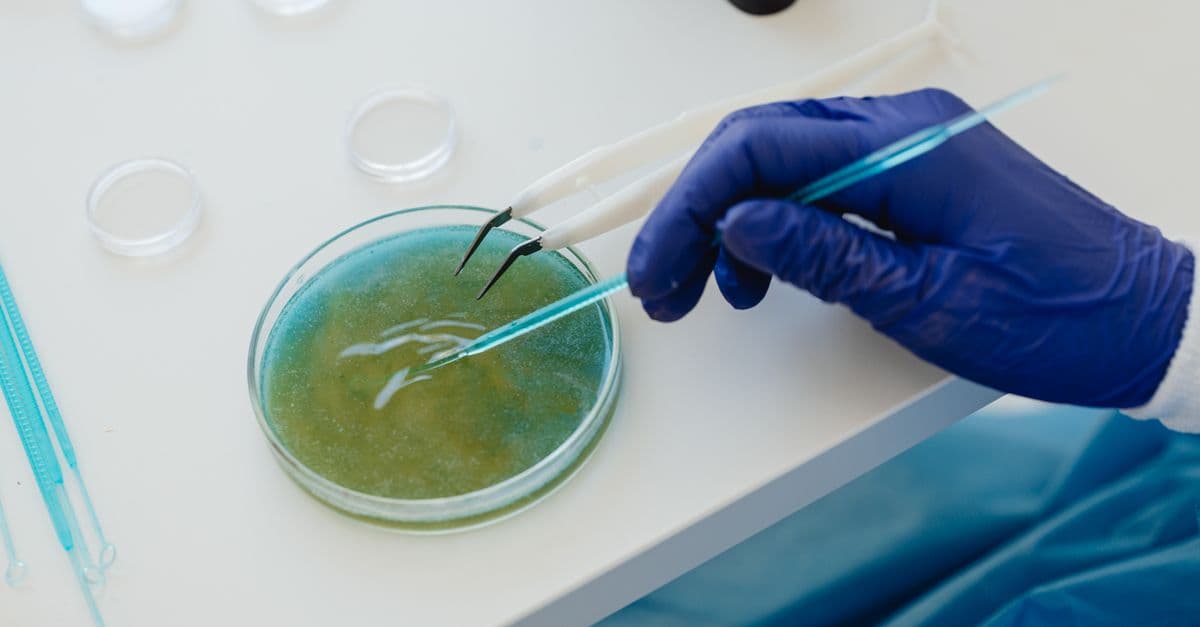
Photo: www.kaboompics.com / Pexels
There is a piece of laboratory equipment so ubiquitous and so visually unremarkable that most people assume it has existed forever — a flat circular dish, about 10 centimeters (4 inches) in diameter, with a shallow lid. It costs about 30 cents to manufacture. More than 2.7 billion of them were used globally in 2024. It is in every hospital diagnostic lab, every university biology department, every pharmaceutical quality control suite, every food safety testing facility on earth. And it was invented in 1887 by a junior research assistant in Robert Koch's Berlin lab, solving a problem so mundane — how to keep a dish of bacterial growth medium from getting contaminated — that Koch himself apparently considered the solution obvious after the fact. The Petri dish is the least glamorous and most indispensable tool in the history of medicine.
A Petri dish (also spelled Petrie dish) is a shallow, flat-bottomed cylindrical dish with a matching loose-fitting lid, used to culture microorganisms on a solid growth medium. The lid fits over the dish rather than sealing it, allowing gas exchange while limiting airborne contamination.
The Problem Robert Koch Was Trying to Solve
To understand why the Petri dish mattered, you need to understand the state of bacteriology in the 1870s and 1880s. Robert Koch — the German physician who would identify the causative agents of tuberculosis (1882), cholera (1883), and anthrax, and who would later win the 1905 Nobel Prize in Physiology or Medicine — was working on a fundamental technical challenge: how to grow a pure culture of a single bacterial species in isolation.
This sounds like a laboratory procedural detail. It was not. It was the entire scientific problem. If you cannot isolate a single species of bacteria and study its properties alone, you cannot prove which organism causes which disease. You cannot test which treatments kill it. You cannot study its metabolism or lifecycle. The germ theory of disease — the proposition that specific microorganisms cause specific diseases — was logically compelling by the 1870s, but it required pure cultures to be experimentally demonstrated and made useful.
Source: Science History Institute, "Julius Richard Petri." (Science History Institute)
Koch's initial method for obtaining pure cultures involved spreading bacteria on the cut surface of a cooked potato slice. Different species would form distinct colonies on the potato's surface — visible clusters of millions of cells, each descended from a single original cell that happened to land on one spot. By transferring cells from a single colony to a new growth surface, Koch could isolate and propagate one species. But potatoes are not universal: not all bacteria grow on potato starch, and the method's capacity to support diverse experiments was limited.
The Gelatin Problem
The next advance came from Walther Hesse, one of Koch's assistants, who began using nutrient gelatin as a growth surface. Gelatin provided more consistent nutrient composition than potato and could support a wider range of bacteria. The bacteria were spread across the surface of a thin gelatin layer in flat glass dishes, colonies formed, and Koch's isolation method improved substantially.
But gelatin failed at body temperature. Most disease-causing bacteria grow optimally at 37°C — human body temperature. At that temperature, gelatin liquefied, collapsing the colony structure into a bacterial soup. Cold-temperature incubation could prevent this, but then many bacteria grew too slowly or not at all.
The solution came not from Koch, not from Walther Hesse, and not from Petri. It came from Fanny Angelina Hesse — Walther Hesse's wife, who assisted in her husband's research without formal recognition or salary, as was standard for women in 19th-century German science.
Source: Smithsonian Magazine, "Meet the Forgotten Woman Who Revolutionized Microbiology With a Simple Kitchen Staple." (Smithsonian)
Fanny Hesse's Agar Suggestion
Fanny Hesse had grown up in a Dutch-American family with connections to Southeast Asian trade. She had learned to use agar — a polysaccharide extracted from red algae, widely used in East and Southeast Asian cooking as a gelling agent — as a thickener in her kitchen. Agar gels at approximately 40°C and remains solid until heated above 85°C. Critically, most bacteria cannot digest agar, meaning it holds its structure under bacterial colonies at body temperature.
In 1881, Fanny Hesse suggested to her husband that he try agar instead of gelatin as the growth medium base. He did. It worked perfectly. Koch adopted agar universally in his lab, and within a short time, microbiologists worldwide had switched from gelatin to agar.
Source: Science History Institute, "Fanny Angelina Hesse." (Science History Institute)
Fanny Hesse received no patent, no publication credit, and no formal acknowledgment during her lifetime. She died in 1934. The belated recognition of her contribution — now widely acknowledged in the history of microbiology literature — is a useful reminder that laboratory science in the 19th century, and well into the 20th, systematically excluded women from credit even when their intellectual contributions were documented and pivotal.
Source: FEBS Network, "A Woman You Have Never Heard of Made Biochemistry Possible." (FEBS Network)
Julius Richard Petri and the Dish
With agar providing a stable growth medium, Koch's lab still faced a practical contamination problem. The flat glass plates used to hold agar layers were open to the air during transfers and incubation periods. Airborne particles — dust, fungal spores, stray bacteria — would settle on the agar surface and produce spurious colonies, contaminating results and wasting cultures.
Julius Richard Petri (1852–1921) was a German bacteriologist working as Koch's assistant at the Imperial Health Office in Berlin. In 1887, he designed a solution elegant in its simplicity: a second, slightly larger glass dish placed loosely over the culture dish as a lid. The lid would not seal the dish — that would prevent gas exchange — but would prevent airborne particles from falling directly onto the medium surface. The lid sat slightly above the culture dish's rim, creating a partial enclosure that dramatically reduced contamination without creating anaerobic conditions.
Source: Wikipedia, "Julius Richard Petri." (Wikipedia)
Petri published a brief paper describing the design in 1887 in the Zeitschrift für Hygiene und Infektionskrankheiten (Journal of Hygiene and Infectious Diseases). The paper was modest — Petri explicitly described it as a minor improvement on Koch's existing methods — but the improvement proved transformative in practice.
The original Petri dishes were made of borosilicate glass, which could be sterilized by autoclaving (steam under pressure at 121°C) or by baking in a dry heat oven. Glass dishes dominated laboratory practice until the 1960s, when disposable polystyrene plastic dishes became available and gradually replaced glass in most clinical and industrial settings.
| Year | Person | Contribution |
|---|---|---|
| 1876 | Robert Koch | Potato slice pure culture method |
| 1881 | Walther Hesse | Nutrient gelatin growth medium |
| 1881 | Fanny Hesse | Agar suggestion as gelatin replacement |
| 1882 | Robert Koch | Identifies Mycobacterium tuberculosis (using agar plates) |
| 1883 | Robert Koch | Identifies Vibrio cholerae |
| 1887 | Julius Richard Petri | Covered glass dish with separate lid |
| 1960s | Multiple manufacturers | Disposable polystyrene Petri dishes |
| 2024 | Global market | 2.7 billion dishes used; $514 million market |
The Petri dish was the last piece in a technical puzzle assembled across a decade by multiple people in Koch's orbit.
How a Petri Dish Actually Works
The tool is deceptively simple. Its function requires understanding what happens at the agar surface.
Agar — the standard growth medium base — is prepared by dissolving agar powder in water with added nutrients (peptone, yeast extract, blood, or specific carbon and nitrogen sources depending on the organisms being studied), heating to approximately 90°C to ensure complete dissolution, then allowing it to cool and solidify in the dish. The solid agar surface provides both physical support for bacterial colonies and a nutrient reservoir that diffuses upward as colonies grow.
When a bacterial suspension is spread across the agar surface with a sterile loop or spreader, individual cells are distributed so far apart that each colony grows in isolation. Because bacteria reproduce by binary fission — one cell splitting into two identical cells — each colony is a clone: genetically identical cells all descended from the single bacterium that landed in that spot. A colony visible to the naked eye (roughly 1 mm in diameter) contains approximately one million cells.
The lid's geometry is the critical engineering decision. A tight seal would trap CO₂ from bacterial respiration and create anaerobic conditions harmful to aerobic organisms. A gap too wide would allow airborne contamination. Petri's original design — a lid with a slightly larger diameter that rests on the dish rim but does not seal it — provides a labyrinthine path that particles cannot easily traverse but gas can exchange through freely.
Source: Biomedical Scientist, "The Big Story: The Petri Dish." (The Biomedical Scientist)
The analogy for the contamination protection: imagine placing a broad-brimmed hat upside down over an open bowl. Dust cannot fall straight down into the bowl — it must travel sideways under the brim and then curve upward and back down into the interior. Most particles are carried past by ambient air currents rather than completing this path.
Growth Media Variations
The Petri dish is only as useful as the medium inside it. Over 137 years of use, microbiologists have developed hundreds of specialized media:
- Blood agar — agar with 5-10% sheep blood, used to distinguish bacteria by whether they hemolyze (break down) red blood cells. Alpha hemolysis produces greenish partial clearing; beta hemolysis produces complete clear zones. Used in clinical labs to identify streptococcal species including Streptococcus pyogenes.
- MacConkey agar — a selective medium containing crystal violet and bile salts that inhibit Gram-positive bacteria, allowing only Gram-negative enteric bacteria to grow. Lactose fermenters (like E. coli) turn pink; non-fermenters (like Salmonella) remain colorless.
- Chocolate agar — agar with lysed (heated and ruptured) red blood cells, releasing growth factors needed by Neisseria gonorrhoeae and Haemophilus influenzae.
- Sabouraud dextrose agar — a low-pH, high-sugar medium selective for fungi.
Each medium exploits different aspects of bacterial physiology to select for or distinguish between species — none of which would be practicable without the stable, contamination-controlled culture environment the Petri dish provides.
Petri Dishes and the Discoveries That Depended on Them
Almost every foundational microbiological discovery since 1887 depended on Petri dish culture methods. A partial accounting:
Antibiotics. Alexander Fleming's discovery of penicillin in 1928 happened when a Penicillium mold contaminated a Petri dish culture of Staphylococcus aureus and produced a clear zone around itself — evidence of an antibacterial substance diffusing through the agar. The Petri dish was the observation platform. Without it, Fleming would have had no agar surface on which to observe the inhibition zone.
Source: Fleming, A. (1929). "On the Antibacterial Action of Cultures of a Penicillium." British Journal of Experimental Pathology, 10(3), 226–236.
Viral culture. While viruses cannot be grown on agar (they require living host cells), viral plaque assays use Petri dishes containing host cell monolayers in agar overlays. Each virus particle infects cells around it, creating a visible clearing (plaque) — the same geometric logic as bacterial colony counting. This method enabled vaccine development, viral quantification, and antiviral drug testing.
Antibiotic resistance monitoring. Disk diffusion testing (the Kirby-Bauer method, standardized in 1966) places paper disks soaked in antibiotics on bacterial cultures spread across an agar plate. The diameter of the inhibition zone around each disk indicates whether the strain is susceptible, intermediate, or resistant to that antibiotic. This test, run in Petri dishes daily in clinical labs worldwide, guides prescribing decisions for millions of patients.
Source: Bauer, A.W., et al. (1966). "Antibiotic susceptibility testing by a standardized single disk method." American Journal of Clinical Pathology, 45(4), 493–496.
Who Actually Gets Credit? The Contested History
The attribution of the Petri dish is unusual because Petri himself was modest about the invention's novelty. In his 1887 paper, he described the covered dish as an improvement over Koch's existing flat plate methods rather than an independent invention. This modesty was historically appropriate — the dish solved a specific problem in an existing system rather than creating a fundamentally new one.
Koch, for his part, apparently acknowledged Petri's contribution but did not make a large issue of credit, given that the dish was designed in and for Koch's own lab. The naming "Petri dish" became convention through widespread use in the scientific community, not through formal recognition.
Fanny Hesse's contribution — the agar suggestion that made the Petri dish useful — remained uncredited in most accounts until feminist historians of science began documenting it in the late 20th century. The Science History Institute, formerly the Chemical Heritage Foundation, now maintains an extensive biography recognizing her role.
Source: Popular Science, "The Forgotten Woman Who Made Microbiology Possible." (Popular Science)
The historiographic lesson: in collaborative laboratory science, credit is determined partly by who publishes, partly by whose name becomes attached to a technique through usage, and partly by who has access to the social infrastructure of scientific acknowledgment. Petri published; Fanny Hesse did not. That asymmetry determined attribution for a century.
Unintended Consequences: What 2.7 Billion Dishes a Year Costs
The transition from reusable glass to disposable polystyrene Petri dishes in the 1960s solved a real problem — washing, sterilizing, and re-sterilizing glass dishes is labor-intensive and time-consuming in high-throughput clinical labs — but created a waste stream that was not anticipated.
Over 2.7 billion Petri dishes were used globally in 2024, with 64% being disposable plastic variants.
Source: Coherent Market Insights, "Petri Dish Market Trends, Share and Forecast, 2025-2032." (Coherent Market Insights)
Polystyrene is not routinely recyclable in most municipal systems; its low value and contamination by biological material make it economically unattractive to recyclers. The result is that a substantial fraction of 2.7 billion dishes ends up in landfills annually. The laboratory science sector has been slower than medical devices or consumer products to address single-use plastic waste, partly because of sterility requirements and regulatory inertia.
Several manufacturers now offer Petri dishes made from biobased polylactic acid (PLA) or recycled polystyrene, though adoption rates remain low. High-throughput labs are increasingly adopting microplate formats — 96-well or 384-well plates that miniaturize culture volumes, reducing plastic use per experiment by factors of 10 to 100 — but these require automated liquid handling systems and are impractical for many clinical applications.
Where the Petri Dish Stands Today
The Petri dish market was valued at approximately $514 million in 2025 and is projected to grow to $709 million by 2032, driven by pharmaceutical quality control, food safety testing, and clinical diagnostics.
Source: Fortune Business Insights, "Petri Dishes Market." (Fortune Business Insights)
Automation-compatible Petri dishes saw a 28% rise in adoption across automated microbiology systems in recent years, reflecting the trend toward robotic colony picking and automated plate reading in pharmaceutical and clinical labs. Modern automated systems can inoculate, incubate, image, and enumerate colonies on hundreds of plates per hour — but the fundamental object being processed remains Julius Petri's 1887 design: a flat dish with a loose-fitting lid.
That continuity is the measure of how well Petri solved the actual problem. The dish did not need to be iteratively improved. Its geometry was right the first time.
Frequently Asked Questions
Q: Who invented the Petri dish? A: Julius Richard Petri, a German bacteriologist working as an assistant in Robert Koch's laboratory at the Imperial Health Office in Berlin, described the covered culture dish in an 1887 paper. However, the dish's utility depended equally on Fanny Hesse's 1881 suggestion to use agar as a growth medium, without which the covered dish would have had little advantage over existing methods.
Q: What is agar and why is it used in Petri dishes? A: Agar is a polysaccharide extracted from red algae (primarily Gelidium and Gracilaria species). It gels at approximately 40°C and remains solid up to about 85°C, which allows bacterial cultures to be incubated at human body temperature (37°C) without the medium liquefying. Most bacteria cannot digest agar, so the gel structure remains intact throughout incubation. Gelatin — the alternative used before agar — melts at 37°C, destroying colony structure.
Q: Why do Petri dish lids not seal tightly? A: Bacteria and other cultured organisms are aerobic or facultatively anaerobic — they need oxygen for respiration. A sealed dish would trap CO₂ from cellular respiration and deplete O₂, creating conditions harmful to most common laboratory organisms. The loose-fitting lid allows gas exchange while blocking most airborne particle contamination by providing a tortuous path that particles cannot easily navigate.
Q: How long does it take for bacterial colonies to grow on a Petri dish? A: For common laboratory and clinical bacteria like E. coli or Staphylococcus aureus, visible colonies (roughly 1 mm in diameter, containing about 1 million cells) typically appear after 18 to 24 hours of incubation at 37°C. Slower-growing organisms take longer: Mycobacterium tuberculosis requires 3 to 8 weeks to form visible colonies on standard media — a diagnostic delay that clinical labs address using liquid culture systems and molecular tests.
Q: What is the difference between glass and plastic Petri dishes? A: Glass dishes are autoclavable, reusable, and optically clear — but require washing, sterilization, and quality-checking between uses, which is labor-intensive. Polystyrene plastic dishes are inexpensive (approximately $0.30 each), pre-sterilized by irradiation, and disposable. They have replaced glass in most high-volume clinical, industrial, and research settings since the 1960s. Research applications requiring specific optical properties (UV transmission, minimal autofluorescence) may still use glass.
Q: Did Alexander Fleming's discovery of penicillin really depend on a Petri dish? A: Yes. Fleming's 1928 observation occurred on an agar plate in a Petri dish that had been contaminated by a Penicillium mold. The mold produced a diffusible substance that cleared the bacterial lawn of Staphylococcus aureus in a visible halo around the mold colony. The agar plate provided the flat, stable surface on which this spatial relationship was observable. Without a solid growth medium in a covered dish, the inhibition zone would not have been visible or interpretable.
Read next:
Weekly digest
Stay ahead of the curve
Get the best science, AI, and tech stories delivered to your inbox every week. No spam — unsubscribe any time.
About the Author
SciHub101 is an independent science and technology publication founded and edited by Buğra Sözeri, a software engineer and app developer based in Türkiye. Articles are drafted against peer-reviewed literature and primary sources, fact-checked, and edited by a human before publication. Where we compare products, anything built by our own team is labelled as such — see the editorial guidelines and About page for how corrections and disclosures work.
Related Articles

The Invention of the Printing Press — SciHub101
How Johannes Gutenberg's movable-type press around 1440–1455 transformed information, triggered the Reformation, and still shapes how knowledge spreads today.

The Personal Computer: From Kit to Commodity — SciHub101
How the Altair 8800, Apple I, and IBM PC turned computing from an institution's tool into a personal one — and why IBM's open architecture was its biggest strategic blunder.
Robert Koch: The Country Doctor Who Founded Modern Bacteriology
Robert Koch proved specific bacteria cause specific diseases, discovered TB and cholera pathogens, and won the 1905 Nobel Prize. His postulates still govern microbiology today.
Pasteurization: How Heating Milk Changed the History of Childhood Death — SciHub101
Louis Pasteur invented pasteurization in 1864 to save wine. It took another 50 years to reach milk—and the delay cost hundreds of thousands of children their lives.