The Human Genome Project Explained

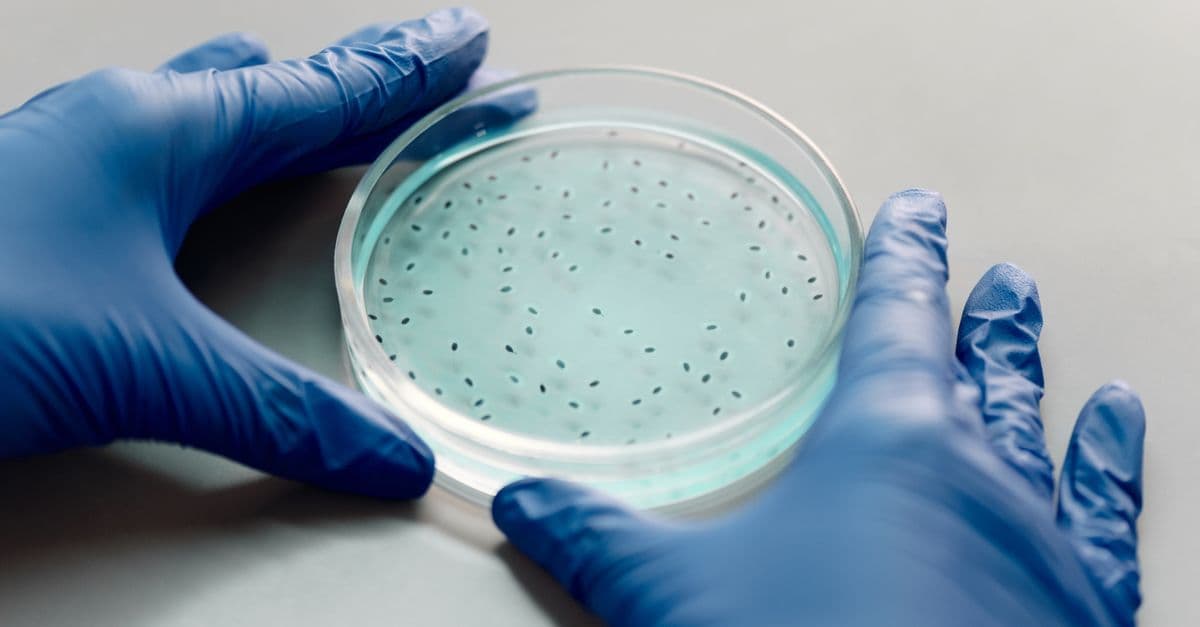
Photo: olia danilevich / Pexels
On April 14, 2003, an international consortium announced it had sequenced essentially the entire human genome, roughly 3 billion base pairs of DNA, two years ahead of schedule and under its $2.7 billion budget (genome.gov). The Human Genome Project (HGP) had started in October 1990, and the finished sequence became the reference map that medicine, forensics, and biotechnology have used ever since. This guide explains what the project actually did, how the sequencing worked, why a private company nearly beat the public effort to the finish line, and what remained unfinished until 2022.
What the Human Genome Project actually did
The Human Genome Project set out to answer a specific technical question: what is the exact order of the roughly 3 billion chemical letters, or base pairs, that make up human DNA? DNA is built from four bases, adenine (A), thymine (T), guanine (G), and cytosine (C), and the order in which they appear along the double helix encodes the instructions for building and running a human body.
The project was coordinated by the U.S. Department of Energy and the National Institutes of Health, with major sequencing centers in the United Kingdom, France, Germany, Japan, and China joining as the International Human Genome Sequencing Consortium (genome.gov timeline). It was, at the time, the largest coordinated project in the history of biology, and it needed to be. No single lab had the throughput to sequence a genome this size using the technology available in 1990.
The goals were broader than just reading letters. The consortium also aimed to map where genes sat on each chromosome, sequence the genomes of several model organisms for comparison (the bacterium E. coli, yeast, the roundworm C. elegans, the fruit fly, and the mouse), develop faster sequencing technology as the project went, and fund a companion program on the ethical, legal, and social implications (ELSI) of having a complete human genetic blueprint. That ELSI program received roughly 3 to 5 percent of the total budget, one of the largest bioethics research investments ever made, precisely because the consortium anticipated that genetic information would eventually touch insurance, employment, and criminal justice.
How you sequence 3 billion letters of DNA
Sequencing a genome this large required breaking an impossible-sounding task into manageable pieces, and the two competing teams in the genome race chose different ways to do it.
The public consortium's map-first approach
The publicly funded consortium used a strategy called hierarchical shotgun sequencing, sometimes described as "clone by clone." Researchers first built a physical map of each chromosome by cutting DNA into large, overlapping fragments of a few hundred thousand base pairs and inserting them into bacterial artificial chromosomes (BACs), essentially using bacteria as tiny photocopiers to multiply each fragment into millions of identical copies. Each mapped BAC clone was then further shattered into small, random pieces small enough for a sequencing machine to read, typically 500 to 800 base pairs at a time, using a method called Sanger sequencing.
Think of it like assembling a 1,000-piece jigsaw puzzle by first sorting the pieces into labeled boxes for the sky, the water, and the mountains, and only then snapping together the pieces within each box. Because the consortium already knew roughly where each BAC clone belonged on the chromosome, reassembling the small fragments back into a chromosome-length sequence was more reliable, even though it was slower to get started.
Celera's whole-genome shotgun gamble
In May 1998, molecular biologist Craig Venter announced a private company, later named Celera Genomics, that claimed it could sequence the entire human genome in three years using a different, riskier method: whole-genome shotgun sequencing (CSHL DNA Learning Center). Instead of mapping first, Celera shattered the entire genome into millions of random fragments all at once and relied entirely on computer algorithms to figure out how the pieces overlapped and reassembled, without ever building a physical map to check the work against.
That is closer to dumping all 1,000 puzzle pieces onto a table with no picture on the box and using pattern-matching software to find which edges fit together. It is faster because you skip the sorting step, and it is exactly what modern sequencers still do today. But in the 1990s, without today's computing power, it was a genuine gamble on whether software alone could correctly reassemble a genome full of repetitive sequences that look nearly identical to each other.
Why the two efforts merged instead of finishing separately
Celera's announcement effectively forced the public consortium to accelerate, and by 1999 both sides were racing toward a finish line neither wanted to lose. The competition became politically awkward: the public project was committed to releasing data freely and immediately, while Celera initially planned to sell subscription access and file preliminary patents on thousands of genes (yourgenome.org).
President Bill Clinton and UK Prime Minister Tony Blair brokered a joint announcement in June 2000, in which both teams presented working drafts of the genome side by side at the White House, and the full papers were published jointly in Nature and Science in February 2001. Notably, Celera's assembly leaned on the public consortium's mapping data to help order and orient its fragments; without the public project's scaffold, independent historians of the race have argued Celera's whole-genome shotgun approach on a genome this repetitive would have been far harder to pull off alone (STAT News, 2026).
Why the result surprised the scientists who produced it
Before the draft genome was published, most geneticists expected to find somewhere between 40,000 and 100,000 protein-coding genes in human DNA, a number based on extrapolating from the complexity of human biology (genome.gov education kit). The actual count, confirmed by the finished sequence in 2003 and refined in subsequent years, landed at roughly 20,000 to 25,000 genes (ScienceDaily, 2001).
That is a strange result to sit with. Humans have only modestly more genes than a roundworm (about 20,000) and not dramatically more than a fruit fly. The explanation that emerged over the following decade is that human complexity comes less from having more genes and more from how those genes are used: a single human gene can be spliced in multiple ways to produce several different proteins, and a dense layer of regulatory DNA switches genes on and off in different cells at different times. The genome, in other words, is less like a parts list and more like a script that gets performed differently depending on the cast and the stage.
What percentage of the human genome codes for proteins?
Only about 1 to 2 percent of the human genome directly codes for proteins. The rest was once dismissively called "junk DNA," but subsequent research, including the ENCODE project that followed the HGP, showed much of it plays regulatory roles: switching genes on or off, stabilizing chromosome structure, or producing functional RNA molecules that never become protein.
How long did the Human Genome Project take and what did it cost?
The project ran from October 1990 to April 2003, about 13 years, and cost roughly $2.7 billion in the currency of the years it was funded, finishing both ahead of its original 15-year schedule and under its allotted budget (genome.gov). The first individual human genome sequenced took about 13 years and roughly $1 billion in incremental costs; a genome can now be sequenced in one to two days for about $300 to $1,000 depending on the platform and depth of coverage, and consumer-grade sequencing for research use has dropped further still.
Why the result mattered beyond the lab
The most immediate effect of the finished genome was that it gave every geneticist on Earth a shared coordinate system. Before 2003, comparing a disease-associated DNA variant found in one lab to a variant found in another lab was slow and error-prone, because there was no common reference to line them up against. After 2003, a researcher anywhere could say "the mutation is at this exact position on chromosome 7" and every other lab in the world would know precisely what that meant.
That shared reference is the quiet infrastructure behind several fields that barely existed, or existed in primitive form, before the genome was finished.
| Field | What changed after the reference genome existed |
|---|---|
| Clinical genetic testing | Disease-gene identification went from years of linkage studies to days of comparison against the reference sequence |
| Cancer genomics | Tumor DNA can be compared directly to the reference to find the specific mutations driving a given cancer |
| Pharmacogenomics | Drug dosing can account for genetic variants that change how a patient metabolizes a medication |
| Forensic science | DNA profiling databases gained a standardized genomic backbone for matching and interpretation |
| Evolutionary biology | Comparing the human reference to sequenced genomes of other species clarified when and how lineages diverged |
| Direct-to-consumer genetics | Ancestry and trait-report services became commercially viable once sequencing costs collapsed post-HGP |
Consumer and clinical sequencing only became affordable because the HGP subsidized the invention of faster sequencing chemistry and instruments as a side effect of trying to finish on schedule. The next-generation sequencing platforms that now read a genome in under two days trace their lineage directly to instrument improvements funded during the project's second half.
What the project got wrong, and what it left unfinished
The 2003 announcement is often remembered as "the genome is complete," but that framing oversimplifies what was actually delivered. The 2003 sequence covered the euchromatic, gene-rich portions of the genome well, but it deliberately left out large repetitive regions near centromeres and telomeres that Sanger sequencing technology of the era could not reliably assemble, because short, identical repeats confuse the same overlap-matching logic that makes shotgun sequencing work in the first place.
Closing that gap took nearly two more decades. The Telomere-to-Telomere (T2T) Consortium, using long-read sequencing technologies that did not exist in 2003, published the first truly gapless human genome sequence in March 2022, adding nearly 200 million base pairs that had been missing, including 1,956 newly predicted genes, of which 99 are thought to be protein-coding (Science, 2022; genome.gov). That is not a minor footnote. It means the "complete human genome" that appeared in textbooks and headlines for nearly 20 years was, by the consortium's own later admission, roughly 8 percent incomplete.
A second limitation is representational, not technical. The original reference genome was assembled primarily from DNA donated by a small number of anonymous volunteers, and it does not capture the genetic diversity of humanity as a whole. Because most genetic variants that matter for disease risk differ in frequency across populations, a reference built mostly from one ancestry can perform worse at flagging clinically relevant variants in people from underrepresented populations. That gap is what motivated follow-on projects, including a human pangenome effort designed to represent genetic diversity across dozens of individuals rather than a genetic composite of just a few.
Did the Human Genome Project patent human genes?
No. The public consortium committed early to releasing sequence data within 24 hours of generation, a policy known as the Bermuda Principles, and the finished reference genome carries no patent restricting its use. Celera Genomics initially pursued gene patents on some of its own findings, but the final published reference that became the field standard is patent-free and freely downloadable through public databases such as NCBI.
Is the Human Genome Project the same thing as genetic testing?
No. The Human Genome Project built one reference sequence, assembled from a small number of anonymous donors, to serve as a map. Individual genetic testing compares a specific person's DNA against that reference to look for meaningful differences, such as disease-associated variants. The project made modern genetic testing possible; it did not test anyone's personal genome as part of its own goals.
Why did scientists expect far more genes than they found?
Estimates before 2001 were extrapolated from the number of distinct proteins researchers had already identified in humans, along with assumptions that a more biologically complex organism needed proportionally more genes. That assumption turned out to be wrong: complexity comes largely from regulatory DNA and alternative splicing, not from raw gene count, which is why humans have only modestly more genes than a fruit fly.
What came after the Human Genome Project?
Several major follow-on efforts built directly on the reference genome: the ENCODE project (started 2003) catalogued functional, non-protein-coding regions; the 1000 Genomes Project (2008-2015) sequenced genomes from populations worldwide to map human genetic variation; the Telomere-to-Telomere Consortium (completed 2022) filled the remaining sequencing gaps; and the Human Pangenome Reference Consortium is building a reference that represents global genetic diversity rather than a handful of donors.
The HapMap Project: turning one genome into a usable map of human variation
A single reference sequence tells you what a "typical" human genome looks like, but it does not tell you how genomes differ from person to person, and those differences are what actually drive disease risk. The International HapMap Project, launched in October 2002 and running through 2010, was built to close that gap (genome.gov).
Researchers from Canada, China, Japan, Nigeria, the United Kingdom, and the United States collected and compared DNA from 270 individuals across four population groups, looking for a specific pattern: nearby genetic variants that tend to be inherited together in blocks, called haplotypes, rather than shuffled independently during reproduction (genome.gov education kit). Knowing which variants travel together let researchers scan a genome for disease associations by checking a much smaller set of tag markers instead of every one of the roughly 10 million known common variants, similar to how a proofreader can check a handful of spot-checked pages rather than re-reading an entire manuscript to catch a printing error.
That shortcut made genome-wide association studies (GWAS) practical for the first time. Before HapMap, researchers hunting for the genetic contributors to conditions like type 2 diabetes or macular degeneration had to guess at candidate genes one at a time. After HapMap, they could scan the whole genome efficiently and let the statistics point to regions worth investigating, a shift that produced hundreds of validated disease-variant associations over the following decade.
Genetic privacy and the law that followed the genome
Sequencing your own genome is only appealing if the results cannot be used against you, and that was not a settled question when the Human Genome Project began. Advocacy groups, bioethicists, and members of Congress spent years debating whether insurers or employers should be allowed to deny coverage or a job based on a person's genetic predisposition to a future illness they did not yet have.
The Genetic Information Nondiscrimination Act (GINA) answered that question. Signed into law on May 21, 2008, GINA prohibits health insurers from using genetic information to set eligibility, premiums, or coverage terms, and separately prohibits employers with 15 or more employees from using genetic information in hiring, firing, or promotion decisions or from requiring employees to submit to genetic testing (EEOC; genome.gov). The law's employment provisions took effect on November 21, 2009.
GINA has real gaps. It does not cover life insurance, disability insurance, or long-term care insurance, and it does not apply to employers with fewer than 15 workers, both of which remain live concerns as direct-to-consumer genetic testing has become routine. But its existence was not incidental to the science. The Human Genome Project's own ELSI program had flagged genetic discrimination as a predictable consequence of a complete genetic reference years before GINA passed, and that early bioethics investment is a direct reason the law existed before consumer genomics companies scaled into a mass-market industry.
From reference genome to prescription: how precision medicine actually uses this data
Pharmacogenomics, the study of how a person's genetic variants change their response to a drug, is one of the most concrete clinical payoffs of having a stable reference genome to compare patients against. A drug that works well and safely for most people can be ineffective, or dangerous, for a patient whose genetic variants alter how quickly their body metabolizes it, and without a shared reference sequence there was no efficient way to identify which patients carried those variants.
The FDA now maintains a running Table of Pharmacogenomic Biomarkers in Drug Labeling that lists drugs whose prescribing information includes genetic information relevant to dosing, effectiveness, or safety risk. A 2021 analysis of that table found 261 drugs with pharmacogenomic labeling information and 362 distinct drug-biomarker pairs accumulated between 2000 and 2020, with the share of newly approved drugs carrying such labeling nearly tripling over that period, from about 10 percent of new approvals in 2000 to roughly 28 percent in 2020 (PMC, Pharmacogenomic Biomarkers in US FDA-Approved Drug Labels, 2000-2020; FDA table).
A commonly cited example is warfarin, a blood thinner with a narrow safety margin: variants in the genes CYP2C9 and VKORC1 change how fast a patient clears the drug, and genotype-informed dosing calculators built on those variants are now used to reduce the guesswork clinicians once relied on with trial-and-error dose adjustment. None of that is possible without a common reference sequence to define what "a variant" even means in the first place, which is the quieter, slower-moving legacy of the 2003 announcement: not a single breakthrough treatment, but an entire layer of infrastructure that lets every subsequent pharmacogenomic discovery slot into the same coordinate system instead of being reinvented lab by lab.
What this means
The Human Genome Project's real achievement was not producing a single perfect map on its first try, it was building the shared infrastructure, the shared coordinate system, and the shared sequencing technology that every genomic advance since 2003 has depended on. The 92-percent-complete 2003 draft was good enough to launch cancer genomics, pharmacogenomics, and consumer ancestry testing, even though it took until 2022 to actually finish the sequence it was named for. That gap between "announced as complete" and "actually complete" is worth remembering any time a scientific headline declares a problem solved: the announcement usually marks the point where a field became usable, not the point where the work stopped.
Read next:
Sources
- National Human Genome Research Institute — The Human Genome Project
- NHGRI — Human Genome Project Timeline
- Comparing the public and private sequencing projects — CSHL DNA Learning Center
- Why was there a race to sequence the human genome? — yourgenome.org
- Tributes to Craig Venter and the genomics race are missing something important — STAT News
- First Draft of the Human Genome Sequence Released — NHGRI education kit
- Fewer Genes Than We Thought — ScienceDaily, 2001
- The complete sequence of a human genome — Science, 2022
- The human genome sequence is now complete — NHGRI, April 2022
- International HapMap Project — NHGRI
- 2002: The International HapMap Project is Announced — NHGRI education kit
- What You Should Know: Questions and Answers about GINA and Employment — U.S. EEOC
- Genetic Information Nondiscrimination Act (GINA) of 2008 — NHGRI
- Pharmacogenomic Biomarkers in US FDA-Approved Drug Labels (2000-2020) — PMC
- Table of Pharmacogenomic Biomarkers in Drug Labeling — FDA
Follow new articles
Add SciHub101 to your feed reader to see new science and technology stories.
About the Author
SciHub101 is an independent science and technology publication founded and edited by Buğra Sözeri, a software engineer and app developer based in Türkiye. AI tools assist with drafting and research. Source documentation in the existing archive is uneven, and articles are being reviewed and corrected. The Editorial Team byline identifies editorial responsibility; it does not certify specialist or independent human review. Where we compare products, anything built by our own team is labelled as such — see the editorial guidelines and About page for how corrections and disclosures work.
Related Articles

The Manhattan Project Science Explained
The Manhattan Project combined nuclear physics, engineering, secrecy, and wartime urgency. This article explains the science without glorifying the weapon.

The First Nuclear Reactor: Chicago Pile-1
Chicago Pile-1 achieved the first controlled nuclear chain reaction. This guide explains the graphite, uranium, control rods, and risk.
Complete Science Experiments Guide 2026 — Every Landmark Experiment by Field
Every landmark science experiment in one hub: Pasteur's swan-neck flask, Galvani's frog legs, Eratosthenes, Michelson–Morley, Hafele–Keating and more than 140 others, grouped by field and era.
The CRISPR Gene Editing Breakthrough
CRISPR turned a bacterial immune system into a gene-editing tool. This article explains the discovery, mechanism, clinical results, and ethical stakes.
Personalized Medicine & AI-Driven Genomics
How genetic data and machine learning guide drug choice, and what trials of cancer, warfarin, and antidepressant testing actually show.
Single-Cell AI: Understanding Cellular Diversity at Scale
How machine learning decodes individual cell states from single-cell RNA sequencing data.