Countries with the Most Organ Transplants (2025 Ranked)

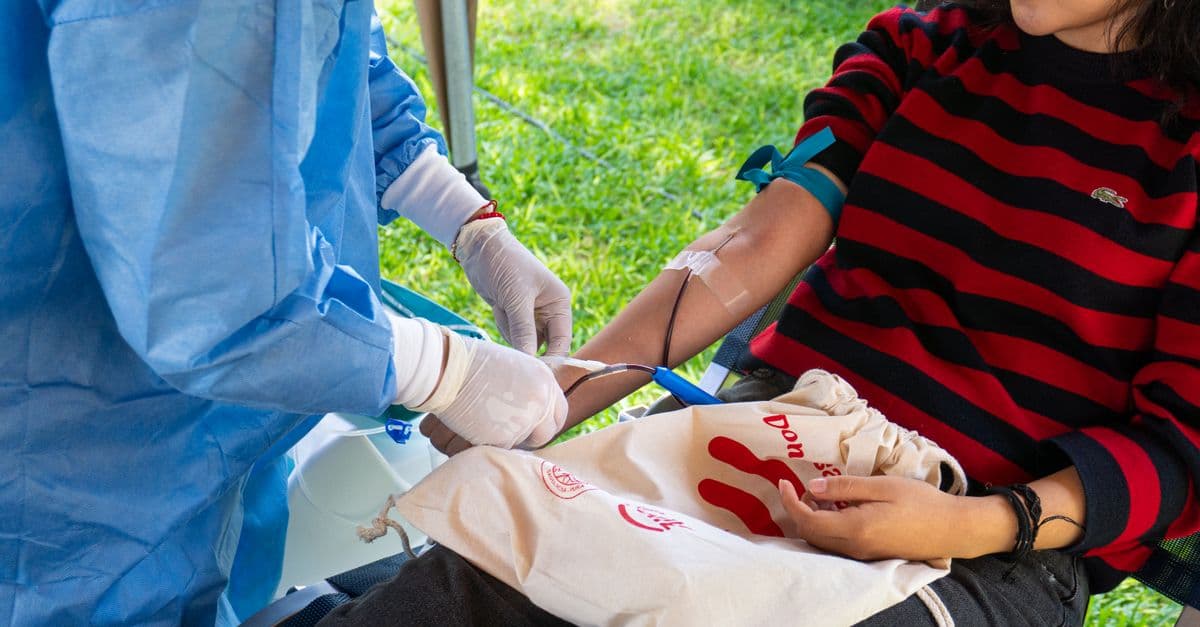
Photo: cottonbro studio / Pexels
Every ten minutes, somewhere in the world, a person dies waiting for an organ transplant. The global shortage of transplantable organs is not a medical failure — the science of transplantation is well-established, the surgery routinely performed, and the immunosuppressive drugs that prevent rejection increasingly effective. The shortage is a social and systems failure: the gap between how many suitable organs become available and how many patients need them. Approximately 150,000 solid organ transplants are performed globally each year, according to the Global Observatory on Donation and Transplantation (GODT). Demand is roughly three times supply. Which countries have built the systems to close that gap — and which have failed?
How This Ranking Works: Methodology
Annual transplant volume data draws on the GODT International Report on Organ Donation and Transplantation Activities (2023 data), the most comprehensive publicly available source, compiled jointly by the World Health Organization and Spain's National Transplant Organisation (ONT). The GODT collects standardised reporting from national transplant authorities across 100+ countries.
Donor rates per million population (pmp) are the standard comparative metric in transplant medicine, normalising for country size. A country with 50 donors pmp delivers a much higher-performing system than a country of similar size with 10 donors pmp, regardless of absolute volume. Two figures matter separately: deceased donor rates (organs from brain-dead or cardiac-death donors) and living donor rates (typically kidney and partial liver from healthy volunteers).
China's figures are marked as estimated and disputed due to incomplete reporting and documented ethical concerns detailed below.
Source: GODT 2023 International Report on Organ Donation and Transplantation Activities (transplant-observatory.org); WHO-ONT collaborative data.
Where This Data Comes From
Annual organ transplant volumes are reported to the Global Observatory on Donation and Transplantation (GODT), a collaboration between the WHO and Spain's National Transplant Organisation, by national transplant authorities and healthcare ministries. The GODT 2023 International Report aggregates standardised data from 100+ reporting countries; non-reporting countries' figures are estimated or unavailable.
The absolute transplant volume figures (e.g., "United States: 46,000+") are documented through national registries: the US through UNOS/OPTN, Spain through the ONT, etc. China's figures are estimates based on hospital capacity, transplant centre reports, and analysis by independent researchers because China does not routinely participate in GODT verification processes. India's high volume with low donor per-capita rates reflects its reliance on living donation, which has different reporting standards than deceased donation. Population figures used for per-capita calculations are 2024 UN data.
The data reflects the most recent full year (typically 2023–2024); some countries report with a one-year lag. Living donor numbers, while tracked, are less standardised internationally than deceased donor statistics, particularly in countries where family-based living donation predominates.
Countries with the Most Organ Transplants (2023–2024)
| Rank | Country | Annual transplants (est.) | Donors per million pop. | Notes |
|---|---|---|---|---|
| 1 | United States | 46,000+ | ~45 | Highest absolute volume |
| 2 | China | 20,000+ (est.) | Disputed/unclear | Ethical controversy |
| 3 | India | 15,000+ | ~1.5 | Mostly living donors |
| 4 | Brazil | 9,500+ | ~20 | |
| 5 | Spain | 6,200+ | 49 (world's highest) | Gold standard system |
| 6 | France | 5,800+ | ~30 | Opt-out since 2017 |
| 7 | Germany | 4,500+ | ~11 | Below EU average |
| 8 | Turkey | 2,800+ | ~10 | High living donor rate |
| 9 | Canada | 2,800+ | ~22 | |
| 10 | Italy | 4,200+ | ~30 | |
| 11 | United Kingdom | 4,000+ | ~22 | Opt-out (England) since 2020 |
| 12 | South Korea | 3,500+ | ~12 | |
| 13 | Australia | 2,500+ | ~23 | |
| 14 | Argentina | 2,100+ | ~16 | |
| 15 | Japan | 2,000+ | ~1.5 | Cultural barriers |
Historical Context: From Experiment to Standard of Care
The first successful organ transplant is one of modern medicine's precise dateable moments: December 23, 1954, at Peter Bent Brigham Hospital in Boston. Surgeon Joseph Murray transplanted a kidney between Ronald Herrick and his identical twin brother Richard — the recipient of the donated kidney survived for eight years. Murray received the Nobel Prize in Physiology or Medicine in 1990 for this and subsequent work.
The twin-donor limitation was fundamental: the early immune system could not be prevented from rejecting a kidney from a genetically distinct donor. The breakthrough came in 1962, when Murray successfully transplanted a kidney from an unrelated deceased donor using the immunosuppressive drug azathioprine. This opened the door to transplantation between non-relatives, transforming the procedure from a medical curiosity into a scalable therapy.
Cyclosporin, introduced in the early 1980s, dramatically improved rejection management and launched transplantation's modern era. By 1984, the US enacted the National Organ Transplant Act, creating the United Network for Organ Sharing (UNOS) and establishing the legal framework for a national allocation system. Heart, liver, lung, and pancreas transplants became routine in the following decade.
Source: History of transplantation from Joseph Murray Nobel biography (Nobel Foundation) and PMC historical review (pmc.ncbi.nlm.nih.gov).
Why the Organ Shortage Defines the Field
Understanding the transplant shortage requires distinguishing between the types of donors a system can access.
Deceased donors are patients declared brain-dead (irreversible loss of all brain function, including the brainstem) or who die after cardiac arrest (donation after circulatory death, DCD). These donors can provide kidneys, liver, heart, lungs, pancreas, and intestines. The challenge is identification: only patients who die in specific clinical circumstances — typically in intensive care units, on ventilators — are suitable deceased donors. Hospital coordinators must identify these patients, approach families, manage consent, and coordinate the complex logistics of organ retrieval and transplantation, all within hours.
Living donors are typically healthy relatives or friends who donate one kidney (humans function normally with a single kidney) or a partial liver lobe (which regenerates). Living donation is safer for the recipient — living donor organs are fresher, from healthier donors, and can be scheduled rather than emergency — but carries a small but real surgical risk for the donor.
The global shortage is acute because deceased donation systems are systematically under-converting: most people who die in circumstances suitable for donation either never have their potential identified, or their families decline consent when approached. Spain's achievement — showing that systematic identification and skilled family communication can double donation rates — is the most important insight in transplant medicine. For donation rates per million people, see countries with the most organ donors.
Per-Country Deep Dive
United States: Scale, Innovation, and Inequality
The US transplant system combines extraordinary volume with persistent inequity. UNOS (now reorganised under the OPTN, Organ Procurement and Transplantation Network) coordinates the national system through 57 organ procurement organisations (OPOs), each responsible for a geographic territory. These OPOs serve over 250 transplant centres that collectively perform the 46,000+ annual transplants.
Of the total, approximately 27,000 are kidney transplants — the most common solid organ transplant globally. Liver transplants account for approximately 9,500, heart transplants for 4,500+, and lung transplants for 3,000+. The remainder are pancreas and small bowel transplants.
The waiting list numbers reveal the system's core failure: approximately 103,000 Americans wait for an organ as of 2025. Median wait time for a kidney is 3.6 years. Approximately 7,000 Americans die annually while waiting. These numbers have improved marginally year over year as donation rates increase, but the structural shortage has not been solved.
Racial disparities are embedded in the system's history. African American patients suffer kidney disease at higher rates than white Americans, but historically faced longer waiting times. Some of this disparity traced to a creatinine-based formula that adjusted kidney function estimates by race — a correction now removed following advocacy from nephrologists. Donation rates in Black communities also remain lower, partly reflecting historical medical distrust stemming from documented abuses such as the Tuskegee syphilis study.
Living donation is the system's largest untapped resource. The US performs approximately 6,000 living kidney donations annually, the world's most active living programme. Kidney paired exchange (KPE) programmes — where incompatible donor-recipient pairs are matched across chains of compatible swaps — have expanded options for patients without a directly compatible living donor. The largest KPE chain in US history involved 70 donors and recipients across multiple transplant centres.
Source: UNOS/OPTN annual data report (optn.transplant.hrsa.gov).
Spain: The Gold Standard That Changed the World
Spain maintains the world's highest deceased donor rate — 49 donors per million population — not through legal mandate alone but through a deliberately engineered human system.
The transformation began with a 1989 reform: Spain's National Transplant Organisation (ONT) placed dedicated transplant coordinators — doctors or nurses with special training — in every hospital with an intensive care unit. These coordinators, often senior intensive care physicians with both clinical authority and interpersonal skill, have one job: identify potential donors and navigate the family through the donation decision during an acutely traumatic period.
Spain's consent rates from approached families exceed 85% — among the highest in the world. This is not because Spanish families are uniquely altruistic. It is because the coordinators are specifically trained in grief communication, in the ethics of donation, and in the practical logistics that families worry about (will the body be disfigured? when can we have the funeral?). When skilled people with institutional authority and time ask well, most families agree.
Spain does operate under presumed consent (opt-out) legislation, which theoretically makes all citizens donors unless they explicitly register otherwise. But the Spanish model works independently of the legal framework: coordinators consult families regardless of legal status, and opt-out status is not used to override a family's clear objection. The legal framework removes one barrier; the human system does the actual work.
The "Spanish model" — intensive coordinator training, hospital-embedded coordinators funded by the state, and a national coordination network — has been exported to Croatia, Portugal, Italy, and several Latin American countries with significant improvements in their donation rates.
Source: Spanish Transplant Organisation ONT annual report, WHO Factsheet on Organ Transplantation (who.int).
China: Volume Without Transparency
China reports approximately 20,000+ transplants annually, making it one of the world's largest transplant nations by volume. China is not a full participant in GODT reporting, and its data is not subject to independent verification — two facts that are themselves significant.
The forced organ harvesting question has been investigated by multiple independent bodies. The China Tribunal, an independent citizens' tribunal chaired by Sir Geoffrey Nice QC (who previously prosecuted Slobodan Milosevic at the International Criminal Tribunal for the former Yugoslavia), published its final judgment in 2019 concluding that China had, "beyond reasonable doubt," forcibly harvested organs from prisoners of conscience, primarily Falun Gong practitioners. The evidence included: extremely short wait times for transplants in China (days, compared to months or years in other countries — only possible with a standing pool of live, on-demand organ sources); excess transplant capacity in Chinese hospitals inconsistent with voluntary donation volumes; survivor testimony; and statistical analyses by researchers David Kilgour, David Matas, and Ethan Gutmann.
China announced in 2015 that it had ended the use of executed prisoner organs and would transition entirely to voluntary civilian donation. International medical bodies have sought to verify this claim. The Transplantation Society and International Society for Heart and Lung Transplantation have restricted publication of research involving Chinese transplant data until independent verification is possible. Some researchers accept the 2015 reform as genuine; others, including those who have analysed hospital capacity and transplant volume statistics, argue that the practice continues.
The ethical implications extend beyond China's borders. Several countries, including Israel, Spain, and Taiwan, have enacted "transplant tourism" legislation restricting citizens from travelling to countries where organs may be obtained from non-consenting donors.
India: Volume Through Living Donation
India's 15,000+ annual transplants are achieved despite an extremely low deceased donor rate (approximately 1.5 donors pmp) through an active living donor programme. This reflects both cultural factors — family members donating to relatives aligns with Indian family obligation norms — and the absence of an effective deceased donor infrastructure in most of the country.
India's Transplantation of Human Organs Act (1994, amended 2011) legalised both brain-death donation and living unrelated donation under specific circumstances. The living unrelated category — where a person not related to the recipient donates — requires authorisation committee approval to prevent commercial donation, which is illegal. Enforcement is imperfect and organ trafficking remains a documented problem in some states.
The concentration of transplant activity in major urban centres — Chennai, Mumbai, Delhi, Hyderabad — means that most of rural India has no realistic transplant access. India's per-capita transplant volume, adjusted for its 1.4 billion population, is among the world's lowest for a country with advanced medical infrastructure.
Japan: Cultural and Legal Resistance
Japan's approximately 2,000 annual transplants represent one of the largest mismatches between medical capability and system output among developed nations. Japan has world-class transplant surgery expertise and hospital infrastructure. It has, by global standards, almost no deceased donation.
The causes are specific and historical. In 1968, the first heart transplant in Japan was performed by Juro Wada at Sapporo Medical University. Within years, Wada faced accusations that he had removed the heart before the donor was legally dead. The case was never conclusively resolved — charges were eventually dropped — but the public controversy created a profound and lasting distrust of brain-death determination as a cover for premature organ retrieval.
Japan's 1997 law legalised brain-death donation but required the individual to have previously provided written consent — an extremely high bar that almost no one met. The 2009 revision allowed family consent without individual prior written consent, producing a modest but significant increase. Deceased donor rates have risen from under 0.5 pmp before 2009 to approximately 1.5 pmp, but Japan remains far below international averages and must wait decades for cultural norms around death and donation to shift further.
Japan compensates with a highly active living liver donation programme — split liver transplants from living donors, technically demanding operations, are performed at major centres with volumes that exceed most of the world.
Source: Japan Organ Transplant Network (jotnw.or.jp) annual report; academic analysis of Japan's donation law reform in Transplantation journal.
Key Trends in Transplant Medicine
Xenotransplantation — transplanting organs from genetically modified animals into humans — moved from science fiction to experimental reality in the early 2020s. In January 2022, surgeons at the University of Maryland Medical Center transplanted a genetically modified pig heart into a human recipient; the patient survived for 60 days before dying of a viral complication unrelated to rejection. In 2023, NYU Langone Health successfully transplanted genetically modified pig kidneys into brain-dead human patients with functioning results. The path from experimental to clinical is long, but the direction is clear.
Bioengineered and lab-grown organs represent a longer horizon. Researchers at Wake Forest Institute for Regenerative Medicine and other centres have demonstrated bladder and tracheal tissue engineering; solid organs such as kidneys and livers present far greater complexity. A functional lab-grown kidney remains a decade or more away from clinical use, but its eventual arrival would eliminate the donor shortage entirely for kidney patients.
Machine perfusion preservation has extended the viable window for donated organs. Traditional cold storage gives transplant teams 4–6 hours for hearts and 12–24 hours for kidneys. Machine perfusion — where the organ is kept alive on a circuit that maintains blood flow, temperature, and oxygenation — can extend kidney viability to 24–48 hours and allows assessment and repair of marginal organs. This technology increases the number of usable organs from each donor.
Opt-out legislation expansion. England switched to an opt-out consent system in May 2020 (Max and Keira's Law). Wales adopted opt-out in 2015. Scotland follows suit. Early evidence from Wales suggests a modest increase in donation rates, consistent with international literature showing opt-out has a real but limited effect absent accompanying coordinator investment.
Frequently Asked Questions
Q: What is the most needed organ for transplant?
A: Kidneys are both the most transplanted and most needed organ globally — approximately 65% of the global transplant waiting list consists of kidney patients. Liver disease is the second most common indication. Heart and lung transplants are less numerous because these organs have narrow viability windows (hours, not days) and require brain-dead donors in specific circumstances.
Q: What is presumed consent and does it actually increase donation rates?
A: Presumed consent (opt-out donation) means all citizens are legally assumed to consent to donation unless they have registered an objection. Countries with opt-out legislation include Spain, France, Portugal, Austria, Belgium, and England. Evidence from transplant research suggests opt-out modestly increases donation rates — but the effect is smaller than expected, because actual donation requires family consultation regardless of legal status. Spain's coordinator model produces far larger effects than legal framework changes alone.
Q: Can you legally buy an organ anywhere?
A: Iran is the only country with a legal regulated kidney market — the Iranian Kidney Foundation acts as an intermediary between paid living donors and patients. No other country legally permits organ sale. Organ trafficking — the illegal purchase of organs, typically from economically coerced living donors in low-income countries — is a significant global criminal problem. Patients from wealthy countries who travel abroad to purchase organs engage in what is called "transplant tourism," which is specifically prohibited in WHO guidance and by national law in several countries.
Q: What happens to the organ if no compatible recipient is found?
A: Organ allocation follows a defined priority order — blood type, tissue compatibility, medical urgency, time on waiting list, and geographic proximity. If no compatible local recipient is found, the search expands regionally and nationally. If an organ cannot be placed within its viability window, it is not transplanted — this represents a genuine failure of matching logistics rather than a shortage of willing recipients.
Q: Are living donors at risk from donation?
A: Living kidney donation carries a small but real surgical risk: approximately 3 in 10,000 living kidney donors die from the operation itself. Long-term, living with a single kidney is safe for healthy donors — research shows minimal reduction in overall life expectancy and only modest increase in late-onset kidney disease risk. Living liver donors face a somewhat higher perioperative risk. Centres with high living donor volumes have lower complication rates, as surgical proficiency matters significantly.
Q: How does xenotransplantation work and when will it be available?
A: Xenotransplantation uses organs from animals — currently pigs — that have been genetically modified to remove pig proteins that trigger human immune rejection and to add human proteins that help the organ integrate. Multiple pig genes are edited; current models involve 10+ genetic modifications. Clinical trials are underway for pig kidneys. Regulatory approval for routine use is likely still 5–10 years away, pending longer-term safety data.
The Takeaway
Organ transplantation is one of medicine's most consequential achievements: the ability to give life through the death or generosity of another. The global shortage of transplantable organs is not a medical constraint but a social one — organs are available in sufficient numbers to dramatically reduce waiting lists, but most countries lack the infrastructure to convert available donors into actual transplants. Spain's model — trained coordinators in every intensive care unit, skilled family communication, supportive legislation — has demonstrated what is possible when a country treats donation as a systems problem rather than an awareness campaign. The ethical shadow of China's forced harvesting represents the darkest possible counterpoint. The coming decade will bring xenotransplantation closer to clinical reality, potentially eliminating the kidney shortage altogether. Until then, the difference between the countries at the top of this ranking and those at the bottom is almost entirely a function of how well they have built the human infrastructure that converts potential into donation.
Related Reading
Follow new articles
Add SciHub101 to your feed reader to see new science and technology stories.
About the Author
SciHub101 is an independent science and technology publication founded and edited by Buğra Sözeri, a software engineer and app developer based in Türkiye. AI tools assist with drafting and research. Source documentation in the existing archive is uneven, and articles are being reviewed and corrected. The Editorial Team byline identifies editorial responsibility; it does not certify specialist or independent human review. Where we compare products, anything built by our own team is labelled as such — see the editorial guidelines and About page for how corrections and disclosures work.
Related Articles

Countries with the Most Space Tourism Activity (2025 Ranked)
The United States dominates space tourism — SpaceX, Blue Origin, and Virgin Galactic are all American companies. Only 30+ private citizens have reached space as tourists since 2001. Russia's Soyuz programme was the world's first commercial space tourism route before it ended in 2009.

Countries with the Most Patents (2025 Ranked)
China surpassed the United States in annual patent filings in 2011 and now files more patents than all other countries combined. The US still leads in international (PCT) patents — the most commercially valuable category. Japan's Sony and Toyota are among the world's most prolific patent filers.

AI in Organ Transplantation: Matching, Allocation, and Saving More Lives
Machine learning is being tested on organ matching, graft-survival prediction, and kidney nonuse. Here is what the evidence shows and where it stops.

AI in Healthcare: Transforming Diagnosis and Treatment
From reading radiology scans to predicting sepsis, AI is reshaping medicine—but clinical adoption is slower and messier than the headlines suggest.

Countries With the Best Healthcare Systems: What the Rankings Actually Show
Australia, the Netherlands and the UK top the Commonwealth Fund's 2024 comparison of ten wealthy health systems, while the US ranks last despite the highest spending. Here is how the major rankings work, what the data shows, and why 'best' depends on what you measure.
Countries with the Most Organ Donors Per Capita (2025 Ranked)
Spain has the world's highest deceased organ donation rate — 49 donors per million people — and has held that position for more than three decades. The secret is not Spanish generosity but a system redesign: opt-out consent, transplant coordinators in every hospital, and a culture of medical trust. Here's what the data shows.