Countries with the Most Organ Donors Per Capita (2025 Ranked)
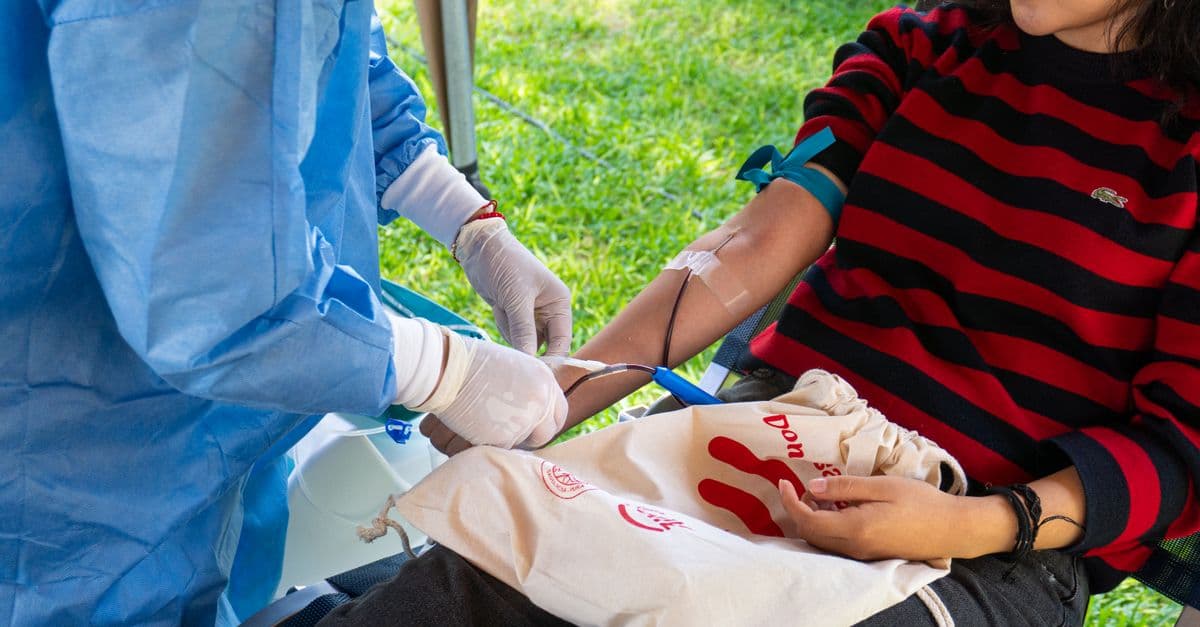
Photo: Manuel Camacho-Navarro / Pexels
Every year, roughly 150,000 organ transplants are performed worldwide, yet more than 2 million people are estimated to need one. That gap between supply and demand is one of the most preventable causes of avoidable death in modern medicine. How a country structures its donation system — the laws, the hospital staffing, the cultural defaults — determines how many of those 2 million people survive. Spain figured this out in 1989, and the evidence of what it did has been sitting in plain sight ever since.
What the data measures and how to read it
Organ donation statistics are published annually by IRODaT (the International Registry on Organ Donation and Transplantation) and the Global Observatory on Donation and Transplantation (GODT), which is jointly operated by the WHO and the Spanish National Transplant Organisation (ONT). The primary metric is deceased donors per million population (pmp) — people who died in hospital under medically appropriate circumstances and whose organs were retrieved for transplantation. This is the most comparable cross-country metric because it accounts for population size.
Deceased donation is different from living donation (where a living person donates a kidney or part of a liver). Both are important, but they follow entirely different logistical and ethical frameworks. This article focuses on deceased donation unless otherwise noted, because that is where system design has the largest measurable effect.
Two subtypes of deceased donation exist. Brain-death donors (DBD) are patients declared brain-dead while still on mechanical ventilation, whose hearts are still beating and organs remain perfused. Donation after circulatory death (DCD) involves patients whose hearts have stopped — a category that has expanded significantly in Spain, France, and the UK over the past decade and now accounts for a growing share of total transplants.
Source: IRODaT 2023 Annual Newsletter — www.irodat.org
Countries ranked by deceased organ donation rate
(Deceased donors per million population, 2023 data, IRODaT / GODT)
| Rank | Country | Donors/million | Consent system | Notes |
|---|---|---|---|---|
| 1 | Spain | 49.4 | Opt-out | 30+ year global leader |
| 2 | Croatia | 42.0 | Opt-out | Adopted Spanish model |
| 3 | Portugal | 36.7 | Opt-out | Reorganised after studying Spain |
| 4 | France | 33.5 | Opt-out (strengthened 2017) | DCD expansion ongoing |
| 5 | United States | ~40.0* | Opt-in | *Includes living + deceased combined |
| 6 | Czech Republic | 33.1 | Opt-out | — |
| 7 | Belgium | 32.9 | Opt-out | — |
| 8 | Austria | 29.1 | Opt-out | — |
| 9 | Italy | 28.1 | Opt-out | Regional variation is large |
| 10 | United Kingdom | 22.9 | Opt-out (2020) | Rising since law change |
| 11 | Canada | 24.2 | Opt-in (mixed by province) | — |
| 12 | Australia | 22.3 | Opt-in | — |
| 13 | Germany | 11.4 | Opt-in | Opt-out proposal defeated 2020 |
| 14 | Japan | ~1.2 | Opt-in (cultural barriers) | Family veto used frequently |
| 15 | China | ~4.0 (est.) | State-directed since 2015 | Formerly relied on executed prisoners |
*The US figure of ~40/million is commonly cited as a composite. GODT lists US deceased donor rate at approximately 40–46/million depending on inclusion criteria.
Source: GODT / IRODaT 2023 data; World Population Review organ donation rates by country (2026 aggregation)
Where This Data Comes From
Organ donation rates are collected annually by the International Registry on Organ Donation and Transplantation (IRODaT) and the Global Observatory on Donation and Transplantation (GODT), a collaboration between the WHO and Spain's National Transplant Organisation. Both organisations compile data reported by national transplant coordinators and health ministries using standardised definitions.
The primary metric — deceased donors per million population — normalises for population size and allows meaningful cross-country comparison. Data reliability varies: Spain, most Western European countries, and the US maintain comprehensive registries with verified donor counts. Some countries, particularly in Southeast Asia, Africa, and parts of Latin America, report estimates rather than exact counts. China's figures have been significantly revised since its 2015 policy change and transparency improvements; pre-2015 figures are considered unreliable due to reliance on executed prisoner organs.
The data reflects the most recent full year available (typically 2023–2024 for most countries, with some countries reporting 2022 data). Living donation statistics are tracked separately and are less standardised internationally — family-based living donation in Iran and South Asian countries is documented through national programmes but may not be fully captured in international registries.
A brief history: how organ transplantation reached this scale
The first successful kidney transplant was performed in Boston in December 1954 by Joseph Murray — a transplant between identical twins, Richard and Ronald Herrick, eliminating the immunological barrier of organ rejection. Murray received the Nobel Prize in Physiology or Medicine in 1990. The discovery of cyclosporine in 1976 by Jean-François Borel, and its clinical introduction in the early 1980s, was the genuine turning point: it suppressed immune rejection without destroying the immune system entirely, making routine transplantation across unrelated patients medically viable for the first time.
By the 1980s, kidney, liver, heart, and lung transplants were established procedures in major medical centres. But supply never caught up with demand. The gap between available organs and waiting patients was apparent by the late 1970s and had become a public health crisis by 1990. Spain's response — the 1989 creation of the ONT and the subsequent redesign of its hospital-level system — became the global template because it worked, demonstrably, year after year.
The modern era of transplantation has added two significant dimensions. First, DCD (donation after circulatory death) expanded the potential donor pool by allowing organ retrieval after cardiac arrest under controlled hospital conditions. Spain, the UK, Belgium, and the Netherlands have led this expansion. Second, xenotransplantation — using genetically modified pig organs in human recipients — reached clinical trials in 2022–2024, with multiple pig kidney transplants performed in the United States. This technology could eventually transform the supply side, but remains years from routine clinical use.
Source: Nobel Prize history — NobelPrize.org; Cyclosporine history — clinical pharmacology records
Why Spain leads: the architecture of the Spanish Model
Spain's National Transplant Organisation (ONT), established in 1989, implemented a system redesign that became the global benchmark. Calling it a "model" understates its specificity — it is an engineered process, with defined roles, performance metrics, and continuous monitoring. Five components explain the results.
Hospital-level transplant coordinators. Every Spanish hospital where a patient might die in a medically relevant way — intensive care units, emergency departments, neurosurgical wards — has a dedicated transplant coordinator embedded in the clinical team. These are typically intensive care specialists, not administrators. They monitor every patient in the ICU for donation potential, identify medically appropriate candidates at the moment of brain death declaration, approach families, and manage the entire donation process. Before this system, the task fell informally to whichever doctor happened to be available. Spain made it a professional role with accountability.
Presumed consent. Spain uses an opt-out system: citizens are legally presumed to consent to organ donation unless they explicitly register an objection. But the practical mechanism is subtler than the law implies. Spanish law still requires family consultation; the treating team almost never proceeds against express family objection. What the opt-out system changes is the starting point of that family conversation. Instead of "would your relative have wanted to donate?", the default question becomes "your relative was a donor unless they said otherwise — do you have any reason to believe they objected?" That framing shift matters enormously for family consent rates.
ICU capacity investment. Spain invested in intensive care unit infrastructure in parallel with its transplant system. More ICU beds mean more medically monitored brain deaths, which means more potential donors. A country with weak ICU capacity simply has fewer patients dying in the clinical circumstances that make donation possible, regardless of what its consent law says.
Medical trust and process integration. The treating physician who managed the patient's care is the same person (or team member) who discusses donation with the family. There is no external organisation arriving to claim the body; the donation conversation is continuous with the medical relationship. Spanish families report trust in this process, and the ONT tracks family refusal rates continuously to identify hospitals where trust is eroding.
Data-driven optimisation. The ONT publishes detailed data on every step of the donation process — potential donors identified, family approaches made, consent obtained, organs retrieved, organs transplanted, organs discarded. This transparency allows continuous identification of where in the pathway organs are being lost, and targeted intervention.
Source: ONT (Organización Nacional de Trasplantes) Annual Activity Report 2023; PMC study on healthcare system impact on organ donation — ncbi.nlm.nih.gov/pmc/articles/PMC10498995/
Historical context: the organ shortage as a policy problem
The global organ shortage has been described as a "silent epidemic." At any given time, approximately 100,000 people in the United States alone are on transplant waiting lists; around 17 people die every day in the US while waiting for a transplant that does not arrive in time. Globally, the WHO estimates that only 10% of transplant needs are met.
This shortage is not primarily a biological problem. Enough people die in hospitals each year under medically appropriate circumstances to supply organs for most people who need them. The constraint is the conversion rate — the proportion of potential donors who become actual donors. Studies suggest that even in the best-performing countries, only 40–60% of medically eligible potential donors actually donate, with family refusal being the single largest preventable cause of lost donors.
Before modern systems, the organ shortage was treated as a supply problem requiring public awareness campaigns. Spain's insight — and the insight that every high-performing country has since replicated — is that it is a process problem. The awareness campaigns help, but they are far less important than whether a trained professional is in the room at the right moment with the right conversation, and whether the system's default assumption is donation or non-donation.
The phrase "opt-out vs opt-in" has dominated public debate, but researchers comparing countries have repeatedly found that transplant coordinator infrastructure is a stronger predictor of donation rates than the legal consent framework alone. Germany (opt-in) has higher rates than some opt-out countries with weaker coordinator systems.
Source: HRSA (US Health Resources & Services Administration) organdonor.gov data; Organ Donation and Transplantation Worldwide GODT 2024 Report — PubMed
Germany's deficit and the 2020 parliamentary defeat
Germany has a rate of only 11.4 donors per million — the lowest among comparable Western European countries — despite possessing advanced transplant surgery and a wealthy, well-organised healthcare system. The contrast with Spain (49.4) is stark enough that it has been called the "German paradox" in transplant medicine literature.
Germany uses an opt-in system requiring positive, explicit registration. In January 2020, the Bundestag debated a proposal backed by Health Minister Jens Spahn to switch to opt-out. It was defeated 379 to 292. The opposition, led by members across party lines, centred on bodily autonomy: the argument that the state should not presume consent over the human body, and that affirmative, positive consent is the only ethically acceptable basis for using someone's organs after death. The Catholic and Protestant churches supported the opposition position.
The consequence is measurable. Approximately 8,500 Germans are on organ transplant waiting lists. An estimated 2,000–2,500 die each year while waiting. Germany imports organs from Eurotransplant — the organ-sharing organisation covering eight European countries — but receives fewer than it contributes, because its donation rate is lower than partners like Belgium (32.9/million) and Austria (29.1/million).
The German case illustrates that the opt-out debate is not simply technical. It involves genuine philosophical disagreement about the relationship between the state, bodily autonomy, and default assumptions about consent. Those who believe the Spanish Model should be universally adopted must contend with the fact that Germany had the debate openly, with full information, and chose differently.
Japan: cultural depth of a low-donation rate
Japan's deceased donation rate of approximately 1.2 per million makes it an outlier among wealthy nations — roughly 40 times below Spain's rate and far below any comparable European country. Understanding why requires engaging with several converging factors that do not reduce to a single policy lever.
Brain death acceptance. Japan's Brain Death Law was not passed until 1997 — nearly two decades after brain death was accepted as a legal basis for donation in most Western countries. Even after the law, the framework required every individual case to pass a complex multi-step verification, and initial legislation explicitly did not define brain death as human death in all circumstances. Subsequent amendments in 2009 expanded the framework, but the legal and philosophical ambiguity about whether a brain-dead person with a beating heart is dead persists in public discourse and medical culture.
Shinto and Buddhist traditions. Japanese religious and cultural traditions emphasise the integrity of the body after death. While no mainstream Shinto or Buddhist authority formally prohibits organ donation, the traditional association of personhood with the physical body, and the cultural importance of returning a complete body for burial or cremation, creates resistance to donation that does not translate neatly into Western frameworks of "religious opposition."
Family veto rights. Under Japanese law, the family can override a registered donation wish. In practice, Japanese families decline in the majority of cases even when the deceased registered as a donor. The cultural norm of family consensus and reluctance to deviate from family wishes — even those of a deceased member — suppresses conversion rates far below what the registration numbers would predict.
Medical culture. Japanese ICU physicians have historically been reluctant to pursue donation aggressively, viewing it as potentially conflicting with their primary duty to the patient. The transplant coordinator role is less established as a distinct clinical specialty.
Japan compensates through living donation — primarily kidney transplants from family members — and has one of the world's longest waiting times for deceased-donor organ transplants, sometimes exceeding 10–15 years for kidneys.
Source: Japan Organ Transplant Network (jotnw.or.jp); Japanese Brain Death Law history — academic medical literature
Living donation: a different map
The rankings above cover deceased donors. Living donation — primarily kidneys from healthy living donors, and occasionally partial liver — follows entirely different patterns.
Iran operates the only legal, regulated, non-directed living donor kidney market in the world. Compensation is permitted for kidney donation, paid partly by the government and partly by the recipient. Iran reports no kidney transplant waiting list as a result. The system is heavily criticised by ethicists and the medical community for commodifying human organs and disproportionately incentivising poor donors, but it is the only country that has empirically closed its kidney waiting list.
Israel introduced the Organ Transplant Law in 2008, which gives registered donors priority access to donated organs if they subsequently need a transplant. The system creates a direct reciprocal incentive and has significantly increased registration and living donation rates. Several countries have considered similar frameworks.
Saudi Arabia, Egypt, Iran, and Pakistan have high living donation rates from family relatives, reflecting cultural emphasis on family obligation to sick relatives and, in some cases, financial need on the part of donors.
Source: Iranian kidney market — published in Transplant International; Israel Organ Transplant Law — Israel Ministry of Health
Trends and what is changing
Several developments are shifting the landscape as of 2024–2026.
DCD expansion. Donation after circulatory death — retrieving organs after a planned withdrawal of life support or after unexpected cardiac arrest under controlled conditions — has expanded significantly in Spain, France, Belgium, the UK, and the Netherlands. Spain's rate of 49.4/million includes a growing DCD component that did not exist at scale a decade ago. DCD kidneys perform comparably to DBD kidneys in most analyses; DCD livers are more complex but increasingly successful.
Xenotransplantation milestones. In March 2024, Richard Slayman became the first human to receive a genetically modified pig kidney transplant from a living donor at Massachusetts General Hospital. Earlier 2022–2023 experiments with brain-dead human recipients at NYU and University of Alabama showed pig kidneys could function in humans for days to weeks. The immunological challenges remain significant, but this technology — if it matures — could ultimately supplement or replace the deceased donor system for kidneys.
UK law change impact. England switched to a soft opt-out system in May 2020 (Wales in 2015, Scotland in 2021). England's rate of 22.9/million is rising. Studies comparing pre- and post-law periods show modest but measurable increases, consistent with the international evidence that opt-out produces a 20–30% improvement in donation rates when implemented alongside coordinator infrastructure.
China's reform. China formally abolished the use of executed prisoner organs in January 2015 following sustained international pressure and a GODT investigation. Its voluntary donation system has grown rapidly from near zero in 2010 to approximately 4/million today — still low, but a genuine transformation of the system's ethical foundation. Chinese transplant volumes are rapidly growing and the country has become a significant participant in global transplant medicine.
Source: Pig kidney transplant — MGH press release, March 2024; England opt-out implementation — NHS Blood and Transplant annual report 2022
What people get wrong about organ donation
"Opt-out automatically solves the shortage." It doesn't. Austria has used opt-out for decades and achieves 29.1/million. Germany uses opt-in and achieves 11.4/million. But France uses opt-out and achieves 33.5/million; Spain 49.4/million. The evidence shows opt-out is associated with higher rates — but the coordinator system and ICU infrastructure matter more. Opt-out without operational infrastructure doesn't close the gap.
"Doctors let registered donors die to harvest organs." This is the single most common reason people give for refusing to register, across multiple surveys. It is false. The treating physician and the transplant team are distinct; the clinical team managing a patient's care has no financial or professional incentive to shorten life for donation. In Spain, transplant coordinators deliberately operate separately from the ICU team managing the patient, precisely to eliminate any conflict of interest.
"Artificial organs will replace human organs soon." Total artificial hearts exist as bridges to transplant but not as permanent replacements. Lab-grown organs using 3D bioprinting and scaffold seeding remain experimental. Xenotransplantation is advancing fastest but is years from routine clinical deployment. For the foreseeable future, human donors remain the primary supply.
"My religion prohibits organ donation." No major religious institution formally prohibits organ donation. Most — including Catholic, Protestant, Islamic, Jewish, and Buddhist authorities — actively endorse it as an act of charity or life-saving obligation. Individual interpretive traditions vary, but institutional prohibition is rare.
Frequently asked questions
Q: Does opt-out consent actually increase donation rates? A: Evidence from cross-country comparisons and natural experiments (like England's 2020 law change) consistently shows opt-out is associated with 20–30% higher donation rates, all else equal. However, researchers including Johnson and Goldstein's foundational 2003 study and subsequent meta-analyses note that the quality of transplant coordinator infrastructure predicts rates more reliably than the legal framework alone. The effect of opt-out appears strongest when implemented alongside a strong coordinator system.
Q: What is the most needed organ for transplant? A: Kidneys, by a substantial margin. Of the roughly 100,000 people on US transplant waiting lists, approximately 83,000 need a kidney. Each deceased donor can typically provide two kidneys, plus a heart, liver, lungs, pancreas, and small intestine — potentially saving up to eight lives. Kidney transplantation also eliminates the need for dialysis, which costs approximately $90,000 per year per patient in the US.
Q: What is brain death and why does it matter for donation? A: Brain death is the complete and irreversible cessation of all brain function, including the brainstem, while the heart continues beating with mechanical support. It is the legal and medical definition of death in most countries, and it is significant for donation because it means organs remain perfused and viable. A brain-dead patient on a ventilator can maintain organ function long enough for a donation process. The key distinction from coma or vegetative state: brain death is irreversible; there is no case of neurological recovery from confirmed brain death.
Q: What happens to organs that are not used? A: Not all retrieved organs are transplanted. Livers may be rejected due to fatty liver disease or damage; hearts require precise size matching and tolerance for ischemic time (time outside the body). Nationally, in the US, approximately 20–25% of retrieved organs are not transplanted, primarily due to recipient matching failures, organ quality issues, or logistical constraints. Reducing this discard rate is a significant area of research, including machine perfusion technology that keeps organs viable for longer transport times.
Q: Can living people donate organs? A: Yes. Living donation is possible for kidneys (humans have two and function normally with one) and partial liver (the liver regenerates). Living kidney donation is the most common. Approximately 6,000 living kidney donations are performed annually in the US. Living donation provides better outcomes than deceased donation in many analyses because organs experience no ischemic time from cardiac arrest.
Q: What is paired kidney exchange? A: When a living donor is willing but biologically incompatible with their intended recipient, paired exchange allows them to swap with another incompatible donor-recipient pair. Chain exchanges — initiated by a non-directed altruistic donor — can extend to chains of dozens of transplants. The National Kidney Registry in the US coordinates these chains and has facilitated thousands of transplants that would otherwise not have occurred.
The takeaway
Spain's 30-year global leadership in organ donation is not a cultural coincidence — it is the result of deliberate system engineering: professional transplant coordinators embedded in every relevant hospital, a presumed consent framework that changes the default of family conversations, sustained ICU investment, and continuous data monitoring. The gap between Spain (49/million) and Germany (11/million) or Japan (1.2/million) is not explained by different levels of altruism; it is explained by system design, legal frameworks, and medical culture. Every country that has fully implemented the Spanish coordinator model has seen donation rates increase. The xenotransplantation advances of 2022–2024 offer a glimpse of a future where the shortage is solved biologically rather than institutionally — but that future is still years away. For now, the evidence of what works is clear, and the cost of not acting is measured in lives: 17 people per day in the United States alone.
Related Reading
Follow new articles
Add SciHub101 to your feed reader to see new science and technology stories.
About the Author
SciHub101 is an independent science and technology publication founded and edited by Buğra Sözeri, a software engineer and app developer based in Türkiye. AI tools assist with drafting and research. Source documentation in the existing archive is uneven, and articles are being reviewed and corrected. The Editorial Team byline identifies editorial responsibility; it does not certify specialist or independent human review. Where we compare products, anything built by our own team is labelled as such — see the editorial guidelines and About page for how corrections and disclosures work.
Related Articles

Countries with the Biggest Film Industries in the World (2025)
Hollywood generates the highest global box office revenue of any single national industry, but India produces more films per year than any other country, and China is the world's largest cinema market by ticket sales. The global film industry is simultaneously more American-dominated and more genuinely international than at any previous point in its history.

What Is Geopolitics? How Geography Shapes the Fate of Nations
Why does Russia keep fighting over access to the sea? Why does the United States have so much room to maneuver? Why has Poland been invaded from both sides? Geopolitics argues that mountains, rivers, coastlines, and resources shape political choices more than most people expect. Here is how the idea works, and where it breaks down.

Countries With the Best Healthcare Systems: What the Rankings Actually Show
Australia, the Netherlands and the UK top the Commonwealth Fund's 2024 comparison of ten wealthy health systems, while the US ranks last despite the highest spending. Here is how the major rankings work, what the data shows, and why 'best' depends on what you measure.

Countries with the Most Organ Transplants (2025 Ranked)
The United States performs more organ transplants than any country — 46,000+ annually. Spain has the world's highest deceased donor rate per million population. China performed forced organ harvesting from prisoners, a practice that drew international condemnation.

Countries with the Lowest Infant Mortality Rates (2025)
Iceland records just 0.9 infant deaths per 1,000 live births — virtually eliminating what was once a universal threat to human families. Monaco, Japan, and Finland follow closely. Meanwhile, the Central African Republic loses 79 infants per 1,000. The gap between the best and worst is among the starkest in global health.

Countries with the Most Doctors Per Capita (Physicians Per 1,000 People Ranked)
Cuba has 9.54 physicians per 1,000 people — the highest doctor-to-population ratio of any large nation on earth. That is nearly three times the OECD average of 3.7, and more than six times the WHO's minimum recommended threshold of 1.5. Behind Cuba sit Monaco, Greece, Belgium, and Lithuania in a top five dominated by an unexpected mix of a Caribbean socialist state and small European nations.