The Defibrillator: From Open-Chest Surgery to the Box on Every Airport Wall — SciHub101
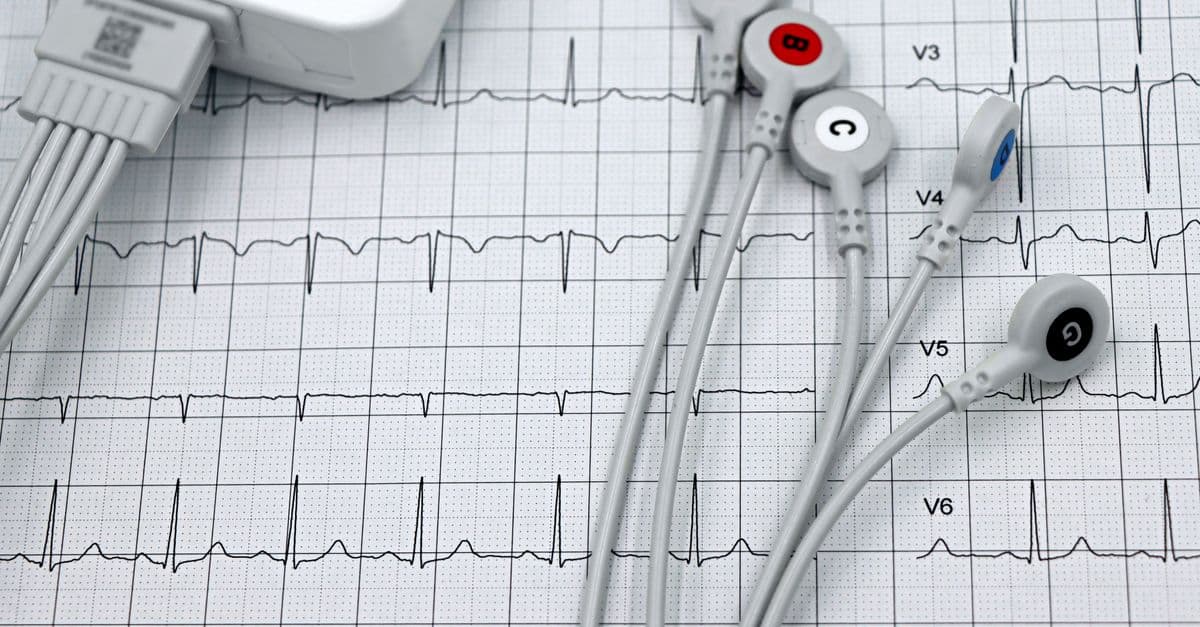
Photo: Marta Branco / Pexels
Every year, sudden cardiac arrest kills approximately 350,000 Americans outside hospital settings. Roughly 70 percent of those arrests happen at home. Fewer than 12 percent of victims survive to hospital discharge. The device that can interrupt the lethal rhythm causing those arrests — a defibrillator — delivers a precisely calibrated electrical shock that has about as good a chance of saving a life as any intervention medicine has developed. The machine now sits in airports, casinos, schools, and shopping centers. You have almost certainly walked past one. Its history runs from a young cardiac surgeon shocking an open heart on an operating table in 1947 to a wristwatch detecting the same arrhythmia while its owner sleeps in 2025.
Source: On Occasion of Seventy-five Years of Cardiac Defibrillation in Humans — PMC/NIH
What Ventricular Fibrillation Actually Is
To understand what the defibrillator does, you have to understand what it is fighting. Ventricular fibrillation (VF) is not a heart attack in the conventional sense. It is an electrical catastrophe. The ventricles — the large lower chambers that pump blood to the lungs and body — lose their organized electrical rhythm and instead quiver uselessly, contracting in hundreds of tiny, uncoordinated spasms per minute. No blood moves. The brain loses oxygen in four to six seconds. Unconsciousness follows within about 10 seconds. Brain death begins at roughly four to six minutes. At eight to ten minutes, the damage is typically irreversible.
Source: Defibrillation — Wikipedia
VF can be triggered by a heart attack — when a coronary artery blockage kills myocardial tissue, the dying cells generate abnormal electrical signals that destabilize the heart's rhythm. It can also occur in structurally normal hearts from electrolyte imbalances, certain drugs, or genetic channelopathies. The key fact is that VF is electrically driven, and it can be electrically interrupted.
The defibrillator works by delivering a large, controlled burst of electrical current through the heart muscle simultaneously depolarizing all cardiac cells — forcing every cell in the ventricles to fire at once and then fall silent. In that brief window of electrical silence, the heart's natural pacemaker — the sinoatrial node — has the opportunity to reassert its organized rhythm. It is analogous to rebooting a frozen computer: you force a complete reset and hope the normal startup process takes over.
Source: When was the Defibrillator Invented? A History of Cardiac Care — HealthTech Magazine
Claude Beck: The First Successful Human Defibrillation
The first use of a defibrillator on a living human being occurred on August 14, 1947, in an operating room at University Hospitals of Cleveland. The surgeon was Claude Beck, a professor at Case Western Reserve University. Beck was performing open-heart surgery on a 14-year-old boy — cardiac surgery in 1947 was still experimental, often performed with the chest fully open — when the patient's heart went into ventricular fibrillation.
Beck had been experimenting with defibrillation on dogs since 1936 and had developed paddle electrodes designed to be applied directly to the surface of the heart. He applied them to the boy's exposed heart and delivered the shock. The first attempt failed. The heart continued fibrillating. Beck massaged the heart manually for 45 minutes while his team prepared for a second attempt, also administering procaine amide (an antiarrhythmic drug) intravenously. The second shock restored normal rhythm. The boy survived and recovered fully.
Beck went on to develop the philosophy that "Hearts too good to die" — meaning hearts in otherwise healthy people that fibrillated — should be resuscitated. He coined the phrase, which became an organizing principle for the field of resuscitation medicine. His paddles required direct contact with the heart, which meant open-chest surgery was a prerequisite. Resuscitation in 1947 was not a procedure you could perform outside an operating room.
The device Beck used delivered alternating current (AC) — the same type that comes from a wall socket. AC defibrillation worked, but it was imprecise and damaging. AC shocks were prolonged, burned myocardial tissue, and required high energy levels. They worked well enough on an open heart under controlled conditions. They were poorly suited for closed-chest application.
Bernard Lown and the DC Breakthrough
The transformation of defibrillation from a surgical procedure to a general medical tool required a different kind of electrical shock. In the late 1950s, Bernard Lown, a cardiologist at Harvard's Peter Bent Brigham Hospital in Boston, recognized the fundamental problem with AC defibrillation: its prolonged delivery time caused unnecessary tissue damage and the shock parameters were difficult to control.
Source: Professor Bernard Lown: An Inventor Who Saved Lives — JACC
Working with electrical engineer Baruch Berkovits, Lown developed a direct current (DC) defibrillator using a capacitor discharge. The capacitor stores electrical energy and releases it in a single brief, high-voltage pulse — measured in milliseconds, not the hundreds of milliseconds of AC delivery. The result was a shock that depolarized cardiac cells effectively while minimizing thermal damage to heart tissue.
Lown's second contribution was equally important: synchronized cardioversion. He discovered that the heart has a brief "vulnerable period" during its electrical cycle — a window of about 30 milliseconds near the peak of the T-wave on an EKG — during which an electrical shock will not restore rhythm but will actually induce VF in a normally beating heart. By timing the shock to avoid this vulnerable period, Lown could safely deliver electrical shocks to patients whose hearts were beating abnormally (as in atrial fibrillation) without the risk of causing VF. He called this timed application "cardioversion."
Source: Bernard Lown — Wikipedia
Lown's DC defibrillator achieved its first clinical successes on humans around 1962. Dr. Donald Effler, cardiac surgeon at the Cleveland Clinic, was among the first to adopt it, stating that Lown's advance made modern cardiac surgery possible. The AC defibrillator was replaced almost universally within a decade.
Lown was also a physician-activist who co-founded International Physicians for the Prevention of Nuclear War, which won the 1985 Nobel Peace Prize. His conviction that medicine had obligations beyond individual patients shaped his entire career — from safer defibrillation to global disarmament.
Frank Pantridge: Taking the Defibrillator Out of the Hospital
Beck's defibrillator required surgery. Lown's required a hospital. Both were useless for the fundamental problem: most cardiac arrests happen outside hospitals, and most victims die before they can be transported to one. The person who solved this was a cardiologist from County Down, Northern Ireland, whose life had already been shaped by improbable survival.
James Francis Pantridge (October 3, 1916 – December 26, 2004) was captured by Japanese forces after the fall of Singapore in 1942 and spent three years as a prisoner of war on the Burma-Thailand "Death Railway," where malnutrition and tropical disease left him with permanent heart damage. He survived against significant odds, trained as a cardiologist, and arrived at the Royal Victoria Hospital in Belfast convinced that cardiac care needed to move to where the patients were dying — not wait for patients to be brought to where the care was.
Source: Frank Pantridge — Wikipedia
In 1965, Pantridge, with colleagues John Geddes and technician Alfred Mawhinney, converted a Belfast ambulance into the world's first mobile coronary care unit. The defibrillator they installed weighed 70 kilograms (154 pounds) and ran on car batteries. The ambulance was essentially a rolling cardiac ward. Paramedics were trained to administer defibrillation and advanced cardiac life support in the field.
The results were striking enough that Belfast in the late 1960s was described in medical literature as "the safest place in the world to have a heart attack." The concept of pre-hospital cardiac care — dispatching skilled responders to the patient rather than racing an untreated patient to the hospital — became the model for emergency medical services worldwide.
Source: Frank Pantridge: Inventor of the Portable Defibrillator — Sudden Cardiac Arrest UK
Pantridge continued refining the device. By 1968, using a miniature capacitor originally developed for NASA space applications, his team had reduced the defibrillator's weight to 3 kilograms (6.6 pounds) — a 96 percent reduction in three years. The miniaturized device could be carried by a single person and operated on a standard battery. The direct lineage from that 3-kilogram unit runs straight to the AED on the wall at your local gym.
Michel Mirowski and the Implantable Defibrillator
Making a defibrillator portable and pre-hospital was a major advance. But it still required trained responders to arrive within the critical window. The next step was embedding the device inside the patient — an idea so radical that when Michel Mirowski proposed it in 1970, the leading cardiac electrophysiologists of his day accused him of trying to build "a bomb inside the body."
Mirowski was a Polish-born physician who had survived the Nazi occupation of Warsaw as a teenager, eventually training in medicine in France, Israel, and the United States. His motivation for the implantable cardioverter-defibrillator (ICD) was personal: his closest friend and mentor, Dr. Harry Heller, had died suddenly of an arrhythmia in 1966 despite being under expert cardiac care. Mirowski was convinced that an implanted device monitoring the heart continuously could detect and treat VF before emergency services could possibly respond.
Working with colleague Morton Mower at Sinai Hospital in Baltimore, Mirowski published the concept in 1970. The cardiology establishment's response ranged from skeptical to hostile. Bernard Lown himself — the pioneer of safer defibrillation — wrote a prominent editorial arguing that the ICD was technically unfeasible and ethically questionable, asserting that better drug therapies would make it unnecessary. The pacemaker company that initially funded Mirowski's work withdrew support in 1972, concluding there was no market for the device.
Mirowski persisted, eventually securing support from Intec Systems, a medical device startup. A fully functional ICD was implanted in a dog in 1975. The first human implant was performed on February 4, 1980, at Johns Hopkins Hospital by cardiac surgeon Levi Watkins Jr. — a separate milestone: Watkins was the first African-American surgical resident at Johns Hopkins and the first surgeon to perform a clinical ICD implantation.
Source: What Medical Device Inventor Evaded the Nazis at Age 15? — MD+DI
The first generation ICD was large — roughly the size of a deck of cards, weighing about 250 grams (9 ounces). It required abdominal implantation with epicardial leads attached to the heart's outer surface. It delivered shocks but could not pace the heart. The FDA approved it in 1985.
Subsequent decades produced radical improvements: transvenous leads that eliminated the need for open-chest surgery to place the device, programmable detection algorithms, anti-tachycardia pacing (which can terminate some arrhythmias with rapid pacing rather than a shock), dual-chamber devices that monitor both atrial and ventricular rhythms, and shrinking device volumes now small enough to implant in the pectoral area under local anesthesia. The modern ICD is roughly the size of three stacked quarters.
Source: The implantable cardioverter-defibrillator: From Mirowski to its current use — BC Medical Journal
The AED and the Las Vegas Casino Experiment
The automated external defibrillator (AED) — the device now mounted on walls in public places — represents the final step in the defibrillator's journey: from surgeon's hands, to paramedic hands, to ordinary bystander hands.
AEDs are designed to be used by people with minimal training. They analyze the cardiac rhythm automatically, determine whether a shockable rhythm is present, and instruct the user through voice and visual prompts. If VF is detected, the device charges and instructs the user to deliver the shock by pressing a button. The operator does not need to diagnose or interpret anything.
The best-documented real-world trial of public-access AED deployment was not conducted in a hospital or clinical setting. It was conducted in Las Vegas casinos. Casinos were among the first institutions to deploy AEDs widely, beginning in the late 1990s — initially with significant hesitation about liability. The first AED save at a Las Vegas casino was documented in July 1997 at the Stardust.
A landmark study published in the New England Journal of Medicine in October 2000 analyzed 105 cardiac arrest victims in Las Vegas casinos whose initial rhythm was ventricular fibrillation. Security officers with AED training (not medical professionals) delivered shocks within an average of 4.4 minutes of collapse. Fifty-six patients — 53 percent — survived to hospital discharge. For patients who received their first shock within three minutes, the survival rate was 74 percent. The survival rates for out-of-hospital cardiac arrest nationally at that time were under 10 percent.
Source: To Save A Life, Odds Favor Defibrillators In Casinos — NPR
The casino study was influential precisely because it was not an ideal clinical environment. The responders were security staff, not paramedics. The victims were typically elderly, high-stress individuals with pre-existing cardiac risk. The survival rates were so dramatically better than national averages that the study became a primary argument for mandatory AED placement in public buildings.
A Timeline of Defibrillator Development
| Year | Event |
|---|---|
| 1947 | Claude Beck performs first successful human defibrillation on an open heart at Case Western |
| 1956 | Paul Zoll performs first successful closed-chest external defibrillation using AC |
| 1962 | Bernard Lown's DC defibrillator achieves first clinical successes; cardioversion technique described |
| 1965 | Frank Pantridge installs 70 kg portable defibrillator in Belfast ambulance; first mobile coronary care unit |
| 1968 | Pantridge reduces portable defibrillator weight to 3 kg using NASA capacitor technology |
| 1970 | Michel Mirowski publishes ICD concept; cardiology community largely hostile |
| 1975 | Fully implanted ICD prototype tested in animals |
| 1980 | First human ICD implanted at Johns Hopkins by Levi Watkins Jr. on February 4 |
| 1985 | FDA approves ICD for clinical use |
| 1990s | AED design standardized; public access deployment begins |
| 1997 | First AED save documented in Las Vegas casino |
| 2000 | NEJM casino study demonstrates 53% VF survival with AED; public access movement accelerates |
| 2004 | Frank Pantridge dies in Northern Ireland |
| 2010s | Smartphone apps enable bystanders to locate nearest AED via GPS |
| 2019 | Apple Watch Series 4 receives FDA clearance for ECG rhythm detection |
| 2020s | Wearable ECG devices capable of detecting AF and VF precursors |
Source: Defibrillators A Brief History — Community Heartbeat Trust
How the Modern Defibrillator Delivers Its Shock
Contemporary defibrillators — both external AEDs and implanted ICDs — deliver biphasic shocks rather than the monophasic shocks used from Beck's era through the early 1990s. The difference is significant.
A monophasic shock sends current in one direction through the heart — like a single push. A biphasic shock sends current in one direction, then reverses and sends it in the opposite direction — like a push and a corrective pull. Biphasic waveforms achieve successful defibrillation at lower energy levels (typically 120–200 joules versus 360 joules for monophasic devices), which reduces post-shock cardiac damage, reduces the chest wall burns common with high-energy shocks, and requires smaller, lighter batteries.
The ICD's detection algorithm distinguishes ventricular tachycardia (VT — fast but organized rhythm that may respond to pacing) from ventricular fibrillation (VF — chaotic, requires shock). Modern ICDs attempt anti-tachycardia pacing first for VT, delivering a rapid burst of pulses that can reset the heart without a painful shock. Only if pacing fails or if VF is detected does the ICD charge and deliver a defibrillation shock. This hierarchy matters: ICD patients feel pacing therapies as a slight flutter or nothing at all, whereas defibrillation shocks are described as being punched in the chest from the inside — effective but not pleasant.
What People Get Wrong About Defibrillators
The most dangerous misconception is that CPR (cardiopulmonary resuscitation) and defibrillation are alternatives. They are sequential tools. CPR — chest compressions and rescue breathing — does not restart a fibrillating heart. It maintains a minimal level of blood circulation to the brain and vital organs while the defibrillator is prepared. CPR buys time; defibrillation fixes the electrical problem. Doing CPR without a defibrillator available delays the definitive treatment. Using a defibrillator without CPR wastes the time before the device is ready.
The second misconception is that AEDs are dangerous in untrained hands. The concern is that an operator might deliver a shock to someone who does not need one. AED software algorithms are designed to be highly specific for shockable rhythms — a well-functioning AED will not recommend a shock unless VF or pulseless VT is detected. The risk of failing to use an AED on someone in VF is orders of magnitude larger than the risk of inappropriate shock delivery.
Source: This is Why There are So Many Defibrillators in Casinos — Nature Scitable
A third misconception involves the "clear" command during AED use. When the device instructs responders to "stand clear," the requirement is that no one maintains physical contact with the patient during shock delivery. A shock of 150–200 joules delivered to a contact path through a responder's body can cause injury or itself trigger an arrhythmia in the bystander.
Where the Defibrillator Stands Today
Approximately 100 million people worldwide are now estimated to live within access of a public AED. That number has grown substantially since 2010, driven by legislative mandates (most US states now require AEDs in schools, fitness facilities, and large public venues), voluntary deployment by businesses, and falling device prices.
Smartphone integration has become a force multiplier: apps like PulsePoint in the United States alert registered bystanders to nearby cardiac arrests in real time and display the location of the nearest AED on a map. Studies of PulsePoint deployments show that the median response time by bystander volunteers summoned via app is faster than emergency medical services arrival in dense urban areas.
Source: Improvements in 25 Years of Implantable Cardioverter Defibrillator Therapy — PMC
The smartwatch generation is adding a new layer. The Apple Watch Series 4, cleared by the FDA in 2019, can perform a single-lead ECG from the wrist. It cannot detect VF during active fibrillation in the way a hospital ECG monitor does — once VF begins, the person is unconscious and cannot interact with the watch. What wearable ECG can detect is atrial fibrillation (AF) — a less immediately lethal arrhythmia that significantly increases long-term VF and stroke risk — during normal wear. Early AF detection and treatment reduces the pool of people who eventually present in VF. It is prevention rather than intervention, but prevention at a scale that was impossible before sensors could be worn continuously.
Subcutaneous ICDs — implanted under the skin rather than inside the heart — are approved for patients who need defibrillation protection but do not need pacing therapy, eliminating the risk of lead failure inside cardiac chambers. Wearable defibrillator vests, containing electrode arrays that can deliver external shocks, bridge the period between a high-risk cardiac event and ICD implantation surgery.
FAQs
Q: What is the difference between a defibrillator and a pacemaker? A pacemaker delivers continuous low-energy electrical pulses to keep the heart beating at a regular rate. It addresses bradycardia (abnormally slow rhythm). A defibrillator delivers a single high-energy shock to interrupt a lethal fast or chaotic rhythm. A modern ICD combines both functions in one implanted device.
Q: Does a defibrillator always restart a stopped heart? A defibrillator treats shockable rhythms — ventricular fibrillation and pulseless ventricular tachycardia. It does not treat asystole (flatline — no electrical activity) or pulseless electrical activity (PEA — organized electrical activity without a pulse). AEDs will instruct "no shock advised" in asystole. CPR and treatment of the underlying cause are the appropriate responses in those situations.
Q: How painful is an ICD shock? Patients describe ICD defibrillation shocks as a sudden, forceful impact to the chest — often compared to being kicked or punched. The experience is brief (the shock lasts milliseconds) but intense. Anti-tachycardia pacing, delivered for less serious arrhythmias, is typically felt as rapid fluttering or not at all.
Q: Why are AEDs mounted in public places if most cardiac arrests happen at home? The majority of cardiac arrests do occur at home, but home AED placement is less practical due to cost and low frequency of use. Public AEDs target high-traffic venues where the probability of a cardiac arrest event is elevated (airports, gyms, stadiums, casinos) and where first responders may be minutes away. Community programs including the US Heart-Safe Communities initiative also target residential placement.
Q: What was the survival rate for cardiac arrest before the defibrillator? Before the defibrillator, cardiac arrest was almost universally fatal outside surgical settings. Beck's 1947 success was remarkable precisely because it was unprecedented. Pre-hospital cardiac arrest in the 1950s and 1960s had survival rates near zero without defibrillation capability. Current survival-to-discharge rates for bystander-witnessed VF with rapid AED application are approximately 40–70% in high-performing systems.
Q: Can an AED harm someone who is not in cardiac arrest? Modern AEDs incorporate rhythm analysis algorithms that withhold shock delivery unless a shockable rhythm (VF or pulseless VT) is detected. An AED will not deliver a shock to a person with a normal rhythm. The devices are specifically designed to prevent inappropriate shock delivery in non-VF situations.
The Takeaway
Claude Beck needed an exposed heart and two paddle electrodes to save his first patient in 1947. Bernard Lown made the electrical physics safer. Frank Pantridge put the device in an ambulance. Michel Mirowski put it inside the patient. The AED put it on every airport wall. The arc from open-chest surgery to a wall-mounted box operated by a security guard represents one of the most consequential evolutions in emergency medicine. The defibrillator still cannot fix a heart whose underlying disease has progressed too far, and it cannot reach most of the people who need it before the critical window closes. But in the places where it can reach — particularly in the four-minute window, which Pantridge first proved mattered in Belfast in 1965 — it is close to the most effective life-saving intervention medicine possesses.
Read next:
Weekly digest
Stay ahead of the curve
Get the best science, AI, and tech stories delivered to your inbox every week. No spam — unsubscribe any time.
About the Author
SciHub101 is an independent science and technology publication founded and edited by Buğra Sözeri, a software engineer and app developer based in Türkiye. Articles are drafted against peer-reviewed literature and primary sources, fact-checked, and edited by a human before publication. Where we compare products, anything built by our own team is labelled as such — see the editorial guidelines and About page for how corrections and disclosures work.
Related Articles
The Electric Guitar: How a Frying Pan and a Pine Log Rewired Popular Music — SciHub101
From Beauchamp's 1931 Frying Pan to Fender's Stratocaster, the electric guitar's invention reshaped jazz, rock, and every genre that followed. Here's the full story.

The Credit Card: From a Forgotten Wallet to $30 Trillion in Transactions — SciHub101
How Frank McNamara's 1950 Diners Club card, IBM's magnetic stripe, and the EMV chip built the global payment infrastructure processing $30 trillion in annual card volume.

How the Human Heart Works: The Cardiac Cycle Explained
The heart beats more than 100,000 times per day without a single conscious command, regulated by an electrical system so precise that it can be measured from electrodes on the skin. Here is how that system works, from the first spark in the SA node to the pressure wave that reaches your fingertips.
How the Heart Works — Anatomy and Function
How the human heart pumps blood: chambers, valves, electrical conduction, cardiac cycle, and the most important diseases and treatments.

How the Human Heart Pumps Blood: A Complete Guide
Your heart beats about 100,000 times a day without a single conscious thought. Here's the remarkable engineering behind it.