The Credit Card: From a Forgotten Wallet to a Global Payment Network
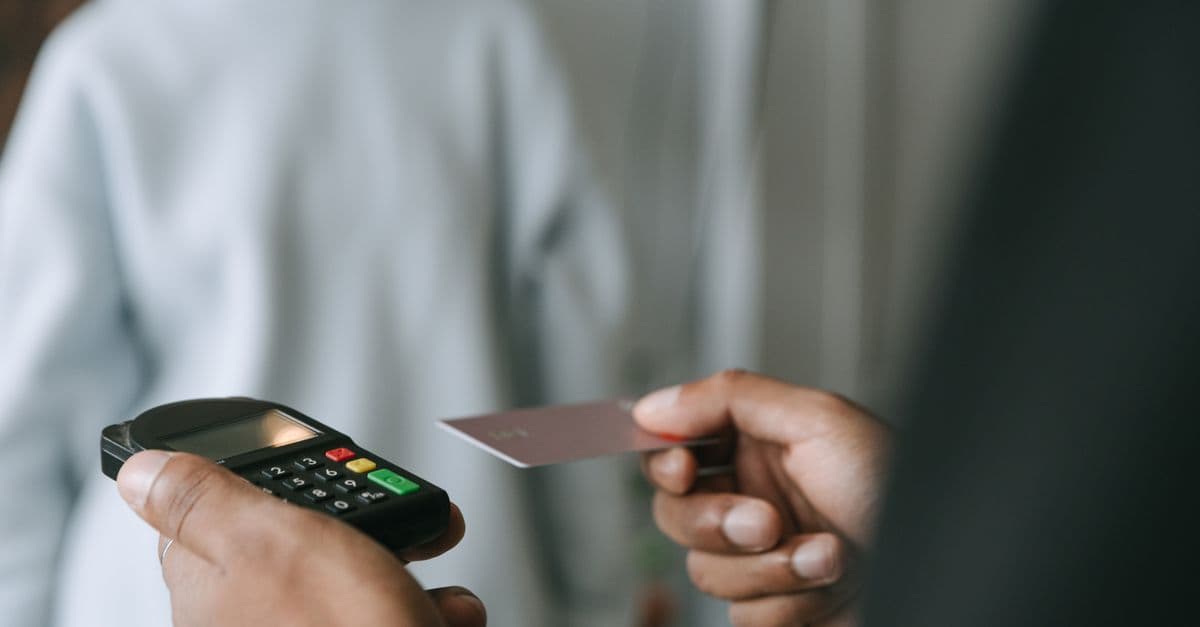
Photo: Ivan S / Pexels
According to the company's own telling, Diners Club began in 1949 at a New York restaurant called Major's Cabin Grill, when Frank McNamara reached for his wallet during a business dinner and found he had left it at home. The story is probably polished: even people close to the company disagreed about the details. What is documented is that McNamara and his attorney Ralph Schneider founded Diners Club in February 1950, and that the card they launched grew, layer by layer over seven decades, into the payment system you tap at a checkout today.
A credit card is a physical or virtual credential tied to a pre-approved line of credit. It lets the holder buy now and settle later, either in full or over time with interest. A charge card is similar, but the balance must be paid in full each period.
The problem cards were built to solve
Credit was not new in 1950. Merchants had long let trusted customers run tabs, and some early forms of cards were already in circulation. According to the Wikipedia history of the credit card, Farrington Manufacturing developed the Charga-Plate in 1928, a metal plate used in the United States from the 1930s to the late 1950s. In 1934 American Airlines and the Air Transport Association introduced an Air Travel Card that offered a 15 percent discount on tickets, and in 1948 it became the first internationally valid charge card for members of the International Air Transport Association.
What did not exist was general-purpose portable credit: one credential accepted across restaurants, hotels, shops, and airlines, issued by a party that had no stake in any single merchant. A store card works only at that store. An airline card works only for flights. A general-purpose card needs a third party who vouches for the cardholder, pays the merchant, and then collects from the cardholder. That three-party structure of cardholder, merchant, and issuer is the core of Diners Club's 1950 invention, and it is still the skeleton of the card business.
Think of it as a restaurant tab managed by a stranger. You do not owe the restaurant, you owe the stranger, and the restaurant trusts the stranger to pay. The whole system rests on the restaurant's confidence that the stranger will actually do so.
How Diners Club launched
Wikipedia's article on Diners Club says the card launched with 27 participating restaurants and was used by about 200 of the founders' friends and acquaintances. Establishments paid a 7 percent fee, and cardholders paid $5 a year. Membership reached about 20,000 by the end of 1950 and 42,000 by the end of 1951. The original card was cardboard, and the first plastic card came in 1961.
The same entry records how contested the origin story is. Accounts differ on whether the meal was lunch or dinner, and on whether McNamara's wife brought his wallet. The company's first press agent, Matty Simmons, said the story was invented, and some journalists later credited another founder, Alfred Bloomingdale, with the idea. The wallet anecdote is better treated as company folklore than as an established event.
| Detail | What the record says |
|---|---|
| Founders | Frank McNamara and Ralph Schneider, February 8, 1950 |
| Launch network | 27 restaurants, about 200 early users |
| Merchant fee | 7 percent |
| Cardholder fee | $5 per year |
| Members | About 20,000 (end of 1950); 42,000 (end of 1951) |
| Payment terms | Balance paid in full each statement |
Source: Wikipedia, "Diners Club International". Origin details are disputed, as noted above.
A stack of five technologies
The modern payment card is not a single invention. It is a stack of separate technologies, each added in a different decade by a different group, and none of them replaced the layers below.
Layer 1: the charge card and revolving credit (1950 to 1970)
Diners Club's bill had to be paid in full at each statement. The financial innovation that made cards a mass-market product came later, from banks.
In 1958, Bank of America launched BankAmericard in Fresno, California. Wikipedia's credit card article calls it "the first successful program recognizable as a modern credit card," and says the bank mailed cards to 60,000 residents at once to persuade merchants to accept them. Unlike a charge card, BankAmericard let customers carry a balance, which is what we now call revolving credit. In the same year, American Express created a worldwide charge card network.
Others followed. According to the same source, Barclays launched Barclaycard in 1966, the first credit card outside the United States, and a group of banks created Master Charge that year, which was the ancestor of Mastercard. Citibank merged its Everything Card into Master Charge in 1969. Mass mailings of unsolicited cards, known as drops, were outlawed in 1970, by which point about 100 million cards had been dropped in the United States.
| Year | Event | Why it mattered |
|---|---|---|
| 1928 | Charga-Plate developed | Metal plate for store accounts |
| 1934 | Air Travel Card | Early airline credit card |
| 1950 | Diners Club | First general-purpose charge card |
| 1958 | BankAmericard (Fresno) | Revolving credit at scale |
| 1958 | American Express card network | Worldwide charge card |
| 1966 | Barclaycard; Master Charge | First card outside the US; bank rival to BankAmericard |
| 1970 | Card drops outlawed | Ended unsolicited mass mailings |
Source: Wikipedia, "Credit card".
Layer 2: the magnetic stripe (about 1960 to 1970)
A cardboard card has a fundamental limitation: every purchase needed manual processing, and nothing on the card could be checked by a machine. The magnetic stripe changed that.
IBM's history page on the magnetic stripe credits Forrest Parry, an IBM engineer who joined the company in 1957, as the first person to attach magnetic media to a plastic card. He was looking for a more secure identity card for CIA officials in the early 1960s, and struggled to attach the stripe reliably until his wife, who was ironing, suggested melting the stripe onto the card with an iron. It worked. Sources differ on the exact date of the original idea, so it is safest to say the work dates to the early 1960s.
Standards followed. IBM's page says IBM led an effort in 1969, under project manager Jerome Svigals, to set standards for the technology; it became a US standard that year and an international standard two years later. IBM did the work without charge and did not patent its machine-readable card. In 1970, IBM, American Airlines, and American Express tested a self-service ticketing system with magnetic stripe cards at Chicago's O'Hare Airport.
What is actually on the stripe
The stripe stores data as a pattern of magnetic domains in a thin magnetic layer, the same basic principle as magnetic tape recording. According to Wikipedia, the standards divide the stripe into three tracks. Track 1 is the only one that may hold alphabetic text, so it carries the cardholder's name, and its format came from the airline industry. Track 2 was developed by the banking industry, is limited to numbers and a few punctuation symbols, and holds the account number. Track 3 is virtually unused by major financial networks.
The stripe holds identifiers, not a running balance. That is the root of its weakness: the data is static, so anyone who reads it can copy it onto another card. Wikipedia describes magnetic stripes as the least secure payment option compared with tokenization, and reports that Mastercard plans to stop using magnetic stripes on its cards by 2033.
The cost of adoption
Banks were slow to move. IBM's history says early per-card costs were about $2, falling below 5 cents as volumes grew. It also reports that only 16 percent of US families held a bank card in 1970, compared with more than two-thirds in 1998. The technology was invented in the early 1960s, but it took decades before it was cheap enough to put on every card.
Layer 3: networks and authorization (1970s)
A readable card is only useful if the merchant's terminal can ask the issuer whether to approve the purchase. For years, many merchants accepted charges without phone verification, relying on printed lists of stolen card numbers, according to Wikipedia. That meant a lost card could keep working until the list was updated and reached the shop.
The fix was a network. Wikipedia's Visa entry says the issuing banks created National BankAmericard Inc. in June 1970, with Dee Hock as its first president and chief executive. The credit card article adds that the system was computerized in 1973 under Hock, reducing transaction time, and that all BankAmericard licensees were unified under the Visa brand in 1976.
Authorization today works the same way in outline. The acquiring bank, which serves the merchant, checks the card number, transaction type, and amount with the issuing bank, which serves the cardholder. The issuer reserves that amount of the cardholder's credit limit and returns an approval code. The network's job is to route those messages quickly and reliably, billions of times a year.
The networks are built differently. According to Wikipedia, Mastercard's Banknet is a mesh of direct connections that uses the ISO 8583 messaging standard, while Visa's design routes transactions through a few central data centers. Visa's entry reports that in 2025 VisaNet processed 257.5 billion transactions worth $14.2 trillion. That is a single company's network in one year, and it shows the scale on which a 1950 idea now operates.
Layer 4: the EMV chip (1990s onward)
The magnetic stripe's static data is its weak point. A skimmer that copies it produces a clone that works anywhere stripes are accepted. The EMV chip, named for Europay, Mastercard, and Visa, answers with a different approach: the chip is a tiny computer that does a calculation for each transaction.
According to Wikipedia's EMV article, the first standard, EMV 2.0, appeared in 1995, and EMVCo now manages the specifications with control split equally among six card schemes: Visa, Mastercard, JCB, American Express, China UnionPay, and Discover. In an online authorization, the chip produces a cryptogram, a digital signature of the transaction details, which the issuer can verify in real time.
A useful analogy is a wax seal. A static stripe is like an ID card that anyone can photocopy, and every copy looks identical. A chip's cryptogram is like a wax seal pressed fresh for each letter, stamped with a ring that never leaves your finger. Someone who intercepts one sealed letter gets a seal that is valid only for that letter.
How chip adoption rolled out
Adoption was staggered by country. Wikipedia reports that France's chip effort began in 1992 and that card fraud there fell by more than 80 percent after introduction. In the United Kingdom, chip and PIN was trialed in Northampton from May 2003 and rolled out nationwide on February 14, 2006, and retailers became liable for magnetic-stripe fraud on January 1, 2005.
The United States moved later, driven by liability. On October 1, 2015, Visa, Mastercard, and Discover shifted liability for point-of-sale fraud, so a merchant without an EMV-capable terminal bore responsibility for the resulting losses. As of April 2016, 70 percent of US consumers had EMV cards, and about 50 percent of merchants were compliant by December 2016, according to the same article.
Globally the chip now dominates. EMVCo's statistics page says that "globally, 97% of card-based transactions are EMV Chip," with data reported by American Express, Discover, JCB, Mastercard, UnionPay, and Visa, and with the most recent figures covering the period through the fourth quarter of 2025. EMVCo notes that in regions where EMV is newly deployed, the twelve-month figure may lag the current share.
The fraud arms race
Chip cards reduced counterfeit fraud at physical terminals, but they did not eliminate fraud. They moved it. Wikipedia says EMV reduced point-of-sale crime and shifted fraud toward telephone, internet, and mail-order transactions, and that card-not-present transactions made up at least 50 percent of credit card fraud. A chip cannot help when a thief types a stolen card number into a web form.
That is why defenses now sit at several levels at once. Banks score every transaction for unusual patterns, which is the subject of our article on AI fraud detection and anomaly learning. Each layer in the stack tends to close one avenue and push criminals toward the next weakest point.
Layer 5: contactless and mobile wallets (2000s to 2010s)
Contactless payment uses near-field communication (NFC), a short-range wireless technology that operates at 13.56 MHz. Wikipedia's NFC article describes a range of 4 centimeters (about 1.5 inches) or less, and says Philips and Sony began the specification in 2002 and that it became an ISO/IEC standard in December 2003. Contactless payment cards follow ISO/IEC 14443, according to the EMV article.
Phones took the idea further. Wikipedia's Apple Pay entry says the service launched on October 20, 2014, first in the United States. Payment data sits in an embedded secure element, and the system replaces the card's real number with a device-specific token so that the merchant never sees the actual account number. Each transaction generates a dynamic security code. The chip inside the phone is a descendant of the microchip, and the whole arrangement depends on the smartphone as a secure computer in your pocket.
Contactless is not immune to research attacks. The EMV article reports that in 2020 researchers at ETH Zurich disclosed a PIN bypass affecting Visa contactless cards, and in 2021 they reported a similar issue for Mastercard. Security researchers probing each layer is part of how a layered system finds its weak points.
| Layer | Introduced | What it fixed | What remained weak |
|---|---|---|---|
| Charge card | 1950 | No portable, general-purpose credit | Manual processing |
| Revolving credit | 1958 | Customers needed to carry balances | Debt risk |
| Magnetic stripe | Early 1960s onward | Machine-readable data | Static, copyable data |
| Authorization network | 1970s | Stolen-card lists, slow checks | Fraud online |
| EMV chip | 1990s onward | Counterfeit card-present fraud | Card-not-present fraud |
| Contactless and wallets | 2000s to 2010s | Speed, tokenized numbers | Relay and bypass research |
Sources: the Wikipedia entries on the credit card, EMV, and Apple Pay, plus the IBM history page.
Who gets paid when you tap
The card network does not work for free, and the economics are as much a part of the system as the technology.
When you pay, the merchant's bank (the acquirer) pays the cardholder's bank (the issuer) an interchange fee. According to Wikipedia's article on interchange fees, a worked example on a $100 purchase has the merchant receiving about $98, with roughly $1.75 going to the issuer as interchange, $0.18 to the card network, and $0.07 to the acquirer. The average US interchange rate is about 1.79 percent, and total fees average about 2 percent of the transaction value. Premium rewards cards carry higher rates than standard cards.
The Nilson Report puts the total at a large figure: a summary on its website says merchants paid $187.2 billion in swipe fees in 2024. Those fees fund fraud losses, credit losses, and the rewards that cardholders see.
Open and closed loops
Diners Club and American Express began as closed loops, where one company signs the merchants, issues the cards, and runs the network. Visa and Mastercard are open networks in which many banks issue cards on shared rails. The open model made it easy for thousands of banks to participate, and it also created a fee that every bank can charge, which is why interchange has drawn so many regulators.
Regulation has taken different forms. In the United States, the Durbin Amendment took effect on October 1, 2010 as part of the Dodd-Frank Act and targets debit card interchange. In the European Union, Regulation 2015/751 took effect on June 8, 2015 and capped interchange at 0.2 percent for debit cards and 0.3 percent for credit cards on personal cards. In a December 2013 ruling, a US judge approved a $7.25 billion settlement in the long-running merchant antitrust litigation. Merchants argue that fees function as a tax. Issuers argue that they pay for fraud protection and consumer benefits. Both claims describe real flows of money.
The unintended consequences
The card's inventors could not have predicted some of what came next, good and bad.
Spending and the "pain of paying"
Behavioral research suggests that people spend differently when paying by card. In a well-known 2001 paper in Marketing Letters, "Always Leave Home Without It," Drazen Prelec and Duncan Simester reported that people were willing to pay more for the same item when told they could pay by credit card instead of cash. One commonly offered explanation is that paying with plastic feels less painful than handing over bills. The effect is one study's finding in a lab and auction setting, but it matches the widely held view that card payment makes spending feel abstract. The full reference is available through its DOI record.
Revolving debt
The revolving credit BankAmericard introduced is convenient for people with uneven cash flow, and it is also expensive when balances persist. According to the Federal Reserve's G.19 consumer credit release of October 7, 2026, revolving credit outstanding was $1,352.4 billion in August 2026 (preliminary, seasonally adjusted). The Fed's data for commercial bank credit card plans put the interest rate on accounts assessed interest at 22.15 percent in the second quarter of 2026, and the rate across all accounts at 20.94 percent.
The gap between those two rates is a reminder that many cardholders pay no interest at all because they pay in full each month. For the rest, interest compounds quickly, which is the subject of our explainer on compound interest. Rates on cards also follow broader monetary policy, as covered in why interest rates affect everything.
Inclusion and exclusion
Cards created infrastructure for global e-commerce, and they also created a two-tier system. The World Bank's Global Findex reports that 79 percent of adults globally had an account in its 2025 edition. That figure measures accounts, not cards, and it leaves roughly one adult in five outside the formal financial system. Mobile phones are changing that: the same page reports that 84 percent of adults in low- and middle-income countries own a mobile phone.
Access to credit is also a matter of record-keeping. Whether a lender will give you a card depends partly on how your history is scored, which we cover in how credit scores estimate risk.
The scale today
By Wikipedia's count, about 7.75 billion credit cards existed worldwide in June 2018, and in the United States about 1.09 billion credit cards were in circulation in 2020, with 72.5 percent of US adults holding at least one. Those are older figures, and the number of cards has probably changed since, so treat them as a snapshot of the order of magnitude.
The physical card may be in its final decades as the dominant form. Wallets store credentials in secure hardware and add biometric checks, which is stronger than a plastic card in a pocket. Yet the financial structure underneath remains familiar: an issuer, an acquirer, a network, and a merchant, linked by the three-party relationship McNamara and Schneider set up in 1950. The physical technology has changed every few decades. The money flow has barely moved.
Myths and misunderstandings
Myth: Diners Club created the first credit card. It created the first general-purpose charge card, which required full payment at each statement. Revolving credit at scale came with BankAmericard in 1958, and earlier cards such as the Charga-Plate and the Air Travel Card had already existed in narrower forms.
Myth: The magnetic stripe holds your balance. The tracks described in the standards hold identifiers such as a name and an account number. Your balance lives in the issuer's systems.
Myth: Chip cards make online shopping safe. A chip protects card-present transactions. Fraud moved to card-not-present channels, which Wikipedia says account for at least half of credit card fraud.
Myth: Contactless means anyone can drain your card by walking past. NFC is designed for a range of about 4 centimeters or less, and each payment involves a cryptogram. Plain NFC is not protected against eavesdropping or relay attacks on its own, which is why payment applications add cryptography on top, and why researchers keep testing it.
Myth: McNamara forgot his wallet, and that was the whole story. The anecdote may be true in outline, but the company's own press agent said it was invented, and accounts disagree on the details.
The takeaway
The credit card is a good example of how infrastructure outlives the technology it begins with. Cardboard gave way to plastic, plastic to stripes, stripes to chips, and chips to phones, while the three-party arrangement that Diners Club introduced in 1950 has stayed intact. Each new layer fixed the weakest point of the one before and exposed a new one, which is why fraud, fees, and debt are still live debates after seven decades. When a payment feels instant and invisible, a chain of cryptography, networks, and contracts is doing the work.
Frequently Asked Questions
Q: Who actually invented the credit card? A: No single person. Frank McNamara and Ralph Schneider founded Diners Club in February 1950 and launched the first general-purpose charge card. Bank of America introduced revolving credit at scale with BankAmericard in Fresno in 1958. Earlier cards, such as the Charga-Plate (1928) and the Air Travel Card (1934), served narrower purposes.
Q: What is the difference between a credit card and a charge card? A: A charge card requires the balance to be paid in full each statement, as Diners Club's original card did. A credit card lets the holder carry a balance and pay interest on it. BankAmericard popularized the revolving model, and the two terms are now often used loosely.
Q: Who invented the magnetic stripe? A: IBM engineer Forrest Parry is credited with attaching magnetic media to a plastic card, a method he reportedly found after his wife suggested using an iron. The work dates to the early 1960s, and IBM led a standards effort in 1969 that became a US standard that year and an international standard two years later.
Q: How does an EMV chip prevent fraud? A: The chip produces a cryptogram, a digital signature of the transaction details, that the issuer can verify in real time. Because the signature is tied to a specific transaction, copying the data from one purchase does not give a thief a card that works again. According to EMVCo, 97 percent of card-based transactions globally are EMV chip.
Q: Why did the United States adopt chip cards later than Europe? A: Liability rules moved things. On October 1, 2015, Visa, Mastercard, and Discover shifted liability for point-of-sale fraud so that merchants without EMV-capable terminals bore the losses. In the United Kingdom, chip and PIN rolled out nationwide on February 14, 2006, after a trial that began in Northampton in May 2003.
Q: Is contactless payment secure? A: Contactless cards follow ISO/IEC 14443 and operate within a few centimeters, and each transaction involves a cryptogram. Phone wallets such as Apple Pay add a device-specific token so the merchant never sees the real card number. Researchers have published bypass attacks, including PIN bypass findings in 2020 and 2021, so the security picture keeps evolving.
Q: How much does a card transaction cost a merchant? A: Wikipedia's interchange article gives an average US interchange rate of about 1.79 percent, with total fees averaging about 2 percent of the transaction. Premium rewards cards cost more, and in the European Union interchange is capped at 0.2 percent for debit and 0.3 percent for credit on personal cards.
Sources
- Wikipedia, "Credit card", "Diners Club International", and "Visa Inc.".
- IBM, History of the magnetic stripe.
- Wikipedia, "EMV", "Near-field communication", and "Apple Pay".
- EMVCo, Worldwide EMV deployment statistics.
- Wikipedia, "Interchange fee", and The Nilson Report, nilsonreport.com.
- Federal Reserve, G.19 Consumer Credit.
- World Bank, Global Findex.
- Prelec, D., and Simester, D. (2001), "Always Leave Home Without It," Marketing Letters 12(1), DOI record.
Read next:
Follow new articles
Add SciHub101 to your feed reader to see new science and technology stories.
About the Author
SciHub101 is an independent science and technology publication founded and edited by Buğra Sözeri, a software engineer and app developer based in Türkiye. AI tools assist with drafting and research. Source documentation in the existing archive is uneven, and articles are being reviewed and corrected. The Editorial Team byline identifies editorial responsibility; it does not certify specialist or independent human review. Where we compare products, anything built by our own team is labelled as such — see the editorial guidelines and About page for how corrections and disclosures work.
Related Articles
The Defibrillator: From Open-Chest Surgery to the Box on Every Airport Wall — SciHub101
Claude Beck saved a life with open-chest paddles in 1947. Bernard Lown made it safe in 1962. Frank Pantridge put it in an ambulance in 1965. Today, a smartwatch can detect the arrhythmia that kills 350,000 Americans a year.

The Camera: 200 Years of Capturing Light — SciHub101
From Niépce's 1826 pewter plate to the CCD sensor that won the 2009 Nobel Prize — how photography evolved from a chemical curiosity into the most used technology on Earth.

Fraud Detection & Anomaly Learning — How AI Catches Financial Crime
AI fraud detection scores each payment in milliseconds, but fraud is rare, criminals adapt, and scams that customers approve themselves slip past transaction models. Here is how the machinery works and where it breaks.
Algorithmic Trading & Neural Networks — How AI Makes Billions Per Second
Algorithms now place most orders in US equity markets, and neural networks are one of the tools quantitative firms use to read order books and forecast returns. Here is how the methods work, what the research actually shows, and where the risks lie.
Robo-Advisors vs. Human Financial Advisors: Who Wins in the Age of AI?
AI-powered robo-advisors now manage over a trillion dollars in the US alone. But can algorithms replace human judgment when markets get chaotic?