The Camera: 200 Years of Capturing Light
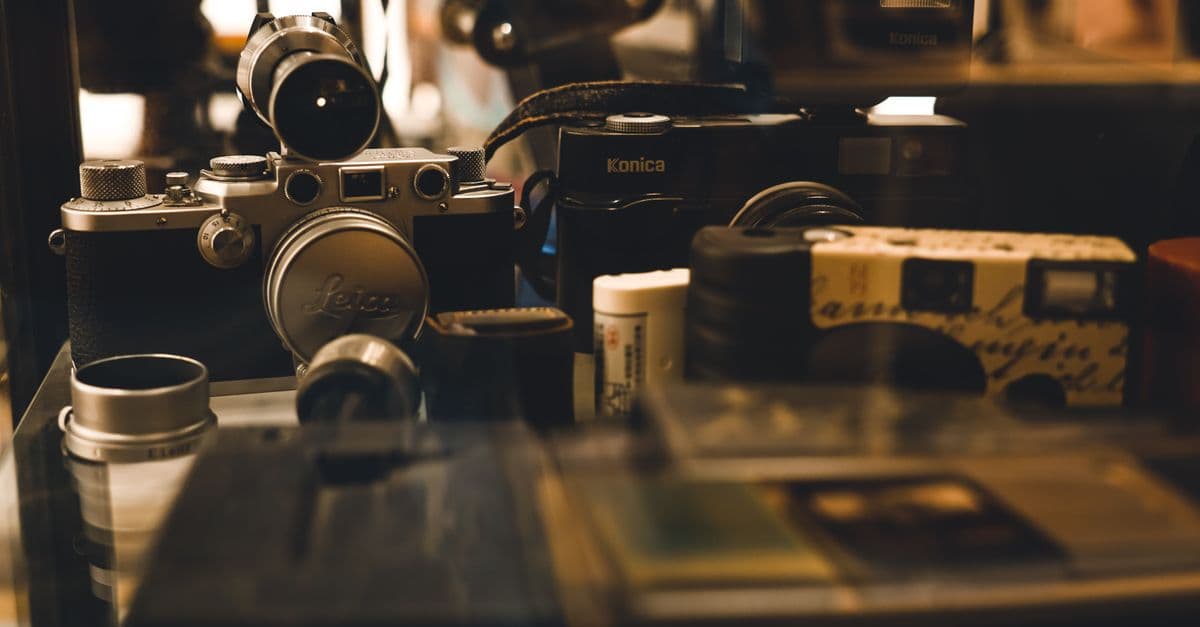
Photo: Wang Qihang / Pexels
On a summer day in 1826 or 1827 — the exact year is still debated — a French inventor pointed a camera obscura out of his upstairs window in Burgundy, loaded it with a pewter plate coated in asphalt dissolved in lavender oil, and left it to expose for somewhere between eight hours and several days. The result is the oldest surviving photograph in existence. It is blurry, gray, and barely distinguishable from a smudge. It is also one of the most consequential images ever made, because it proved that light itself could be made to write.
What Photography Actually Is
Photography is the process of recording light patterns on a light-sensitive surface in such a way that the record persists after the exposure ends. Every camera ever made — from Niépce's pewter plate to a 200-megapixel smartphone — does the same four things: it admits light through a controlled aperture, focuses that light onto a surface, triggers a chemical or electronic reaction proportional to the light's intensity, and produces a record that can be viewed later.
Camera obscura — Latin for "dark room." A lightproof chamber with a small hole (or lens) on one side that projects an inverted image of the outside world onto the opposite wall. Known since at least the 10th century and widely used by artists and astronomers. The camera obscura produced an image but could not record it — someone had to trace it by hand.
Photosensitivity — the property of certain materials (silver salts, bitumen of Judea, silicon photodiodes) to change their physical or chemical state when struck by photons. Photography required both the optical system of the camera obscura and the discovery of photosensitive materials that could fix a projected image permanently.
Source: Beaumont Newhall, "The History of Photography" (5th ed., 1982), Museum of Modern Art; Wikipedia, "History of the Camera."
The two discoveries — light projection and light-sensitive materials — were both available by the early 19th century. Several inventors were working on combining them at the same time. What happened between 1826 and 1839 was not a single invention but a cluster of independent, overlapping discoveries that eventually coalesced into a technology.
The Story Behind the Discovery
Niépce and the First Photograph
Joseph Nicéphore Niépce was a French inventor and amateur scientist who had spent years experimenting with lithography — the process of printing from a flat stone surface. His interest in photography grew out of a practical problem: he could not draw, so he wanted a way to capture images automatically for lithographic printing.
By the early 1820s, Niépce was coating plates with bitumen of Judea (a naturally occurring asphalt that hardens when exposed to light) and exposing them in a camera obscura. The hardened areas resisted acid etching; the unexposed areas were washed away, leaving a relief that could be printed. He called the process heliography (sun-writing).
The surviving image — "View from the Window at Le Gras" — was made from a second-floor window at his estate in Saint-Loup-de-Varennes, France. The pewter plate measured 16.2 cm × 20.2 cm (about 6.4 × 8 inches). Because the exposure lasted so long — at minimum eight hours, possibly several days, based on analysis of the lighting — the sun appears to illuminate buildings on both sides of the frame simultaneously, as if it had traveled across the sky during the shot.
Source: View from the Window at Le Gras, Wikipedia; Petapixel, "The First Photo: Nicéphore Niépce's 'View from the Window at Le Gras'" (2023).
The image was rediscovered in 1952 by historian Helmut Gernsheim, who located it in a private collection in England. It now resides at the Harry Ransom Center at the University of Texas at Austin, where it is stored in a specially controlled environment.
Daguerre and the Silver Surface
Louis-Jacques-Mandé Daguerre was a French showman and artist best known for his Diorama — a theater in Paris that used large translucent paintings and controlled lighting to create immersive visual experiences. His interest in capturing images was driven by similar theatrical instincts.
Niépce and Daguerre entered into a formal partnership in 1829. When Niépce died in 1833, Daguerre continued the work alone. By 1835, he had discovered that silver iodide — formed by exposing a silver surface to iodine vapor — was far more sensitive to light than bitumen of Judea. The exposure time dropped from hours to minutes.
Daguerre's crucial accident came (according to his own account) when he stored an exposed but undeveloped silver iodide plate in a cabinet that happened to contain a broken mercury thermometer. When he retrieved the plate, it showed a detailed, fully developed image. The mercury vapors had amplified the faint latent image left by light exposure.
Source: Daguerre biography, Britannica; Newhall, "The History of Photography."
The daguerreotype was announced publicly on January 7, 1839, at a meeting of the French Academy of Sciences. The announcement attracted international attention. On August 19, 1839, the French government declared the process free to the world — a gift to all of humanity, in the words of physicist François Arago — in exchange for annual pensions to Daguerre and Niépce's son. Daguerre made no attempt to patent the process.
A daguerreotype produced a unique positive image on a silver-coated copper plate: sharp, detailed, and unrepeatable. You could not make copies from it. Every daguerreotype was its own original.
Fox Talbot and the Negative
William Henry Fox Talbot, a British polymath and Member of Parliament, had been working independently on photography since 1834 — before he knew of Daguerre's work. When he heard the January 1839 announcement, he rushed his own results to the Royal Institution in London, presenting them on January 25, 1839.
Talbot's process — the calotype, patented in 1841 — used paper coated with silver iodide. A "negative" image formed on the paper during exposure: light areas appeared dark, dark areas light. A second exposure of the negative onto fresh paper reversed this, producing a positive print. The critical advantage over the daguerreotype: you could make unlimited copies from a single negative.
Source: Fox Talbot Museum, Lacock Abbey; Newhall, "The History of Photography."
The negative-positive system Talbot invented is the structural basis for every chemical photographic process that followed, all the way to 35mm film in the 20th century. Daguerre's process was sharper and more detailed; Talbot's was reproducible. History chose reproducibility.
| Year | Inventor | Process | Key Feature |
|---|---|---|---|
| 1826–27 | Niépce | Heliography | First permanent photograph |
| 1839 | Daguerre | Daguerreotype | Sharp, detailed, not reproducible |
| 1841 | Fox Talbot | Calotype | Negative-positive; reproducible |
| 1851 | Frederick Scott Archer | Wet collodion | Faster, sharper than calotype |
| 1871 | Richard Maddox | Dry gelatin plate | Could be made in advance |
| 1888 | George Eastman | Kodak camera + roll film | Consumer photography |
| 1947 | Edwin Land | Polaroid instant camera | Instant print, no darkroom |
| 1969 | Boyle & Smith | CCD sensor (Bell Labs) | Electronic image capture |
| 2000s | Multiple | CMOS sensors + smartphones | Photography for 4 billion people |
How a Camera Actually Works
The Optical System
Every camera lens does one job: it bends light rays from a scene so that they converge at a precise point behind the lens, forming a sharp image. The distance at which they converge (the focal length) determines how much of the scene is visible (field of view) and how large objects appear (magnification).
Aperture — the adjustable opening that controls how much light passes through the lens. A wide aperture (expressed as a low f-number, like f/1.8) admits lots of light and produces a shallow depth of field — the zone of sharp focus is narrow, so backgrounds blur. A narrow aperture (f/16) admits less light but keeps more of the scene in focus. The classic analogy: aperture is like a pupil, dilating in dim conditions and contracting in bright ones.
Shutter speed — the duration for which light is allowed to reach the sensor or film. Fast shutter speeds (1/1000 second) freeze motion. Slow shutter speeds (1/15 second or longer) allow moving subjects to blur. Exposure — the total amount of light reaching the recording surface — is the product of aperture area and shutter duration.
Source: Bryan Peterson, "Understanding Exposure" (4th ed., 2016); Nikon Imaging educational resources.
Chemical Photography: How Film Works
Silver halide film consists of microscopic silver bromide crystals suspended in gelatin and coated onto a plastic base. When photons strike a silver halide crystal, they knock electrons free. These electrons migrate to "sensitivity specks" — impurities or defects in the crystal — and cause silver ions to neutralize into metallic silver atoms. After exposure, the film holds a latent image: a pattern of a few silver atoms per crystal that codes for where light fell.
Development amplifies this signal enormously. The developer chemical reduces entire silver halide crystals to metallic silver wherever the latent image exists — amplifying the original signal by a factor of roughly one million. The fixer removes unexposed silver halide crystals, leaving a stable negative.
Color film adds three layers, each sensitive to a different portion of the spectrum (blue, green, red), with dye couplers that produce colored dyes during development proportional to the amount of each color of light captured.
Source: Kodak Professional Photoguide (1977 edition); Scientific American, "How Photographic Film Works" (1991).
Digital Photography: How a CCD Works
On October 17, 1969, Willard Boyle and George E. Smith at Bell Labs in Murray Hill, New Jersey, sketched out the charge-coupled device (CCD) in a brainstorming session that lasted less than an hour. The concept: use the photoelectric effect — the emission of electrons from a material when struck by light — to store a charge proportional to light intensity in an array of capacitors, then shift those charges out sequentially for reading.
Photoelectric effect — the phenomenon (explained by Einstein in 1905, and the subject of his Nobel Prize) by which photons striking a material eject electrons. The number of electrons ejected is proportional to the number of photons, which is proportional to the brightness of the light. This is the physical foundation of all electronic imaging.
A CCD sensor is an array of millions of tiny wells (pixels). Each well accumulates charge during exposure. After the exposure, charge is shifted along rows and columns of the array to an amplifier and read out as a voltage, then converted to a digital number. A 12-megapixel sensor has 12 million of these wells, each reporting a number between 0 (no light) and 4,095 (maximum light, for a 12-bit sensor).
Color is added by placing a Bayer filter array over the sensor — alternating red, green, and blue filters in a 2×2 pattern (two green, one red, one blue) — and reconstructing full-color pixels through interpolation software.
Source: Boyle and Smith, "Charge Coupled Semiconductor Devices," Bell System Technical Journal (1970); 2009 Nobel Prize in Physics press release, NobelPrize.org.
Boyle and Smith shared half the 2009 Nobel Prize in Physics "for the invention of an imaging semiconductor circuit — the CCD sensor." The Nobel Committee noted that the CCD had "revolutionized photography" and enabled a generation of scientific imaging from astronomy to medical diagnostics.
CMOS Sensors and Smartphones
The CMOS (Complementary Metal-Oxide Semiconductor) image sensor, developed commercially in the 1990s, uses a different readout architecture that places an amplifier directly at each pixel rather than shifting charges across the array. CMOS sensors consume less power, can be integrated with other circuits on the same chip, and are cheaper to manufacture at scale. By the mid-2000s, CMOS had largely displaced CCD in consumer devices.
The smartphone camera combines a small CMOS sensor with computational photography: software algorithms that merge multiple exposures, reduce noise, correct lens distortion, and add effects that would be physically impossible on the optics alone. Apple's iPhone camera system, for example, captures multiple frames at different exposures and merges them in real time (HDR), applies neural network-based noise reduction, and uses machine learning to detect scenes and adjust color rendering accordingly.
Source: IEEE Spectrum, "The Rise of CMOS" (2005); Apple iPhone Camera technical documentation (2024).
The People Involved
George Eastman and the Democratization of Photography
Before 1888, photography required a darkroom, chemistry training, and equipment that weighed tens of kilograms. George Eastman, a bank clerk from Rochester, New York, set out to eliminate each of these requirements.
Eastman founded the Eastman Dry Plate Company in 1881, manufacturing pre-coated glass plates that photographers could buy ready-to-use. In 1884, he replaced glass plates with a flexible film base — initially paper, then celluloid. In 1888, he introduced the Kodak camera: a preloaded box camera containing a 100-exposure roll of film, sold for $25. The camera was mailed back to Kodak when the roll was finished; Kodak developed the film, printed the photographs, reloaded the camera, and mailed everything back.
The Kodak slogan — "You press the button, we do the rest" — was an accurate description of the product. It was also a statement about the future of consumer technology: complicated processes could be made invisible if you designed the system right.
Source: George Eastman Museum, Rochester, NY; Eastman Kodak corporate history archives.
Edwin Land and Instant Photography
Edwin Land founded Polaroid Corporation in 1937. Like Eastman, he was driven by the desire to eliminate friction from photography — in his case, the gap between taking a photograph and seeing the result. The idea came from his young daughter, who asked why she had to wait to see a photograph she had just taken.
Land invented instant photography by developing a self-contained chemical laboratory inside a film pack. When a Polaroid photograph was ejected from the camera after exposure, it passed between two rollers that ruptured a pod of reagent chemicals sandwiched in the film. The developing chemicals spread across the emulsion and, within sixty seconds, produced a finished print.
The first Polaroid camera, the Model 95, went on sale at a Jordan Marsh department store in Boston on November 26, 1947. All 56 units sold within hours.
Source: Polaroid corporate history; MIT Museum, Edwin Land collection.
Willard Boyle and George Smith
Both men were physicists at Bell Labs. Boyle was Canadian, born in Amherst, Nova Scotia; Smith was American, born in White Plains, New York. Their CCD invention grew out of Bell Labs' work on semiconductor memory storage, not photography. They were trying to create a new type of computer memory that used charge on a silicon surface. The imaging application became obvious almost immediately.
Source: Bell Labs press release on 2009 Nobel Prize; University of Chicago News, "Alumnus George E. Smith invents CCD sensor, 1969."
Patent and Priority Disputes
Daguerre and Fox Talbot clashed bitterly over priority and patents. Talbot patented the calotype in England in 1841 and enforced the patent aggressively, which slowed the adoption of photography in Britain relative to France. The wet collodion process introduced by Frederick Scott Archer in 1851 was not patented at all — Archer died in poverty in 1857 — and quickly displaced both daguerreotype and calotype because it was faster, sharper, and free to use.
Kodak's business model was also inseparable from IP: Eastman held dozens of patents on film emulsions, camera mechanisms, and processing chemistry, and used them to defend a vertically integrated business that controlled the entire photographic supply chain from silver mining to film processing.
Source: Reese Jenkins, "Images and Enterprise: Technology and the American Photographic Industry" (1975), Johns Hopkins University Press.
The patent battles in digital imaging have been similarly intense. The smartphone camera has generated litigation between Apple, Samsung, Nokia, and Qualcomm running to billions of dollars — mostly over image processing algorithms, sensor integration, and autofocus systems rather than fundamental sensor physics.
Unintended Consequences
Photography and the End of Painting's Monopoly on Representation
Before photography, the only way to preserve a realistic visual record of a person, place, or event was painting or drawing. Photography didn't kill painting — it freed painting from the obligation of literal representation. The Impressionist movement emerged in France in the 1860s and 1870s partly as a response to photography: if the camera could capture what a scene looked like, painters were free to explore what it felt like.
Source: Aaron Scharf, "Art and Photography" (1974), Penguin Books.
Photography and Evidence
The photograph became, in the late 19th century, a form of evidence — in courts of law, in journalism, in science. It carried an implicit claim of objectivity: the camera doesn't lie. This claim was always partly false (photographs can be staged, cropped, and manipulated), but the social authority of photographic evidence shaped law, journalism, and science for more than a century. Eugène Atget's photographs of Paris created an archive of urban space. Mathew Brady's Civil War photographs brought industrialized warfare into American living rooms for the first time. Eadweard Muybridge's sequential photographs of a galloping horse (1878) proved that all four hooves leave the ground simultaneously — settling a bet by railroad magnate Leland Stanford.
Source: Mary Warner Marien, "Photography: A Cultural History" (4th ed., 2014), Laurence King Publishing.
Surveillance
The same technology that lets you photograph your children at Christmas also enables facial recognition, license plate readers, CCTV networks, and satellite imagery precise enough to read a newspaper from orbit. Every digital image contains metadata (EXIF data) recording the exact GPS coordinates where it was taken, the time, and the device model. A photograph uploaded to social media carries, by default, a complete record of where you were and when.
Where the Camera Stands Today
The smartphone has made the camera the most widely used technology in human history. Apple sold its one-billionth iPhone in 2016; the global installed base of smartphones exceeded 4.3 billion units by 2024. Each contains at least one camera with computational photography capabilities that would have required a professional studio in 2000.
Source: IDC Smartphone Market Tracker (2024); Statista global smartphone user data.
Computational photography — using software to extend what the optics can physically do — is the dominant frontier. Google's Night Sight mode captures multiple exposures at high ISO and merges them, producing usable photographs in light levels that would have required a tripod and a 30-second exposure on film. Apple's ProRes video captures cinema-quality footage on a device that fits in a shirt pocket. NVIDIA's AI-based image upscaling reconstructs fine detail in low-resolution images using patterns learned from millions of photographs.
The CCD sensor that Boyle and Smith sketched in an afternoon in 1969 — a solution to a computer memory problem that accidentally became the foundation of digital photography — now captures trillions of images per year.
What People Get Wrong About Photography
The most common error is attributing the invention of photography entirely to Daguerre. Daguerre was a brilliant publicist as well as an inventor, and the 1839 announcement in Paris generated enormous press. But Niépce had the prior claim by over a decade, and Fox Talbot independently arrived at a more useful process — the reproducible negative — at almost exactly the same time as Daguerre. Photography was not one invention; it was a simultaneous convergence by multiple investigators working in the same space defined by available chemistry and optics.
A second misconception: that digital photography replaced film because digital is "better." The two technologies have different characteristics. Film retains an analog gradation of tones that some photographers and cinematographers still prefer; IMAX and some major film productions shot on film into the 2010s. Digital won primarily because it eliminated the per-shot cost of film and processing, enabling a different relationship with photography — one in which you could take hundreds of images for the cost of taking ten, and know immediately whether you had the shot.
A third error: attributing the CCD to Kodak or to camera companies. The CCD was invented by two physicists at a telephone laboratory (Bell Labs) as a solution to a computer memory problem. The imaging application was secondary. This pattern — technology invented for one purpose being transformatively applied to another — recurs constantly in the history of the camera.
Frequently Asked Questions
Q: What is the world's oldest surviving photograph? A: "View from the Window at Le Gras," made by Joseph Nicéphore Niépce between June and July 1827 (exact dates debated). It was made on a pewter plate coated with bitumen of Judea using a camera obscura, with an exposure lasting at minimum eight hours and possibly several days. The plate is now preserved at the Harry Ransom Center, University of Texas at Austin.
Q: How is a digital photograph different from a film photograph? A: Film records light through a chemical reaction — photons alter silver halide crystals, which are then developed into a visible image using chemical baths. A digital sensor records light electronically — photons eject electrons from a silicon surface, creating charges that are measured and converted to numbers. Both produce a record of the light pattern that struck the recording surface; the key difference is that digital information can be copied, transmitted, and processed without degradation, while film is a physical object that degrades with each copy.
Q: Who invented the digital camera? A: The first digital camera was built by Steven Sasson at Eastman Kodak in 1975, using a CCD sensor. It weighed 3.6 kg (8 lb), captured a 0.01-megapixel black-and-white image, and stored it on a cassette tape. The first commercially available digital camera was the Dycam Model 1, sold in 1990. Kodak, paradoxically, both invented the digital camera and was destroyed by it — the company filed for bankruptcy protection in 2012 as film sales collapsed.
Q: What did Willard Boyle and George Smith win the Nobel Prize for? A: Boyle and Smith shared half the 2009 Nobel Prize in Physics for inventing the charge-coupled device (CCD) at Bell Labs in 1969. The citation was "for the invention of an imaging semiconductor circuit — the CCD sensor." The other half of the prize went to Charles K. Kao for his work on fiber optics.
Q: Why do professional photographers still use dedicated cameras instead of smartphones? A: Professional cameras have larger sensors, which capture more light per pixel, producing better performance in low-light conditions and greater dynamic range. Larger sensors also allow for shallower depth of field, which is essential for portrait and product photography. Dedicated cameras support interchangeable lenses with focal lengths ranging from ultra-wide to extreme telephoto. Smartphones excel at convenience and computational photography but cannot match large-sensor cameras for optical quality in demanding conditions.
Q: What is computational photography? A: Computational photography uses software algorithms — increasingly based on machine learning — to process image data in ways that extend beyond what the optical system can do alone. Examples include HDR merging (combining multiple exposures), night mode (combining many exposures to reduce noise), portrait mode depth simulation (estimating depth from dual cameras or phase detection autofocus to simulate shallow depth of field), and AI upscaling (reconstructing detail in low-resolution images). Modern smartphone cameras make more computational decisions per photograph than the photographer does.
Read next:
Follow new articles
Add SciHub101 to your feed reader to see new science and technology stories.
About the Author
SciHub101 is an independent science and technology publication founded and edited by Buğra Sözeri, a software engineer and app developer based in Türkiye. AI tools assist with drafting and research. Source documentation in the existing archive is uneven, and articles are being reviewed and corrected. The Editorial Team byline identifies editorial responsibility; it does not certify specialist or independent human review. Where we compare products, anything built by our own team is labelled as such — see the editorial guidelines and About page for how corrections and disclosures work.
Related Articles

The Credit Card: From a Forgotten Wallet to a Global Payment Network
How Diners Club's 1950 charge card, BankAmericard's revolving credit, the magnetic stripe, and the EMV chip built the network behind card payments.

The Bicycle: From Running Machine to 1.6 Billion Wheels
Karl Drais built a steerable two-wheeler in 1817. It took 68 more years and four distinct designs to reach the bicycle you recognize today.
Camera Invention: From Camera Obscura to Digital Sensors
The camera evolved from the camera obscura to chemical photography and digital sensors. This guide explains the chain of inventions.
How Camera Sensors Work — CCD vs CMOS
How digital camera sensors turn photons into pixels: photodiodes, Bayer filters, CCD vs CMOS, pixel size, noise, dynamic range, and computational photography.

How Photography Didn't Kill Painting — It Transformed Everything
When photography arrived in 1839, painters feared for their craft. Instead of ending painting, the camera changed what painting was for, and art has traded ideas with it ever since.
How Drones Actually Work and Where They Are Going
Drones range from 249-gram camera quadcopters to 27-hour military aircraft. Here is how they fly, what sensors and software keep them stable, what the rules say, and what delivery and air taxis can realistically do.