The Electric Motor: From Faraday's Wire to the EV Revolution
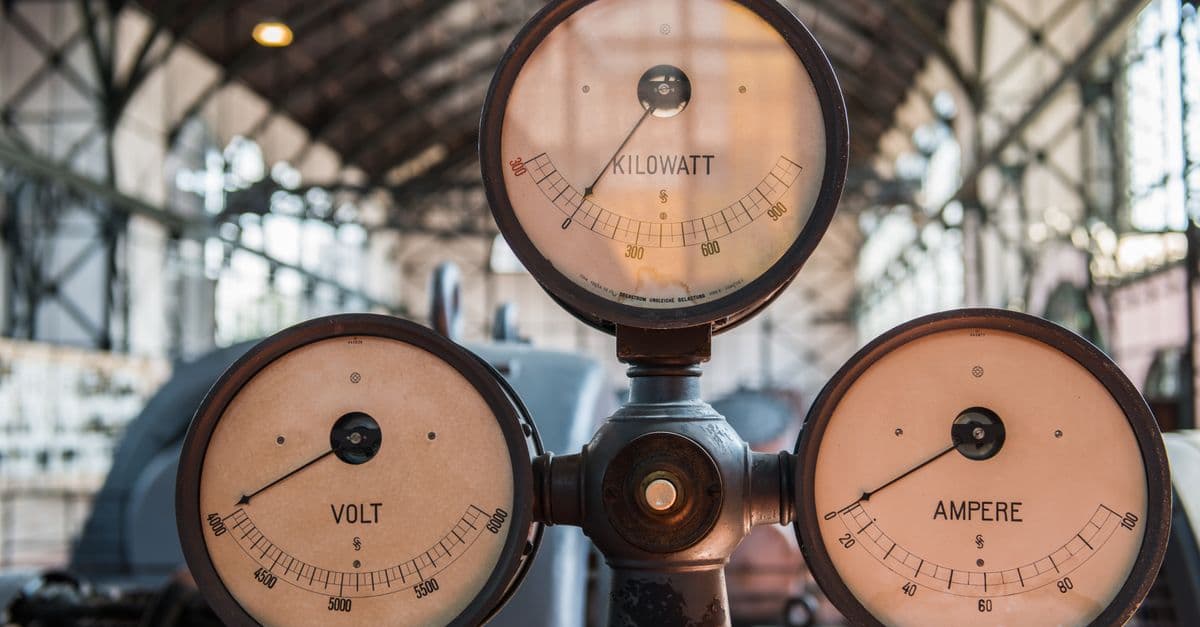
Photo: Wolfgang Weiser / Pexels
On September 3, 1821, Michael Faraday set up an experiment in the basement of the Royal Institution in London: a wire suspended in a cup of mercury, with a magnet fixed at the bottom. When he connected a battery, the wire began to rotate continuously around the magnet. It was the first electric motor — not yet useful, barely even a device, more a proof of principle. What Faraday had demonstrated was that electricity could produce continuous mechanical motion. Everything that plugs in and moves, from an electric toothbrush to a Tesla Model S, descends from that rotating wire.
What an Electric Motor Does
An electric motor converts electrical energy into mechanical energy — specifically, into rotational force (torque). The conversion depends on a fundamental interaction between electricity and magnetism: a current-carrying conductor in a magnetic field experiences a force. Reverse the process (move the conductor through the magnetic field) and you generate electricity. The motor and the generator are the same device running in opposite directions.
Torque — the rotational equivalent of force. Measured in newton-meters (N·m) in SI units. An electric motor's torque at zero speed (stall torque) determines how quickly it can accelerate a load from rest. This is why electric vehicles accelerate so rapidly: their motors produce maximum torque at zero RPM, unlike internal combustion engines, which must rev to a specific RPM range to produce peak torque.
Back-EMF — back electromotive force. As a motor spins, the rotating conductor generates its own voltage opposing the input voltage. The faster the motor spins, the greater the back-EMF and the less current flows. This is a self-regulating mechanism that prevents motors from accelerating indefinitely.
Source: IEEE Spectrum, "200 Years Ago, Faraday Invented the Electric Motor" (2021); Engineering and Technology History Wiki, "Simple Electric Motor."
The Story Behind the Discovery
Faraday's Rotating Wire (1821)
Michael Faraday began his scientific career as an assistant to Humphry Davy at the Royal Institution — a role he obtained partly through obsessive note-taking at Davy's public lectures. By 1821, he had been asked to write a review of electromagnetic discoveries for a scientific journal, which required him to understand and replicate all the existing experiments.
The starting point was Hans Christian Ørsted's 1820 discovery that an electric current deflects a compass needle — the first evidence that electricity and magnetism were connected. Davy and William Hyde Wollaston had tried to build a motor from this insight and failed. Faraday, working systematically through the geometry of the force, realized that the force on a wire near a magnet was not linear (pushing the wire away) but circular — it would cause the wire to rotate around the magnet if free to do so.
His experiment confirmed this. The device — a wire hanging in mercury with a fixed magnet — is now called a homopolar motor. Faraday published his results on September 11, 1821. The device was not yet practical (the wire rotated but produced almost no useful torque), but it demonstrated the principle that would power the industrial world.
Source: APS Physics News, "September 4, 1821 and August 29, 1831: Faraday and Electromagnetism" (2001); Science Museum Blog, "A Small Revolution: Michael Faraday and the Origins of the Electric Motor."
In 1831, Faraday discovered electromagnetic induction: a changing magnetic field generates a voltage in a nearby conductor. This completed the circuit between electricity and magnetism in both directions — current produces magnetic force (motor effect), and moving magnetic fields produce current (generator effect). Every practical motor and generator ever built exploits these two phenomena.
From Principle to Practice: 1830s–1870s
Faraday's rotating wire was a demonstration, not a machine. The gap between the principle and a useful motor took decades to close, as inventors solved problems with commutation (switching current direction to maintain rotation), mechanical construction, and efficiency.
Commutator — a rotary switch that reverses the direction of current in a DC motor's rotating coils at precisely the right moment to maintain continuous rotation in one direction. Without a commutator, the rotating coil would stop and reverse each half-rotation as the magnetic force reversed.
In 1831, the American scientist Joseph Henry independently demonstrated electromagnetic rotation, and by the mid-1830s, a Vermont blacksmith named Thomas Davenport had built the first DC motor practical enough to drive small tools. Davenport received the first US patent for an electric motor in 1837.
The watershed for practical DC motors came with Antonio Pacinotti's ring armature design (1860), later refined by Zénobe Gramme in 1871. The Gramme machine demonstrated in 1873, at an exhibition in Vienna, that two identical machines could be connected — one running as a motor, one as a generator — to transmit power electrically from one point to another. It was the first practical demonstration of electric power transmission.
Source: Gramme machine history, IEEE Milestones program; Edison Tech Center, motor history timeline.
| Year | Inventor | Development | Significance |
|---|---|---|---|
| 1820 | Ørsted | Current deflects compass | First evidence of electromagnetism |
| 1821 | Faraday | Electromagnetic rotation | First electric motor (homopolar) |
| 1831 | Faraday / Henry | Electromagnetic induction | Foundation of generators |
| 1837 | Davenport | First US motor patent | First commercial attempt |
| 1860 | Pacinotti | Ring armature DC motor | Practical continuous rotation |
| 1873 | Gramme | Electric power transmission demo | DC motors as industrial machines |
| 1888 | Tesla | AC induction motor patent | Eliminated commutator |
| 1891 | Tesla / Westinghouse | Niagara Falls AC system | AC wins the current war |
| 1969 | Various | Permanent magnet synchronous motors | High-efficiency design |
| 2020s | Various | ~95% efficient PMSM in EVs | Dominant EV motor type |
Nikola Tesla and the AC Induction Motor (1888)
The DC motor of the Gramme era had a fundamental problem: the commutator. The spring-loaded carbon brushes that made sliding contact with the commutator wore down, sparked, and required constant maintenance. The commutator also limited how fast a motor could spin without the brushes losing contact.
Nikola Tesla believed there was a solution: if you could create a magnetic field that rotated by itself — without any mechanical switching — the rotor would chase the field and spin continuously with no commutator at all. The challenge was creating that rotating field electrically.
Tesla's insight, which he later described as occurring to him during a sunset walk in Budapest in 1882, was that two alternating currents out of phase with each other could create a rotating magnetic field. If you wound two sets of coils at 90 degrees to each other and fed them with AC currents 90 degrees out of phase, the combined magnetic field would rotate smoothly.
After failing to interest his first employer (Continental Edison Company in Paris) in the concept, Tesla emigrated to the United States in 1884 and eventually secured financial backing to develop his ideas. He filed a group of patents covering the AC induction motor in October 1887; the patents were granted on May 1, 1888.
Source: IEEE Spectrum, "May 1888: Tesla Files His Patents for the Electric Motor"; US Patent No. 381,968, Nikola Tesla, "Electro Magnetic Motor," patented May 1, 1888.
The AC induction motor works as follows: alternating current in the stator (the stationary outer coils) creates a rotating magnetic field. This rotating field induces currents in the rotor (the inner rotating part), and those currents create their own magnetic field that chases the stator field. The rotor never quite catches the stator field — this lag is called "slip" — but the resulting torque drives a useful load. The entire system requires no electrical contact with the rotating part: no commutator, no brushes, no wear.
Source: Tesla's AC Motor: The Rotating Magnetic Field That Powers Modern Industry, Kronecker Wallis; Sophia Rare Books, Tesla Patent No. 381,968.
How the Electric Motor Actually Works
DC Motor Fundamentals
A DC motor has three main components: a stator (fixed magnets providing the magnetic field), a rotor (coils that rotate inside the field), and a commutator (the switching mechanism). Current flows through the rotor coils, which experience a force in the magnetic field (the Lorentz force: F = qv × B). The commutator switches the current direction each half-rotation, ensuring the force always acts in the same rotational direction.
The analogy: imagine paddling a boat in circles. If you always paddle forward on the right side and backward on the left side, you turn clockwise. If the "paddle timing" switches every half-rotation (like a commutator), you keep turning in the same direction despite the alternating current.
AC Induction Motor Fundamentals
In an AC induction motor, the stator carries alternating current that produces a rotating magnetic field — a field that appears to spin around the inside of the motor at a speed determined by the AC frequency and the number of pole pairs. In a two-pole motor on a 60 Hz grid, the field rotates at 3,600 RPM (synchronous speed).
The rotor, made of aluminum or copper bars embedded in iron, has currents induced in it by the rotating stator field (Faraday's law of induction). These induced currents create a magnetic field that chases the stator field. The rotor spins at slightly less than synchronous speed — the slip — and the difference drives the torque.
Efficiency in a well-designed modern AC induction motor reaches 92–96%. The losses are primarily resistive heating in the coils (I²R losses) and hysteresis losses in the iron core as the magnetic field reverses.
Permanent Magnet Synchronous Motor (PMSM)
The PMSM, used in most modern electric vehicles including Tesla's drive units, replaces the induced-current rotor with permanent magnets. Because the rotor field is provided by permanent magnets rather than induced currents, there are no I²R losses in the rotor. The result is higher efficiency — typically 93–97% across a wide operating range — compared to induction motors.
The trade-off: PMSMs require rare earth magnets (typically neodymium-iron-boron), which are expensive and sourced predominantly from China. They also require precise electronic control (inverter electronics) to supply the stator with AC at exactly the right frequency and phase to match the rotor position. This control system — the inverter — is one of the most sophisticated components in a modern EV.
Source: U.S. Department of Energy, "Electric Motor Systems: Technology Overview" (2023); Tesla Motor Technology white papers.
The People Involved
Michael Faraday (1791–1867)
Faraday is one of the most significant experimental scientists in history and one of the least formally educated. He left school at 13 and was apprenticed to a bookbinder, where he read voraciously. His self-education through reading scientific books in the shop, combined with meticulous note-taking at Humphry Davy's Royal Institution lectures, secured him a laboratory assistant position in 1813.
What Faraday lacked in mathematical training (he never mastered calculus) he compensated for with an extraordinary physical intuition. He conceived of electric and magnetic fields as lines of force — a geometric visualization that James Clerk Maxwell later formalized into the equations of electromagnetism. Faraday's concept of field lines is still how students learn electromagnetism.
By the end of his career, Faraday had discovered electromagnetic induction (1831), the laws of electrolysis (1833), the Faraday effect in optics (1845), and the diamagnetic properties of matter. He refused a knighthood and twice declined the presidency of the Royal Society.
Source: Royal Institution biography; Michael Faraday, Wikipedia; APS Physics historical account.
Nikola Tesla (1856–1943)
Tesla was born in Smiljan, in what is now Croatia, the son of a Serbian Orthodox priest. He studied engineering in Graz and Prague before working for the Continental Edison Company in Paris and Budapest. His move to America in 1884 was motivated partly by a letter of introduction to Thomas Edison from Charles Batchelor: "I know two great men and you are one of them; the other is this young man."
Tesla's relationship with Edison soured quickly. Edison paid wages; Tesla wanted equity. Tesla quit in 1885 and eventually secured backing from investors to found the Tesla Electric Company in 1886. His AC motor patents were licensed to George Westinghouse in July 1888 for $60,000 plus $2.50 per horsepower of motors sold — a royalty that Tesla later voluntarily surrendered to help Westinghouse survive the financial pressure of the current wars.
By the early 1890s, Tesla had also invented the polyphase power transmission system, the Tesla coil (a resonant transformer), and the basic principles of radio transmission (a priority dispute with Guglielmo Marconi was resolved by the US Supreme Court in Tesla's favor in 1943, months after his death).
Source: Nikola Tesla, Wikipedia; IEEE Spectrum, "May 1888: Tesla Files His Patents"; Tesla's autobiography, "My Inventions" (1919).
The War of Currents
The late 1880s brought a public battle between two systems for delivering electrical power: Thomas Edison's direct current (DC) system, which he had built out across lower Manhattan, and Nikola Tesla's alternating current (AC) system, backed by George Westinghouse.
Edison's DC system had a critical limitation: it could only transmit power economically over about 1.6 km (one mile) before resistive losses degraded it. Every neighborhood needed its own power station. AC could be transformed to high voltages for long-distance transmission and stepped back down at the destination — using the transformer, itself an electromagnetic device — making it practical to generate power centrally and distribute it across a city or region.
Edison knew AC was superior for distribution but had invested heavily in DC infrastructure. His counter-campaign included public demonstrations in which animals (including, infamously, Topsy the elephant in 1903) were electrocuted with AC current to demonstrate its danger. He tried to have the unit of execution by AC electricity named an "ohm" after Ohm rather than a watt after Watt, and lobbied to have the term "Westinghoused" adopted for electrocution.
Source: War of currents, Wikipedia; PBS American Experience, "Tesla" documentary.
The war ended when Westinghouse won the contract to light the 1893 World's Columbian Exposition in Chicago — 100,000 incandescent lamps, powered by AC generators — and then the contract to build the generating station at Niagara Falls in 1895. The Niagara system, designed by Tesla and built by Westinghouse, transmitted 15,000 horsepower of AC power 40 km (25 miles) to Buffalo, New York. AC had won.
Unintended Consequences
50% of All Electricity
Electric motors are the single largest category of electricity consumption in the world. The International Energy Agency estimates that electric motors and motor-driven systems consume approximately 45–50% of global electricity generation annually.
Source: International Energy Agency, "Energy Efficiency: Motor Systems" (2023).
This scale means that incremental efficiency improvements in motor technology have enormous economic and environmental consequences. A one-percentage-point improvement in average motor efficiency across global industrial installations would save approximately 700 terawatt-hours per year — roughly equivalent to the entire electricity consumption of Germany.
The Industrial Revolution's Second Act
The first industrial revolution was powered by steam. The second — the electrification of industry between roughly 1880 and 1930 — was powered by electric motors. The replacement of line shafts (a single steam engine powering an entire factory through a system of belts and shafts) with individual electric motors for each machine transformed factory layout, eliminated mechanical transmission losses, allowed machines to be started and stopped independently, and made continuous-process manufacturing possible.
Historian David Nye has argued that electrification did more to reshape daily life in the United States between 1880 and 1940 than any other technological development — including the automobile.
Source: David Nye, "Electrifying America: Social Meanings of a New Technology" (1990), MIT Press.
The Electric Vehicle and Rare Earth Dependencies
The shift to electric vehicles (EVs) has restored the electric motor's central role in personal transportation — a role it briefly held before gasoline engines displaced it in the early 20th century. The first electric vehicles were actually electric; the Baker Electric, manufactured between 1899 and 1916, was faster than most gasoline cars of the era and preferred by drivers who found gasoline engines unreliable and difficult to start.
Modern EVs use permanent magnet synchronous motors that achieve efficiencies of 93–97%, compared to 25–40% for the best internal combustion engines. The practical range of a modern Tesla Model S is approximately 650 km (405 miles) on a single charge.
Source: U.S. Department of Energy, "Electric Vehicle Benefits and Considerations" (2024); Tesla Model S specifications (2024).
The complication: PMSM motors require neodymium-iron-boron permanent magnets. Global production of neodymium is dominated by China (approximately 70% of world supply), creating a supply chain dependency that governments are actively working to mitigate through domestic mining investment and alternative motor designs.
Where the Electric Motor Stands Today
The permanent magnet synchronous motor is now the standard for high-performance applications — EVs, robotics, industrial servo drives, and precision manufacturing equipment. In less demanding applications (HVAC fans, pumps, compressors), the AC induction motor remains dominant because of its lower cost and maintenance-free operation.
The efficiency frontier for motors has essentially been reached: PMSMs achieve 95–97% efficiency across most of their operating range. Future improvement comes from the systems around the motor: better inverter electronics, more efficient power electronics (silicon carbide switching devices replacing silicon IGBTs), and improved thermal management that allows motors to be smaller and lighter without overheating.
Source: DOE, "Motor Systems Technology Overview" (2023); IEEE Transactions on Industry Applications, PMSM efficiency data.
The most consequential current development is the integration of motor and inverter electronics into a single unit (e-axle in EVs) that eliminates the mechanical differential, gearbox, and driveshaft of a conventional powertrain. Tesla's Model 3 rear motor produces 239 kW (320 hp) from a unit that weighs 31 kg (68 lb) — less than the V8 engine it replaces, which produced similar power from 200 kg (440 lb) of iron and aluminum.
Source: Tesla Motor Technology Overview (2020); Engineering Explained, Tesla Model 3 motor analysis.
What People Get Wrong About Electric Motors
The first misconception is that Nikola Tesla invented the electric motor. Faraday invented the motor principle in 1821. Tesla invented the AC induction motor — a specific type — in 1888. The distinction matters because DC motors, induction motors, synchronous motors, and permanent magnet motors are genuinely different technologies, even though they all exploit the same electromagnetic principles.
A second error: that Edison lost the current war because AC is "safer" than DC. AC is not inherently safer — at the same voltage, AC is slightly more dangerous than DC because the oscillating current causes muscles to contract, preventing the victim from releasing the source. AC won because it can be transformed to high voltages for efficient long-distance transmission, which was the economically decisive advantage.
A third common confusion: the claim that electric vehicles are not actually zero-emission because they use electricity that may be generated by burning coal. This is true but incomplete. The relevant metric is lifecycle emissions per kilometer, not tailpipe emissions per kilometer. Even in electricity grids with substantial coal generation, EVs typically produce lower lifecycle CO₂ than gasoline vehicles, because electric motors convert energy so much more efficiently than combustion engines. As grids decarbonize, the advantage increases.
Source: U.S. Department of Energy, "Emissions from Electric Vehicles" (2024); Union of Concerned Scientists, EV lifecycle emissions analysis (2023).
Frequently Asked Questions
Q: Who invented the electric motor? A: Michael Faraday demonstrated the first electromagnetic rotation — the operating principle of all electric motors — on September 3, 1821. Thomas Davenport built the first practical DC motor and received the first motor patent (US, 1837). Nikola Tesla invented the AC induction motor (patented May 1, 1888), which eliminated the commutator and became the basis for industrial power systems. No single inventor owns the entire history; the motor evolved through contributions by Faraday, Henry, Davenport, Pacinotti, Gramme, Tesla, and many others.
Q: What is the difference between AC and DC motors? A: A DC motor runs on direct current and uses a commutator to switch the direction of current in the rotating coils, maintaining continuous rotation. An AC motor runs on alternating current; the alternating current in the stator creates a rotating magnetic field that drives the rotor without any mechanical switching. AC motors are simpler, require less maintenance (no brushes or commutator), and are dominant in industrial and EV applications. DC motors are still used where precise speed control at low cost is needed, such as in small appliances and some automotive accessories.
Q: Why do electric vehicles accelerate so quickly? A: Electric motors produce maximum torque at zero RPM. An internal combustion engine produces peak torque only within a specific RPM range (typically 1,500–4,500 RPM for a gasoline engine), requiring gear changes to keep the engine in its optimal range during acceleration. An electric motor delivers full torque from standstill, with no gear changes needed. This is why a Tesla Model S can accelerate from 0 to 100 km/h (0–62 mph) in under 3 seconds despite weighing over 2,000 kg.
Q: How efficient is an electric motor compared to a gasoline engine? A: A modern permanent magnet synchronous motor achieves 93–97% efficiency across most of its operating range — meaning 93–97% of input electrical energy is converted to mechanical energy, with the rest lost as heat. The best internal combustion engines achieve peak thermal efficiency of about 40% (the rest is wasted as heat in exhaust and cooling systems), with typical on-road efficiency of 25–35%. Electric motors are roughly three times more energy-efficient in converting fuel energy to motion.
Q: What is the War of Currents? A: The War of Currents was a commercial and technical dispute in the late 1880s between Thomas Edison's direct current (DC) electrical system and George Westinghouse's alternating current (AC) system, largely designed by Nikola Tesla. Edison promoted DC and campaigned against AC, partly because he had invested heavily in DC infrastructure. AC won because it could be transformed to high voltages for efficient long-distance transmission. The Westinghouse-Tesla AC system powered the 1893 World's Fair in Chicago and the Niagara Falls power station in 1895, effectively ending the dispute.
Q: How much of the world's electricity do electric motors consume? A: The International Energy Agency estimates that electric motors and motor-driven systems consume approximately 45–50% of global electricity generation. Industrial motors (pumps, compressors, fans, conveyors) account for the majority of this. This makes improving motor efficiency one of the highest-leverage strategies for reducing global energy consumption and carbon emissions.
Read next:
Follow new articles
Add SciHub101 to your feed reader to see new science and technology stories.
About the Author
SciHub101 is an independent science and technology publication founded and edited by Buğra Sözeri, a software engineer and app developer based in Türkiye. AI tools assist with drafting and research. Source documentation in the existing archive is uneven, and articles are being reviewed and corrected. The Editorial Team byline identifies editorial responsibility; it does not certify specialist or independent human review. Where we compare products, anything built by our own team is labelled as such — see the editorial guidelines and About page for how corrections and disclosures work.
Related Articles

The Electric Toothbrush: From Corded Swiss Prototype to AI-Powered Dental Coach
How Philippe-Guy Woog's 1954 Broxodent, a glue-gun toy frog idea, and University of Washington research built the $4 billion electric toothbrush market — and what the evidence says it does.
The Electric Power Grid — How Edison, Tesla, and Insull Wired the Modern World
From Edison's Pearl Street DC station in 1882 to the AC war of currents, Insull's monopoly model, and today's smart grid, the electrical power grid shaped every hour of modern life.
Oersted's Electromagnetism Discovery: The Compass Needle That Changed Physics
In 1820, Hans Christian Oersted noticed a compass needle deflect near a current-carrying wire — accidentally unifying electricity and magnetism and launching the age of electromagnetism.
Faraday's Induction: From Magnets to Electricity
In 1831, Michael Faraday discovered that changing magnetic fields induce electric currents. This fundamental discovery enabled electric motors, generators, and transformed civilization.

The Radio: Marconi, Tesla, and the Invention That Wired the Air
How Guglielmo Marconi's 1895 wireless experiments — and a disputed 1943 Supreme Court ruling crediting prior patents — built the radio into the foundation of all modern wireless communication.