The Electric Power Grid — How Edison, Tesla, and Insull Wired the Modern World — SciHub101
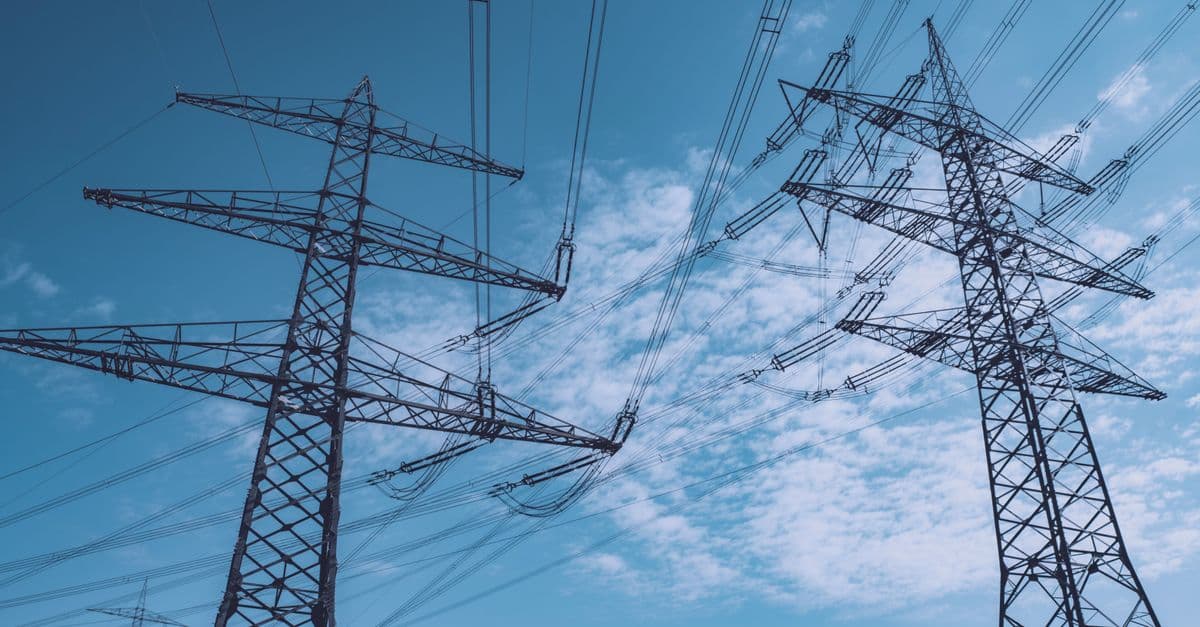
Photo: Ilo Frey / Pexels
The electrical power grid is the largest machine humanity has ever built. It is a single, synchronized system of generators, transformers, transmission lines, substations, and distribution cables that, in its continental forms, keeps electricity flowing at a precisely maintained frequency to hundreds of millions of users simultaneously. If it fails — as portions of it do periodically — people die: hospitals lose power, heating and cooling collapse, water treatment plants stop, supply chains freeze. Yet most people interact with the grid exclusively through a wall socket, with no more awareness of the engineering behind it than they have of the atmospheric dynamics behind a clear sky. The grid was assembled from the competing visions of Thomas Edison, Nikola Tesla, George Westinghouse, and Samuel Insull over roughly four decades at the end of the 19th century and beginning of the 20th, and the decisions they made then still constrain the engineers trying to integrate renewable energy today.
What the Power Grid Is — and Why It Is Harder to Run Than It Looks
The electrical power grid is a real-time balancing act. Electricity cannot be stored at scale with current technology — not in the quantities required to supply a city through the night. Every electron that flows out of a wall socket must be generated at precisely that moment by a generator somewhere on the network. If demand exceeds supply, the system's frequency drops below its nominal 60 Hz (in North America) or 50 Hz (in Europe and most of the rest of the world). If supply exceeds demand, frequency rises. Either deviation, if uncorrected, cascades into overloads, protective relay trips, and potentially a blackout.
Think of the grid as a bathtub with the drain open: the water level (frequency) is the signal. If people are drawing more water (demand) than is being poured in (generation), the level drops. You need to respond in seconds, not minutes.
This real-time balancing requirement makes the grid fundamentally different from other large infrastructure systems — roads, pipelines, water distribution — where demand fluctuations are buffered by storage. The grid's inability to buffer means that every increase in demand must be matched by a corresponding increase in generation or a reduction in demand somewhere else, in near-real-time, across a network spanning thousands of kilometers.
Source: The real-time frequency-balancing requirement of electrical grids is described in the North American Electric Reliability Corporation (NERC) reliability standards documentation.
The Story of the Electrical Power Grid
Edison's Pearl Street Station — The First Central Power Plant (1882)
Thomas Edison conceived of electric power distribution as a system, not merely as an invention. His 1879 demonstration of a practical incandescent light bulb at Menlo Park, New Jersey, was impressive, but Edison understood that a light bulb was useless without a delivery system for electricity. In the same way that gas companies supplied gas through pipes to gas lamps throughout a city, Edison planned to supply electricity through wires to electric lamps throughout a city.
The Pearl Street Station, completed in lower Manhattan's Financial District at 255–257 Pearl Street, began generating electricity on September 4, 1882. The station's six Porter-Allen steam-powered dynamos (generators) supplied direct current (DC) at 110 volts through a buried copper cable network to an initial load of approximately 400 lamps distributed across 82 customers.
Source: Pearl Street Station's September 4, 1882 start date, initial customer and lamp count, and 110V DC supply are documented at ETHW Milestones: Pearl Street Station, 1882 and Pearl Street Station Wikipedia.
Within 14 months, Pearl Street Station was supplying 508 customers with power for 12,732 lamps. The system was profitable. Edison had proved the commercial viability of central station power generation and distribution.
But the system had a fundamental limitation: it ran on direct current. DC voltage cannot be easily stepped up or stepped down by transformers. (Transformers require alternating current to function.) This meant the distribution network had to operate at the same voltage as the lamps — 110 volts — because there was no practical way to transmit at higher voltage and then step down at the customer. At 110 volts, resistive losses in the copper conductors were significant. Beyond a radius of roughly 1.5 km (about 1 mile) from the generating station, the voltage drop in the wires was too large to deliver usable power.
Source: The 1.5 km distribution radius limitation of Edison's DC system is described in allaboutcircuits.com's history of the War of Currents.
The implications were stark: to electrify a city, Edison would need generating stations roughly every 3 km. That was economically unworkable for any city outside the densest urban cores. The DC distribution model could not be scaled.
The War of Currents — Westinghouse, Tesla, and Alternating Current (1886–1896)
George Westinghouse was a Pittsburgh industrialist who had already made his fortune from the railroad air brake. By 1885, he was interested in electrical power, and specifically in a technology that Edison had dismissed: alternating current (AC), in which the voltage and current reverse direction many times per second (60 times per second at 60 Hz).
The crucial advantage of AC over DC was transformer compatibility. An AC transformer — a pair of magnetically coupled coils — can step voltage up or down with high efficiency. This made it possible to generate electricity at moderate voltage (a few thousand volts), step it up to high voltage (tens of thousands of volts) for efficient long-distance transmission through relatively thin copper wires, and then step it back down to household levels (110 or 120 volts) at a local transformer near the customer.
Source: AC's transformer advantage and its significance for long-distance transmission are described in Physics World's analysis of the AC/DC war.
Westinghouse licensed Nikola Tesla's polyphase AC system patents in May 1888 for a reported $60,000 plus royalties. Tesla, a Serbian-born inventor who had briefly worked for Edison before a celebrated dispute over compensation, had developed a complete polyphase AC system including generators, transmission lines, and motors. Tesla's AC motors were particularly significant: DC motors of the era were mechanically complex and required maintenance-intensive brushes and commutators; Tesla's induction motor had no physical contact between its rotating and stationary parts, making it more reliable and easier to maintain.
Source: Westinghouse's licensing of Tesla's patents in May 1888 for $60,000 plus royalties is documented in allaboutcircuits.com's War of Currents history.
Edison fought back with a campaign that belongs in the history books for its ugliness. His laboratory engineers, led by Harold P. Brown, publicly electrocuted animals — dogs, calves, and ultimately an elephant named Topsy at Coney Island in 1903 — using Westinghouse AC generators, trying to demonstrate that AC was more lethal than DC and therefore unsuitable for domestic use. Edison lobbied states to adopt AC as the voltage for the electric chair — successfully; New York adopted AC execution in 1889 — to associate AC with death.
Source: Harold P. Brown's animal electrocutions and Edison's lobbying for AC execution are described in allaboutcircuits.com and in multiple historical accounts of the War of Currents.
The war's decisive battles were commercial, not rhetorical. In 1893, Westinghouse won the contract to illuminate the Chicago World's Columbian Exposition, underbidding General Electric (Edison's successor company) by approximately half. The fairground's display — hundreds of thousands of electric lights powered by AC generators — was seen by more than 27 million visitors. For most of them, it was their first experience of electric light. The favorable impression was indelible and overwhelmingly public.
The final resolution came at Niagara Falls. A consortium that included Westinghouse and General Electric won the contract to develop the falls' hydroelectric potential. The Adams Power Plant No. 1 at Niagara Falls began transmitting AC electricity to Buffalo, New York — a distance of 26 miles (42 km) — in 1896. The transmission voltage was 11,000 volts; Buffalo distribution was at 1,100 volts after stepping down. This long-distance AC transmission, impossible with Edison's DC system, demonstrated beyond argument that AC was the architecture for a national grid.
Source: The 1896 Niagara Falls AC transmission to Buffalo and its significance in the War of Currents are documented at allaboutcircuits.com and Pearl Street Station Wikipedia.
Samuel Insull and the Regulated Utility Model (1892–1929)
Edison lost the technical war. His business interests survived through General Electric. But the organizational model for the electric utility industry was built by a man who had started as Edison's private secretary: Samuel Insull.
On May 26, 1892, Insull left General Electric — where he had been passed over for the presidency — to become president of Chicago Edison. He arrived to find Chicago served by nearly 30 competing electric companies. Insull had a different vision: a single, regulated monopoly serving an entire territory, with exclusive rights to operate in exchange for state control over pricing and service standards.
Source: Insull's May 1892 appointment at Chicago Edison and his consolidation strategy are documented at Wikipedia's Samuel Insull article and freeingenergy.com's analysis of Insull's utility monopoly model.
Insull's strategic insight was economic rather than technical. Large central generating stations had dramatically lower cost per kilowatt-hour than small local plants, due to economies of scale. By aggregating customers across an entire city, Insull could spread the fixed cost of a large steam turbine generating plant over millions of kilowatt-hours, making electricity cheap enough that customers who had previously considered it a luxury could afford it continuously. He understood that the cheapest electricity per unit came from the largest plants running at maximum capacity, and he structured pricing to achieve that: cheap off-peak rates to encourage usage when generators were otherwise idle, flat-rate pricing for small residential customers to reduce metering costs.
By 1895, Insull had achieved a complete monopoly on electric service in Chicago Edison's territory through acquisition of competitors. Chicago Edison's larger Harrison Street plant, opened in August 1894 with an original capacity of 6,400 kW, was the largest electric power plant in the United States at that time.
Source: Chicago Edison's Harrison Street plant capacity and the monopoly achieved by 1895 are documented at Chicago Edison Company HistoryWiki and freeingenergy.com.
Insull's model — the vertically integrated, regulated, geographically exclusive electric utility — became the template for the US electric power industry for the next century. By 1929, his holding company empire, Middle West Utilities, controlled electric utilities serving 4,000 communities across 30 states. His empire collapsed spectacularly in 1932 amid the Great Depression and revelations of financial manipulation, and Insull fled to Greece to avoid prosecution. He was eventually extradited, tried, and acquitted — but his regulatory model survived him and persisted until deregulation experiments beginning in the 1990s.
Rural Electrification — The New Deal Fills the Gap (1935–1960)
By the early 1930s, electric power was a fixture of urban American life. Rural America was largely dark. Privately owned utilities had no incentive to build distribution lines to farms — the cost per customer was too high, the revenue too low. When President Roosevelt created the Rural Electrification Administration (REA) by Executive Order 7037 on May 11, 1935, only 10 percent of rural American farms had electricity.
Source: The May 11, 1935 Executive Order creating the REA and the 10 percent rural electrification figure are documented at the USDA's 80th Anniversary of the REA and Living New Deal.
The Rural Electrification Act, signed by Roosevelt on May 20, 1936, authorized the REA to make low-cost loans to non-profit rural electric cooperatives — farmers who banded together to build and own their own distribution lines. The cooperative model was crucial: it aligned economic incentives in a way that investor-owned utilities had not. Farmers who owned their cooperative had every reason to bring in new members and extend lines to additional farms.
The results were transformative at a speed that surprised even the program's advocates. By 1939, 288,000 households had REA-supplied electricity. By 1942, half of US farms had electricity. By 1950, 87 percent of farms had electrical service. By 1960, almost 97 percent.
Source: Rural electrification statistics for 1939, 1942, 1950, and 1960 are from the Rural Electrification Administration Wikipedia article and EH.net encyclopedia entry on the Rural Electrification Administration.
The sociological impact was as large as the engineering achievement. Refrigeration eliminated the icebox and the daily ice delivery. Electric pumps brought running water to farmhouses that had previously used hand-pumped wells. Electric lighting extended productive hours beyond sunset. Electric motors replaced hand labor in dozens of farm tasks. The REA's own promotional literature described electrification as the difference between a 20th-century farm and a 19th-century one, and on that particular claim it was not exaggerating.
How the Power Grid Works — AC Transmission, Transformers, and Frequency
The modern AC grid operates across three distinct voltage levels, each matched to its function.
Generation: Power plants — whether coal, gas, nuclear, hydroelectric, or wind turbines — generate electricity at voltages in the range of 10,000 to 25,000 volts (10–25 kV). This is the voltage range that large rotating generators produce efficiently.
Transmission: Step-up transformers at the power plant raise the voltage to 115,000 to 765,000 volts (115–765 kV) for long-distance transmission. High voltage means low current for a given power level (Power = Voltage × Current), and low current means low resistive losses in the transmission lines (Losses = Current² × Resistance). Transmitting at 345,000 volts rather than at 110 volts reduces line losses by a factor of (345,000/110)² — nearly 10 million. This is why long-distance transmission at high voltage and local distribution at low voltage is not merely convenient — it is the physical requirement for any viable grid covering more than a few kilometers.
Distribution: Step-down transformers at substations reduce transmission voltage to 4,000–35,000 volts for local distribution, then pole-mounted or pad-mounted transformers outside individual buildings reduce it further to 120/240 volts (US residential) or 230 volts (EU residential).
Source: Grid voltage levels and the physics of high-voltage transmission are described in standard electrical engineering textbooks and summarized in the NERC reliability standards.
The 60 Hz (US) or 50 Hz (EU) frequency is not arbitrary. At these frequencies, the synchronous generators used in large power plants operate efficiently with manageable mechanical forces, and the inductance and capacitance of practical conductors produce acceptable phase relationships. The 60 Hz vs. 50 Hz difference is a historical artifact — the United States standardized early at 60 Hz, while Europe standardized at 50 Hz, and both systems are now too extensively deployed to change.
The Three US Grids
The contiguous United States is not one grid — it is three largely separate synchronous AC grids:
| Grid | Coverage | Notes |
|---|---|---|
| Eastern Interconnection | Most of eastern North America east of the Rockies | Largest, extends into Canada and parts of Mexico |
| Western Interconnection | Western US, Canada, and parts of Mexico | Includes all of WECC territory |
| Texas (ERCOT) | Most of Texas | Deliberately isolated to avoid federal jurisdiction |
The three grids connect to each other only through high-voltage direct-current (HVDC) links — back-to-back DC converter stations that can transfer power between asynchronous AC systems without coupling their frequencies. Texas's isolation through ERCOT is not a technical necessity but a political choice: by avoiding interstate electricity commerce, Texas's utilities historically avoided Federal Energy Regulatory Commission (FERC) jurisdiction.
Source: The three US interconnections and ERCOT's deliberate isolation are described in multiple FERC and EIA publications on US grid structure.
The Texas 2021 Blackout — What Happens When the Grid Fails
In February 2021, Winter Storm Uri delivered temperatures well below freezing across Texas. Natural gas wells, pipelines, and generators froze. Wind turbines iced up. Coal plants tripped offline. The loss of generating capacity exceeded 30 gigawatts — roughly one-third of ERCOT's total generation capacity. The grid's frequency dropped toward the threshold at which automatic relays would trip everything offline in a cascading, potentially unrecoverable collapse. Grid operators initiated rolling blackouts — controlled load shedding — to prevent total grid failure.
The blackouts lasted days rather than hours. More than 4.5 million Texas homes lost power. At least 246 people died, by the state's official count, though research estimates suggest the true toll may have been over 700.
Source: The 4.5 million home power loss figure, 246 official deaths, and higher research estimates for actual deaths are from the UT Energy Institute's ERCOT Blackout 2021 analysis and the Baker Institute's Texas blackout report.
The Texas blackout's proximate cause was the failure to weatherize generating equipment — gas wells, pipelines, and power plant equipment that were not insulated or heated for extreme cold. The underlying cause was a regulatory structure that created no financial incentive for generators to invest in weatherization, because the cost savings from avoiding rare cold-weather failures were diffuse and probabilistic while the capital cost of weatherization was immediate and certain.
Source: FERC and NERC's joint analysis of the Texas blackout and the weatherization failure is in their Final Report on February 2021 Freeze.
The blackout cost Texas over $195 billion in property damage and economic losses — more than Hurricanes Harvey, Irma, and Maria combined.
Key People in the History of the Electrical Grid
Thomas Edison (1847–1931): Pearl Street Station proved the concept of central station power supply. Edison's specific technological choices — DC, 110 volts — were wrong for scaling, but his system-level thinking (generation, distribution, metering, billing) was the right framework. See also: Thomas Edison — Inventor, Industrialist, and the Man Who Built the Modern World.
Nikola Tesla (1856–1943): The polyphase AC system Tesla developed and Westinghouse commercialized is the direct ancestor of every AC grid operating today. Tesla's induction motor is the basis for virtually all large industrial AC motors. His theoretical and practical contributions to AC electrical engineering were foundational. See also: Nikola Tesla — The Physicist Who Rewired the Modern World.
George Westinghouse (1846–1914): The industrialist who backed AC, licensed Tesla's patents, and won the War of Currents through commercial and engineering competence rather than propaganda. Westinghouse held more than 360 patents and founded or acquired dozens of companies. His approach to the Niagara Falls project — assembling the best available technology from multiple sources rather than defending proprietary designs — was the decisive factor in AC's commercial victory.
Samuel Insull (1859–1938): The organizational genius who built the modern electric utility industry. Insull's regulated monopoly model, criticized as anticompetitive and ultimately undermined by his own financial empire's collapse, was nonetheless the structure that made universal electrification economically viable. Without large, capital-intensive generating stations serving millions of customers, electricity prices would not have fallen to levels that made universal access possible.
Source: Insull's biography and the collapse of his empire in 1932 are documented in Samuel Insull Wikipedia and Harold Platt's book The Electric City (University of Chicago Press, 1991).
Franklin D. Roosevelt (1882–1945): The New Deal's Rural Electrification Administration, created by Roosevelt's executive order, extended electricity to rural America in a decade — faster than any private market process had managed in the preceding 50 years.
The Unintended Consequences of the Power Grid
Coal's Long Shadow
The power grid made electric light and motors universally available; for most of its history, it was powered by burning coal. The US electrical power sector burned approximately 1 billion tons of coal per year at its peak in the early 2000s, making it the single largest source of sulfur dioxide, nitrogen oxides, and mercury emissions in the country. The acid rain crisis of the 1970s and 1980s — which acidified lakes and killed forests across the northeastern US and Canada — was primarily a consequence of coal-burning power plants.
The coal-powered grid's CO₂ emissions have been the largest single contributor to US greenhouse gas output for most of the grid's existence. The ongoing energy transition — replacing coal with natural gas and renewable energy sources — has reduced coal's share of US electricity generation from approximately 50 percent in 2006 to under 20 percent by 2023.
Source: Coal's decline from 50 percent of US generation in 2006 to under 20 percent by 2023 is documented by the US Energy Information Administration's Monthly Energy Review.
The Vulnerability Problem
A grid that is the backbone of every other critical infrastructure system — hospitals, water treatment, communications, transportation signals, food refrigeration — is also a target. The 2003 Northeast blackout, triggered by a software bug in a single Ohio utility's control system that caused a cascading failure affecting 55 million people across eight US states and Ontario, demonstrated the grid's systemic fragility.
Source: The August 2003 Northeast blackout's cause and extent are documented by the US-Canada Power System Outage Task Force final report.
Electromagnetic pulse (EMP) events — whether from nuclear detonation or severe solar geomagnetic storms — are the scenarios grid planners find most alarming, because they can simultaneously damage large numbers of high-voltage transformers that take 12–18 months to manufacture and replace. The 1989 Quebec geomagnetic storm knocked out the entire Hydro-Québec grid in 92 seconds, cutting power to 6 million people for up to 9 hours.
Source: The March 1989 Quebec geomagnetic storm blackout is documented by NASA's Space Weather research archives and multiple space weather publications.
Where the Power Grid Stands Today
The contemporary grid is undergoing its most significant transformation since the War of Currents. Three forces are reshaping it simultaneously.
The renewable energy integration challenge: Wind and solar photovoltaic generation are variable — they produce power when the wind blows and the sun shines, not necessarily when demand peaks. Integrating large amounts of variable generation requires either massive grid-scale storage (currently expensive but declining rapidly in cost), greater interconnection between regions to share surpluses, demand flexibility (shifting industrial and commercial loads to match generation availability), or overcapacity (building enough renewable generation to meet peak demand even in low-output conditions). The grid architecture designed for large, controllable central generators does not natively accommodate variable distributed generation, and adapting it is the defining grid engineering challenge of the 2020s.
Source: The renewable integration challenge and the role of storage, interconnection, and demand flexibility are analyzed in the DOE's National Transmission Needs Study (2023).
The smart grid: Advanced metering infrastructure (AMI) smart meters that communicate usage data in near-real-time, grid sensors that give operators visibility into the distribution network that was previously invisible, automated controls that can respond to anomalies faster than human operators, and demand response programs that compensate customers for reducing load during peak periods are all components of what the industry calls the smart grid. The US Department of Energy estimates that the smart grid could reduce US electricity consumption by 4 percent and peak demand by up to 20 percent relative to the conventional grid.
Source: Smart grid efficiency and peak demand reduction estimates are from the DOE's Smart Grid overview.
The return of DC: High-voltage direct current (HVDC) transmission, economically unviable in Edison's era but now enabled by modern power electronics, is increasingly competitive with AC for transmission distances over approximately 600 km and for connecting offshore wind farms or other remote generation resources to shore. HVDC lines lose less power over long distances than AC lines (because they have no reactive power losses) and can be routed underground or underwater more easily. China has built the world's longest HVDC lines, including the ±800 kV Zhundong-Wannan link spanning 3,324 km.
Source: China's Zhundong-Wannan HVDC link specifications are from the State Grid Corporation of China's project documentation.
FAQs About the Electrical Power Grid
Q: Why does the US use 120V and Europe use 230V for household electricity? A: Both voltages are historical accidents solidified into infrastructure. The US standardized at 110V (later updated to 120V nominal) early in the electrification era, partly reflecting Edison's original 110V DC system and the compatible voltage for early incandescent bulbs. Europe standardized at 220–240V (later harmonized to 230V nominal) partly to reduce line losses in lower-density distribution networks. Higher voltage means lower current for the same power, which means smaller, cheaper wiring. Europe's higher voltage is technically more efficient; the US system is more deeply embedded in incompatible infrastructure to change.
Q: Who won the War of Currents — Edison or Tesla? A: AC won, which means Westinghouse and Tesla won the technical and commercial battle. Edison's business interests survived through General Electric, which pivoted to AC manufacturing after the Niagara Falls demonstration made the outcome clear. Edison himself never publicly conceded the argument. Privately, he reportedly told his associate Henry Ford in 1931 that the greatest mistake he ever made was not using AC current.
Q: Why does Texas have its own separate power grid? A: ERCOT (the Electric Reliability Council of Texas) was deliberately designed as an isolated AC synchronous system to avoid interstate electricity commerce, which would have subjected Texas utilities to Federal Energy Regulatory Commission jurisdiction. By keeping the grid within state lines, Texas utilities operated under state rather than federal regulation. The isolation was not a technical decision but a regulatory strategy — and it proved catastrophically costly during the February 2021 freeze, when Texas could not import significant emergency power from neighboring grids because the interconnections are limited DC ties rather than high-capacity AC connections.
Q: How much of the US grid runs on renewable energy? A: In 2023, renewable energy sources (including hydroelectric) accounted for approximately 21 percent of total US electricity generation. Wind was the largest single renewable source at about 10 percent, followed by hydroelectric at about 6 percent and solar at about 5 percent. The share is rising rapidly — new renewable capacity additions have exceeded new fossil fuel additions in every year since 2011 — but the existing fossil fuel fleet continues to supply the majority of generation.
Source: US electricity generation by source in 2023 is from the EIA's Monthly Energy Review.
Q: What is a blackout, and how does one start? A: A blackout is a loss of electrical power over a geographic area. Most large blackouts start with a fault — a short circuit, a line contacting a tree, a generator tripping offline — that would normally be isolated by protective relays. If the protection system fails to isolate the fault, or if the fault causes other elements of the grid to become overloaded, those elements trip their own protective relays, causing further overloads in a cascading sequence. The 2003 Northeast blackout took about 8 seconds to cascade from a single tripped transmission line in Ohio to cutting power to 55 million people.
Q: What is the difference between a blackout and a brownout? A: A blackout is a total loss of power. A brownout is a deliberate reduction in voltage — typically 10 to 20 percent below nominal — implemented by grid operators when generation capacity is insufficient to fully meet demand. Brownouts reduce the power consumed by resistive loads (incandescent lights, electric heaters) and the speed of motor-driven equipment. They are a tool for managing demand without fully curtailing supply, buying time for additional generation to come online or for demand to naturally fall.
The Takeaway
The electrical power grid emerged from a conflict between two incompatible visions — Edison's distributed DC model versus Tesla and Westinghouse's long-distance AC model — and the physics of electricity settled the argument conclusively. Samuel Insull then built the organizational architecture, the regulated utility monopoly, that made universal electrification economically possible. Franklin Roosevelt's Rural Electrification Administration extended that architecture to the places the market would never reach. The result is a machine so essential that its temporary failure in Texas in 2021 killed hundreds of people and caused nearly $200 billion in damage. Now that same machine must be rebuilt in real time to incorporate variable renewable energy without losing the reliability that 140 years of engineering has painstakingly achieved — one of the most complex engineering challenges any generation has faced.
Read next:
Weekly digest
Stay ahead of the curve
Get the best science, AI, and tech stories delivered to your inbox every week. No spam — unsubscribe any time.
About the Author
SciHub101 is an independent science and technology publication founded and edited by Buğra Sözeri, a software engineer and app developer based in Türkiye. Articles are drafted against peer-reviewed literature and primary sources, fact-checked, and edited by a human before publication. Where we compare products, anything built by our own team is labelled as such — see the editorial guidelines and About page for how corrections and disclosures work.
Related Articles
The Electric Motor: From Faraday's Wire to the EV Revolution — SciHub101
Michael Faraday's 1821 rotating wire became the device that now consumes 50% of the world's electricity. Here's how the electric motor works and why Tesla's AC design won.

The Electric Guitar: How a Frying Pan and a Pine Log Rewired Popular Music — SciHub101
From Beauchamp's 1931 Frying Pan to Fender's Stratocaster, the electric guitar's invention reshaped jazz, rock, and every genre that followed. Here's the full story.

Nikola Tesla: The Visionary Who Rewired the World
Tesla's alternating current system powers every home on Earth today — yet he died broke and largely forgotten. Here's the full story.
The Light Bulb: Edison, Swan, and the Race to Illuminate the World
How Thomas Edison's 1879 carbon filament patent at Menlo Park — and the rivalry with Joseph Swan — launched commercial electricity and permanently changed human civilization.
The Radio: Marconi, Tesla, and the Invention That Wired the Air
How Guglielmo Marconi's 1895 wireless experiments — and a disputed 1943 Supreme Court ruling crediting prior patents — built the radio into the foundation of all modern wireless communication.

How AI Data Centers Use Electricity
AI data centers use electricity for GPU compute, cooling, and grid conversion losses, not just chips. See real training vs. inference power figures.