Thomas Edison: The Napping Inventor Who Tested His Guests With Soup
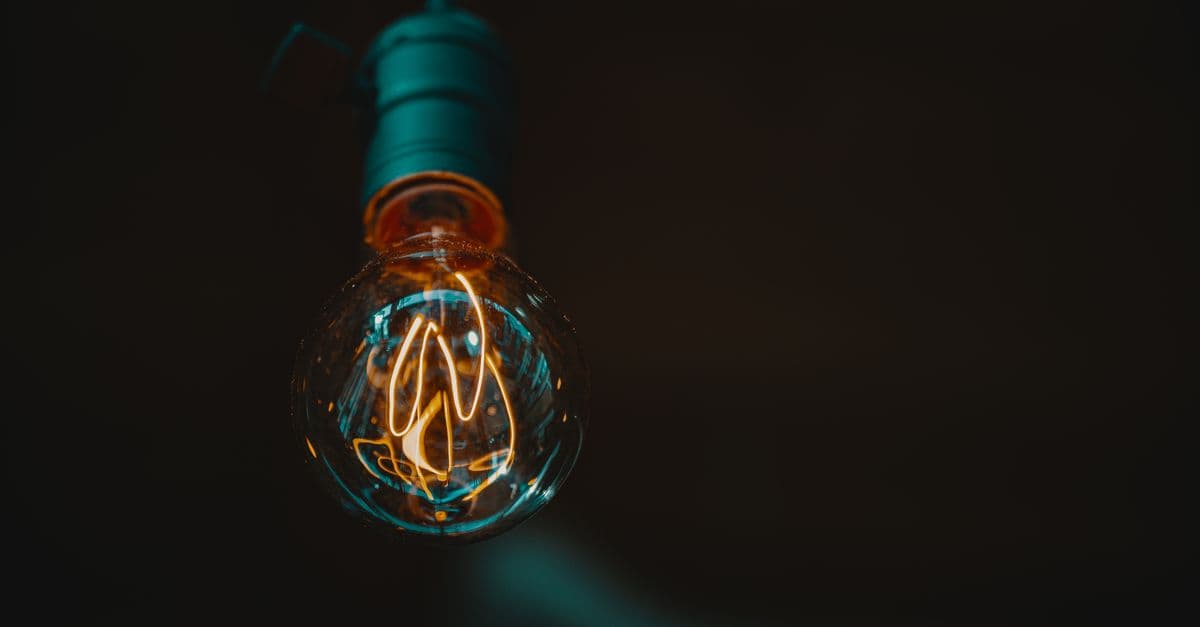
Photo: Brett Sayles / Pexels
Thomas Alva Edison (1847–1931) was an American inventor and businessman whose Menlo Park laboratory produced, by his own count, a minor invention every ten days and a major one every six months. He held 1,093 U.S. patents — a record that stood for decades. The phonograph, the practical incandescent light bulb (not invented from scratch, but made commercially viable), and the world's first industrial research laboratory are among his creations. He was also a ferocious competitor, a poor sleeper by choice, and a man of opinions that extended to soup.
Quick Biography
Thomas Alva Edison was born on February 11, 1847, in Milan, Ohio, the seventh child of Samuel and Nancy Edison. He contracted scarlet fever as a toddler and a middle-ear infection shortly after, resulting in significant hearing loss that worsened throughout his life. By adulthood he was nearly deaf in both ears. Edison later said the hearing loss was a blessing: it allowed him to concentrate without distraction.
His formal schooling lasted approximately three months. His teacher called him "addled"; his mother, a former schoolteacher, pulled him out and taught him at home. She gave him Richard Parker's School of Natural Philosophy — a science primer for young readers — and Edison later cited it as the most important book of his childhood. At 12 he began selling newspapers and candy on the Grand Trunk Railroad. He taught himself telegraphy and by 15 was working as a telegraph operator, traveling from city to city across the Midwest and Canada.
In 1869, Edison moved to New York. His first important invention was a stock ticker that he sold for $40,000 — roughly $900,000 today — a sum that let him establish a commercial laboratory in Newark, New Jersey. In 1876 he moved the operation to Menlo Park, New Jersey, creating what is arguably the world's first purpose-built industrial research laboratory. Over the next decade the Menlo Park lab produced the carbon-microphone transmitter that made the telephone commercially viable, the phonograph (1877), and the practical incandescent light system (1879–1882).
Edison's electrical system used direct current (DC). When Nikola Tesla — then briefly an Edison employee — demonstrated the advantages of alternating current, Edison launched a public campaign against it that historians call the "War of Currents" (see the quirks section). The war ultimately went to Tesla and his backer George Westinghouse; AC became the standard for power distribution. For the full story of Tesla's competing vision, see Nikola Tesla: The Inventor Who Lit the World and Died Broke.
Edison married twice — first to Mary Stilwell in 1871 (she died in 1884) and then to Mina Miller in 1886. He had six children. He moved his primary laboratory to West Orange, New Jersey, in 1887, where he remained prolific into old age. He died on October 18, 1931, aged 84, of complications from diabetes. President Herbert Hoover asked Americans to dim their electric lights for one minute in his honor.
Major Scientific Contributions
The Phonograph (1877)
Edison's phonograph — a device that recorded and played back sound by inscribing a vibrating stylus onto a rotating cylinder of tinfoil — was his own favorite invention. He had not expected it to work. He shouted "Mary had a little lamb" into the mouthpiece, cranked the cylinder, and heard his own voice played back. He reportedly sat in silence for a moment, then said: "I was always afraid of things that worked the first time." The phonograph inaugurated the recorded music industry, transformed entertainment, and gave rise (after improvements by others, including Charles Tainter and Alexander Graham Bell) to the gramophone and all subsequent audio media.
The Practical Incandescent Light Bulb (1879)
Edison did not invent the light bulb; at least 22 inventors had produced glowing filaments before him. What Edison invented was a complete, practical, commercially viable electric light system: a durable carbon-filament bulb that burned for 1,200 hours, the generators to power it, the parallel wiring that let bulbs be switched on and off independently, the meters to charge customers by usage, and the business model. The Pearl Street Station in lower Manhattan (1882) was the world's first commercial power station. Within a year it was powering 508 customers and 10,164 lamps. The light bulb alone was not Edison's invention; the electrified city was.
The Motion Picture Camera (Kinetoscope, 1891)
Edison's laboratory — primarily the work of his employee William Kennedy Laurie Dickson — produced the Kinetoscope, a device that allowed one viewer at a time to watch a short film loop. It was not projected cinema (that was the Lumière brothers' contribution), but the Kinetoscope established the technical basis of motion pictures: a strip of photographs taken in rapid succession and played back at speed to create the illusion of motion. Edison's Black Maria studio in West Orange was the world's first film production studio.
The Carbon Microphone Transmitter (1877)
Alexander Graham Bell had invented the telephone but his instrument was too faint for commercial use. Edison's carbon button microphone dramatically improved the transmission of voice, making the telephone a practical technology. Bell Telephone licensed Edison's transmitter, and the device became standard in telephones for nearly a century.
Industrial Research as an Invention
Edison's most durable contribution may be the organized research laboratory itself. Before Menlo Park, invention was solitary. Edison staffed his laboratory with machinists, chemists, mathematicians, and draftsmen, and directed them systematically toward commercial targets. This model — teams of specialists organized around product goals — is the template of every corporate R&D department that followed, from Bell Labs to Google X.
The Iron Ore Disaster: Edison's Costliest Failure
Between roughly 1889 and 1900, Edison sank the majority of his personal fortune — estimated at several million dollars, equivalent to tens of millions today — into an attempt to develop a new process for extracting low-grade iron ore from New Jersey's magnetic sands using powerful electromagnets. The process worked in the laboratory and worked intermittently at the Ogden, New Jersey mining and processing plant he built. The plant did not work reliably at commercial scale. Edison spent a decade iterating on the machinery, living for extended periods at the mine site, and pouring in capital. By the time he closed the operation, the open-pit steel mines of the Mesabi Range in Minnesota had come online, driving down iron ore prices so far that even a successful Ogden operation could not have competed. He lost approximately $2 million — most of what he had made from his electrical systems work. Edison's response, documented in multiple interviews, was characteristically defiant: he said he had learned everything there was to know about how not to build a ore-processing plant and that the knowledge was worth having. He used equipment and patents from the failed ore-processing venture as the foundation for a new Portland cement business, which eventually became moderately profitable. The iron ore failure is largely absent from Edison mythology, but it occupied a decade of his middle life and consumed resources that might otherwise have funded more fruitful work.
Personal Life and Relationships
Edison's personal life was secondary to his work — not incidentally but by design. He married his first wife, Mary Stilwell, in 1871 when she was 16 and he was 24. She had been an employee at his Newark laboratory. Their marriage produced three children: Marion ("Dot"), Thomas Jr. ("Dash"), and William. Mary was frequently ill, largely isolated in the family home in Menlo Park while Edison spent almost all his time in the laboratory. She died in 1884, aged 29, of what was recorded as "congestion of the brain" — likely a brain tumor or meningitis. Edison's laboratory diaries show that he barely paused his work during her final illness or after her death, which biographers have interpreted variously as emotional shutdown, work as coping mechanism, or straightforward indifference. He later wrote that he had spent insufficient time with his family and that he regretted it. Whether this regret was retrospective or genuine is hard to establish.
His second marriage, to Mina Miller in 1886, was more carefully chosen. Mina was the daughter of Lewis Miller, a wealthy industrialist and co-founder of the Chautauqua Institution. She was educated, socially confident, and understood that she was marrying an institution rather than a husband. She managed their household at Glenmont, the West Orange estate, organized his social life, and raised their three children (Madeleine, Charles, and Theodore) largely without his presence. Charles Edison eventually became governor of New Jersey and served briefly as Secretary of the Navy. Mina survived Edison by nearly four decades and was the primary steward of his public legacy until her death in 1947.
Edison's children from his first marriage described a distant father; Thomas Jr. in particular struggled with his father's shadow and had a difficult adulthood marked by failed businesses and Edison's intervention to prevent him from commercially exploiting the Edison name. Edison was not cruel to his children; he was simply absent from their interior lives in the way that total absorption in work makes a person absent.
Lesser-Known Habits and Quirks
The Steel-Ball Nap System
Edison famously claimed to sleep only three to four hours per night, which he promoted as a mark of productive superiority — a claim that modern sleep science would strenuously contest. What he actually did was supplement nighttime sleep with frequent brief naps throughout the day. His documented technique: he would sit in a chair holding steel balls in each hand, with metal bowls placed on the floor beneath. As he drifted into sleep, his hands would relax, the balls would drop into the bowls with a clatter, and he would wake. The naps lasted minutes. Multiple laboratory employees at Menlo Park and West Orange described witnessing this. The method is documented in the Edison Papers at Rutgers University, which holds roughly 5 million pages of Edison's documents, notebooks, and correspondence. Modern sleep researchers note that this kind of hypnagogic state — the edge of sleep — may facilitate creative problem-solving, a finding Edison had discovered empirically.
The Soup Job Interview
This is among the most reliably documented of Edison's eccentricities, verified by multiple firsthand accounts. When Edison was considering hiring an applicant, particularly for more senior roles, he would invite the candidate to share a bowl of soup with him. Edison would watch to see whether the candidate salted the soup before tasting it. If they did, he rejected them on the grounds that they were making decisions based on assumption rather than evidence. The anecdote appears in multiple biographies drawing on interviews with Edison employees, and Edison himself referenced the test in later-life interviews. The reasoning was entirely consistent with his laboratory philosophy: never assume; test everything. The test was admittedly imperfect — it also screened out people who simply liked more salt than Edison — but the logic was his own.
The War of Currents and Electrocuted Animals
Edison's DC power system and Nikola Tesla's AC system competed for the emerging electricity market in the late 1880s. Edison launched a sustained public-relations campaign against AC, arguing that its higher voltages made it lethally dangerous. His laboratory staged public demonstrations in which animals — dogs, calves, and eventually on January 4, 1903, a circus elephant named Topsy — were killed using AC current to demonstrate its danger. The Topsy electrocution was filmed and widely shown. Historians note, with some irony, that Edison's associate Harold P. Brown carried out many of these demonstrations and that Edison supplied the equipment for the first electric chair — which used AC — on the grounds that being associated with death would damage Westinghouse's reputation. The strategy failed. AC's engineering advantages were decisive, Westinghouse won the contract for the Niagara Falls power station in 1893, and AC became the global standard. For Tesla's perspective on this conflict, see Nikola Tesla: The Inventor Who Lit the World and Died Broke.
He Proposed to His Second Wife in Morse Code
Edison was so fluent in Morse code that it functioned for him as a secondary written language. When courting Mina Miller in 1885 — he was 37, she was 19 — he taught her Morse code during their courtship. He then proposed to her by tapping the message out on her hand in Morse code while they were in the presence of her family. She replied in Morse: yes. This account comes from Mina Edison's own later reminiscences and from the family papers at the Edison-Ford Winter Estates in Fort Myers, Florida.
His Hearing Loss and the Phonograph
Edison claimed, in multiple interviews, that his near-deafness gave him a unique relationship with sound recording. He said he could hear the phonograph best by biting into the wooden cabinet and receiving the vibrations through his jawbone — a form of bone conduction hearing that worked around his damaged ears. Multiple accounts from musicians and technicians at his West Orange laboratory describe watching Edison crouch next to a phonograph and press his teeth against it, sometimes for extended periods, while evaluating recordings. He said this was how he decided whether recordings were acceptable for commercial release. The musician Jan Paderewski, who recorded for Edison, described witnessing this in published memoirs.
He Worked Through the Night Routinely and Smelled of It
Multiple contemporaries noted that Edison's dedication to laboratory work was physically evident. He would work 60 to 90 continuous hours during intensive development phases, sleeping on a cot in the laboratory, eating irregularly, and changing clothes infrequently. His colleague and later biographer Francis Jehl described the Menlo Park environment during intense work periods as carrying "the permanent smell of tobacco, chemicals, and Edison." Edison smoked cigars constantly — he went through approximately 10 to 15 cigars per day throughout his adult life and credited them as an aid to concentration, a claim that would have alarmed any physician then or now.
He Was a Poor Father Who Nicknamed His Children After Punctuation
Edison nicknamed his first two children "Dot" and "Dash" — after the two symbols of Morse code. The names were informal but persistent in family use. His dedication to work left little time for fatherhood; his son Charles later said that Edison was present in the house but essentially absent as a parent, entirely absorbed by whatever problem his laboratory was working on. The nicknames are documented in family correspondence in the Edison Papers.
Famous Quotes
"Genius is one percent inspiration and ninety-nine percent perspiration." This is one of the few Edison quotes with a solid documented origin. It appears in multiple versions in his recorded interviews from the 1890s onward and is consistent with his laboratory-production philosophy. It was also self-serving: Edison wanted credit for relentless work, not natural brilliance.
"I have not failed. I've just found 10,000 ways that won't work." Often quoted regarding the development of the storage battery, not the light bulb (a common misattribution). The precise wording varies across sources, but the sentiment appears in documented interviews from the West Orange period. The battery project did involve thousands of failed experiments over nearly a decade.
"The doctor of the future will give no medicine, but will interest his patients in the care of the human frame, in diet, and in the cause and prevention of disease." From an interview published in the Newark Advocate, 1903. Edison was a believer in preventive health, vegetarianism (in his later years), and skepticism toward pharmaceutical medicine — convictions consistent with his empiricist worldview.
"There is no substitute for hard work." Appears repeatedly in his public statements and interviews throughout his career. Entirely documented, entirely characteristic.
Legacy
Edison's legacy is both towering and complicated. His 1,093 patents across electric power, sound recording, motion pictures, and telecommunications established the modern technology industry. The Menlo Park laboratory model became the template for Bell Labs, PARC, and every corporate R&D facility that followed. The phonograph gave the world recorded music; his electrical system literally illuminated the industrial age.
The complications are real. Edison frequently took credit for work done by laboratory employees — notably William Dickson on the motion picture camera and multiple engineers on the electrical system's infrastructure. His suppression of AC current delayed the widespread availability of safe long-distance power transmission. His treatment of Tesla — claiming Tesla's suggestion of improving DC motor efficiency deserved no bonus because Tesla had "not understood the American sense of humor" when the reward was offered — is one of the more disreputable episodes in the history of invention.
He remains, in net, one of the most consequential inventors in history. His insistence on commercial application — on inventing things that people would actually buy — gave him a focus that pure researchers lacked. The question of what the world owes him, versus what he owed others, has never been fully settled. For context on the industrial age of invention and science that Edison shaped, see the complete science guide.
FAQ
Q: What was Edison's biggest failure? The iron ore mining venture at Ogden, New Jersey. From roughly 1889 to 1900, Edison invested most of his personal fortune — estimated at $2 million, a vast sum at the time — in an electromagnetic ore-separation process intended to extract usable iron from low-grade New Jersey deposits. The plant failed to operate reliably at commercial scale, and the opening of the Mesabi Range iron mines in Minnesota made low-cost iron ore available before he could fix it. He lost his investment almost entirely. He salvaged some intellectual capital by adapting the equipment for a cement business. The venture is largely absent from popular Edison biography but occupies a full decade of his working life.
Q: Did Thomas Edison invent the light bulb? No, not in isolation. At least 22 inventors produced incandescent light before Edison, including Humphry Davy (1802), Warren de la Rue (1840), and Joseph Swan (1878), who demonstrated a working bulb before Edison. Edison's contribution was a complete, commercially viable system: a durable long-burning carbon-filament bulb, parallel wiring, metered billing, and the generators to power it all. Swan and Edison eventually merged their British operations into Edison-Swan United. Edison invented the electric light industry, not the bulb.
Q: What was Edison's relationship with Nikola Tesla? Tesla worked briefly for Edison in 1884–1885, improving DC motors. He claimed Edison promised him $50,000 for the work, then laughed it off as a joke. Edison disputed this. Tesla resigned, and the two became competitors. Edison's campaign against AC — including the staged animal electrocutions — was as much about commercial competition as safety concerns. Nikola Tesla's full story is here.
Q: How much did Edison actually sleep? Edison claimed four hours per night and promoted this publicly. His laboratory notebooks and the accounts of employees suggest the reality was more complex: irregular nighttime sleep supplemented by multiple brief naps during the day, plus occasional marathon work sessions followed by longer recovery sleep. His steel-ball nap technique is well documented. Sleep scientists today would classify his regime as significantly sleep-deprived for sustained periods.
Q: Why did Edison use a soup test to evaluate job candidates? Edison believed that pre-salting soup demonstrated an assumption-based rather than evidence-based mindset — a disposition he considered disqualifying for research work. The test is documented in multiple employee accounts and Edison's own interviews. Its actual validity as a hiring tool is, of course, questionable.
Q: Did Edison really have 1,093 patents? Yes. Edison holds 1,093 U.S. patents, a record that stood until 2003 when Shunpei Yamazaki surpassed it. However, many patents were filed in Edison's name for inventions substantially developed by laboratory employees. The patents were institutional as much as personal.
Q: How did Edison's Menlo Park laboratory change the nature of invention? Before Menlo Park, inventions came from individual tinkerers working alone or in small workshops. Edison built a purposefully staffed laboratory with machinists, chemists, glassblowers, and mathematicians working on problems he defined, toward commercial targets he set. This is the model of every subsequent corporate R&D operation. Bell Labs, which produced the transistor and information theory, and PARC, which produced the graphical user interface and Ethernet, are direct institutional descendants of Edison's approach. He industrialized the act of invention before anyone had a name for that.
Q: What happened to Menlo Park? Edison moved his primary operations to the larger West Orange laboratory in 1887, and Menlo Park gradually fell into disrepair. Henry Ford, a deep admirer, had the Menlo Park laboratory buildings dismantled and transported to Greenfield Village, his living history museum in Dearborn, Michigan, in 1929. The reconstruction was opened with a celebration attended by Edison himself, President Hoover, and several hundred guests. Edison, by then 82 and in declining health, apparently wept during the event. The buildings remain at Greenfield Village, now part of The Henry Ford museum.
Sources
- Israel, Paul. Edison: A Life of Invention. Wiley, 1998.
- Josephson, Matthew. Edison: A Biography. McGraw-Hill, 1959.
- DeGraaf, Leonard. Edison and the Rise of Innovation. Sterling Publishing, 2013.
- The Thomas A. Edison Papers, Rutgers University. https://edison.rutgers.edu/
- Baldwin, Neil. Edison: Inventing the Century. Hyperion, 1995.
- Jonnes, Jill. Empires of Light: Edison, Tesla, Westinghouse, and the Race to Electrify the World. Random House, 2003.
- Edison-Ford Winter Estates Archives, Fort Myers, Florida.
Follow new articles
Add SciHub101 to your feed reader to see new science and technology stories.
About the Author
SciHub101 is an independent science and technology publication founded and edited by Buğra Sözeri, a software engineer and app developer based in Türkiye. AI tools assist with drafting and research. Source documentation in the existing archive is uneven, and articles are being reviewed and corrected. The Editorial Team byline identifies editorial responsibility; it does not certify specialist or independent human review. Where we compare products, anything built by our own team is labelled as such — see the editorial guidelines and About page for how corrections and disclosures work.
Related Articles

Richard Feynman: The Bongo-Playing Physicist Who Cracked Safes at Los Alamos
Richard Feynman's biography, quantum electrodynamics, and verified quirks: safecracking at the bomb lab, bongo drums in strip clubs, learning Portuguese on a whim.
Nikola Tesla: The Obsessive Genius Who Fell in Love With a Pigeon
Nikola Tesla's life, inventions, and verified quirks: pigeon love affairs, rooms divisible by 3, pearl earring hatred, and sleeping only two hours a night.
The Light Bulb: Edison, Swan, and the Race to Illuminate the World
How Thomas Edison's 1879 carbon filament patent at Menlo Park — and the rivalry with Joseph Swan — launched commercial electricity and permanently changed human civilization.
Claude Shannon: The Bell Labs Tinkerer Who Invented Information
Claude Shannon founded information theory in 1948, proved Boolean algebra runs circuits in 1937, built a maze-solving mouse, and juggled on a unicycle through Bell Labs hallways.
Ernest Rutherford: The New Zealander Who Split the Atom
Ernest Rutherford discovered the atomic nucleus, named alpha and beta radiation, and mentored 11 future Nobel laureates. His biography, gold foil experiment, and legacy.