Nikola Tesla: The Obsessive Genius Who Fell in Love With a Pigeon
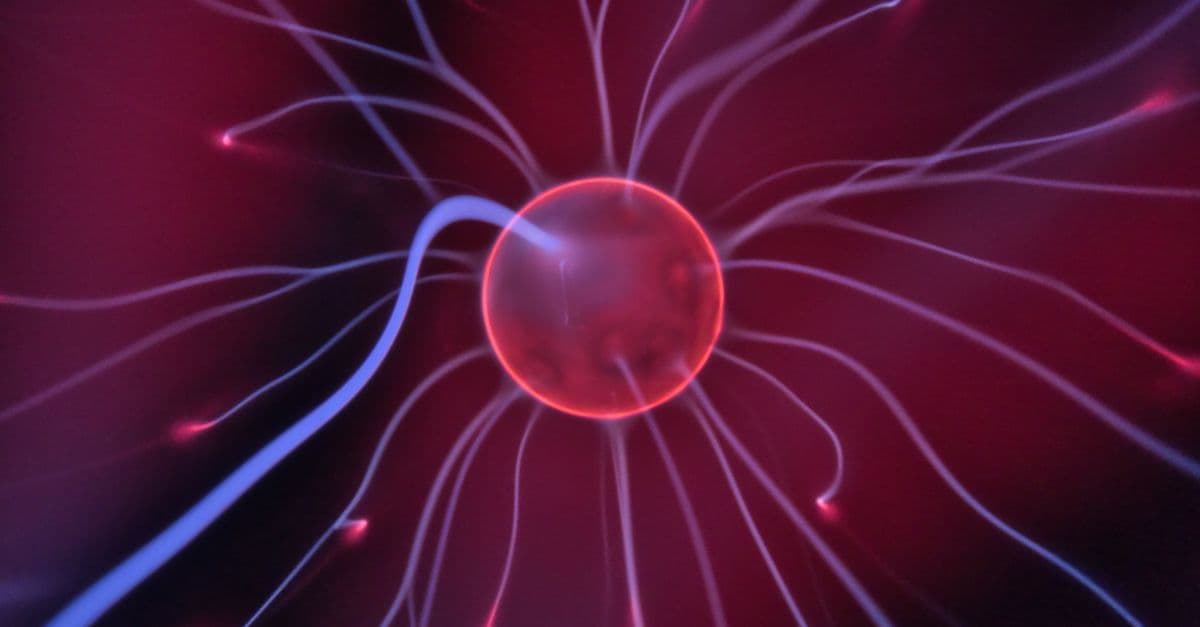
Photo: R Bude / Pexels
Nikola Tesla (1856–1943) was a Serbian-American inventor, electrical engineer, and physicist whose work on alternating current (AC) electrical systems became the foundation of the modern electrical grid. He held over 300 patents across multiple countries and pioneered radio transmission, rotating magnetic fields, and early remote control technology. He also lived a life of such spectacular eccentricity that separating the man from the mythology requires care — but the documented reality is strange enough on its own.
Quick Biography
Nikola Tesla was born on July 10, 1856, in Smiljan, a village in the Austrian Empire (present-day Croatia). His father, Milutin Tesla, was a Serbian Orthodox priest; his mother, Duka, was mechanically inventive in her own right, constructing tools and household devices despite having no formal education. Tesla later credited his visual memory and mechanical imagination to her influence.
He studied engineering at the Graz University of Technology in Austria and the Charles-Ferdinand University in Prague, though he left both without graduating. In 1882, working in Budapest, he had the insight that would define his career — the concept of the rotating magnetic field, which made AC motors possible. He sketched the design in the dirt with a stick while reciting Goethe in a city park, according to his own account.
Tesla worked briefly for the Continental Edison Company in Paris before immigrating to the United States in 1884. He arrived with four cents, a book of poems, and a letter of introduction to Thomas Edison. He worked for Edison for a year before the relationship collapsed over money and fundamentally different approaches to engineering. Edison paid him roughly $18 a week and allegedly promised a $50,000 bonus for improved DC motor designs, then dismissed the offer as a joke when Tesla completed the work. Tesla resigned.
In 1887 Tesla founded his own laboratory and in 1888 demonstrated the AC induction motor to the American Institute of Electrical Engineers. George Westinghouse purchased the patents and hired Tesla to develop them — setting the stage for the War of Currents, the battle between Westinghouse's AC and Edison's DC for dominance of the American electrical market. AC won, and modern power distribution is built on Tesla's system.
In the 1890s Tesla became obsessed with wireless power transmission. His laboratory at Colorado Springs in 1899 created artificial lightning bolts more than 30 meters long and lit 200 incandescent bulbs wirelessly from 40 kilometers away. His Wardenclyffe Tower project — a 57-meter transmission tower on Long Island intended to deliver free wireless power globally — was abandoned in 1917 when his financial backer J.P. Morgan withdrew funding. Tesla was left broke and the tower was demolished.
He spent his final years in Room 3327 of the Hotel New Yorker, in considerable poverty, feeding pigeons in Bryant Park. He died on January 7, 1943, alone in his room. He was 86.
Major Scientific Contributions
Alternating Current Electrical System
Tesla's AC induction motor and polyphase power distribution system solved the central problem of electrical transmission: direct current loses power rapidly over distance. Alternating current can be stepped up or down by transformers and transmitted over hundreds of miles with minimal loss. Every home connected to the electrical grid today runs on a version of Tesla's system. For a broader history, see how electricity was discovered and harnessed.
The AC induction motor works like a relay race between magnetic fields: the motor's stator creates a rotating magnetic field, and the rotor — made of conducting bars — is dragged along by electromagnetic induction, producing torque without any physical contact between the rotating parts. No brushes, no friction contact, no sparks. This is why AC motors last far longer than the DC motors they replaced in most industrial applications.
The Tesla Coil (1891)
The Tesla coil is a resonant transformer circuit that produces extremely high-voltage, high-frequency alternating current. Tesla used it in his research on wireless power and radio frequency transmission. Today it appears in radio technology, televisions, and as a demonstration device in physics education. The SI unit of magnetic flux density — the Tesla (T) — was named in his honor in 1960.
Radio Transmission
Tesla demonstrated wireless radio signal transmission in 1893, two years before Guglielmo Marconi's famous demonstrations. He filed patents for radio technology and was awarded U.S. patent 645,576 for a radio transmitter in 1900. Marconi was awarded the Nobel Prize for radio in 1909, but the U.S. Supreme Court ruled in 1943 — the year Tesla died — that several of Marconi's key patents were anticipated by Tesla's earlier work.
Rotating Magnetic Field
Tesla's discovery that two out-of-phase AC currents could create a rotating magnetic field was the theoretical foundation for AC motors. A rotating magnetic field produces torque without mechanical contact, making motors dramatically more efficient and reliable. This principle is in every AC motor manufactured today — in washing machines, elevators, electric vehicles, and industrial machinery.
Remote Control Technology
In 1898 Tesla demonstrated a radio-controlled boat to a skeptical audience at Madison Square Garden. He called it a "teleautomaton." The concept of remote control — a machine responding to signals without human physical contact — was so novel that some observers thought it was controlled by a trained monkey inside the hull, or by some form of telepathy. The patent for the device (U.S. patent 613,809) is the foundational document of remote control technology.
Personal Life and Relationships
Tesla never married. He stated in multiple interviews and in his own autobiography that celibacy was a deliberate choice connected to his dedication to his work, though whether this represents genuine preference, rationalization, or something more complex is impossible to determine from the surviving record. The common online claim that he was "celibate by choice because scientists must sacrifice personal life" is partly his own framing and partly mythology spun around a man who was socially isolated and spent most of his adult life in hotels.
His most significant personal attachments appear to have been professional friendships. His relationship with George Westinghouse was one of genuine mutual respect; when Westinghouse's company faced financial crisis during the economic panic of 1890s, Tesla voluntarily tore up his royalty contract — a contract that would have made him one of the wealthiest men in America — to save the company. He described this decision as motivated by loyalty, not calculation. There is no evidence he regretted it financially, though he probably should have.
His relationship with Mark Twain was a documented and warm friendship. Twain visited Tesla's laboratory regularly in the 1890s and was photographed there; Tesla used Twain's famous interest in technology as a kind of endorsement in the public press, and Twain wrote enthusiastically about Tesla's experiments. Twain reportedly spent considerable time in Tesla's lab sitting on a vibrating platform that Tesla claimed had therapeutic effects (this device was more likely a mechanical oscillator used for structural resonance experiments, not medicine, but Twain apparently found it entertaining).
Tesla's relationship with J.P. Morgan was the central financial disappointment of his life. Morgan invested $150,000 in the Wardenclyffe Tower on the understanding it would be a wireless communications system — comparable to the transatlantic radio station Marconi was building. When Tesla revealed the true ambition (free global power transmission with no metering mechanism), Morgan saw no business model and withdrew support. Tesla spent years writing increasingly desperate letters seeking new funding; none materialized. The correspondence between Tesla and Morgan is held by the Morgan Library in New York and makes for difficult reading: a brilliant engineer reduced to pleading with a financier who had made a rational business decision.
In his final years at the Hotel New Yorker, Tesla's primary social relationship was with the hotel staff, who brought him warm milk and honey and maintained his room at his precise specifications. He tipped generously when he had money and not at all when he did not, and the staff tolerated his pigeons and his eccentricities with what appears to have been genuine affection.
Lesser-Known Scientific Work
The Earthquake Machine: Real Mechanism, Mythologized Claims
In 1898 Tesla patented a mechanical oscillator — a steam-powered device that produced a rhythmic mechanical pulse (U.S. patent 514,169). He claimed that by tuning the oscillator to a building's resonant frequency, he could cause it to shake and eventually collapse. The story that he nearly brought down a Manhattan city block with this device is almost certainly apocryphal, but the underlying physics is real: mechanical resonance can destroy structures tuned to a specific frequency (the Tacoma Narrows Bridge collapse in 1940 being the canonical example). Tesla's actual device was a precision oscillator useful for generating controlled vibrations in laboratory settings, not a weapon.
X-Ray Research
Tesla conducted significant early research on X-rays independently of Wilhelm Röntgen, who announced the discovery in December 1895. Tesla had been conducting experiments with Crookes tubes (vacuum tubes that accelerate electrons) and had noticed fogged photographic plates near his apparatus — which he documented but did not immediately connect to a new form of radiation. After Röntgen's announcement he published several papers on his own X-ray experiments and obtained some of the clearest early X-ray images, including one of the human hand. His laboratory fire of 1895 — which destroyed much of his equipment and records — meant that his priority claim could not be fully substantiated.
Early Fluorescent Lighting
Before Edison's incandescent lamp became standard, Tesla experimented extensively with phosphorescent and fluorescent lighting systems using high-frequency currents. He demonstrated wireless fluorescent lighting in 1891 — tubes that lit without any electrical connection, simply by being held near his Tesla coil. This was a demonstration of his wireless power concept as much as a lighting technology. The modern fluorescent tube operates on different principles, but Tesla's demonstrations established that high-frequency electromagnetic fields could excite luminescent gases.
Lesser-Known Habits and Quirks
He Fell in Love With a Pigeon
This is perhaps the most widely reported and most easily verified of Tesla's eccentricities. Tesla regularly fed pigeons in Bryant Park and on the windowsills of his hotel room. Among them he became deeply attached to one particular white female pigeon. In a 1919 account published in Electrical Experimenter magazine — Tesla's own words — he described the pigeon as returning to him whenever he called, and experiencing a profound connection with it. When the pigeon became ill, he nursed it in his room, rigging special lighting to keep it warm. When she died, he wrote: "I knew my life's work was finished." He was then 63 years old. This account is in Tesla's own autobiographical writings, not second-hand mythology.
Rooms Divisible by 3
Tesla's obsessive relationship with the number 3 and, more broadly, divisibility by 3 is documented in multiple contemporary accounts and in his own memoir My Inventions (1919). He would walk around a block three times before entering a building. He requested hotel rooms only if the room number was divisible by 3 (his long-term residence at the Hotel New Yorker was Room 3327 — divisible by 3). He calculated the cubic volume of his food before eating it and estimated the mass of soup bowls before he would use them. He stacked napkins in piles of 18. These behaviors are consistent across accounts from hotel staff, colleagues, and his own writing.
He Claimed to Need Only Two Hours of Sleep
Tesla repeatedly stated he slept only two hours per night, supplemented occasionally by brief naps. Contemporaries were skeptical, and modern sleep researchers would be too — sustained two-hour sleep schedules produce measurable cognitive decline. The more accurate picture, from accounts of colleagues who worked with him, is that Tesla worked in intense multi-day bursts with minimal sleep during periods of creative excitement, then recovered with longer sleep periods afterward. His self-reported figure was almost certainly an exaggeration or a reflection of the bursts rather than sustained practice.
He Despised Pearl Earrings
Tesla had a documented strong aversion to pearl jewelry — specifically earrings — to the point that he reportedly sent his secretary home when she arrived wearing them. He was otherwise fastidious and formal in his dress preferences and expected the same from people in his presence. The pearl aversion fits within a broader pattern of sensory sensitivity that Tesla described in his memoir: as a child he was overwhelmed by certain sounds, light frequencies, and textures. He found the touch of hair deeply unpleasant and could not bear to handle round objects he found "slippery."
He Could Visualize Engineering Designs Completely in His Head
Tesla claimed — and this is supported by the quality of his patents and the accounts of colleagues — that he designed machines entirely in his mind before touching any physical materials. He said he would visualize a device, run it mentally for weeks, mentally inspect every component for wear and failure, and only then build the physical prototype. His 1919 memoir states: "I do not rush into actual work. When I get an idea, I start at once building it up in my imagination." Engineers who worked with him confirmed that he would describe mechanical specifications from memory with a precision that matched final blueprints.
The Wardenclyffe Financial Collapse
Tesla's financial relationship with J.P. Morgan reveals both his brilliance and his commercial naivety. Morgan funded the Wardenclyffe Tower project on the understanding it would be a wireless communications system. When Tesla revealed his actual goal — free global wireless power transmission — Morgan reportedly asked the crucial investor's question: "If anyone can draw power from anywhere in the world, where do I put the meter?" He stopped funding immediately. Tesla had apparently not considered the revenue model for the central concept of his life's greatest project. The tower was sold for unpaid taxes and demolished in 1917.
He Memorized Entire Books and Spoke Eight Languages
Tesla had a photographic or near-photographic memory that he described as both a gift and a burden. He memorized entire books in Serbian, German, French, Hungarian, English, Czech, and Latin. He claimed his visual memory was so vivid that he sometimes confused memories with present experience. He memorized Goethe's Faust in the original German and could recite extended passages on demand. This account appears in My Inventions and is corroborated by contemporaries.
He Ate Alone and Had a Precise Meal Ritual
Tesla dined almost exclusively alone, always at Delmonico's restaurant in New York and later at the Hotel New Yorker restaurant. He required a stack of exactly 18 napkins at each meal, used them one by one to polish his silverware and glasses, and returned them all folded. He ate in a strict sequence — soup, then a specific meat, then honey — and from about 1920 onwards subsisted almost entirely on vegetable juices, warm milk, honey, and occasional vegetable broth. He weighed each portion, estimated its cubic volume, and ate in silence. Hotel staff confirmed these behaviors remained consistent across decades.
Famous Quotes
"The present is theirs; the future, for which I really worked, is mine." From an interview given late in his life, expressing his sense that his work on wireless power and global energy transmission would eventually be vindicated — a feeling that was equal parts genuine vision and rationalization for commercial failure.
"If you want to find the secrets of the universe, think in terms of energy, frequency and vibration." Widely attributed to Tesla. The precise document source is not firmly established, but it is consistent with his documented thinking and has been cited in numerous Tesla secondary sources.
"I don't care that they stole my idea. I care that they don't have any of their own." Attributed to Tesla, likely referring to the disputes with Edison and Marconi. The precise provenance is difficult to verify, but the sentiment matches documented statements.
"Of all things, I liked books best." From My Inventions (1919). Tesla described books as his primary companion through childhood and his most reliable refuge during periods of crisis.
Legacy
Tesla's legacy was substantially rehabilitated in the 20th century after decades of underappreciation. The modern AC power grid is his most direct legacy — it delivers electricity to over 4 billion people. Radio, remote control technology, and early concepts of wireless communication all pass through Tesla's patent portfolio.
In popular culture, Tesla became a symbol of the unappreciated visionary — which is partly accurate and partly mythology. He was genuinely cheated by investors and scooped on priority for radio transmission. He was also a poor businessman who made promises he could not keep and alienated financial backers with shifting project goals.
The company that has done the most to rehabilitate his name — Tesla Motors, founded in 2003 — chose it precisely to invoke the AC induction motor at the heart of its electric vehicles. Every Tesla electric car uses a version of the rotating magnetic field principle Tesla sketched in a Budapest park in 1882. For the science behind how electricity enables such systems, see the science of Tesla's wireless electricity experiments.
FAQ
Q: Did Tesla really have a feud with Edison? Yes, and it was real on both sides. Edison publicly demonstrated that AC electricity could kill animals in an attempt to discredit AC power's safety — including the electrocution of an elephant named Topsy in 1903, though Edison's direct involvement in that specific event is disputed by historians. Tesla found Edison's empirical approach without theoretical grounding exasperating; Edison found Tesla's visionary projects commercially unworkable. Both assessments were partly correct.
Q: Did Tesla invent the radio or did Marconi? Both made foundational contributions. Tesla demonstrated wireless signal transmission in 1893 and held relevant patents from 1900. Marconi transmitted across the Atlantic in 1901 and received the Nobel Prize in 1909. The U.S. Supreme Court ruled in 1943 that key Marconi patents were invalid because Tesla had anticipated them. Most historians credit both men while acknowledging Tesla's chronological priority on the underlying technology.
Q: Was Tesla's wireless power transmission idea ever proven to work? At small scale, yes. Tesla demonstrated wireless power transfer to light 200 bulbs at 40 kilometers in Colorado Springs (1899). The physics is sound. The challenge is efficiency — broadcasting power in all directions wastes most of it. Modern wireless charging technology uses focused electromagnetic fields over short distances, which is a different application of the same principle.
Q: Why did Tesla die in poverty despite his inventions? Tesla signed away his AC motor royalties to Westinghouse during a financial crisis — voluntarily, to help the company survive. His later projects were poorly funded, overpromised, and delivered late or never. He had no head for business, no interest in accumulating money, and a spectacular ability to alienate the investors he needed.
Q: Is the number 3 obsession real or exaggerated? The behaviors Tesla describes in My Inventions — his own 1919 memoir — are consistent with what would now be described as obsessive-compulsive behaviors. The pigeon relationship, the number 3 rituals, the sensory sensitivities, and the counting behaviors are all mentioned in primary sources. The more dramatic iterations circulating online (he calculated the volume of every meal to the cubic centimeter) are embellished versions of documented behavior.
Q: Was Tesla celibate by choice? Tesla stated that he chose celibacy to focus on his work, and this statement appears in his memoir and interviews. Whether this represents genuine preference, social difficulty, or post-hoc rationalization is impossible to determine. Historians note that Tesla spent most of his adult life in hotels without close personal relationships of any kind, which may reflect temperament as much as conscious choice. The claim that celibacy is scientifically beneficial — which Tesla sometimes implied — has no scientific support.
Q: What happened to Tesla's papers after he died? When Tesla died in his hotel room in 1943, the U.S. Office of Alien Property seized his papers and effects, citing wartime national security concerns. His technical documents were reviewed by scientists including John G. Trump (an MIT physicist) who concluded they contained no practical weapons applications. The papers were later returned to Tesla's nephew Sava Kosanovic, and most of the scientific documents are now held by the Nikola Tesla Museum in Belgrade.
Q: Is Tesla's "earthquake machine" real? The mechanical oscillator Tesla patented in 1898 (U.S. patent 514,169) is real and generates resonant vibrations. The story that he nearly shook down a Manhattan city block is almost certainly apocryphal — no contemporary news accounts record such an event, and Tesla was known to embellish his experiments in interviews. The underlying physics of mechanical resonance is genuine, but the dramatic version circulating online far exceeds what the device could plausibly do.
Sources
- Tesla, Nikola. My Inventions: The Autobiography of Nikola Tesla. Electrical Experimenter, 1919. Reprinted by Cosimo Classics, 2007.
- Cheney, Margaret. Tesla: Man Out of Time. Prentice Hall, 1981.
- Seifer, Marc J. Wizard: The Life and Times of Nikola Tesla. Birch Lane Press, 1996.
- Carlson, W. Bernard. Tesla: Inventor of the Electrical Age. Princeton University Press, 2013.
- U.S. Supreme Court. Marconi Wireless Telegraph Co. of America v. United States, 320 U.S. 1 (1943).
- Tesla Museum, Belgrade. https://tesla-museum.org/
- Morgan Library and Museum, New York. Tesla-Morgan Correspondence.
Follow new articles
Add SciHub101 to your feed reader to see new science and technology stories.
About the Author
SciHub101 is an independent science and technology publication founded and edited by Buğra Sözeri, a software engineer and app developer based in Türkiye. AI tools assist with drafting and research. Source documentation in the existing archive is uneven, and articles are being reviewed and corrected. The Editorial Team byline identifies editorial responsibility; it does not certify specialist or independent human review. Where we compare products, anything built by our own team is labelled as such — see the editorial guidelines and About page for how corrections and disclosures work.
Related Articles
Richard Feynman: The Bongo-Playing Physicist Who Cracked Safes at Los Alamos
Richard Feynman's biography, quantum electrodynamics, and verified quirks: safecracking at the bomb lab, bongo drums in strip clubs, learning Portuguese on a whim.
Niels Bohr: The Atomic Model, the Horseshoe, and the Gold Hidden From Nazis
Niels Bohr built the first quantum atomic model, founded the Copenhagen interpretation, and smuggled Nobel gold past the Nazis dissolved in acid. His verified biography.
Thomas Edison: The Napping Inventor Who Tested His Guests With Soup
Thomas Edison's life, verified quirks, and scientific legacy: steel-ball naps, soup job interviews, the AC/DC war, and what he actually invented.
Nikola Tesla: The Visionary Who Rewired the World
Tesla's alternating current system powers every home on Earth today — yet he died broke and largely forgotten. Here's the full story.
Claude Shannon: The Bell Labs Tinkerer Who Invented Information
Claude Shannon founded information theory in 1948, proved Boolean algebra runs circuits in 1937, built a maze-solving mouse, and juggled on a unicycle through Bell Labs hallways.
Ernest Rutherford: The New Zealander Who Split the Atom
Ernest Rutherford discovered the atomic nucleus, named alpha and beta radiation, and mentored 11 future Nobel laureates. His biography, gold foil experiment, and legacy.