Nikola Tesla: The Visionary Who Rewired the World
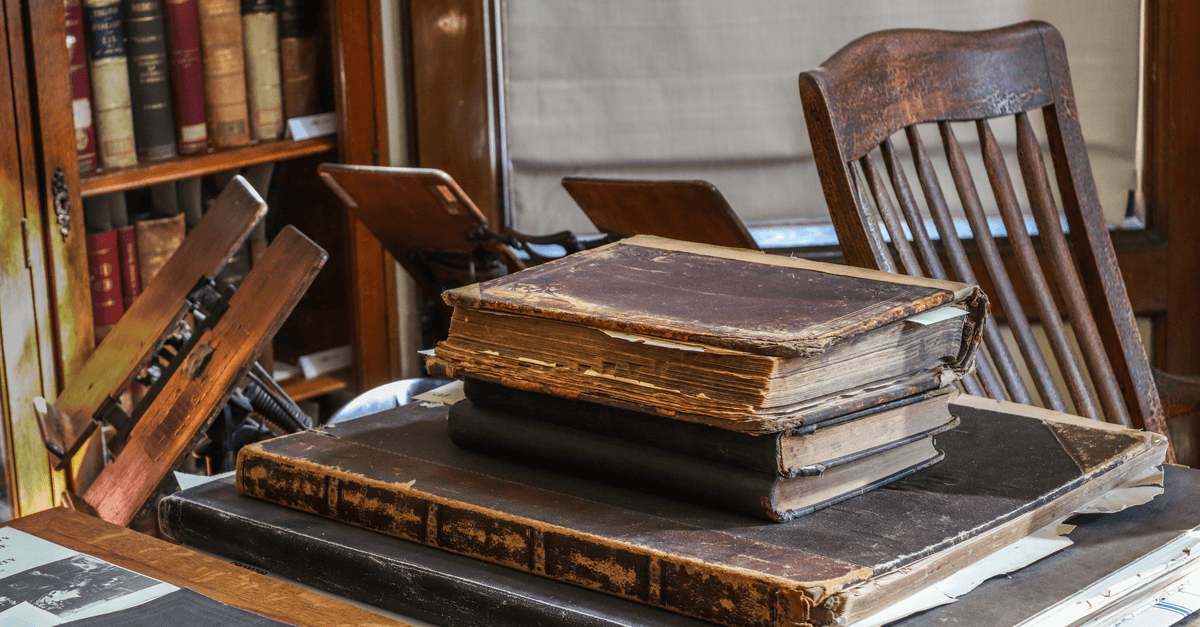
Photo: Tyler Mascola / Pexels
In the summer of 1884, a 28-year-old Serbian engineer stepped off a boat in New York City with four cents in his pocket, a letter of recommendation, and a head full of ideas that would reshape civilization. His name was Nikola Tesla, and he was about to change everything — though the world would take decades to fully recognize it.
Early Life and the Making of a Mind
Nikola Tesla was born in 1856 in Smiljan, a village in what is now Croatia. His father was a Serbian Orthodox priest, his mother an inventive woman who, despite having no formal education, designed household appliances and memorized epic poetry. Tesla often credited her as his first inspiration.
He was an unusual child — prone to vivid visions, capable of performing complex calculations entirely in his head, and deeply curious about electrical phenomena. A childhood brush with death from cholera left him bedridden for months, and he bargained with his father: if he recovered, he'd be allowed to study engineering instead of joining the clergy. He recovered. He studied engineering.
At the Graz University of Technology in Austria, Tesla became fixated on a problem that was stumping every electrical engineer of his era: the inefficiency of direct current (DC) motors. He argued with his professor, who said Tesla's ideas about alternating current were "impractical." The professor wasn't the last person to underestimate him.
After working for a telephone company in Budapest and then for Thomas Edison's operation in Paris, Tesla made the crossing to America. The letter in his pocket was from a colleague to Edison himself: "I know two great men and you are one of them. The other is this young man."
The War of Currents
Edison hired Tesla almost immediately, but the collaboration was short-lived. Tesla proposed replacing Edison's DC system — which required a power station every mile to avoid energy loss — with his alternating current design, which could transmit electricity over vast distances. Edison, who had enormous financial stakes in DC infrastructure, wasn't interested.
There are competing accounts of what followed. Tesla claimed Edison promised him $50,000 to redesign his DC generators, and then laughed it off as an "American joke" when Tesla asked to be paid. Edison's defenders dispute this. Either way, Tesla resigned in 1885 and spent a humiliating year digging ditches to survive.
His salvation came through inventor George Westinghouse, who recognized the commercial potential of AC power and licensed Tesla's patents. What followed was the "War of Currents" — a fierce, often underhanded battle between Edison's DC empire and Westinghouse's AC system. Edison's team publicly electrocuted animals with AC current to demonstrate its dangers. They lobbied to have AC used in the electric chair, hoping to brand it "the Westinghouse current."
The war ended decisively in 1893, when Westinghouse (using Tesla's patents) lit the World's Columbian Exposition in Chicago with 100,000 AC lamps. The following year, Tesla and Westinghouse won the contract to harness Niagara Falls — the first major hydroelectric power station. AC had won. Every electrical outlet in your home carries Tesla's signature.
The Key Discoveries: More Than Just AC
Tesla's contributions go far beyond the alternating current motor, though that alone would cement his place in history.
The Rotating Magnetic Field (1887): This was Tesla's central insight — that by running two alternating currents out of phase with each other, you could create a rotating magnetic field that would spin a motor without physical contact between the moving parts. It sounds abstract, but it was the conceptual breakthrough that made AC motors practical. The moment of insight reportedly came during a walk in a Budapest park in 1882, when Tesla used a stick to sketch the concept in the dirt.
The Tesla Coil (1891): A resonant transformer circuit that produces high-voltage, high-frequency alternating current. Tesla used it to produce wireless electrical lighting — lighting bulbs at a distance without wires, decades before modern wireless technology. The coil remains the basis of radio tuning circuits and is still used in radio and television sets.
Radio Transmission: Tesla demonstrated wireless radio transmission in 1893, a full two years before Guglielmo Marconi's famous 1895 experiments. The U.S. Supreme Court finally recognized Tesla's radio patents in 1943 — a few months after his death.
The Wardenclyffe Tower (1901–1917): Tesla's most ambitious — and Eventually, tragic — project. He secured funding from J.P. Morgan to build a global wireless communication and energy transmission system on Long Island. Morgan pulled the funding when it became clear Tesla wasn't just building a communication tower but a free energy transmitter. The tower was demolished for scrap during World War I.
Why It Was Revolutionary
What set Tesla apart was not just technical cleverness but a fundamentally different way of thinking about electricity. Edison's approach was empirical and iterative — try ten thousand things and find what works. Tesla's approach was conceptual — solve the problem in your mind first, run mental simulations, then build only when you're certain.
His AC system made long-distance electrical grids possible. Without it, electrification would have been limited to dense urban cores. The rural electrification that transformed agriculture, healthcare, and quality of life across the 20th century rests on Tesla's foundations.
His radio work laid the conceptual groundwork for wireless communication. And the Tesla coil directly influenced the development of early radar and modern wireless charging systems.
Legacy and Impact Today
Tesla died alone in a New York hotel room in January 1943, deeply in debt, having signed away his patents decades earlier and received almost none of the financial rewards of his inventions. He had spent his final years feeding pigeons in Bryant Park, one of his few consistent pleasures.
The irony is that his work is more present today than ever. Electric motors based on his rotating magnetic field design power everything from factory floors to electric vehicles — the Tesla car company took his name because its motor uses his AC induction design. Modern power grids are alternating current systems. Wireless charging pads use resonant inductive coupling, a principle Tesla pioneered.
In 1960, the international scientific community named the SI unit of magnetic flux density the "tesla" — a recognition that came too late for the man himself but acknowledges that his work underpins modern electromagnetism.
The story of Tesla is also a cautionary tale about genius in collision with commerce. He was a difficult personality — obsessive, sometimes paranoid, prone to feuds — but also genuinely ahead of his time. His Wardenclyffe vision of freely transmitted global energy was not technically insane; it was financially untenable. The difference matters.
Key Takeaways
- Tesla's AC power system won the "War of Currents" against Edison's DC and became the global standard for electrical grids.
- His key insight — the rotating magnetic field — came during a moment of mental visualization, illustrating how conceptual thinking can precede physical experiment.
- He demonstrated radio transmission before Marconi but received no recognition until after his death.
- The Tesla coil anticipated modern wireless technology by over a century.
- Tesla died penniless despite his work powering modern civilization; his story raises lasting questions about how societies recognize and reward inventors.
Tesla's Abandoned and Speculative Projects
Beyond his major achievements, Tesla pursued several ambitious ventures that never reached fruition or were later abandoned, yet reveal his innovative thinking:
The Wireless Transmission of Power: Tesla's most speculative idea was that electrical energy could be transmitted through the air or Earth itself without wires. While the Wardenclyffe Tower project failed to demonstrate this practically, modern wireless power transfer (used in cell phone charging pads) validates some of Tesla's conceptual approach, though through different mechanisms than he envisioned.
The Earthquake Machine (Oscillator): Tesla claimed to have invented a mechanical oscillator that could generate powerful vibrations. Stories of him claiming he could "split the Earth" with it are largely mythologized, but the oscillator demonstrated principles of resonant frequency that later influenced seismic measurement technology.
The Death Ray (Particle Beam Weapon): In his later years, Tesla claimed to have conceptualized a directed particle beam weapon. While never built, the idea preceded modern particle accelerator research by decades. His conceptual framework demonstrated intuition about electromagnetic phenomena ahead of his era.
Source: IEEE Proceedings (2012) — "The Engineering Legacy of Nikola Tesla"
Tesla's Methods and How They Differ from Modern Innovation
Tesla's approach to problem-solving was distinctly different from the trial-and-error methodology that dominated his era:
Visualization and Mental Simulation: Tesla claimed he could imagine machines in complete detail, "see" them running, and predict outcomes entirely within his mind before building prototypes. Modern cognitive science has validated that spatial visualization and mental simulation are genuine cognitive abilities, though Tesla's proficiency seems to have been exceptional.
Conceptual First, Empirical Second: Rather than Edison's approach of trying thousands of materials and designs, Tesla solved problems conceptually first, then built only once he understood the principles. This is now recognized as superior to pure trial-and-error in complex engineering.
Documentation Weakness: Ironically, Tesla was less systematic about documenting his work than Edison. Many of Tesla's ideas exist only in notebooks and scattered records, making full assessment of his contributions difficult.
Frequently Asked Questions
Q: Did Tesla really invent radio before Marconi?
A: Tesla publicly demonstrated wireless radio transmission in 1893, and the U.S. Supreme Court ruled in 1943 that his radio patents predated Marconi's. Marconi received the Nobel Prize in 1909, largely based on commercialization rather than invention priority. Recognition was delayed but eventually came — decades after both men died.
Q: Why did Tesla die broke if his inventions were so valuable?
A: Tesla was a superior inventor but poor businessman. He sold key patents to Westinghouse below market value during a financial crisis to help the company survive. He poured millions into speculative projects like the Wardenclyffe Tower that never generated revenue. Poor financial decisions combined with inability to commercialize left him vulnerable despite his genius.
Q: What is the Tesla coil and is it still used today?
A: A Tesla coil is a high-frequency resonant transformer producing dramatic electrical arcs. Beyond its theatrical displays, the underlying principles are used in radio tuning circuits, neon and fluorescent lighting systems, and modern wireless charging technology. The physics Tesla discovered remains directly applicable.
Q: How does Tesla's work connect to modern electric vehicles?
A: The Tesla car company (founded 2003) named itself after him specifically because its AC induction motor is based directly on his 1887 patent. The rotating magnetic field principle Tesla visualized in Budapest in 1882 drives millions of electric vehicle motors today, making it one of his most valuable legacies.
Q: Was Tesla genuinely ahead of his time or is that narrative overstated?
A: Both true. Within electrical engineering, Tesla's contributions were never forgotten by professionals — his work remained in textbooks. But public recognition was delayed until late 20th century. Some claims about Tesla (the "death ray," free energy transmission) are myths, but his core innovations (AC motors, wireless transmission concepts) were genuinely visionary.
Q: Why don't most people know about Tesla if he was so important?
A: Edison was more successfully commercialized and celebrated during his lifetime and for decades after. Edison's reputation was built on public relations and commercialization; Tesla's diffidence and focus on pure innovation left him less visible. The historical record has corrected this significantly since the 1990s, but popular culture still underrepresents Tesla relative to his contributions.
The Physics of Tesla's Rotating Magnetic Field
Understanding why Tesla's rotating magnetic field was revolutionary requires understanding the electrical engineering of his time:
Edison's DC problem: Direct current flows in one direction. To make a motor spin, you need mechanical switches (commutators) to reverse direction repeatedly. This approach is:
- Mechanically complex (brushes, commutators wear out)
- Energy-inefficient (brush resistance wastes ~10-20% as heat)
- Limited in power transmission distance (resistance causes ~10% loss per mile)
Tesla's AC solution: Alternating current naturally reverses direction 60 times per second (60 Hz in US). If you arrange motor coils correctly, the reversing current creates a rotating magnetic field without any mechanical switching.
The mathematics: Two AC currents 90 degrees out of phase, when applied to coils 90 degrees apart in space, create a magnetic field rotating at constant speed. This field pulls the rotor along magnetically, no brushes needed.
Modern implications:
- AC motors are 90%+ efficient (vs. 80% for brushed DC motors)
- AC transmission can carry power over hundreds of kilometers (DC loses ~50%+ over the same distance)
- AC systems are scalable (power stations can be anywhere; DC required local generation)
This single insight — the rotating magnetic field — enabled the modern electrical grid. Without it, electricity would remain confined to dense cities with local power stations. Rural electrification wouldn't have been economically viable.
Source: Caltech Engineering Archives (2018) — "The Physics and History of Rotating Magnetic Fields"
Tesla vs. Edison: Two Models of Innovation
The Edison-Tesla comparison, while often simplified into myth, reveals two genuinely different approaches to engineering that remain relevant today:
Edison's empirical method:
- Methodical testing of thousands of materials and designs
- Documented results meticulously
- Focus on commercialization and market implementation
- Successful businessperson; built companies and acquired wealth
- Advantages: systematic, teachable, scalable as a research approach
- Weaknesses: slow for conceptually difficult problems; expensive in materials and time
Tesla's conceptual method:
- Solved problems mentally before building
- Conducted experiments to verify predictions, not to explore
- Focus on fundamental principles and beauty of designs
- Poor businessman; repeatedly underestimated commercial value
- Advantages: rapid for theoretical breakthroughs; elegant, efficient designs
- Weaknesses: requires exceptional intuition; difficult to teach; poor documentation
Modern parallel: This resembles the distinction between data-driven development (test everything, extract insight) and first-principles engineering (understand fundamentals, derive solutions). Tech companies like SpaceX (Elon Musk) tend toward first-principles; tech companies like Amazon tend toward empirical testing.
Neither approach is inherently superior. Edison's method works well for optimizing existing technologies. Tesla's method works well for conceptual breakthroughs. Most modern innovation benefits from blending both.
Source: Carlson, W. B. (2013) — "Tesla: Inventor of the Electrical Age" (comparative analysis of Edison and Tesla methods)
Modern Applications of Tesla's Principles
Tesla is often relegated to history, but his specific discoveries remain foundational to modern technology:
AC induction motors: Every induction motor in existence uses Tesla's 1887 rotating magnetic field principle. Applications include:
- Manufacturing equipment (conveyor belts, pumps, compressors)
- Household appliances (fans, washers, dryers)
- Electric vehicles (Tesla's EV motor uses nearly identical principles to Tesla's 1887 design)
- Industrial machinery
- HVAC systems
Induction motors represent the single most common application of electrical power on Earth.
Wireless power transfer: Modern wireless charging pads (smartphones, toothbrushes, electric vehicles) use resonant inductive coupling — a principle Tesla pioneered with the Tesla coil. Two coils tuned to the same resonant frequency can transfer power across distance without direct contact.
Radio and communication systems: Tesla's demonstration of wireless transmission was the conceptual foundation for radio, cellular networks, WiFi, and modern wireless systems. While others (Marconi, Hertz, Maxwell) contributed, Tesla's understanding of resonant circuits and frequency tuning was instrumental.
Magnetic resonance imaging (MRI): Modern MRI machines create rotating magnetic fields to manipulate nuclear spins — using principles Tesla understood in the 1890s, though applied to quantum phenomena he couldn't have anticipated.
Power distribution systems: Global electrical grids distributing AC power at high voltage and low current (to minimize transmission losses) over vast distances follow Tesla's vision. Modern voltage step-up transformers (another Tesla contribution) enable efficient transmission.
These applications touch billions of people daily, yet most users don't realize they're using 130-year-old technology perfected by a man who died in 1943.
The Psychology of Tesla: Genius and Mental Illness
Tesla's documented behaviors suggest psychological characteristics that demand serious analysis:
Obsessive-compulsive patterns: Tesla exhibited documented OCD behaviors — needing things in multiples of three, elaborate cleaning rituals, inability to touch human hair or pearls (reportedly), extreme reactions to germs.
Social isolation and misanthropy: Later in life, Tesla withdrew from social contact, spending hours alone or talking primarily to pigeons. This pattern accelerated in his 60s and 70s.
Grandiose thinking balanced with technical realism: Tesla made speculative claims about his abilities (the "death ray," unlimited energy transmission) that were partly mythologized, yet his technical work remained rigorously grounded in physics.
Hyperfocus and flow states: Tesla reportedly worked without sleep for extended periods, becoming obsessed with specific problems until solved.
Modern interpretation: Some researchers argue Tesla exhibited traits consistent with high-functioning autism spectrum disorder — exceptional focus, difficulty with social interaction, preference for technical/mechanical thinking over social reasoning, and sensory sensitivity.
Whether or not this characterization is accurate, Tesla's psychology was clearly divergent from neurotypical patterns. His genius may have been inseparable from his psychological makeup — the same wiring that enabled extraordinary visualization likely contributed to social difficulties and compulsive behaviors.
This raises important questions: How much of genius stems from neurotypical brain function pushed to extremes? How much from neurodiversity? Can society better support both exceptional talent and psychological wellbeing?
Source: Murch, Randall (2015) — "Autism and the Inventor: The Role of Neurodiversity in Creativity"
The Wardenclyffe Project: Tragedy and Triumph of Ambition
Tesla's greatest failure illuminates the tension between visionary ambition and financial reality:
The vision (1901): Tesla proposed building a global wireless communication and power transmission system using a massive tower on Long Island. The tower would transmit electrical energy wirelessly through the Earth itself — providing free energy to anyone with a receiver.
The reality: Tesla secured $150,000 in funding from J.P. Morgan. Construction began in 1901. By 1902, it became apparent that Tesla's design was truly a power transmitter (not just communication as Morgan assumed). Morgan, who had invested in conventional electrical infrastructure, withdrew funding immediately.
The failure: The incomplete tower stood for 15 years, a monument to unfulfilled ambition. During World War I, it was demolished for scrap metal.
Was it scientifically viable? This remains genuinely uncertain. Tesla understood electromagnetic theory correctly. The concept of wireless power transmission through resonant coupling is physically sound — modern wireless charging demonstrates this. However:
- The efficiency of long-distance transmission would have been extremely low
- The safety of unrestricted electromagnetic radiation was not understood
- The cost likely would have exceeded conventional electrical infrastructure
Tesla's vision was not scientifically impossible, but economically impractical and technologically premature. He was 50-100 years ahead of the infrastructure and understanding needed to implement it.
Modern parallel: SpaceX's Falcon 9 rocket (with reusable boosters) was repeatedly rejected as impossible and impractical by the aerospace industry for 15 years before SpaceX proved it worked. Sometimes ambitious ideas are ahead of their time and await the right combination of technology, economics, and talent.
The Evolution of Tesla's Public Perception
Tesla's reputation has undergone dramatic revision over the past century:
1943-1970 (Obscurity): Tesla died in 1943, largely forgotten. Most electrical engineers knew his work, but the general public had no idea who he was. Edison remained the public face of electricity.
1970-1990 (Rediscovery): Biographies (particularly John J. O'Neill's 1944 "Prodigal Genius") brought Tesla's story to academic and popular attention. Scientists began recognizing his contributions systematically.
1990-2010 (Partial Recognition): Tesla appears in history textbooks, is recognized for AC power systems. Public awareness grows but remains limited. AC/DC band gets credit for singing about him; most listeners don't understand the reference.
2010-present (Mainstream Hero): Tesla motors company catalyzes new interest. Popular culture (memes, documentaries, museum exhibits) rediscover him. He becomes a cultural icon representing visionary genius and independent thinking.
Current narrative: Tesla is now often lionized as a misunderstood genius. This corrects prior neglect, but sometimes overcorrects — attributing capabilities to Tesla he didn't possess or crediting him for work developed by others post-mortem.
The mature understanding: Tesla was genuinely visionary, genuinely brilliant, made fundamental contributions, but was also a difficult person with poor business judgment whose later speculative ideas were not scientifically grounded. He deserves recognition without mythologizing.
Lessons for Modern Innovation and Science Policy
Tesla's life offers several lessons relevant to contemporary research and innovation:
Conceptual breakthroughs require sustained focus: Tesla spent years on single problems. Modern pressure for rapid publication and quick results may undermine the kind of deep thinking his work exemplified.
Market timing matters: Tesla's AC system was revolutionary, but it succeeded because Westinghouse recognized the commercial opportunity. A brilliant idea alone is insufficient; implementation and market timing matter enormously.
Documentation and communication are essential: Tesla's poor documentation means many of his ideas are imperfectly understood. Modern scientists should learn from his weakness in this area.
Neurodiversity in innovation: If Tesla's psychological profile included autism spectrum traits, this suggests neurodivergent minds may contribute disproportionately to breakthrough innovation. Society should support such talent appropriately.
The virtue of independence: Tesla's unwillingness to compromise technical principles for commercial convenience sometimes cost him financially but preserved the integrity of his work. There's value in principled independence.
The Takeaway
Tesla was a physicist-engineer-visionary whose fundamental contributions power every electrical grid on Earth. His AC system was not merely an incremental improvement over Edison's DC — it was a conceptual revolution that made long-distance electrical transmission possible, enabling the 20th century's electrification and beyond. That a man whose work literally energizes modern civilization died penniless and largely unrecognized is a sobering commentary on how societies recognize innovation.
Yet his legacy offers hope: a century after his death, his name adorns the SI unit of magnetic flux density, powers one of the world's most valuable car companies, and increasingly represents humanity's shift toward clean electric energy. His approach to problem-solving — conceptual first, empirical second — remains a model for breakthrough innovation. History eventually recognizes genius, though often too late for the genius themselves. Understanding Tesla's life and methods offers insights into how breakthrough innovation actually occurs and how societies can better support visionary thinking.
Read next:
- How Electricity Was Discovered and Harnessed
- Michael Faraday and the Discovery of Electromagnetic Induction
- The Scientific Revolution: How Science Changed Everything
Sources:
- Carlson, W. B. (2013). Tesla: Inventor of the Electrical Age. Princeton University Press.
- Seifer, M. J. (1996). Wizard: The Life and Times of Nikola Tesla. Birch Lane Press.
- O'Neill, J. J. (1944). Prodigal Genius: The Life of Nikola Tesla. Ives Washburn.
- IEEE Global History Network. (2012). "Nikola Tesla: Visionary of the Modern Age."
- Cheney, M., & Uth, R. (1999). Tesla: Master of Lightning. Barnes & Noble.
- Hunt, I. P., & Draper, W. W. (1964). Lightning in His Hand: The Life Story of Nikola Tesla. Hawthorne Books.
Follow new articles
Add SciHub101 to your feed reader to see new science and technology stories.
About the Author
SciHub101 is an independent science and technology publication founded and edited by Buğra Sözeri, a software engineer and app developer based in Türkiye. AI tools assist with drafting and research. Source documentation in the existing archive is uneven, and articles are being reviewed and corrected. The Editorial Team byline identifies editorial responsibility; it does not certify specialist or independent human review. Where we compare products, anything built by our own team is labelled as such — see the editorial guidelines and About page for how corrections and disclosures work.
Related Articles
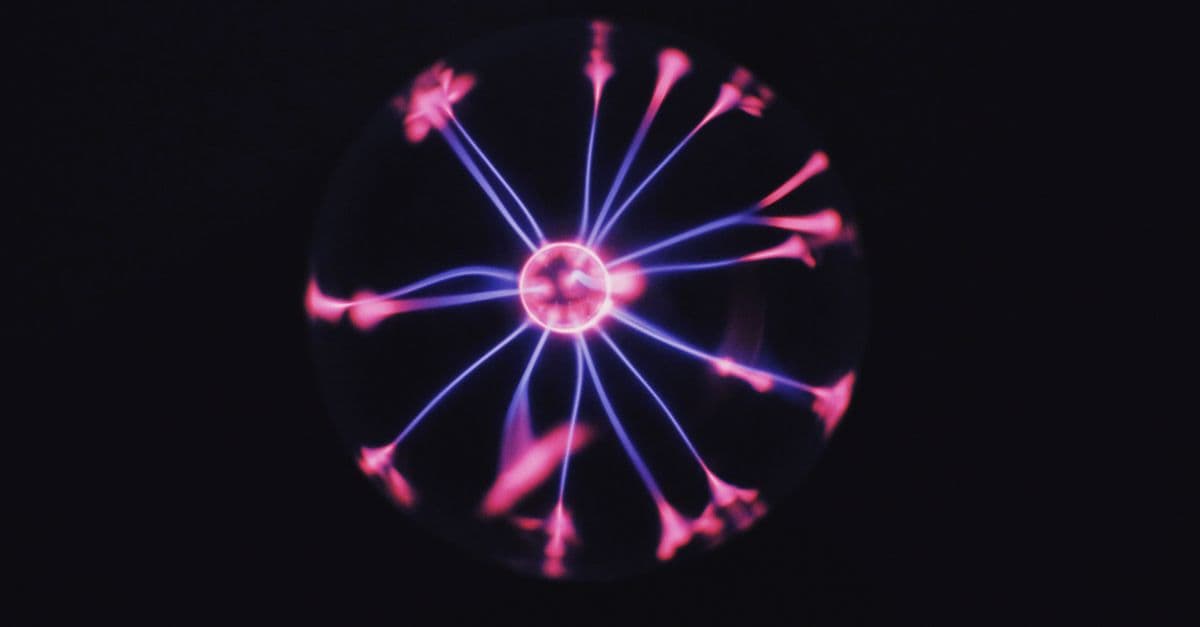
Nikola Tesla: The Quest for Wireless Electricity
Tesla tried to turn the Earth itself into a conductor and beam electricity to the whole planet without a single wire. The tower he built to do it never worked, and the physics explains exactly why.
How Machine Learning Is Accelerating Materials Discovery
AI is compressing decades of trial-and-error chemistry into weeks, helping scientists discover new compounds with unprecedented precision.
Galileo: The Night He Pointed a Telescope at Jupiter
In January 1610, Galileo saw four stars near Jupiter that moved. Within a week he understood the solar system would never be the same.
Stephen Hawking: What He Really Discovered About Black Holes
Hawking wasn't just a symbol of perseverance — he made fundamental discoveries about black holes that physicists are still trying to resolve today.
Isaac Newton: The Laws That Govern the Universe
Newton didn't just discover gravity — he invented calculus to describe it. His 18-month plague exile became the most productive retreat in science history.
Why Silk Is So Expensive — The Ancient Biology Behind the World's Most Coveted Fabric
Silk comes from a caterpillar that spins a single filament up to 1,500 metres long, eats almost nothing but mulberry leaves and can no longer live in the wild. That biology, not marketing, is why silk costs what it does.