How the Scientific Revolution Changed Everything
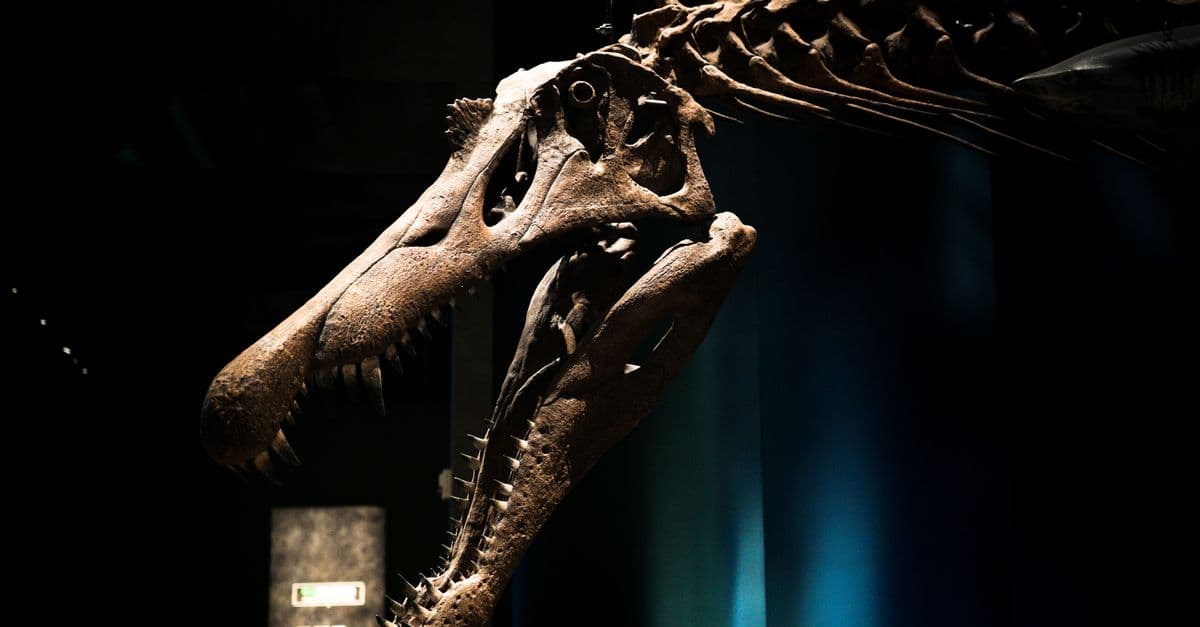
Photo: Tima Miroshnichenko / Pexels
In 1543, two books appeared that asked readers to distrust their ancestors. One moved the Earth out of the center of the universe. The other opened the human body and found that the ancient anatomy texts were wrong in hundreds of places. By 1687, Isaac Newton had shown that one mathematical law governs both a falling stone and the orbit of the Moon. The Scientific Revolution is that 144-year stretch, when European thinkers swapped inherited doctrine for measurement, experiment, and proof. What follows traces who did what, what they got wrong, and why historians still argue about the word "revolution."
Key takeaways
- The Scientific Revolution (conventionally 1543 to 1687) replaced Greek and medieval authority with observation, experiment, and mathematical reasoning
- Copernicus's 1543 model put the Sun near the center but was no more accurate than Ptolemy's, because it still relied on circles and epicycles
- Tycho Brahe's precise data and Kepler's ellipses did the real work of making heliocentrism accurate
- Galileo's telescope and experiments supplied evidence that could be checked by anyone with the right instrument
- Newton's Principia (1687) derived Kepler's laws from one gravitational law, joining terrestrial and celestial physics
- Bacon and Descartes offered rival recipes for method; working science ended up borrowing from both
What counted as knowledge before 1543
Medieval European natural philosophy rested on a short list of authorities. For the heavens, that meant Aristotle (384 to 322 BCE) and Ptolemy, who worked in Alexandria in the second century CE. For the body, it meant Galen. Their texts reached Latin Europe through centuries of translation from Greek and Arabic, a transfer the historian Edward Grant has called "probably the greatest intellectual expropriation of knowledge" in history. Universities taught from those books the way a law school teaches from statutes.
The Aristotelian picture was coherent. Earth sat motionless at the center. The Moon, Sun, planets, and stars rode on nested crystalline spheres, and everything above the Moon was made of an unchanging fifth element. Heavy things fell because their natural place was the center. The Church had woven this cosmos into its theology, so doubting the physics could feel like doubting the architecture of creation.
It also worked, in a practical sense. Ptolemy's astronomical model predicted where planets would appear using circles riding on circles (epicycles, small loops that let a planet seem to slow, stop, and run backward against the stars). Think of a legacy codebase that has been patched for 1,400 years. Every time an observation disagreed with the model, someone added another patch, and the program kept returning usable answers. Nobody had a strong reason to rewrite it until the patches began to cost more than the rewrite.
Cracks had appeared before 1543. Printing, introduced in Europe in the mid-15th century (see the invention of the printing press), meant scholars could hold identical copies of the same text and compare notes. Wikipedia's summary of the period notes that print "ended the manuscript culture of the Middle Ages," and that the discovery of the Americas, which appear nowhere on Ptolemy's maps, chipped away at his reputation as the final word on geography. Aristotle's own works were still revered, but the habit of checking them against reality was spreading.
Two books in 1543: Copernicus and Vesalius
Nicolaus Copernicus, born February 19, 1473, was a church administrator who studied astronomy on the side. He thought Ptolemy's machinery was inelegant, so he rebuilt the system with the Sun near the center and the Earth as one planet among six, spinning daily and circling the Sun yearly. A first printed summary of the idea, the Narratio prima by his student Rheticus, appeared in Gdansk in 1540. The full work, De revolutionibus orbium coelestium, came out in 1543, and the Stanford Encyclopedia of Philosophy records that he held a finished copy shortly before his death on May 24 of that year.
Here is the part popular accounts skip. Copernicus did not predict planetary positions better than Ptolemy. He relied heavily on Ptolemy's own observations, kept circular orbits, and still needed epicycle-style circles, swapping Ptolemy's equant (an off-center point used to even out a planet's apparent speed) for extra small circles. His tables, published later as the Prutenic Tables, were not clearly more accurate than the older Alfonsine Tables, though they were more widely adopted. Moreover, the Sun was not truly at the center of his geometry. The center of Earth's orbit sat near the Sun, not on it.
What he did offer was structure. In his ordering, the planets run outward from the Sun by orbital period: Mercury in about 80 days, then Venus, Earth, Mars, Jupiter, and Saturn at roughly 30 years. That ordering explained why Mercury and Venus never stray far from the Sun in the sky, a fact Ptolemy's model had to assume rather than explain. Think of moving the lamp instead of the furniture: with the light source in a different spot, a whole set of odd shadows suddenly follows from one choice.
The book also carried a preface Copernicus did not write. A Lutheran minister, Andreas Osiander, who helped manage the printing, added an anonymous note saying that "these hypotheses need not be true nor even probable," presenting the model as a calculating device. Rheticus and another friend protested, and Rheticus reportedly crossed the preface out in his own copy. Copernicus plainly believed the Earth moved.
In June 1543, the same year, Andreas Vesalius, then 28, published De humani corporis fabrica in Basel. It grew out of his lectures at the University of Padua, where he broke with custom by doing dissections himself instead of letting a barber-surgeon work while a professor read from Galen. According to Wikipedia's account of the book, it ran to more than 250 illustrations and corrected about 300 of Galen's errors, including that the great vessels begin in the liver and that men have fewer ribs than women. Vesalius still kept some of Galen's mistakes, such as two different kinds of blood in veins and arteries, which shows how hard it is to unlearn a textbook.
Tycho Brahe: the data that made the next step possible
A better model needed better numbers. The Danish nobleman Tycho Brahe (1546 to 1601) spent his career building instruments and using them with unusual discipline. On November 11, 1572, he spotted a new star in Cassiopeia and showed that it had no daily parallax (the shift in apparent position you would see if it were close), which put it beyond the Moon. He published De nova stella in 1573 and coined the word "nova." In Aristotle's cosmos, the heavens were not supposed to change.
In 1577 a bright comet gave him a second blow. Tycho found that it lay far beyond the Moon and estimated an orbit that cut across the region where the supposed solid spheres would have to be. A comet cannot plow through crystal. This was evidence from the sky that the nested-sphere picture was in trouble, and it came from measurement, not argument.
With royal funding, Tycho built the observatory Uraniborg on the island of Hven, beginning in 1576, and added the underground Stjerneborg in 1584 after finding the towers too unsteady for precise work. He observed from Hven until 1597, roughly 21 years, and compiled a catalogue of about 1,000 stars. Wikipedia's summary of the research says his positions approached one arcminute of accuracy (a sixtieth of a degree), about five times better than the observations of Wilhelm of Hesse, though a later analysis puts the typical error in his final catalogue closer to 1.5 to 2 arcminutes.
Tycho did not accept Copernicus. He proposed a hybrid in which the Sun and Moon circle the Earth while the other planets circle the Sun. That model removed the crystalline spheres and matched the geometry of Copernicus's, yet it kept the Earth still. The compromise matters later, because it explains why some evidence that "disproved Ptolemy" did not by itself prove Copernicus.
Emperor Rudolf II took Tycho into imperial service, and he moved to Prague in 1599. He died there on October 24, 1601, aged 54, a year after Kepler arrived to work with him. His real legacy was the ledger he left behind.
Kepler: turning a table of numbers into ellipses
Johannes Kepler (1571 to 1630) inherited Tycho's observations, especially the long run of measurements for Mars. He wanted circles. He tried circles, then circles with off-center points, and found that his best circular fit missed Mars by a margin that Tycho's data made impossible to ignore. Kepler wrote down the mismatch as a reason to start over, not as noise to excuse.
The result, published in Astronomia Nova in 1609, was two laws. First, a planet's orbit is an ellipse with the Sun at one focus. Second, a line from the Sun to the planet sweeps out equal areas in equal times, so a planet moves faster when it is near the Sun and slower when it is far. In 1619, in Harmonice Mundi, he added a third: the square of a planet's orbital period is proportional to the cube of its average distance. You can see the laws in action in Kepler's three laws, explained, and the biography of Kepler tells the human story, including his mother's witchcraft trial.
Think of Tycho as the bookkeeper and Kepler as the auditor. The bookkeeper recorded everything with unusual care and left no theory. The auditor found that the books only balanced if you dropped a cherished assumption, the one that heavenly motion must be circular. Kepler's laws were rules of thumb with no explanation of why planets behave that way. That explanation had to wait for Newton, but the rules were accurate, and they ended the need for epicycles.
Galileo: a telescope, a method, and a trial
Galileo Galilei (1564 to 1642) approached nature with a different instinct: build a situation where the answer shows up on its own. For motion, that meant rolling balls down ramps to slow acceleration enough to measure it, an approach described in Galileo's inclined plane experiments. In The Assayer (1623) he wrote that the book of nature "is written in the language of mathematics." Aristotle had warned against treating physics as geometry; Galileo made the opposite bet.
In 1609 he turned a telescope toward the sky and recorded what he saw. The mountains and craters on the Moon made it look like a rocky world, not a polished sphere of aether. Four points of light near Jupiter changed position night to night and moved with the planet, so they were moons orbiting something other than Earth. He published the lunar and Jupiter findings in Sidereus Nuncius (Starry Messenger) in March 1610. His sunspot observations, which showed the Sun was blemished and rotating, were published later.
The phases of Venus came later in 1610. Galileo first told Kepler privately, through an anagram that protected his priority, and published the result in his 1613 Letters on Sunspots. In the Ptolemaic scheme Venus always sits between Earth and the Sun and so can never show a nearly full face. Seeing a full Venus, and a crescent, effectively ended the pure Ptolemaic model. It did not decide between Copernicus and Tycho, though, since both predict phases. Galileo's evidence was strong against one rival and merely consistent with another.
His troubles followed. In February 1616, Inquisition consultants called the Sun's stillness "foolish and absurd in philosophy, and formally heretical," and Cardinal Bellarmine told Galileo to stop teaching or defending the Copernican view. In 1632 he published his Dialogue, which defended Copernicus through three conversationalists, and put Pope Urban VIII's own arguments in the mouth of a character named Simplicio. The sale of the book was soon banned, and Galileo was tried in 1633. On June 22 of that year he was found "vehemently suspect of heresy," made to abjure, and then lived under house arrest at Arcetri, near Florence, for the rest of his life. According to the Stanford Encyclopedia of Philosophy, he kept working: his Two New Sciences was smuggled out of Italy and printed in Leiden in 1638. The famous line "Eppur si muove" (and yet it moves) has no evidence behind it.
Galileo's legacy is partly the observations and partly a style. He wrote about what could be checked, gave numbers, and invited readers to look through the tube themselves. His biography covers the personal side.
Bacon and Descartes: two recipes for method
While Galileo worked, two philosophers tried to say what the new way of knowing actually was. Francis Bacon (1561 to 1626) published Novum Organum in October 1620. It begins by cataloguing four "idols," habits of mind that distort judgment. Idols of the Tribe are errors built into human nature, such as assuming our senses report the world accurately. Idols of the Cave come from an individual's upbringing. Idols of the Market come from the imprecision of language. Idols of the Theatre are false doctrines absorbed from philosophical systems.
His remedy was what the Stanford Encyclopedia of Philosophy entry on Francis Bacon describes as eliminative induction. You build three tables, one listing cases where a phenomenon is present, one where it is absent, and one where it appears in different degrees. Then you eliminate the explanations that fail to fit. Think of a detective's whiteboard where each suspect is crossed out as the alibis come in. In his utopian New Atlantis, Bacon imagined a research institute, Salomon's House, with specialists collecting data and "interpreting nature." He died on April 9, 1626.
René Descartes (1596 to 1650) pulled in the opposite direction. His Discourse on the Method, published anonymously in French in 1637 with essays on optics, meteorology, and geometry, argued that reliable knowledge starts with doubt and builds up through clear, mathematical steps. He pictured nature as matter arranged in shapes and motions, a worldview later called mechanism. His Meditations appeared in 1641 and his Principles of Philosophy in 1644.
| Francis Bacon | René Descartes | |
|---|---|---|
| Starting point | Collect and tabulate observations | Doubt everything, find certain foundations |
| Main tool | Eliminative induction (three tables) | Deduction and mathematics |
| Key work | Novum Organum (1620) | Discourse on the Method (1637) |
| Strength | Takes data seriously | Takes structure seriously |
| Weakness | Rarely produced results on its own | Reasoning from first principles outran evidence |
| Shows up today as | Systematic experiments and controls | Mathematical models and theory |
Working science became a blend. Newton, for example, insisted that claims should be deduced from phenomena and generalized by induction, a line in which Baconian caution and Cartesian mathematics sit together. For a modern view of how the pieces fit, see the scientific method.
Opening the body: Vesalius to Harvey
Anatomy ran a parallel revolution. After Vesalius, medical students could compare a claim in a book with what lay under the knife. The gap between text and body became a standing invitation to experiment.
William Harvey used that invitation in 1628 in De Motu Cordis. The usual account was that the liver made blood continuously and the body consumed it. Harvey asked how much blood that would require. Wikipedia's summary of his argument has him estimating about two ounces leaving the heart per beat. At 72 beats per minute, that comes to roughly 540 pounds an hour, far more than a person could eat or make. The blood had to return to the heart and go around again: "There must be a motion, as it were, in a circle."
The one-way valves in veins, described by Fabricius in 1603, backed the picture. Press a vein shut with a finger, slide the finger along it, and the vein empties only in one direction. What Harvey could not see were the tiny vessels linking arteries to veins. Marcello Malpighi observed capillaries in the early 1660s, after Harvey's death. More detail on the experiments is in William Harvey's blood circulation experiments.
Harvey's argument is a template for the whole era. It used a number to test an idea, followed the number to a conclusion that felt strange, and then tied it to something anyone could verify with a finger and a vein.
Instruments and institutions: how the work became public
The period also changed the social machinery of knowledge. Instruments such as the telescope and microscope extended the senses, and the microscope's story shows how quickly Robert Hooke and Antonie van Leeuwenhoek turned a toy into a laboratory tool. Hooke's Micrographia (1665), with its large drawings of fleas and cork, helped establish that small things had structure worth studying.
Institutions made claims accountable. According to the Royal Society's history page, its first meeting took place on November 28, 1660, after a lecture at Gresham College in London. Its first charter in 1662 adopted the motto Nullius in verba, usually read as "take nobody's word for it." In 1665 Henry Oldenburg founded the Philosophical Transactions, a journal where discoveries could be registered and challenged by others. The French Academy of Sciences followed in 1666 as a government body under Colbert.
A fair analogy is a modern software project that accepts changes only through public review. A result in the Transactions worked like a submitted change: stated plainly, dated, and open to inspection. A private claim from a famous name no longer settled anything. That shift, from authority by person to authority by evidence, may matter more than any single discovery.
Newton: one law for the apple and the Moon
Isaac Newton (1643 to 1727) finished the era's central project. In 1684, Edmond Halley asked him what path a planet would follow under an inverse-square force, and Newton sent a short tract, De Motu, that November. Robert Hooke had raised related questions with Newton in 1679 and later pressed a priority claim, which helped push Newton toward a more mathematically rigorous presentation. The finished book, Philosophiae Naturalis Principia Mathematica, appeared in 1687 with the Royal Society's imprimatur. Newton chose the title in 1686, in a nod to Descartes's Principia Philosophiae, and the work has three books.
The Principia set out three laws of motion: a body stays at rest or in uniform straight-line motion unless a force acts on it, a change in motion is proportional to the force applied, and every action has an equal and opposite reaction. It added universal gravitation, a force that falls off with the square of distance. The Stanford Encyclopedia of Philosophy notes that Kepler's rules were treated as approximations until the Principia. Newton showed that a body under an inverse-square central force sweeps equal areas in equal times and moves along a conic section, which brought Kepler's laws out of gravity instead of leaving them as separate facts.
That was the synthesis. Before 1687, the heavens and the Earth followed different rules, Aristotle's ruling in one region and Kepler's in another. After it, one mathematical framework covered a cannonball and a planet. Picture an operating system that finally runs on both the desktop and the server: the same code, no special cases. The modern story of what gravity is runs on from there in what gravity is, from Newton to Einstein. The biography of Newton covers the rest of his career, and the mechanics were not fundamentally overturned until Einstein.
The apple story deserves a caveat. Early accounts of Newton noticing a falling apple come from recollections of people who knew him in old age, and the version in which an apple strikes his head is a later embellishment. The more important point is that the idea matured over years of calculation, not in a flash.
Calculus is the other famous dispute. Newton began working on his method of fluxions in 1666, but the October 1666 manuscript was not published until 1737. Gottfried Leibniz developed his own version, with the differential notation first appearing in his notebooks in 1675, and published his first paper on it in 1684. The accusations of plagiarism began in 1699, and the Royal Society's Commercium Epistolicum, largely shaped by Newton himself, followed in 1712 to 1713. Historians now agree that the two men invented calculus independently. Mathematicians still use Leibniz's notation, such as dx and the integral sign, because it is easier to manipulate.
The timeline at a glance
| Year | Event | Why it mattered |
|---|---|---|
| 1543 | Copernicus publishes De revolutionibus | Puts the Sun near the center and sets Earth in motion |
| 1543 | Vesalius publishes De humani corporis fabrica | Corrects Galen from human dissection |
| 1572 | Tycho observes a new star in Cassiopeia | Challenges the unchanging heavens |
| 1609 | Kepler's Astronomia Nova | Elliptical orbits and equal-area law |
| 1610 | Galileo's Sidereus Nuncius | Telescopic evidence against Aristotelian cosmology |
| 1620 | Bacon's Novum Organum | Systematic induction and the "idols" |
| 1628 | Harvey's De Motu Cordis | Blood circulates, shown by quantitative argument |
| 1633 | Galileo's trial and sentence | Shows the cost of challenging authority |
| 1637 | Descartes's Discourse on the Method | Doubt, deduction, and mechanism |
| 1660 | Royal Society first meets | Institutional home for experimental science |
| 1665 | Philosophical Transactions and Micrographia | Journals and the microscope enter public science |
| 1687 | Newton's Principia | One mathematical framework for Earth and sky |
Was it really a revolution?
The label is younger than the events. Wikipedia's overview of the field traces the phrase to the 18th century, when Clairaut applied "revolution" to Newton's work in 1747, and notes that Herbert Butterfield popularized it in The Origins of Modern Science, saying the period "outshines everything since the rise of Christianity." Historians still debate the start date. The conventional answer is 1543, with a few proposing Tycho's supernova in 1572, and most accounts end with the Principia in 1687.
There are good reasons for caution. The people involved did not know they were in a revolution. Copernicus and Kepler were as interested in mystical harmonies as in measurement, and Newton spent large amounts of time on theology and alchemy. Medieval scholars had also asked sharp questions about motion and optics, which the later period built on. Calling it a single event can hide how gradual and tangled the change really was.
The Church's role is also more complicated than the cartoon. Giordano Bruno was burned in Rome on February 17, 1600, but the Stanford Encyclopedia of Philosophy's account describes a trial built around eight heretical propositions, and it does not tie his execution to Copernican astronomy. Galileo's 1633 conviction does involve the Copernican view, though it was also driven by politics and personal conflict with Urban VIII. In 1992, Pope John Paul II said that "the error of the theologians of the time" was assuming Scripture dictated the physical world.
The revolution had costs too. The mechanistic worldview encouraged treating nature as an object to be exploited. And the story as it is usually told centers elite European men, though it drew on earlier Greek and Islamic learning, and most of humanity was excluded from taking part.
What the Scientific Revolution left behind
The durable product was not any single theory. Several of those, including Newton's absolute space and time, were later replaced. The lasting inheritance was a set of habits: put claims in public, back them with measurement, let others repeat the measurement, and revise when the numbers disagree. A claim stands or falls on evidence anyone can check.
That is why the period still feels close. A researcher posting a result today, sharing data, and expecting reviewers to attack it is acting out the Royal Society's motto. The method has since produced germ theory, quantum mechanics, and the double helix, and it keeps correcting itself, including its own founders' mistakes.
FAQ
Q: Was Copernicus's heliocentric model actually correct? A: Partly. He was right that Earth orbits the Sun, but he kept circular orbits and epicycle-like circles, and the center of his system sat near the Sun rather than on it. His predictions were not clearly better than Ptolemy's. Kepler's elliptical orbits (1609) are what made heliocentrism accurate. Even then, the Sun is not the center of the universe, since it orbits the center of the Milky Way.
Q: Did the Church really oppose science during this period? A: The picture is mixed. Church officials censured Copernicanism in 1616 and convicted Galileo in 1633, and Bruno was executed in 1600, though the records on his charges do not single out astronomy. At the same time, many clergy practiced astronomy and natural philosophy. The "war between science and religion" framing flattens a messier story of politics, theology, and personalities.
Q: Did Newton really discover gravity by watching an apple fall? A: Probably not in a single moment. Accounts of an apple come from recollections of people who knew Newton late in life, and the apple-on-the-head version is an embellishment. His law of universal gravitation emerged over years of mathematical work, and the Principia of 1687 is where the full argument appears.
Q: Who invented calculus, Newton or Leibniz? A: Both, independently. Newton began his fluxions in 1666 but published little for decades. Leibniz had his differential notation in his notebooks by 1675 and published in 1684. A priority fight began in 1699, and the Royal Society's report of 1712 to 1713, shaped by Newton, favored him. Most historians now accept independent discovery, and the notation used today is Leibniz's.
Q: Why is 1543 the usual starting date? A: It is the year Copernicus's De revolutionibus and Vesalius's De humani corporis fabrica both appeared. Some historians prefer 1572 (Tycho's supernova) as a starting point, and most end the period with Newton's Principia in 1687. The dates are conventions that help organize the story, not sharp boundaries.
Q: Did Galileo prove that the Earth moves? A: Not by himself. His observations of Venus's phases ruled out the pure Ptolemaic system, but they were also consistent with Tycho's hybrid model. Direct proof of Earth's motion came later, and the Copernican framework gained its full explanatory power only once Kepler's laws and Newton's gravity were in place.
Q: Is the Scientific Revolution over, or are we still in it? A: The method it established continues. Later upheavals, such as Darwin's theory of evolution in 1859 and the arrival of relativity and quantum mechanics in the early 20th century, overturned old assumptions in much the same way. Historians usually reserve the name for the 16th and 17th centuries and treat the later changes as separate episodes.
Sources
- Royal Society history: founding date, charter, motto, Philosophical Transactions, Micrographia
- Stanford Encyclopedia of Philosophy: Nicolaus Copernicus
- Stanford Encyclopedia of Philosophy: Galileo Galilei
- Stanford Encyclopedia of Philosophy: Johannes Kepler
- Stanford Encyclopedia of Philosophy: Francis Bacon
- Stanford Encyclopedia of Philosophy: Descartes
- Stanford Encyclopedia of Philosophy: Newton's Principia
- Stanford Encyclopedia of Philosophy: Giordano Bruno
- Wikipedia: Galileo affair
- Wikipedia: Phases of Venus
- Wikipedia: Leibniz-Newton calculus controversy
Read next:
Follow new articles
Add SciHub101 to your feed reader to see new science and technology stories.
About the Author
SciHub101 is an independent science and technology publication founded and edited by Buğra Sözeri, a software engineer and app developer based in Türkiye. AI tools assist with drafting and research. Source documentation in the existing archive is uneven, and articles are being reviewed and corrected. The Editorial Team byline identifies editorial responsibility; it does not certify specialist or independent human review. Where we compare products, anything built by our own team is labelled as such — see the editorial guidelines and About page for how corrections and disclosures work.
Related Articles
André-Marie Ampère: Electromagnetism's Mathematician
Ampère discovered that electric currents create magnetic fields and developed the mathematical framework of electromagnetism. His laws still govern electrical engineering.
The History of DNA: From Miescher to the Double Helix
DNA was discovered in 1869, but nobody knew what it did. Working out its role and structure took 84 more years, and the story is more collaborative, and more complicated, than the famous version.

Plague and Disease: How Epidemics Shaped History
The Black Death killed a third of Europe. The 1918 flu killed more people than World War I. Epidemics have redirected history more than any army.
History of Mathematics: From Euclid to Turing
Mathematics is the only field where we prove things are true forever. The story of how humans discovered that power spans 2,300 years and several revolutions in thought.
History of the Atom: From Dalton to Quantum Mechanics
The atom went from a philosophical guess to a nuclear reality in about 150 years. Each model that replaced the last was stranger than anyone expected.

How Surgery Became Safe: Anesthesia, Antiseptics, and the Sterile Revolution
Before 1846, surgery meant unbearable agony and a near-certain chance of fatal infection. Here's how medicine solved both problems within a generation.